
REVIEW · KATHMANDU
Everest Base Camp Trek with Helicopter Return from Gorakshep to Lukla
The mountain walk ends with a helicopter. This 12-day Everest Base Camp trek combines classic Himalayan foot travel with a scenic helicopter flight from Gorakshep to Lukla, saving you the long return hike. I like the careful acclimatization stops at Namche and Dingboche, and I like that the price includes guides, porters, meals, permits, lodging, and domestic flights. The main drawback is the altitude: reaching 5,365 meters at Base Camp and 5,555 meters at Kala Patthar demands real stamina.
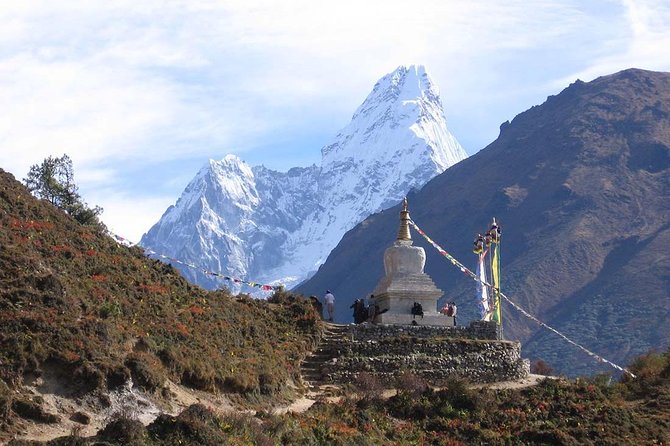
You will walk through pine forests, cross prayer-flagged suspension bridges, pass stone memorials, and spend nights in mountain villages where comfort is basic. The helicopter finish is exciting and practical, but mountain weather can disrupt flights, so you should keep some flexibility in your plans.
Key things to know before you book
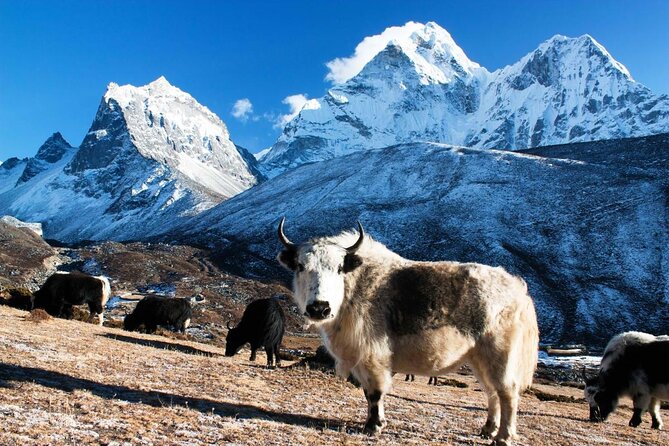
- The helicopter cuts out the return trek: After reaching Gorakshep, you fly to Lukla in about 20 minutes instead of retracing the full trail.
- Two acclimatization days are built in: Namche and Dingboche give your body time to adjust before the highest sections.
- Kala Patthar is the top viewpoint: At 5,555 meters, it offers the trek’s most rewarding mountain panorama, but it is also one of the hardest climbs.
- Your group can be small: The maximum group size is 14, with one porter assigned for every two trekkers.
- The package covers the practical basics: Permits, food, staff costs, Lukla airfare, Kathmandu transfers, filtered trail water, and a first-aid kit are included.
- You need moderate fitness and insurance: Emergency rescue and evacuation coverage is not included, and it is your responsibility to arrange suitable travel insurance.
Why the Gorakshep helicopter return changes the trek
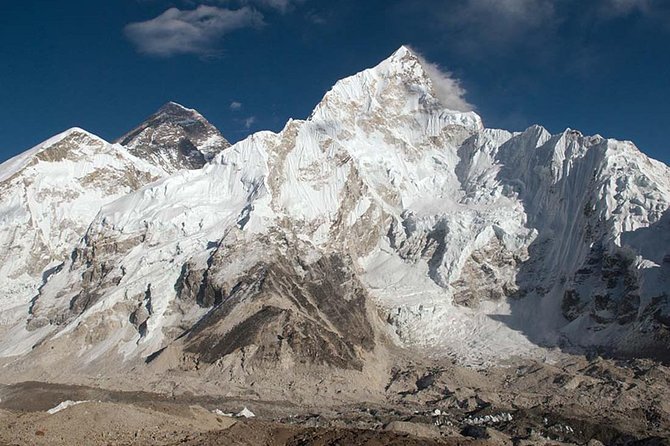
The classic Everest Base Camp route is famous for a simple reason: you walk into the Khumbu valley step by step, gaining altitude slowly and seeing the mountains grow around you. The return route, however, repeats much of the same trail. This trip replaces that long descent with a shared helicopter ride from Gorakshep to Lukla.
That choice matters. Descending on foot still takes several days, and tired legs can make the return feel like a chore rather than an adventure. The helicopter gives you more time in the high country and removes some of the strain after Base Camp and Kala Patthar.
You should not think of the flight as a luxury escape from every difficult part. You still walk to high altitude, sleep in basic mountain lodging, and tackle long days on uneven paths. The helicopter simply changes the final logistics.
The flight is also weather dependent. If conditions are poor, schedules can change, and the stated cancellation terms allow a different date or a full refund when the experience is canceled for bad weather. Build some patience into your Nepal plans. Himalayan aviation does not run like a city bus.
More Everest Base Camp Treks in Kathmandu:
- Everest Base Camp Trek – 14 Days
★ 5.0 · 1,499 reviews - Everest Base Camp Trek
★ 5.0 · 842 reviews - Everest Base Camp Trekking
★ 5.0 · 485 reviews
Day 1: A soft landing in Kathmandu
Your arrival begins with an airport pickup in a private tourist vehicle. You are taken to your Kathmandu hotel, where you meet the guide and attend a pre-trip briefing.
This first day is useful rather than glamorous. It gives you a chance to ask about the trail, check your equipment, and settle before the early flight to Lukla. The package includes two nights in a three-star Kathmandu hotel with breakfast, but lunch and dinner in the capital are your responsibility.
The guide team comes from Ace the Himalaya and includes licensed, English-speaking local guides with first-aid training. The company also provides an oxygen saturation meter and a first-aid kit, a sensible feature on a trek where altitude needs close attention.
Day 2: Flying to Lukla and walking to Phakding
The morning starts early with a flight from Kathmandu to Tenzing and Hillary Airport in Lukla. The flight takes about 35 minutes and reaches an altitude of 2,804 meters.
Lukla is the gateway to the Everest region. After landing, you meet the porter team and begin walking toward Phakding. This first hiking day is shorter than the days ahead, giving your legs a gentle introduction to the trail.
Phakding sits at roughly 2,600 meters, although the exact elevation is not listed in the program. You will stay in a mountain guesthouse, with attached toilets promised in Lukla, Phakding, and Namche. That level of comfort is welcome, but you should still expect simple accommodation rather than city-hotel standards.
The package assigns one porter for every two people. Pack with that system in mind, and keep anything you need during the day in your own small bag.
Day 3: The river trail to Namche Bazaar
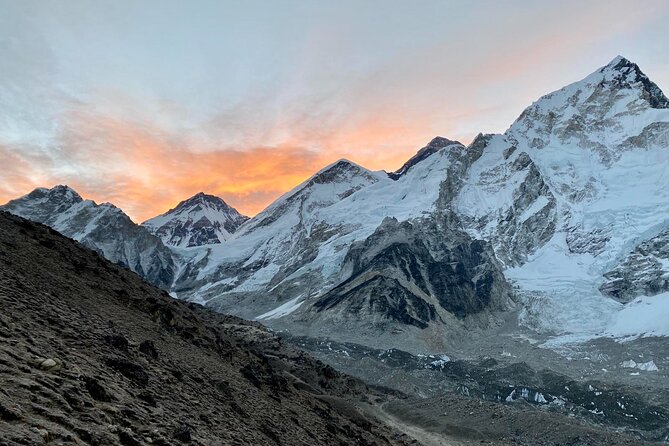
The walk from Phakding to Namche takes about six hours. The route follows the Dudh Koshi, crossing the river several times on suspension bridges decorated with prayer flags.
This is where the trek begins to feel properly Himalayan. The path passes through forest, rises and falls, and brings you closer to the high mountain villages. The bridges are exciting, but they also remind you that this is a working trail, not a polished park path.
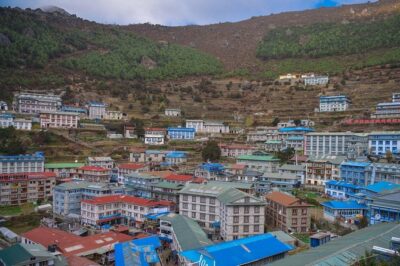
Namche Bazaar is the region’s main trading center and a natural stopping point for acclimatization. The climb into Namche can feel demanding because you gain height quickly. Take your time. A slow pace here is not a sign of weakness; it is smart mountain travel.
A few more treks around Kathmandu worth a look
- Everest Base Camp Trek with Helicopter Return to Lukla – 10 Days
★ 5.0 · 34 reviews - Everest Base Camp Trek with Helicopter Return -11 Days
★ 5.0 · 12 reviews - Helicopter Return Everest Base Camp Trek, KTM-LUKLA & Gorakshep-KTM by Heli
★ 5.0 · 9 reviews - Everest Base Camp Trek with Helicopter Return – 10 Days
★ 5.0 · 9 reviews
Day 4: Acclimatization above Namche
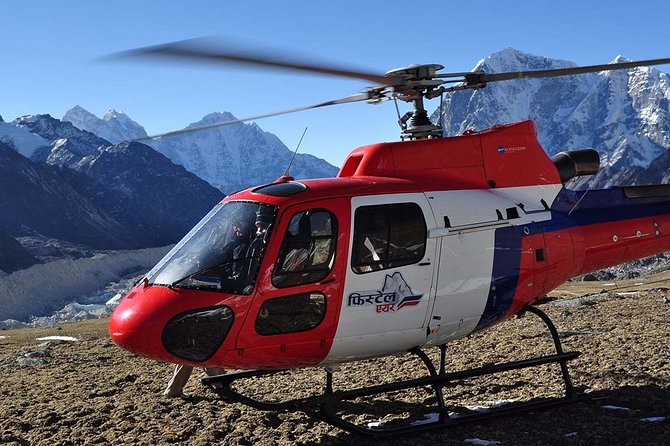
You spend the day around Namche rather than pushing farther up the valley. A short hike to the Everest View Point gives you a first look at the Himalayan giants and helps your body adjust to thinner air.
The itinerary describes a sunrise mountain view, so an early start may reward you with clearer conditions. You also get a chance to walk around Namche and become familiar with the village before the trail becomes more remote.
This rest day is one of the best features of the program. Some fast itineraries treat acclimatization as wasted time, but skipping it can make the high sections much harder. Here, you gain altitude in stages.
Do not treat the day as a full day off. The point is gentle movement, not a long lie-in. The short hike helps with adjustment while keeping your legs active.
Day 5: Tengboche and its mountain monastery
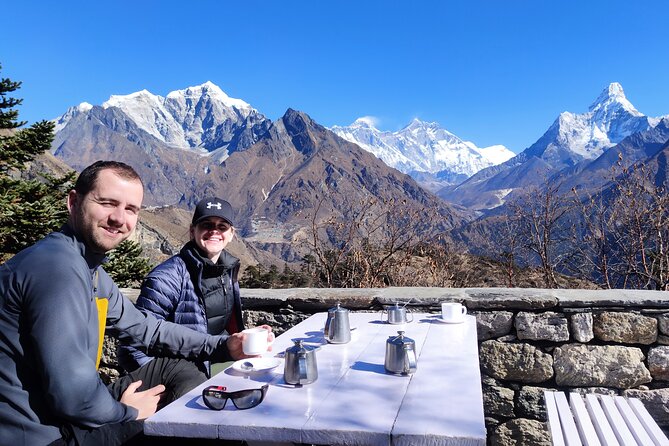
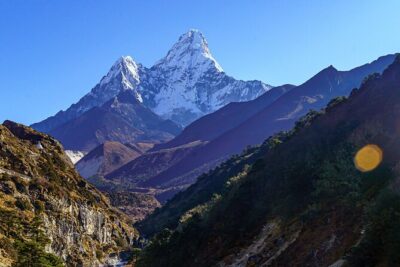
The route continues beside the Dudh Koshi, with strong mountain views along the way. You descend to Debuche, cross the Imja Khola, and climb toward Tengboche at 3,860 meters.
Tengboche is known for its monastery and its broad setting among the peaks. The monastery gives the day a cultural focus, not just a physical one. Prayer flags, mani stones, and Buddhist symbols appear often along this part of the trail.
The altitude now becomes a serious factor. The itinerary describes this as a long day, listed at about 16 hours, although actual walking time can vary with the group and conditions. Ask your guide for the expected start and arrival times, and do not judge the day only by distance.
Day 6: Through Pangboche to Dingboche
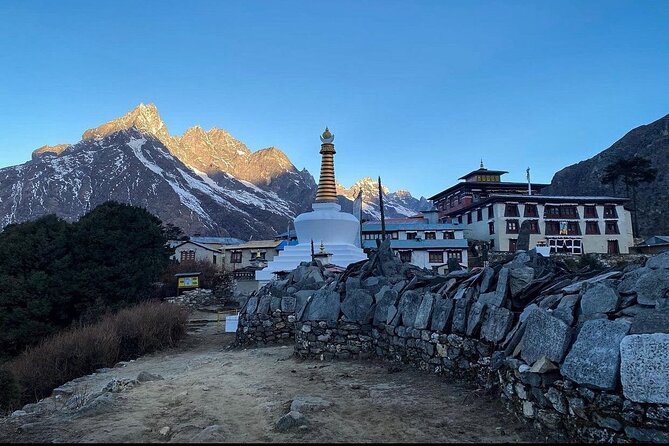
From Tengboche, the path drops to Debuche and crosses another suspension bridge before climbing through Pangboche. Mani stones line parts of the route, adding a quiet spiritual note to the walk.
You continue toward Dingboche, a major acclimatization stop at high altitude. The route becomes more open as the trees thin out, and the cold and wind can feel sharper than they did near Lukla.
Dingboche is an important turning point. From here, the journey is less about forests and more about glaciers, stone, and exposed mountain terrain. You should keep your daypack organized with warm layers, water, sunscreen, and any personal medication.
Day 7: Nangkartshang Peak for altitude practice
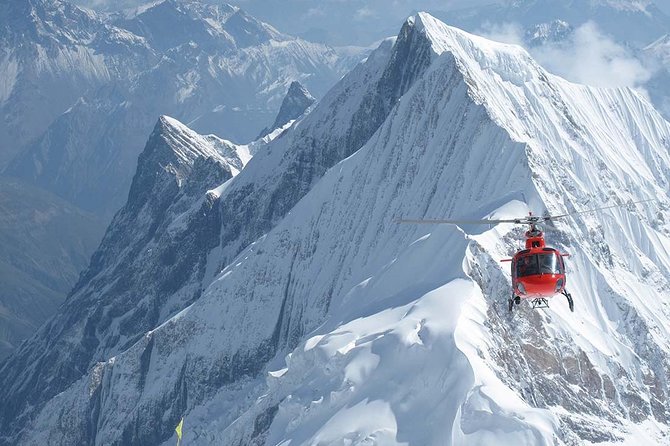
This is the second planned acclimatization day. You do not move to a new overnight stop. Instead, you hike above Dingboche to Nangkartshang Peak.
The climb offers a strong view over the surrounding mountains and gives your body more time at altitude. It is a demanding outing, but it is useful preparation for the higher route to Lobuche and Gorakshep.
The program describes Nangkartshang as an excellent viewpoint, especially in clear conditions. Clouds can hide much of the view, so keep your expectations flexible. The value of the day is not only the scenery. It is also the chance to test your pace before the hardest part of the trek.
Day 8: Memorial stones and the trail to Lobuche
The trail follows the lateral moraine of the Khumbu Glacier toward Lobuche. You pass stone memorials dedicated to climbers who died on nearby peaks.
These memorials add emotional weight to the route. Everest is not simply a scenic destination. It is a serious climbing environment, and the stones make that reality impossible to ignore.
The day is listed at about 16 hours, so this is another long section. The path can feel rough and tiring, especially as the air gets thinner. Your guide and porter team become especially important here. Guides named in the company’s teams, including Raj, Ram, Madan, and Rajendra, have been praised for support, motivation, and careful attention to individual needs.
Lobuche is a practical overnight stop before Base Camp. The accommodation is basic, and you should expect limited comforts at this altitude. A good sleeping bag, warm layers, and personal snacks can make a noticeable difference.
Day 9: The long walk to Everest Base Camp
This is the day many people imagine when they book the trek. From Lobuche, you walk along the Khumbu Glacier toward Gorakshep and then continue to Everest Base Camp at 5,365 meters.
The route is difficult. You are high, the terrain is uneven, and the thin air makes every uphill section feel longer. The trail description calls it a big day, and that is fair. Reaching Base Camp is a major achievement even though you are not climbing Mount Everest itself.
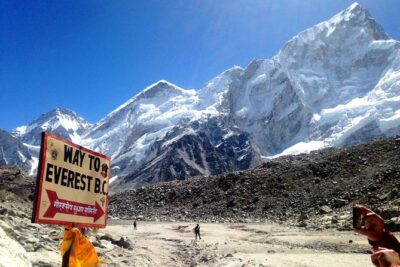
Base Camp looks different depending on the season. During spring, there may be climbing activity in the area. The site itself is not a conventional viewpoint with a large visitor center. It is a high-altitude expedition camp surrounded by glacier terrain and mountain scenery.
After spending time at Base Camp, you return to Gorakshep for the night. This out-and-back section is tiring, but it gives you the satisfaction of reaching the destination rather than seeing it from a distance.
Day 10: Kala Patthar at 5,555 meters
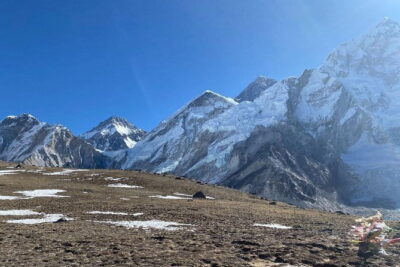
Kala Patthar is often the visual high point of the trek. The climb reaches 5,555 meters and provides the most famous close views of Everest and the surrounding peaks.
The ascent is short in distance but hard on the body. At this height, you may take several steps, pause, and take several more. That is normal. The guide’s job is not to rush you but to help you maintain a safe pace.
The itinerary calls this one of the most difficult yet rewarding days. I agree with that assessment. Base Camp gives you the achievement, but Kala Patthar gives you the wider mountain view many people hope to see.
The helicopter connection from Gorakshep to Lukla is the trip’s defining feature. The exact timing can shift with weather and flight operations, but the planned journey is a shared helicopter ride of about 20 minutes. From Lukla, the itinerary includes the return flight toward Kathmandu, described as another scenic flight of about 35 minutes.
Because the schedule also lists Lukla and Kathmandu transportation on Day 11, confirm the precise flight sequence with the operator before departure. The central promise is clear: you do not walk the full route back from Gorakshep.
What the $3,000 price really covers
At $3,000 per person, this is not a budget trek. It is also not simply a hotel-and-walk package. The cost includes a large set of services that are expensive and difficult to arrange independently.
You receive airport and hotel transfers, two Kathmandu hotel nights with breakfast, mountain guesthouses, a licensed guide, porters, staff wages, staff insurance, food, permits, domestic airfare, and the shared helicopter flight. Meals during the trek include breakfast, lunch, and dinner, with a farewell dinner on the final night.
The company also supplies a duffel bag, trekking map, sun hat, filtered trail water, seasonal fruit, and a first-aid kit with an oxygen saturation meter. Those details reduce the number of small purchases and decisions you need to make along the way.
The price does not include international airfare, a Nepal entry visa, Kathmandu lunches and dinners, alcoholic drinks, personal gear, travel insurance, or tips. Tipping is expected, so set aside extra money for the guide, porters, and driver.
The value is strongest if you want a managed trip with a helicopter return and do not want to organize permits, porters, food, and internal flights yourself. Independent trekkers may spend less, but they also take on more planning and risk.
Who will enjoy this trek most
This trip suits a fit, determined person who wants the full Everest Base Camp experience but does not want to spend several extra days walking back down the valley. You should be comfortable with long hiking days, basic guesthouses, cold conditions, and high altitude.
It is not a casual sightseeing holiday. The stated requirement is moderate physical fitness, but the high point of the trek is above 5,500 meters. You should take that seriously and discuss your plans with a medical professional if you have health concerns.
The maximum group size is 14, which keeps the trip small enough for the guide to monitor people more closely than on a large coach tour. The minimum booking is two people, so solo booking is not available under the stated conditions.
The strongest praise for this experience focuses on staff support. Guide names such as Ram, Raj, Madan, Rajendra, and porter teams including Bishal, Girija, Pesal, Krishna, Probin, Saman, Jit, and Sher appear repeatedly in the trip feedback. That points to a company culture where the human side of the trek matters as much as the route.
Practical advice before departure
Bring personal trekking equipment suited to cold, high-altitude conditions. The duffel bag and sun hat are useful, but they do not replace your own clothing, footwear, and sleeping equipment.
Keep your passport, insurance information, medication, and a few essential items in your daypack. Porters carry the main luggage, but you should not rely on reaching it during the day.
Drink the filtered trail water provided by the company, and use the acclimatization days properly. Walk slowly, tell the guide if you feel unwell, and do not hide symptoms to keep up with the group.
Travel insurance must cover emergency rescue and evacuation. It is not included in the price, and this is one area where cutting costs makes little sense.
Cancellation terms are strict close to departure. Cancel at least six full days before the start for a full refund, two to six days ahead for a 50 percent refund, and less than two days ahead for no refund. Weather-related cancellations may lead to a new date or full refund.
Should you book this Everest trek?
Book it if you want the classic route, strong guide and porter support, planned acclimatization, and a helicopter escape from the long return walk. The package offers real value for people who prefer a well-organized trek and want the major costs handled in advance.
Think twice if you dislike basic accommodation, long hiking days, or uncertain flight schedules. The helicopter is a wonderful finish, but it cannot control Himalayan weather.
For a fit trekker with limited time and a clear goal of reaching Base Camp, this is a smart version of the Everest journey. You still earn the mountain on foot. You just do not have to walk every step home.
FAQ
How long is the Everest Base Camp trek with helicopter return?
The experience lasts approximately 12 days. The route includes Kathmandu, Lukla, Phakding, Namche Bazaar, Tengboche, Dingboche, Lobuche, Gorakshep, Everest Base Camp, and Kala Patthar.
Is the helicopter ride included in the price?
Yes. A shared helicopter flight from Gorakshep to Lukla is included. The flight takes about 20 minutes, although weather and flight conditions can affect timing.
What is the highest point on the trek?
Kala Patthar is the highest point listed, at 5,555 meters. Everest Base Camp is reached at 5,365 meters.
Are meals included?
Breakfast, lunch, and dinner are included during the trek. Breakfast is included during the two Kathmandu hotel nights. Lunch and dinner in Kathmandu are not included.
Is travel insurance included?
No. You must arrange your own travel insurance, and it needs to cover emergency rescue and evacuation.
How large is the group?
The activity has a maximum of 14 participants. A minimum booking of two people is required, and one porter is assigned for every two trekkers.
Recently added around Kathmandu
- Ghorepani Poon Hill Trek★ 5.0 · 16 reviews
- Private Manaslu Circuit Trek at Himalayas★ 5.0 · 3 reviews
- Amazing 1 Day Trekking Experience in Kathmandu Nepal★ 5.0 · 24 reviews
- Ghorepani Poonhill Trek★ 5.0 · 5 reviews
- Upper Mustang Trekking★ 5.0 · 2 reviews
- Upper Mustang Trekking★ 3.0 · 2 reviews
- Upper Mustang Trekking★ 5.0 · 4 reviews
- Upper Mustang Trek★ 5.0 · 5 reviews
Everest Base Camp Treks, compared.
Browse the lists this tour appears in