
REVIEW · KATHMANDU
12 Days Everest Base Camp Trek
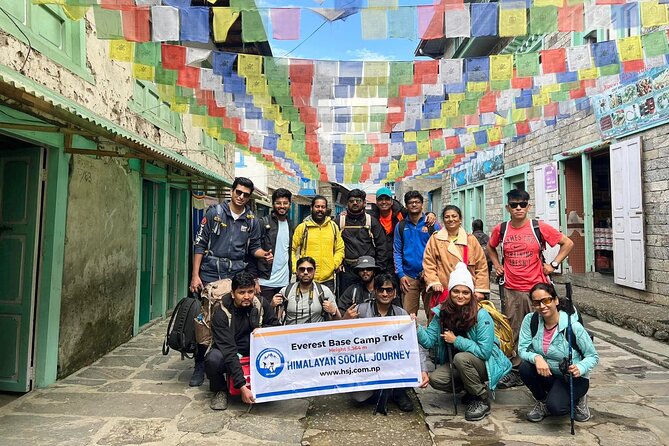
Everest begins with a small plane. This guided 12-day trek from Kathmandu gives you a clear route to Everest Base Camp, with domestic flights, permits, tea-house stays, breakfast, porters, and a licensed guide arranged for $1,099 per person. You walk through Sherpa villages, cross suspension bridges, spend acclimatization days in Namche Bazaar and Dingboche, and finish with sunrise at Kala Patthar.
I like the well-paced acclimatization plan, especially the extra days in Namche Bazaar and Dingboche. I also like the practical support: one porter for every two people, a first-aid kit, duffle bags if needed, and transfers before and after the trek. The main caution is that the trip is physically serious, and the meal information is not perfectly clear. Breakfast is included, but lunch, dinner, drinks, and personal gear are listed as extra.
The Everest Base Camp details that matter most
- Two acclimatization days are built into the route, with hikes to Syangboche and Nangkartshang Peak.
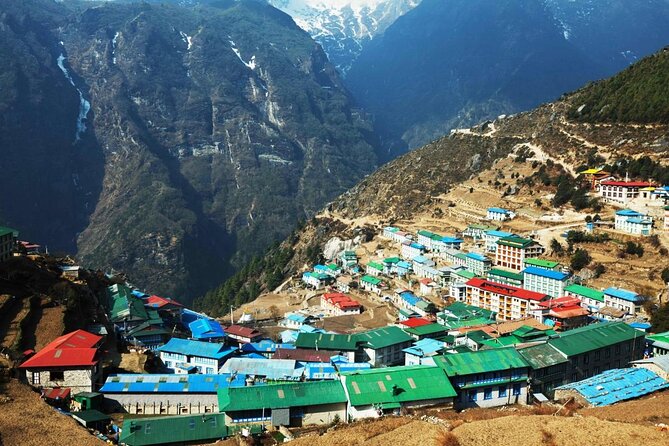
- The main trail landmarks include Namche Bazaar, Tengboche Monastery, Dingboche, Lobuche, Gorakshep, Everest Base Camp, and Kala Patthar.
- A guide and porter team is included, with one porter assigned for every two people.
- The package costs $1,099, including flights, permits, trekking accommodation, breakfast, transfers, and government charges.
- The group can reach 30 people, so ask how large your particular departure is.
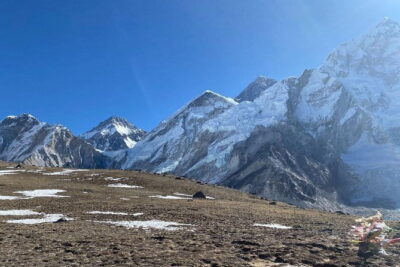
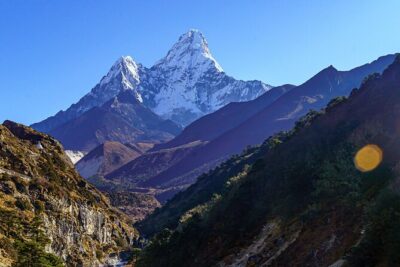
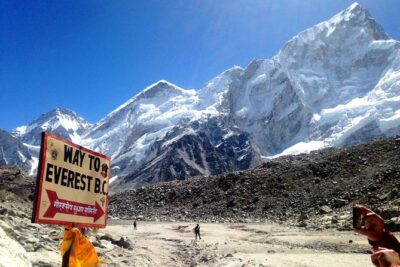
- The final mountain views are hard-won, with Everest, Lhotse, Nuptse, Ama Dablam, Pumori, Makalu, and other peaks appearing along the route.
What the $1,099 price really covers
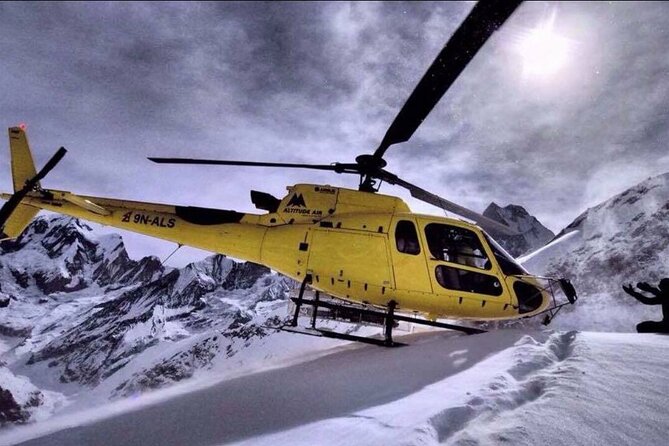
At $1,099, this trek offers solid value for a route that can be awkward to arrange independently. The price includes the flight between Kathmandu or Ramechhap and Lukla, domestic airfare for the trekking crew, national park fees, Lukla entrance fees, local taxes, transfers, accommodation in mountain guesthouses, breakfast, a guide, and porter support.
That matters because the Everest route has several moving parts. Flights can involve Kathmandu or Ramechhap, depending on the current operating plan. Your guide handles the trail, permits, and day-to-day arrangements while the porter carries part of your load. You still need to pay for personal clothing, equipment, insurance, drinks, lunch, and dinner.
There is one point I would clarify before paying. The general description says meals are included, but the detailed exclusions say breakfast, lunch, dinner, and drinks during the trip are not included. The accommodation section clearly includes breakfast, so you should ask the operator exactly what food is covered. Budgeting for extra meals and drinks is the safer approach.
One night at Gokarna Forest Resort in Kathmandu is also mentioned as included. Yet the detailed inclusions say Kathmandu accommodation is not included. That is another small contradiction worth resolving in writing. The mountain lodging is clearly guesthouse accommodation on a twin-sharing basis, not luxury lodging.
More Everest Base Camp Treks in Kathmandu:
- Everest Base Camp Trek – 14 Days
★ 5.0 · 1,499 reviews - Everest Base Camp Trek
★ 5.0 · 842 reviews - Everest Base Camp Trekking
★ 5.0 · 485 reviews
Day 1: Lukla flight and the walk to Phakding
The first day combines a short domestic flight with your first walk in the Khumbu region. The flight to Lukla takes about an hour and puts you at the main gateway for the Everest trek.
From Lukla, the trail descends through pine forest and Sherpa villages toward Phakding. This is a useful opening day because you begin walking without immediately facing the hardest climbs. You get a first look at the river valleys, stone buildings, suspension bridges, and tea-house rhythm that will shape the rest of the trip.
The schedule lists a long overall day, though the actual walking time from Lukla to Phakding is usually treated as a short opening stage. You should still expect an early start, airport procedures, and a full day of transitions.
Phakding is a pleasant place to spend the night. Use the remaining daylight for a short walk and let your body settle into the new routine. Your stay is in a tea house, so expect basic mountain accommodation rather than resort comfort.
Day 2: Suspension bridges and the climb to Namche Bazaar
The path follows the Dudh Koshi River through pine forest. At Monjo, your entry into Sagarmatha National Park is checked, then you continue past Jorsalle and toward the famous Tenzing Hillary Suspension Bridge.
The approach to Namche Bazaar is the first major test. After crossing the bridge, you face a steep climb toward the Khumbu’s main market town. The effort pays off with views of Thamserku, Everest, and other peaks, though the first glimpse of Everest can be partly hidden depending on the weather.
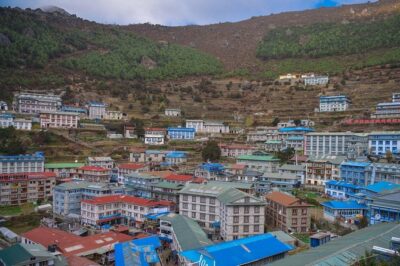
Namche Bazaar is more than a stopping point. It is the commercial center of the region, with shops, restaurants, government offices, and ATMs. That makes it the best place on the route to check supplies and prepare for the higher sections.
This day can feel long, especially if you are new to mountain trekking. Keep your pace slow and steady. The goal is not to reach Namche quickly. The goal is to arrive with enough energy to enjoy the acclimatization day that follows.
Day 3: Acclimatization above Namche
A full day in Namche is one of the strongest features of this route. You do not simply sit in the tea house. The plan includes a hike to Syangboche and the Hotel Everest View area, where you can look toward Everest and nearby peaks.
This short climb helps your body adjust to the increasing altitude while keeping you active. It also gives you a useful mountain-view day without committing to a difficult transfer between villages.
Namche itself offers time to walk through the colorful market, visit shops, eat at local restaurants, and organize your gear. You might also find this is the last convenient place to replace a forgotten item, though the supplied information does not promise that every type of equipment will be available.
Take this day seriously. Acclimatization is not wasted time on an Everest trek. It is part of the safety plan, and skipping rest can make the higher sections much harder.
A few more treks around Kathmandu worth a look
- Annapurna Circuit Trek with Tilicho Lake
★ 5.0 · 368 reviews - Everest Base Camp Trekking – 13 Day
★ 5.0 · 365 reviews - Everest Base Camp Trek
★ 5.0 · 350 reviews - Everest Base Camp Trek -14 Days
★ 5.0 · 321 reviews
Day 4: Tengboche Monastery and Deboche
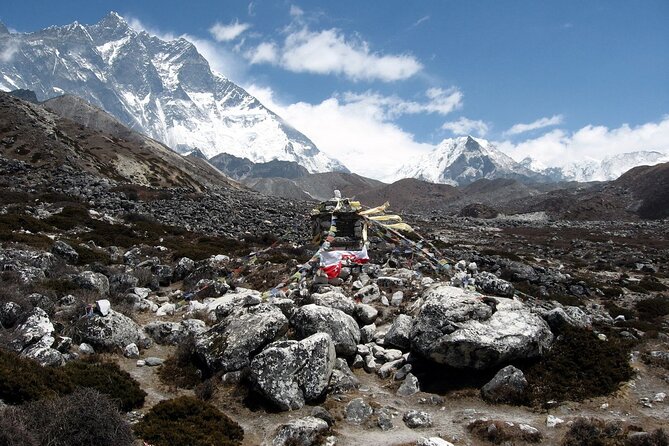
The trail climbs toward Tengboche, home to the largest monastery in the Everest region. The walk takes about five to six hours according to the schedule, with mountain views opening toward Everest, Ama Dablam, and other Himalayan peaks.
Tengboche is one of the route’s most meaningful stops. The monastery adds a cultural layer to the trek, giving you a chance to see a working religious center rather than just another viewpoint. Allow a little quiet time here. The mountain scenery is impressive, but the setting also invites a slower look at Sherpa Buddhist life.
After Tengboche, you continue to Deboche, crossing the Imja River before checking into a tea house. The trail passes through birch, conifer, and rhododendron forest, making this section feel very different from the bare high-altitude terrain still ahead.
The overnight stop in Deboche breaks up the route and keeps the day manageable. Still, the long schedule means you should not plan on moving at a rushed pace.
Day 5: Into the Imja Valley and Dingboche
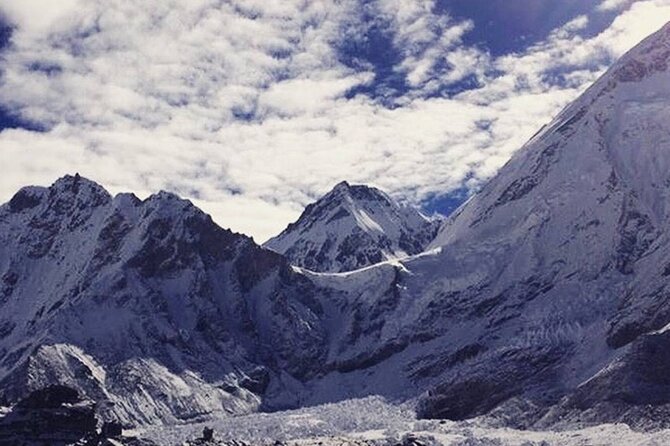
From Deboche, the route continues through forest and then into the Imja Valley. You pass views of Everest, Lhotse, and Ama Dablam before reaching the Lobuche River and climbing toward Dingboche.
Dingboche marks a clear change. The air is thinner, the terrain is more open, and vegetation becomes less dominant. You are now preparing for the highest and most demanding section of the trek.
The day is listed at five to six hours of walking, but altitude can make that feel much longer. Drink regularly, eat what you can, and tell your guide if you feel unwell. A guide cannot remove the altitude, but an experienced one can help you respond sensibly.
Day 6: Nangkartshang Peak acclimatization walk
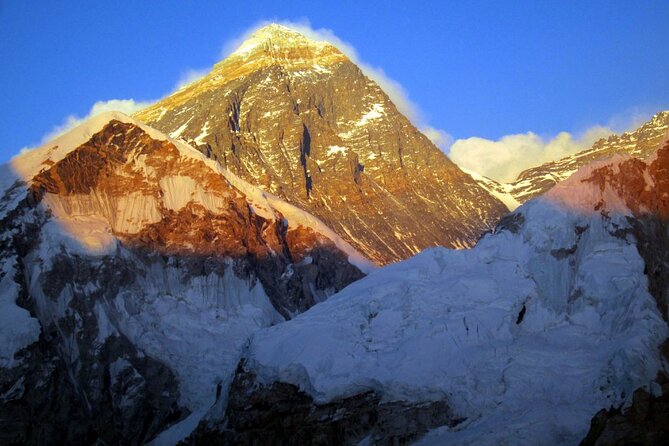
The second full acclimatization day is in Dingboche. The optional hike to Nangkartshang Peak gives you wide views toward Makalu, Lhotse, Cholatse, Tawache, and Ama Dablam.
This is a strong design choice because you climb higher during the day and return to sleep at Dingboche. The walk lets you test your legs and breathing before the route reaches Lobuche, Gorakshep, and Everest Base Camp.
Do not treat the acclimatization hike as a competition. You are not there to prove speed. Take the slowest comfortable pace, use the rest of the day to recover, and keep your clothing organized for the colder stages ahead.
Day 7: Thukla Pass and Lobuche
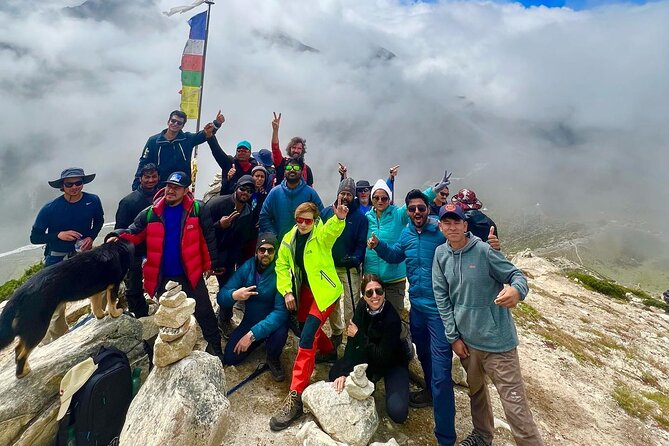
The trail from Dingboche to Lobuche becomes rougher and more exposed. You climb toward Thukla Pass, stop for lunch, and continue through high-altitude terrain with views toward Pumori and Nuptse.
Thukla is an emotional section of the route because the pass is associated with memorials to climbers and high-altitude workers who died on Himalayan expeditions. It is a quiet place, and your guide can help explain the significance of what you see.
Lobuche is not a comfort stop. Guesthouse accommodation becomes increasingly basic at this height, and one of the supplied comments makes that point plainly: you should not expect much comfort near 5,000 meters. That is not a flaw unique to this tour. It is part of the reality of sleeping high in the Everest region.
Day 8: Gorakshep and Everest Base Camp
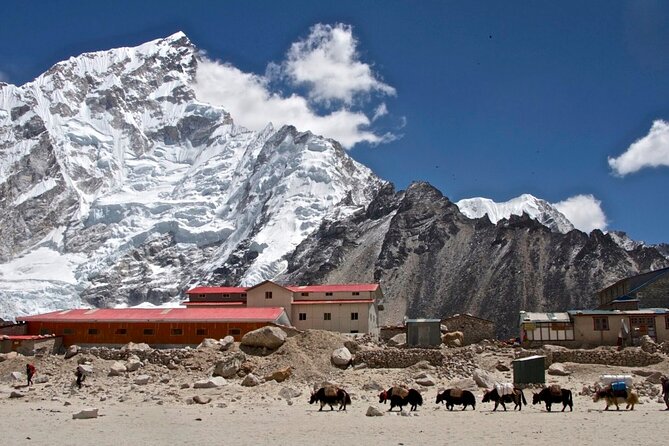
You leave Lobuche and walk over rocky ground toward Gorakshep, the last settlement before Everest Base Camp. After checking into the tea house and eating lunch, you continue toward Base Camp along the Khumbu Glacier.
Reaching Everest Base Camp is the central goal, but the route is not a gentle stroll at this stage. The air is thin, the ground is uneven, and the return to Gorakshep still lies ahead. Keep your expectations realistic. You are visiting the mountaineering base area, not climbing Everest itself, and conditions can change with the season.
The supplied schedule gives a short time allocation for the Base Camp stop, likely reflecting time at the viewpoint rather than the full return walk. Plan to follow your guide’s pace and allow time for photographs without wandering away from the group.
That night at Gorakshep may be one of the least comfortable of the trek. The reward is knowing you have reached the route’s main destination.
Day 9: Kala Patthar sunrise and the descent to Pheriche
The early start for Kala Patthar is worth the cold and dark. From this viewpoint, you can watch sunrise spread across Everest and the surrounding peaks, then return to Gorakshep for breakfast.
Kala Patthar often provides a better broad view of Everest than Base Camp itself. The climb is short in distance but demanding because of the altitude, so take it slowly and listen to your guide.
After breakfast, you descend toward Pheriche, stopping for lunch around Lobuche or Thukla. Going downhill brings welcome relief, although the trail can still be tiring after the early morning climb.
Pheriche gives you a more comfortable feeling simply because you are returning to a lower elevation. It is a good place to rest, eat, and think about how different the trail feels on the way down.
Days 10 to 12: Returning through Namche and Lukla
Day 10 takes you from Pheriche back to Namche Bazaar. You retrace familiar sections of the route, but the lower altitude should make breathing easier. Namche is a useful overnight stop before the final long push to Lukla.
On Day 11, you walk from Namche through familiar villages and forests, with lunch in Phakding before continuing across suspension bridges to Lukla. This is a long closing day, and tired legs can make the return feel less easy than expected.
The final morning brings the flight back to Kathmandu. Transfers to your trip hotel are included, though the information about Kathmandu accommodation is not fully consistent. Ask if the Gokarna Forest Resort night is part of your exact booking.
Flights to Lukla depend on weather, so keep your wider Nepal plans flexible. The cancellation terms allow a full refund if the operator cancels because of poor weather, or you may be offered another date.
Guides, porters, and group size
The trip includes a licensed English-speaking guide and one porter for every two people. That arrangement can make a major difference. You carry your daypack, while the porter handles part of the heavier luggage.
The strongest praise is directed at the guiding team. Names repeatedly associated with good support include Mingmar, Khilraj, Dawa Sherpa, Santosh, Sonam, Indra, Nema, Tenzing, Janak, Siddharth, Kubir, and Kilraj. Specific praise focuses on clear daily briefings, help with accommodation and food, terrain advice, and steady encouragement.
That does not mean every departure will have the same guide. Ask who is assigned to your group and how many people are expected. The maximum group size is 30, which is large enough to affect pace and personal attention. A smaller group may feel easier on narrow trails and during slower acclimatization days.
Who should book this trek?
This trek fits an active person with moderate fitness and some mountain walking experience. You do not need to be an elite athlete, but you do need to handle repeated long walking days, steep climbs, basic lodging, and high altitude.
I would choose it if you want the classic Everest Base Camp route without arranging every flight, permit, porter, tea house, and transfer yourself. It also suits solo bookers who want to join a group, since one solo participant joined a group of 17 and found the guide team handled accommodation and daily needs well.
I would hesitate if you want private rooms, flexible daily distances, polished hotels throughout, or a food package with no extra spending. The lower price reflects a practical trekking setup, not luxury in the mountains.
Personal insurance is required, and you should bring your original passport. Your own trekking clothes and equipment are not included, although duffle bags may be supplied if needed.
Should you book the 12-day Everest Base Camp trek?
Book it if your priority is a guided, organized route with two valuable acclimatization days, porter support, and the main Everest viewpoints for $1,099. The route is well structured, and the guides appear to be the strongest part of the service, especially names such as Mingmar, Dawa Sherpa, Khilraj, Santosh, Sonam, and Indra.
Before booking, confirm three points: the exact Kathmandu hotel arrangement, what meals are included, and the likely group size. If you accept basic tea houses, demanding days, and extra costs for food, drinks, insurance, and personal gear, this is a practical way to reach Everest Base Camp without carrying the full planning burden yourself.
FAQ
How long is the Everest Base Camp trek?
The scheduled experience lasts 12 days, including the flights between Kathmandu or Ramechhap and Lukla.
What is the price of the trek?
The listed price is $1,099 per person.
Is the Lukla flight included?
Yes. The package includes domestic flights between Kathmandu or Ramechhap and Lukla, including the return journey.
Are permits and national park fees included?
Yes. Sagarmatha National Park fees, Lukla entrance fees, local tax, government taxes, and office expenses are included.
Is accommodation included?
Mountain accommodation in guesthouses is included on a twin-sharing basis during the trekking days. One night at Gokarna Forest Resort in Kathmandu is also mentioned, but the detailed information says Kathmandu accommodation is not included, so confirm this before booking.
Are meals included?
Breakfast is included with the guesthouse accommodation. Lunch, dinner, and drinks are listed as extra in the detailed exclusions, so confirm the final meal arrangement with the operator.
Is a guide provided?
Yes. The trek includes a licensed English-speaking guide and porter support.
How large can the group be?
The maximum group size is 30 people.
What happens if bad weather cancels the trip?
If the experience is canceled because of poor weather, you are offered another date or a full refund. You can also cancel for a full refund up to six full days before the start time.
Recently added around Kathmandu
- Ghorepani Poon Hill Trek★ 5.0 · 16 reviews
- Amazing 1 Day Trekking Experience in Kathmandu Nepal★ 5.0 · 24 reviews
- Private Manaslu Circuit Trek at Himalayas★ 5.0 · 3 reviews
- Ghorepani Poonhill Trek★ 5.0 · 5 reviews
- Upper Mustang Trekking★ 5.0 · 2 reviews
- Upper Mustang Trekking★ 3.0 · 2 reviews
- Upper Mustang Trekking★ 5.0 · 4 reviews
- Upper Mustang Trek★ 5.0 · 5 reviews
Everest Base Camp Treks, compared.
Browse the lists this tour appears in