REVIEW · KATHMANDU
Upper Mustang Trekking
Step into Nepal’s old Tibetan frontier. This 17-day Upper Mustang trek takes you from Kathmandu through Pokhara, Jomsom, Kagbeni, and the remote valleys leading to Lo Manthang, once the center of a closely guarded Buddhist kingdom. I like the route for two clear reasons: the steady climb gives you time to adjust to altitude, and the visit to Lo Manthang, Nyiphu, Garphu, and Ghar Gumba adds real cultural weight to the walking.
The main drawback is effort. This is not a casual village walk, even though it requires no technical climbing. You will spend many days on foot, cross passes above 4,000 meters, and sleep at elevations up to about 3,800 meters. Good fitness and sensible pacing matter more here than speed.
Key Points Before You Book
- Upper Mustang was closed to outsiders until 1992, helping preserve customs and Buddhist traditions with strong Tibetan links.
- Lo Manthang gets a full rest day and a separate northern walking day, giving you more than a quick photo stop.
- The highest points are above 4,000 meters, although the main sleeping elevations rise gradually.
- Flights connect Pokhara with Jomsom, saving several days of road travel at the start and end of the walk.
- The $2,300 price covers permits, transport, flights, lodging, meals, guide services, taxes, and fees, but not drinks, tips, visas, or personal spending.
- This is a private trip for your group, with pickup offered and group discounts available.
Why Upper Mustang Feels Different
Upper Mustang is not simply another Himalayan walking route. Its identity comes from its long separation from the rest of Nepal. The kingdom of Mustang began under the warrior Ame Pal in 1380, and Lo Manthang later developed as a walled city and political center. For centuries, the region kept its own customs, religion, architecture, and village patterns.
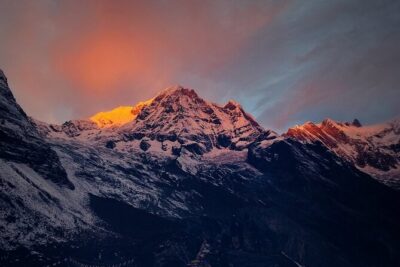
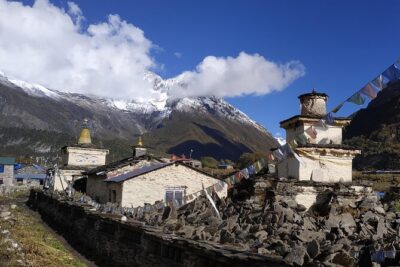
The Tibetan connection is especially clear in the monasteries, caves, prayer traditions, and dry mountain setting. The route does not offer the thick forests and famous green valleys found on some lower Nepal treks. Instead, you get broad rock walls, high passes, bare ridges, and villages gathered around limited water and farmland.
I would choose this walk if you want culture and remoteness as much as mountain views. The reward is not only the scenery. It is the sense that each settlement has adapted to a difficult place over a very long time.
You should also keep expectations sensible. The remote setting means accommodation is practical rather than luxurious. The included hotels and guesthouses give you a base for rest, but this is not a resort-style holiday.
A few more treks around Kathmandu worth a look
- Everest Base Camp Trek – 14 Days
★ 5.0 · 1,499 reviews - Everest Base Camp Trek
★ 5.0 · 842 reviews - Everest Base Camp Trekking
★ 5.0 · 485 reviews
Kathmandu to Pokhara: Two Different Starts
Your first day begins with arrival in Kathmandu, followed by sightseeing on day two. This gives you a useful introduction to Nepal before the walking begins. It also provides some breathing room after an international flight.
On day three, you travel from Kathmandu to Pokhara by tourist bus, a journey of roughly six to seven hours. That is a full travel day, so do not think of Pokhara as a quick transfer point. It is the staging town for the mountain flight and the last major urban stop before the route becomes much more remote.
The bus journey may feel long, but it keeps the overall price lower than using private transport for every section. Private ground transport is included where stated, while the Kathmandu to Pokhara segment uses a tourist bus.
Jomsom and Kagbeni: The Route Begins at Altitude
The flight from Pokhara to Jomsom takes you to about 2,743 meters. From Jomsom, you walk for around three hours to Kagbeni at 2,810 meters. This is a sensible opening walking day because the distance is short and the elevation gain is limited.
Kagbeni matters as more than a place to sleep. It is the gateway toward Upper Mustang, and its position gives the route a clear change of character. From here, the walk becomes more focused on the old Mustang region rather than the wider Annapurna travel corridor.
Your first night is in Kagbeni, and the next day you walk to Chele at 3,050 meters. The five to six hour route begins the real rhythm of the trek. You should expect the air to feel thinner and the walking to become more demanding, even if the daily distance seems manageable.
The planned stay at Mustang Gate Hotel gives you a fixed point after this first longer day. I would use the evening for food, water, and rest rather than trying to do too much sightseeing.
Chele to Lo Manthang: The Hardest Build-Up
From Chele, the route climbs toward Syangmochen at about 3,800 meters. The walking time is listed as five to six hours, and this is one of the days when gradual acclimatization becomes important. You are not sleeping at extreme altitude yet, but you are spending more time high above sea level.
The route then continues from Syangmochen to Tsarang, a six to seven hour day. Tsarang sits at about 3,560 meters, slightly lower than Syangmochen, which can help your body recover. You stay at Lumbini Guest House, then continue to Lo Manthang the following day.
The walk from Tsarang to Lo Manthang takes about four to five hours and reaches approximately 3,800 meters. The shorter duration makes sense because Lo Manthang is the main cultural goal of the trip. You arrive with time to settle into the Mystique Hotel and begin exploring the walled city.
This section is not a race. If you push hard on the early days, the altitude can catch up with you later. The route is designed with gradual gains, but your own condition still controls how comfortable the walk feels.
Same trailhead, a longer or shorter day out:
- Annapurna Circuit Trek with Tilicho Lake
★ 5.0 · 368 reviews - Everest Base Camp Trekking – 13 Day
★ 5.0 · 365 reviews - Everest Base Camp Trek
★ 5.0 · 350 reviews - Everest Base Camp Trek -14 Days
★ 5.0 · 321 reviews
Lo Manthang: The Cultural Center of the Route
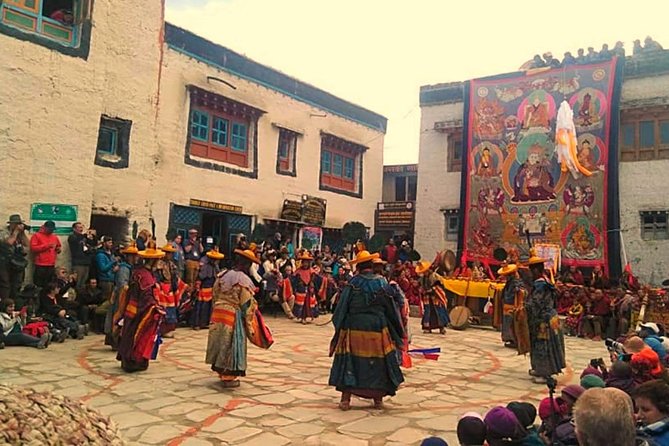
Lo Manthang receives more attention than most stops, and rightly so. You have a full rest day to explore its heritage sites, followed by a separate day hike to Nyiphu and Garphu monasteries, caves, and villages north of the city.
That extra time is one of the strongest parts of the plan. A short visit would give you photographs, but two days let you look more closely at the area’s religious and architectural character. The old walled setting helps you understand why Lo Manthang became such an important center in Mustang.
The rest day does not have to mean complete inactivity. It gives your legs a break while allowing you to see heritage sites at a slower pace. At 3,800 meters, that matters. I would treat it as both a cultural day and an acclimatization day.
The northern walk to Nyiphu and Garphu adds variety. Instead of only following the main route, you reach monasteries, caves, and nearby villages. These places connect the religious life of the region with the dry mountain setting around it.
You stay at Mystique Hotel for both nights. Since the provided plan does not describe the hotel’s exact facilities, you should view the accommodation as a practical trekking base rather than assume high-end comforts.
Ghar Gumba and the Return Through Dhakmar
After Lo Manthang, the route turns south toward Dhakmar. The six-hour walk passes through Ghar Gumba, also known as Loghekar Monastery. This is an important stop because the return route is not simply a repeat of the outward journey.
Dhakmar sits at about 3,820 meters, close to Lo Manthang’s elevation. The following day takes you to Ghiling at 3,570 meters, another six-hour walk. You stay at New Kunga Hotel, and the lower sleeping elevation gives you a modest recovery after the high section.
The route then continues from Ghiling to Samar, around 3,550 meters, in six hours. Hotel Himali is listed for the night. By this point, fatigue may be a bigger concern than altitude. Six hours of walking for several days in a row can wear down your feet and knees, even if you have trained well.
The second half of the route is valuable because you see different villages and pass through a new sequence of valleys. It also gives the trip a proper circuit rather than an out-and-back feel.
Samar to Jomsom: The Final Walking Days
The walk from Samar back to Kagbeni takes six to seven hours and drops to about 2,810 meters. You stay at Nilgiri Hotel. The lower elevation should feel welcome, but the long distance still calls for steady pacing.
The final walking day runs from Kagbeni to Jomsom, about three hours, with an overnight stay at Trekkers Inn. This shorter day lets you finish the walking portion without forcing a long final push.
Jomsom is the link back to modern transport. On day 16, you fly from Jomsom to Pokhara and then continue by air to Kathmandu. You stay at Hotel Dream City in Kathmandu before your final departure on day 17.
Flights in the Jomsom area depend on conditions, so flexibility is important. The cancellation terms specifically allow a different date or a full refund if poor weather prevents the experience from operating. That is useful protection, though it cannot remove the inconvenience of a delayed flight.
What the $2,300 Price Covers
At $2,300, this is a substantial purchase, but the inclusions make the value easier to judge. The price covers:
- Ground transport by private vehicle and tourist bus as specified
- Flights included in the route
- Required permits
- A professional trekking guide
- Breakfast, lunch, and dinner
- Accommodation throughout the trip
- Fees and taxes
The permits are especially important in Upper Mustang, where access has historically been restricted. Having them arranged as part of the package removes a major administrative task.
Meals and lodging also make the price more predictable. You are not paying for every major service separately once the trek begins. The main extra costs are drinks, Nepal visa fees, personal expenses, guide tips, and optional activities.
I consider the price reasonable for a private 17-day trip with flights, permits, full board, accommodation, and a guide. It would be less attractive if you wanted to travel independently or already had your own equipment and logistics arranged. For someone who wants the complex pieces handled in advance, the package offers practical value.
Group discounts may improve the price for larger parties. Since only your group participates, you also avoid being placed with strangers, which can make pacing and daily decisions easier.
Fitness, Altitude, and Daily Comfort
You need a moderate level of physical fitness. The route does not involve technical climbing, but the walking days commonly run from three to seven hours. Several days in a row last six hours or more.
Altitude is the bigger issue. The route reaches sleeping elevations around 3,800 meters, and the passes rise above 4,000 meters. The gradual progression from Jomsom and Kagbeni is helpful, but it is not a guarantee that everyone will feel comfortable.
Train with long walks, hills, or stairs before arrival. Comfortable footwear matters, as does carrying only what you need during the day. The supplied information does not specify luggage support, equipment rental, or a detailed medical procedure, so you should ask the operator about those points before paying.
You should also allow time for the walking pace of the slowest person in your private group. A private trip can be an advantage here, since the group does not need to match the speed of a larger public departure.
Who Should Book This Trek?
I would recommend Upper Mustang to you if you want:
- A culturally focused trek rather than only famous mountain viewpoints
- A route with Buddhist monasteries, caves, old villages, and Lo Manthang
- A private experience for your own group
- A gradual approach to high altitude
- A long trip with meals, lodging, permits, and transport arranged
I would be cautious about booking it if you dislike basic accommodation, long walking days, high elevations, or weather-related flight uncertainty. It is also not the right choice if you want a relaxed Nepal holiday with only occasional walks.
The strongest feature is the combination of access and time. Upper Mustang is not just a quick stop on a larger Nepal tour. You spend enough days there to notice how the villages, monasteries, and routes fit together.
Booking Details and Cancellation Terms
Pickup is offered, mobile tickets are available, and confirmation is provided at booking. The listed meeting point is Tribhuvan International Airport on Ring Road in Kathmandu, with a stated start time of 12:15 am. That time is unusually early, so confirm the exact pickup hour and meeting instructions before arrival.
The trip offers free cancellation up to 24 hours before the local start time for a full refund. Cancellations or changes within 24 hours are not refunded or accepted. Weather and minimum-group requirements can also affect operation, with a different date or a full refund offered if the provider cancels for either reason.
Should You Book Upper Mustang Trekking?
Book it if you want one of Nepal’s more distinctive cultural walking routes and can handle two and a half weeks of changing transport, long hikes, and high-altitude nights. The full-board setup, permits, guide, flights, and private format make the $2,300 cost easier to justify.
Skip it if your idea of Nepal is a short scenic walk with comfortable hotels. Upper Mustang asks more from you, but it gives more back in return: Lo Manthang, old Buddhist sites, remote villages, and a route shaped by centuries of separation. Train properly, confirm the flight and pickup details, and allow yourself time to walk slowly. That is how this trip makes sense.
FAQ
How long is the Upper Mustang Trekking experience?
The trip lasts approximately 17 days, including arrival and departure days, Kathmandu sightseeing, transport to Pokhara, the trek, and return flights.
Where does the trip begin?
The listed meeting point is Tribhuvan International Airport on Ring Road in Kathmandu, Nepal.
What time does the experience start?
The stated start time is 12:15 am. Because this is unusually early, confirm the exact pickup instructions before the trip.
Is the tour private?
Yes. Only your group participates in the private tour or activity.
What fitness level is required?
A moderate level of physical fitness is required. Walking days range from about three to seven hours, and the route reaches elevations around 3,800 meters, with passes above 4,000 meters.
Does the price include meals?
Yes. Breakfast, lunch, and dinner are included throughout the trip.
Are permits included?
Yes. All required permits are included in the price.
Are flights included?
Yes. The listed flights include Pokhara to Jomsom and the return flight from Jomsom to Pokhara and Kathmandu, as specified in the route.
What is not included?
Drinks, Nepal visa fees, personal expenses, guide tips, and extra activities are not included.
Recently added around Kathmandu
- Ghorepani Poon Hill Trek★ 5.0 · 16 reviews
- Private Manaslu Circuit Trek at Himalayas★ 5.0 · 3 reviews
- Amazing 1 Day Trekking Experience in Kathmandu Nepal★ 5.0 · 24 reviews
- Ghorepani Poonhill Trek★ 5.0 · 5 reviews
- Upper Mustang Trekking★ 3.0 · 2 reviews
- Upper Mustang Trekking★ 5.0 · 4 reviews
- Upper Mustang Trek★ 5.0 · 5 reviews
- Upper Mustang Trek 14 Days★ 5.0 · 3 reviews
Kathmandu Trekking Tours, compared.