REVIEW · KATHMANDU
Upper Mustang Trekking
Ancient Mustang still feels wonderfully remote. This private Nepal trek takes you toward Lo Manthang, the walled former capital of a Tibetan kingdom, with Tibetan Buddhist culture and old cave monasteries at its center. I like the included Upper Mustang permit and ACAP permits, and I like that meals, trekking accommodation, and two Kathmandu hotel nights are covered. The main concern is the unclear duration: the experience is advertised as about 14 hours, yet the description presents a multi-day trek.
I also like the chance to include Lo Manthang’s Tiji festival, a major Buddhist celebration linked with prayers for peace and the defeat of evil. You should, however, read the transport plan carefully. The package includes bus travel between Kathmandu and Pokhara, flights between Pokhara and Jomsom, and private ground transport, but the supplied details do not give a full day-by-day walking schedule.
Key points before you book
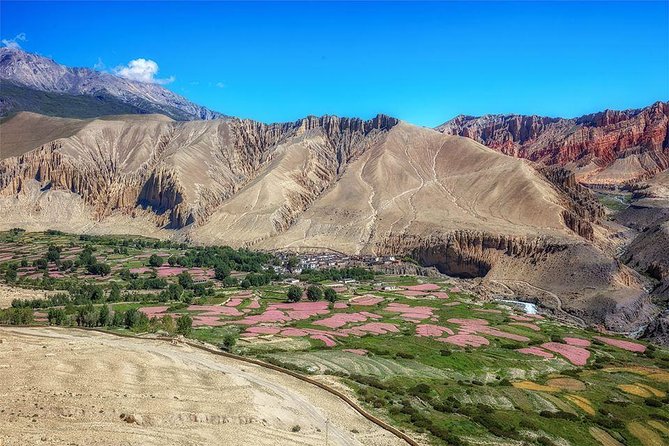
- Lo Manthang is the main prize: The walled city once belonged to the Tibetan Kingdom of Gungthang until the 1830s.
- The permit cost matters: Upper Mustang is a restricted area, and the special permit is included in the price.
- Tiji festival timing can change the trip: The festival in Lo Manthang is a cultural highlight, but dates are not provided here.
- Transport is part of the package: Kathmandu to Pokhara is by tourist bus, while Pokhara to Jomsom is by air.
- Meals and lodging are mostly covered: Breakfast, lunch, dinner, tea or coffee, trekking accommodation, and two Kathmandu hotel nights are included.
- You need moderate fitness: This is not presented as a casual sightseeing outing, even though the published duration is only about 14 hours.
Why Upper Mustang feels different from the rest of Nepal
Upper Mustang is often called a forbidden kingdom, and the name fits the sense of separation described in the tour material. The region lies between Tibet and the Himalayas, and its customs, villages, monasteries, and old settlements are closely tied to the Tibetan world.
For you, that means this is not simply a mountain walk with scenic viewpoints. The main appeal is cultural: Lo Manthang, old Buddhist monasteries, cave temples, and pre-historic sites give the route a strong sense of place.
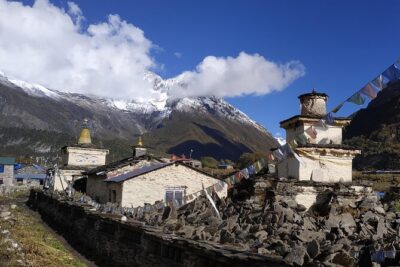
The village architecture is described as similar to Tibetan settlements. That comparison helps set expectations. You are not signing up for a polished resort area or a fast-moving city tour. The attraction is the contrast between the remote setting and the long religious and political story of the Mustang region.
The walled city of Lo Manthang is the natural focus. It was part of the Tibetan Kingdom of Gungthang until the 1830s, a detail that gives the city more weight than its compact size might suggest. You can look at the walls, old religious buildings, and surrounding dry mountain scenery as pieces of a former kingdom rather than isolated sights.
A few more treks around Kathmandu worth a look
- Everest Base Camp Trek – 14 Days
★ 5.0 · 1,499 reviews - Everest Base Camp Trek
★ 5.0 · 842 reviews - Everest Base Camp Trekking
★ 5.0 · 485 reviews
Lo Manthang and the old Kingdom of Lo
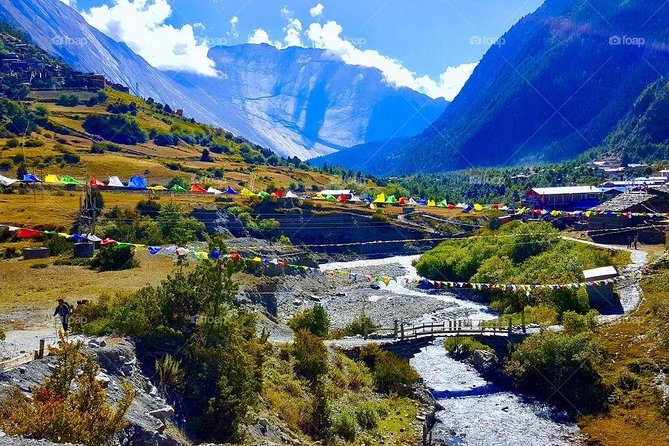
The tour lists Lo Manthang as its main stop, so you should expect the city to carry much of the experience. The supplied information does not provide a detailed sightseeing sequence inside the town, but it does point to historical, natural, cultural, and heritage sites.
That broad mix is important. You are not paying only for a walk through one old settlement. The package is designed around the wider Upper Mustang area, with Lo Manthang acting as the cultural anchor.
I would allow time to move slowly here. The value is in noticing how the city, monasteries, nearby villages, and dry mountain setting fit together. A rushed stop would miss much of what makes Upper Mustang appealing.
The tour also refers to Nepal’s oldest Buddhist monasteries. It does not identify them by name, so you should ask the operator for the exact monastery visits before departure. The same applies to the cave sites. The description promises mysterious caves and cave temples said to be thousands of years old, but it does not specify which ones are included or how difficult they are to reach.
That lack of detail is one of the tour’s weak points. The headline sights are compelling, but a careful buyer should request a written route and list of visits. You want to know which sites are guaranteed and which depend on weather, road conditions, local access, or the final walking plan.
Caves, monasteries, and a very old spiritual world
The cave temples are among the most unusual features described for this trip. They connect Upper Mustang with a much older period of settlement and religious practice, giving the region an archaeological feel as well as a Buddhist one.
I like this part of the tour because it offers something beyond mountain scenery. A high pass or dramatic view can be memorable, but an ancient cave used for worship gives you a stronger connection to the people who lived here long before modern tourism.
Still, the available information is not specific enough to promise a particular cave chamber, painting, statue, or monastery interior. Do not book on the assumption that every famous site in Upper Mustang is included. Ask for the exact names, access conditions, and whether entrance fees are covered.
Admission tickets are listed as included, which is helpful. The wording does not say that every possible local fee is covered, so it is sensible to confirm what the admission line refers to.
Tiji festival: the best special-event option
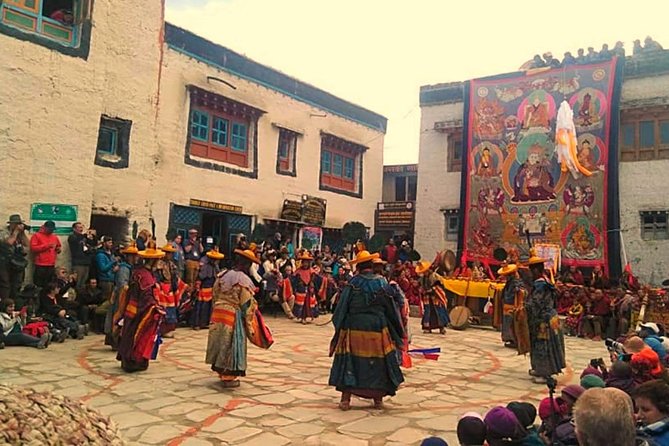
If your dates match, the Tiji festival could add a powerful cultural dimension. It is held in Lo Manthang and is described as a celebration that prays for peace and concerns the defeat of evil.
The supplied details do not include festival dates, so you should not assume that the standard trip automatically includes it. Ask the company to confirm the festival schedule, how many festival days fit the route, and where you will stay during that period.
A festival visit also changes the rhythm of a trip. Lo Manthang may feel more crowded than usual, accommodation may be tighter, and transport plans may require more care. Those are not reasons to avoid the event. They are reasons to plan early and get the arrangements in writing.
For me, the festival is best treated as an optional bonus rather than the only reason to pay for the trek. Upper Mustang’s monasteries, villages, caves, and old kingdom history remain the core experience.
Same trailhead, a longer or shorter day out:
- Annapurna Circuit Trek with Tilicho Lake
★ 5.0 · 368 reviews - Everest Base Camp Trekking – 13 Day
★ 5.0 · 365 reviews - Everest Base Camp Trek
★ 5.0 · 350 reviews - Everest Base Camp Trek -14 Days
★ 5.0 · 321 reviews
Getting there from Kathmandu, with an early start
The meeting point is Tribhuvan International Airport in Kathmandu, at 6:15 in the morning. That is an early start, so you should arrange your evening before the trip with care. The package includes two nights in a Kathmandu hotel with breakfast, but the exact placement of those nights within the schedule is not explained.
The route includes tourist bus transport from Kathmandu to Pokhara and back. You also receive the Pokhara to Jomsom and return flight fare. This combination makes practical sense for reaching the Mustang region, but it also exposes you to two kinds of delay: road conditions on the bus journey and weather affecting the flights.
The experience requires good weather. If poor weather cancels it, the stated policy offers a different date or a full refund. That protection is useful, especially because the Jomsom flight is a key part of the plan.
Private ground transport is included. This should make transfers simpler for your own group, but the listing does not explain the vehicle type, luggage limits, or exact transfer times. Ask those questions before paying, particularly if you carry trekking equipment.
What the $1,760 price really covers
At $1,760 per person, the price looks more reasonable once you separate the included items from the costs you must handle yourself. The package covers:
- Breakfast, lunch, and dinner
- Coffee or tea
- Upper Mustang special permit
- ACAP TIMS and permit fees
- Two Kathmandu hotel nights with breakfast
- Accommodation during the trek
- Pokhara to Jomsom return airfare
- Kathmandu to Pokhara return tourist bus
- Private ground transport
- Admission tickets
The Upper Mustang permit is a major inclusion. Restricted-area permits can make this region more expensive than a standard Nepal trek, and having that fee built into the price reduces one large surprise.
You still need to budget for bottled or mineral water, snacks, alcoholic drinks, Kathmandu lunches and dinners, travel insurance, Nepal’s entry visa, and tips for field staff. A single supplement costs an additional $600.
The package has good value for someone who wants a private trip with permits, transport, meals, and lodging arranged. It is less attractive if you are comparing it with a simple hotel-and-transport package, because the special permit and trekking support are central to the cost.
The biggest value question is not the food or hotel. It is the quality of the route planning and field support. Because the supplied itinerary gives only Lo Manthang as a stop, you should ask for the full walking schedule before deciding that $1,760 is fair.
Fitness, comfort, and the missing itinerary detail
You need a moderate level of physical fitness. That wording is important because this is described as a trek, not an easy city excursion. The available material does not state the walking distance, elevation gains, number of trekking days, or maximum altitude.
Those missing figures make it hard to judge the physical demand. Ask for daily walking hours, highest sleeping point, rest days, and advice about altitude before booking. You should also ask what happens if someone cannot complete a walking day.
Accommodation during the trek is included, but no room type or lodge standard is specified. You should not assume hotel-style comfort in every location. Ask if rooms are private or shared, if bathrooms are private or communal, and how hot water is handled.
Meals are included, which simplifies budgeting. Bottled water is not, so carry money for drinking water and snacks. Coffee or tea is included, but the details do not say how often or where it is served.
The tour is private, meaning only your group participates. That is a real benefit if you prefer a flexible pace or want to discuss cultural sites with your guide. It also means the experience depends heavily on the assigned field staff. A private tour does not automatically mean a better guide, so ask who will lead the trip and what support staff are included.
What the public feedback tells you to check
The experience has a rating of 3 from two reviews, so the sample is very small. One review specifically describes a positive Upper Mustang trip in April 2019 with Sherpa Expedition and Trekking. That gives the route some encouraging history, but it is too little evidence to treat the rating as decisive.
The other published review raises a serious complaint about a guide named Kaylan, but it concerns a 15-day Annapurna Circuit and Tilicho Lake trip in April 2024, not this Upper Mustang itinerary. The complaint involved guide conduct and trip management. The company replied that it investigated the matter and discussed the group situation with the guide and porter.
You should not assume Kaylan will lead this trek, and the complaint does not prove that this Upper Mustang trip will have the same problems. It does show why you should request the guide’s name, confirm the planned services, and know how to contact the operator during the trip.
The company is Sherpa Expedition & Trekking. Its response to the positive Upper Mustang feedback was polite and invited the customer to return, but the small number of public comments means you should do your own checks rather than rely on the rating alone.
Who should book this Upper Mustang trip?
I would recommend it most to someone who values Tibetan Buddhist culture, old settlements, caves, monasteries, and a restricted region more than a highly polished itinerary.
It suits you if you want:
- A private trip for your own group
- Permits and major transport arranged in advance
- Meals and trekking accommodation included
- A chance to visit Lo Manthang
- Cultural sites with a strong Tibetan connection
- The possibility of adding Tiji festival timing
I would be more cautious if you need a precise schedule, luxury accommodation, or clearly published walking statistics before you pay. The 14-hour duration is especially confusing for a product described as a multi-day Upper Mustang trek. That point needs clarification, not guesswork.
Cancellation is free up to 24 hours before the 6:15 a.m. start time for a full refund. Changes made within 24 hours are not accepted, and late cancellations are not refunded. Weather cancellation offers a different date or a full refund.
Should you book it?
Book this trip if the restricted-area permit, Lo Manthang, Tibetan culture, and ancient cave sites are your main reasons for visiting Nepal. The included flights, permits, meals, lodging, and private transport give the $1,760 price a solid base value.
Before booking, ask for the complete day-by-day itinerary, walking hours, altitude details, accommodation names, guide assignment, Tiji festival dates if relevant, and an explanation of the 14-hour duration. If the company supplies clear answers, this could be a strong way to reach one of Nepal’s most distinctive cultural regions. If it cannot explain those basics, choose a better documented Upper Mustang plan.
FAQ
Where does the experience start?
It starts at Tribhuvan International Airport on Ring Road in Kathmandu.
What time is the meeting?
The stated start time is 6:15 a.m.
How long is the experience?
The published duration is approximately 14 hours, although the description presents it as a multi-day trek. You should ask the operator to clarify the complete duration before booking.
Is this a private tour?
Yes. Only your group participates in the activity.
Is transportation included?
Yes. The package includes private ground transportation, Kathmandu to Pokhara return travel by tourist bus, and Pokhara to Jomsom return airfare.
Are meals included?
Breakfast, lunch, dinner, and coffee or tea are included. Lunch and dinner in Kathmandu are not included.
Is the Upper Mustang permit included?
Yes. The Upper Mustang special permit, ACAP TIMS, and permit fees are included.
Is accommodation included?
Yes. Two Kathmandu hotel nights with breakfast and all accommodation during the trek are included.
What is not included in the price?
Bottled or mineral water, alcoholic beverages, snacks, travel insurance, Nepal’s entry visa fee, tips for field staff, and Kathmandu lunches and dinners are not included. A single supplement costs an extra $600.
Recently added around Kathmandu
- Ghorepani Poon Hill Trek★ 5.0 · 16 reviews
- Private Manaslu Circuit Trek at Himalayas★ 5.0 · 3 reviews
- Amazing 1 Day Trekking Experience in Kathmandu Nepal★ 5.0 · 24 reviews
- Ghorepani Poonhill Trek★ 5.0 · 5 reviews
- Upper Mustang Trekking★ 5.0 · 2 reviews
- Upper Mustang Trekking★ 5.0 · 4 reviews
- Upper Mustang Trek★ 5.0 · 5 reviews
- Upper Mustang Trek 14 Days★ 5.0 · 3 reviews
Kathmandu Trekking Tours, compared.