
REVIEW · KATHMANDU
Everest Base Camp Trek -14 Days
The world’s highest mountains make poor background scenery. This 14-day Everest Base Camp trek gives you Lukla flights, licensed guides, meals, lodges, permits, and acclimatization days in one package, which removes much of the planning burden. I especially like the small group limit of 12 and the careful pause at Namche Bazaar and Dingboche, both important for handling altitude.
I also like that the route includes both Everest Base Camp and Kala Patthar, where the sunrise views are a major reward. Guides such as Saugat, Laxman, Ram, Nir, and Subash have been praised for being attentive and supportive. The main drawback is that this is still a demanding high-altitude trek, and the lodges, food, weather, and Lukla flights may feel basic or unpredictable.
Key points to know before booking
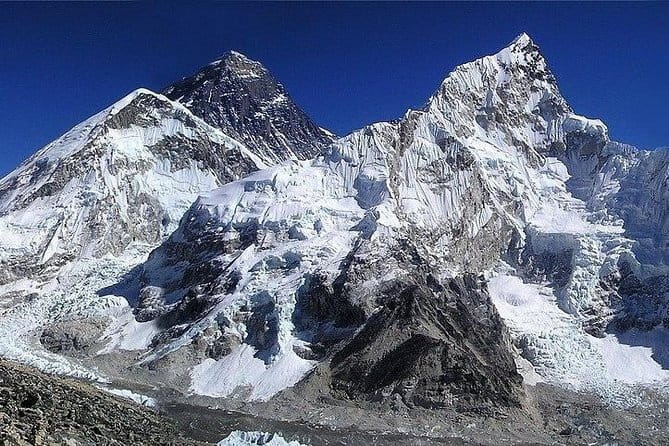
- The trek reaches 17,598 feet: Everest Base Camp is the main goal, but Kala Patthar offers the broader mountain panorama.
- Two acclimatization stops matter: You spend rest days around Namche Bazaar and Dingboche rather than rushing uphill.
- The package covers the costly essentials: Return Kathmandu to Lukla flights, permits, guide, meals, accommodation, taxes, and a first aid kit are included.
- The group is capped at 12 people: That is small enough for personal attention without paying for a private trek.
- Extras add up: Drinks, bottled water, showers, Wi-Fi, snacks, porter service, tips, visas, and international flights are not included.
- The schedule is flexible by nature: Lukla flights and mountain weather can affect timing, even when the planned itinerary is clear.
What the $1,420 price really covers
At $1,420 per person, this trek is priced as a full-service route rather than a bare-bones guiding arrangement. You receive 12 breakfasts, 11 lunches, and 11 dinners during the walking section, along with trekking lodge accommodation and a government-licensed guide.
The package also includes return flights between Kathmandu and Lukla, departure taxes, Everest National Park and TIMS documents, government charges, local taxes, and official expenses. Those inclusions matter because permits, flights, and logistics can be awkward to arrange separately.
You still need to budget for several daily extras. Hot and cold drinks, coffee, tea, snacks, water, hot showers, Wi-Fi, porter service, tipping, Nepal’s entry visa, and international flights are excluded. If you want a porter, arrange and pay for that separately.
The value is strongest if you want one company handling the paperwork and route planning. It is less attractive if you already have a local guide, can arrange the Lukla flight yourself, or prefer to carry your own equipment. The average booking lead time is 52 days, which is a useful hint that you should not leave planning until the last minute.
More Everest Base Camp Treks in Kathmandu:
- Everest Base Camp Trek – 14 Days
★ 5.0 · 1,499 reviews - Everest Base Camp Trek
★ 5.0 · 842 reviews - Everest Base Camp Trekking
★ 5.0 · 485 reviews
Kathmandu arrival and the first night
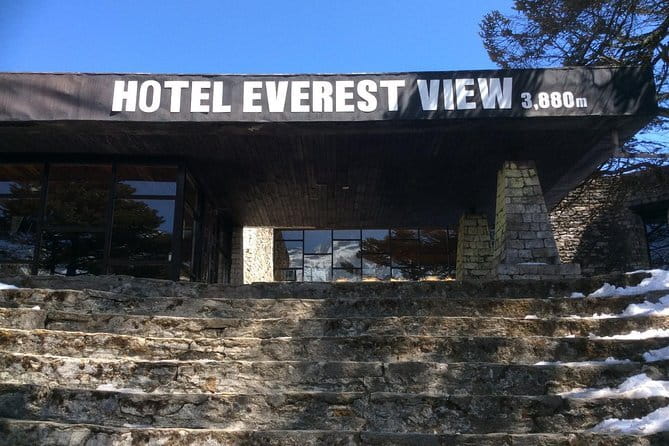
Your trip begins with airport pickup at Tribhuvan International Airport. Alpine Ramble Treks staff take you to your hotel, giving you a smoother start after a long international flight.
The first night is more than a place to sleep. It gives you time to meet the team, check your trekking arrangements, and get ready for an early flight. The exact hotel is described as the best available trekking arrangement, while the package also promises a night at a top Kathmandu hotel and a celebratory dinner after the trek.
The meeting point is in Thamel, Kathmandu. This central area is useful for transport and pre-trek preparation. You should still confirm the precise pickup details and hotel location after booking, since the supplied schedule uses general wording.
Day 2: The short flight to Lukla
The flight from Kathmandu to Lukla takes about 35 minutes. It is a scenic start, but the real value is practical: Lukla is the gateway to the Khumbu region, and flying avoids a long road journey before the walking begins.
At Lukla, you meet the trekking crew and begin walking through the home region of the Sherpa people. The first day includes about two hours of acclimatization walking, which is a sensible introduction to the altitude and trail rhythm.
Lukla itself can feel like a jolt after Kathmandu. One account described the Lukla accommodation as basic, so you should arrive ready for simple facilities rather than city-hotel comfort. The tradeoff is that you are immediately in the mountain region, with no wasted road transfer.
Day 3: Forest paths and the first Everest view
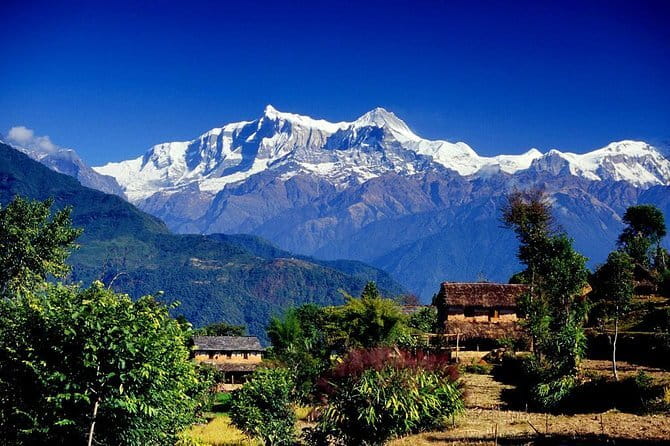
The trail follows the Dudh Koshi River and passes through pine forest. You cross the river and walk through a greener part of the route before reaching views of Everest, Kusum Kanguru, and other peaks.
This is a rewarding early day because the trek begins to feel like a journey, not just a series of transfers. The forests, bridges, villages, and river valleys offer more variety than the high, rocky section still ahead.
The walking is not technical, but you should not mistake the lower elevation for an easy holiday stroll. The route rises and falls, and the cumulative effort begins early. Keep your pace steady and save energy for the coming days.
A few more treks around Kathmandu worth a look
- Annapurna Circuit Trek with Tilicho Lake
★ 5.0 · 368 reviews - Everest Base Camp Trekking – 13 Day
★ 5.0 · 365 reviews - Everest Base Camp Trek
★ 5.0 · 350 reviews - Manaslu Circuit Trek
★ 5.0 · 292 reviews
Days 4 and 5: Namche Bazaar and the first acclimatization test
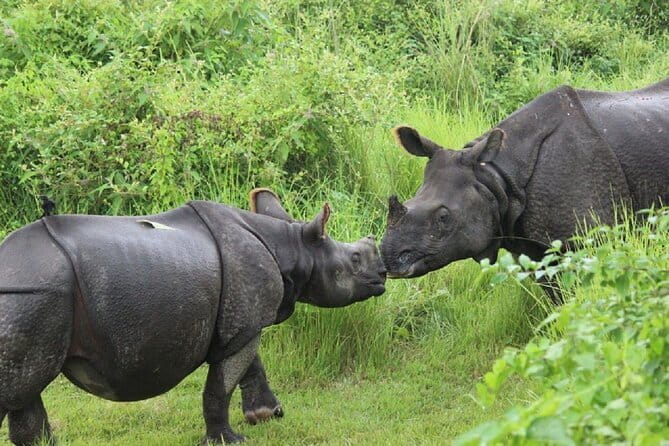
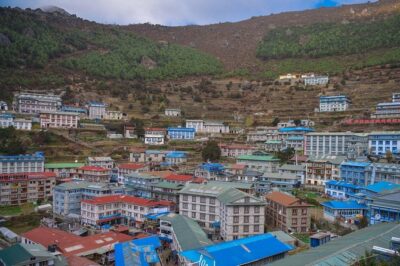
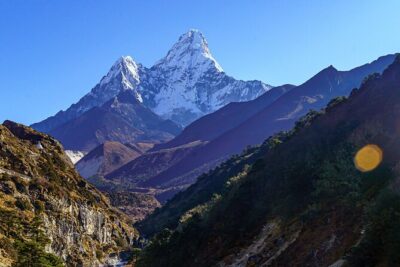
The Namche area is one of the most important sections of the trek. Day 4 is reserved for acclimatization, with a climb to a lookout for views of Everest, Lhotse, Cholatse, Thamserku, Kwangde, Kangtega, and Ama Dablam.
The point is not to spend the day in bed. A controlled walk to a higher viewpoint helps your body adjust, then you return to sleep at a lower elevation. You also get time to experience the Sherpa mountain community and the shape of the valley before heading farther up.
Day 5 follows the main Everest route, including a descent to the Dudh Koshi River and an ascent through rhododendron country. This section reminds you that the trail is rarely flat for long. You lose height only to regain it, a pattern that can be tiring but keeps the walking varied.
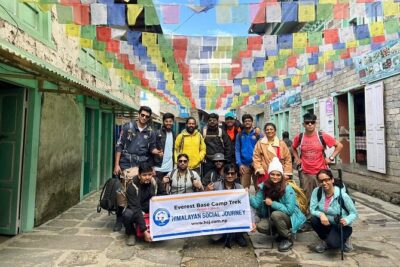
Namche is also where group dynamics become important. With a maximum of 12 people, you have a fair chance to get to know the others without being swallowed by a large tour. Guides can monitor the group more easily, although everyone still needs to speak up if altitude symptoms appear.
Day 6: Tengboche and the monastery setting
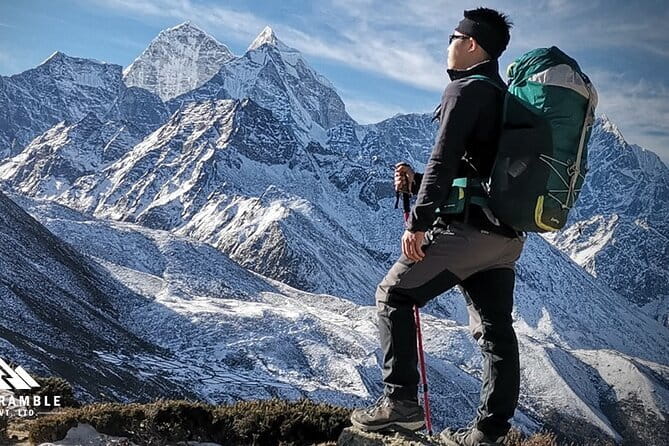
The morning view around Tengboche is one of the most atmospheric parts of the route. The monastery and surrounding peaks look especially striking in the early light, and the trail continues through forest before opening toward higher mountain scenery.
Tengboche is valuable because it combines culture with scenery. You are not simply walking from lodge to lodge. The monastery gives the route a strong Sherpa and Buddhist character, while the mountain views keep changing as you gain height.
The forest section also provides a welcome contrast to the exposed terrain above. You should enjoy it while it lasts, because the trail becomes more open and rugged as you move toward Dingboche and Lobuche.
Day 7: Rest and acclimatization in Dingboche
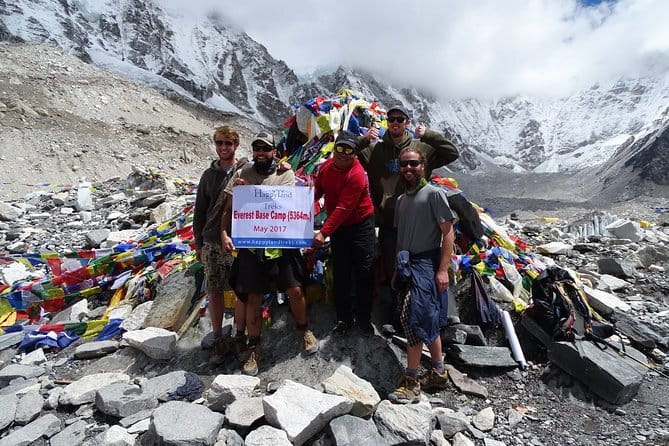
Dingboche is another planned rest stop. It is a common base for people heading toward Everest, Ama Dablam, or Imja Tse, and the village is surrounded by stone-walled fields used to protect crops such as barley and potatoes.
This rest day is one of the strongest parts of the schedule. The highest portion of the trek comes soon, so taking time here is far wiser than trying to gain altitude every day. You may use the day for a short uphill walk, then return to the village to rest.
The accommodation is in trekking lodges, not luxury hotels. Expect simple rooms and shared facilities in parts of the route. The package includes meals, but food choices can become repetitive. Simple menus are normal at altitude, and hot drinks and snacks cost extra.
Day 8: Memorials near Chukpo Lari
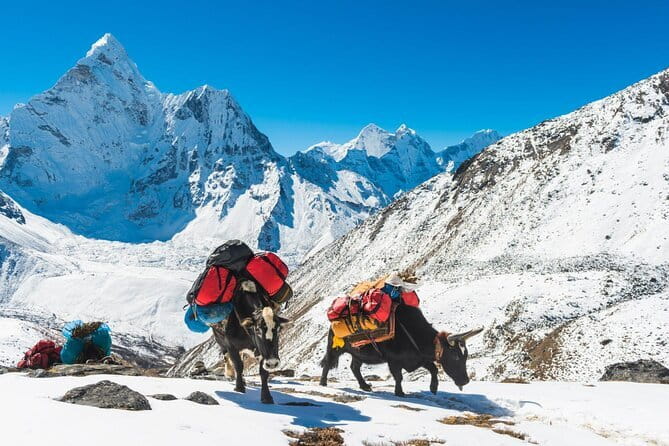
From Dingboche, the trail climbs gradually to Duglha before making a steeper ascent to the ridge at Chukpo Lari. Here you pass memorials honoring climbers who died on Mount Everest.
This is a serious and moving part of the trek. The memorials place the risks of high-altitude climbing in clear view, even though this route is a trekking journey rather than a technical mountaineering expedition.
The day also marks a change in the feel of the route. The higher you go, the more the air, cold, effort, and exposed terrain matter. Move slowly, drink regularly, and follow your guide’s advice. The included first aid kit and Diamox are useful provisions, but they are not a substitute for proper medical judgment or travel insurance.
Day 9: Everest Base Camp at 17,598 feet
The walk from Lobuche leads across a relatively flat meadow before following the Khumbu Glacier. You then climb onto the lateral moraine and continue toward Everest Base Camp.
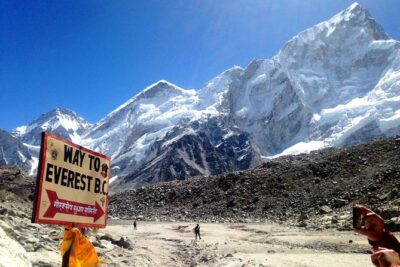
This is the emotional high point of the trek. Reaching 17,598 feet, or 5,364 meters, is a major physical achievement, and the glacier scenery gives the approach a rugged, dramatic character.
Base Camp itself is not a comfortable sightseeing stop. Conditions can be cold, windy, crowded, and rough, and the view of Everest is not always the broadest from this position. The achievement is in reaching the site at the foot of the world’s highest mountain, then returning safely to lower ground.
You should keep your expectations practical. The mountain views depend on weather and visibility, and the trail can be tiring after several days of altitude. That is why the next day’s early start and descent are important.
Day 10: Kala Patthar at sunrise
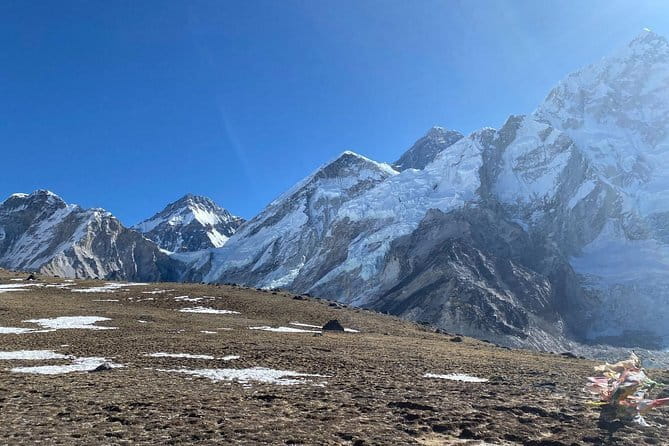
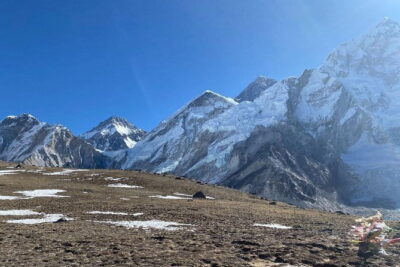
You wake early for the climb to Kala Patthar, a roughly two-hour ascent from the overnight area. The summit sits below Mount Pumori and offers a 360-degree view toward Everest, Nuptse, Lhotse, and the surrounding Himalayan peaks.
For many people, Kala Patthar provides the best mountain viewpoint of the trip. Everest Base Camp is the famous destination, but Kala Patthar is where the wide sunrise panorama often makes the biggest visual impression.
The early start has a cost. It can be cold, dark, and physically demanding, especially after Base Camp the day before. Still, this is the day I would protect most carefully in the schedule. The sunrise is worth the effort when weather conditions cooperate.
After the viewpoint, the route begins its long return. Descending is easier on the lungs, but tired knees and feet can make it demanding in another way.
Days 11 and 12: Returning through Sherpa villages
The trail descends through Sherpa villages toward the Dudh Koshi River. You pass through Dingboche, climb back toward Tengboche, then continue down through Jorsalle, Monjo, Benkar, Phakding, and smaller settlements.
The return route uses much of the same trail, but it does not feel identical. You now recognize the villages, bridges, forests, and river crossings, and the lower altitude usually brings more energy.
Suspension bridges appear again along the Dudh Koshi. They are a practical part of daily life in the valley, not just scenic photo stops. Take care on the crossings, particularly if the group is moving quickly or the trail is crowded.
The descent is also a good time to notice details missed on the way up. You may find yourself enjoying the trees and village life more after the stark high-altitude section.
Day 13: Flight back to Kathmandu
The final listed day brings a flight from Lukla to Kathmandu and free time in the capital. The schedule is described as a 13-day activity, while the product is sold as a 14-day trek. That difference likely reflects the arrival day, but you should confirm the exact number of nights and the final departure plan before paying for international flights.
A free day in Kathmandu is useful after the trek. It gives you time to rest, enjoy the included celebration dinner and hotel night, and handle any delayed luggage or schedule changes. The return flight from Lukla can be affected by mountain weather, so avoid planning an international connection immediately afterward.
Guides, group size, and support
The licensed guide is central to the experience. Names associated with especially positive service include Dil, the owner, and guides such as Sujal, Amer, Dhower, Nir, Laxman, Ram, Saugat, and Subash. Guide assignments can vary, but the pattern is clear: attentive support and practical help are major strengths of this company.
The group limit of 12 is a useful middle ground. You get companionship and a shared experience, but the group should remain small enough for the guide to notice problems. Solo walkers can also request a local porter, though that costs extra.
Emergency rescue is included only as an operation funded by travel insurance. You should treat comprehensive travel insurance as essential and check that it covers high-altitude trekking and evacuation. The supplied information does not state that insurance itself is included.
Who should book this trek?
I would recommend this trip to someone who wants Everest Base Camp without arranging every flight, permit, lodge, meal, and guide independently. It suits people who accept basic mountain accommodation and who are comfortable with a moderate physical fitness requirement.
I would hesitate to recommend it to anyone expecting a luxury lodge holiday, a private room every night, or a relaxed sightseeing pace. The route is long, high, and tiring. You also need to accept that hot showers, Wi-Fi, drinks, water, snacks, porter service, and tips cost extra.
The package is particularly useful for first-time high-altitude trekkers who want a planned acclimatization schedule and a guide close at hand. Families and small groups can also benefit, and one guide was praised for making the route manageable for teenagers aged 15 and 17.
Should you book the Everest Base Camp trek?
Book it if you want the classic Everest route with the major logistics handled for you. The strongest reasons are the two acclimatization days, return Lukla flights, included meals and permits, small group size, and the combination of Base Camp with Kala Patthar.
Go in with realistic expectations. You will pay extra for everyday comforts, lodges may be plain, food can repeat, and weather can disrupt flights. If you pack for cold, walk patiently, buy suitable insurance, and leave spare time after Lukla, the $1,420 price offers solid value for a demanding but well-supported Himalayan trek.
FAQ
How long is the Everest Base Camp trek?
The experience is sold as a 14-day trek, while the listed activity duration is approximately 13 days. The schedule includes arrival in Kathmandu, the trek, the return flight from Lukla, and free time in Kathmandu.
What altitude does Everest Base Camp reach?
Everest Base Camp is listed at 17,598 feet, or 5,364 meters, above sea level.
Are flights from Kathmandu to Lukla included?
Yes. The package includes round-trip flights between Kathmandu and Lukla, including departure taxes.
Are meals included during the trek?
Yes. The package includes full-board meals during the trek, with 12 breakfasts, 11 lunches, and 11 dinners listed.
Is accommodation included?
Yes. Accommodation at trekking lodges during the trek is included, along with a Kathmandu hotel stay and a celebratory dinner described in the tour information.
Is a guide included?
Yes. A professional, experienced, friendly, government-licensed guide is included.
Is porter service included?
No. A local porter is available if needed, but porter service is not included in the stated price.
What expenses are not included?
International flights, Nepal entry visa fees, drinks, water, snacks, hot showers, Wi-Fi, personal expenses, porter service, and tips are not included.
How large is the group?
The group can include a maximum of 12 people.
Recently added around Kathmandu
- Ghorepani Poon Hill Trek★ 5.0 · 16 reviews
- Private Manaslu Circuit Trek at Himalayas★ 5.0 · 3 reviews
- Amazing 1 Day Trekking Experience in Kathmandu Nepal★ 5.0 · 24 reviews
- Ghorepani Poonhill Trek★ 5.0 · 5 reviews
- Upper Mustang Trekking★ 5.0 · 2 reviews
- Upper Mustang Trekking★ 3.0 · 2 reviews
- Upper Mustang Trekking★ 5.0 · 4 reviews
- Upper Mustang Trek★ 5.0 · 5 reviews
Everest Base Camp Treks, compared.
Browse the lists this tour appears in