
REVIEW · KATHMANDU
Everest Base Camp Trek
The mountains begin before the trail does. This 14-day Everest Base Camp trek combines Kathmandu logistics, short domestic flights, lodge stays, and a private guide-led walk through the Khumbu region. I like the private format, which lets you move at a pace suited to your group rather than chase a fixed pack. I also like that the price includes meals, permits, flights, accommodation, a guide, and porter support.
The main caution is the physical demand. This is not a scenic stroll with a few uphill sections. You will walk for several hours on most trekking days, reach nearly 18,000 feet at Everest Base Camp, and face long days such as the 14 to 15 kilometer return from Gorakshep. The itinerary also begins early, with a 2:15 a.m. meeting time for the drive toward Ramechap.
Still, the excellent preparation and guide support can make a huge difference. The strongest praise focuses on smooth organization, quick communication from Ganga, and guides such as Ram, Shyam, Vishma, Paban, and Ramesh, who helped people manage both the physical strain and the practical details. At $1,790 per person, this is a serious purchase, but it covers many costs that can quickly add up on a Himalayan trek.
Key Things to Know Before You Book
- Private guiding lets you set the rhythm: Your group has its own guide rather than being tied to a large public departure.
- The high point is a demanding two-part day: You trek from Gorakshep to Everest Base Camp and return, covering 14 to 15 kilometers in about eight hours.
- Two acclimatization days are built in: The hikes to Everest View Hotel and Nagarjun Hill help break up the steady climb.
- Flights use Ramechap and Lukla: The journey includes transfers between Kathmandu, Ramechap, and the mountain airstrip.
- Porter support is shared: One porter is provided for every two trekkers, with a maximum load of 25 kilograms.
- The package covers the big essentials: Meals, permits, domestic flights, lodge accommodation, guide services, insurance for trekking staff, and two Kathmandu hotel nights are included.
Kathmandu to Lukla: A Very Early Start
Your first day is for arriving in Kathmandu. Airport pickup by car is included, along with two nights at a three-star hotel in the city. That first night matters because the next morning begins at 2:15 a.m., when you drive to Ramechap for the flight to Lukla.
This route may feel roundabout, but it is part of the current travel arrangement for the trek. Your package includes the drive, transfers, and round-trip flight via Ramechap, so you are not left to arrange this complicated start yourself.
From Lukla, you walk to Phakding. The distance is about eight kilometers, with roughly three hours on foot. At 8,699 feet, Phakding gives you a manageable opening day rather than an immediate endurance test.
The early departure is the first major practical issue. You should be ready for little sleep, airport-style waiting, and a full transition from city roads to mountain trails in a single morning. That is one reason the included pickup and guide support are useful.
More Everest Base Camp Treks in Kathmandu:
- Everest Base Camp Trek – 14 Days
★ 5.0 · 1,499 reviews - Everest Base Camp Trekking
★ 5.0 · 485 reviews - Everest Base Camp Trekking – 13 Day
★ 5.0 · 365 reviews
Phakding to Namche Bazaar, 10 to 12 Kilometers
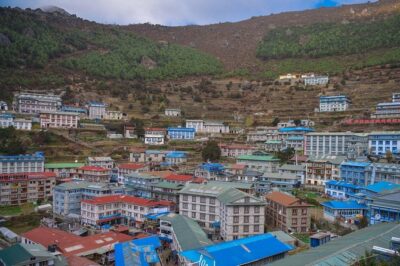
Day three takes you from Phakding to Namche Bazaar, the main trading center of the Khumbu region. The walk covers 10 to 12 kilometers and takes about six hours, reaching 11,283 feet.
This is where the trek begins to feel serious. The route is longer than the opening walk, and the gain in altitude becomes more noticeable. Namche is not just a stopping point. It is the place where you begin to adjust to thinner air, colder mornings, and the daily routine of walking, eating, resting, and walking again.
The included lodge accommodation is described as the best available twin-sharing option. Private bathrooms with hot showers are included at Phakding, Namche, and Lukla, which is a useful comfort at the start and end of the trek. Do not assume the same bathroom arrangement throughout the route, since the package specifically names those three locations.
Namche Acclimatization and the Everest View Hotel
Day four is set aside for acclimatization. You hike to the Everest View Hotel at 12,995 feet, covering about three to four kilometers in three to four hours.
This is a short day by distance, but it is not an empty day. The purpose is to gain altitude during daylight and then return to sleep lower in Namche. That pattern gives your body time to adjust before the route climbs farther into the Khumbu.
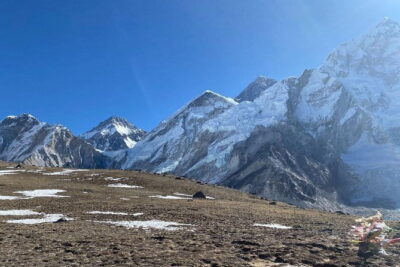
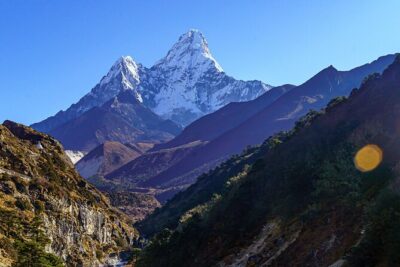
The viewpoint is also one of the first places where the scale of the mountains becomes clear. The trek is designed to show several major Himalayan peaks, not just Everest itself. You should treat this hike as both a scenic outing and an important part of the safety plan.
Tengboche and Dingboche: Temples, Views, and Thin Air
The trail continues to Tengboche on day five. You walk 10 to 11 kilometers in about five hours and reach 12,660 feet.
Tengboche is one of the memorable stops because of its mountain setting and strong cultural character. The itinerary does not list a separate temple visit, so you should not treat that as a guaranteed tour feature, but the village is an important point in the route and offers a change from the lower settlements.
Day six moves on to Dingboche, at 14,464 feet. The distance is 11 to 12 kilometers, with about five hours of walking. At this height, steady pacing matters more than speed. A private guide can adjust breaks and walking rhythm to suit your group, which is one of the clearest benefits of booking a private trek.
You are still climbing, but the day lengths remain moderate. That is helpful because the challenge comes from repeated days at altitude, not simply from one huge ascent.
A few more treks around Kathmandu worth a look
- Annapurna Circuit Trek with Tilicho Lake
★ 5.0 · 368 reviews - Everest Base Camp Trek
★ 5.0 · 350 reviews - Everest Base Camp Trek -14 Days
★ 5.0 · 321 reviews - Manaslu Circuit Trek
★ 5.0 · 292 reviews
Nagarjun Hill and the Second Acclimatization Day
Day seven is another acclimatization day. You hike to Nagarjun Hill and return, walking five to six kilometers in four to five hours.
The shorter distance does not make this a throwaway day. The route takes you higher during the day while allowing you to sleep again in Dingboche. The planned rest also gives you time to judge how your body is responding.
The supplied details describe this trek as suitable for people with a strong fitness level. That is fair. Even if you train well, altitude can affect you in ways that ordinary fitness does not predict. A guide can help you stay on the planned route and notice when the day needs to slow down, but no guide can remove the effects of high altitude.
Lobuche to Gorakshep: The Trail Gets Serious
On day eight, you walk to Lobuche, reaching 16,105 feet. The distance is 11 to 12 kilometers and takes about five hours.
At this point, the views become more important because the walking becomes more demanding. The air is thinner, the route is high, and each climb asks more from your legs and lungs. Your best strategy is simple: walk slowly, drink regularly, and keep your day pack light.
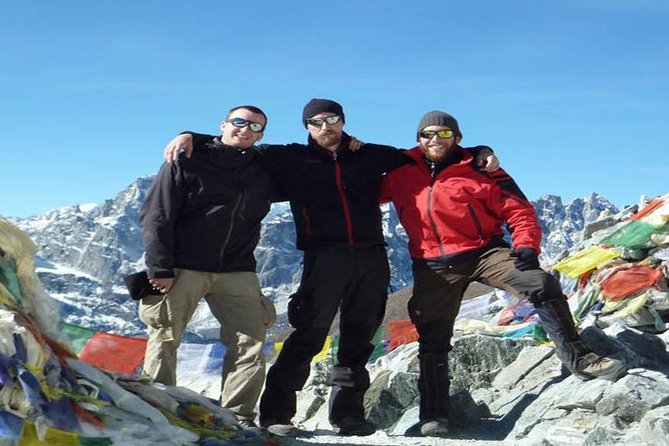
Day nine is the hardest and most important day for many people. You trek from Gorakshep to Everest Base Camp and return to Gorakshep. The total distance is 14 to 15 kilometers, and the day takes about eight hours. Everest Base Camp sits at 5,364 meters, or 17,594 feet.
This is a long out-and-back walk at serious altitude. You will not be staying overnight at Base Camp. The lodge base is Gorakshep, and you return there after reaching the destination.
That detail matters when you picture the day. The achievement is reaching Base Camp, but the return walk is still ahead of you. Your guide and porter support are most valuable here, when tired legs, cold conditions, and altitude can turn a straightforward route into a real test.
Kala Patthar and the Long Return Toward Pheriche
Day ten starts with a hike to Kala Patthar, followed by a trek back to Pheriche. The listed walking distance is 13 to 14 kilometers, taking about seven hours. The itinerary gives Kala Patthar as 11,283 feet, which appears inconsistent with its position in the high route, so you should confirm the exact elevation with the operator before departure.
The day remains demanding even though you are now heading lower. A descent is not always easy. Knees and feet take plenty of strain, especially after the long Base Camp day.
Pheriche is listed at 4,210 meters, or 13,810 feet. Reaching it gives you a meaningful change in altitude and begins the return phase of the trek. You should still pace yourself. Many people make the mistake of relaxing too early once the highest point is behind them.
Namche to Lukla: The Final Long Walking Days
Day eleven takes you back to Namche. The distance is 14 to 15 kilometers and takes around seven hours. You will retrace sections of the route, but the return view is not the same as the outward journey. You now know what the trail has asked of you, and the lower altitude can make the walking feel more manageable.
Day twelve is the longest listed walking day by distance. You trek from Namche to Lukla, covering 18 to 19 kilometers in about seven hours.
This is a substantial finish. Your legs may be tired, and the final approach should not be treated as an easy walk to the airport. The reward is a last night in the mountain region, with a hot shower available in Lukla according to the package details.
Day thirteen brings the return flight to Ramechap, followed by the drive to Kathmandu. Flights in mountain regions depend on conditions, so keeping your final international departure separate from the trek schedule is sensible. The itinerary includes one departure day after your return to Kathmandu, but you should still avoid planning a tight same-day international connection.
What the $1,790 Price Really Covers
The price includes far more than the walking itself. You receive airport pickup and drop-off, two nights in a three-star Kathmandu hotel, round-trip flights via Ramechap and Lukla, transfers, lodge accommodation, all trek meals, permits, government taxes, and office service charges.
During the trek, breakfast, lunch, dinner, and tea or coffee are included. Seasonal fruit is also provided. A professional English-speaking certified guide and porter are included, with one porter assigned for every two trekkers. The porter package includes the porter’s food, accommodation, insurance, and related costs.
You also receive a trekking map, trip achievement certificate, first aid medical kit, and complimentary waterproof windproof duffel or kit bag. Taken together, these inclusions give the price solid value, especially if you prefer one booking that handles the major moving parts.
The exclusions still matter. You pay for international flights, Nepal’s entry visa, drinks, snacks, personal purchases, hot showers during the trek, personal equipment, travel insurance, and tips. The stated visa cost is $40 for 30 days, payable on arrival at the airport.
Packing for Cold Nights and a Light Porter Load
The equipment list is long because conditions change sharply along the route. You need hiking boots with spare laces, warm socks, gloves, thermal layers, a fleece layer, waterproof shell clothing, a warm sleeping bag, sunglasses with UV protection, a headlamp, water bottles, trekking poles, and a small first aid kit.
A day pack of about 20 to 22 liters is recommended. The operator supplies a duffel bag, but you also need a separate large bag or suitcase for items left in Kathmandu.
The porter arrangement has a firm practical limit: one porter for two trekkers, carrying up to 25 kilograms maximum. Pack light and share the load fairly. The notes also point out that trekking equipment can be purchased in Kathmandu, including locally made and imported items, so a forgotten piece of gear may be replaceable before the trek begins.
Bring small useful items that are easy to overlook: plastic bags to protect clothing, toilet paper, wet wipes, hand sanitizer, earplugs, spare batteries, and a lock. Drinks and snacks are not included, so budget for them separately.
How the Guiding and Support Affect the Experience
The most repeated praise centers on organization and personal care. Communication from Ganga is described as quick and helpful, particularly for people traveling alone or preparing for their first Himalayan trek.
Specific guides receive strong attention. Ram is praised for being well prepared and good company, Shyam for staying attentive, Vishma for steady support, and Paban for helping make a demanding trek manageable. Other trips included guides and staff named Ramesh, Ram Saran, Ramkrishna, Dipesh, Bikas, Sabin, Kadji, Amir, Melon, and Sandip.
The useful lesson is not simply that the staff are friendly. It is that the guide can affect whether the trek feels orderly or chaotic. You want someone who keeps track of the route, pace, meals, accommodation, and group needs while you focus on walking.
The private format is especially useful for a small group with mixed fitness levels. It does not make the route easy, but it can reduce the pressure to keep up with strangers.
Who Should Book This Trek
You should consider this trek if you want Everest Base Camp with a planned route and support from Kathmandu to departure. It suits fit, active people who are comfortable with long walking days, basic lodge accommodation, cold weather, and high-altitude conditions.
It is also a strong choice if you value having meals, flights, permits, and transport arranged in one package. Solo people can book, but the minimum booking requirement is two people, and the maximum is 15.
You should think twice if you dislike early starts, long uphill walks, shared twin rooms, or uncertainty around mountain flights. Travel insurance is not included, and you are responsible for having suitable personal equipment.
Should You Book the Everest Base Camp Trek?
I would book this trek if I wanted a well-organized private route with strong guide support and clear inclusions. The itinerary provides two acclimatization days, covers the main Everest Base Camp route, and includes the expensive logistical pieces that are easy to underestimate.
I would not book it casually. The 14 to 15 kilometer Base Camp day and the 18 to 19 kilometer walk to Lukla require preparation. If you train, pack intelligently, allow time for the altitude, and accept that lodge comforts are limited, the $1,790 cost offers good value. If you want a soft adventure with flexible comfort, choose an easier Himalayan trip instead.
Free cancellation is available up to 24 hours before the start time. Poor weather or failure to meet the minimum number of participants can also lead to a date change, alternative experience, or full refund.
FAQ
Is this Everest Base Camp trek private?
Yes. This is a private activity, so only your group participates. The booking requires at least two people and allows up to 15 people.
How long does the trek take?
The full program lasts approximately 14 days, including arrival and departure in Kathmandu, the flights to and from Lukla via Ramechap, and the walking route.
What is the highest point reached?
Everest Base Camp is listed at 5,364 meters, or 17,594 feet. The route also includes a hike to Everest View Hotel and an acclimatization hike to Nagarjun Hill.
Are flights to Lukla included?
Yes. Round-trip flights to and from Lukla via Ramechap are included, along with the required transfers between Ramechap and Kathmandu.
Are meals included?
Breakfast, lunch, dinner, and tea or coffee are included during the trek. Seasonal fruit is also provided. Drinks, snacks, and personal expenses are not included.
Is accommodation included?
Yes. The package includes the best available twin-sharing lodge accommodation during the trek and two nights at a three-star hotel in Kathmandu. Private bathrooms with hot showers are provided at Phakding, Namche, and Lukla.
Is a porter included?
Yes. One porter is included for every two trekkers. The porter can carry up to 25 kilograms, and the package includes the porter’s food, accommodation, and insurance.
Do I need travel insurance?
Yes. Travel insurance is not included in the price, so you must arrange it yourself. Personal trekking equipment, international airfare, Nepal’s entry visa, drinks, snacks, and tips are also excluded.
Recently added around Kathmandu
- Ghorepani Poon Hill Trek★ 5.0 · 16 reviews
- Private Manaslu Circuit Trek at Himalayas★ 5.0 · 3 reviews
- Amazing 1 Day Trekking Experience in Kathmandu Nepal★ 5.0 · 24 reviews
- Ghorepani Poonhill Trek★ 5.0 · 5 reviews
- Upper Mustang Trekking★ 5.0 · 2 reviews
- Upper Mustang Trekking★ 3.0 · 2 reviews
- Upper Mustang Trekking★ 5.0 · 4 reviews
- Upper Mustang Trek★ 5.0 · 5 reviews
Everest Base Camp Treks, compared.
Browse the lists this tour appears in