
REVIEW · KATHMANDU
Everest Base Camp Trek – 14 Days
The Himalayas demand your full attention. This 14-day Everest Base Camp trek combines a famous route with small-group support, porters, permits, meals, and domestic flights, so you can focus on walking rather than sorting out mountain logistics. I like the built-in acclimatization days in Namche Bazaar and Dingboche, and I like that the team includes a first-aid-trained guide plus a porter for every two people.
The main drawback is the physical strain. You reach 5,365 meters at Base Camp and climb to 5,555 meters at Kala Patthar, with several long trekking days and simple mountain lodging. Flight plans can also shift between Kathmandu and Manthali Airport during busy seasons, so you need patience and flexible travel plans.
Key points before you book
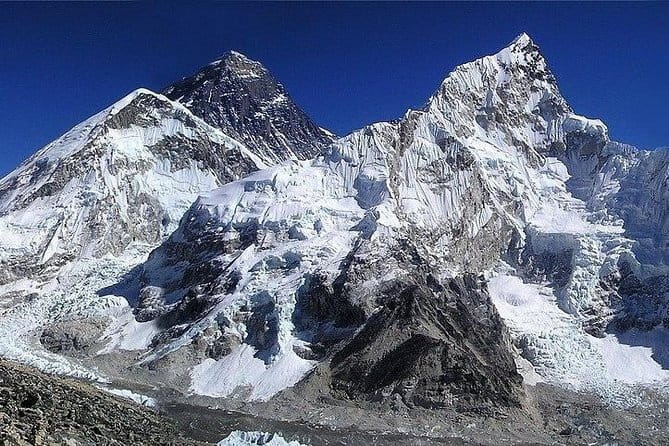
- High point: Everest Base Camp at 5,365 meters, followed by the harder Kala Patthar climb at 5,555 meters.
- Built-in rest: Full acclimatization days in Namche Bazaar and Dingboche help you adjust without rushing upward.
- Practical support: A licensed English-speaking guide, porters, filtered trail water, permits, meals, and staff insurance are included.
- Small-group format: The maximum group size is 14, with an intimate feel compared with a large coach-style tour.
- Real cost: The $1,800 price includes a great deal, but you still need insurance, personal gear, drinks, tips, visa costs, and some Kathmandu meals.
- Best preparation: You need moderate fitness, a careful approach to altitude, and tolerance for basic guesthouse accommodation.
What the $1,800 price really covers
At $1,800 per person, this is not a shoestring walk. It is also not an all-inclusive holiday. The value comes from bundling the expensive and important pieces of a high-altitude trek into one package.
The price includes airport and hotel transfers, two nights in a three-star Kathmandu hotel, domestic flights between Kathmandu and Lukla, accommodation during the trek, meals on the trail, permits, a licensed guide, porters, staff costs, filtered water, and an emergency first-aid setup. That removes a large amount of planning from your shoulders.
The porter arrangement is especially useful. One porter serves two people for 11 days, so you can carry a daypack rather than haul your full luggage up steep paths. You should still pack carefully, since the domestic flight luggage allowance is 15 kilograms.
The price does not include international airfare, Nepal’s visa, travel insurance, personal trekking equipment, alcoholic or soft drinks, lunch and dinner in Kathmandu, or tips. High-altitude rescue and evacuation insurance is essential, not an optional extra. The package includes emergency arrangements, but your insurance needs to cover the cost of evacuation.
The listed price is based on two people booking together. It can also apply to a solo booking if you join an existing group and share accommodation. If no one is available to share your room, or if you want a private departure, a $250 single surcharge may apply when you arrive in Nepal.
More Everest Base Camp Treks in Kathmandu:
- Everest Base Camp Trek
★ 5.0 · 842 reviews - Everest Base Camp Trekking
★ 5.0 · 485 reviews - Everest Base Camp Trekking – 13 Day
★ 5.0 · 365 reviews
Kathmandu arrival and the first practical briefing
Your trip begins at Tribhuvan International Airport, where an Ace the Himalaya representative meets you outside the terminal with a sign. A private vehicle then takes you to your hotel.
This first day is more than a simple transfer. It gives you time to recover from your flight, sort your gear, and get ready for the trail. You receive the company’s duffel, trekking map, sun hat, and other trip information as part of the package. The duffel is useful because you can leave unnecessary luggage in Kathmandu while taking only what you need into the mountains.
Kathmandu meals are not included at lunch and dinner, so budget separately for those. You also need to arrange your Nepal visa on arrival unless you have already secured one before flying.
Lukla flight logistics and the start of the trail
The flight to Tenzing-Hillary Airport in Lukla is short, scenic, and closely tied to the whole trek. During peak trekking periods, flights may operate from Manthali Airport in the Ramechhap district instead of Kathmandu because of air traffic congestion. That change can add road travel before the flight, so keep your schedule open.
Once in Lukla, the walking begins. The first stretch follows the Dudh Koshi River, with suspension bridges decorated by prayer flags. The route enters Sagarmatha National Park, and the scenery quickly shifts from airport-town activity to steep paths, river valleys, and Sherpa settlements.
The early walking days help set the rhythm of the trip. You are not simply marching toward Base Camp. You are adjusting to changing heights, carrying a small pack, and learning how your body responds to repeated climbs.
Namche Bazaar and the first acclimatization day
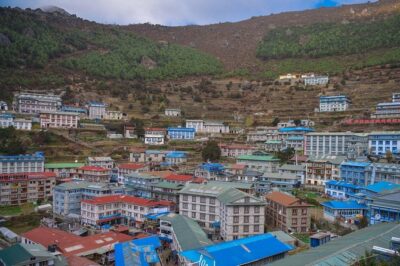
Namche Bazaar is one of the most important stops on the route. It is a major Sherpa trading town and the first place where the thin air becomes hard to ignore.
You spend an acclimatization day here rather than gaining more height immediately. The planned outing includes the Sherpa Museum, where you can learn about Sherpa customs and the mountain communities that support trekking and climbing in the region. This is a good example of why the schedule takes 14 days instead of forcing the route into a much shorter timetable.
The pause is practical, but it is also rewarding. You get a closer look at local culture instead of passing through every settlement at walking speed. The route’s Buddhist character becomes clear through prayer flags, mani stones, and monasteries.
The itinerary lists some long trekking days, but those times should be read as demanding full-day outings rather than a promise of nonstop walking. Your guide will set the pace and monitor the group. The small maximum group size helps here, since a guide can give more attention to individual needs than on a large departure.
A few more treks around Kathmandu worth a look
- Annapurna Circuit Trek with Tilicho Lake
★ 5.0 · 368 reviews - Everest Base Camp Trek
★ 5.0 · 350 reviews - Everest Base Camp Trek -14 Days
★ 5.0 · 321 reviews - Manaslu Circuit Trek
★ 5.0 · 292 reviews
Tengboche Gompa and the Buddhist heart of the route
From Namche, the trail follows the Dudh Koshi and reaches Tengboche at about 3,860 meters. The route includes river crossings, mountain views, and a climb through a changing highland setting.
Tengboche Gompa is one of the memorable cultural stops. The monastery contains religious images and Buddhist objects, and its setting gives the day more meaning than a simple climb from one lodge to another. The path also drops briefly to Debuche before crossing the Imja Khola and climbing toward Pangboche.
Pangboche is known for its mani stones, which add a visible spiritual layer to the route. You should take these moments seriously. The Everest trail is not only about reaching a famous point on a map. It passes through communities where religion, trade, farming, guiding, and mountain travel are closely linked.
Accommodation becomes simpler as you move higher. Lukla, Phakding, and Namche include guesthouses with attached toilets, but you should not expect the same arrangement throughout the trek. Mountain lodging is part of the challenge, and you should be ready for basic facilities.
Dingboche and the second acclimatization day
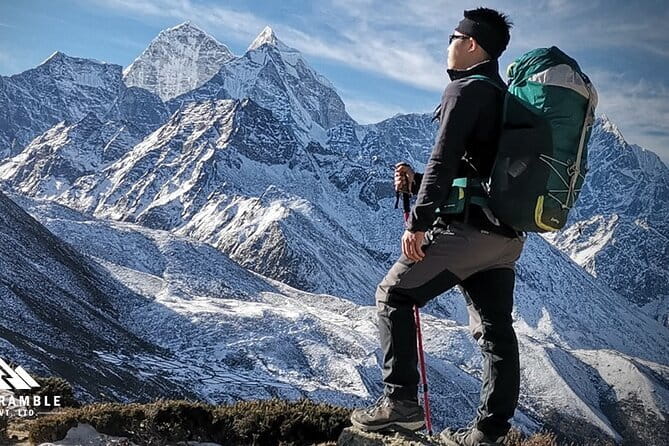
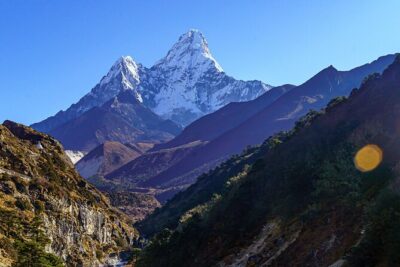
Dingboche is the next major altitude stop. After leaving Tengboche, you continue through Pangboche and climb toward the village, with views opening toward the higher peaks.
The following day is another full acclimatization day. Instead of pushing toward Base Camp, you hike to Nangkartshang Peak above Dingboche. This is a demanding but useful outing, since it lets you gain height during the day and return to sleep lower.
I like this feature of the schedule. A trek at these elevations should not be judged by how quickly it reaches Base Camp. The planned pauses give your body time to adjust, and they also create some of the best chances to stop, look around, and take in the mountains without rushing.
You should still be honest about your fitness. The tour asks for a moderate fitness level, but the terrain and altitude make that more serious than it sounds at sea level. Regular walking and stair training will help, but you cannot train away the effects of thin air. Listen to your guide and report symptoms early.
Lobuche, the memorials, and a more serious mood
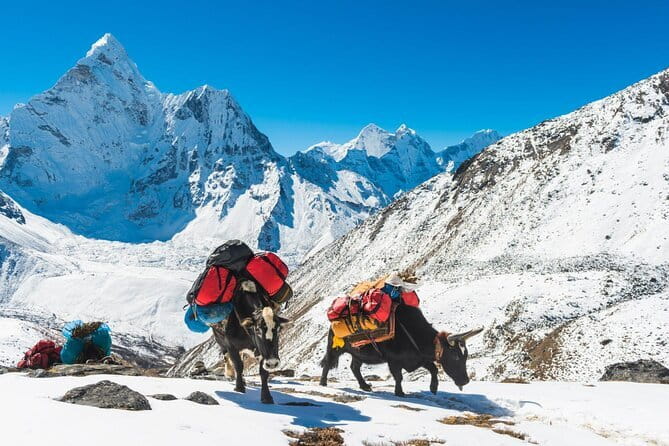
After Dingboche, the trail follows the lateral moraine of the Khumbu Glacier toward Lobuche. The terrain becomes more austere, and the route passes stone memorials honoring climbers who died on nearby peaks.
These memorials change the mood of the day. Everest is often presented as a dream destination, but the high mountains are dangerous places. The memorials remind you that the route has a human cost and that safety decisions matter more than speed or pride.
At Lobuche, the altitude and fatigue begin to shape the experience. Meals, water, rest, and clothing choices become increasingly important. Filtered water is provided using a Katadyn Pocket Water Filter, which reduces the need to buy bottled water along the route and cuts down on discarded plastic.
The included standard meals are breakfast, lunch, and dinner. You should not expect a restaurant menu at every stop, and hot drinks cost extra, but having meals organized is a major convenience after a long day outside.
Everest Base Camp at 5,365 meters
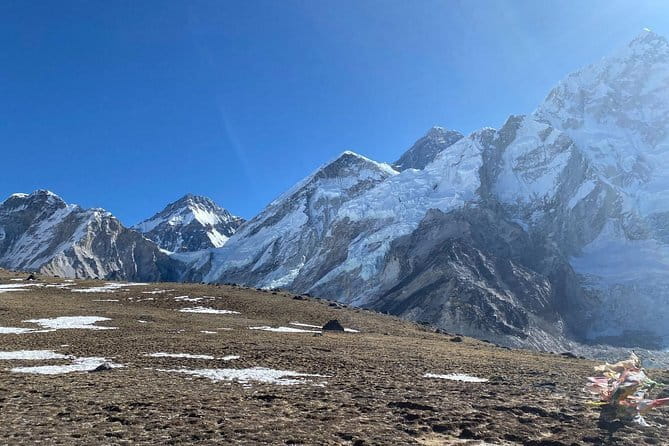
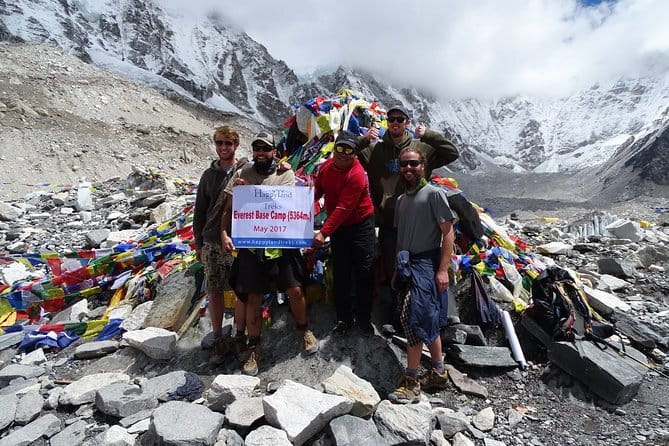
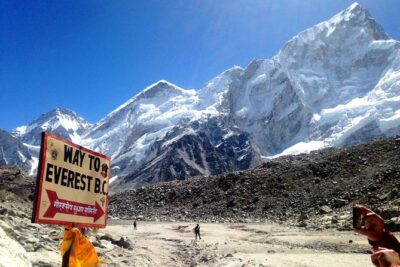
The walk to Everest Base Camp is the emotional center of the trip. You follow the Khumbu Glacier and climb toward the camp at 5,365 meters, the highest point on the standard route before the Kala Patthar excursion.
The approach is difficult. At this height, even a moderate incline can feel slow, and the glacier terrain demands steady attention. The Base Camp area also changes with the season. In spring, climbing activity may be visible, but the exact appearance and atmosphere depend on conditions.
Base Camp itself is not the summit of Everest, and you do not climb the mountain. That distinction matters. You reach the point used by mountaineering expeditions while experiencing the route on foot, with a guide and support team handling the practical details.
Expect limited time at the stop compared with the effort required to reach it. The achievement comes from the full journey, not from lingering at a single viewpoint.
Kala Patthar at 5,555 meters
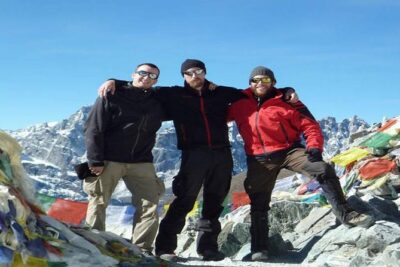
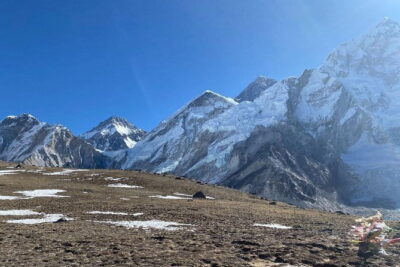
The climb to Kala Patthar is often the hardest day of the trek. At 5,555 meters, this small peak gives you the route’s finest mountain viewpoint, including a close look toward Everest and the surrounding high peaks.
The ascent is steep and tiring, especially after the Base Camp day. You should treat it as a separate achievement rather than an optional photo stop. The early start, cold conditions, and thin air can make the climb feel much harder than its distance suggests.
For many people, Kala Patthar is the visual high point. Base Camp gives you the name and the milestone. Kala Patthar gives you the broad mountain view. If you are deciding how to measure the trip’s rewards, count both.
The long return through Namche and Lukla
After Kala Patthar, the route turns downhill toward Namche Bazaar. The descent passes through Pangboche and Tengboche before reaching Namche in the afternoon.
Downhill walking sounds easy, but tired legs and uneven ground can make it tough. Trekking poles, careful foot placement, and a relaxed pace are useful here. You also regain some comfort as the air thickens and the villages feel more familiar.
The next day continues to Lukla, where the trek began. This final walking day gives the group time to reflect on the route and the personal effort involved. It is not just transport to the airport. You have spent days moving through valleys, villages, monasteries, bridges, and high passes on foot.
The return flight to Kathmandu takes about 35 minutes when operating as planned. Flights in mountain regions can be affected by conditions, so do not schedule an important international connection immediately after the domestic flight unless you have allowed plenty of time.
Guides, porters, and the human side of the trip
The strongest feature of this package is its staff support. Your guide is a government-licensed English speaker with first-aid training, and the company carries a first-aid kit while arranging emergency medical evacuation in the worst case.
Names that have been associated with recent departures include Kishor, Chris, Maddy, and Rajendra Khatry. Porters named Saman and Sher have also received warm praise for their humor, hard work, and attention to the group. Specific staff assignments can change, so treat these names as examples rather than guarantees.
The support is not only about carrying bags. A good guide sets a safe pace, explains the route, helps with altitude decisions, and manages the daily details when you are tired. Porters make it possible for you to enjoy the walking with a lighter load, but you should remember that the 15-kilogram flight limit and porter arrangement still require sensible packing.
Tips are not included, and tipping is expected. Set aside money for the guide and porters before you leave home.
Who should book this Everest trek?
This trip suits you if you want the classic Everest Base Camp route without arranging every permit, flight, lodge, meal, and porter yourself. It is especially useful for a first high-altitude trek, since the route includes planned acclimatization days and a trained guide.
It also suits solo bookers who want the social feel of a small group. The maximum size is 14, and the price may remain at the shared rate if you join an existing departure. Ask about the single surcharge before arrival if sharing is not possible.
This is not a good fit if you want luxury accommodation, a relaxed walking holiday, or a fixed schedule with no flight uncertainty. It is also a poor choice if you are unwilling to train, carry a daypack, manage cold conditions, or purchase high-altitude evacuation insurance.
Cancellation is flexible only up to a point. You can receive a full refund if you cancel at least six full days before the start, a 50 percent refund if you cancel two to six full days before, and no refund for cancellations less than two full days before the experience.
Should you book it?
I would choose this trek if you want a well-supported route to Everest Base Camp and value planning help more than private luxury. The included flights, permits, meals, porters, filtered water, staff costs, and acclimatization days make the $1,800 price reasonable for what is covered.
Before booking, confirm the flight departure airport for your dates, check the single-room surcharge, buy suitable insurance, and prepare for basic mountain lodging. If you do those things and approach the altitude with respect, this trip offers a clear path to one of the world’s great trekking goals without making you manage every detail alone.
FAQ
Where does the Everest Base Camp trek begin and end?
It begins at Tribhuvan International Airport in Kathmandu. After the trek and the return flight from Lukla, the activity ends back at the Kathmandu meeting point, followed by an airport transfer for departure.
How many people can join the group?
The maximum group size is 14 people. The price is based on two people booking together, though it can also apply to a solo booking if you share accommodation with another person in an existing group.
Is accommodation included?
Yes. The package includes two nights in a three-star, twin-share Kathmandu hotel with breakfast, plus guesthouse accommodation during the trek. Lukla, Phakding, and Namche have guesthouses with attached toilets.
Are meals included?
Breakfast, lunch, and dinner are included during the trek. Lunch and dinner in Kathmandu are not included. Alcoholic drinks, hot drinks, and cold drinks are also excluded.
What luggage allowance applies to the domestic flights?
The domestic flight luggage allowance is 15 kilograms. Porter service is included for 11 days, with one porter assigned for every two people.
Do I need travel insurance?
Yes. You need travel insurance that covers emergency high-altitude rescue and evacuation. That insurance is not included in the tour price.
Recently added around Kathmandu
- Ghorepani Poon Hill Trek★ 5.0 · 16 reviews
- Private Manaslu Circuit Trek at Himalayas★ 5.0 · 3 reviews
- Amazing 1 Day Trekking Experience in Kathmandu Nepal★ 5.0 · 24 reviews
- Ghorepani Poonhill Trek★ 5.0 · 5 reviews
- Upper Mustang Trekking★ 5.0 · 2 reviews
- Upper Mustang Trekking★ 3.0 · 2 reviews
- Upper Mustang Trekking★ 5.0 · 4 reviews
- Upper Mustang Trek★ 5.0 · 5 reviews
Everest Base Camp Treks, compared.
Browse the lists this tour appears in