
REVIEW · KATHMANDU
Private Manaslu Circuit Trek at Himalayas
Mountain country rewards steady walkers. This 13-day private Manaslu Circuit Trek takes you from Kathmandu through subtropical forest, Tibetan-influenced villages, alpine meadows, and glacial terrain beneath 8,163-meter Manaslu. I especially like the quiet route and the two planned acclimatization days, while the main caution is clear: crossing 5,160-meter Larkya La Pass requires solid fitness, patience, and proper altitude planning.
I also like the practical package. It includes the restricted-area permits, conservation permits, guide, tea house lodging, meals during the trek, ground transport, and useful cold-weather gear if needed. The drawback is that a porter is not included, and drinks, insurance, rescue costs, Kathmandu meals, tips, and international travel expenses are extra.
Key points to know before booking
- Larkya La reaches 5,160 meters: This is the hardest and highest day, with 7 to 8 hours of walking.
- Two acclimatization days are built in: One is near Manaslu Base Camp, and another is in Samdo.
- The route moves through nine trekking stops: You progress from Machha Khola to Jagat, Pewa, Namrung, Lho, Sama Gaon, Samdo, Larkya Phedi, and Bimthang before reaching Dharapani.
- A private group keeps the pace flexible: Only your own group participates, and the guide can adjust the rhythm within the planned route.
- The $1,500 price covers many major costs: Permits, guide, lodging, meals, buses, taxes, and some equipment are included.
- You must book with at least two people: This is a restricted trekking area, so solo booking is not accepted.
Why the Manaslu Circuit feels different
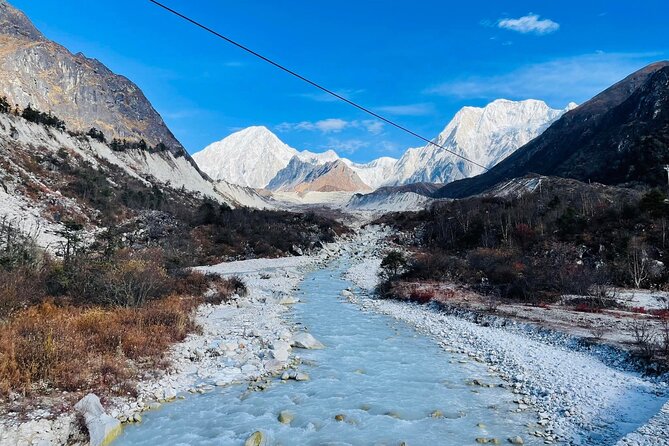
The Manaslu Circuit offers a quieter alternative to Nepal’s most famous trekking routes. You move from low river valleys into high mountain country, with the scenery changing every few days rather than staying fixed.
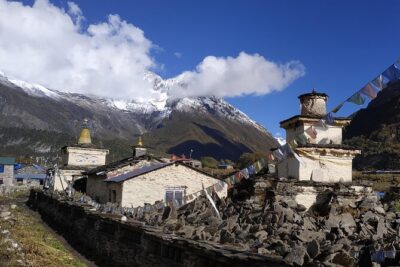
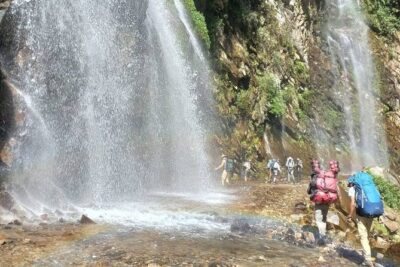
Early sections pass through forests, suspension bridges, waterfalls, hot springs, and narrow paths beside the Budhi Gandaki River. Higher up, the villages show clear Tibetan Buddhist influence through prayer wheels, mani walls, monasteries, and mountain architecture.
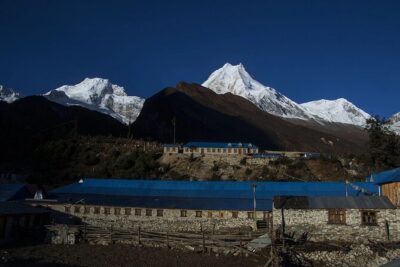
The route’s main prize is the view of Manaslu, the world’s eighth-highest mountain at 8,163 meters. You also get views toward Himalchuli, Ganesh Himal, Cho Danda, Larkya Peak, and the wider Manaslu range.
I like that this is not simply a high-altitude walk from one famous viewpoint to another. The villages and changing terrain give the trek a sense of movement and place. You are not only chasing a summit pass. You are following an old mountain corridor through communities shaped by trade, Buddhism, and difficult geography.
The tradeoff is comfort. Tea houses and lodges provide a practical bed and meals, but this is not a luxury itinerary. The route includes long driving days, basic mountain accommodation, and high-altitude walking where weather can affect the pace.
More Manaslu Treks in Kathmandu:
- Manaslu Circuit Trek
★ 5.0 · 292 reviews - Manaslu Circuit Trek:
★ 5.0 · 106 reviews - Manaslu Circuit Trek (15 Days)
★ 5.0 · 50 reviews
Day 1: The long road to Machha Khola
The trip begins with a 7 to 8-hour drive from Kathmandu to Machha Khola, the trailhead for the walking portion. This is one of the less glamorous parts of the experience, but it matters. You need to accept that this trek begins with a long road journey, not a quick flight to a mountain airstrip.
The package includes the bus from Kathmandu to Machha Khola. Travel conditions can make the day feel tiring before you take your first major steps, so keep your day bag organized and carry anything you need during the ride.
The stated altitude for this first day is 1,400 meters. It is mainly a transfer day, giving you a gradual start before the trail climbs.
Day 2: Rivers, bridges, and Jagat
The walk to Jagat takes about 6 to 7 hours and reaches 1,410 meters. The trail is narrow in places and crosses the Tharo Khola before continuing toward Khorlabesi.
A hot spring adds a pleasant break to the day. You also cross a suspension bridge, one of several features that make this route feel more like a real mountain journey than a marked park walk.
Jagat is an important early stop because it marks the shift from road access into a more committed trekking route. The day is not especially high, but the walking surface and river crossings require attention.
Day 3: From Jagat to Pewa
The route continues for about seven hours toward Pewa at 1,860 meters. You leave Jagat behind and follow the Budhi Gandaki corridor through changing forest and river scenery.
The altitude gain is moderate, but the repeated ups and downs can make this day feel longer than the number suggests. Pace matters here. A guide who watches your rhythm can help you avoid using too much energy before the high country arrives.
Pewa is a more basic stop than some of the larger villages ahead. That is part of the appeal, but it also means you should expect a simple evening rather than a wide range of facilities.
A few more treks around Kathmandu worth a look
- Everest Base Camp Trek – 14 Days
★ 5.0 · 1,499 reviews - Everest Base Camp Trek
★ 5.0 · 842 reviews - Everest Base Camp Trekking
★ 5.0 · 485 reviews - Annapurna Circuit Trek with Tilicho Lake
★ 5.0 · 368 reviews
Day 4: Reaching Namrung at 2,630 meters
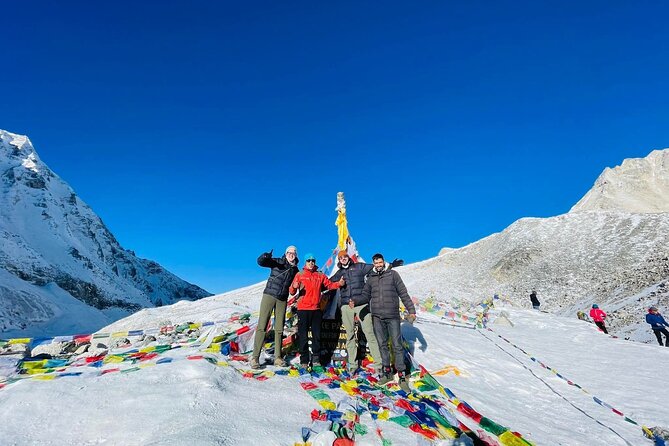
The six-hour walk to Namrung brings a stronger change in scenery and altitude. Forest gives way to more open mountain views, and the route begins to feel distinctly alpine.
Namrung is one of the more memorable villages on this section because it introduces the Tibetan-influenced culture that becomes more visible as you continue. Prayer wheels, mani walls, and monasteries help explain the spiritual character of the region.
This is also the point where altitude deserves more respect. You are not yet near the pass, but you are climbing steadily. Walk slowly, drink enough nonalcoholic fluid, and tell your guide if you feel unwell.
Day 5: A shorter day to Lho
The walk to Lho takes about four hours and reaches 3,180 meters. That shorter schedule is welcome because your body is now adjusting to higher ground.
Lho is a spiritual and scenic stop, with mountain views and Buddhist features that give the village a strong sense of place. The itinerary describes it as a spiritual setting, and that fits the mood of the route at this point. The villages feel increasingly tied to the high peaks and to Tibetan Buddhist traditions.
Do not mistake the shorter walking time for an easy day in every sense. Altitude can make four hours feel demanding, especially if you have not spent much time above 3,000 meters.
Day 6: Sama Gaon and the Manaslu valley
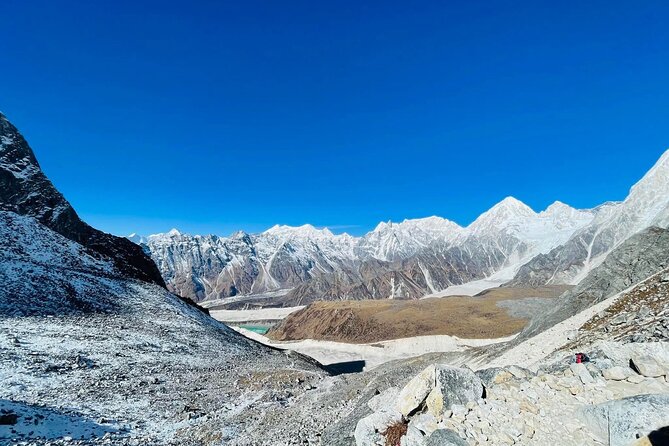
The route to Sama Gaon takes about seven hours and reaches 3,530 meters. You leave Lho and continue into the higher Manaslu valley, where the scenery becomes broader and more severe.
Sama Gaon is one of the key villages of the trek. It is the natural base for exploring the surrounding high country and for preparing your body before the pass. The village’s Tibetan influence is especially important here, with religious structures and mountain traditions forming part of daily life.
I like the way the itinerary places a full acclimatization day after reaching this altitude. A rushed schedule could push you upward too quickly. Here, you have time to adjust before the route heads toward Base Camp and Samdo.
Day 7: Acclimatization near Manaslu Base Camp
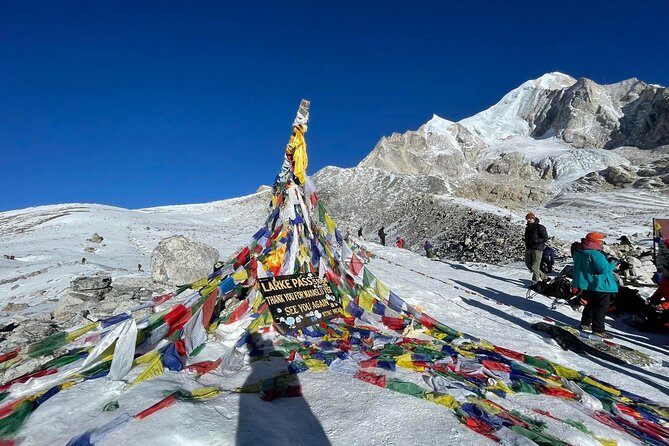
This is an acclimatization day with a maximum altitude of 4,400 meters at Manaslu Base Camp. The purpose is not simply to add another scenic walk. It gives your body time at altitude before the route becomes harder.
The plan is to explore around the base camp area and take in views of the Manaslu range. The exact walking details can depend on conditions and how the group is feeling, so listen closely to the guide rather than treating this as a race.
An included first-aid kit and oximeter provide useful support, but they do not replace travel insurance or sensible decisions. High-altitude trekking can change quickly. The package states that emergency helicopter service can be arranged and paid through your travel insurance, so insurance with suitable evacuation coverage is essential.
Day 8: Samdo and the approach to the pass
The walk to Samdo takes about 4 to 5 hours, with the route descending toward the Budhi Gandaki River before continuing toward the Manaslu Base Camp area and the Larkya La trail. Samdo sits at 3,690 meters.
At this point, the scenery is more open, colder, and less sheltered. The route feels close to Tibet, and Samdo’s location reflects the old trade links across the high passes.
The shorter walking time is helpful, but altitude remains the main issue. You may find that ordinary tasks take longer. Keep your pack light, use the sleeping bag and down jacket if required, and let the guide set a safe pace.
Day 9: A second acclimatization day in Samdo
The second acclimatization day is spent in Samdo at 3,690 meters. You can explore the village or hike higher up the valley toward one of the trade passes to Tibet.
This is valuable preparation for the next two days. You get a chance to see the high valley without also needing to change accommodation. The possible hike provides excellent views, but the important point is not how far you go. It is how your body responds.
I would use this day conservatively. A strong appetite and good energy are encouraging, but neither guarantees that the pass day will feel easy. Tell your guide about headaches, nausea, unusual tiredness, or breathing problems.
Day 10: Samdo to Larkya Phedi
The walk to Larkya Phedi, also called Larkya Base Camp or Dharamshala, takes about 4 to 5 hours and reaches 4,460 meters. The route crosses a wooden bridge over the Budhi Gandaki and passes two streams.
This is the final overnight stop before the pass, so the day has a practical purpose. You are positioning yourself for an early and demanding crossing rather than trying to reach the top from a lower village.
Accommodation at Larkya Phedi is likely to feel basic, and the high elevation can make the night less comfortable. That is normal for this type of trek, but it is worth knowing before you book. The reward comes the next day.
Day 11: Crossing Larkya La at 5,160 meters
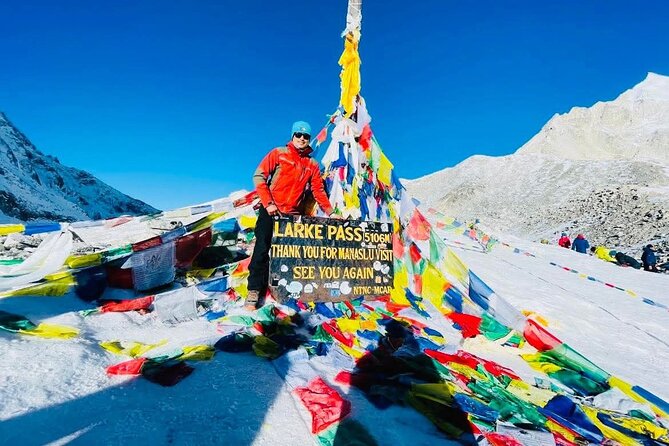
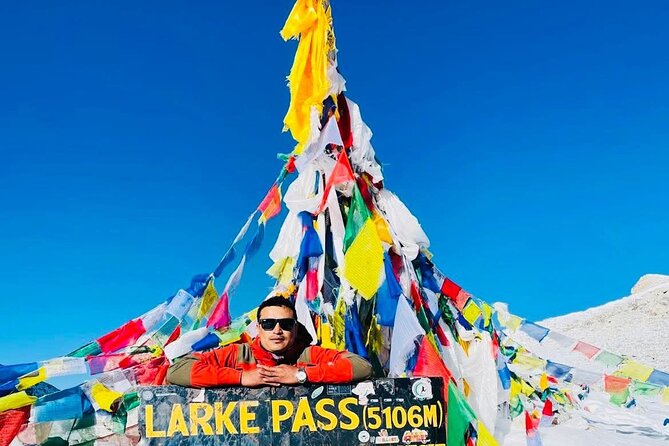
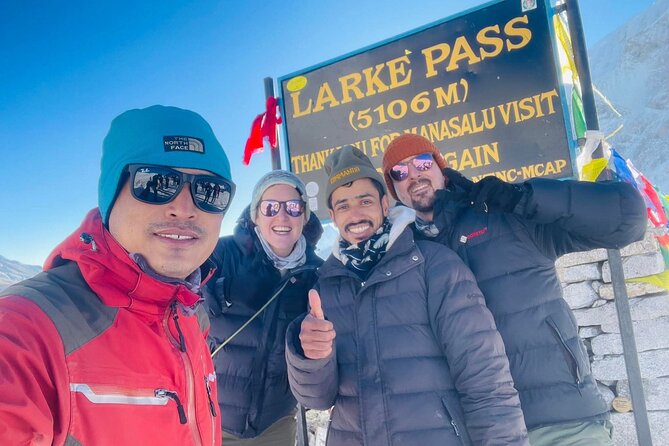
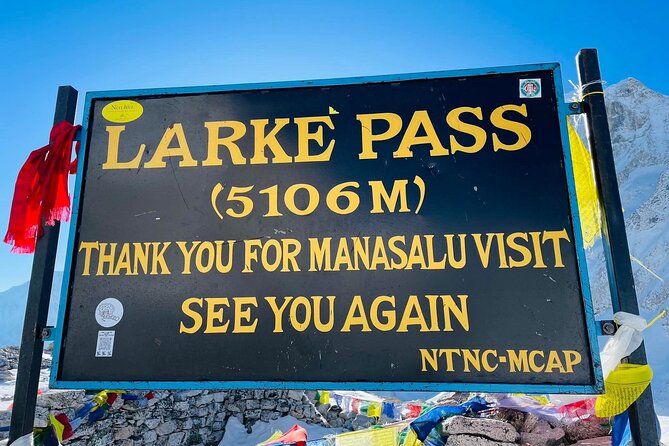
The pass day is the trek’s central challenge. The itinerary allows 7 to 8 hours of walking and reaches 5,160 meters at Larkya La.
The route begins through a valley with views of Cho Danda and Larkya Peak. It then crosses glacial moraines before reaching the pass. This is high, exposed mountain terrain, and conditions can influence both the timing and difficulty.
The achievement is not just reaching the pass. You must still descend afterward. Good footwear, warm layers, a day pack, water, and a patient pace matter more than speed.
This is where the private format can help. A small group and an experienced guide can keep the day focused on the needs of your party. One customer specifically praised guide Raj for matching a faster walking pace while keeping the journey comfortable and safe. That is useful if you prefer a brisk rhythm, but pace should never come before altitude safety.
Day 12: Descending to Bimthang
After the pass, the route drops toward Bimthang over about nine hours. The stated maximum altitude is 3,720 meters.
The descent changes the feeling of the trek. The air becomes easier, but a long downhill day can be hard on knees and tired legs. Take care on loose or uneven ground, and do not assume that descending means the day is effortless.
Bimthang gives you a major psychological lift. You have crossed the highest point, and the route begins its return toward lower country. This is also one of the strongest contrasts of the circuit: within a short period, you move from glacial terrain back toward forests and village life.
Day 13: Dharapani and the return journey
The final day involves 8 to 10 hours of travel toward Dharapani, at about 1,963 meters. The route continues through lower mountain country before the trek reaches its transport connection.
The bus from Dharapani to Kathmandu is included, but the day’s schedule is long. Confirm the exact transport plan and arrival details before you begin, particularly if you have a flight or another booking after the trek.
A farewell dinner in Kathmandu is included on the last night. It gives the trip a pleasant closing point, although meals in Kathmandu itself are not covered except for that farewell meal.
What the $1,500 price really covers
At $1,500 per person, the price is reasonable for a private restricted-area trek because several expensive and necessary elements are included:
- Kathmandu to Machha Khola bus
- Dharapani to Kathmandu bus
- Licensed trekking guide, including the guide’s insurance and food
- Tea house or lodge accommodation
- Manaslu Restricted Permit
- Manaslu Conservation Area Permit
- Annapurna Conservation Area Permit
- Breakfast for 13 days
- Lunch for 13 days
- Dinner for 12 days
- Sleeping bag, down jacket, and duffle bag if needed
- First-aid kit and oximeter
- Government taxes, VAT, and service charges
- Farewell dinner in Kathmandu
The price does not include a porter, so you carry your own bag unless you arrange one separately. Drinks, Kathmandu meals, tips, insurance, rescue and evacuation costs, airfare, visa fees, and upgraded Kathmandu accommodation are also extra.
That list makes the price easier to judge. You are paying for access, logistics, permits, a private guide, and most trek-day basics. You still need a budget for personal spending and emergency protection.
The company has received a top overall rating across three customer submissions, with particular praise for guides Yaka, Laxman, and Raj. Yaka was praised for his care and mountain knowledge, Laxman for carrying bags and being good company, and Raj for matching a faster pace while keeping the route safe and organized.
Who should book this trek
I would recommend it to fit walkers who want a quieter Himalayan route and are comfortable with simple lodges, long road transfers, and high-altitude conditions. It is a good match if you value village life, changing scenery, and a private guide more than polished hotel comfort.
You should think twice if you want a soft adventure, dislike long bus rides, or have no experience with sustained walking at altitude. The itinerary lists moderate fitness as the requirement, but the 5,160-meter pass is a serious undertaking.
The minimum two-person booking rule also makes this better suited to couples, friends, or a small private party. Since only your group participates, you have more control over pace than on a large group departure, within the limits of safety and the fixed route.
Cancellation is generous only when handled early. Cancel at least six full days before the start for a full refund. A cancellation two to six days ahead receives 50 percent, while cancelling less than two full days before the start receives no refund.
FAQ
How long is the Manaslu Circuit Trek?
The experience lasts approximately 13 days, including transport from Kathmandu to the trailhead and the return journey from Dharapani.
What is the highest point on the trek?
The highest point is Larkya La Pass at 5,160 meters.
Is this a private trek?
Yes. Only your own group participates in the activity.
How many people are needed to book?
At least two people are required because the trek passes through a restricted trekking area.
Are meals included?
Breakfast and lunch are included for 13 days. Dinner is included for 12 days. Meals in Kathmandu are not included, apart from the farewell dinner on the last night.
Is accommodation included?
Yes. Tea house or lodge accommodation during the trek is included. Any special upgraded accommodation in Kathmandu costs extra.
Is a porter included?
No. Porter service for your bag is not included in the price.
Is trekking equipment provided?
A sleeping bag, down jacket, and duffle bag can be supplied if necessary and must be returned after the trek.
Is emergency evacuation included?
Emergency helicopter service can be arranged and paid through your travel insurance. Personal travel insurance and rescue or evacuation costs are not included in the tour price.
Should you book the Manaslu Circuit Trek?
Book this trek if you want high mountain scenery, Tibetan-influenced villages, a private guide, and a quieter route with two planned acclimatization days. The permits, meals, lodging, buses, and guide make the $1,500 cost useful, especially for a restricted-area trek.
Before paying, confirm the porter arrangement, insurance requirements, transport timing, and the exact plan for the acclimatization walks. If you are fit, prepared for basic accommodation, and ready for Larkya La, this is a strong choice for a serious Himalayan adventure.
Recently added around Kathmandu
- Ghorepani Poon Hill Trek★ 5.0 · 16 reviews
- Amazing 1 Day Trekking Experience in Kathmandu Nepal★ 5.0 · 24 reviews
- Ghorepani Poonhill Trek★ 5.0 · 5 reviews
- Upper Mustang Trekking★ 5.0 · 2 reviews
- Upper Mustang Trekking★ 3.0 · 2 reviews
- Upper Mustang Trekking★ 5.0 · 4 reviews
- Upper Mustang Trek★ 5.0 · 5 reviews
- Upper Mustang Trek 14 Days★ 5.0 · 3 reviews
Manaslu Circuit Treks, compared.
16 Day Private Manaslu Circuit Trek from Kathmandu
Read our review →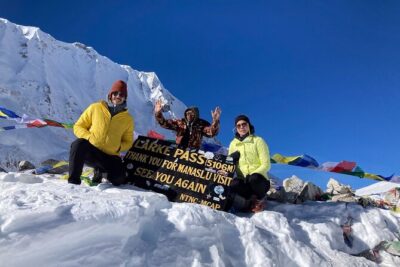
10 Days Manaslu Circuit Trek in Larke La Pass
Read our review →Browse the lists this tour appears in