
REVIEW · KATHMANDU
Everest Base Camp Trek with Helicopter Return -11 Days
The world gets very high, very fast. This 11-day Everest Base Camp trek packs Lukla, Namche Bazaar, Tengboche, Dingboche, Gorakshep, and Kalapatthar into a demanding mountain journey, then replaces the long walk back with a helicopter flight. I like the efficient plan and the chance to spend two nights acclimatizing before the highest sections. The main caution is simple: this is a compressed trek, and altitude is not something you can hurry.
I also like the practical support, including a guide, porters, trekking permits, lodge accommodation, meals, a duffle bag, and rescue arrangements. The return flight saves several walking days and gives you a memorable aerial finish. Still, the $3,500 price is a serious commitment, and you should confirm helicopter conditions, the exact pickup point, and any extra charge for solo or odd-numbered groups before booking.
Key things to know before you book
- Kalapatthar reaches 5,545 meters: This is the highest point on the route and the best scheduled viewpoint for Mount Everest.
- The return is by shared helicopter: You avoid the long descent on foot, but the flight depends on good weather and aircraft availability.
- Two acclimatization days are included: One comes in Namche Bazaar and another in Dingboche, both important for handling the altitude.
- The group is private: Only your own party takes part, with an experienced guide and one porter for every two clients.
- Kathmandu and Lukla flights are included: The package covers the Kathmandu to Lukla or Ramechhap to Lukla flight arrangement.
- The support is personal: Guides named in past trips include Prakash Adhikari and Dikpal, while Bhagwat Simkhada helped organize difficult plans and changes.
Why the helicopter return changes the Everest Base Camp trek
The classic Everest Base Camp trek usually takes about two weeks or more on foot. This version cuts the total to roughly 11 days by flying out to Lukla, walking to Base Camp, and returning to Kathmandu by helicopter after Kalapatthar.
That change matters most on the way down. Descending through the same villages can be rewarding, but it also adds several long walking days after you have already reached the high point. Here, you spend your energy reaching the goal, then leave the high country from the air.
The helicopter is not just a luxury add-on. It makes the schedule possible for people with limited vacation time. It also reduces exposure to the physical strain of repeated downhill walks. The trade-off is cost, weather risk, and less time among the villages on the return route.
The flight is shared, so you should not expect a private helicopter reserved only for your party. The inclusion says the flight is from Gorakshep to Kathmandu, while the daily schedule places Kalapatthar first and then lists the helicopter return. Ask the operator to explain the exact departure point and sequence before you pay.
More Everest Base Camp Treks in Kathmandu:
- Everest Base Camp Trek – 14 Days
★ 5.0 · 1,499 reviews - Everest Base Camp Trek
★ 5.0 · 842 reviews - Everest Base Camp Trekking
★ 5.0 · 485 reviews
Day 1: Arriving in Kathmandu
Your trip begins with airport pickup in Kathmandu and a private transfer to the hotel. Two nights in a three-star Kathmandu hotel are included, with breakfast.
This first day is useful for more than sleep. You can settle into Nepal, meet the guide, and make sure your trekking gear is ready. The stated start time is 6:00 a.m., so do not treat the first morning as a slow hotel morning.
The package also includes a farewell dinner at an authentic Nepalese restaurant with cultural performance. That gives the city portion a clear beginning and ending, rather than making Kathmandu feel like a mere airport stop.
Day 2: Lukla to Phakding, a gentle first walk
The mountain section begins with a flight from Kathmandu to Lukla, at about 2,860 meters. Depending on operating conditions, the arrangement may use Ramechhap for the Lukla flight, so confirm the departure airport and transfer plan close to your travel date.
From Lukla, you walk to Phakding at approximately 2,610 meters. The listed walking time is three to four hours, followed by lunch, dinner, and a lodge stay.
This is a sensible opening day because the walking distance is moderate. You are already at altitude, but you do not immediately face one of the route’s hardest climbs. Use the day to find your walking rhythm and keep your pace steady. The goal is not speed. It is to arrive in Phakding feeling ready for the bigger climb ahead.
Day 3: The long climb to Namche Bazaar
The walk from Phakding to Namche Bazaar takes six to seven hours and reaches about 3,446 meters. This is one of the first days that makes the trek feel serious.
Namche is the main settlement of the Khumbu region and your first important acclimatization stop. The route involves a long uphill approach, so you will want to follow the guide’s pace rather than trying to keep up with faster hikers.
The value of having a guide becomes clearer here. The package includes an experienced guide, porters, first-aid supplies, travel and rescue arrangements, and one porter for every two clients. That support means you can carry less and pay more attention to breathing, footing, food, and rest.
Accommodation is in local lodges or tea houses. These are functional mountain stays, not resort hotels. Bring realistic expectations about comfort and personal expenses. Hot showers, phone calls, laundry, battery charging, and bar bills are not included.
A few more treks around Kathmandu worth a look
- Everest Base Camp Trek with Helicopter Return from Gorakshep to Lukla
★ 5.0 · 161 reviews - Everest Base Camp Trek with Helicopter Return to Lukla – 10 Days
★ 5.0 · 34 reviews - Helicopter Return Everest Base Camp Trek, KTM-LUKLA & Gorakshep-KTM by Heli
★ 5.0 · 9 reviews - Everest Base Camp Trek with Helicopter Return – 10 Days
★ 5.0 · 9 reviews
Day 4: Acclimatizing around Namche Bazaar
The fourth day is set aside for acclimatization. You visit Khumjung Village and the Hotel Everest View, listed at about 3,880 meters.
This is not a wasted rest day. The short outing helps your body adjust while keeping you active. It also gives you a fuller sense of the Sherpa communities around Namche instead of reducing the region to a route between lodges.
I especially like this part of the plan because the itinerary does not push you higher every day. Altitude problems can affect fit people without warning, so a scheduled acclimatization day is one of the most valuable features in the program.
You should still take symptoms seriously. The provided details do not specify a medical evacuation procedure beyond general rescue arrangements and a first-aid kit, so ask your guide how altitude concerns are handled before the trek begins.
Day 5: Tengboche and its famous monastery
The trail from Namche to Tengboche takes about five to six hours and climbs to roughly 3,860 meters. The destination is known for Tengboche Monastery, described as the largest monastery in the Everest region.
This is one of the most meaningful stops on the route. The monastery gives the walk cultural weight, and the setting adds a strong mountain backdrop. You are not simply checking off another overnight point. You are visiting a working spiritual center in a high-altitude community.
The route also passes through rhododendron and juniper areas. At this stage, the trees help mark the gradual change from lower mountain country toward the more exposed upper valley. The walk is still substantial, but it is not yet the highest or coldest section of the trek.
Day 6: From Tengboche to Dingboche
The next walk reaches Dingboche at approximately 4,360 meters and takes five to six hours. The route is described as relatively steep in places and passes through rhododendron and juniper forests.
Dingboche feels like a turning point. From here, the altitude becomes a constant part of the day. Your pace will likely slow, and ordinary tasks may require more patience. The best approach is to keep drinking fluids, eat what you can, and avoid treating fatigue as a personal challenge to defeat.
The package covers breakfast, lunch, and dinner during the trek. Bottled water, coffee, and tea are extra, so budget for drinks and carry a reusable water system if you have one. The information does not state that water purification is supplied, so ask what options are available.
Day 7: A second acclimatization day in Dingboche
The second acclimatization day is held at about 4,360 meters. That extra pause is important because the itinerary becomes much more demanding after Dingboche.
You should use this day to rest without becoming completely inactive. The official plan gives the day to acclimatization, but it does not specify a separate excursion. Ask the guide what walking plan is suitable for your condition and the weather.
I would not book this trek assuming every day will feel equally manageable. The two acclimatization days improve the schedule, but they cannot remove the effects of thin air. Moderate physical fitness is required, and prior hiking experience would be useful even though it is not listed as mandatory.
Day 8: The high route to Lobuche
The Dingboche to Lobuche walk takes five to six hours and ends around 4,910 meters. This is a high, serious day even though the walking time may look familiar from earlier stages.
At Lobuche, your body has little room for rushing. The distance is only one part of the challenge. Cold, altitude, sleep quality, and appetite can all affect how you feel. This is where a supportive guide earns their place by watching the group and adjusting the pace when needed.
Past trips organized by this company have specifically praised guides for attention to safety, encouragement, and practical support. Prakash Adhikari is named several times, and Dikpal is also praised for being considerate and helpful. Those comments do not guarantee who will lead your trip, so request the guide’s name and qualifications in advance.
Day 9: Everest Base Camp and Gorakshep
Day 9 is the main goal day. You walk from Lobuche to Everest Base Camp, at about 5,360 meters, then continue to Gorakshep at approximately 5,160 meters. The total walking time is listed as six to seven hours.
Reaching Base Camp is a major physical achievement, but keep your expectations clear. The camp is a mountaineering staging area, not the summit of Everest, and the view of the mountain itself is often better from nearby viewpoints than from Base Camp. The emotional reward comes from arriving at the place used by expeditions and understanding how far you have walked to reach it.
Gorakshep is the high overnight base before Kalapatthar. This is likely to be one of the most demanding nights of the trip. The accommodation remains in a tea house, and comfort is limited by altitude and the remote setting.
The schedule includes all three meals on this day. Eat even if your appetite is reduced. You will need energy for the early or demanding walk to Kalapatthar, though the exact departure time is not stated.
Day 10: Kalapatthar and the helicopter to Kathmandu
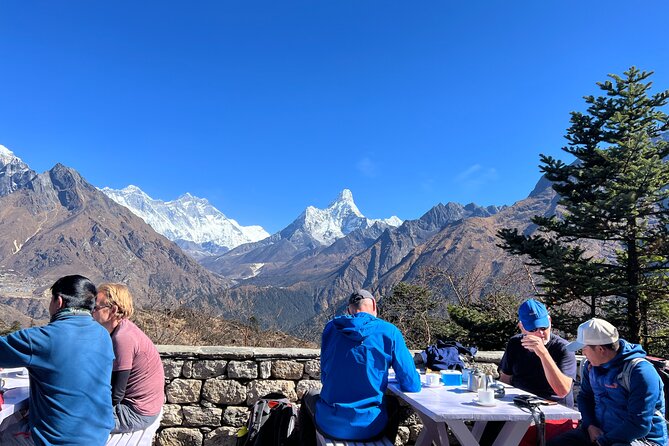
The route from Gorakshep to Kalapatthar is listed as a three to four-hour walk. At 5,545 meters, Kalapatthar is the highest point in the itinerary and the main viewpoint for Mount Everest and the surrounding peaks.
This is the visual high point of the trek. You have already reached Base Camp, but Kalapatthar is where the mountain views are meant to open up. Weather matters greatly here. Clouds or poor visibility can reduce the reward, and the helicopter also requires suitable conditions.
After Kalapatthar, you return to Kathmandu by shared helicopter. The daily plan lists breakfast and dinner, with lunch not included on this day. Check how the timing works, since the flight location is described differently in the schedule and inclusions.
The helicopter return is exciting, but it should not be treated as guaranteed in every condition. The cancellation terms state that poor weather can lead to a new date or a full refund. You should still keep some flexibility in your wider Nepal plans.
Day 11: Departure from Kathmandu
The final day includes breakfast and airport departure. Since the package ends back at the meeting point, the airport transfer arrangement should be confirmed if your flight leaves at a time that does not fit the original pickup plan.
The short final day works well for an international departure because the main trek is already finished. If your flight is delayed or the helicopter is affected by weather, however, the schedule could change. I would avoid booking a tight onward connection immediately after the mountain section.
What the $3,500 price covers
At $3,500 per person, this is not a budget trek. The value comes from the number of costly and practical pieces bundled together:
- Airport pickup and private hotel transfer
- Two hotel nights in Kathmandu with breakfast
- Flights to Lukla, including the Kathmandu or Ramechhap arrangement
- Lodge and tea house accommodation during the trek
- Breakfast, lunch, and dinner during most trekking days
- TIMS permit and Khumbu Valley fees
- Guide, porters, paperwork, and basic medical supplies
- Duffle bag and company T-shirt
- Rescue and travel arrangements
- Shared helicopter return
- Farewell dinner with cultural performance
The price makes more sense if you value organization and do not want to arrange permits, flights, lodges, porters, meals, and the helicopter yourself. The return flight is the biggest convenience, but it also brings the greatest uncertainty because mountain aviation depends on weather.
Several personal costs remain outside the price. Plan for bottled water, hot showers, phone use, laundry, battery charging, coffee, tea, bar bills, extra porters, and tips. One past booking also highlighted an extra fee for solo or odd-numbered groups. That charge is not listed in the main inclusions, so ask for the full price for your exact group size.
The human side of the support team
The strongest praise centers on organization, kindness, safety, and quick responses. Bhagwat Simkhada is repeatedly named as the person who helped plan trips, answer questions, and find solutions when conditions changed. One account described flooding that nearly disrupted plans, with the team working to keep the trip moving.
Prakash Adhikari is also named often as a lead guide who kept safety first, encouraged the group, and knew the mountain route well. Another trip praised Dikpal as a considerate and helpful guide, while porter Madan was praised for his strength and reliability.
You should not assume any named person will lead your departure. Still, the repeated focus on guide care and planning is useful when judging the company. Ask who your guide will be, how many people will be in your private group, and what happens if someone cannot continue.
The private format is a real advantage. Only your own party takes part, so the guide can focus on your pace and condition. It may also cost more if you are alone or have an odd number of people.
Who should choose this trek?
I would recommend this trip to you if you want the Everest Base Camp achievement but have limited time for a full walking return. It also suits people who value having permits, flights, accommodation, meals, porters, and a helicopter arranged through one company.
It is a good match for hikers with moderate fitness who can prepare for long walking days and high altitude. You need patience, flexibility, and a willingness to accept basic lodge conditions.
I would hesitate if you dislike weather-related uncertainty, need private transport at every stage, or want a relaxed mountain holiday. Eleven days is efficient, not leisurely. The altitude gain is substantial, and the helicopter return may be delayed by conditions.
Free cancellation is available up to 24 hours before the start time for a full refund. Changes made inside that period are not accepted, and poor weather may lead to a new date or a full refund.
Should you book the Everest Base Camp helicopter return?
Book it if the helicopter return is the feature that makes Everest Base Camp possible for you. The itinerary includes two acclimatization days, strong logistical support, a private group format, and a practical escape from the long downhill route.
Before committing $3,500, get written confirmation of the exact helicopter departure point, the Kathmandu or Ramechhap flight plan, solo or odd-number supplements, guide assignment, and what happens if weather interrupts the return. If those details are clear, this is a well-supported, time-saving way to reach Base Camp and Kalapatthar.
FAQ
How long is the Everest Base Camp trek with helicopter return?
The experience lasts approximately 11 days, including arrival and departure days in Kathmandu.
Where does the experience begin?
It begins at Tribhuvan Airport in Kathmandu, Nepal. Airport pickup and transfer to the hotel are included.
What time does the experience start?
The stated start time is 6:00 a.m.
Is the helicopter return private?
No. The included helicopter flight from the Everest region to Kathmandu is described as a shared helicopter.
Are flights to Lukla included?
Yes. The package includes the Kathmandu to Lukla or Ramechhap to Lukla flight arrangement.
What is the highest point on the itinerary?
Kalapatthar is the highest point, at approximately 5,545 meters.
Are meals included?
Breakfast, lunch, and dinner are included during the trekking days, with the stated Day 10 plan including breakfast and dinner. Breakfast is included during the Kathmandu hotel stay.
Are permits included?
Yes. The TIMS permit, Khumbu Valley fees, and necessary paperwork are included.
Recently added around Kathmandu
- Ghorepani Poon Hill Trek★ 5.0 · 16 reviews
- Private Manaslu Circuit Trek at Himalayas★ 5.0 · 3 reviews
- Amazing 1 Day Trekking Experience in Kathmandu Nepal★ 5.0 · 24 reviews
- Ghorepani Poonhill Trek★ 5.0 · 5 reviews
- Upper Mustang Trekking★ 5.0 · 2 reviews
- Upper Mustang Trekking★ 3.0 · 2 reviews
- Upper Mustang Trekking★ 5.0 · 4 reviews
- Upper Mustang Trek★ 5.0 · 5 reviews
Everest Base Camp Treks, compared.






Browse the lists this tour appears in