
REVIEW · KATHMANDU
Ghorepani Poon Hill Trek
Sunrise is the prize at Poon Hill. This six-day trek links Kathmandu, Pokhara, Ulleri, Ghorepani, Poon Hill, Tadapani, and Ghandruk in one compact trip, giving you forest trails, stone steps, mountain views, and time in Gurung villages without committing to a much longer Himalayan route. I especially like the classic sunrise walk and the chance to sleep in mountain communities rather than rushing back to Pokhara each day. The main consideration is the pace: the fourth day lasts about nine hours and includes an early climb before a long day on foot.
I also like that the package handles the main transport and trekking permits, while an English-speaking guide stays with your private group. Guides such as Hari have earned especially warm praise for helping slower walkers, carrying a tired person’s bag when needed, arranging hot water, and stopping for tea breaks. Still, the $650 price does not include porter service, and several meals and local bus transfers are your responsibility.
What makes this trek worth your time
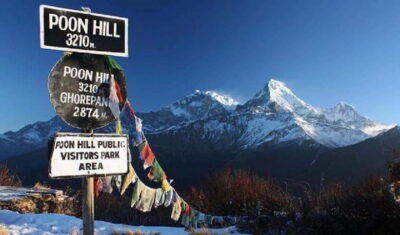
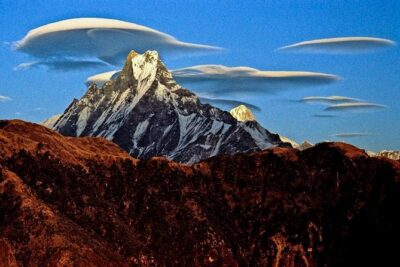
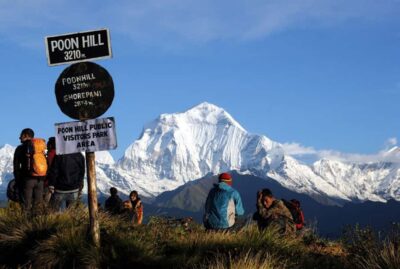
- Poon Hill at sunrise: An early climb brings wide views of the Annapurna and Dhaulagiri ranges as daylight reaches the snow-covered peaks.
- A proper village-to-village walk: You pass through Ulleri, Ghorepani, Tadapani, and Ghandruk instead of treating the mountains as a single photo stop.
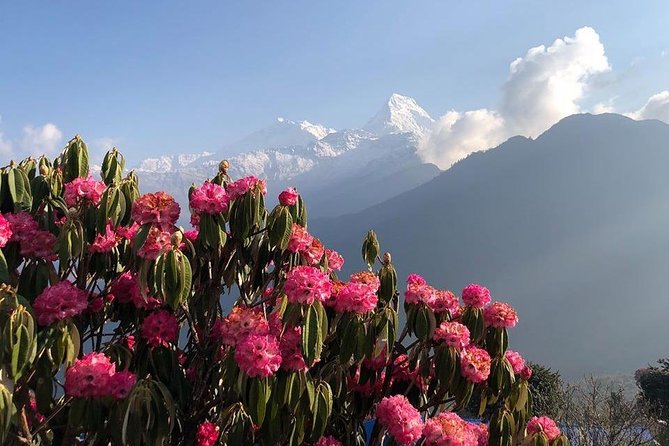
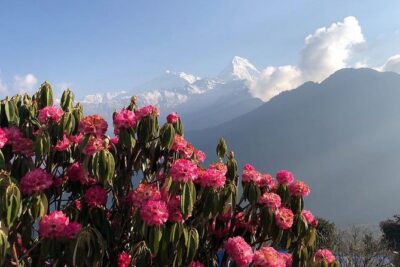
- Rhododendron forest trails: The route moves through wooded sections and open mountain views, giving you welcome variety during the climbs.
- Gurung culture in Ghandruk: The final mountain village adds a human side to the trip, with traditional homes, local life, and a slower pace.
- Private group format: Only your own group takes part, which makes it easier to pause, walk at different speeds, and ask the guide for help.
- Transport included from Kathmandu: Tourist buses connect Kathmandu and Pokhara, reducing the need to arrange the long road journeys yourself.
The route at a glance
This is a six-day trip beginning and ending in Kathmandu. The first and last days are mostly road travel, while the middle four days form the walking section through the Annapurna region.
The itinerary lists approximately six hours from Kathmandu to Pokhara, seven hours from Pokhara to Ulleri including the transfer to Nayapul and the trek, six hours from Ulleri to Ghorepani, nine hours for Poon Hill and the route onward toward Tadapani, six hours from Ghandruk back to Pokhara, and seven hours from Pokhara to Kathmandu.
That adds up to a lot of movement in a short period. You get an efficient taste of the region, but this is not a slow retreat. I would choose it if you want a focused mountain experience and have only a week available. If you prefer long mornings, spare days, or a very relaxed walking pace, the schedule may feel tight.
More Poon Hill Treks in Kathmandu
- 4 Days Poon Hill Trek
★ 5.0 · 94 reviews - Ghorepani(Poonhill Trek)
★ 5.0 · 81 reviews - 4-day Poon Hill Trek
★ 5.0 · 74 reviews
Day 1: Kathmandu to Pokhara by tourist bus
Your start time is 7:00 am. From Kathmandu, you take a tourist bus toward Pokhara, with roughly six hours on the road.
The attraction is the changing scenery. You pass terraced fields, villages, and distant Himalayan views before reaching Pokhara. Once there, the plan gives you time to settle into a hotel and relax beside Phewa Lake.
I like this opening because it avoids trying to begin the trek immediately after arriving in Nepal. Pokhara provides a calmer setting before the walking days begin, and the lake gives you a pleasant place to reset after the road journey.
The drawback is simple: six hours on a bus is still a long ride. Road conditions and traffic can affect how the day feels, so keep your expectations practical. This is a scenic transfer, not a quick airport connection.
Day 2: Nayapul, the river route, and the stone steps to Ulleri
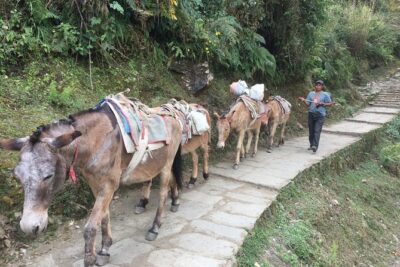
The walking begins after a local bus transfer from Pokhara to Nayapul. Nayapul serves as the gateway to the Annapurna route, and from there you follow villages, forest, and the Modi Khola River.
The day takes about seven hours. The most demanding part is the climb to Ulleri, where stone steps lead upward through the hills. This is where your physical preparation matters. You do not need to be an elite mountaineer, but the operator asks for a moderate fitness level for good reason.
Ulleri makes a useful first night because you finish the day in a mountain village rather than returning to the city. The setting includes mountain views and a clear change in pace from Pokhara.
I would keep your daypack light and carry only what you need for the walk. Porter service is not included, so you either carry your own main bag or arrange a porter separately. That extra cost could make the trip more comfortable if you do not want to climb with full luggage.
Day 3: Forest color and mountain views on the way to Ghorepani
The route from Ulleri to Ghorepani takes about six hours. You walk through rhododendron forests, with the trees adding color and shade to a day that gradually gains height.
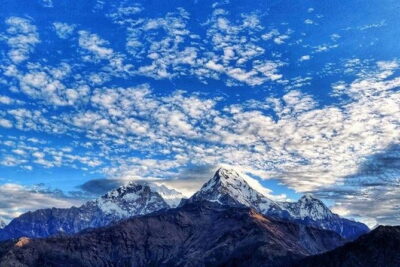
The route also opens toward the Annapurna and Dhaulagiri ranges. This mix of enclosed forest and sudden mountain views is one of the trek’s best features. You are not simply walking uphill on an exposed path for hours at a time.
Ghorepani is a mountain village surrounded by high peaks. Arriving here in the afternoon gives you time to settle in, and the schedule points to a sunset over the snow-covered mountains.
This is an important night because the next morning begins before dawn. Try to treat the evening as preparation rather than a late social event. The sunrise climb is the central moment of the route, and you will enjoy it more if you are ready to leave early.
Same trailhead, a longer or shorter day out:
- Everest Base Camp Trek – 14 Days
★ 5.0 · 1,499 reviews - Everest Base Camp Trek
★ 5.0 · 842 reviews - Everest Base Camp Trekking
★ 5.0 · 485 reviews - Annapurna Circuit Trek with Tilicho Lake
★ 5.0 · 368 reviews
Day 4: Poon Hill sunrise and the long route toward Tadapani
Day four is the highlight and the hardest day. You rise before dawn for the climb to Poon Hill, a viewpoint known for sunrise across the Himalayas.
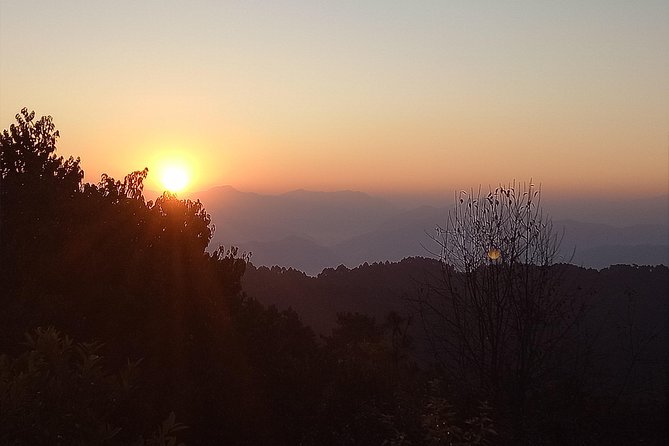
The appeal is visual but also physical. You walk in darkness, reach the viewpoint, and watch the first light spread across the Annapurna and Dhaulagiri ranges. The mountains change as the sun rises, so this is the time to keep your camera ready and your hands warm.
After Poon Hill, you return to Ghorepani for breakfast. The route then continues toward Tadapani, with the full day listed at about nine hours.
That timing deserves attention. You are not hiking only to a viewpoint and then spending the rest of the day resting. The sunrise climb is followed by breakfast and more trail time. If you are new to trekking, tell the guide early if you need a slower pace or a short rest.
The schedule places Tadapani after Poon Hill and before the final approach to Ghandruk. Since the supplied plan does not give a separate overnight description for Tadapani, confirm the exact lodging arrangement before departure.
Guides are a major part of the experience here. Hari is repeatedly praised for staying with slower members of a group, arranging breaks, helping with bags, checking on comfort, and assisting with practical matters such as hot water. Ganesh is also identified as a guide on this route. Those details matter on a long day, when steady encouragement can be as useful as trail knowledge.
Day 5: Ghandruk and the return to Pokhara
The final walking section descends toward Ghandruk, a well-known Gurung village with mountain views and a strong local identity. After the effort of the previous day, the descent changes the rhythm of the trek.
Ghandruk is more than a lunch stop. The itinerary gives you time to explore the village, observe its traditional character, and enjoy a meal before the return journey. This is where the route feels most connected to everyday mountain life.
After lunch, you take a public bus back to Pokhara. The bus transfer is included as a local transport segment, but it will not have the same setup as the tourist bus used between Kathmandu and Pokhara. Keep your expectations modest and view the ride as part of the local travel experience.
The day is listed at about six hours. Because the schedule combines downhill walking, village time, lunch, and a road transfer, you should not expect a completely open afternoon in Pokhara. Still, returning to the lake city gives you a comfortable change after several nights in the hills.
Day 6: Pokhara to Kathmandu
The final day is a scenic drive from Pokhara back to Kathmandu, taking about seven hours. You pass villages and countryside while the Annapurna trip gradually gives way to the capital.
I appreciate the symmetry of the plan. You travel overland in both directions, rather than adding flights or separate transport arrangements to the package. The tradeoff is another long bus day at the end, so this itinerary is best for people who accept road travel as part of seeing Nepal.
The journey also gives you time to think back over the trek: the stone steps at Ulleri, the forests above Ghorepani, the sunrise at Poon Hill, and the Gurung village of Ghandruk.
What the $650 price covers
At $650 per person, the package includes the tourist bus between Kathmandu and Pokhara in both directions, the local bus from Pokhara to Nayapul, and the local bus from Ghandruk to Pokhara.
It also includes trekking permits, government and local taxes, an English-speaking professional guide, four lunches, five breakfasts, and three dinners. These inclusions cover much of the basic structure of the trip, so you are not paying only for guiding and then arranging every transfer yourself.
The value depends on how much help you want. A private group, permits, guide service, intercity transport, and several meals can make the price reasonable for a first trek, especially if you prefer one company to organize the route.
But check the gaps. Porter service is not included, and the phrase anything not included means you should budget for expenses outside the stated meals and transport. The exact meal schedule also deserves confirmation, since the trip includes different numbers of breakfasts, lunches, and dinners. I would ask about lodging, porter rates, drinking water, extra meals, and any personal costs before paying.
Group discounts may improve the value if you are traveling with friends. The trip is private, so your group does not have to join a larger shared departure.
Fitness, comfort, and the guide relationship
The operator describes the trek as suitable for people with a moderate fitness level. I would take that seriously, especially because the schedule includes stone steps, repeated climbs, an early morning ascent, and a nine-hour fourth day.
This is not a technical climbing expedition. The appeal is that you can reach major Himalayan viewpoints without a long expedition or specialized mountaineering skills. Still, regular walking practice will help, particularly on hills and stairs.
The strongest practical feature is the guide support. Hari receives repeated praise for patience, kindness, taking photographs, watching the back of a group, carrying a bag when someone was hurt or tired, and making sure basic needs were handled. Those comments suggest a guide who pays attention to the people in front of him, not only to the clock.
That does not remove the need for personal preparation. Bring suitable walking shoes, layers for changing temperatures, a daypack, and enough personal supplies for the parts not covered by the package. Since there is no porter included, decide in advance how much weight you are willing to carry.
The best and weakest parts of the experience
The best part is the range of scenery in a short time. You get river valleys, forests, stone stairways, mountain villages, open views, and a famous sunrise. The cultural element also gives the trip more meaning than a simple viewpoint hike.
The guide service is another clear strength. The repeated praise for Hari focuses on care, patience, safety, and practical help. For a first trek, that kind of support can make the difference between feeling overwhelmed and enjoying the walk.
The weakest part is the compressed schedule. The bus rides are long, the fourth day is demanding, and the package does not include porter service. The plan also leaves some practical details open, particularly lodging arrangements around Tadapani and costs outside the listed inclusions.
Who should book this trek?
I would recommend it to you if you want a short introduction to the Annapurna region, enjoy active holidays, and have enough fitness for long walking days. It is also a good fit for a private group of friends or relatives who want a guide without joining strangers.
First-time trekkers can manage it, provided they prepare and communicate clearly with the guide. The repeated praise for Hari and the mention of Ganesh suggest that guide support is a meaningful part of the experience, not a minor add-on.
I would hesitate if you want a gentle holiday, dislike long bus rides, or expect every expense to be included. I would also ask for a clearer day-by-day explanation of accommodation, porter options, and the exact Tadapani arrangement before booking.
Should you book the Ghorepani Poon Hill Trek?
Yes, if your priority is a compact Himalayan route with a memorable sunrise, mountain villages, and a guide-led private format. The $650 cost offers useful value through permits, transport, meals, and professional guiding, but you need to budget for porter service and other personal expenses.
The trek asks for real effort, particularly on the Ulleri steps and the long Poon Hill day. If you are ready for that, this route gives you a satisfying first look at the Annapurna region without requiring a much longer trip.
The experience has a rating of 5 out of 5 from 16 reviews, with 100 percent recommending it. I would treat that as strong evidence of satisfaction, while still checking the practical details before you commit.
FAQ
How long is the Ghorepani Poon Hill Trek?
The trip lasts approximately six days, beginning in Kathmandu and ending in Kathmandu.
What time does the experience start?
The listed start time is 7:00 am.
Is transport from Kathmandu to Pokhara included?
Yes. Tourist bus transport from Kathmandu to Pokhara and back to Kathmandu is included.
Is transport between Pokhara and the trekking route included?
Yes. The package includes a local bus from Pokhara to Nayapul and a local bus from Ghandruk to Pokhara.
Is a guide included?
Yes. An English-speaking professional guide is included.
Are trekking permits included?
Yes. Trekking permits, government taxes, and local taxes are included.
How many meals are included?
The package includes four lunches, five breakfasts, and three dinners.
Is porter service included?
No. Porter service is not included in the stated price.
Is this a private tour?
Yes. Only your own group takes part in the activity.
Can I cancel for a full refund?
You can cancel for a full refund if you cancel at least 24 hours before the experience start time. Changes or cancellations made less than 24 hours before the start are not accepted for a refund. If poor weather causes the experience to be canceled, you will be offered another date or a full refund.
Recently added around Kathmandu
- Private Manaslu Circuit Trek at Himalayas★ 5.0 · 3 reviews
- Amazing 1 Day Trekking Experience in Kathmandu Nepal★ 5.0 · 24 reviews
- Ghorepani Poonhill Trek★ 5.0 · 5 reviews
- Upper Mustang Trekking★ 5.0 · 2 reviews
- Upper Mustang Trekking★ 5.0 · 4 reviews
- Upper Mustang Trek★ 5.0 · 5 reviews
- Upper Mustang Trekking★ 3.0 · 2 reviews
- Upper Mustang Trek 14 Days★ 5.0 · 3 reviews
Poon Hill Treks, compared.
4-Day Ghorepani, Poonhill & Ghandruk Mountain Trek
Read our review →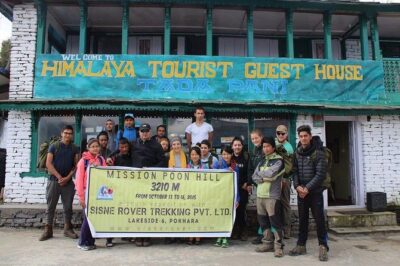
Browse the lists this tour appears in