
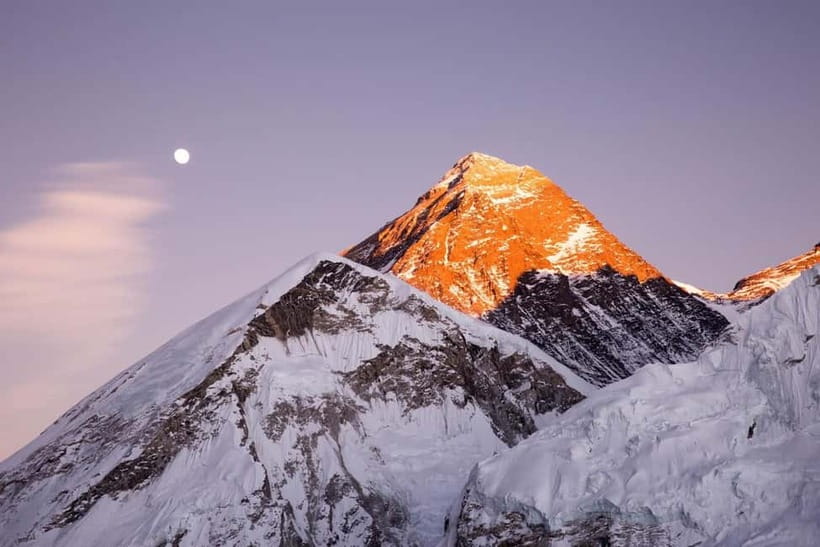
REVIEW · KATHMANDU
From Kathmandu: 12-Day Everest Base Camp Guided Trekking
The Himalayas reward steady steps. This 12-day Everest Base Camp trek combines the classic route with two acclimatization days, a small group of no more than 15 people, and support from guides such as Padam, Nishan, Rohan, and Adhish. I like the careful pacing and the fact that permits, domestic flights, lodges, and guide costs are included.
I also like the thoughtful equipment support: you can request a jacket, sleeping bag, and duffle bag, which saves you from buying or carrying every item yourself. The main drawback is that meals are not included, and the nights at high altitude can be very cold, especially in December. This is a demanding mountain trek, not a comfortable sightseeing holiday with a few walks added.
The trek in five useful points
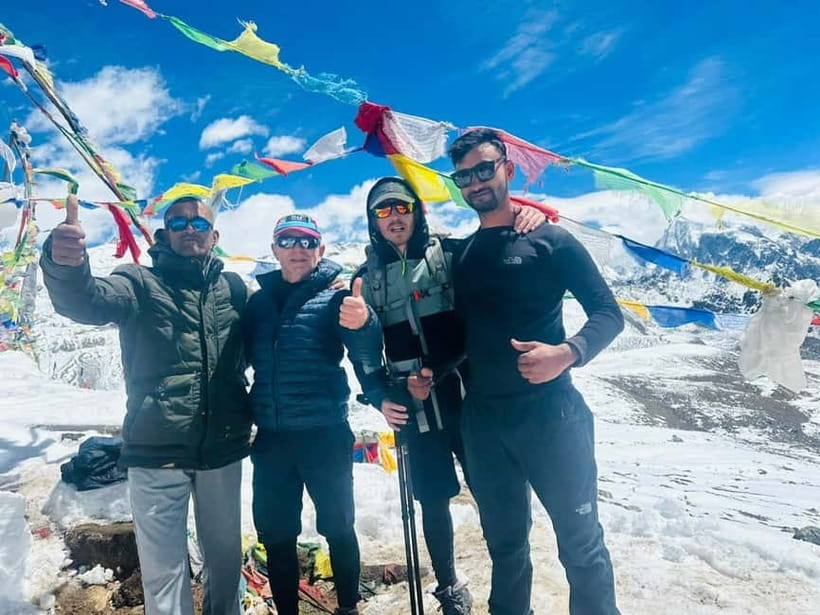
- 12 days from Kathmandu to Everest Base Camp and back, with a return flight from Lukla.
- Two acclimatization days, one in Namche Bazaar and one in Dingboche.
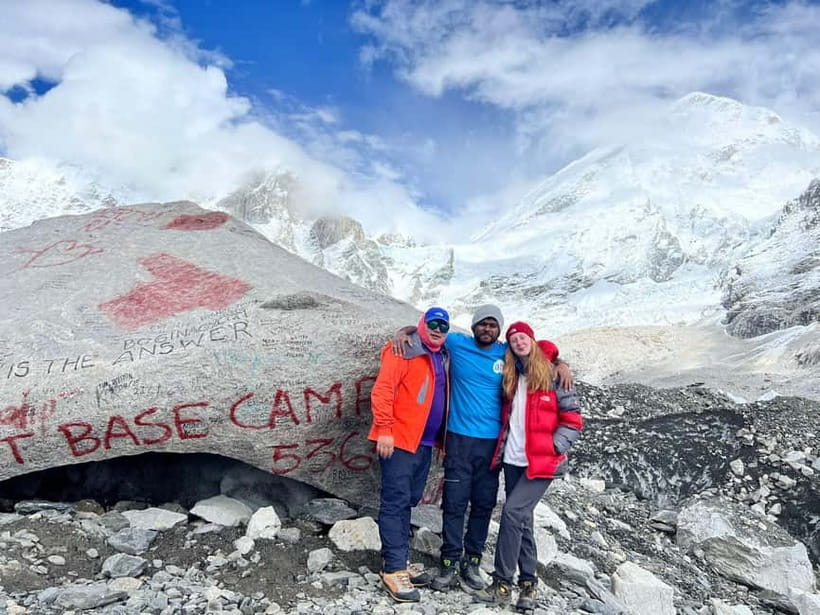
- Everest Base Camp reaches 5,364 meters, while Kala Patthar climbs higher to 5,545 meters.
- The biggest mountain views include Ama Dablam, Nuptse, Lhotse, Khumbetse, and Lingtren.
- Guide, permits, domestic flights, lodge accommodation, and government charges are included in the $1,002 price.
- Meals, drinks, porter service, hot showers, internet, and travel insurance cost extra.
Why this 12-day route works
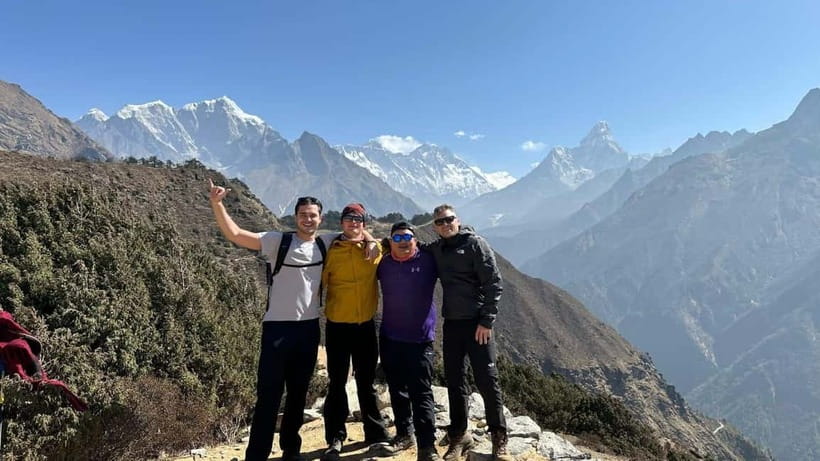
The route follows the familiar Everest Base Camp approach from Lukla. You begin with a flight from Kathmandu to Lukla, walk through Phakding and Namche Bazaar, then climb gradually toward Dingboche, Lobuche, Gorakshep, and Base Camp.
That gradual rise matters. Namche Bazaar sits at 3,440 meters, Dingboche at 4,260 meters, and Lobuche at 4,930 meters. Two rest days give your body time to adjust before the hardest section. I would not treat those rest days as wasted time. At this altitude, they are part of the plan.
The schedule is still tough. You reach Everest Base Camp at 5,364 meters, then climb Kala Patthar at 5,545 meters the next morning. You need reasonable fitness, patience, and a willingness to walk for several hours on rough mountain paths.
The group limit of 15 is a useful middle ground. You get the social side of a group trek without joining a huge procession. Your English-speaking guide is responsible for the route, daily support, and practical decisions along the way. The strongest praise has gone to guides who combine humor with calm judgment. Padam was especially appreciated for keeping spirits up during difficult sections, while Nishan was praised for adapting the pace to individual needs.
More Everest Base Camp Treks in Kathmandu:
- Everest Base Camp Trek – 14 Days
★ 5.0 · 1,499 reviews - Everest Base Camp Trek
★ 5.0 · 842 reviews - Everest Base Camp Trekking
★ 5.0 · 485 reviews
Day 1: Kathmandu to Lukla, then Phakding
Your first day begins with hotel pickup in Kathmandu, Bhaktapur, or Lalitpur. You then go to Tribhuvan International Airport for an early domestic flight to Lukla.
The flight is a major part of the experience, since Lukla is the gateway to the Khumbu region. Once you arrive, the group transfers to the trailhead and begins walking toward Phakding. The first day is shorter than several later stages, giving you a gentler introduction after the flight.
You spend the night in a tea house lodge in Phakding. Tea houses are simple mountain accommodation, and you should expect basic facilities rather than hotel-style comfort. Meals are purchased separately, as are drinks and hot showers.
Day 2: Phakding to Namche Bazaar at 3,440 meters
The trail climbs from Phakding to Namche Bazaar, one of the most important stops on the route. Namche sits at 3,440 meters and marks the point where the altitude becomes a serious part of your trip.
This is a full walking day, and the upward gain can feel sharper than the distance suggests. You are not simply strolling between villages. You are adjusting to thinner air while carrying your personal gear, unless you pay for a porter.
Namche is also where the trek begins to feel distinctly Himalayan. The town is your base for the first acclimatization day, and you spend two nights here. That extra night gives your body a better chance to cope with the climb ahead.
Day 3: An acclimatization day in Namche
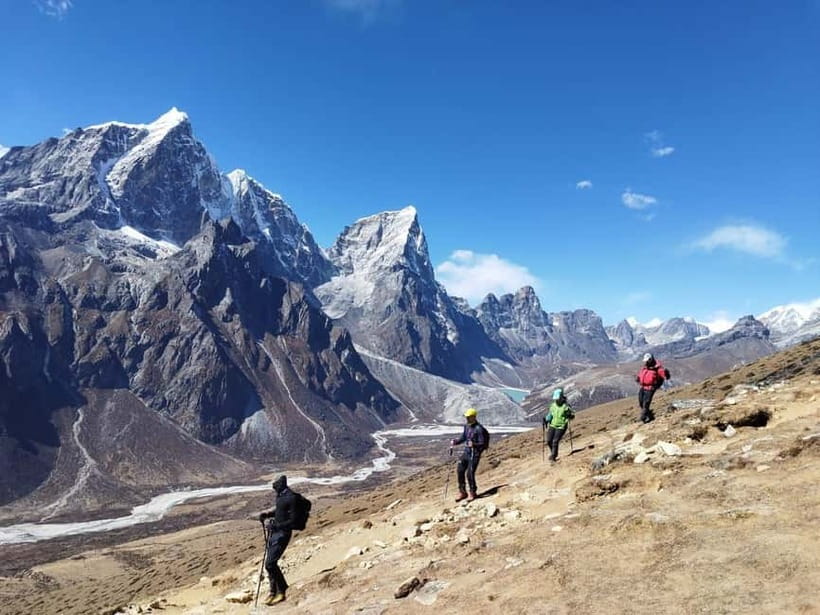
The schedule keeps you in Namche for a second night. Use this day sensibly. Rest, drink water, and keep your activity moderate. The point is not to prove how far you can walk before the main ascent.
Namche is a valuable pause in the itinerary because the next stages take you well above 4,000 meters. A guide such as Padam or Nishan can help you judge how hard to push, and the small group format makes it easier for the pace to be adjusted when needed.
This is also one of the better days to check your kit. Make sure your sleeping bag, jacket, socks, and walking shoes are working for you. Once you move higher, small problems can become very uncomfortable.
More Guided Treks in Kathmandu:
- 12 Day Everest Base Camp Guided Trek
★ 5.0 · 40 reviews - Everest Base Camp Trek 15 days | Local Guide | Flexible Itinerary
★ 5.0 · 27 reviews - 5 Day Private Guided Trekking in Annapurna Base Camp
★ 5.0 · 25 reviews - Upper Mustang Classic Trek with Local guide
★ 5.0 · 15 reviews
Day 4: Namche to Tyangboche at 3,867 meters
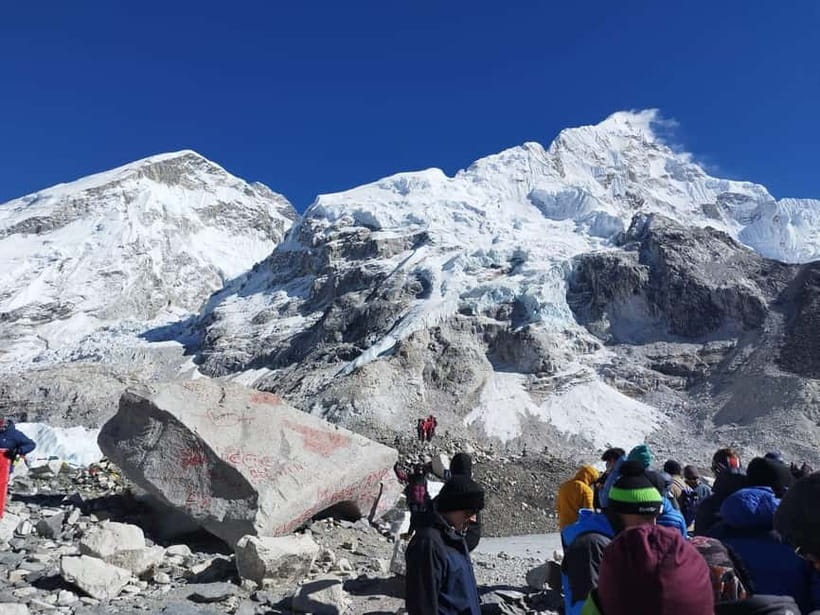
From Namche, you hike to Tyangboche, also written as Tengboche, at 3,867 meters. The route brings broader mountain views and a clear change in scenery as you move through the Khumbu area.
Tyangboche is a memorable overnight stop because of its position among famous peaks. You are now well above Namche, but the gain is still gradual enough to fit the acclimatization plan.
The night is spent in a lodge. Again, keep expectations practical. Tea house lodging is part of the mountain experience, but it does not remove the basic challenges of cold rooms, shared facilities, and limited services. Hot showers and internet are not included.
Day 5: Through rhododendron forest into the Imja Valley
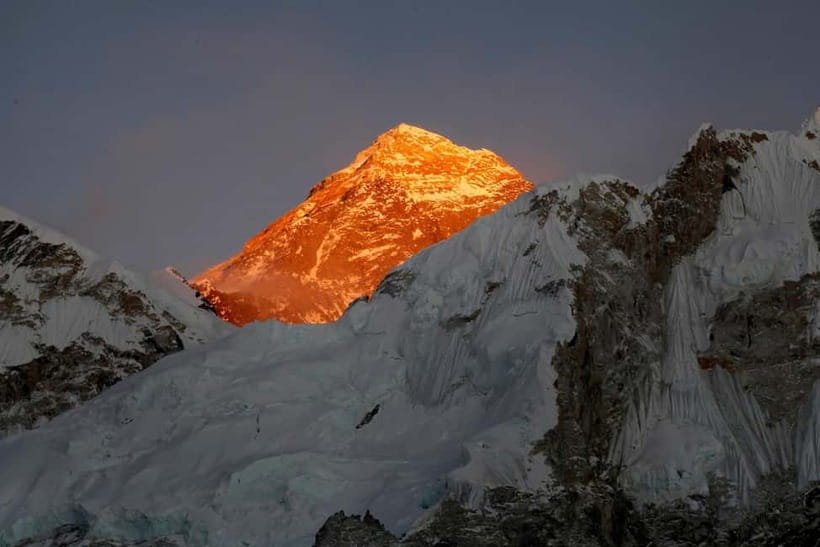
This is one of the most scenic days. You leave Tyangboche and walk through rhododendron forest before crossing a suspension bridge over the Imja Khola.
The route continues toward Minlinggo and then enters the Imjatse Valley. Ama Dablam, Nuptse, and Lhotse become major reference points as you move beneath their huge walls. These are not distant postcard views. The mountains shape the route and give you a constant sense of scale.
You finish at Dingboche, at 4,260 meters. This is a significant altitude gain, so the overnight stop is important. You will likely notice the cold and thinner air more here than in the lower villages.
Day 6: A second acclimatization night in Dingboche
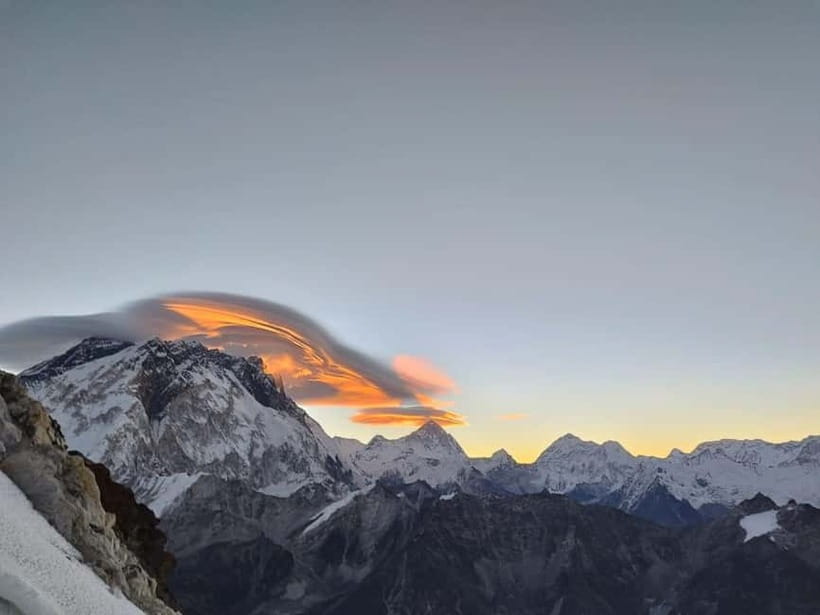
Dingboche provides the trek’s second rest day. The value is straightforward: you spend another night at 4,260 meters before going higher.
I would use this day to recover rather than treating it as a spare sightseeing day. The upcoming trail reaches Lobuche at 4,930 meters, followed by Gorakshep and Base Camp. You need your energy for those stages.
Your guide is particularly useful here. Several strong guide reports describe careful attention to comfort, safety, and personal pace. Adhish was praised for making the trek fun, while Rohan was described as experienced and dependable. Those qualities matter more than a polished speech when you are tired and the air is thin.
Day 7: Dingboche to Lobuche at 4,930 meters
The walk from Dingboche to Lobuche takes about 5.5 hours. You stop for lunch in Dugla before continuing to Lobuche, where you sleep at 4,930 meters.
This is a serious day because you are approaching 5,000 meters. Even if the walking time looks manageable, the altitude changes how your body works. You should expect a slower pace and take your guide’s advice seriously.
Lobuche is not the place to spend energy trying to be heroic. Eat, rest, and prepare your clothing for the next morning. You are close to the highest and most anticipated part of the trek, but the route remains rocky and demanding.
Day 8: Gorakshep and Everest Base Camp at 5,364 meters
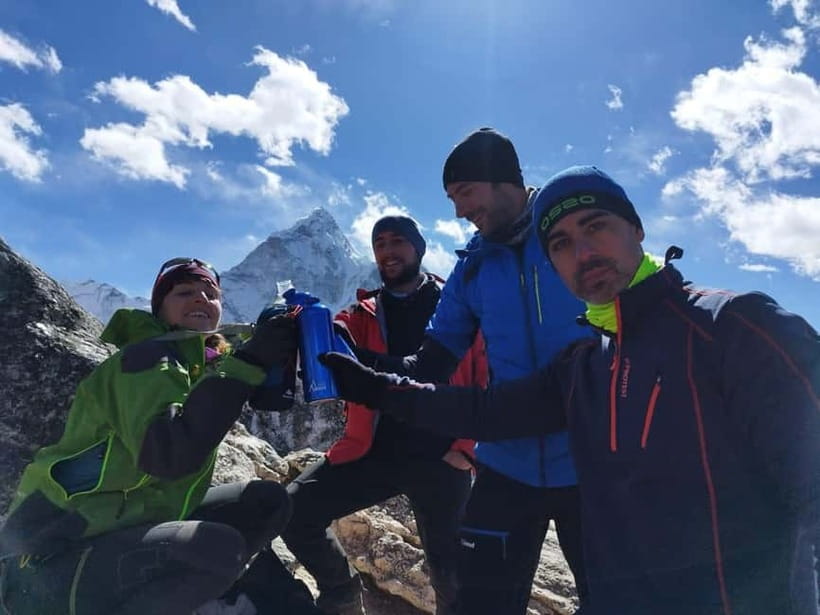
After breakfast, you walk from Lobuche toward Gorakshep and then continue to Everest Base Camp. This is the emotional high point of the trip for many people.
The trail follows rocky ground with views of the Khumbu Glacier. You are walking into a high, cold setting where the mountain terrain feels more severe than the lower valleys. The destination itself is famous, but the approach is just as important. You have spent a week earning the final miles.
Everest Base Camp sits at 5,364 meters. After reaching it, you return to Gorakshep for the night. That return is worth noting. Reaching Base Camp does not mean the day is finished. You still need to walk back and sleep at altitude.
The guide’s role is central here. Conditions, fatigue, and the pace of the group all matter. Alexander from Spain specifically valued Padam’s calm support and experience in a difficult environment. That kind of steady presence is what you want on this day.
Day 9: Kala Patthar at 5,545 meters, then Pheriche
You leave Gorakshep and climb to Kala Patthar, reaching 5,545 meters. This is the highest point on the itinerary and one of the best places for wide views of the Everest region.
The climb can be hard even after Base Camp. You are at the highest altitude of the trek, and the early start means you may be walking in very cold conditions. The reward is the mountain panorama, including views toward Everest and nearby peaks such as Nuptse and Lhotse.
After Kala Patthar, you descend to Pheriche at 4,243 meters for the night. The descent is welcome, but it still requires care. Tired legs and loose, rocky ground can make downhill walking uncomfortable.
Day 10: Down through Tyangboche toward Namche
The return route takes you from Pheriche down toward Tyangboche and then Namche Bazaar at 3,440 meters. The schedule describes this as the descent through Tyangboche to Namche, with the overnight stay in Namche.
This is a long return section, and the lower altitude should help your breathing even if your legs are tired. You get another night in Namche before the final push to Lukla.
The return walk also gives you a different view of the same route. You have already seen the valleys while climbing, but the descent lets you pay attention to details you may have missed when conserving energy.
Day 11: Namche Bazaar to Lukla
You continue from Namche to Lukla and spend your last night there. At this point, the trek is nearly complete, but you still need to walk carefully and preserve enough energy for the final day.
Lukla is your transition point between mountain trail and air travel. The overnight stay is practical because the flight to Kathmandu is scheduled for early morning.
Weather can affect mountain flights. One account describes a change from airplane to helicopter because of conditions, handled professionally by the local team. That does not guarantee a helicopter transfer on your trip, but it shows why flexibility is useful around Lukla.
Day 12: The flight back to Kathmandu
You take an early scenic flight from Lukla to Kathmandu. A tour representative transfers you to your hotel, and the planned overnight is in Kathmandu.
The return flight gives you a final view of the mountain region before you return to city life. After 12 days of walking, the contrast will be sharp. It is also why the airport transfers included in the package are helpful, particularly after a long descent.
What the $1,002 price really covers
At $1,002 per person, the price includes several expensive and essential parts of the trip:
- Hotel pickup and drop-off
- Domestic flights between Kathmandu and Lukla
- Lodges and tea house accommodation
- National park permits and the TIMS card
- An English-speaking guide
- Guide salary, food, accommodation, transport, and insurance
- Government taxes, VAT, official charges, and service fees
- A jacket, sleeping bag, and duffle bag if requested
That is a strong package for someone who wants the main logistics arranged. The return Lukla flights alone are an important part of the cost, while permits and guide expenses can be easy to overlook when planning independently.
Still, $1,002 is not your final spending figure. Breakfast, lunch, and dinner are excluded, along with alcoholic and non-alcoholic drinks. Hot showers and internet also cost extra, and porter service is separate. One porter can carry up to 25 kilograms for two people, so you should budget for that if you do not want to carry your own larger bag.
Travel insurance is not included and should be arranged separately. This matters on a high-altitude trek where flight disruption, illness, or an early return could create extra costs.
Guides, porters, and the human side of the trek
The guide quality is one of the strongest reasons to consider this trip. Padam received praise for being funny, helpful, and reassuring. Nishan was valued for adjusting the walk to suit the group. Rohan and porter Bahla were also singled out for making the journey feel well managed.
You should still clarify your porter needs before departure. Porter service costs extra, and the stated limit is 25 kilograms for two people. Pack light, keep essential personal items with you, and do not assume that a porter is automatically included.
The group size is limited to 15 participants, and the tour is conducted in English. That makes it suitable for people who want company and support but do not want a very large organized group.
What to bring and what to expect in the lodges
Your passport is specifically required. Large bags and luggage are not allowed as part of the activity information, so you should plan around a practical trekking bag and confirm how your main belongings will be handled before setting out.
The available jacket, sleeping bag, and duffle bag can reduce the amount of specialist equipment you need to buy. Request them in advance if you need them.
Tea house lodging is included, but food is not. You should be ready to pay as you go for standard meals and drinks. Internet and hot showers are also outside the package, so do not count on regular online access or hotel-style bathing at altitude.
The cold is a real consideration. December nights were described as especially tough, even though the daytime scenery made the effort worthwhile. If you go in a colder period, warm layers and a good sleeping setup are not optional extras.
Who should book this trek?
I would recommend it to you if you want the classic Everest Base Camp route, prefer a guided small group, and value having flights, permits, lodges, and guide costs arranged in one package.
It suits people who can manage repeated mountain walking and accept basic accommodation. It is not suitable for pregnant women, people with heart problems, or wheelchair users. The high altitude also means you should take your own health needs seriously before booking.
I would think twice if you want private rooms, included restaurant meals, reliable internet, or an easy holiday. The trek is physically demanding, and the highest nights can be uncomfortable. The route rewards patience, not speed.
Should you book the Everest Base Camp trek?
Book it if you want a well-supported 12-day route with two acclimatization stops, an English-speaking guide, and major costs included upfront. The most convincing strengths are the guide support, sensible altitude schedule, and the chance to reach both Everest Base Camp and Kala Patthar.
Before paying, confirm the expected meal budget, porter arrangement, equipment requests, and what happens if weather disrupts the Lukla flight. If you understand those extra costs and accept tea house conditions, the $1,002 price offers good value for a classic Himalayan trek with practical support.
FAQ
How long is the Everest Base Camp trek?
The experience lasts 12 days, beginning with hotel pickup in Kathmandu and ending with a flight from Lukla back to Kathmandu.
Is the flight between Kathmandu and Lukla included?
Yes. The package includes the return domestic flight between Kathmandu and Lukla, along with domestic airport pickup and drop-off.
Are meals included during the trek?
No. Breakfast, lunch, and dinner are not included. Alcoholic and non-alcoholic drinks are also separate expenses.
Are permits included?
Yes. The package includes the Sagarmatha National Park entrance permit, the TIMS card fees, and other necessary paperwork and official charges.
Is porter service included?
No. A porter is available for an additional cost. One porter can assist with up to 25 kilograms for two people.
Where are the acclimatization days?
The first acclimatization day is in Namche Bazaar, where you spend a second night at 3,440 meters. The second is in Dingboche, where you spend a second night at 4,260 meters.
What is the highest point on the itinerary?
Kala Patthar is the highest point, at 5,545 meters. Everest Base Camp is visited at 5,364 meters.
Recently added around Kathmandu
- Ghorepani Poon Hill Trek★ 5.0 · 16 reviews
- Amazing 1 Day Trekking Experience in Kathmandu Nepal★ 5.0 · 24 reviews
- Private Manaslu Circuit Trek at Himalayas★ 5.0 · 3 reviews
- Ghorepani Poonhill Trek★ 5.0 · 5 reviews
- Upper Mustang Trekking★ 5.0 · 2 reviews
- Upper Mustang Trekking★ 3.0 · 2 reviews
- Upper Mustang Trekking★ 5.0 · 4 reviews
- Upper Mustang Trek★ 5.0 · 5 reviews
Everest Base Camp Treks, compared.






Browse the lists this tour appears in