
REVIEW · KATHMANDU
Everest Base Camp Trek | Deluxe Lodges | Both Way Helicopter Ride
Ten days can take you a long way. This Everest Base Camp trip packs the classic Sherpa villages, Namche Bazaar, Tengboche, Kala Patthar, and Everest Base Camp into a short schedule, with shared helicopter flights at the beginning and end. I like the scenic Kathmandu to Lukla helicopter ride and the fact that the price includes permits, meals, guides, porters, trekking gear, and accommodation. I also like the two acclimatization days, which are essential at altitude. The main concern is the pace: reaching Everest Base Camp in ten days requires strong fitness and careful attention to how your body handles the height.
Life Himalaya Trekking operates this as a private trip for your own group. The company arranges airport transfers, Kathmandu hotels, lodge stays along the route, and a government-licensed guide. Guides named in past trips include Tika, Rabin, Pramod, and Promod, with several guests praising their care, flexibility, encouragement, and safety focus.
The trek at a glance
- A 45-minute helicopter flight begins the adventure: You fly from Kathmandu to Tenzing-Hillary Airport in Lukla, with views toward Everest and Kanchenjunga.
- Two acclimatization days are built in: You spend time adjusting in Namche Bazaar and Dingboche rather than climbing higher every day.
- Everest Base Camp comes with a helicopter return: After the trek to Gorakshep and Base Camp, a shared helicopter takes you toward Lukla before the flight back to Kathmandu.
- The $3,332 price covers the main trek costs: Lodging, meals during the trek, permits, staff, porter support, airport transfers, and several useful items are included.
- You sleep in twin-share lodges: The package calls these the best available lodges, with two nights in a three-star Kathmandu hotel.
- This is a demanding high-altitude trip: You need strong physical fitness, travel insurance covering rescue up to 5,500 meters, and a willingness to accept a brisk schedule.
Why the helicopter start matters
The trip begins with pickup at Tribhuvan International Airport in Kathmandu. A private car or van takes you to your hotel, giving you a quiet first evening after your international flight. You get one night in Kathmandu before the trek and another night after it, both in a three-star hotel with breakfast.
Early the next morning, your guide takes you to the airport for the helicopter flight to Lukla. The flight is listed at about 45 minutes and is one of the most memorable parts of the package. You travel over Nepal’s high country, with the route described as offering views toward Everest and Kanchenjunga.
Lukla’s Tenzing-Hillary Airport is the gateway to the Khumbu region. From there, you start walking toward Phakding. The first hiking day is intentionally short, following the river and giving you a chance to adjust to the rhythm of trekking. That is useful because the altitude begins to matter from the very start, even if your legs still feel fresh.
The helicopter saves several days compared with a longer walking itinerary. That makes this trip attractive if you have limited holiday time. The tradeoff is simple: you get less time for gradual adjustment and less room for a slow, flexible schedule.
More Everest Base Camp Treks in Kathmandu:
- Everest Base Camp Trek – 14 Days
★ 5.0 · 1,499 reviews - Everest Base Camp Trek
★ 5.0 · 842 reviews - Everest Base Camp Trekking
★ 5.0 · 485 reviews
Days 1 to 3: Kathmandu, Lukla, Phakding, and Namche
Your first evening in Kathmandu is mostly practical. You arrive, meet the local team, transfer to the hotel, and rest. The meeting point for the company is Life Himalaya Trekking on Narsingh Chowk Marg in Kathmandu.
On the second day, the helicopter carries you to Lukla. After landing, you begin the trail toward Phakding, walking through the first Sherpa villages and along the river. The route is described as gentle on this opening day, but the long day shown in the schedule means you should not treat it as a casual stroll.
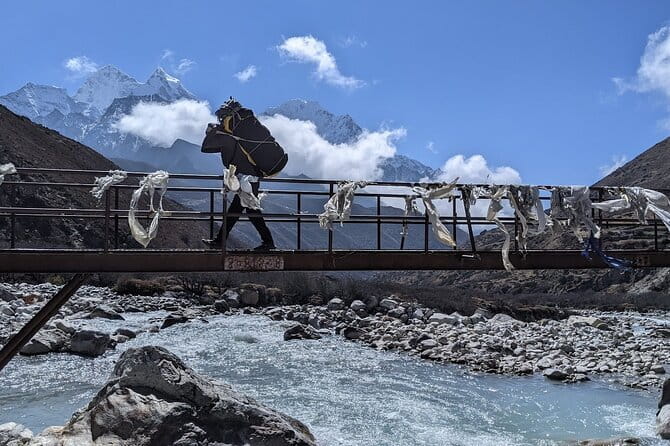
Day three brings one of the classic Khumbu walks. You follow pine forest beside the Dudh Koshi River, pass Benkar, and cross the Hillary Bridge before reaching Monjo. The trail then continues toward Namche Bazaar, with a final steep ascent before the famous mountain views begin.
Namche is the region’s main trading center and an important rest point. The town sits at about 3,440 meters and offers restaurants, markets, massage centers, and spa services. Those comforts do not remove the altitude, but they make Namche a useful place to pause, eat well, and check how you are feeling.
Day 4: Namche acclimatization and Hotel Everest View
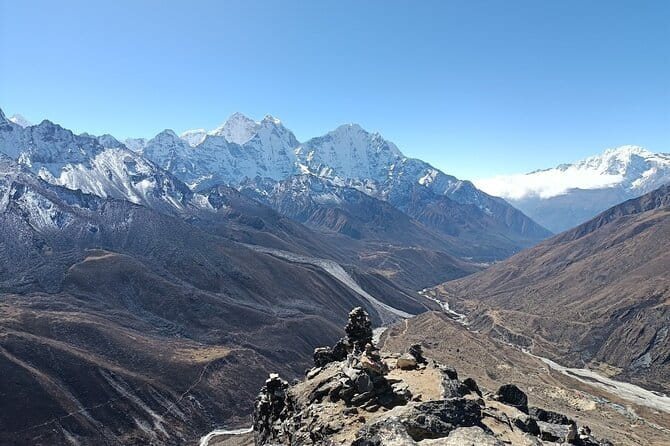
Day four is your first dedicated acclimatization day. Instead of spending the whole day lying around, you hike toward Syangboche beneath Khumbila Peak. The plan follows the familiar high-altitude idea of climbing higher during the day and sleeping lower at night.
One stop is Hotel Everest View, listed at about 3,880 meters inside Sagarmatha National Park. You can pause there for coffee and wide views of Everest, Ama Dablam, Lhotse, and other peaks. The hotel visit has an extra admission charge, so bring money if you want to go inside.
You return to Namche for several hours of rest and free time. This is a good day to enjoy the town without rushing. I particularly like this part of the schedule because it gives you a proper break before the trail becomes higher, colder, and more exposed.
Days 5 and 6: Tengboche and Pangboche
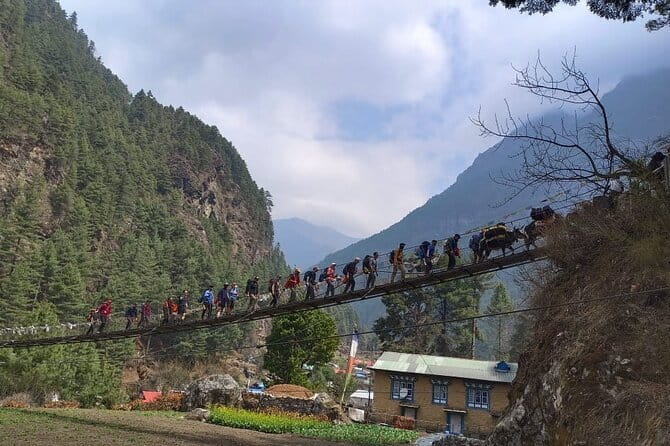
From Namche, the route follows the Dudh Koshi for a while before crossing into the Imja Khola Valley. You cross another suspension bridge and continue toward Tengboche, home to Tengboche Gompa.
The monastery is one of the cultural highlights of the trek. The itinerary includes the stop, so you are not simply walking through mountain scenery. You also get a chance to see an important religious site connected with the Sherpa communities of the Khumbu.
Day six continues toward Pangboche. The route offers views of Ama Dablam and Lhotse, along with high mountain scenery that changes as you gain altitude. The schedule lists about five hours of hiking, though the exact experience will depend on your pace and trail conditions.
Pangboche is also written as Pangboche Buddhist Monastery in the itinerary. That stop adds another cultural note to the walk. I like that the program includes monasteries and villages instead of focusing only on the final Base Camp photograph.
A few more treks around Kathmandu worth a look
- Everest Base Camp Trek with Helicopter Return from Gorakshep to Lukla
★ 5.0 · 161 reviews - Everest Base Camp Trek with Helicopter Return to Lukla – 10 Days
★ 5.0 · 34 reviews - Everest Base Camp Trek with Helicopter Return -11 Days
★ 5.0 · 12 reviews - Helicopter Return Everest Base Camp Trek, KTM-LUKLA & Gorakshep-KTM by Heli
★ 5.0 · 9 reviews
Day 7: Dingboche and the second acclimatization day
Dingboche is your second acclimatization point. The day follows the climb-high, sleep-low approach, with a hike toward higher ground before returning to Dingboche.
The schedule allows around five hours for this outing. At this altitude, five hours can feel quite different from five hours at home. You should keep your pace steady, follow your guide’s advice, drink regularly, and speak up if you feel unwell.
The attraction here is not a single monument. It is the gradual change in the mountains around you and the chance to prepare for the final push toward Gorakshep and Everest Base Camp. The rest day is one of the trip’s most important safety features, even though you still hike.
Day 8: Lobuche and the Thukla memorials
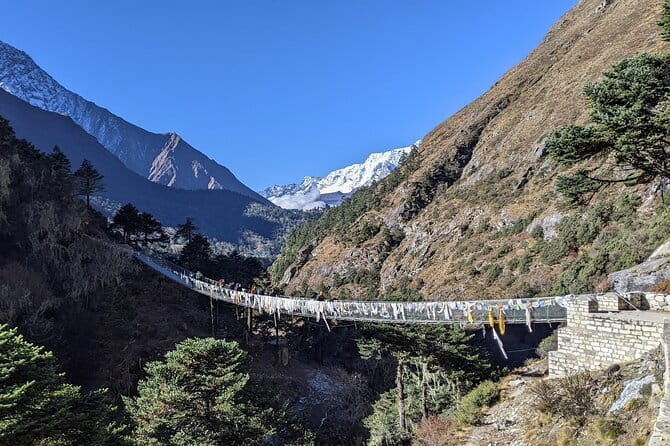
The walk to Lobuche is described as relatively light in distance but significant in altitude gain. You follow slopes toward the wide valley of Dughla and then pass the memorial area near Thukla.
The memorials honor climbers and Sherpa guides who died on Everest and nearby peaks. This is a quiet, serious part of the route. It gives the trek a human side, reminding you that the mountains are not just a backdrop for photographs.
The schedule shows a 14-hour stop duration for Lobuche, which appears to represent the overnight portion rather than fourteen hours of hiking. You should confirm the exact daily walking times with Life Himalaya Trekking before departure, since the itinerary also uses unusual time labels elsewhere.
Lobuche is high, and sleeping there can be challenging. This is where the value of an experienced guide becomes clear. Past trips have highlighted guides such as Tika, Rabin, Pramod, and Promod for encouragement, organization, and attention to safety.
Day 9: Everest Base Camp and Gorakshep
The biggest walking day takes you from Lobuche toward Gorakshep and then onward to Everest Base Camp. The route follows rough glacier terrain and takes about four hours to reach Gorakshep, according to the schedule. From there, you continue to Base Camp.
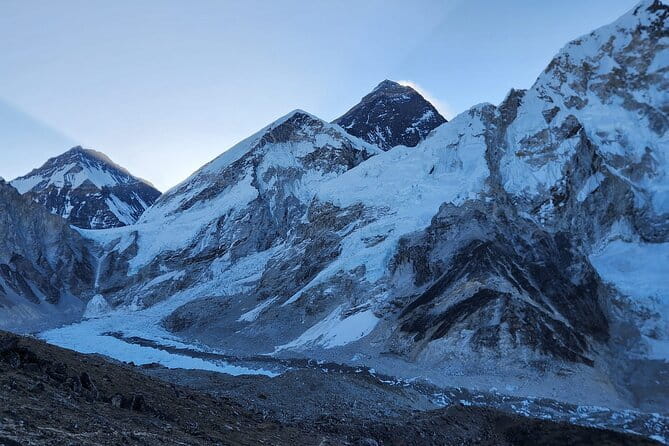
Everest Base Camp itself is the emotional high point of the trek. You are at the foot of the route used by climbers preparing for Everest, surrounded by the Khumbu peaks and glacier terrain. The exact view and atmosphere can vary, but the achievement is the same: you have walked into one of the world’s best-known mountain destinations.
The program lists about six hours for the Base Camp stop and includes admission. You return to Gorakshep for the night. Since the helicopter return is included from Everest Base Camp or Gorakshep to Lukla, ask the operator to explain the exact sequence for your departure. The schedule also includes Kala Patthar on day ten, so timing may depend on the flight plan and local operating conditions.
Day 10: Kala Patthar and the helicopter return
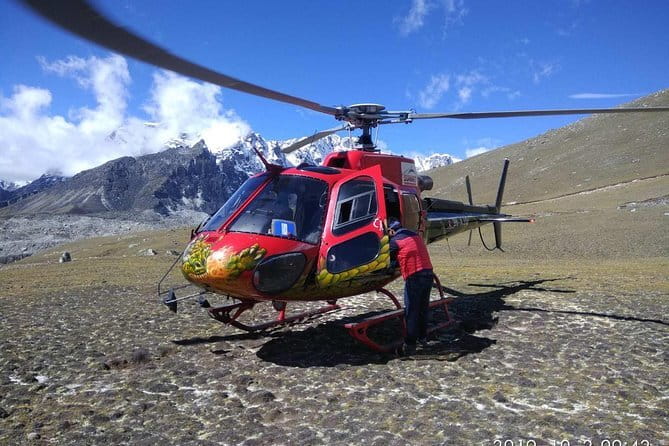
The final morning begins early with a climb to Kala Patthar for sunrise. This is often the best viewpoint for Everest itself, along with a broad view of the surrounding peaks. The walk is short in calendar terms but demanding because you are already at high altitude and may be tired from Base Camp.
After Kala Patthar, the package includes a shared helicopter flight from the Everest Base Camp area, listed as Gorakshep, to Lukla. From Lukla, the included helicopter service continues to Kathmandu. The flight arrangement saves you from retracing the long trail.
A shared helicopter is practical rather than private. You pay less than you would for exclusive use, but the exact flight timing and seating arrangement are not entirely yours to control. Ask how the two helicopter legs connect, especially because the published schedule places both the Kala Patthar walk and the return flight on the final day.
What the $3,332 price really includes
At $3,332 per person, this is not a budget tea-house trek. The price is buying time, helicopter transport, staff support, and a compact itinerary.
Included are shared helicopter flights from Kathmandu to Lukla and from Gorakshep to Lukla, plus the onward Lukla to Kathmandu flight. You also receive private airport transfers, two Kathmandu hotel nights with breakfast, twin-share lodge accommodation during the trek, and meals on the trail.
The package lists ten breakfasts, eight lunches, and eight dinners. Lunch and dinner in Kathmandu are not included, as are drinks and snacks. That distinction matters because food and drinks at high altitude can add up.
You also receive:
- Sagarmatha National Park and Pasang Lhamu Rural Municipality permits
- A government-licensed guide
- One porter for every two people
- Staff wages, food, transport, equipment, and accidental insurance for the guide and porters
- A warm down jacket and sleeping bag rated to minus 20 degrees Celsius, returned after the trip
- A duffel bag, T-shirt, trail map, and first-aid supplies
- An oximeter for the staff and group
- A farewell dinner at a traditional Nepali cultural restaurant
- An achievement certificate
- Emergency and rescue coordination
The luggage allowance is 10 kilograms for a large bag and 5 kilograms for a handbag. Pack carefully. The porter system makes the trek easier on your back, but it does not remove the need to carry your daily essentials.
Travel insurance is not included. You need cover for trekking and rescue or evacuation up to 5,500 meters. International flights, the Nepal entry visa, Kathmandu lunches and dinners, beverages, snacks, and any service not listed are also your responsibility.
Lodges, meals, and the deluxe label
The package uses twin-share, best available lodge accommodation along the route. That is more comfortable than carrying camping equipment, but you should keep your expectations realistic. The itinerary does not promise luxury rooms in the high mountains.
The two nights in Kathmandu are in a three-star hotel. Along the trail, the main benefit is having a prepared place to sleep, eat, and recover after long walking days. If you are comparing this trip with a standard Everest Base Camp trek, the helicopter transport is likely the larger comfort upgrade than the lodge label.
The included sleeping bag and down jacket are useful. They reduce the amount of specialist cold-weather equipment you need to bring, although you should still pack suitable personal layers and footwear for a high-altitude trek.
How strong do you need to be?
The operator states that you should have a strong physical fitness level. That advice should be taken seriously. This is not a sightseeing tour with a few optional walks. You hike for several hours on multiple days, gain altitude steadily, and reach Everest Base Camp after a demanding sequence.
The two acclimatization days help, but the ten-day format remains brisk. I would consider this trip best for someone who already handles long walks well and is comfortable with early starts, basic mountain lodging, and changing plans at altitude.
You also need to be honest about your health before booking. The package includes first-aid equipment and an oximeter, and the company offers emergency coordination, but those services do not replace insurance or personal preparation.
What the service seems to do well
The strongest part of the operation is the human support. The company arranges airport pickup, hotel transfers, permits, staff, porters, meals, gear, and return transport in one package. That reduces the number of moving parts you must manage in Kathmandu.
Past trips have singled out guides including Tika, Rabin, Pramod, and Promod. The useful pattern is not just friendliness. The guides are described as encouraging, flexible with personal pace, attentive during the trek, and focused on safety. That matters most when you are tired or struggling with altitude.
The trip can also be adjusted for individual or group needs, according to the tour information. Ask for any changes in writing before you pay, since a shorter trip leaves less spare time if you want to add rest days.
Who should book this Everest Base Camp trek?
I would choose this package if you want the full classic route but have about ten days, prefer organized support, and value helicopter transport over a longer return walk. It suits people who want villages, monasteries, high mountain views, Base Camp, and Kala Patthar without arranging every permit, lodge, porter, and flight themselves.
I would hesitate if you want a slow trek with plenty of spare days. I would also think twice if you dislike shared transport, have limited hiking experience, or expect hotel-style comfort throughout the route.
The free cancellation policy allows cancellation up to 24 hours before the experience start time for a full refund. Changes or cancellations inside that period are not accepted for a refund, and local Nepal time controls the cutoff.
Final verdict: a fast, well-supported route to Base Camp
This is an expensive trek, but the price includes the costly parts: multiple helicopter flights, staff, permits, meals, accommodation, airport transfers, and useful cold-weather equipment. The package also gives you two acclimatization days and includes both Everest Base Camp and Kala Patthar.
My main advice is to confirm the final helicopter schedule, the meaning of the unusual time entries, and the exact lodge standards before booking. If you are fit, short on time, and happy with a brisk private trip supported by local guides and porters, this is a strong way to reach Everest Base Camp. If you want the journey to unfold slowly, choose a longer itinerary instead.
FAQ
How long is the Everest Base Camp trek?
The experience is planned for 10 days, including the Kathmandu arrival and departure arrangements, trekking days, acclimatization days, and helicopter flights.
Where does the experience start?
The tour begins with airport pickup at Tribhuvan International Airport in Kathmandu. The provider’s meeting point is Life Himalaya Trekking on Narsingh Chowk Marg, Kathmandu.
Is helicopter transport included?
Yes. The package includes a shared helicopter from Kathmandu to Lukla, a shared helicopter from the Everest Base Camp area or Gorakshep to Lukla, and a shared helicopter from Lukla to Kathmandu.
Is accommodation included?
Yes. You receive two nights in a three-star Kathmandu hotel with breakfast and twin-share lodge accommodation during the trek.
Are meals included?
Ten breakfasts, eight lunches, and eight dinners are included. Lunch and dinner in Kathmandu, drinks, and snacks are not included.
Is a guide provided?
Yes. The package includes an experienced, government-licensed trekking guide. Past trips have used guides named Tika, Rabin, Pramod, and Promod.
Is porter support included?
Yes. The package provides one porter for every two people. Porter costs, food, transport, equipment, wages, and accidental insurance are included for the trekking staff.
What luggage allowance is provided?
The stated allowance is 10 kilograms for a large bag and 5 kilograms for a handbag.
Do I need travel insurance?
Yes. Travel insurance is not included, and you need coverage for rescue and evacuation up to 5,500 meters.
Can I cancel for a full refund?
You can cancel up to 24 hours before the experience start time for a full refund. Cancellations or changes made less than 24 hours before the start time are not accepted for a refund.
Recently added around Kathmandu
- Ghorepani Poon Hill Trek★ 5.0 · 16 reviews
- Private Manaslu Circuit Trek at Himalayas★ 5.0 · 3 reviews
- Amazing 1 Day Trekking Experience in Kathmandu Nepal★ 5.0 · 24 reviews
- Ghorepani Poonhill Trek★ 5.0 · 5 reviews
- Upper Mustang Trekking★ 5.0 · 2 reviews
- Upper Mustang Trekking★ 3.0 · 2 reviews
- Upper Mustang Trekking★ 5.0 · 4 reviews
- Upper Mustang Trek★ 5.0 · 5 reviews
Everest Base Camp Treks, compared.






Browse the lists this tour appears in