
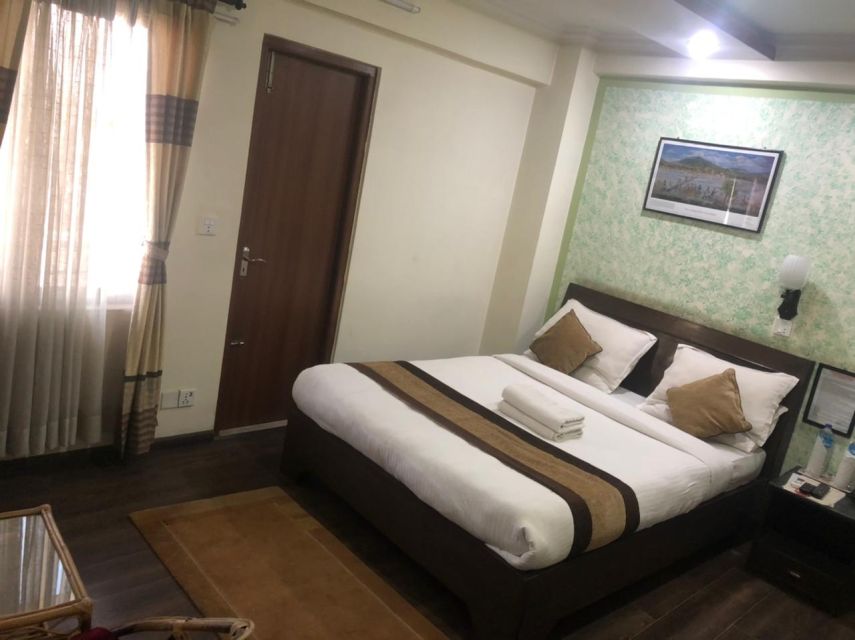
REVIEW · KATHMANDU
From Kathmandu: 11-Day Annapurna Base Camp Trek
Mountain views come with a real climb. This 11-day Annapurna Base Camp trek packs Nepal’s best scenery into a short route, from Pokhara’s lake setting to Gurung villages, waterfalls, rhododendron forests, and the high bowl of Annapurna Base Camp. I especially like the compact schedule and the fact that permits, domestic flights, meals on the trail, porters, and mountain gear are included.
I also like the human side of the trip. The guides are described as kind, helpful, and ready to answer questions about both the trek and local life. The main drawback is the pace: you reach 4,130 meters in only six trekking days, then walk seven to eight hours back to Bamboo. This is a serious mountain holiday, not a gentle sightseeing tour.
What makes this trek worth considering
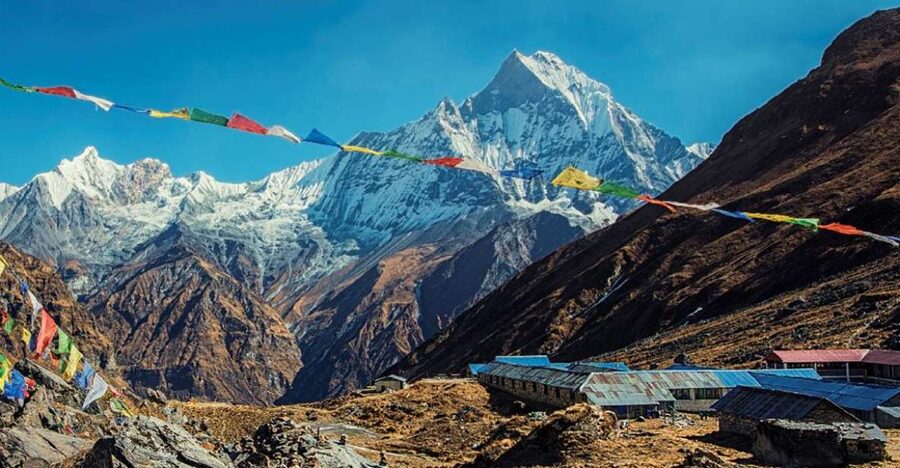
- Annapurna I reaches 8,091 meters, and the route also brings you near Machhapuchhre Base Camp at 3,700 meters.
- Ghandruk offers a strong cultural start, with Gurung communities, traditional village life, and a museum visit if time allows.
- The price includes major costs, including Kathmandu and Pokhara hotels, flights, permits, trail meals, porters, a down jacket, and sleeping bag.
- The route works well for limited vacation time, taking 11 days instead of the 14 days used by the longer Annapurna Sanctuary option.
- Spring and autumn offer the best odds of clear views, while winter brings fewer people but much colder conditions.
- A verified March 2023 booking received five stars, with special praise for the organization and the helpful guides.
From Kathmandu to Pokhara: Setting up the mountain trip
Your first night is in Kathmandu at 1,300 meters, with a welcome dinner included. This gives you a simple arrival day before the mountain section begins, though lunch in Kathmandu is not included. Airport pickup is optional from accommodation in Thamel, so check the arrangements carefully if you stay elsewhere.
On day two, you fly to Pokhara. The flight takes about 30 minutes, and the right side of the plane is recommended for Himalayan views. This is one of the trip’s smart features: flying saves a long road journey and gets you quickly to Pokhara, at 823 meters.
Pokhara is known as the Lake City and offers views toward Dhaulagiri, Manaslu, Machhapuchhare, and Annapurna. You will not have much free time here on the way into the mountains, but the overnight stay helps break up the journey.
From Pokhara, a private vehicle takes you about one hour and 20 minutes to Nayapul, near Birethanti. The walk then begins. You should think of this first day as both a scenic introduction and a test of your legs, since the trek to Ghandruk takes five to six hours.
More Annapurna Treks in Kathmandu
- Annapurna Circuit Trek with Tilicho Lake
★ 5.0 · 368 reviews - Annapurna base camp trek 5 Days
★ 5.0 · 252 reviews - 14-Day Private Annapurna Base Camp Trek
★ 5.0 · 180 reviews
Ghandruk: Gurung culture and the first long walk
Ghandruk is one of the most appealing stops on the route. The village is mainly inhabited by the Gurung community, and a visit to the Gurung museum may be possible if your arrival time allows it.
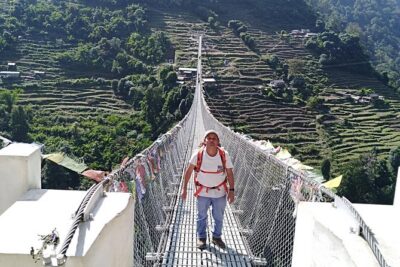
The cultural element matters here. This is not just a route through trees and mountain passes. You are moving through lived-in villages and terraced farmland, with the chance to learn about a local community through your guide. The trip includes a guide who speaks English and holds a government license, so questions about local customs and daily life are part of the value.
The five to six hour walk from Birethanti means you need to arrive ready for activity. You will have lunch and dinner included on trek days, along with breakfast, so food is handled once you leave the city hotels.
Accommodation during the mountain section is in teahouses or guesthouses. These are practical places to sleep rather than luxury hotels. The price includes seven nights in this style of lodging, plus three nights in three-star hotels in Kathmandu and Pokhara.
Ghandruk to Chhomrong: A village-to-village rhythm
Day three takes you from Ghandruk to Chhomrong, at 2,170 meters. The walk takes five to six hours, keeping the daily schedule active but manageable compared with the harder days ahead.
Chhomrong is an important point on the route because the elevation begins to feel more serious. The itinerary does not list a separate acclimatization day, so you should take your guide’s advice seriously and report any problems promptly. A medical kit is carried by the trek leader, but personal travel and rescue insurance is not included.
The walking pattern here is part of the appeal. You are not rushing from one famous viewpoint to another by vehicle. You move through villages, farmland, forest, and mountain country at walking speed. That gives you time to notice changing vegetation and the way settlements fit along the route.
Bamboo and Deurali: Forest, waterfalls, and higher ground
The fourth day runs from Chhomrong to Bamboo and takes four to five hours. This is a shorter walking day, but the route still gains altitude, reaching Bamboo at 2,310 meters.
The scenery becomes more forested as you continue. The trip description highlights lush rhododendron forests and cascading waterfalls, two features that help make this route more than a simple high-altitude march. Spring is especially attractive for this reason, when the weather is generally warm and sunny and the forests are in season.
From Bamboo, day five continues to Deurali at 3,230 meters. The walking time drops to three to four hours, but the altitude rises by nearly 1,000 meters from Bamboo. You will want to move steadily and avoid treating the shorter duration as an invitation to hurry.
At Deurali, you are already above 10,000 feet. The scenery should feel more open and mountainous, but conditions can also become colder and more demanding. The included down jacket and sleeping bag are useful here, especially because teahouse accommodation is basic and the temperature can be harsh in winter.
Same trailhead, a longer or shorter day out:
- Everest Base Camp Trek – 14 Days
★ 5.0 · 1,499 reviews - Everest Base Camp Trek
★ 5.0 · 842 reviews - Everest Base Camp Trekking
★ 5.0 · 485 reviews - Everest Base Camp Trekking – 13 Day
★ 5.0 · 365 reviews
Annapurna Base Camp via Machhapuchhre Base Camp
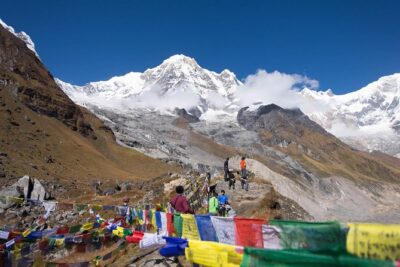
Day six is the high point of the trip, both literally and emotionally. You walk from Deurali to Machhapuchhre Base Camp at 3,700 meters, then continue to Annapurna Base Camp at 4,130 meters. The total walking time is five to six hours.
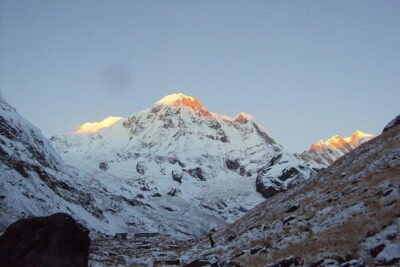
Machhapuchhre is also known as Fishtail, and the route brings you into the mountain world associated with the Annapurna massif. Annapurna I rises to 8,091 meters, making it the 10th highest mountain in the world. The massif also includes 13 peaks above 7,000 meters and 16 more above 6,000 meters.
The base camp itself is the main prize. You are not climbing Annapurna I, but you are reaching the place used as a staging point for expeditions to the mountain. The setting gives you wide mountain views and a strong sense of scale.
This is also the day when the trip’s short format matters most. You reach 4,130 meters without a spare rest day built into the schedule. The experience may suit a fit hiker with limited time, but it is less forgiving than a longer plan. If you want more breathing room, the 14-day Annapurna Sanctuary trek is the better comparison.
The long return to Bamboo
Day seven goes from Annapurna Base Camp back to Bamboo and takes seven to eight hours. The route is downhill overall, but a long descent can be hard on knees and tired legs.
You should not read the downhill direction as easy. The route still requires concentration, and the day comes immediately after reaching the trek’s highest point. Good footwear and a realistic attitude toward the schedule will matter.
One benefit of returning by the same general route is that familiar villages, forests, and trail sections look different when viewed in reverse. You also get another chance to appreciate the changes in altitude, from the high mountain basin back toward forest country.
Jhinu Danda and the final walk to Naya Pul
On day eight, you walk from Bamboo to Jhinu Danda at 1,760 meters. The schedule allows five to six hours, and the sharp drop in elevation should bring a noticeable change in the surroundings.
Jhinu Danda is the final overnight stop listed in the mountain route. The itinerary does not promise a specific activity there, so you should not assume a hot spring visit or any extra excursion is included. The value of the stop is mainly its position on the route and the chance to move lower after the high section.
Day nine takes about six hours of walking to Naya Pul, followed by a one-hour drive to Pokhara. This is your transition from trail life back to town life. The return to Pokhara gives you a more comfortable base before the flight to Kathmandu.
Lunch in Pokhara is not included, so budget for that meal. Extra nights in Kathmandu or Pokhara are also not included if your plans change, you arrive early, depart late, or return from the mountain ahead of schedule.
Kathmandu, departure, and what the $1,699 covers
Day ten is the return flight from Pokhara to Kathmandu. Day eleven is departure, with transportation to the airport arranged by Alpine Club of Himalaya.
At $1,699 per person, the trip is not a bare-bones walking package. The cost includes round-trip domestic flights, private ground transport, three hotel nights with breakfast, seven teahouse or guesthouse nights, all breakfast, lunch, and dinner during the trek, and welcome and farewell dinners.
It also includes an English-speaking, government-licensed trek leader; porter service at a ratio of one porter for two trekkers; staff wages, insurance, food, equipment, and lodging; permits for the Annapurna Conservation Area and TIMS; taxes; a medical kit; a duffel bag; a T-shirt; a trekking map; a down jacket; and sleeping bag use.
That list gives the price solid value, especially for someone who would rather not arrange flights, permits, porters, and mountain equipment separately. The main extra costs are your international airfare, Nepalese visa, travel and rescue insurance, personal spending, excess baggage, and lunches in Kathmandu and Pokhara.
Porter service is worth noting. One porter is shared by two trekkers, so you should pack with that arrangement in mind rather than expecting unlimited personal luggage. The duffel bag is supplied, which helps simplify preparation.
The best months, and the less comfortable ones
September through November and March through May are presented as the best seasons. You can expect generally sunny, warm weather and better chances of clear mountain views during these periods.
Winter, from December through February, may appeal if you want fewer people and more quiet on the trail. The tradeoff is harsh cold, especially at higher elevations. The included sleeping bag and down jacket help, but they do not turn a winter trek into a mild one.
June through August is monsoon season. Rain can affect the route and reduce mountain visibility. If panoramic views are your main reason for booking, spring or autumn is the safer choice.
Who should book this Annapurna route?
I would point this trip toward a fit hiker who has 11 days available and wants the famous base camp without committing to a longer 14-day route. The itinerary offers a clear structure, support staff, transport, and equipment, which is useful if you are trekking in Nepal for the first time.
You should be comfortable with five to eight hours of walking on several days. You should also understand that the route reaches 4,130 meters and has no listed rest day. The short format saves time, but it leaves less room for an unhurried pace.
The trip also suits someone who values local contact. The guide’s role is not limited to leading the path. One verified booking praised the organization and described the guides as friendly and helpful, with no questions left unanswered about logistics or local subjects. That is exactly the kind of support you want when the route becomes tiring or confusing.
Small practical details that matter
Bring your passport. The activity is conducted in English, and pickup is available from accommodation in Thamel, Kathmandu.
Cancellation is flexible up to 24 hours before the start for a full refund, and you can reserve now and pay later. These terms are useful when flight plans are still taking shape, but they do not replace travel and rescue insurance, which you must arrange yourself.
The trip has a five-star rating from two verified bookings, including a March 8, 2023 booking from Germany. That is a very small sample, so I would treat the rating as encouraging rather than final proof. The specific praise for organization and helpful guides is more useful than the number alone.
Should you book the 11-day Annapurna Base Camp trek?
Book it if you want Annapurna Base Camp, have limited time, and prefer a package that handles flights, permits, meals, porters, and mountain gear. The route gives you villages, forest, waterfalls, terraced fields, and major Himalayan views in a tightly planned 11 days.
Choose the longer 14-day Annapurna Sanctuary option if you want more time in the mountains or a less compressed schedule. Also think twice about this version if you dislike long walking days or cold, basic accommodation.
For the right hiker, the $1,699 cost is reasonable because so many major expenses are included. The strongest reasons to choose it are the helpful English-speaking support, the cultural stop in Ghandruk, and the chance to reach 4,130-meter Annapurna Base Camp without arranging the complex pieces yourself.
FAQ
How long is the Annapurna Base Camp trek?
The full experience lasts 11 days, including arrival in Kathmandu, flights to and from Pokhara, the trek, and departure.
What is the highest point reached?
The route reaches Annapurna Base Camp at 4,130 meters, or 13,545 feet. It also passes through Machhapuchhre Base Camp at 3,700 meters.
Is transportation from Kathmandu to Pokhara included?
Yes. Domestic flights between Kathmandu and Pokhara are included in both directions. Private ground transportation listed in the schedule is also included.
How many nights are spent in teahouses or guesthouses?
The package includes seven nights in teahouse or guesthouse accommodation during the trek.
Are meals included?
Breakfast is included at the Kathmandu and Pokhara hotels. Breakfast, lunch, and dinner are included during the trek, along with welcome and farewell dinners. Lunch in Kathmandu and Pokhara is not included.
Is a guide provided?
Yes. The group has an experienced, English-speaking, government-licensed trek leader.
Is porter service included?
Yes. Porter service is included at a ratio of one porter for every two trekkers.
What months are best for this trek?
September through November and March through May are identified as the best seasons. Winter can offer fewer people but colder conditions, while June through August is the monsoon season.
Recently added around Kathmandu
- Ghorepani Poon Hill Trek★ 5.0 · 16 reviews
- Private Manaslu Circuit Trek at Himalayas★ 5.0 · 3 reviews
- Amazing 1 Day Trekking Experience in Kathmandu Nepal★ 5.0 · 24 reviews
- Ghorepani Poonhill Trek★ 5.0 · 5 reviews
- Upper Mustang Trekking★ 5.0 · 2 reviews
- Upper Mustang Trekking★ 3.0 · 2 reviews
- Upper Mustang Trekking★ 5.0 · 4 reviews
- Upper Mustang Trek★ 5.0 · 5 reviews
Annapurna Base Camp Treks, compared.
Trekking in Annapurna/Langtang/Everest/Upper Mustang regions
Read our review →
Kathmandu to Annapurna Base Camp (ABC) 5-Day Trek
Read our review →Browse the lists this tour appears in