
REVIEW · KATHMANDU
Annapurna Base Camp Trekking
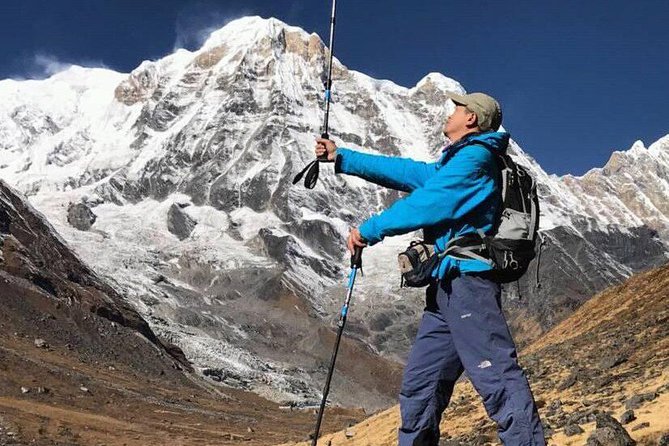
The mountains do the talking here. This 14-day Annapurna Base Camp trek combines Poon Hill sunrise views with the high Himalayan amphitheater at 4,130 meters, while taking you through Gurung, Magar, and Thakali villages. I like the mix of scenery and culture, and I also like that transport, meals, lodging, a guide, and porter are arranged in one package.
The main caution is the physical demand. You need a moderate fitness level, and the long trekking days can be tiring, especially as you gain altitude. The price of $1,779 per person is not small, but it covers much of the trip’s complicated planning and support.
Quick Take: The Details That Matter Most
- Poon Hill adds a superb early reward: You rise for sunrise on Day 5, with views toward the Annapurna range before continuing deeper into the mountains.
- Annapurna Base Camp reaches 4,130 meters: This is a serious mountain destination, but the route is described as moderate rather than technical.
- One porter serves two people: The package provides one insured porter for every two participants, plus an insured trekking guide.
- The trek includes full board: Breakfast, lunch, and dinner are included during the mountain section, but drinks, bottled water, hot showers, heaters, desserts, and city meals cost extra.
- The group must have at least two people: This is a private activity, so only your own group participates.
- The support team receives strong praise: Guides named in the feedback include Anuj, Hari, Expansion, Ramesh, Gyanendra, and Gyan Bahadur Karki. The repeated theme is careful organization and personal support.
Why Annapurna Base Camp Is Such a Good Choice
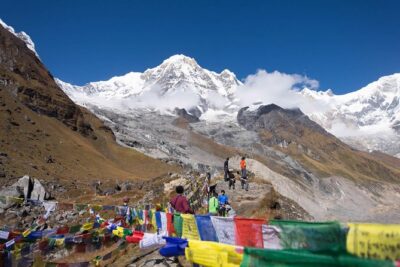
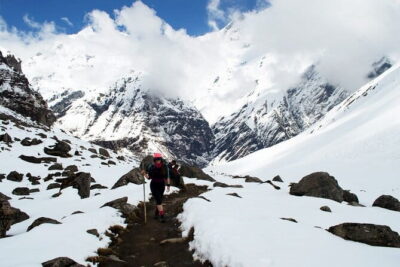
Annapurna Base Camp gives you a concentrated Himalayan experience without asking you to cross a high mountain pass. You begin among lower foothills and traditional villages, walk through rhododendron forest, and gradually reach colder mountain country. The payoff is a circular mountain setting surrounded by Annapurna III, Annapurna South, Hiunchuli, Fang, Machhapuchhare, and Gangapurna.
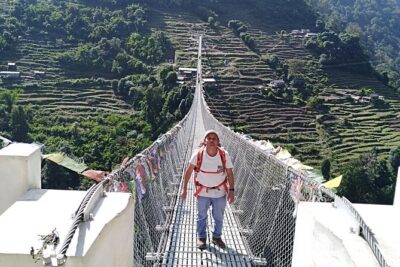
I especially like the route’s change of mood. Near the start, you see village life and terraced hillsides. Higher up, the trees thin out and the peaks take over. This is not simply a walk from one lodge to another. It is a gradual shift from Nepal’s settled middle hills into a glacier-ringed mountain basin.
You also get two different kinds of mountain viewing. Poon Hill provides an open sunrise viewpoint, while Annapurna Base Camp places you inside the mountain range. That combination gives the trek a stronger rhythm than a route focused on only one destination.
The cultural side matters, too. The path passes through communities associated with the Gurung, Magar, and Thakali people. The itinerary specifically encourages stopping for conversation, which is worthwhile if you are willing to slow down rather than treat each village as a quick photo stop.
More Annapurna Treks in Kathmandu
- Annapurna Circuit Trek with Tilicho Lake
★ 5.0 · 368 reviews - Annapurna base camp trek 5 Days
★ 5.0 · 252 reviews - 14-Day Private Annapurna Base Camp Trek
★ 5.0 · 180 reviews
Days 1 and 2: Kathmandu Arrival and Phewa Lake
Your trip begins with arrival at Tribhuvan International Airport in Kathmandu. Arrival transport is included, as are Kathmandu accommodations with breakfast. The first day is mainly about getting settled, recovering from your flight, and meeting the practical needs of a high-altitude trek.
On Day 2, you travel to Pokhara and have time to walk around Phewa Lake. The package includes the Kathmandu to Pokhara drive, so this portion is by road rather than the later flight back to Kathmandu. The itinerary gives this day a full-day slot, but the exact amount of free time will depend on road conditions and the transfer schedule.
Pokhara is a useful staging point. It gives you a calmer setting before the trail begins and lets you enjoy the lake and mountain-town atmosphere. Do not expect the city portion to be fully covered by the package: main meals in cities, drinks, and similar personal costs are excluded.
Days 3 and 4: Nayapul, Ulleri, and Ghorepani
The trekking section starts with a drive from Pokhara to Nayapul, described as roughly an hour from Pokhara. From Nayapul, you begin walking toward Ulleri and stay overnight in a tea house or lodge.
Ulleri is an early test of your legs. The route then continues toward Ghorepani on Day 4. These days take you through the lower mountain country, with village scenery and forest rather than the exposed high-altitude setting found near base camp. You should expect the days to be active and tiring even before reaching the highest point.
Tea house lodging is part of the appeal. It keeps you close to the local communities and avoids the feel of a conventional hotel circuit. Comfort is practical rather than luxurious. The package covers the room and meals during the trek, but hot showers, heaters, drinks, desserts, juice, and mineral water are extra.
The supplied schedule gives each of these days a 12-hour block, though that does not necessarily mean you will walk for 12 continuous hours. It is best to ask the operator for the expected walking time and elevation gain before departure.
Day 5: Poon Hill Sunrise
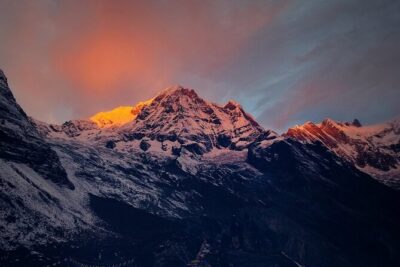
Day 5 begins with sunrise at Poon Hill, listed as a 45-minute stop. The early start is part of the point. You are there for the light on the Annapurna range, not simply for a daytime view.
Poon Hill is one of the route’s smartest features. It gives you a major Himalayan viewpoint before the longer approach to Annapurna Base Camp. If clouds cover the peaks, the experience may be less dramatic, but the viewpoint still helps you understand the scale and shape of the surrounding range.
After sunrise, the trek continues toward Chhomrong. That makes this a demanding day in terms of timing and energy. You will want warm layers, a headlamp, water, and a small camera or phone ready before you leave the lodge.
Same trailhead, a longer or shorter day out:
- Everest Base Camp Trek – 14 Days
★ 5.0 · 1,499 reviews - Everest Base Camp Trek
★ 5.0 · 842 reviews - Everest Base Camp Trekking
★ 5.0 · 485 reviews - Everest Base Camp Trekking – 13 Day
★ 5.0 · 365 reviews
Days 6 and 7: Chhomrong to Deurali
From Chhomrong, the route continues toward Deurali. Chhomrong is an important stop because it marks the transition toward the deeper Annapurna Sanctuary area. The route is still surrounded by villages and forest, but the mountains begin to feel more immediate.
The following day brings you to Deurali for another tea house night. This is where the trip’s moderate classification needs some explanation. You do not need technical climbing skills based on the information provided, but you do need stamina for repeated walking days, uneven paths, stairs, and altitude gain.
The guide is an important part of the package here. The operator provides an insured trekking guide, and the feedback repeatedly praises guides for being supportive and attentive. Named guides include Anuj, Ramesh, Hari, Expansion, and Gyanendra. That range of names suggests you should confirm who will lead your departure rather than assume a specific person is guaranteed.
Days 8 and 9: The Annapurna Mountain Range and Bamboo
Day 8 is presented as a 360-degree view of the Annapurna mountain range. This is the visual center of the trip, with the mountain group arranged around a glacier-covered amphitheater. The itinerary does not clearly label the exact overnight location for this day, so you should ask for a detailed day-by-day elevation and lodging plan before booking.
The named peaks include Annapurna III, Annapurna South, Hiunchuli, Fang, Machhapuchhare, and Gangapurna. The route’s great strength is how close you get to this group on foot. You are not viewing the Himalayas from a distant road or hotel balcony. You gradually walk into their surrounding basin.
Day 9 continues to Bamboo, where you spend the night in a lodge or tea house. The change from high mountain scenery toward forested country helps break up the return journey. It also means the trek is not simply an out-and-back slog. The scenery shifts again as you descend.
Day 10: Jhinu Danda and the Hot Spring
The trek continues to Jhinu Danda, known for its hot spring. This is a welcome feature after several demanding days on foot. The itinerary includes the stop, but it does not specify how much time you will spend there or whether entry costs are separate, so ask the operator for current details.
Jhinu Danda works well in the schedule because it gives you a chance to slow down. A hot spring is not a substitute for rest, but it can make the return section feel less mechanical. You are still in the mountains, yet the day offers a different kind of reward from another viewpoint.
Days 11 and 12: Pothana and the Return to Pokhara
On Day 11, you trek to Pothana and spend the night in a tea house or lodge. By this point, you have completed the main base camp section and are moving toward the road. Pothana provides another middle-hill setting before the return to Pokhara.
Day 12 brings you back to Pokhara, followed by time around Phewa Tal. The package includes the Phedi to Pokhara drive. This is a sensible place to keep the evening easy. You will likely appreciate a proper change of clothes, a relaxed meal, and the chance to enjoy Pokhara without a pack.
Accommodation in Pokhara with breakfast is included, but meals in the city are not. Budget separately for food, drinks, and personal purchases.
Days 13 and 14: Kathmandu and Departure
Day 13 includes a flight from Pokhara to Kathmandu, with airport tax included. A free day in Kathmandu follows, allowing time to visit the city or simply prepare for your onward journey.
The contrast between the mountain section and Kathmandu can be sharp. After quiet trails and small lodges, the capital feels busy and intense. Keep your plans modest if you are tired, since this final day is also useful for handling souvenirs, laundry, or last-minute arrangements.
Day 14 is departure from Kathmandu. Airport arrival and departure transport are included, which removes one common source of confusion at the beginning and end of a Nepal trip.
What the $1,779 Price Covers
The price has solid value if you want a guided trek with transport and meals arranged in advance. It includes:
- Kathmandu and Pokhara accommodation with breakfast
- Tea house accommodation during the trek
- Breakfast, lunch, and dinner during the trekking section
- Arrival and departure transport
- Kathmandu to Pokhara road transport
- Pokhara to Nayapul and Phedi to Pokhara transfers
- Pokhara to Kathmandu flight and airport tax
- A trekking guide with insurance
- One porter for every two people, with insurance
- Trekking duffel bag and regional map
- Government taxes and office service charges
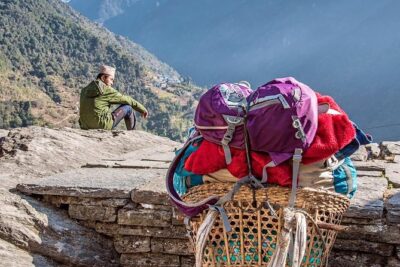
That is a substantial list. The porter arrangement is especially useful because you do not need to carry every item yourself. Still, one porter for two people means you should pack sensibly and confirm the baggage limit.
The package lists 13 breakfasts, 10 lunches, and 9 dinners. That matches a trip with meals included during most of the route, but the wording suggests you should verify exactly which meals are covered on city days and transfer days.
The extra costs are easy to overlook. You pay for international airfare, Nepal’s entry visa, travel insurance, drinks, bottled water, hot showers, heater charges, desserts, juice, and main meals in Kathmandu and Pokhara. Tips for the guide, porter, and driver are also separate.
Who Will Enjoy This Trek Most?
This trip suits you if you want a private, guided Himalayan trek with a clear support system. It is a strong choice for first-time multi-day trekkers who prefer not to arrange every transfer, lodge, meal, and permit detail alone.
Families can also consider it, provided everyone is fit enough for repeated mountain walking. One family group included children aged 14, 16, and 19, and the feedback described the experience as successful. That does not mean the trek is easy for young people. It means a fit family with sensible preparation may find it manageable.
The route is less suitable if you want luxury accommodation, short walking days, or complete flexibility. Tea houses are practical mountain lodges, not resort hotels. The fixed, non-refundable booking condition also means you should be certain about your dates and have travel insurance before paying.
Guide Support and Group Arrangements
The minimum group size is two people, and the activity is private. That gives you more control than a large scheduled group, although the exact amount of flexibility depends on the operator and trail conditions.
The guide and porter system is one of the package’s strongest features. Feedback highlights friendly communication, careful organization, and staff who helped people feel safe and supported. Several names receive specific praise, including Anuj, Gyanendra, Gyan Bahadur Karki, Ramesh, Hari, and Expansion.
You should still ask who is assigned to your trek, how much luggage the porter will carry, and what happens if someone in your group needs a slower pace. Those questions are practical, not fussy. They help turn a promising itinerary into a comfortable one.
Practical Advice Before You Book
You should have a moderate fitness level and be ready for consecutive trekking days. The information does not provide exact walking distances or elevation gain for every day, so request those details before making a final decision.
Plan for changing temperatures. Lower villages, forest sections, and the 4,130-meter base camp will not feel the same. Warm layers, rain protection, sturdy walking shoes, and a headlamp are sensible items, even though the included equipment is limited to a trekking duffel bag and regional map.
Tell the operator about dietary requirements at booking. Meals during the trek are included, but your preferences need to be known in advance.
Finally, buy suitable travel insurance. The tour does not include any form of travel insurance, and high-altitude trekking is not the place to rely on optimism alone.
Should You Book the Annapurna Base Camp Trek?
I would choose this trip if you want a well-supported introduction to Nepal’s mountain trails, especially if the combination of Poon Hill, traditional villages, hot springs, and Annapurna Base Camp appeals to you.
The best reasons to book are the varied route, the included meals and mountain lodging, the guide and porter support, and the chance to experience the Annapurna range from inside its great mountain bowl. The main reasons to hesitate are the demanding schedule, extra costs for drinks and city meals, unclear day-by-day walking detail, and strict non-refundability.
Before paying, confirm the exact walking hours, overnight locations, porter baggage allowance, assigned guide, and what happens if weather disrupts the Pokhara flight. If those answers suit you, the $1,779 cost buys a lot of organization for a serious and memorable Himalayan walk.
FAQ
How long is the Annapurna Base Camp trek?
The full experience lasts approximately 14 days, including arrival in Kathmandu, time in Pokhara, the trek, the return to Kathmandu, and departure.
What is the highest point on the trek?
Annapurna Base Camp is listed at 4,130 meters.
Where does the trek begin?
The walking section begins at Nayapul, reached by road from Pokhara.
Is Poon Hill included?
Yes. The itinerary includes a sunrise visit to Poon Hill on Day 5.
Is accommodation included?
Yes. Kathmandu and Pokhara accommodation with breakfast are included, along with tea house or lodge accommodation during the trek.
Are meals included?
Breakfast, lunch, and dinner are included during the trekking section. Drinks, desserts, juice, mineral water, and main meals in the cities are not included.
Is a guide and porter provided?
Yes. The package includes an insured trekking guide and an insured porter, with one porter provided for every two participants.
Does the package include flights?
It includes the Pokhara to Kathmandu flight and airport tax. International airfare is not included.
Recently added around Kathmandu
- Ghorepani Poon Hill Trek★ 5.0 · 16 reviews
- Private Manaslu Circuit Trek at Himalayas★ 5.0 · 3 reviews
- Amazing 1 Day Trekking Experience in Kathmandu Nepal★ 5.0 · 24 reviews
- Upper Mustang Trekking★ 5.0 · 2 reviews
- Ghorepani Poonhill Trek★ 5.0 · 5 reviews
- Upper Mustang Trekking★ 3.0 · 2 reviews
- Upper Mustang Trekking★ 5.0 · 4 reviews
- Upper Mustang Trek★ 5.0 · 5 reviews
Annapurna Base Camp Treks, compared.
Trekking in Annapurna/Langtang/Everest/Upper Mustang regions
Read our review →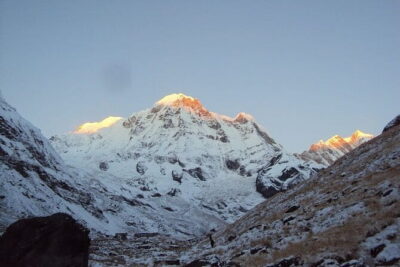
Kathmandu to Annapurna Base Camp (ABC) 5-Day Trek
Read our review →
Browse the lists this tour appears in