
REVIEW · KATHMANDU
14-Day Private Annapurna Base Camp Trek
The Himalayas reward steady feet. This 14-day private trek takes you from Kathmandu through Pokhara, Poon Hill, and the Annapurna Sanctuary to Annapurna Base Camp at 4,230 meters. I like the way the price includes guides, porters, permits, meals, teahouse lodging, airport transfers, and trekking gear. I also like the private format, which lets your guide adjust the pace and daily rhythm to your own group.
The main catch is comfort. Teahouse rooms are shared by four or five people, and the route includes long days, steep stone steps, and a demanding return walk of about 18 kilometers. You also need travel insurance, drinking water, personal gear, Nepal visa fees, and several meals in Kathmandu and Pokhara.
Key points to know before booking
- Base Camp reaches 4,230 meters: You spend several days gaining height before sleeping at the highest point.
- Poon Hill adds a famous sunrise viewpoint: The early hike on Day 5 gives you a second mountain highlight before Base Camp.
- Jhinu Danda brings a hot-spring finish: A soak after several hard walking days is one of the route’s best rewards.
- One porter carries for two trekkers: Pack carefully and keep your personal day bag light.
- The private group format matters: Only your party joins the trek, so the guide can focus closely on your needs.
- The $1,090 price covers a lot: Permits, food, staff costs, hotels, buses, gear, and airport transfers are included, but not everything.
What the $1,090 price really buys
At $1,090 per person, this trek offers solid value if you want a guided Himalayan trip without arranging each moving part yourself. The fee covers airport pickup and drop-off, three-star twin-room hotels in Kathmandu and Pokhara, tourist bus transport between those cities, teahouse lodging during the trek, three meals a day on trekking days, permits, a guide, porters, staff costs, and government charges.
You also receive use of a duffle bag, trek map, down jacket, and sleeping bag. That can save money and luggage space, especially if you do not already own cold-weather trekking equipment.
The price does not cover every expense. You pay for lunch and dinner in Kathmandu and Pokhara, drinks and bottled water, your Nepal visa, travel insurance, personal trekking equipment, tips, and private transport or airfare to and from Pokhara. Read that list carefully. The included tourist bus is useful, but it is not the same as a private car or a domestic flight.
Meals during the trek are ordered from a menu, which gives you more choice than a fixed meal plan. Your guide and porter costs, food, accommodation, equipment, salaries, and accidental insurance for staff are included. That all-in structure makes budgeting easier, though you should still carry money for drinks, snacks, and tips.
More Annapurna Treks in Kathmandu
- Annapurna Circuit Trek with Tilicho Lake
★ 5.0 · 368 reviews - Annapurna base camp trek 5 Days
★ 5.0 · 252 reviews - Annapurna Base Camp Trekking
★ 5.0 · 116 reviews
Kathmandu arrival and the first bus to Pokhara
Day 1 is deliberately light. You are collected at Tribhuwan International Airport and taken to your Kathmandu hotel. The package includes airport transfers and accommodation, giving you a place to settle in before the mountain days begin.
Day 2 takes you from Kathmandu to Pokhara by tourist bus. The drive is listed at six to seven hours, so this is a full transport day rather than a quick hop. Pokhara sits at 910 meters, far below Base Camp, which gives your body time to begin adapting before the trail rises.
Pokhara also serves as the practical base for the trek. The package includes a three-star twin room here, along with breakfast, but lunches and dinners are your responsibility in town. Keep this in mind when comparing the advertised price with your final spending.
Tikhe Dhunga begins the walking days
On Day 3, you travel from Pokhara to Tikhe Dhunga and begin walking. The route covers about nine kilometers in four hours and finishes at 1,495 meters.
This is a sensible first walking day. You get a clear introduction to the pace of the route without immediately sleeping at extreme altitude. The village setting and local communities begin to replace city life, and your guide can help you settle into the routine of walking, eating, and resting.
The schedule gives you a walking time, not a guaranteed finish time. Breaks, trail conditions, meal stops, and the pace of the slowest person in your group all matter. A private trip helps here because you are not tied to the speed of a large mixed party.
The stone steps to Ghorepani
Day 4 is tougher. You walk 13 kilometers from Tikhe Dhunga to Ghorepani, with about seven hours on foot, gaining height to 2,850 meters.
This is one of the route’s major climbing days. The distance is manageable on paper, but repeated stone steps can make it feel longer. Use trekking poles if you have them, take regular breaks, and do not race simply because the trail looks close on the map.
Ghorepani is important because it places you near Poon Hill. It also marks the point where the altitude becomes more noticeable. Your guide should be watching how you feel, and you should speak up about headaches, unusual tiredness, or poor sleep rather than trying to prove anything.
Same trailhead, a longer or shorter day out:
- Everest Base Camp Trek – 14 Days
★ 5.0 · 1,499 reviews - Everest Base Camp Trek
★ 5.0 · 842 reviews - Everest Base Camp Trekking
★ 5.0 · 485 reviews - Everest Base Camp Trekking – 13 Day
★ 5.0 · 365 reviews
Poon Hill, Tadapani, and the best early mountain views
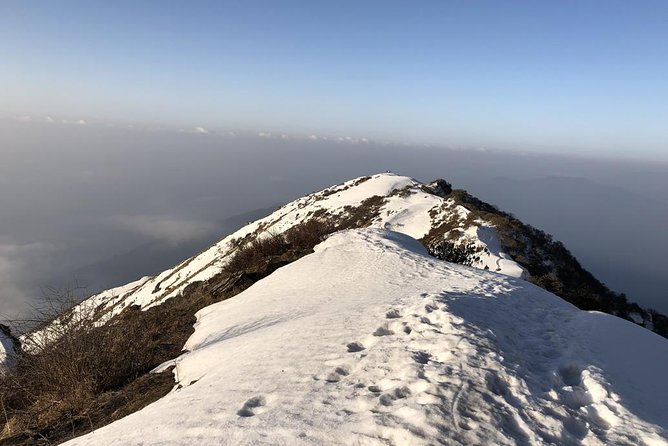
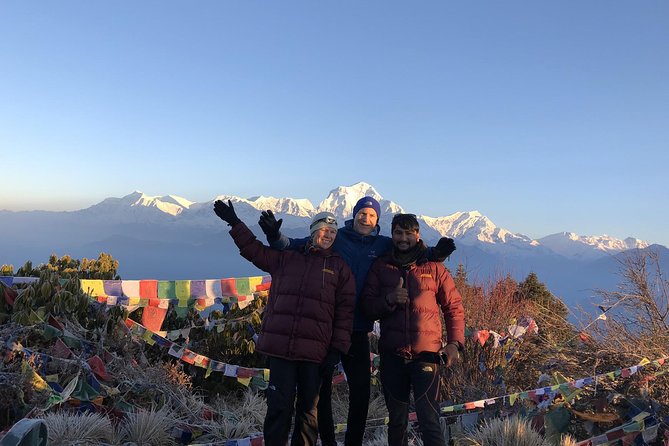
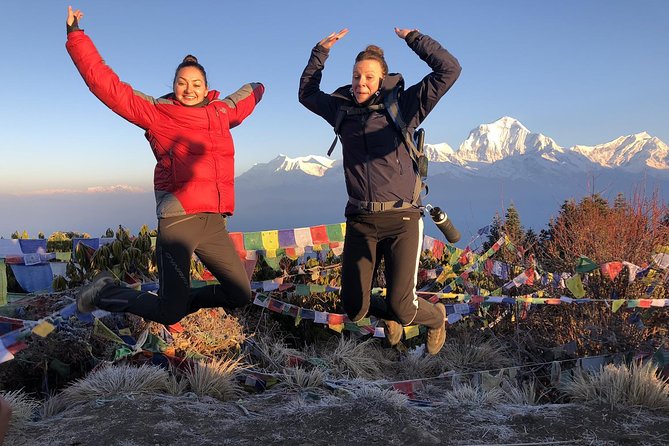
Day 5 starts with a hike to Poon Hill, then continues to Tadapani. The full day covers about nine kilometers and takes six to seven hours, ending at 2,500 meters.
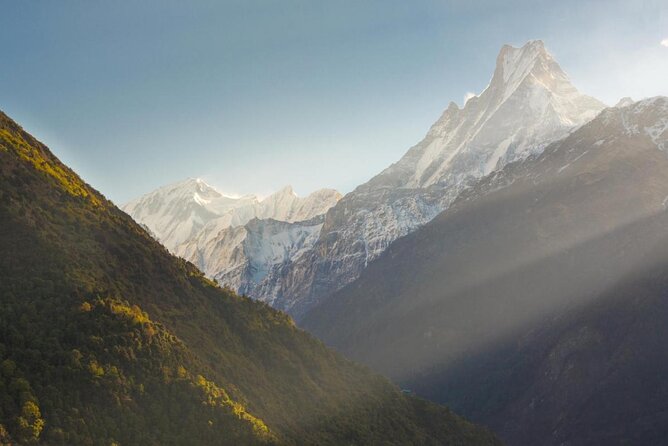
Poon Hill is a strong feature of this route because it gives you a major viewpoint before you reach Base Camp. The early start can be tiring, but it adds a memorable mountain stop without requiring a separate detour from the main trek.
After Poon Hill, you continue to Tadapani through changing forest and mountain scenery. The day is not just a viewpoint outing. It combines an early climb with several more hours of walking, so keep breakfast and clothing simple and accessible.
Day 6 leads from Tadapani to Chhomrong, covering 8.5 kilometers in about five hours. Chhomrong sits at 2,020 meters and is an important village on the way into the Annapurna Sanctuary. It is also a useful reset after the higher night at Ghorepani.
Entering the Annapurna Sanctuary from Chhomrong
Day 7 takes you from Chhomrong to Dovan, about nine kilometers in five hours. The route rises to 2,600 meters, and the scenery becomes more enclosed as you move farther into the mountain sanctuary.
Day 8 continues from Dovan to Deurali. This is a shorter day by distance, about 7.8 kilometers and four hours, but you finish at 3,200 meters. Shorter does not always mean easier. At this height, your body may work harder even when the walking time looks modest.
The value of the schedule is its gradual climb. You do not go directly from Pokhara to Base Camp. Instead, the route increases elevation over several days, with overnight stops that help you adjust. Still, altitude is never fully predictable, and good fitness does not guarantee that you will feel fine at 4,000 meters.
The high point: Machhapuchhre Base Camp and Annapurna Base Camp
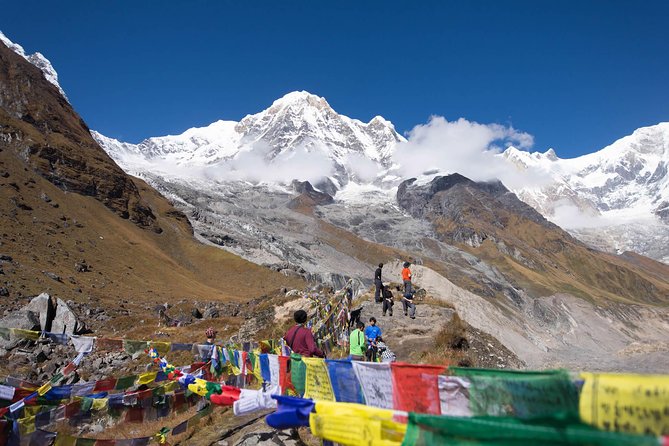
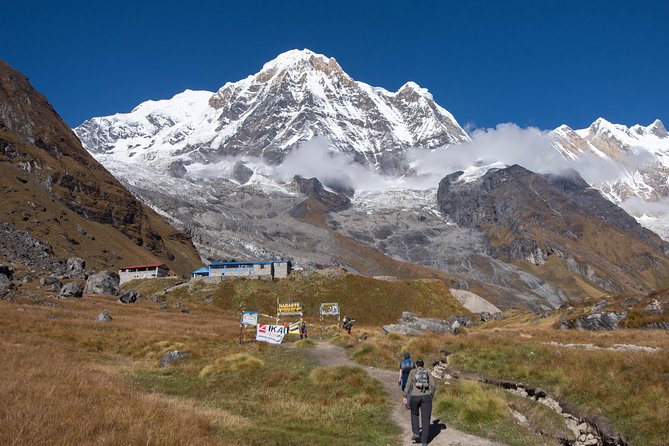
Day 9 is the trek’s central achievement. You walk from Deurali through Machhapuchhre Base Camp to Annapurna Base Camp, reaching 4,230 meters. The eight-kilometer day takes about five to six hours.
This is where the route’s gradual preparation pays off. You have already walked for several days and slept at increasing heights. The final approach is still serious, but the daily distance is not excessive.
Machhapuchhre Base Camp is a major stop along the way, and Annapurna Base Camp is the highest point of the trip. At more than four kilometers above sea level, the altitude can affect breathing, sleep, appetite, and energy. Move slowly, drink regularly, follow your guide’s advice, and do not treat the arrival as a race.
The tour supplies a first-aid kit with an oximeter to monitor oxygen levels and heartbeat. That is useful support, but it is not a replacement for travel insurance, medical judgment, or honest communication about symptoms.
The high camp experience also comes with basic lodging. You are staying in teahouses, not a mountain hotel. The package states that four or five people may share a room during the trek, so privacy and warmth will be limited compared with your Kathmandu or Pokhara hotel.
The long return to Bamboo
Day 10 is the hardest-looking entry on the schedule: 18 kilometers from Annapurna Base Camp to Bamboo, taking about seven hours. The route descends from 4,230 meters to 2,310 meters.
Many people focus on reaching Base Camp and underestimate the return. You still need energy, balance, and patience after the main goal is complete. Downhill walking can be hard on knees, especially over uneven stone steps.
The advantage is that you lose height quickly, which may help if altitude has been bothering you. The drawback is the long distance. Keep a few snacks in your day bag, protect your knees with controlled steps, and expect this to be a full day rather than an easy stroll home.
Jhinu Danda adds a welcome hot spring
On Day 11, you walk from Bamboo to Jhinu Danda, about 12 kilometers over six hours, ending at 1,780 meters. The most appealing feature here is the hot spring.
Jhinu Danda provides a change of pace after the high camp and long descent. The hot spring is a simple pleasure, not a luxury spa, but soaking tired muscles can make this part of the trip especially satisfying. Bring suitable swimwear and keep expectations practical.
The lower elevation also makes the night feel different from the high sanctuary. You are moving back toward warmer conditions, village life, and the final stage of the trek.
Returning to Pokhara and Kathmandu
Day 12 takes you from Jhinu Danda back to Pokhara. The schedule does not provide a walking distance or exact transport time, so you should regard this as a transfer day with some room for local conditions.
Pokhara gives you a chance to rest after the trail. Accommodation is included, but lunch and dinner are not, so budget for your own meals. Day 13 returns you to Kathmandu by tourist bus, again with a listed drive time of about six to seven hours for the Kathmandu to Pokhara leg.
Day 14 is the farewell day and the end of the tour. Airport drop-off is included by private car, which is useful when your departure time does not fit easily with public transport.
Guides, porters, and the private format
The package provides one experienced guide for the group and one porter for every two trekkers. Your porter is not there to carry an unlimited suitcase, so use the supplied duffle bag sensibly and keep your daypack comfortable.
The strongest praise for this company centers on staff care and organization. Guides named in personal accounts include Arjun, Yubraj, Bibek, Pabin, Deepak, Suraj, Netra, Bhim, Krishnan, and Paban. Specific praise often focuses on guides who check comfort, allow sensible breaks, explain the route, and respond calmly when plans need adjusting.
That kind of support matters more than a polished sales pitch on a high-altitude trek. Communication from the Kathmandu office, including help with last-minute changes, has also received strong approval. Still, the exact guide assigned to your group is not stated, so you should not book solely on the hope of having one particular person.
A private trip is especially useful for couples, families, and friends with similar fitness levels. You can ask for breaks and keep the group together. The flip side is that you do not have a larger group to share the social side of the trail with, and the cost may be less attractive for a solo participant.
Who should book this Annapurna Base Camp trek?
I would suggest this trip to someone who wants a structured introduction to Himalayan trekking and values having the major arrangements handled in advance. It suits people who can manage several hours of walking per day, steep steps, shared rooms, and a high point of 4,230 meters.
It is less suitable if you want private hotel rooms every night, full control over transport, or a gentle holiday with occasional walks. The route is physically demanding, even though the daily distances are carefully spread out.
You should bring personal trekking clothing and footwear, since the included jacket, sleeping bag, map, and duffle bag do not cover every item you need. Travel insurance is compulsory for outdoor activities in Nepal. You also need three passport-size photographs for trekking permits.
The booking can be canceled for a full refund up to 24 hours before the experience begins. Poor weather or failure to meet a minimum number of participants can lead to a new date, another experience, or a full refund.
Should you book it?
Book it if you want a well-supported private route to Annapurna Base Camp with Poon Hill, Jhinu Danda, airport transfers, permits, meals on the trail, and staff costs bundled together. The $1,090 price is strong for what it includes, especially if you would otherwise need to rent cold-weather gear and arrange permits, lodging, guides, porters, and buses yourself.
Think twice if shared teahouse rooms, long walking days, tourist buses, and altitude sound unpleasant. For a fit hiker who accepts basic mountain comforts, this plan offers a clear route, useful support, and several distinct highlights rather than one big finish.
FAQ
How long is the Annapurna Base Camp trek?
The experience lasts approximately 14 days, including arrival and departure days, travel between Kathmandu and Pokhara, and the walking route.
What is the highest point reached?
The trek reaches Annapurna Base Camp at 4,230 meters, or about 13,810 feet, via Machhapuchhre Base Camp.
Is this a private tour?
Yes. Only your group participates in the activity.
Is airport pickup included?
Yes. Airport pickup and drop-off by private car are included.
Is transport between Kathmandu and Pokhara included?
Yes. Tourist bus transport from Kathmandu to Pokhara and back to Kathmandu is included. Private vehicle transport and airfare to or from Pokhara are not included.
Are meals included?
Breakfast, lunch, and dinner are included during the trek, with meals selected from a menu. Lunch and dinner in Kathmandu and Pokhara are not included.
What type of accommodation is provided?
Kathmandu and Pokhara accommodation is in a three-star category hotel with twin rooms. During the trek, you stay in lodges or teahouses, where four or five people may share a room.
Is trekking equipment supplied?
The tour supplies use of a duffle bag, trek map, down jacket, and sleeping bag. Personal trekking equipment is not included.
Do I need travel insurance?
Yes. Travel insurance is compulsory for outdoor activities in Nepal, and it is not included in the tour price.
Recently added around Kathmandu
- Ghorepani Poon Hill Trek★ 5.0 · 16 reviews
- Private Manaslu Circuit Trek at Himalayas★ 5.0 · 3 reviews
- Amazing 1 Day Trekking Experience in Kathmandu Nepal★ 5.0 · 24 reviews
- Ghorepani Poonhill Trek★ 5.0 · 5 reviews
- Upper Mustang Trekking★ 5.0 · 2 reviews
- Upper Mustang Trekking★ 3.0 · 2 reviews
- Upper Mustang Trekking★ 5.0 · 4 reviews
- Upper Mustang Trek★ 5.0 · 5 reviews
Annapurna Base Camp Treks, compared.
Trekking in Annapurna/Langtang/Everest/Upper Mustang regions
Read our review →
Kathmandu to Annapurna Base Camp (ABC) 5-Day Trek
Read our review →
Browse the lists this tour appears in