
REVIEW · KATHMANDU
Annapurna Sanctuary Trek – 14 Days
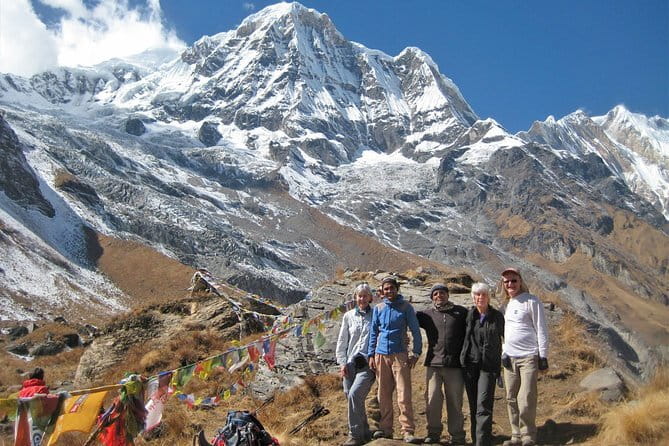
The Himalayas reward steady walkers. This 14-day Annapurna Sanctuary Trek combines Kathmandu’s UNESCO sites, a sunrise at Poon Hill, and a close approach to Annapurna I at 8,091 meters. I like the gradual route, which gives you time to adjust, and I like that the $860 price includes flights, hotels, guides, porters, permits, and meals during the trek.
The main concern is effort. You will walk six to seven hours on many days, often on rough stone steps and steep mountain trails, with the route reaching 4,130 meters. The teahouses are practical rather than luxurious, and you should expect shared rooms, basic facilities, and extra charges for showers, hot water, charging, and bottled water.
Key things to know before booking
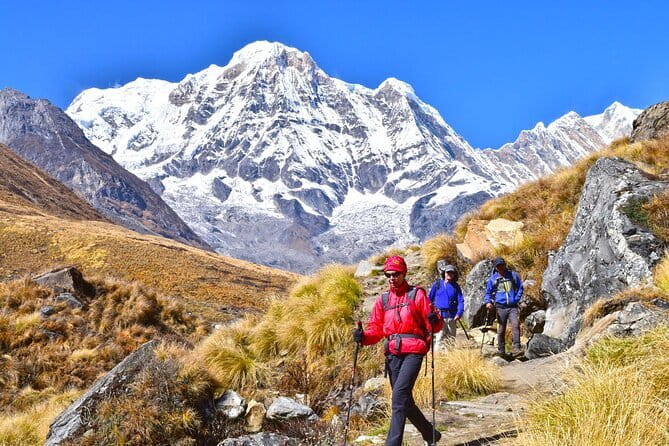
- Poon Hill sunrise adds a major payoff: The early climb to 3,210 meters gives you wide views of the Annapurna and Dhaulagiri ranges.
- Annapurna Base Camp is the main prize: You reach the foot of Annapurna I through a narrow mountain gorge surrounded by huge peaks.
- The route changes character each day: Expect subtropical forest, terraced farms, rhododendrons, waterfalls, bamboo woods, rocky high country, and glacial rivers.
- The package is unusually broad for the price: Domestic flights, private transfers, permits, porters, guide services, trekking meals, and city hotels are included.
- Support is built into the group structure: One assistant guide is provided for every four trekkers, with one porter for every two.
- Spring and autumn offer the safest bet for views: March to May and September to November usually bring the clearest conditions, while winter offers fewer people but colder weather.
Why this route works so well in 14 days
The Annapurna Sanctuary Trek is not the shortest way to reach Annapurna Base Camp, and that is a good thing. The schedule gives you time to pass through villages, change altitude in stages, and stop at Poon Hill before reaching the higher part of the route.
You begin in Kathmandu, fly to Pokhara, drive to the trailhead, and then walk through the Modi Khola valley toward Annapurna Base Camp. After reaching the base camp, you return by a different rhythm, descending through Bamboo, Chhomrong, and Jhinu Danda before driving back to Pokhara.
I especially like the balance between mountain walking and cultural sightseeing. You do not spend the entire trip staring at your boots. Kathmandu supplies temples and old palaces, Pokhara provides a softer finish, and the trail gives you the close-up Himalayan experience.
The route is rated as moderate, but that word needs explaining. You do not face technical climbing, yet the daily distance, uneven footing, repeated staircases, and high altitude demand real fitness. Previous hiking or camping experience is preferred.
More Annapurna Treks in Kathmandu
- Annapurna Circuit Trek with Tilicho Lake
★ 5.0 · 368 reviews - Annapurna base camp trek 5 Days
★ 5.0 · 252 reviews - 14-Day Private Annapurna Base Camp Trek
★ 5.0 · 180 reviews
Kathmandu’s four major sights on Day 2
Your second day covers four important sites by private vehicle. The order gives you a broad introduction to Nepal’s religious and royal traditions before you leave the city.
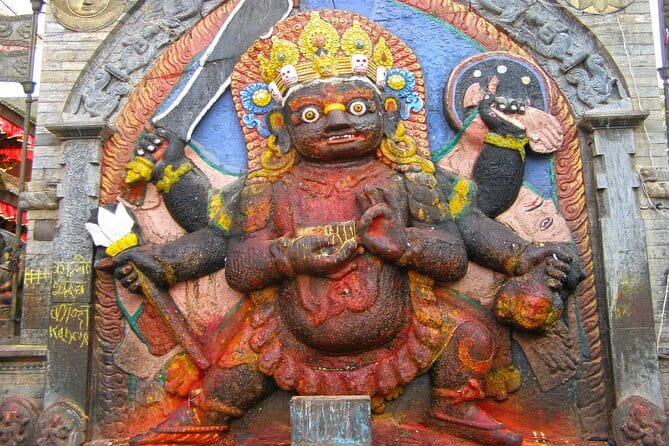
At Kathmandu Durbar Square, you see the former palace complex of the Malla and Shah kings. Hanuman Dhoka Palace, Taleju Temple, Kumari Ghar, and Kasthamandap are the main sights. The square suffered damage in the 2015 earthquake, so you will see restoration work alongside detailed wood carving, temples, courtyards, and daily religious activity.
Pashupatinath Temple is Nepal’s most important Hindu shrine. Non-Hindus cannot enter the main temple, but you can view the complex and its riverside ghats from surrounding areas. The Bagmati River, smaller shrines, and cremation sites make this a serious religious place, not just a photo stop.
Swayambhunath sits on a hill above Kathmandu and is also called the Monkey Temple. The white stupa, prayer wheels, flags, and city views make it one of the more memorable stops. There are steps, so you will get a small taste of the physical work ahead.
Boudhanath Stupa offers a different mood. Walk around the great circular stupa, turn the prayer wheels, and look into the surrounding Tibetan Buddhist monasteries. Each stop receives about an hour, so the day is a useful overview rather than a slow, scholarly visit.
Flying to Pokhara and climbing to Ulleri
Day 3 starts with a morning flight from Kathmandu to Pokhara. Sit on the right side of the aircraft for the best chance of seeing Himalayan peaks. The flight is short, but the mountain views can be excellent when the weather cooperates.
After landing, you drive to Hile, the trailhead. The walking starts through subtropical forest and along sections cut into hillsides. After lunch, you cross the Bhurungdi Khola and reach Tikhedhunga before facing the famous climb to Ulleri.
The Ulleri section uses thousands of stone steps and boulders. It is an early test of your legs, especially because you are still adapting to the pace and carrying a daypack. You sleep in Ulleri, giving you a simple first night on the trail.
Day 4 continues uphill to Ghorepani. The name refers to the area’s old role as a stopping place for horses and traders. Today it is a well-known trekking village with small shops, stalls, and mountain views.
Ghorepani sits high enough for cold evenings. The upper section of the village provides views toward Annapurna South and Nilgiri, but do not expect a resort town. Accommodation is in a teahouse, and comfort becomes more basic as you move higher.
Poon Hill sunrise and the rhododendron route
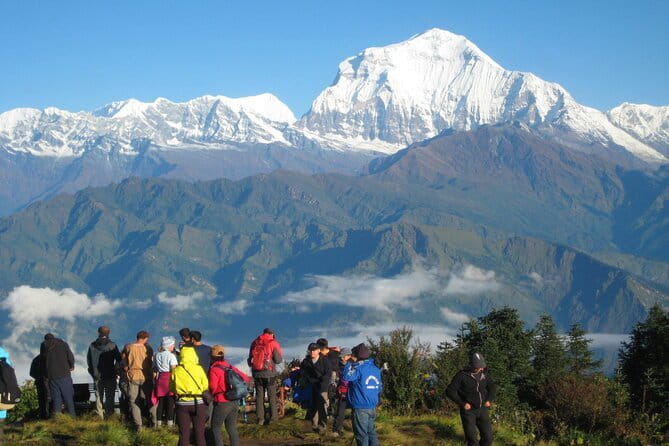
Day 5 begins before breakfast with the climb to Poon Hill, at 3,210 meters. This is one of the best-known viewpoints in the Annapurna region, and the early start is worth it if clouds stay away.
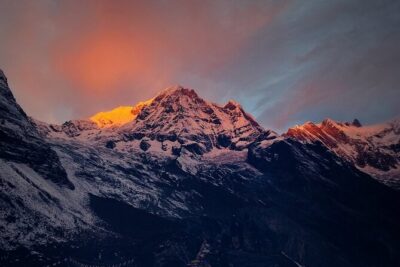
From the viewpoint, you may see the Dhaulagiri and Annapurna ranges, Mustang, Pokhara, and more than 20 high peaks. The light changes quickly, so bring warm layers and keep your camera ready. After time for tea, coffee, or hot chocolate, you return to Ghorepani for breakfast.
The day is not finished. You then cross a ridge and descend through rhododendron forest, passing waterfalls on the way to Tadapani. This combination of sunrise and forest walking makes the day one of the most varied on the trek, though the early start followed by several more hours on foot can be tiring.
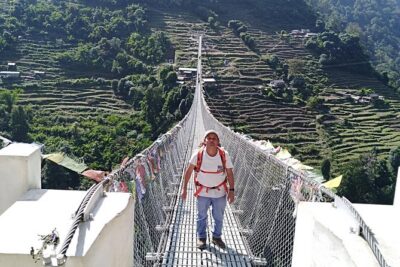
On Day 6, the trail drops through more rhododendron forest before opening onto terraced fields. You pass waterfalls and cross a suspension bridge, then continue through a series of climbs and descents to Chhomrong.
Chhomrong sits below the Annapurna massif and is one of the most attractive villages on the route. It also signals a change in the trek. From here, you are moving deeper into the sanctuary, and the trail becomes more focused on altitude, forest, river crossings, and mountain walls.
Same trailhead, a longer or shorter day out:
- Everest Base Camp Trek – 14 Days
★ 5.0 · 1,499 reviews - Everest Base Camp Trek
★ 5.0 · 842 reviews - Everest Base Camp Trekking
★ 5.0 · 485 reviews - Everest Base Camp Trekking – 13 Day
★ 5.0 · 365 reviews
Through Bamboo, Deurali, and the high valley
Day 7 starts with stone steps down from Chhomrong to the Chhomrong Khola. After crossing the suspension bridge, you climb toward Sinuwa, pass through forest to Kuldihar, and descend to Bamboo.
The repeated up-and-down pattern can surprise you. Even when the day is not especially long, stairs use your legs differently from a flat trail. Bamboo is a lower, forested stop, with a damp and cool feel.
On Day 8, the forest becomes darker and colder as you pass through bamboo. The trail climbs, sometimes steeply, toward Himalaya Hotel. After that, the trees open and you can see the glacial river below.
The route then moves through drier forest toward Hinku Cave, drops to a river, and rises again to Deurali. The scenery becomes more open as vegetation thins out. You may see Dhaulagiri and waterfalls dropping from the cliffs, while the river and valley below give the day a more high-mountain feel.
This is a day to keep your pace slow. You are approaching the highest part of the trek, and rushing now makes the next morning harder.
Annapurna Base Camp at 4,130 meters
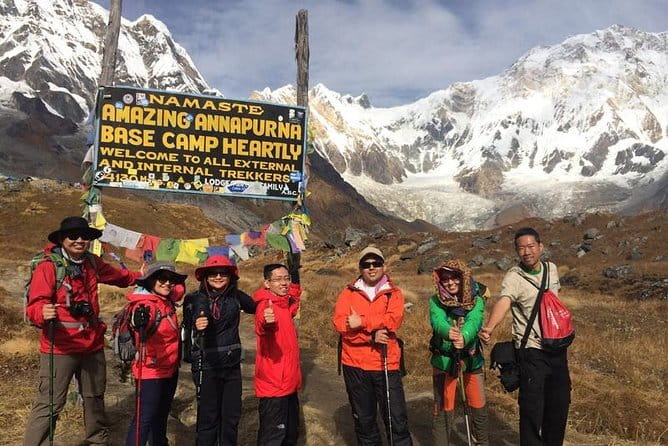
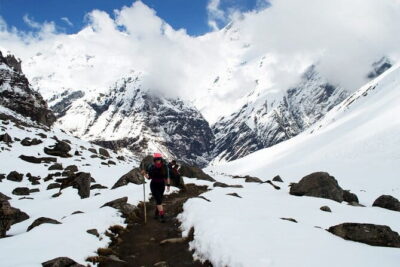
Day 9 is the emotional center of the trip. From Deurali, you follow the valley on a steady climb over rocky trail. Some sections cling to a cliff, and the route can feel steep, but the mountain setting keeps changing as you gain height.
You first reach Machhapuchhre Base Camp. From here, the views include Hiunchuli, Annapurna South, Annapurna I, Annapurna III, Gandharvachuli, and Gangapurna. The trail then turns toward Annapurna Base Camp.
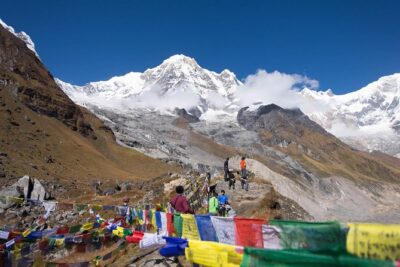
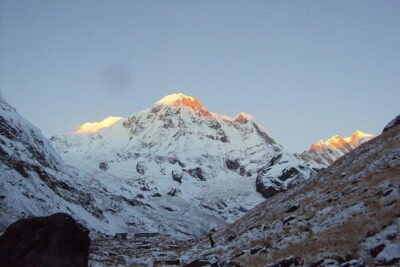
The final approach is gentle in places, but altitude makes every step count. Annapurna Base Camp sits at 4,130 meters and is enclosed by an impressive ring of peaks. The only route in is through the gorge you have followed, which gives the arrival a strong sense of entering a protected mountain bowl.
Annapurna I rises to 8,091 meters, making it the world’s tenth-highest mountain. You are not climbing the mountain, but you are standing at its base, surrounded by several major Himalayan summits. That distinction matters: this is a demanding trek to a high viewpoint, not a mountaineering expedition.
Altitude affects people differently. The schedule gains height in stages, but you still need to report symptoms to your guide and accept changes if safety requires them. The leader can amend or cancel parts of the route because of weather, illness, or natural events.
The long return through Bamboo and Jhinu Danda
Day 10 descends from Annapurna Base Camp past Machhapuchhre Base Camp, Deurali, Himalaya Hotel, and Doban to Bamboo. The downhill direction may sound easy, but steep steps and uneven ground can punish knees and toes.
Good footwear matters here. Trekking poles may also help, though they are not listed among the supplied equipment. Since the route retraces much of the approach, you will recognize places from a different angle and notice how quickly the vegetation returns as you lose altitude.
On Day 11, you return to Chhomrong for lunch before taking the steep descent toward Jhinu Danda. You pass through rain forest and farmland, then continue down stone steps toward the Modi Khola valley.
Jhinu Danda is a welcome rest stop. The afternoon is left for relaxation, which is sensible after the high section and the long descent. The schedule does not list a specific included hot spring visit, so do not book this trek expecting that activity as a guaranteed part of the program.
Day 12 brings the final walk through the western hills to Matque. From there, a private vehicle takes you to Pokhara in roughly two hours, with lunch on the way. This marks the end of the trek itself.
Pokhara, flights, and the practical value of the package
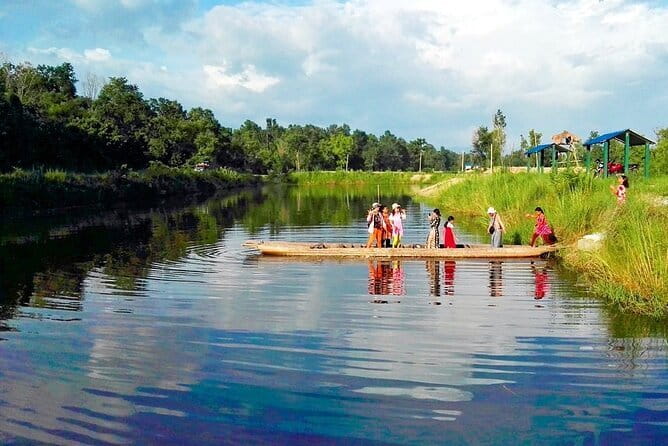
In Pokhara, you stay at a hotel and have a half-day sightseeing tour. The city is known here as the city of lakes, and it gives you a gentler setting after two weeks of temples, stairs, forest trails, and thin mountain air.
Day 13 includes an afternoon flight back to Kathmandu. Sit on the left side of the plane for the best chance of seeing the Himalayas. After landing, you have free time for shopping or missed sights, followed by a farewell dinner.
The $860 price is strong for what it covers. You receive three-star hotel accommodation in Kathmandu and Pokhara with breakfast, teahouses during the trek, trekking breakfasts, lunches, and dinners, private ground transport, domestic flights, permits, a licensed English-speaking trek leader, assistant guide support, porters, and staff expenses.
You also receive a down jacket, sleeping bag, trekking duffel, T-shirt, and map. The jacket and sleeping bag are returned after the trip, while the duffel, T-shirt, and map are yours to keep.
The price does not cover your Nepalese visa, international flights, travel and rescue insurance, tips, personal laundry, phone calls, bar bills, charging, showers, bottled or boiled water, or extra nights caused by an early arrival or delayed departure. Lunch and dinner in Kathmandu and Pokhara are also your responsibility, apart from the welcome and farewell dinners.
Those exclusions are normal for a trek of this kind, but they affect your real budget. A single supplement costs an additional $425, and single rooms may not be available at higher elevations. Most rooms are twin shared, with attached bathrooms in many sections but not all.
Guides, porters, and group size
The support system is one of the strongest parts of this trip. The usual arrangement is one lead guide, one assistant guide for every four trekkers, and one porter for every two people. The stated maximum group size is 12.
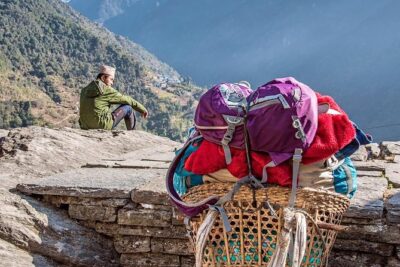
That ratio gives the group a better safety net if someone becomes ill. It also means you should pack carefully and keep your own daypack manageable, since the porter carries your larger bag rather than every item you bring.
Himalayan Glacier has received strong praise for communication, care, and guide service. One guide named Jaya was singled out for handling difficult weather and adjusting the schedule well, while repeat clients praised the company’s experienced guides and porters. You should still treat those comments as helpful signals, not a promise that every departure will feel identical.
Best season and who should book
March through May and September through November are the best choices for warm weather and clear mountain views. December through February can mean fewer people and a quieter trail, but cold conditions are more likely.
You should book this trek if you want a supported Himalayan walk with a clear goal, cultural sightseeing, and enough days to avoid racing to base camp. It suits people with moderate fitness who can handle six to seven hours of walking over steep, rough ground.
I would not choose it if you want private rooms every night, easy trails, or a polished resort experience. I would also avoid treating the $860 price as all-inclusive. Add insurance, tips, personal expenses, city meals, and possible extra nights to your planning.
If you can accept basic teahouses and long stair sections, this is a well-balanced way to reach Annapurna Base Camp. The Poon Hill sunrise gives you an early reward, and the base camp approach delivers the big mountain moment the trek is built around.
FAQ
How long is the Annapurna Sanctuary Trek?
The trip lasts approximately 14 days, including time in Kathmandu and Pokhara, domestic flights, sightseeing, and the trek to and from Annapurna Base Camp.
What is the highest point reached?
The route reaches Annapurna Base Camp at approximately 4,130 meters. Poon Hill is reached earlier at 3,210 meters.
How many hours will I walk each day?
You are likely to walk about six to seven hours per day over steep and often rough trails.
Are meals included?
Breakfast is included in Kathmandu and Pokhara, with welcome and farewell dinners. Breakfast, lunch, and dinner are included during the trek. Lunch and dinner in Kathmandu and Pokhara are not included.
Is accommodation included?
Yes. The package includes three-star hotels in Kathmandu and Pokhara with breakfast, plus teahouse accommodation during the trek. Rooms are generally twin shared.
Are domestic flights included?
Yes. The Kathmandu to Pokhara and Pokhara to Kathmandu flights are included.
Is a guide provided?
Yes. The trek includes an experienced, English-speaking, government-licensed trek leader, with assistant guide support at a ratio of one assistant for every four trekkers.
What is the best time to go?
March through May and September through November are recommended for warm weather and clear views. Winter is also possible if you prefer fewer people and can handle colder conditions.
What happens if bad weather changes the route?
The trek leader may amend or cancel part of the itinerary for safety because of weather, illness, or natural disasters. If the experience is canceled because of poor weather, you can be offered another date or a full refund. Cancellation at least 24 hours before the start time qualifies for a full refund; cancellations within 24 hours are not refunded.
Recently added around Kathmandu
- Ghorepani Poon Hill Trek★ 5.0 · 16 reviews
- Private Manaslu Circuit Trek at Himalayas★ 5.0 · 3 reviews
- Amazing 1 Day Trekking Experience in Kathmandu Nepal★ 5.0 · 24 reviews
- Ghorepani Poonhill Trek★ 5.0 · 5 reviews
- Upper Mustang Trekking★ 5.0 · 2 reviews
- Upper Mustang Trekking★ 3.0 · 2 reviews
- Upper Mustang Trekking★ 5.0 · 4 reviews
- Upper Mustang Trek★ 5.0 · 5 reviews
Annapurna Base Camp Treks, compared.
Trekking in Annapurna/Langtang/Everest/Upper Mustang regions
Read our review →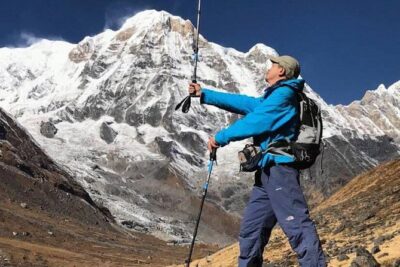
Kathmandu to Annapurna Base Camp (ABC) 5-Day Trek
Read our review →Browse the lists this tour appears in