
REVIEW · KATHMANDU
Annapurna Circuit with Tilicho Lake Trek
High passes, thin air, huge rewards. This Annapurna Circuit trek adds a demanding side trip to Tilicho Lake, then crosses Thorong La before flying from Jomsom to Pokhara. I like the small group of up to eight, which should make walking and daily planning more manageable. I also like that permits, meals, teahouse lodging, a guide, porters, and the Jomsom to Pokhara flight are bundled into the price.
The main caution is the altitude and the hard walking days. This is not a gentle mountain holiday. You need solid fitness, patience for long drives, and flexibility around high mountain conditions. The schedule is described as 13 days, though some trip wording refers to 18 days, so confirm the exact length before paying.
Key things to know before booking
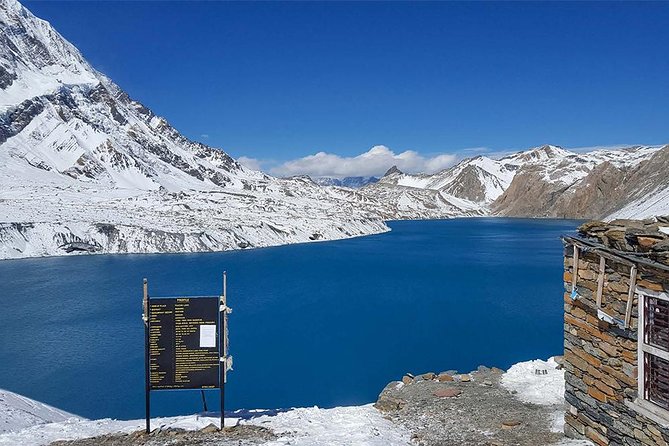
- Tilicho Lake reaches a serious altitude: The side trip includes long days from Khangsar to Tilicho Base Camp and then up to the lake.
- Thorong La is the major test: Day 10 includes the pass crossing before the descent to Muktinath.
- You get useful support: A certified guide, one porter for every two people, first-aid supplies, sleeping bags, and duffel bags are included.
- Transport saves time: The route ends with a Jomsom to Pokhara flight instead of returning overland through the entire valley.
- Manang provides an acclimatization day: This pause is valuable before the route climbs higher.
- The price covers much of the hard-to-arrange work: At $1,093.34 per person, permits, food, lodging, porters, and mountain transport are included, but not Kathmandu lodging, drinks, insurance, or the Nepal visa.
What this Annapurna trek is really like
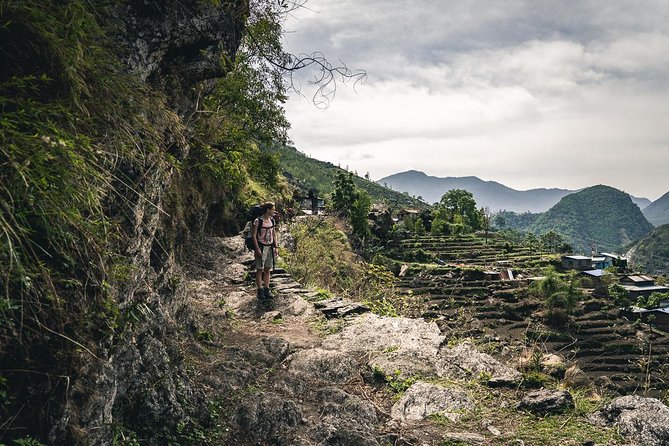
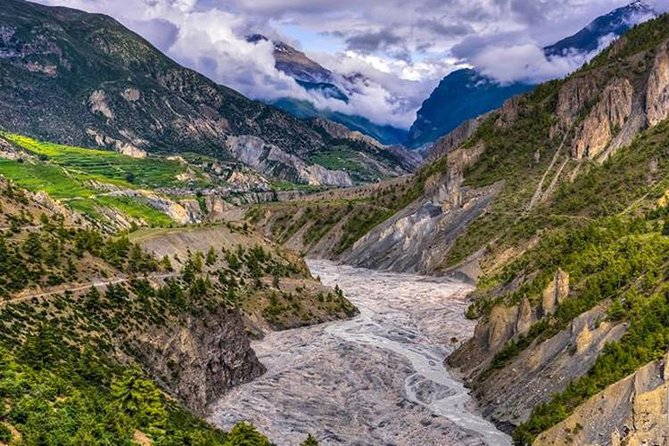
This is a point-to-point mountain journey through the Annapurna range, not a collection of easy day walks. You begin with a long road transfer from Kathmandu, then spend several days walking through river valleys, villages, forests, and high mountain terrain.
The appeal comes from the changing scenery. You move from the Marsyangdi River and forested valleys toward Tibetan-influenced villages, high ridges, glacial surroundings, and the stark country around Thorong La. The Tilicho Lake detour adds a major reward, but it also makes the trip harder than a standard version of the circuit.
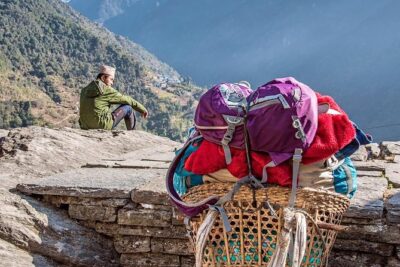
You are not left to work out the route alone. A guide handles the daily direction and practical planning, while porters carry personal gear and group equipment. That leaves you free to focus on pacing, food, weather, and the views.
The trip is listed at 13 days, with a maximum group size of eight. That is a useful size for a trek where people walk at different speeds. One published description also calls it an 18-day itinerary, and a five-star account refers to 18 days on the circuit. Ask for the final day-by-day schedule in writing, especially if you are arranging flights or extra hotel nights.
More Annapurna Treks in Kathmandu
- Annapurna Circuit Trek with Tilicho Lake
★ 5.0 · 368 reviews - Annapurna base camp trek 5 Days
★ 5.0 · 252 reviews - 14-Day Private Annapurna Base Camp Trek
★ 5.0 · 180 reviews
Day 1: Kathmandu to Chame by way of Besisahar
Your first day is mostly a road day. You leave Kathmandu around 8:00 am and follow the Kathmandu to Pokhara highway toward Dumre, then continue along the Marsyangdi River to Besisahar and onward toward Chame.
The stated duration is about nine hours. That is a long start, and road travel in the mountains can feel tiring even before you begin walking. Still, this transfer gets you closer to the trail and avoids spending an extra night at a lower point on the route.
Chame is the district headquarters of Manang and the starting point for the stronger trekking rhythm that follows. Your first night is in teahouse or guesthouse accommodation. These lodgings are practical rather than luxurious, so pack with simple mountain comfort in mind.
Day 2: Forest trails and the approach to Pisang
The route to Pisang moves through a narrow, steep valley and forest. You cross two bridges, one at about 2,910 meters and another at roughly 3,040 meters, with views toward snow-covered Lamjung Himal.
This is a six-hour walking day. The distance is manageable for a fit trekker, but the rising altitude changes how the walk feels. Take short, regular pauses instead of racing uphill. You want energy left for the higher sections later in the trip.
Pisang is an important stop because it gives you time to settle into the mountain routine. Your guide can set the pace, but you still need to pay attention to your own breathing and hydration. A small group helps here, since it is easier to keep the walking rhythm together.
Day 3: Ridge views and Manang
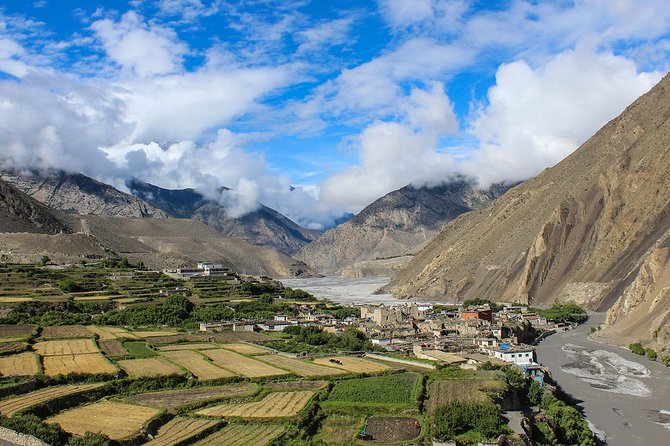
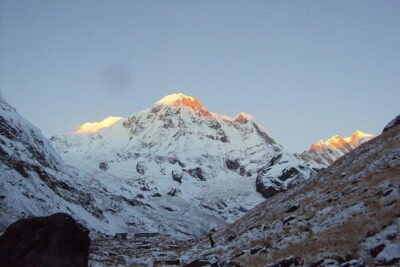
The trail climbs a steep ridge with views over Manang Valley and toward Tilicho Peak, which rises to 7,134 meters. You pass through Humde, home to the airstrip at around 3,280 meters, before continuing to Manang.
The walking time is listed at about five hours. That sounds short, but altitude can turn a moderate walk into a serious effort. Manang is a substantial village by local standards, so this is a good place to take stock of how your body is reacting.
The views also give you a preview of what is ahead. Tilicho Peak is not the lake itself, but seeing it from the route helps explain why the coming side trip is such a major part of this trek.
Same trailhead, a longer or shorter day out:
- Everest Base Camp Trek – 14 Days
★ 5.0 · 1,499 reviews - Everest Base Camp Trek
★ 5.0 · 842 reviews - Everest Base Camp Trekking
★ 5.0 · 485 reviews - Everest Base Camp Trekking – 13 Day
★ 5.0 · 365 reviews
Day 4: A useful acclimatization day in Manang
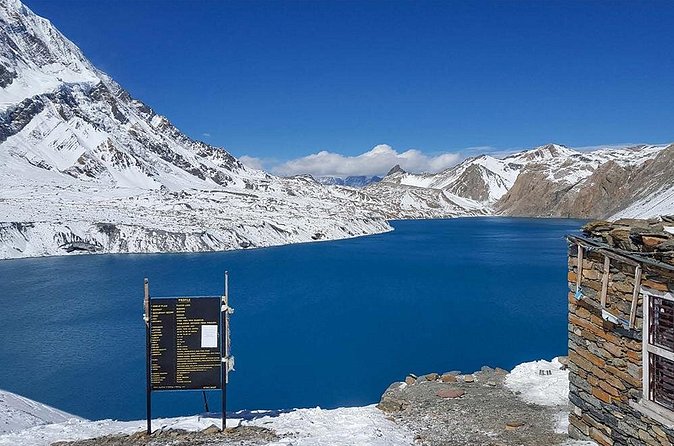
The rest day in Manang is one of the smartest features of the schedule. You can explore the village, meet local residents, and let your body adjust before moving higher.
The day is listed as six hours, which likely allows for an acclimatization walk or local exploration rather than continuous trekking. Do not treat it as a wasted day. At this altitude, extra time can make the following stages more manageable.
This is also your chance to check your gear. Make sure your sleeping bag, layers, water supply, and daypack are working for you. Porters carry personal gear and group equipment, but you still need to carry the items you want during the day.
Day 5: Manang to Khangsar
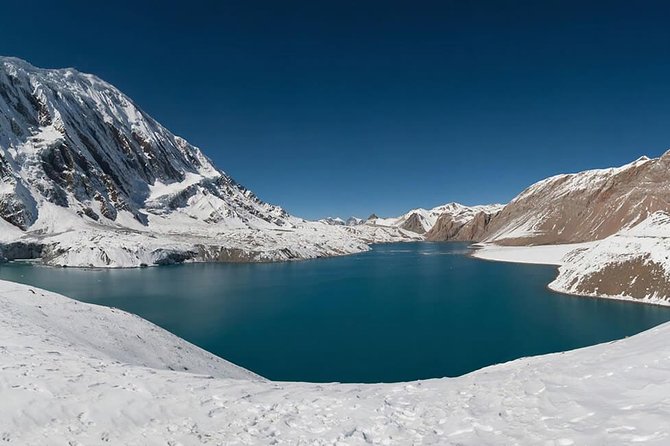
From Manang, the path follows the river before crossing Khangsar Khola by bridge and climbing toward Khangsar Village. The walk takes about four hours.
Khangsar has a Tibetan-influenced character, which adds a cultural change as well as a geographic one. The shorter day gives you time to prepare for Tilicho Lake. This is where the route begins to feel less like a standard valley trek and more like a high-altitude side journey.
Do not let the short walking time fool you. You are sleeping higher, and the next two days are the demanding heart of the trip. A quiet afternoon and an early night are more useful than trying to squeeze in extra activity.
Day 6: Khangsar to Tilicho Base Camp
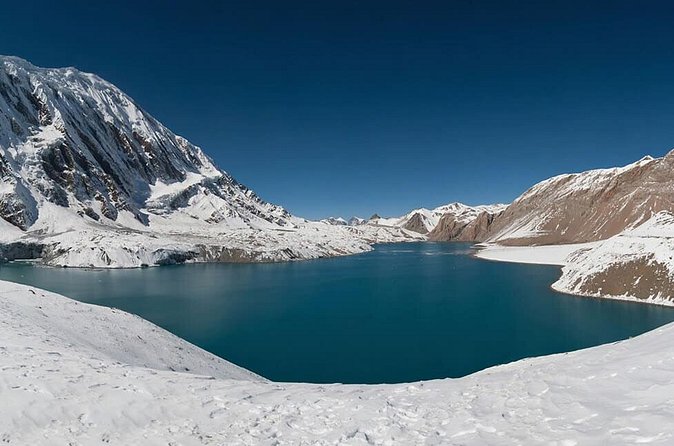
The route passes a gompa and follows a newer trail up toward a high ridge. You encounter two route choices, an older and harder path and a newer, easier option. The precise choice depends on conditions and the guide’s judgment.
This is an eight-hour day, and the terrain becomes more exposed and demanding. The newer trail may be easier, but easier does not mean easy at altitude. Keep your pace steady and follow the guide’s instructions around narrow or uneven sections.
The destination is Tilicho Base Camp, where accommodation is basic and the setting is remote. Your overnight stop is part of the attraction, but you should expect fewer comforts than in larger villages such as Manang.
Day 7: The climb to Tilicho Lake
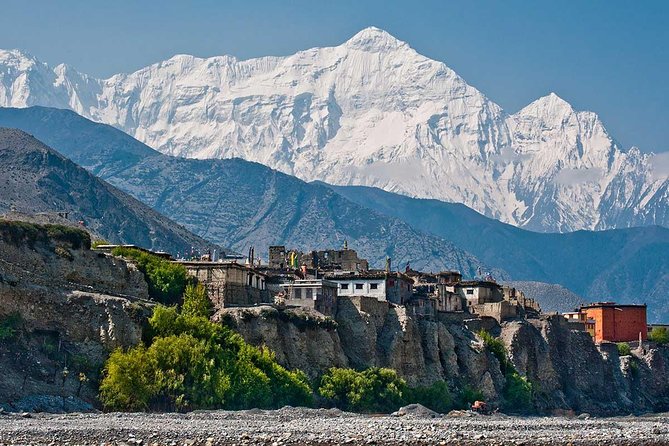
Start early. Winds often strengthen later in the day as warmer air from lower areas meets colder air above. The climb from Base Camp to Tilicho Lake and back is listed at about nine hours.
This is one of the longest and most memorable days. Tilicho Lake sits in a high mountain basin, and reaching it requires sustained uphill walking at altitude. The reward is not a quick photo stop followed by an easy stroll. You need to budget energy for the return route as well.
If you are prone to altitude problems, this is a day to take seriously. Tell the guide promptly if you feel unwell. The included first-aid kit is useful, but it is not a substitute for travel insurance or medical cover. Insurance is not included in the package.
The early start also explains why the itinerary cannot be treated like a relaxed sightseeing tour. You are working with mountain weather and daylight, not just a timetable.
Day 8: Leaving the Tilicho route for Yak Kharka
You descend gradually from Tilicho Base Camp, then climb about 500 meters toward Yak Kharka. The route passes through Tengi and leaves the Marsyangdi Valley as it heads toward the Thorung route.
This seven-hour day links the Tilicho detour back to the main Annapurna Circuit. It can feel tough because it follows the long lake day, so pacing matters. Keep food and water available in your daypack and avoid burning energy early.
Yak Kharka is a practical overnight stop before the pass. The scenery becomes more open and severe, and the remaining route offers fewer easy chances to shorten the day. This is another reason the included guide and porter support have real value.
Day 9: Toward Thorong Phedi
The day begins with a climb to a ridge, followed by a descent toward the Kone River. You cross a wooden bridge and continue on a narrow trail toward Thorong Phedi.
The stated walking time is five hours. This is shorter than the Tilicho days, but it is a preparation day rather than a casual one. Thorong Phedi is the staging point for the pass crossing, so conserving energy is the sensible plan.
Your guide’s role is especially important here. The route can be narrow, conditions can change, and the next day is the biggest physical test. You want clear advice on start time, clothing, food, and the correct pace.
Day 10: Crossing Thorong La to Muktinath
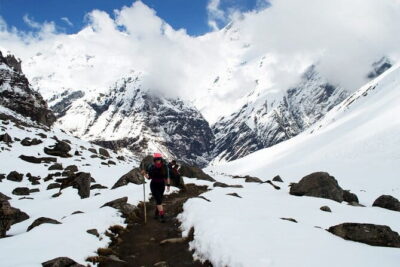
This is the trip’s major challenge. You start early after breakfast and climb toward Thorong La, then descend to Muktinath. The day is listed at about eight hours, with high altitude and possible snow adding difficulty.
Thorong La is the sort of pass that rewards preparation more than speed. You will need warm clothing, careful footwork, and enough food and water. The route description warns of extreme snow at times, so conditions may affect the exact plan.
The descent to Muktinath brings a powerful change after the pass. You have crossed from one side of the Annapurna circuit to the other, and the arrival feels well earned. Muktinath is also an important religious destination, making this more than a simple overnight stop.
Day 11: Muktinath to Jomsom
You can reach Jomsom by the Kagbeni route or the Lupra route, depending on the plan. The trail follows the Kali Gandaki River and takes about six hours.
Jomsom is a cold, scenic valley with more amenities than the smaller mountain stops. It serves as the final trekking base before the flight to Pokhara, so you get a chance to wash, rest, and prepare for a change of pace.
The route choice matters because Kagbeni and Lupra offer different walking experiences. Ask your guide which path is planned and why. The available information does not promise one specific option, so this is something to confirm before departure.
Day 12: The Jomsom to Pokhara flight
You wake early for the flight to Pokhara. The journey takes about two hours in the schedule, including the transfer to your accommodation, and offers mountain views from the air.
Including this flight is a major practical advantage. Returning overland from Jomsom would take much longer and could undo the time saved by the trekking route. Flights in mountain regions can also depend on local conditions, so keep your wider travel plans flexible.
Once in Pokhara, you shift from high mountain trekking to a more comfortable city stay. Accommodation in Pokhara is included as part of the planned route, but the exact category should be confirmed.
Day 13: Pokhara to Kathmandu
The final day uses a tourist coach from Pokhara to Kathmandu. The drive takes about seven hours, and an overnight stay in Kathmandu is arranged according to the agreed accommodation category and bed-and-breakfast plan.
This is another long transport day, so the trip does not finish with the flight into Pokhara. If you have an international flight soon after, allow plenty of extra time. The international ticket is not included, and traffic or road conditions can affect the journey.
The schedule lists accommodation in Kathmandu as not included, while the final day says an overnight stay is arranged under the agreed category. Clarify exactly what is covered, since this is one of the few unclear points in the package.
What the $1,093.34 price buys you
The price has solid value for a guided high-altitude trek because it includes several costs that quickly add up when arranged separately:
- Teahouse or guesthouse accommodation during the trek
- Breakfast for 13 days, lunch for 11 days, and dinner for 11 days
- A certified professional guide
- One porter for every two trekkers
- Annapurna Conservation Area Permit and TIMS
- Jomsom to Pokhara flight
- Private transport and airport transfers as specified
- Sleeping bag, duffel bag, and other supplied trekking gear
- First-aid kit, fees, and taxes
You still pay for drinks, alcohol, extra food and drinks, Kathmandu accommodation, the Nepal entry visa, international flights, and medical or travel insurance. Those exclusions matter because mountain trips often involve extra nights and drinks bought along the route.
The value is strongest if you want a managed trek rather than the work of arranging permits, porters, transport, and flights yourself. The group limit of eight is another plus. It is small enough for a personal feel without being a private trip.
Food, lodging, gear, and support
Teahouse accommodation keeps the trip rooted in the local trekking system. Expect practical rooms and simple mountain facilities rather than hotel-style comfort. Your supplied sleeping bag should make cold nights easier, especially at the higher stops.
Meals are covered on the stated schedule, but drinks are not. Carry water and budget for anything beyond the included breakfasts, lunches, and dinners. Alcohol is available for purchase, but it is a poor match for acclimatization and long days at altitude.
The porter arrangement is one porter for two people. Pack responsibly and keep your day-use essentials with you. Your guide carries the route knowledge and daily planning, while you remain responsible for telling the guide when your body is struggling.
One five-star account specifically praised the professionalism, kindness, and organization of the agency, and identified guide NC Sherpa and porter MisterD Sherpa by name. If those staff members are assigned to your departure, their names give you a useful point of reference. Staff assignments can change, so confirm them rather than assuming.
Who should book this trek
I would recommend this trip to fit, active people who want a serious Himalayan route with support. You should be comfortable with long walking days, steep climbs, basic lodging, changing weather, and the possibility that altitude will slow you down.
It is a poor match if you want a short, soft adventure with guaranteed schedules. The nine-hour opening drive, nine-hour Tilicho day, eight-hour base camp day, and Thorong La crossing require commitment.
The Manang rest day helps, but it does not erase the physical demands. Train for sustained uphill walking and carry a daypack during practice. The supplied gear and porter service reduce your load, not the height of the mountains.
Booking details worth checking
Confirmation is provided at booking, and you need each participant’s passport name, passport number, expiry date, and country. Pickup is offered, mobile tickets are available, and the listed start time is 8:00 am.
The trip is free to cancel up to 24 hours before the local start time for a full refund. Changes or cancellations inside that window are not accepted for a refund.
Before booking, ask the operator to confirm four things in writing: the final 13-day or 18-day schedule, Kathmandu accommodation, the exact Pokhara and Kathmandu hotel arrangements, and the likely route from Muktinath to Jomsom. These details affect both your budget and your flight planning.
Should you book the Annapurna Circuit with Tilicho Lake?
Book it if you want the Annapurna Circuit with a serious high-altitude bonus, and you value having a guide, porters, permits, food, and transport handled together. Tilicho Lake and Thorong La give the route its strongest moments, while the Manang rest day provides sensible support.
Skip it if you are not ready for altitude, long walking days, or basic teahouse lodging. Also pause until the duration and Kathmandu accommodation are clarified. For a prepared trekker, the package offers a strong amount of support for the price, with the main risks coming from the mountains themselves and a few details that need confirmation.
FAQ
How long is the Annapurna Circuit with Tilicho Lake Trek?
The schedule provided is 13 days, but some descriptions refer to an 18-day itinerary. Confirm the exact duration with Nepal Social Treks and Expedition before booking.
What is the maximum group size?
The group can include a maximum of eight people.
Is the Jomsom to Pokhara flight included?
Yes. The Jomsom to Pokhara flight is included in the package.
Are meals included?
Breakfast is included for 13 days, lunch for 11 days, and dinner for 11 days. Drinks, alcohol, and other food or drinks are not included.
Are permits included?
Yes. The Annapurna Conservation Area Permit and TIMS are included.
Is a guide and porter included?
Yes. A certified professional guide is included, along with one porter for every two trekkers.
Is travel insurance included?
No. Travel and medical insurance are not included, and you are responsible for arranging your own cover.
Recently added around Kathmandu
- Ghorepani Poon Hill Trek★ 5.0 · 16 reviews
- Private Manaslu Circuit Trek at Himalayas★ 5.0 · 3 reviews
- Amazing 1 Day Trekking Experience in Kathmandu Nepal★ 5.0 · 24 reviews
- Ghorepani Poonhill Trek★ 5.0 · 5 reviews
- Upper Mustang Trekking★ 5.0 · 2 reviews
- Upper Mustang Trekking★ 3.0 · 2 reviews
- Upper Mustang Trekking★ 5.0 · 4 reviews
- Upper Mustang Trek★ 5.0 · 5 reviews
Annapurna Base Camp Treks, compared.

Trekking in Annapurna/Langtang/Everest/Upper Mustang regions
Read our review →
Kathmandu to Annapurna Base Camp (ABC) 5-Day Trek
Read our review →Browse the lists this tour appears in