
REVIEW · KATHMANDU
Annapurna Circuit Trek with Heritage Highlights
The mountains are only half the story. This 18-day Annapurna Circuit journey links high Himalayan passes with Kathmandu’s temples, Pokhara’s lakeside views, and villages shaped by Tibetan and Hindu traditions. I like the careful acclimatization day in Manang, and I like that the price includes permits, porters, staff costs, hotels, and transport. The main consideration is the demanding altitude: Thorong La reaches 5,416 meters, and a long-distance hike is required.
I also like the cultural range, from Kathmandu Durbar Square and Boudhanath to Muktinath, Kagbeni, and the old cities of Patan and Bhaktapur. The drawback is that several road journeys and internal transfers take up time, while food, heritage entrance fees, insurance, tips, and the Nepal visa cost extra.
Key things to know before booking
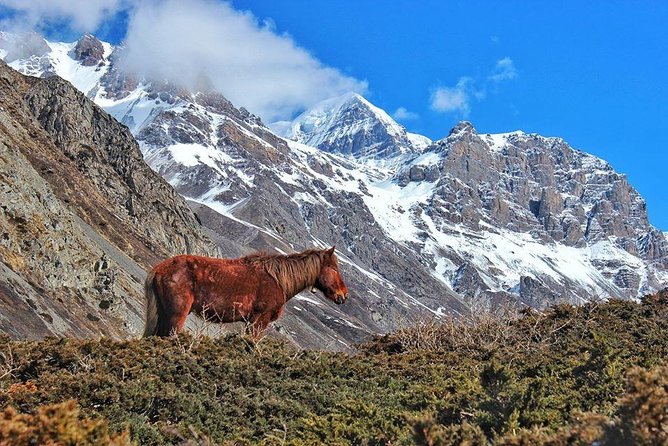
- Thorong La is the physical high point: The pass reaches 5,416 meters, or 17,764 feet, with an early start and a steep ascent.
- Manang provides a useful acclimatization day: You can visit monasteries, see Gangapurna Lake, and follow safety advice from the Himalayan Rescue Association.
- The trek crosses several distinct regions: Expect green river valleys, pine and juniper country, dry Tibetan-style villages, and the Kali Gandaki Valley.
- A porter is included for every two trekkers: Staff costs, insurance, equipment, and accommodation are also covered for the support team.
- Kathmandu and Pokhara add real value: The trip includes UNESCO-listed squares, hilltop viewpoints, caves, waterfalls, museums, boating, and mountain panoramas.
- The package costs $1,937.80 per person: That is a substantial sum, but it covers 17 nights of accommodation, permits, transport, guides, porters, and several breakfasts.
What the $1,937.80 price really covers
At $1,937.80 per person, this is not a shoestring Nepal trip. You are paying for a structured mountain journey with an experienced government-licensed guide, porters, permits, staff support, city hotels, and private transport. Four nights in Kathmandu are covered on a breakfast basis, three nights in Pokhara include breakfast, and ten nights during the trek are included on a room-only basis.
That last point matters. Meals during the trek are not included, so you need a separate food and drink budget. Heritage entrance fees are also extra, estimated at about $60 per person. Add travel insurance, a Nepal visa, tips, personal purchases, donations, and any room upgrades.
The value improves if you want someone else to manage the moving parts. ACAP and TIMS permits are included, as are other necessary permits. A porter is assigned at a ratio of one for two trekkers, and the listed staff costs include salary, insurance, equipment, and accommodation. That removes several expenses and decisions you would otherwise handle yourself.
The price is less attractive if you prefer independent travel, already have trekking arrangements, or want to spend freely on higher-end hotels and meals. Still, for a private group trip with transport and support arranged from airport pickup through departure, the package is fairly easy to understand.
More Annapurna Treks in Kathmandu
- Annapurna Circuit Trek with Tilicho Lake
★ 5.0 · 368 reviews - Annapurna base camp trek 5 Days
★ 5.0 · 252 reviews - 14-Day Private Annapurna Base Camp Trek
★ 5.0 · 180 reviews
Kathmandu begins with three major heritage sites
Your arrival at Tribhuvan International Airport is met by a representative who helps with the transfer to your hotel. After check-in and rest, you receive a trip briefing. That first day is intentionally light, which is sensible after an international flight and a busy airport arrival.
The second day brings three important Kathmandu sights. Kathmandu Durbar Square gives you a first look at the old royal center and medieval Malla architecture. Plan on about an hour here, and remember that the entrance fee is not included.
Swayambhunath, often called the Monkey Temple, sits on a hill above the city. The climb includes 365 stone steps, so it is a small but useful test of your legs before the trek. The reward is a broad view across the Kathmandu Valley, along with Buddhist stupas, shrines, and pagodas.
Boudhanath is a calmer stop, with time to walk around the large stupa and eat at a rooftop restaurant. The site is UNESCO listed, and the circular streets around it offer a more relaxed way to observe daily religious life. Entrance fees for these Kathmandu sites are extra, so keep some cash available.
The road to Syange and the first walking days
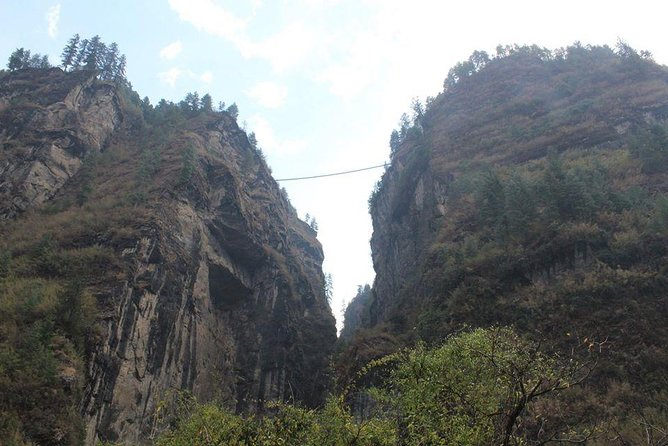
The route leaves the city by private vehicle and heads toward Besisahar and then Syange. The drive takes about seven hours, with stops for food and breaks. It is a long road day, but the green hills, river valleys, and small towns give you an early look at rural Nepal.
The schedule contains a small wording inconsistency around Besisahar, Syange, and Dharapani, with one day description repeating the Syange to Dharapani section. The practical point is clear: expect a road transfer into the trek area, followed by a walking stage through Jagat, Chyamche, Tal, Kyodo, and Karte before reaching Dharapani at 1,860 meters.
This section includes both uphill and downhill walking, though it is described as relatively easy. Tal and the river scenery help break up the day, and Dharapani marks a gradual change toward higher mountain country. You should still take the pace seriously. Early, comfortable walking days are where you protect your energy for the pass later.
The route then continues toward Chame. The written schedule gives limited detail for this day, but Chame is one of the important settlements on the approach to the upper Manang Valley. From here, the scenery begins to feel more enclosed and mountainous.
Pisang and the changing scenery near Manang
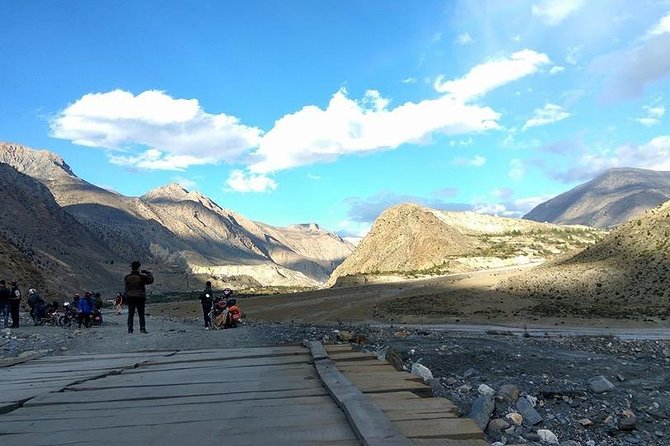
The walk toward Pisang enters a narrow valley with steep sides and forest. One of the memorable natural features is the Paungda Danda rock face, shaped by glacial action. It is a good reminder that this route is not simply a walk toward a single mountain view. The terrain itself keeps changing.
Pisang offers lodges and meals, though the cost of food is yours to cover. The village is a useful overnight stop before the route opens into the upper Manang Valley. You will notice a shift in architecture, vegetation, and the feel of the settlements as altitude increases.
The next stage reaches Manang by way of Ngwal or Ghyaru. This route gives you wide mountain views and a look across the valley. The trail follows the northern side of the river and allows time in Ngwal before continuing.
This is one of the sections I would value most. The walk is not only about ticking off settlements. You are moving through the Marsayangdi and Manang valleys, where village life, old trails, and high mountain scenery meet. The exact route may depend on conditions, but the central reward is the broad view and the gradual move into drier country.
Same trailhead, a longer or shorter day out:
- Everest Base Camp Trek – 14 Days
★ 5.0 · 1,499 reviews - Everest Base Camp Trek
★ 5.0 · 842 reviews - Everest Base Camp Trekking
★ 5.0 · 485 reviews - Everest Base Camp Trekking – 13 Day
★ 5.0 · 365 reviews
Manang is more than a rest stop
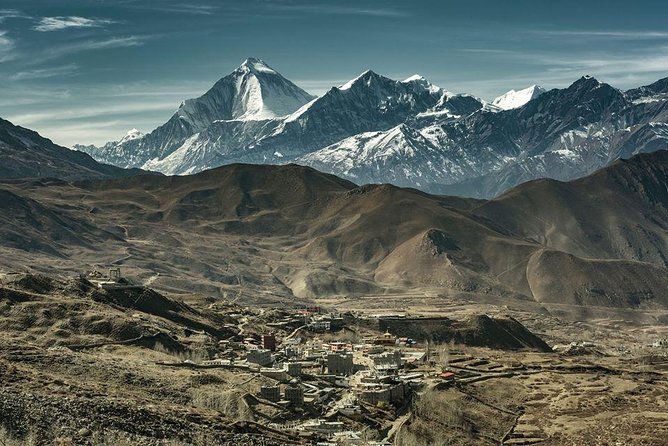
Day eight is set aside for acclimatization in Manang, and that is one of the strongest choices in the plan. At this altitude, a rest day is not wasted time. It gives your body a chance to adjust before the much higher stages toward Thorong La.
If conditions permit, you may take a short boating trip at Gangapurna Lake. You can also visit monasteries around Manang or simply spend time looking across the mountains. The plan specifically advises following guidance from the Himalayan Rescue Association, and you should take that seriously.
You should not treat this day as an excuse for a hard side hike. The best use of it is gentle activity, hydration, food, and attention to how you feel. The itinerary does not promise a fixed boating experience, so regard that as weather dependent rather than guaranteed.
Ledar and Thorong High Camp raise the stakes
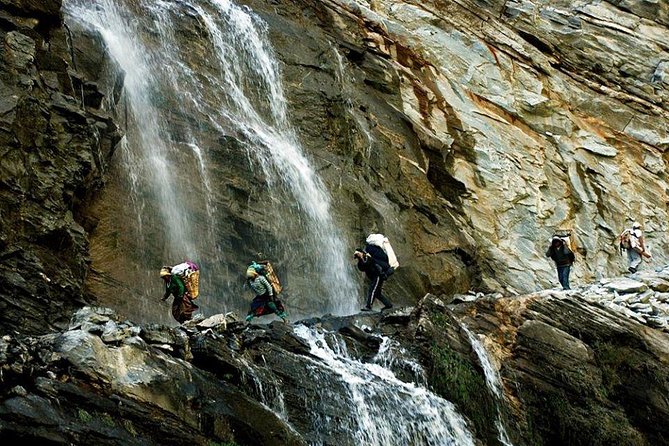
After Manang, the route climbs toward Tengi, Ghunsang, Yak Kharka, and Ledar. The vegetation becomes more sparse, with barberry, juniper, and rose mentioned along the way. The trail crosses streams and gradually leaves the Marsayangdi Valley behind.
Yak Kharka sits around 4,000 meters, while Ledar is the next rest point. The listed walking time for this stage is only about two hours, but the altitude makes short distances more serious than they look on paper. Your breathing, sleep, and appetite matter more here than your speed.
The approach to Thorong High Camp follows the valley, crosses a suspension bridge, and reaches Thorong Phedi before a steep one-hour climb to high camp. The scenery includes Thorong Peak and surrounding mountains, but the night is mainly about preparing for the pass.
This is where a guide and porter arrangement earns its keep. You can focus on walking steadily, carrying a lighter personal load, and following the advice of the staff. The included support does not remove the physical challenge, but it reduces the burden of logistics.
Thorong La is the decisive day
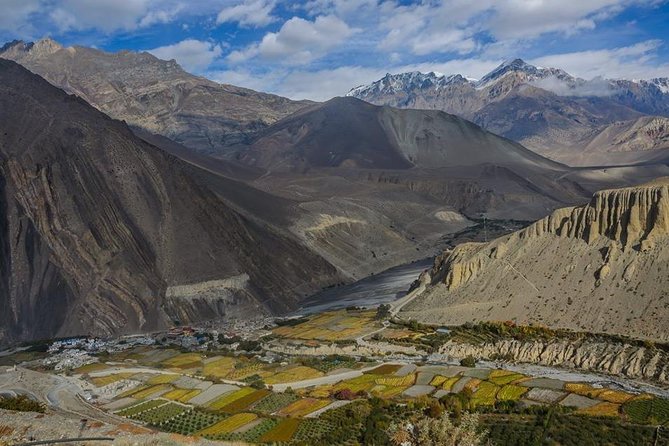
The crossing of Thorong La is the hardest and most memorable part of the trip. The pass reaches 5,416 meters, or 17,764 feet, and the ascent is steep. The day is listed at about seven hours, followed by a descent toward Muktinath.
From the pass, you can see the Dhaulagiri Massif to the west. That view is the payoff, but it comes after an early start and a demanding climb. You should be ready for cold, thin air, and a long day on your feet. A moderate fitness level is the minimum stated requirement, but I would regard strong preparation as wise.
The descent leads toward Chirabu and then Muktinath, a place with major significance for both Hindus and Buddhists. Tibetan traders, holy sadhus, and piles of stones left by pilgrims add human detail to the mountain setting.
Muktinath is not just a convenient overnight stop. It is a religious center where different traditions meet, and that gives the crossing a meaningful cultural finish. The pass tests your body, while Muktinath gives you time to consider the people and beliefs that have shaped this route.
Kagbeni and Jomsom reveal the dry side of the circuit
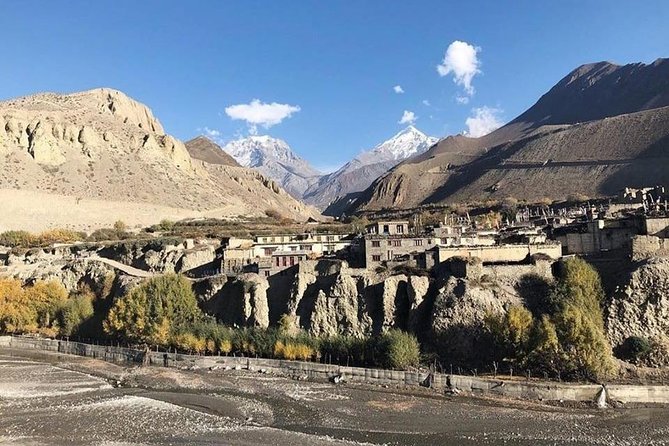
The next morning includes a visit to Muktinath Temple, a Buddhist monastery, and the famous natural gas flame. Views of Nilgiri and Dhaulagiri add to the setting. Afterward, you make an easier downhill walk toward Kagbeni through Tibetan-style villages.
Kagbeni is a rewarding place to slow down. You can visit its monastery, meet local people, and observe the dry, high-altitude character of the settlement. The contrast with the green lower valleys is one of the great strengths of the Annapurna Circuit.
The route continues to Jomsom, where you prepare for the flight to Pokhara. Weather and flight schedules can affect this part of the journey, although the schedule allows the following morning for the flight. The plan does not spell out a backup arrangement, so it is sensible to keep a flexible attitude around this transfer.
Pokhara trades boots for boats and museums
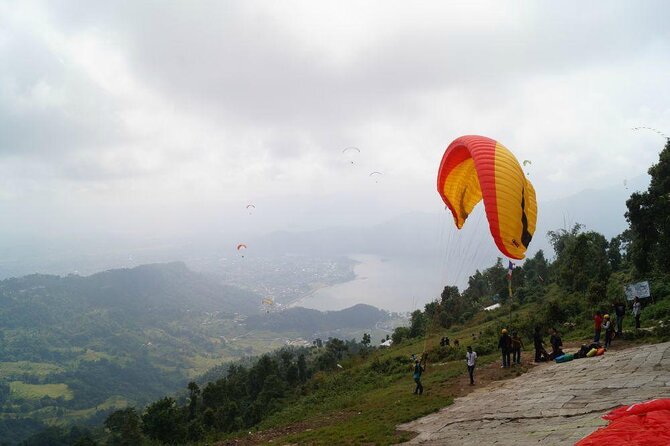
The flight from Jomsom to Pokhara takes about 30 minutes and offers views toward the mountains and the Tatopani and Ghorepani routes. Once in Pokhara, you have free time around the lakeside area and Phewa Lake.
Boating on Phewa Lake is one of the gentler pleasures of the trip. The water can reflect Annapurna, Machhapuchhre, and Dhaulagiri when conditions are clear. After the high pass, this slower pace feels well earned.
The next sightseeing day covers Devi’s Fall, Gupteswar Gupha, and the International Mountain Museum. Devi’s Fall is formed where the Pardi Khola disappears into a cavern, creating sprays and a dramatic underground channel. Gupteswar Gupha is a sacred cave, while the museum gives useful context on mountaineering and the people who climb in this region.
The schedule also mentions the Seti Gandaki River, which cuts through Pokhara and runs underground in places. Tibetan settlements around the city sell handicrafts and carpets. These stops help you see Pokhara as more than a base for mountain trips.
Sarangkot and the World Peace Pagoda
An early drive to Sarangkot is designed around sunrise. From the viewpoint, you can see Annapurna, Fishtail, Dhaulagiri, and other peaks as the first light reaches them. The early departure is worth noting, since the appeal depends on clear conditions and timing.
The day also includes boating on Phewa Lake and a walk toward the World Peace Pagoda on Anadu Hill. The pagoda is a Buddhist monument with views back toward the lake and mountains. The schedule lists a very short visit duration for the pagoda, but the broader day allows time for the boat trip and walk.
This part of the program gives you a welcome change from steep trails. It also gives you several chances to see the mountains from a distance, which can be just as satisfying after spending days among them.
Patan, Bhaktapur, and one last Kathmandu look
A scenic drive returns you to Kathmandu after breakfast. You can rest at the hotel or walk around Thamel in the evening. The following day visits Patan Durbar Square, Krishna Temple, and the Patan Museum.
Patan rewards careful looking. The carved wood and metalwork are not background decoration, and the museum helps explain the artistic traditions of the valley. Entrance to these attractions is included on this day, unlike the earlier Kathmandu Durbar Square visit.
Bhaktapur brings another old urban center, with preserved wood-carved buildings and Nyatapola Temple. Pottery Square adds a hands-on option, though the pottery-making class is not included in the listed price. This final heritage day makes the trip feel more complete: you have seen the Himalaya from the trail, then returned to the valley where much of Nepal’s art and religion took shape.
Who this Annapurna Circuit trip suits best
I would recommend this experience to you if you want one organized journey that combines a serious Himalayan trek with Nepal’s major cultural sights. It suits people who value a private group, a licensed guide, porter support, arranged transport, and a clear route through the Annapurna region.
You need moderate fitness and comfort with long-distance hiking. The high point is not technical climbing, and no technical knowledge is required, but altitude and steep walking are real concerns. You should also be comfortable paying separately for meals, drinks, insurance, tips, entrance fees, and personal expenses.
The strongest praise attached to the experience centers on warm, attentive service. Nilam and Devi are specifically thanked for making the trip feel smooth and personal, with one account describing their care as making the group feel like VIPs. Another highlights unforgettable companionship and a journey worth repeating. Those comments suggest that the human side of the trip is a major strength, though the overall rating is based on only two reviews, so I would keep expectations measured.
Cancellation is flexible up to 24 hours before the start time for a full refund. Pickup is available at Tribhuvan International Airport, and the experience operates as a private activity for your group.
Should you book it?
Book this trip if you want the Annapurna Circuit without arranging every permit, hotel, porter, transfer, and guide yourself. The combination of Thorong La, Muktinath, Kagbeni, Pokhara, and Kathmandu’s heritage sites gives you far more than a mountain walk.
Think twice if you want a low-cost independent trek, dislike long vehicle journeys, or are not ready for a high pass at 5,416 meters. For a supported, culture-heavy Nepal program with clear inclusions and a demanding but nontechnical route, the price is reasonable, provided you budget carefully for everything left outside the package.
FAQ
How long does the Annapurna Circuit experience last?
The program lasts approximately 18 days, beginning with airport pickup in Kathmandu and ending with a transfer to Tribhuvan International Airport.
Where does the experience start?
It starts at Tribhuvan International Airport in Kathmandu, Nepal, where a representative assists with your transfer to the hotel.
Is the trek technically difficult?
No technical knowledge is required. However, a moderate fitness level is needed, and the program requires a large amount of hiking, including the steep crossing of Thorong La at 5,416 meters.
Is there an acclimatization day?
Yes. The program includes a rest and acclimatization day in Manang. You can visit monasteries, see Gangapurna Lake, and follow safety advice from the Himalayan Rescue Association.
Are meals included?
Six breakfasts are included. Food, drinks, and other beverages are not included, and the ten trekking nights are listed on a room-only basis.
Are permits and porter services included?
Yes. ACAP, TIMS, and other necessary permits are included. Porter service is provided at a ratio of one porter for every two trekkers.
Are heritage entrance fees included?
Some later Pokhara and Patan attractions are listed as included, but Kathmandu Durbar Square, Swayambhunath, and Boudhanath entrance fees are not included. Heritage entrance fees are estimated at about $60 per person overall.
Can I cancel for a full refund?
Yes, you can cancel up to 24 hours before the experience start time for a full refund. Cancellations or changes made less than 24 hours before the start time are not accepted for a refund.
More Heritage Trips in Kathmandu
- 10 Days Nepal Trip – Heritage Kathmandu – Natural Pokhara and Poon Hill Trek
★ 5.0 · 3 reviews - Trekking History and Indigenous Heritage in Minca + Cacao & Coffee + Waterfall
★ 4.9 · 63 reviews - From Hanoi : Sapa Moutain Trek – Halong bay Heritage
★ 4.5 · 25 reviews
Recently added around Kathmandu
- Ghorepani Poon Hill Trek★ 5.0 · 16 reviews
- Private Manaslu Circuit Trek at Himalayas★ 5.0 · 3 reviews
- Amazing 1 Day Trekking Experience in Kathmandu Nepal★ 5.0 · 24 reviews
- Ghorepani Poonhill Trek★ 5.0 · 5 reviews
- Upper Mustang Trekking★ 5.0 · 2 reviews
- Upper Mustang Trekking★ 3.0 · 2 reviews
- Upper Mustang Trekking★ 5.0 · 4 reviews
- Upper Mustang Trek★ 5.0 · 5 reviews
Annapurna Base Camp Treks, compared.

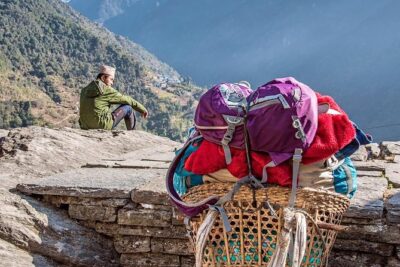
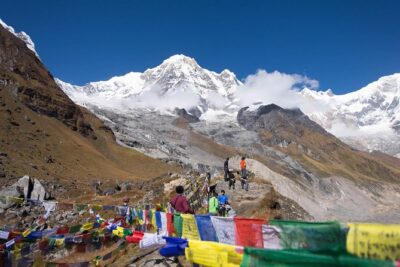
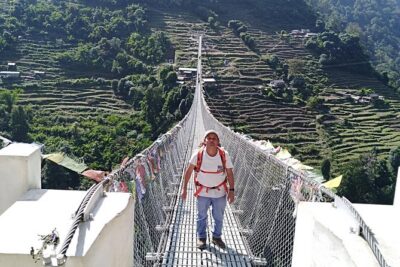
Trekking in Annapurna/Langtang/Everest/Upper Mustang regions
Read our review →
Kathmandu to Annapurna Base Camp (ABC) 5-Day Trek
Read our review →Browse the lists this tour appears in