
REVIEW · KATHMANDU
Annapurna Circuit Trek in Nepal (9 Days)
Thorong La is the big test. This 9-day Annapurna Circuit trek combines high mountain scenery, Tibetan-influenced villages, local culture, and a serious pass crossing at 5,416 meters. I like the small private-group format and the fact that meals, tea house lodging, permits, local transport, and a licensed guide are included. I also like the built-in acclimatization day in Manang, which is essential rather than decorative.
The main concern is the pace. You face several long days, early starts, rough road transfers, and high altitude in a short period. Porters cost an extra $240 per porter, and Kathmandu or Pokhara lodging, insurance, visas, and international flights are not part of the $880 price.
Key things to know before booking
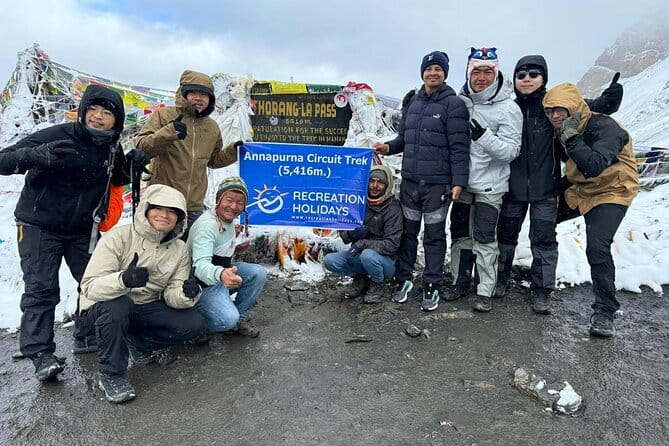
- Thorong La reaches 5,416 meters: The pass crossing is the physical and emotional high point, with a 3 AM start on Day 8.
- Manang provides one acclimatization day: You can rest, explore the village, visit monasteries, or walk toward Gangapurna’s glacial lakes.
- The price includes the main trek basics: Eight nights in twin-sharing tea houses, meals, permits, a guide, and local transport are covered.
- The route mixes walking and road travel: You start with a bus and jeep transfer, then finish with a long ride from Muktinath to Pokhara.
- This is a private activity: Only your group takes part, making the experience more personal than a large departure.
- You need moderate fitness: The trek includes long walking days, steep climbs, suspension bridges, and thin air.
What the $880 price really covers
At $880 per person, this trek offers a solid package for a short Annapurna Circuit itinerary. You get eight nights of tea house accommodation, with twin-sharing rooms, plus eight breakfasts, eight dinners, and nine lunches. That removes much of the daily guesswork, especially in places where food and rooms are basic and supplies arrive by road or foot.
The price also includes trekking permits, a licensed English-speaking guide, a first-aid kit, luggage storage during the trek, and local transport from Kathmandu toward Dharapani and from Muktinath to Pokhara. All listed fees and taxes are included as well.
For groups of eight or more, an assistant guide is included, with food, lodging, salary, and insurance covered for that staff member. That is useful on a route where people often spread out on uphill sections.
The value drops if you need a porter. Porter service costs $240 per porter, with one porter available for every two trekkers. You should also budget separately for Nepal’s entry visa, international airfare, Kathmandu and Pokhara hotels, extra baggage, travel insurance, and medical insurance.
One important detail deserves careful attention: emergency evacuation support is described as covered by travel insurance, but travel and medical insurance themselves are not included. You need your own policy. The first-aid kit and guide support are helpful, but they are not a replacement for insurance that covers high-altitude trekking and evacuation.
More Annapurna Treks in Kathmandu
- Annapurna Circuit Trek with Tilicho Lake
★ 5.0 · 368 reviews - Annapurna base camp trek 5 Days
★ 5.0 · 252 reviews - 14-Day Private Annapurna Base Camp Trek
★ 5.0 · 180 reviews
Day 1: Kathmandu to Bhulbhule, Besisahar, and Dharapani
The day starts around 6 or 7 AM with hotel pickup in Kathmandu. The listed meeting time is 6:15 AM, and the starting point is tied to Tribhuvan Airport in Kathmandu, so confirm the exact pickup location with the operator before departure.
The first part is a scenic bus ride toward Bhulbhule via Besisahar. From Bhulbhule, you transfer to a shared jeep for the mountain road toward the trekking area. This is not a gentle sightseeing morning. It is a long transport day, and road conditions can make the journey tiring before your boots even hit the trail.
The route information also describes local transport from Kathmandu to Dharapani. The practical point is that Day 1 is primarily a transfer into the Annapurna region, with the final vehicle section using a shared jeep. Keep your day bag close, carry water, and expect limited personal space during the road portions.
The reward is arrival in the lower mountain region, where villages and steep hills replace Kathmandu’s city streets. Since accommodation is provided in tea houses during the trek, you should have a simple place to rest after the long ride.
Day 2: Dharapani to Chame through Tibetan-style villages
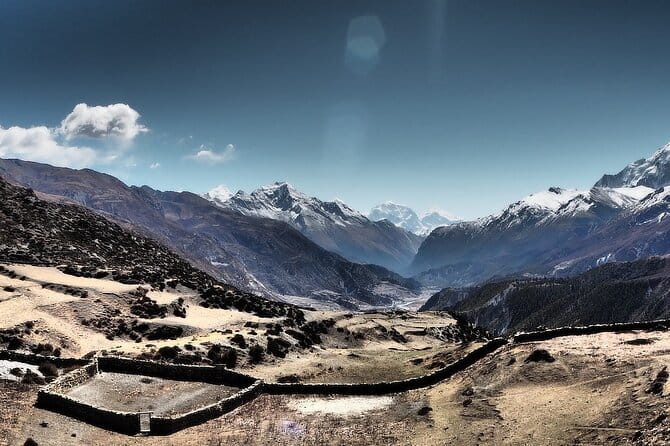
The walk from Dharapani toward Chame enters cooler mountain country. Bagarchhap and Danakyu provide early cultural interest, while apple orchards and mountain views give the day a changing rhythm.
This is listed as a 12-hour day, so you should take the timing seriously. The route includes an upward trend and long stretches on foot. A guide can help set a sensible pace, but you still need to be ready for a full day outside.
The villages are part of what makes this route more than a mountain photograph. The trek brings you through communities shaped by Himalayan trade, farming, Buddhist traditions, and life at altitude. You will see local settlement patterns rather than staying only in purpose-built trekking hubs.
Chame is an important stop because it marks a move into higher country. The air becomes cooler, and the views become more openly mountainous. After a long walking day, however, you may care more about a hot meal and a bed than about squeezing in extra sightseeing.
Day 3: Forests, bridges, and Paungda Danda
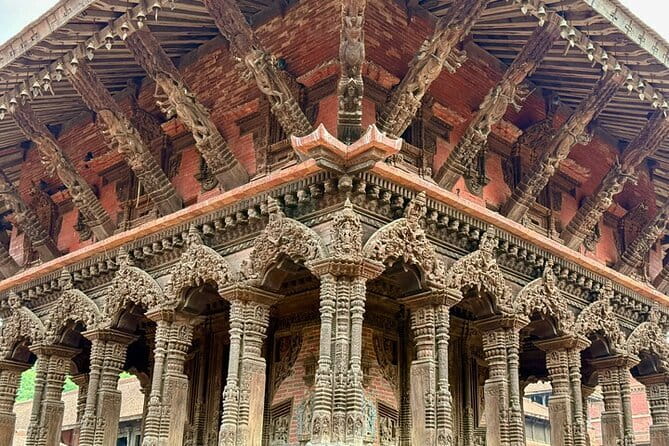
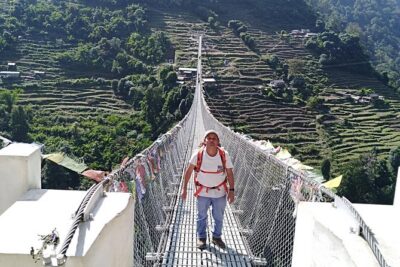
Day 3 takes you through rhododendron and pine forests, across several suspension bridges, and over meadows and steep sections. The route then reaches Paungda Danda, a huge curved rock face that gives the day a memorable visual feature.
I like the variety here. The trail is not just a steady march through one type of scenery. You move between forest, open ground, bridges, and exposed rock, which helps break up the effort.
The itinerary gives another 12-hour estimate. That is a demanding schedule, especially after the previous day. The combination of steep sections and repeated bridge crossings may feel harder than the distance alone suggests. Wear shoes with dependable grip, and keep your hands free on bridges.
One itinerary detail is unclear: this day is labeled Nepal rather than naming the overnight village. Because of that, ask for the exact Day 3 overnight stop and expected walking distance before departure. The route description is clear enough to understand the terrain, but the accommodation location is not.
Same trailhead, a longer or shorter day out:
- Everest Base Camp Trek – 14 Days
★ 5.0 · 1,499 reviews - Everest Base Camp Trek
★ 5.0 · 842 reviews - Everest Base Camp Trekking
★ 5.0 · 485 reviews - Everest Base Camp Trekking – 13 Day
★ 5.0 · 365 reviews
Day 4: Reaching Manang and the Annapurna views
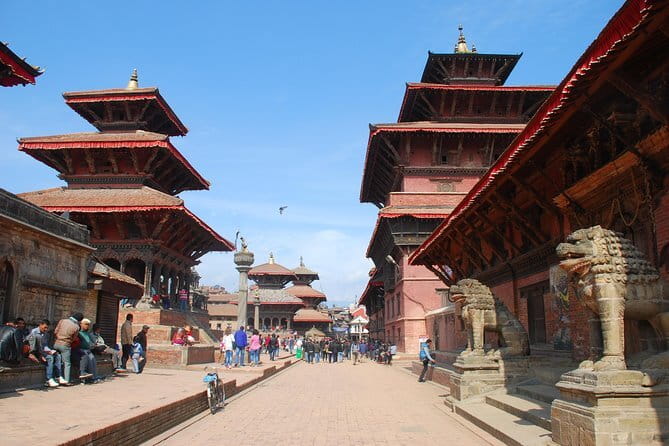
Day 4 brings you to Manang, one of the most important villages on this version of the circuit. The day begins on flatter ground before a gradual climb toward Humde. Along the way, you get views of Annapurna II, Annapurna III, and Annapurna IV, with other major peaks in the wider range.
Manang matters because it is both a cultural stop and an altitude checkpoint. You are now high enough that pacing, hydration, sleep, and appetite deserve real attention. A gradual climb is good news, but the elevation still makes ordinary walking feel harder.
The day is listed as one full day rather than a specific hour count. That may reflect the longer route description or a flexible schedule. Ask your guide how much walking is planned and how much time you will have in Manang.
This is the point where the trek feels distinctly high Himalayan. The views are bigger, the air thinner, and the villages more closely tied to mountain conditions. I would treat this night as preparation for the hardest section ahead, not simply another stop on the way.
Day 5: Why Manang’s acclimatization day matters
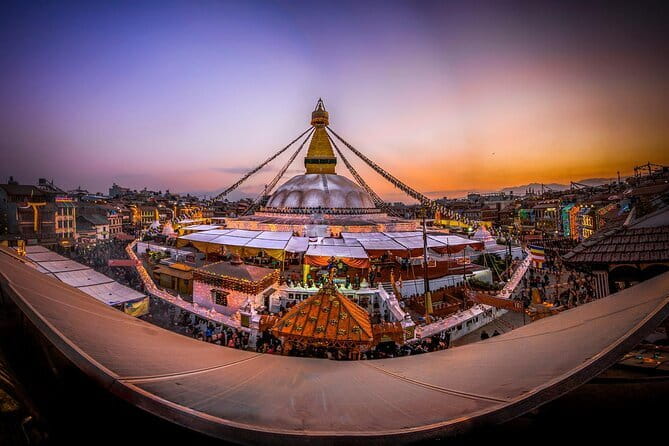
The rest day in Manang is one of the strongest features of the itinerary. You can explore the village, visit local monasteries, or hike toward glacial lakes at the base of Gangapurna. The purpose is to help your body adjust before the route climbs higher.
Do not assume a rest day means lying in bed all morning. A gentle walk is often more useful than complete inactivity, but the exact plan should follow your guide’s advice. The provided itinerary allows choices, which is helpful for a private group with different energy levels.
This day also gives you room to experience Manang as a lived-in mountain village rather than a quick overnight stop. You can look around, take photographs, and enjoy the mountain setting without also having to cover a major distance.
If you are sensitive to altitude, this is the day to speak plainly with your guide. Headache, unusual fatigue, poor coordination, or worsening symptoms should never be treated as a challenge to overcome. The schedule includes acclimatization, but it cannot eliminate altitude risk.
Day 6: Manang to Yak Kharka
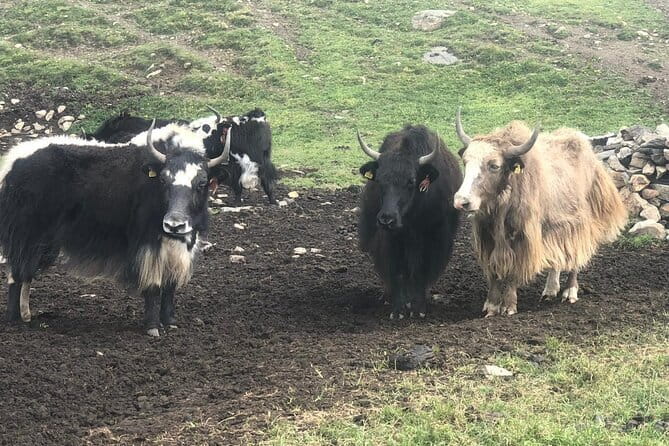
From Manang, the trail climbs steadily toward Yak Kharka. The route passes local settlements and cultivated farmland before reaching higher, more open country. Suspension bridges add a bit of variety, but the main feature is the gradual gain in altitude.
This is listed as another 12-hour day, though the description calls the ascent moderate. The combination may mean a long overall day with a manageable grade, or a schedule that includes plenty of stops. Either way, keep your pace slow and steady.
Yak Kharka is a practical overnight stop before the Thorong La section. You are not climbing the pass yet, but you are moving into the zone where cold, thin air, and limited facilities affect the experience.
Tea house accommodation is part of the package, but you should keep expectations simple. Twin-sharing rooms give you a place to sleep, while included dinner and breakfast reduce the cost burden. This is not a hotel-based trek, and comfort becomes more basic as you climb.
Day 7: Toward Thorong Phedi
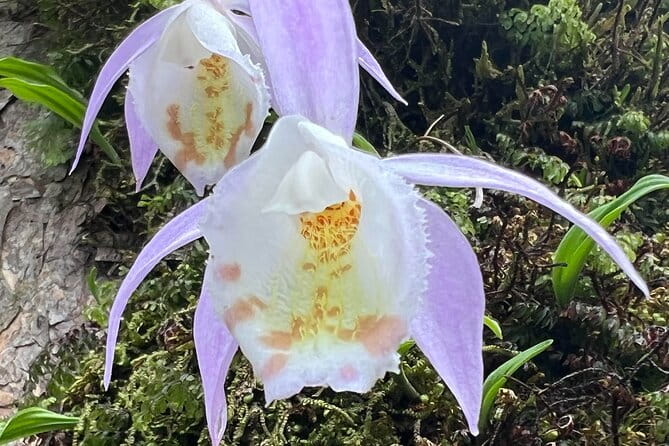
The route to Thorong Phedi takes about four to five hours and follows a gradual incline. The altitude slows everyone down, so the shorter walking estimate does not necessarily make the day easy.
This is a useful buffer before the pass. Reaching Thorong Phedi early gives you time to eat, rest, drink, and prepare for the 3 AM start. The itinerary describes the views as a major part of the day, but your priority should be conserving energy.
You should organize clothing and essentials before dinner. Keep warm layers, water, headlamp or flashlight, snacks, gloves, and any personal medication easy to reach. Since the pass crossing begins in darkness, a poorly packed bag can become a nuisance at the worst time.
Admission to the Thorong La section is listed as included. That does not change the physical demand. This is still the day when you need to be honest about how your body is responding to altitude.
Day 8: Thorong La at 5,416 meters, then Muktinath
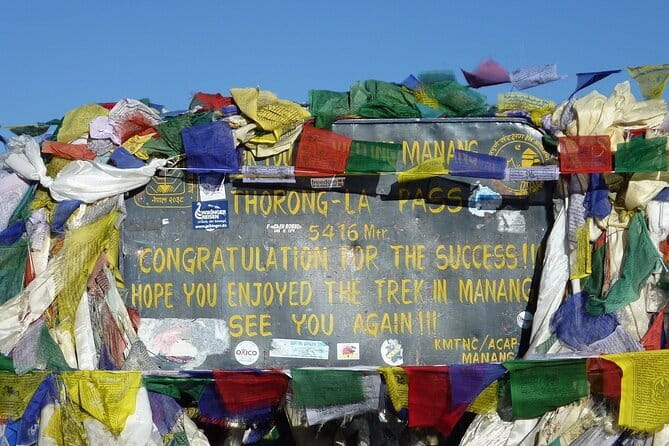
The biggest day begins around 3 AM. You climb to Thorong La, the highest point on the Annapurna Circuit, at 5,416 meters. The early departure is designed to give you the best chance of crossing before weather and wind become more difficult later in the day.
The ascent is slow and strenuous. You will likely stop often, and that is exactly what you should do. The reward is a broad mountain panorama from the pass, followed by the descent toward Muktinath.
Muktinath Temple gives the day a cultural and spiritual finish. The itinerary describes the pass crossing and onward route as a 12-hour day, so do not underestimate the descent. Going downhill can be hard on tired knees, especially after several hours at altitude.
This is also where the scenery changes. The dry, high mountain setting around Mustang contrasts with the greener lower sections earlier in the route. You get one of the trek’s clearest shifts in climate and terrain within a single day.
Day 9: Muktinath to Pokhara by road
After a night in Muktinath, you travel by jeep or bus toward Pokhara. The road follows the lower Mustang Valley and offers a final set of mountain views as you descend.
This is another long day, listed at about 12 hours. Road travel in the mountains can be tiring, and the journey may feel less polished than the walking days. Still, it is a practical way to finish the route within nine days.
Arriving in Pokhara gives you a satisfying endpoint, with the trek completed and the high pass behind you. Accommodation in Pokhara is not included, so arrange your own night if you are not continuing elsewhere.
Guides, group size, and the human side of the trek
The experience is designed as a private activity, so only your group participates. That gives you more control over breaks and pace than a large fixed group, although the tight nine-day schedule still limits how much you can change.
A licensed English-speaking guide is included. The company emphasizes professional support, careful organization, and attention to safety. The available feedback also repeatedly praises the guide and porter support, the follow-up during the journey, and the way the team handles logistics.
The founder, Hari, is specifically recognized for returning clients and for building confidence in the company’s trekking service. No individual guide name is provided for this departure, so ask who will lead your group before you go.
Cultural contact is another strength. The route passes through villages, farmland, monasteries, apple orchards, and mountain communities rather than keeping you on a purely scenic route. You should still treat local homes, religious sites, and people with care. Ask before taking close-up photographs.
Who should book this 9-day trek?
I would recommend it to you if you want the classic Annapurna Circuit experience but have limited time and a reasonable level of fitness. You need to be comfortable with long walking days, basic tea house accommodation, early mornings, and a high pass crossing.
It suits people who value a guide and organized transport but still want a private group. The included meals and permits also make budgeting simpler.
I would not choose this version if you want a relaxed schedule, private hotel rooms, or lots of spare time in each village. The 9-day format compresses a demanding route. If you are new to high-altitude trekking, the moderate fitness requirement should be treated as a minimum, not a casual suggestion.
Cancellation is free with at least 24 hours’ notice before the local start time. After that, refunds are not provided, and late changes are not accepted.
Should you book the Annapurna Circuit Trek?
Book it if Thorong La is your main goal and you want a guided, private trek with meals, permits, tea houses, and local transport bundled into one price. The strongest features are the Manang acclimatization day, the support of a licensed guide, and the mix of mountain scenery and village life.
Think twice if you dislike long road transfers or prefer a slower trek. Before paying, confirm the exact Day 3 overnight stop, the pickup point in Kathmandu, the guide’s name, porter arrangements, and the insurance requirements. With those details clear, the $880 package offers good value for a demanding but memorable route.
FAQ
What is included in the $880 price?
The price includes eight nights of twin-sharing tea house accommodation, a licensed English-speaking guide, trekking permits, a first-aid kit, luggage storage, local transport from Kathmandu to Dharapani and from Muktinath to Pokhara, all listed fees and taxes, eight breakfasts, eight dinners, and nine lunches.
Is porter service included?
No. Porter service is available for an additional $240 per porter. The stated arrangement is one porter for every two trekkers.
Is travel insurance included?
No. Travel and medical insurance are not included. Emergency evacuation support is described as covered by travel insurance, so you need your own suitable policy.
Where does the trek start?
Pickup is offered in Kathmandu, with the listed meeting location connected to Tribhuvan Airport. The start time is 6:15 AM, while the first day description says pickup is around 6 or 7 AM.
Where does the trek finish?
The trek finishes in Pokhara after traveling from Muktinath by jeep or bus through the lower Mustang Valley.
How difficult is the trek?
The experience requires a moderate level of physical fitness. It includes long walking days, steep ascents, suspension bridges, high altitude, and a 5,416-meter pass crossing.
Is there an acclimatization day?
Yes. Day 5 is reserved for acclimatization in Manang. You can explore the village, visit monasteries, or walk toward Gangapurna’s glacial lakes.
Is this a private tour?
Yes. Only your group participates. An assistant guide is included for groups of eight or more.
Recently added around Kathmandu
- Ghorepani Poon Hill Trek★ 5.0 · 16 reviews
- Private Manaslu Circuit Trek at Himalayas★ 5.0 · 3 reviews
- Amazing 1 Day Trekking Experience in Kathmandu Nepal★ 5.0 · 24 reviews
- Ghorepani Poonhill Trek★ 5.0 · 5 reviews
- Upper Mustang Trekking★ 5.0 · 2 reviews
- Upper Mustang Trekking★ 3.0 · 2 reviews
- Upper Mustang Trekking★ 5.0 · 4 reviews
- Upper Mustang Trek★ 5.0 · 5 reviews
Annapurna Base Camp Treks, compared.
Trekking in Annapurna/Langtang/Everest/Upper Mustang regions
Read our review →
Kathmandu to Annapurna Base Camp (ABC) 5-Day Trek
Read our review →Browse the lists this tour appears in