
REVIEW · KATHMANDU
Annapurna Circuit Trek
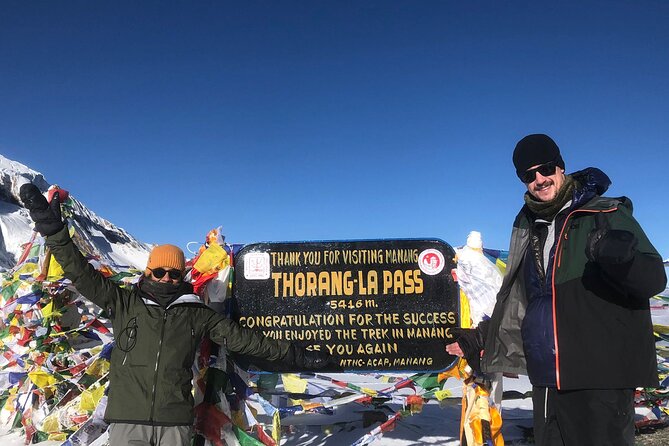
The high pass is the prize. This 14-day private Annapurna Circuit trek takes you from Kathmandu through Manang, across Thorung La at 5,416 meters, and down toward Muktinath and Pokhara. I like the way the package handles the hard planning: airport transfers, permits, tea-house stays, meals on the trail, and a guide are all arranged.
I also like the rest day in Manang, which gives your body time to adjust before the highest part of the route, and the two hotel nights in both Kathmandu and Pokhara. The main caution is simple: this is a serious high-altitude trek, not a gentle sightseeing holiday. The long road transfers, basic mountain lodging, steep walking, and thin air require preparation.
For about $1,150 per person, the trip offers solid value if you want a private, organized route without arranging every permit, vehicle, meal, and bed yourself. Still, read the inclusions carefully. Porter service, bottled water, hot showers, Wi-Fi, charging, tips, and meals in Kathmandu and Pokhara cost extra.
Key points to know before booking
- Thorung La reaches 5,416 meters: This is the physical centerpiece of the trek and the point where fitness, pacing, and altitude awareness matter most.
- Manang includes a rest day: You can take short hikes toward Bonjo Gumba, Gangapurna Lake, or nearby villages instead of pushing onward.
- Full-board meals cover the trekking days: Breakfast, lunch, dinner, and tea are included while you are on the trail.
- The route ends with a long road journey: The drive from Muktinath to Pokhara takes about 10 hours and may use a shared bus or jeep.
- The tour is private and adjustable: Only your group participates, and the itinerary can be customized to suit your needs.
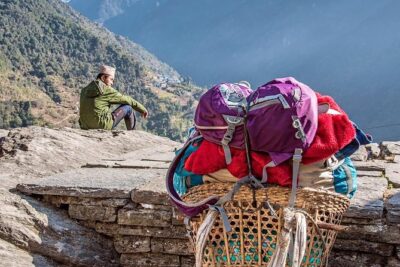
- Porters are not included: You must carry your own trekking load unless you arrange porter service separately.
What the $1,150 price really covers
At first glance, $1,150 is not a small amount. For a 14-day Nepal trip, though, it covers a useful set of costly pieces: airport transfers, Kathmandu and Pokhara hotels, trekking accommodation, a professional guide, permits, area entrance fees, ground transport, full-board trekking meals, taxes, and first-aid medicine.
You also receive a trip completion certificate. A duffel bag and sleeping bag may be provided for use if needed, which can save you from buying or renting those items separately.
The strongest value comes from removing decisions at the moments when decisions are least welcome. You do not need to search for a lodge after a long day, figure out which permits you need, or negotiate every mountain transfer. A guide also gives you a local point of contact and helps keep the trek moving safely.
The price does not cover everything. You pay for international flights, a Nepal visa, porter service, tips, alcoholic drinks, bottled water, Wi-Fi, charging, hot showers, and other personal costs. Lunch and dinner in Kathmandu and Pokhara are also on you.
That last point is easy to miss. The package includes breakfast at the city hotels, but city meals are not included. Bring some Nepalese rupees for food, drinks, small purchases, and mountain extras.
More Annapurna Treks in Kathmandu
- Annapurna Circuit Trek with Tilicho Lake
★ 5.0 · 368 reviews - Annapurna base camp trek 5 Days
★ 5.0 · 252 reviews - 14-Day Private Annapurna Base Camp Trek
★ 5.0 · 180 reviews
Kathmandu arrival and the first long drive
Your trip begins at Tribhuvan International Airport, where a company representative meets you and transfers you to your hotel by private vehicle. After you rest, the guide gives you a briefing about the Annapurna Circuit.
This first day is practical rather than scenic. It gives you a soft landing after an international flight and a chance to check your equipment before heading into the hills. Since the trek includes steep trails and cold, high conditions, use this time to make sure your walking shoes, layers, water system, and daypack are ready.
Day two starts with a long drive toward Syange, lasting about eight to nine hours. The journey is part of the Nepal experience, but it will test your patience. You are not yet walking through mountain villages, and a full day in a bus or vehicle can feel tiring before the trek has even begun.
The transport plan includes tourist bus travel for the long ground journey between Kathmandu and Besishar, followed by local transport toward the trail. The details in the schedule describe Syange as the first overnight trekking-area stop, so confirm the exact vehicle and overnight plan with the operator before departure.
Syange to Dharapani: the trail begins
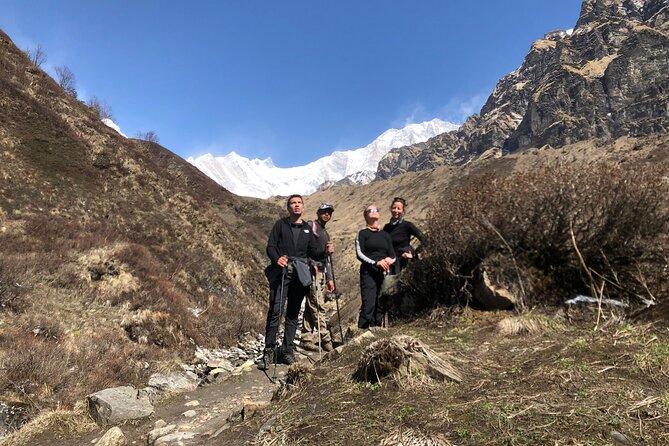
From Syange, the walking starts in earnest. The route toward Dharapani takes roughly six to eight hours, depending on pace and conditions. You cross a bridge and follow the Marshyangdi River valley through increasingly rugged scenery.
This is a useful first test of your legs. The route is not described as flat, and the day includes trail sections where you need to watch your footing. You also begin to settle into the basic rhythm of a Himalayan trek: breakfast, walking, lunch, steady climbing, and an evening in a tea house.
Dharapani is a good early stopping point because it marks a clear change from road travel to a more traditional trekking routine. Accommodation is in twin-sharing lodges or tea houses, rather than private city-style hotels. Expect functional rooms and shared facilities, with comfort becoming simpler as you gain altitude.
Chame and the Paungda Danda cliffs
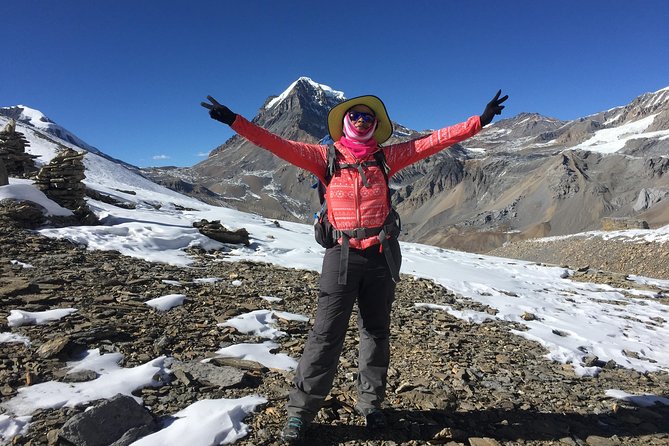
The next section leads toward Chame, the administrative center of Manang District. The walk takes about six hours and passes through steep ridges, green woodland, and areas affected by landslides.
The trail demands attention. You cannot spend the whole day looking at the peaks because some sections are narrow or uneven. That balance is part of the appeal: you get dramatic views, but you also need to keep your feet and mind on the path.
After Chame, the route passes the striking Paungda Danda rock formation, described as a curved rock rising roughly 1,500 meters. It is one of the more memorable geological sights on the route and gives this section a strong sense of place.
The schedule lists another six-hour walking day in this area. You pass through a narrowing valley and continue toward Upper Pisang. The scenery begins to change as the route climbs, and the mountain setting becomes more pronounced.
Same trailhead, a longer or shorter day out:
- Everest Base Camp Trek – 14 Days
★ 5.0 · 1,499 reviews - Everest Base Camp Trek
★ 5.0 · 842 reviews - Everest Base Camp Trekking
★ 5.0 · 485 reviews - Everest Base Camp Trekking – 13 Day
★ 5.0 · 365 reviews
Upper Pisang and the approach to Manang
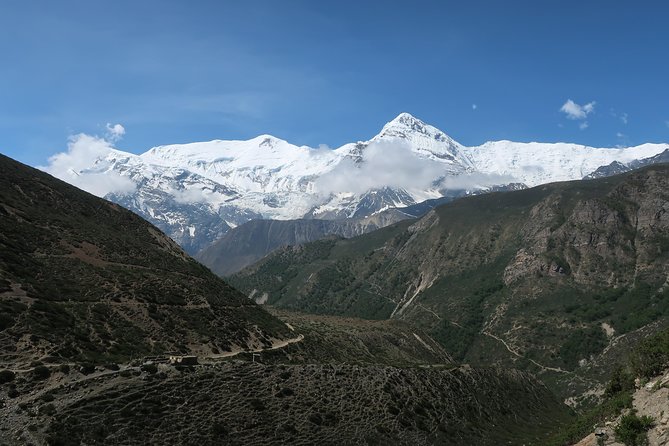
The route from Pisang toward Manang is one of the scenic high points of the trek. You pass through Upper Pisang and continue along the Marshyangdi Valley, with the mountains becoming more immediate as you gain height.
The planned walking time is about seven hours. That is a full day, but the gradual climb is important. You are not simply racing toward the pass. You are building altitude day by day, which gives your body a better chance to adjust.
Manang is described as a major destination for local and international visitors, and it is easy to see why. The valley combines mountain views, Tibetan-influenced culture, and a strong sense of remoteness. It is also the place where the itinerary wisely slows down.
Manang rest day: the smartest pause on the schedule
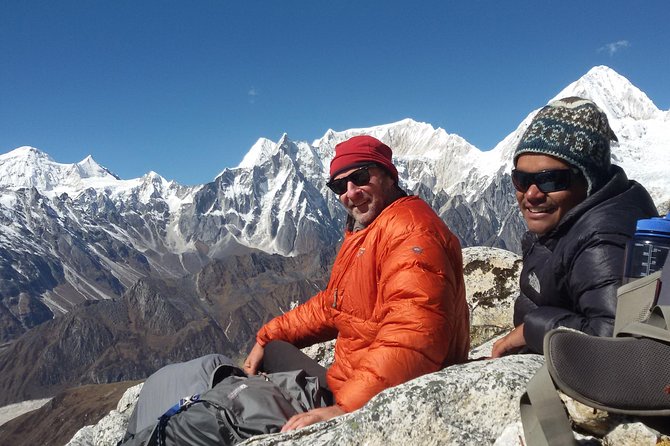
Day seven is set aside for rest and short hikes around Manang. You may walk toward Bonjo Gumba, Gangapurna Lake, or nearby villages such as Vraga.
This is not a wasted day. At high altitude, rest days are useful because they let you explore without committing to a long forward push. The best approach is to walk gently, drink enough water, and pay attention to how you feel.
The guide can help you choose a suitable outing. If you feel tired, staying close to Manang is sensible. If you feel strong, a short hike gives you better views and helps you spend time at altitude before the highest days.
The schedule calls this a five-hour day, but it is better understood as a flexible acclimatization day rather than a fixed excursion. The private format helps here. Your group can adjust the pace and activity level more easily than a large scheduled group.
Tenki, Ghunsa, and the final climb
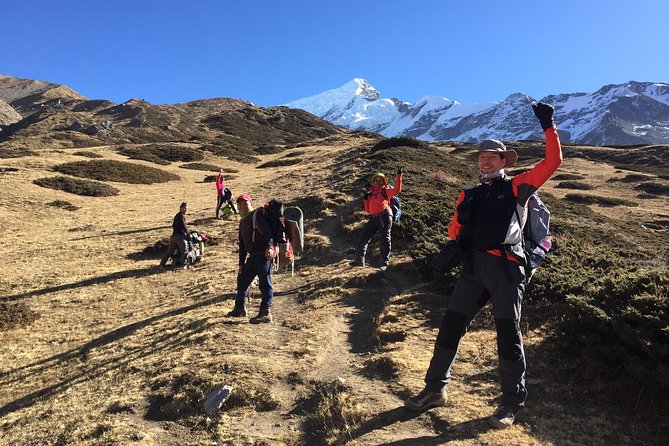
After Manang, the trail continues upward through Tenki and along the upper Marshyangdi Valley. The route passes a small stream, juniper trees, and Ghunsa Village, with about four hours of walking listed for this day.
This part of the trek feels more exposed and austere than the lower valley. Trees become less dominant, the air is thinner, and each climb requires more effort. Short walking days are valuable here because altitude, not distance, is the main challenge.
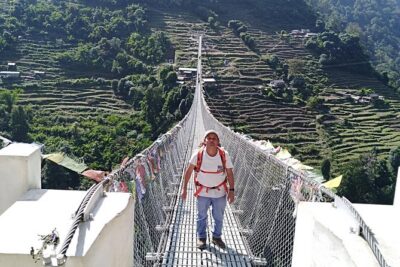
The next stage leads toward Thorong Phedi. You cross a suspension bridge to reach Letdar Village, then continue past steep cliffs and higher mountain terrain. The schedule gives this day about four hours, but the route is still physically demanding because of the elevation gain.
Thorong Phedi is the final major staging point before the pass. The name sounds modest, but reaching it is a real achievement. At this point, you need an early night, warm layers, and a clear understanding of the next day’s plan.
Thorung La at 5,416 meters
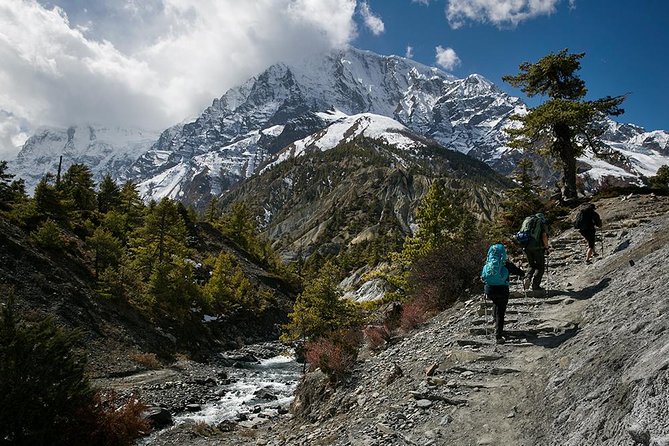
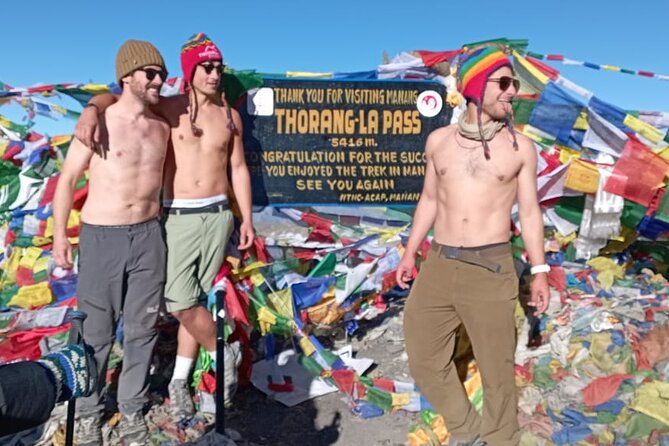
The pass day is the big one. You climb to Thorung La, also written as Thorong La, at 5,416 meters. This is the highest point of the trek and the reason you need to take altitude seriously from the start.
The schedule allows about eight hours for the pass crossing and the descent toward Muktinath. The effort is not just the height. You are walking uphill in cold conditions, then descending for a long stretch afterward. Your guide’s pacing matters here, and the private arrangement allows you to move at a sensible speed.
Do not treat the pass as a race. Keep your steps short, take breaks, and carry only what you need for the day. Since porter service is not included, your own packing choices have a direct effect on comfort.
Muktinath gives you a rewarding finish to the high route. The Muktinath Temple area is important to both Hindu and Buddhist pilgrims, and it provides a strong cultural change after the Manang side of the circuit. The scenery and architecture also reflect the Tibetan influence of Mustang.
The pass can be affected by weather. The operator states that poor weather may lead to a changed date or a full refund, but you should also expect the practical possibility of delays or changes in mountain conditions.
Muktinath to Pokhara: scenic but very long
After the pass, the walking portion ends. The next day brings a bus or jeep journey from Muktinath to Pokhara, taking about 10 hours.
This is not a relaxing transfer in the usual sense. Long mountain roads can be tiring, and the ride may be shared with other people. Still, it is an efficient way to connect the high Mustang area with Pokhara without adding more trekking days.
Pokhara provides a welcome change of pace. Two hotel nights are included in the city, with breakfast, and day 12 is set aside for rest or independent exploration of Pokhara Valley. Meals outside breakfast are not included, so budget separately for lunch and dinner.
The schedule mentions the option of flying from Pokhara to Kathmandu for an extra charge. The included plan uses a tourist bus, taking about seven hours. That bus transfer is less expensive, but the flight option may appeal if you want to save time and avoid another long road day.
Guides, gear, and the practical weak spots
A professional trekking guide is included, along with first-aid medicine carried by the guide. This matters most on the high sections, where route choices, pacing, and quick judgment can affect the whole day.
The trip has received a five-star rating from 35 reviews, with 100 percent recommendation shown in the supplied information. One detailed positive review praised the smooth handling of documents and airport transfers, as well as the hotel accommodation in Kathmandu and Pokhara.
That same feedback also raised a useful caution: guide and staff training may not always be consistent. I would ask before departure who your guide will be, what experience they have on the Annapurna Circuit, how altitude concerns are handled, and what happens if your group needs a slower pace.
The package includes a company duffel bag and sleeping bag if needed, but you should confirm availability and condition before arriving. Pack for basic tea-house living, since hot showers, Wi-Fi, charging, and bottled water are not included during the trek.
Who should book this trek?
This experience suits you if you want the classic Annapurna Circuit but do not want to arrange each permit, hotel, meal, transfer, and trekking bed independently. It is especially useful for first-time visitors to Nepal who value a private guide and a defined support system.
You should have a moderate fitness level and be comfortable walking for several hours on steep, uneven trails. The route also suits people who can handle basic accommodation and long vehicle rides without expecting luxury.
It is less suitable if you want a short trek, private bathrooms throughout, included porter support, or a fully flexible travel schedule. The Thorung La crossing is a serious commitment, and the 10-hour ride to Pokhara is not a minor footnote.
Book early if your dates matter. The experience is booked an average of 105 days ahead, which suggests that planning several months in advance is sensible.
Should you book the Annapurna Circuit Trek?
I would book this trek if I wanted a structured, private way to experience one of Nepal’s best-known routes and valued having permits, meals, transfers, and accommodation arranged. The Manang rest day, high pass crossing, Muktinath visit, and two city hotel stays give the trip a good mix of challenge and recovery.
I would ask a few direct questions before paying: the exact day-by-day walking distances, the guide’s experience, porter options, the condition of supplied gear, and the transport plan from Kathmandu to the trailhead. If the answers are clear and you are ready for altitude, basic tea houses, and long road transfers, the $1,150 price is reasonable for the amount of organization included.
If you want comfort above all else, choose a shorter or more supported itinerary. If you want a demanding mountain route with strong cultural variety and fewer planning headaches, this is a solid choice.
FAQ
How long is the Annapurna Circuit Trek?
The experience lasts approximately 14 days, including arrival and departure transfers, trekking days, a rest day in Manang, time in Pokhara, and the return to Kathmandu.
What is the highest point of the trek?
The highest point is Thorung La, also called Thorong La, at 5,416 meters.
Is this a private trek?
Yes. Only your group participates, and the itinerary can be customized to suit your needs.
Are meals included?
Breakfast is included at the Kathmandu and Pokhara hotels. Breakfast, lunch, dinner, and tea are included during the trekking portion. Lunch and dinner in Kathmandu and Pokhara are not included.
Is a guide included?
Yes. One professional trekking guide is included for the trek, and first-aid medicine is carried by the local guide.
Is porter service included?
No. Porter service is not included in the stated price.
What accommodation is included?
The package includes two nights in Kathmandu, two nights in Pokhara with breakfast, and twin-sharing lodge or tea-house accommodation during the trek.
How do you return from Muktinath to Pokhara?
The package includes a local bus or jeep from Muktinath to Pokhara. The journey takes about 10 hours and may be shared with other passengers.
Can I cancel for a full refund?
Yes, you can receive a full refund if you cancel at least 24 hours before the experience start time. Changes or cancellations made less than 24 hours before the start are not accepted for a refund.
Recently added around Kathmandu
- Ghorepani Poon Hill Trek★ 5.0 · 16 reviews
- Private Manaslu Circuit Trek at Himalayas★ 5.0 · 3 reviews
- Amazing 1 Day Trekking Experience in Kathmandu Nepal★ 5.0 · 24 reviews
- Ghorepani Poonhill Trek★ 5.0 · 5 reviews
- Upper Mustang Trekking★ 5.0 · 2 reviews
- Upper Mustang Trekking★ 3.0 · 2 reviews
- Upper Mustang Trekking★ 5.0 · 4 reviews
- Upper Mustang Trek★ 5.0 · 5 reviews
Annapurna Base Camp Treks, compared.
Trekking in Annapurna/Langtang/Everest/Upper Mustang regions
Read our review →
Kathmandu to Annapurna Base Camp (ABC) 5-Day Trek
Read our review →Browse the lists this tour appears in