
REVIEW · KATHMANDU
Annapurna Base Camp Trekking
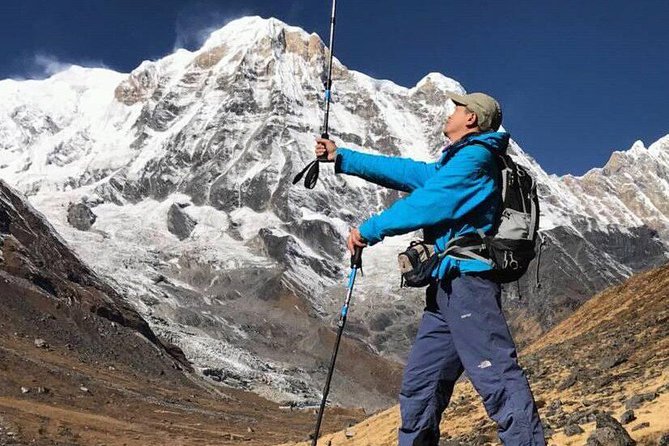
The Himalayas reward steady feet. This private Annapurna Base Camp trek combines Kathmandu’s major sacred sites, Pokhara, Poon Hill, and the high mountain route to Annapurna Base Camp in one carefully arranged trip. I like the private guide support and the fact that airport pickup, permits, transport, lodging, and trekking meals are arranged for you. I also like the blend of cultural sightseeing and walking, rather than rushing straight into the mountains.
The main point to watch is the schedule. It is described in places as a 15-day tour, but the supplied day-by-day plan runs for 14 days. The mountain route also includes long days, steep stone steps, cold upper sections, and basic teahouse accommodation. You need a moderate level of fitness, and you should confirm the final schedule before paying.
Key Points Before You Book
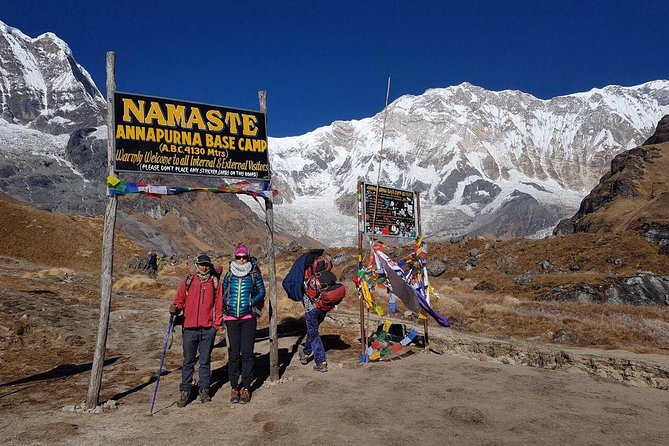
- Sunrise at Poon Hill: An early climb to 3,210 meters brings broad views toward the Annapurna and Dhaulagiri ranges.
- Private trekking support: Your English-speaking guide gives your group direct attention, with porters provided at a ratio of one porter for two trekkers.
- A full Himalayan route: The plan reaches Annapurna Base Camp, then returns through Bamboo and Jhinu Danda.
- Kathmandu culture included: Pashupatinath, Boudhanath, Patan Durbar Square, and Swayambhunath are built into the opening day.
- Good package value: Hotels, teahouse meals, permits, tourist-coach transport, guide, porters, and airport pickup are included for $899 per person.
- Weather can change the plan: One account describes turning back before base camp because of weather, so flexibility matters in the mountains.
What the $899 Price Covers
At $899 per person, this trek offers a useful amount of support for the money. You receive airport pickup, three-star category hotels in Kathmandu and Pokhara with breakfast, teahouse lodging during the trek, and breakfast, lunch, and dinner while walking in the mountains.
The package also includes a tourist coach between Kathmandu and Pokhara, an English-speaking guide, porters, trekking permits, ACAP and TIMS paperwork, government and local taxes, and porter expenses such as insurance, equipment, food, lodging, and transport.
That matters because the paperwork and transport can be a headache if you arrange them alone. You are not simply buying a walking route. You are paying to have the arrival, city stay, mountain access, food arrangements, and return journey handled by one company.
Still, budget for extras. Lunch and dinner in Kathmandu and Pokhara are not included. Bottled or boiled water, hot water, tea, coffee, soft drinks, showers, laundry, battery charging, phone calls, alcoholic drinks, and bar bills cost extra. Tips for the guide and porters are also excluded.
Entrance fees for the Kathmandu sightseeing stops are not included either. The price is therefore strong for a supported trek, but it is not an all-inclusive holiday. Carry enough cash for mountain drinks, showers, charging, tips, and meals outside the trek.
More Annapurna Treks in Kathmandu
- Annapurna Circuit Trek with Tilicho Lake
★ 5.0 · 368 reviews - Annapurna base camp trek 5 Days
★ 5.0 · 252 reviews - 14-Day Private Annapurna Base Camp Trek
★ 5.0 · 180 reviews
Your First Two Days in Kathmandu
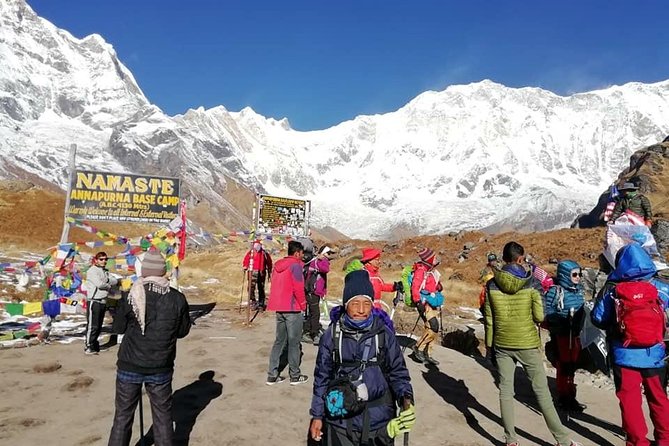
Your arrival starts simply. A representative meets you at Tribhuvan International Airport and takes you to the hotel in Kathmandu. This is helpful after a long flight, especially if you are unfamiliar with the city and do not want to negotiate transport immediately.
The next day covers four important sites in the Kathmandu Valley. At Pashupatinath, you see one of the most sacred Hindu temple areas in Nepal beside the Bagmati River. The site is active and religious, so respectful clothing and behavior are important.
Boudhanath is a major Buddhist stupa east of central Kathmandu. Its large white dome and watchful eyes give you a clear introduction to Tibetan Buddhist culture in the valley. The open space around the stupa also makes this a good place to slow down before the trek.
Patan Durbar Square brings a different mood, with palace buildings, courtyards, pagoda temples, and a museum containing religious art. Swayambhunath, often called the Monkey Temple, sits on a hill above the city and gives you a broad view over Kathmandu.
This sightseeing day is valuable, but it is full. You will be visiting several major places rather than spending a whole afternoon at one site. Entrance fees are extra, and the exact sightseeing pace may depend on traffic and your guide.
The Long Ride to Pokhara
On the third morning, pickup is scheduled around 6:30 am, with the tourist bus leaving at about 7:00 or 7:30 am. The ride normally takes about six to eight hours, depending on the schedule and road conditions.
Pokhara is smaller and calmer than Kathmandu, with Phewa Lake and mountain views toward Annapurna, Machhapuchare, Dhaulagiri, Lamjung Himal, and Manaslu. It is a practical base for the trek and a pleasant place to spend the night before walking.
The bus is included, which keeps the price down. You should not expect a quick transfer. This is a long road journey, and the schedule leaves little room for a relaxed morning in Kathmandu. If you prefer speed and can pay more, ask whether another transport option is available, but the supplied package specifically uses a tourist coach.
Nayapul to Ulleri: The First Mountain Day
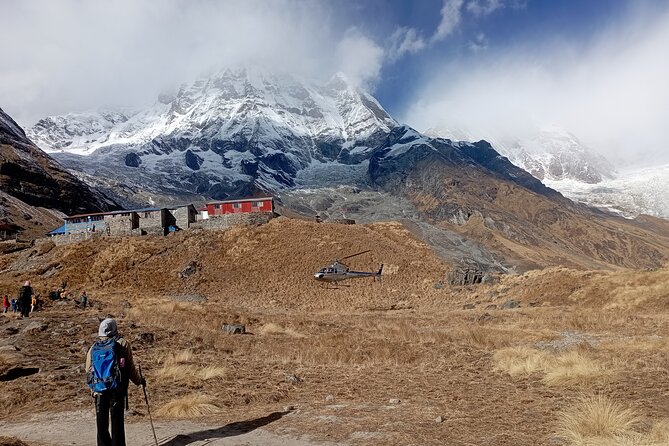
The trek begins after a private vehicle takes you from Pokhara to Nayapul. From there, you walk along the Modi Khola for about 15 minutes before reaching Birethanti at 1,015 meters.
Birethanti is a useful early stop, with shops and teahouses. The route then follows the Bhurungdi Khola through Hille and Tikhedhunga before continuing toward Ulleri. The first day is described as five to seven hours, though the shorter route description also refers to the Ulleri area after starting at Nayapul.
This is your introduction to the rhythm of the trek: river valleys, village paths, steady climbing, and simple mountain accommodation. It is not an extreme opening day, but you should not treat it as a casual walk. The route gains height, and the next morning brings a well-known climb.
Same trailhead, a longer or shorter day out:
- Everest Base Camp Trek – 14 Days
★ 5.0 · 1,499 reviews - Everest Base Camp Trek
★ 5.0 · 842 reviews - Everest Base Camp Trekking
★ 5.0 · 485 reviews - Everest Base Camp Trekking – 13 Day
★ 5.0 · 365 reviews
Ulleri to Ghorepani Through Rhododendron Forest
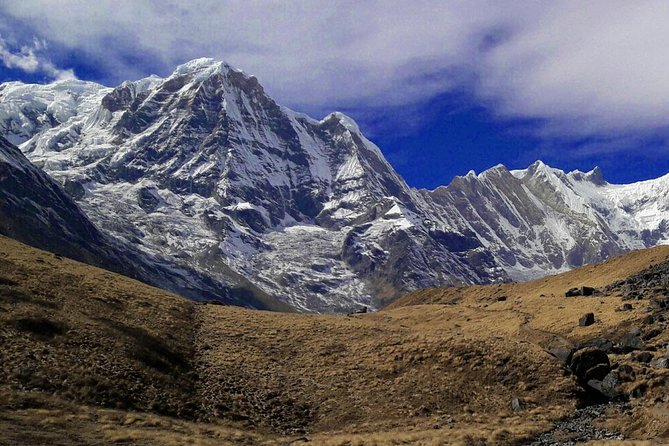
The route from Ulleri to Ghorepani includes a steep climb to around 2,070 meters. After Ulleri, the trail becomes gentler as it passes through oak and rhododendron forest toward Banthanti and Nangethanti.
This is one of the more attractive walking sections, especially when the forest is in flower. The day is listed at four to five hours, but the stone steps and uphill sections can make it feel longer if your legs are not ready.
Ghorepani sits around 2,750 to 2,840 meters, depending on the elevation reference used. The changing figures are not a major issue, but they show why you should think in terms of approximate mountain elevations rather than exact numbers.
Poon Hill Sunrise and the Walk to Tadapani
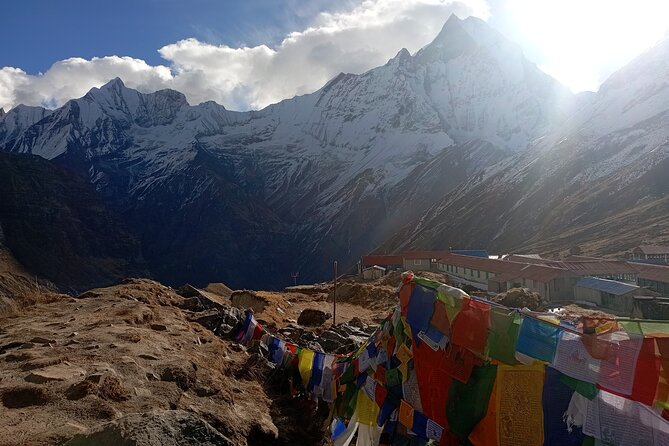
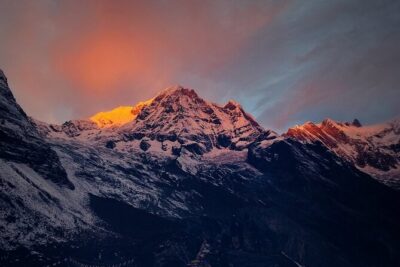
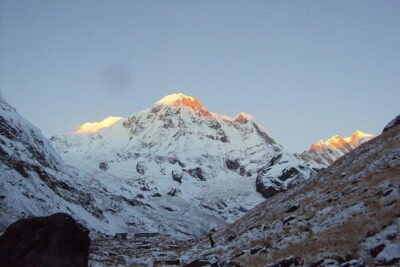
Poon Hill is one of the great rewards of this route. You leave early for the climb to 3,210 meters, aiming to reach the viewpoint for sunrise over the high mountains.
The route description promises views toward Annapurna and Dhaulagiri, along with Mustang, Pokhara, and many high peaks. Weather controls what you see. On a clear morning, the viewpoint can be superb. In cloud, the climb still adds time and effort without guaranteeing a view.
After returning to Ghorepani for breakfast, you continue east along a ridge before descending through rhododendron forest and past waterfalls to Tadapani. The full day is listed at six to seven hours.
I like this day because it gives you a major viewpoint early in the trek, before the route becomes more focused on the approach to base camp. The drawback is the early start followed by a long walking day. Sleep well in Ghorepani and keep your pack light.
Tadapani to Chhomrong and the Stone Steps
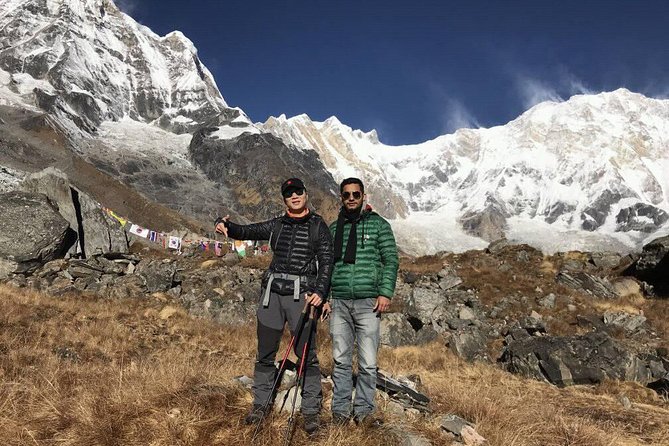
From Tadapani, the trail descends through a large rhododendron forest before opening onto terraced fields. You pass waterfalls and a suspension bridge, then deal with more uphill and downhill walking before reaching Chhomrong at about 2,170 meters.
Chhomrong sits below the Annapurna massif and is one of the key villages on the route. It is both scenic and practical, since the trail later passes through the village again on the return.
The five to six hour estimate is reasonable for a fit walker, but the repeated changes in elevation can be tiring. The stone steps are a real feature of the route. They make the trail easy to follow, but they also place steady pressure on knees and thighs.
Bamboo Forest, Dovan, and Deurali
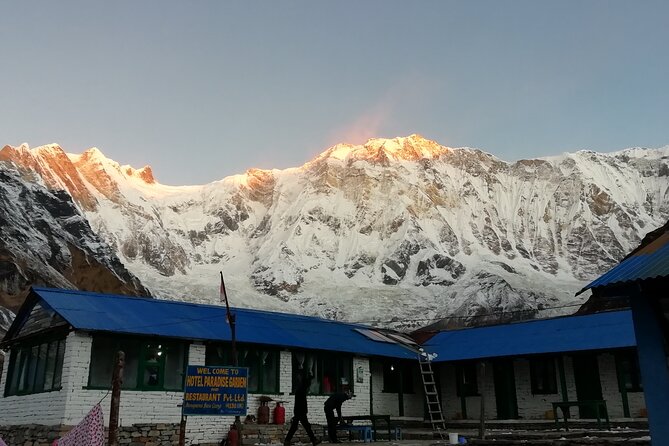
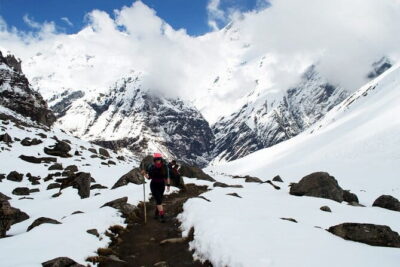
The route from Chhomrong to Dovan moves through damp bamboo forest. The trail can feel cold and shaded at first, then climbs toward Himalaya Hotel, where the forest opens and the valley views improve.
You continue through drier woodland toward Hinku Cave, descend to a river, and climb again to Dovan. Waterfalls, cliffs, the glacial river, and increasingly sparse vegetation give this section a stronger high-mountain feel.
The walking time is about five to six hours. From Dovan, you continue toward Deurali on a steady valley climb. The trail follows rocky cliffs and can be steep in places. The route description gives another five to six hours for this section.
These days are less about one famous viewpoint and more about the gradual change in the surroundings. The lower forest gives way to rock, cold air, and open views. You should expect basic teahouse conditions as you gain height, with extras such as hot showers, bottled water, and charging paid separately.
Annapurna Base Camp at 4,130 Meters
From Deurali, the trail continues toward Machhapuchare Base Camp before reaching Annapurna Base Camp. The final approach is described as a steady or rapid ascent, with five to seven hours of walking depending on the exact section and pace.
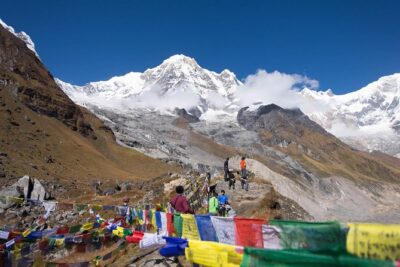
Annapurna Base Camp is the central goal of the trek. You reach an open mountain setting surrounded by high peaks, with the route enclosed by the Annapurna sanctuary. The experience depends heavily on weather, fitness, and how your body responds to altitude.
Do not treat the base camp day as a simple photo stop. You have already climbed for several days, and the altitude makes each uphill section harder. The benefit of a private guide is especially clear here. Your guide can help manage the pace, watch how you are coping, and adjust the plan when conditions are poor.
One positive account describes a trek that could not continue to base camp because of weather. That is an important reminder: reaching the destination is desirable, but safe decisions matter more than forcing the schedule.
The Return to Bamboo and Jhinu Danda
The descent begins by retracing the route through Machhapuchare Base Camp, Deurali, Himalayan Hotel, Dovan, and Bamboo. This is listed as five to seven hours, and downhill does not always mean easy. Long descents can be hard on knees, especially over stone paths.
From Bamboo, the route continues back toward Chhomrong, where you stop for lunch, before descending into the Modi Khola valley. The return section includes more stone steps and another demanding day of about seven hours.
Jhinu Danda provides a welcome change. The route includes time at the hot spring, followed by an overnight stay in the area. The hot spring is one of the trip’s most appealing recovery points after several long days of walking.
The following day takes you toward Nayapul before a drive back to Pokhara. The schedule lists about five hours of trekking and transport. You spend the night in Pokhara, giving you a chance to rest before the final bus to Kathmandu.
Guides, Porters, and Personal Attention
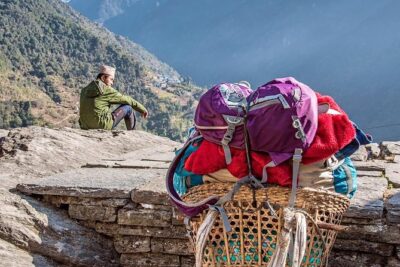
The strongest part of this arrangement is the direct support. The package supplies an English-speaking guide and one porter for every two trekkers. That means you can walk with a lighter daypack while the porter carries the main luggage.
Positive feedback gives particular attention to guides named Bishnu Bhatta and Vishnu, as well as a guide called Prem dai. The praise centers on care, friendliness, organization, and help with comfort and food. One solo trekker especially appreciated being looked after from airport arrival through departure, including attention to meals to reduce the chance of stomach trouble.
The company also received praise from older walkers who completed the route with support. That does not remove the physical demands, but it suggests the private format can work well when the guide adjusts the pace and pays close attention to the group.
Ask for the name of your assigned guide before departure, since the supplied information refers to more than one staff member. Also confirm the porter arrangement if your group size changes.
Who This Trek Suits Best
This trek suits you if you want the Annapurna Base Camp route without arranging every hotel, vehicle, permit, guide, and meal yourself. It is a good match for a small private group that values personal attention and some flexibility.
You should be comfortable walking for four to seven hours on several consecutive days. A moderate fitness level is required, but the route is not presented as technical climbing. The main challenges are steep steps, repeated ascents and descents, altitude, weather, and basic mountain facilities.
It may not suit you if you want luxury lodging, a short transfer from Kathmandu to Pokhara, or a relaxed holiday with only occasional walking. The bus journeys are long, the mountain rooms are simple, and several days require early starts or extended walking.
Free cancellation is available when you cancel at least 24 hours before the scheduled start time. Changes made later are not accepted, so check your dates carefully.
Should You Book the Annapurna Base Camp Trek?
I would consider this a good-value choice for a first supported trek in the Annapurna region. The combination of Kathmandu’s major heritage sites, Pokhara, Poon Hill, Annapurna Base Camp, Jhinu hot springs, permits, porters, meals, and transport gives you a lot for $899.
Before booking, confirm three things: the correct trip length, the exact day-by-day route, and what happens if weather prevents you from reaching base camp. If you are ready for long walking days and basic teahouses, the private guiding and strong support make this an appealing package. If your priority is comfort or a guaranteed summit-style destination, choose a shorter or more flexible holiday instead.
FAQ
How long is the Annapurna Base Camp trek?
The detailed schedule covers 14 days, while the overview describes it as a 15-day tour. Confirm the final duration with the operator before booking.
What is included in the $899 price?
The price includes airport pickup, three-star category hotels in Kathmandu and Pokhara with breakfast, teahouse accommodation, trekking meals, tourist-coach transport between Kathmandu and Pokhara, an English-speaking guide, porters, permits, paperwork, and listed government and local taxes.
Are meals included throughout the trip?
Breakfast is included at the Kathmandu and Pokhara hotels. Breakfast, lunch, and dinner are included during the trek. Lunch and dinner in Kathmandu and Pokhara are not included.
Is transport between Kathmandu and Pokhara included?
Yes. Tourist-coach transport from Kathmandu to Pokhara and back to Kathmandu is included.
How difficult is the trek?
A moderate level of physical fitness is required. Walking days range from about four to seven hours and include steep climbs, stone steps, forest trails, and high-altitude sections.
Does the trek visit Poon Hill?
Yes. The route includes an early morning climb from Ghorepani to Poon Hill at about 3,210 meters for sunrise views.
Are permits included?
Yes. The package includes the Annapurna Conservation Area Permit, TIMS paperwork, and the necessary government and local paperwork.
What is not included in the price?
Hot water, bottled or boiled water, soft drinks, tea, coffee, phone calls, laundry, showers, battery charging, bar bills, entrance fees for Kathmandu sightseeing, tips, and extra hotel nights are not included.
Recently added around Kathmandu
- Ghorepani Poon Hill Trek★ 5.0 · 16 reviews
- Private Manaslu Circuit Trek at Himalayas★ 5.0 · 3 reviews
- Amazing 1 Day Trekking Experience in Kathmandu Nepal★ 5.0 · 24 reviews
- Ghorepani Poonhill Trek★ 5.0 · 5 reviews
- Upper Mustang Trekking★ 5.0 · 2 reviews
- Upper Mustang Trekking★ 3.0 · 2 reviews
- Upper Mustang Trekking★ 5.0 · 4 reviews
- Upper Mustang Trek★ 5.0 · 5 reviews
Annapurna Base Camp Treks, compared.

Trekking in Annapurna/Langtang/Everest/Upper Mustang regions
Read our review →
Kathmandu to Annapurna Base Camp (ABC) 5-Day Trek
Read our review →Browse the lists this tour appears in