
REVIEW · KATHMANDU
Annapurna Base Camp Trekking
The mountains arrive one village at a time. This 14-day Annapurna Base Camp trek combines Kathmandu temples, Pokhara’s lakeside setting, Gurung and Magar villages, rhododendron forests, and the high mountain bowl at 4,130 meters. I especially like the mix of cultural stops and walking days, plus the inclusion of permits, meals, airport transfers, and a local English-speaking guide.
I also like that the route includes Poon Hill, Chhomrong, the Annapurna Sanctuary, and the hot springs at Jhinu Danda. The main consideration is physical effort: long days on stone steps, repeated climbs and descents, basic guesthouse accommodation, and high altitude make this a serious trek rather than a casual holiday.
Key points to know before booking
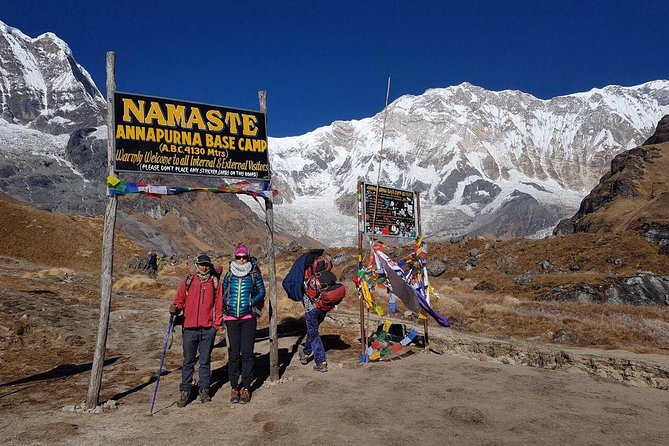
- The trek reaches Annapurna Base Camp at 4,130 meters, with views of Machhapuchhre, Annapurna South, Annapurna I, Hiunchuli, and nearby peaks.
- Poon Hill adds a major viewpoint over Dhaulagiri, Annapurna, and Manaslu before the route enters deeper mountain country.
- The package covers trekking meals, permits, guesthouses, transport, and a guide, which makes the $1,600 price easier to assess.
- Kathmandu and Pokhara are part of the trip, so you get temples and city time before and after the mountain route.
- The trek is private for your group, rather than a large shared departure.
- Published ratings are consistently five stars, with praise for friendly support, reasonable pricing, guides, and equipment help from John Shrestha.
What the $1,600 price actually buys
At $1,600 per person, this is not a bare-bones walking package. The cost includes twin-sharing hotels in Kathmandu and Pokhara with breakfast, twin-sharing guesthouses during the trek, a certified English-speaking guide, trekking permits, full-board meals on trekking days, and transport between Kathmandu and Pokhara by tourist bus.
Airport pickup and drop-off are also included in a private vehicle. The package covers guide insurance, salary, lodging, meals, transportation, and a medical kit. That matters in Nepal, where a lower headline price can leave you paying separately for permits, meals, transfers, or staff costs.
The package also includes a farewell dinner with Nepali dance and a trip accomplishment certificate. Those extras will not decide the trek, but they provide a pleasant finish after two weeks on the road.
You still need to budget for international flights, Nepal’s entry visa, travel and rescue insurance, drinks and bottled water, laundry, phone costs, bar bills, and tips for your guide and porter. Tipping is expected, though no specific amount is given. Travel and rescue insurance deserves special attention because the route reaches 4,130 meters and the package does not cover it.
The value is strongest if you want one company to handle the main moving parts. You are paying for more than a room and a mountain path, but you should still confirm exactly what porter support, baggage limits, and any extra transport costs mean before paying.
More Annapurna Treks in Kathmandu
- Annapurna Circuit Trek with Tilicho Lake
★ 5.0 · 368 reviews - Annapurna base camp trek 5 Days
★ 5.0 · 252 reviews - 14-Day Private Annapurna Base Camp Trek
★ 5.0 · 180 reviews
Kathmandu begins with temples and practical help
Your trip starts at Tribhuvan International Airport, where a representative meets you and takes you to the hotel. If you arrive during the day, Thamel offers an easy first walk. If you arrive late, rest is the sensible choice, especially before sightseeing and the long transfer to Pokhara.
The second day focuses on Kathmandu Valley heritage sites. The sightseeing can be adjusted to your interests and is planned with a city guide. The description groups the sights into stupas, temples, and palaces, giving you a useful introduction to Nepal before the trek begins.
This day is valuable because it keeps the trip from becoming only a physical challenge. You get time to see the cultural side of Nepal, ask last-minute questions, and prepare for the walking days ahead. Admission to the sightseeing is listed as free, though personal spending during the day is not included.
One practical strength is equipment support. John Shrestha is specifically praised for meeting people in Kathmandu, helping them find the right trekking equipment, and checking that they were doing well during their stay. That kind of help can be useful if you arrive without every item sorted.
Pokhara adds a calm pause before the trail
On day three, you travel from Kathmandu to Pokhara by tourist bus. The trip takes about six hours and passes towns, villages, terraced farmland, rivers, and hill country. It is not a quick transfer, but it gives you a broad view of central Nepal before the footpath begins.
Pokhara is known as the City of Lakes and offers a gentler change of pace. You check into your hotel, then have time to walk around Phewa Lake. Davis Falls, the World Peace Pagoda, and Bindhyabasini Temple are listed as possible attractions, along with activities such as paragliding, zip lining, and bungee jumping.
Do not try to cram every Pokhara activity into this short stop. The trek begins soon, and a quiet evening near Phewa Lake may serve you better than an ambitious side trip. Breakfast is included at the hotel, while other personal expenses are yours.
Ulleri and Ghorepani bring the first hard steps
The walking portion begins after breakfast with a drive from Pokhara to Naya Pul. From there, you follow forest paths toward Tikhedunga and Ulleri. Oak and rhododendron forest provides shade, but the famous Ulleri Stairs bring a sharp physical test early in the route.
The path includes steps, boulders, bridges, cliffs, villages, and steep sections. The day is described as about six hours, ending at Ulleri in the afternoon. The route may be called gentle in parts, but the stairs are still a serious start. Keep your pace steady and avoid treating the first day like a race.
The next day leads through Banthanti and Nangethanti toward Ghorepani. Lunch is planned at Nangethanti, with more forest walking before you reach the village. Ghorepani is important because it opens views toward Dhaulagiri and the Annapurna ranges.
This part of the route gives you a clear taste of what follows: village lodges, stone steps, changing forest, and mountain views that improve as you gain height. The guesthouses are practical rather than luxurious, and twin sharing is the standard arrangement.
Same trailhead, a longer or shorter day out:
- Everest Base Camp Trek – 14 Days
★ 5.0 · 1,499 reviews - Everest Base Camp Trek
★ 5.0 · 842 reviews - Everest Base Camp Trekking
★ 5.0 · 485 reviews - Everest Base Camp Trekking – 13 Day
★ 5.0 · 365 reviews
Poon Hill rewards the early effort
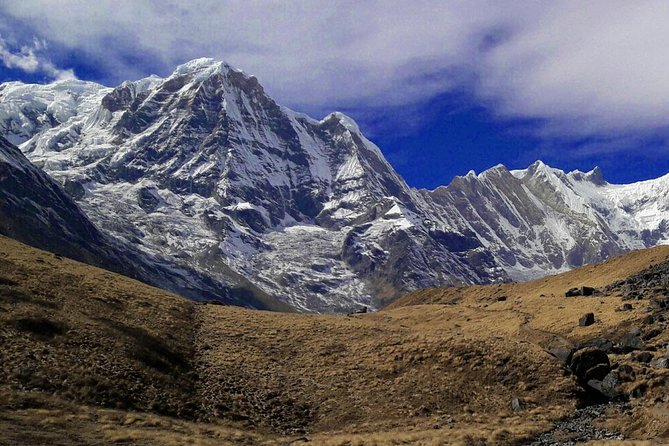
Poon Hill is one of the major highlights of the trek. From the viewpoint, you can see Dhaulagiri, Annapurna, and Manaslu. The route then continues to Tadapani through forest, with both uphill and downhill walking and plenty of rocky steps.
The plan describes about six hours for the day. The exact timing of the Poon Hill visit is not fully detailed, so you should ask the operator how the viewpoint fits into the morning schedule. The important point is that Poon Hill adds a wide mountain panorama before the trail turns toward the Annapurna Sanctuary.
Tadapani and Chhomrong bring a stronger sense of entering mountain country. The path to Chhomrong passes through rhododendron and oak forest, with downhill walking before the village appears. Chhomrong is a Gurung settlement set below the Annapurna massif, with views toward Annapurna South and Machhapuchhre.
You are given time to explore Chhomrong, which is welcome because the village is more than a sleeping stop. Its Gurung character adds a cultural dimension to a route otherwise dominated by peaks and forest.
The route turns wilder beyond Chhomrong
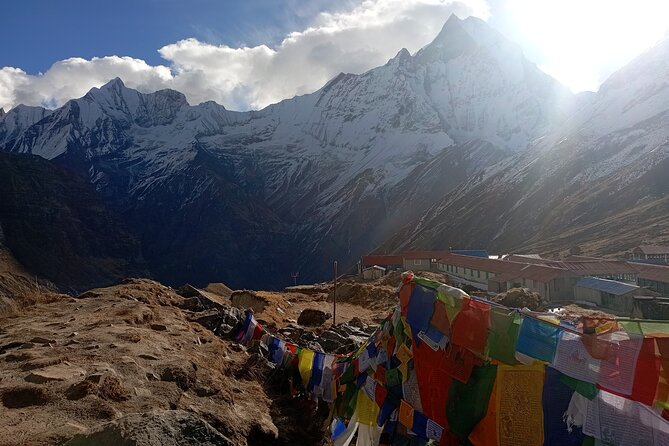
The following section is demanding. You descend roughly 2,500 steps toward the Chhomrong Khola, then climb again toward Khuldighar and Sinuwa. The route includes steep sections and a gorge before reaching Bamboo.
Bamboo is described as damp and cold, an important warning for comfort. Forest conditions change quickly in the mountains, so you should keep a warm layer and rain protection within reach rather than buried in your bag.
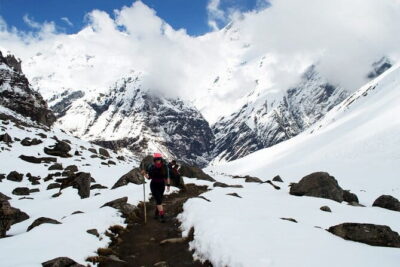
From Bamboo, the trail climbs through rhododendron forest toward the Himalaya Hotel. The route description notes views of glaciers from this area. The walking day is about seven hours, with repeated changes in direction and elevation. This is where reasonable fitness matters most.
The provided day labels contain a small point of confusion. One day is labeled Ghandruk even though its description continues from Chhomrong through Bamboo and toward the Himalaya Hotel, which is the route toward Annapurna Base Camp. Ask for a clean, dated route schedule before departure so you know where you will sleep each night.
Annapurna Base Camp is the great payoff
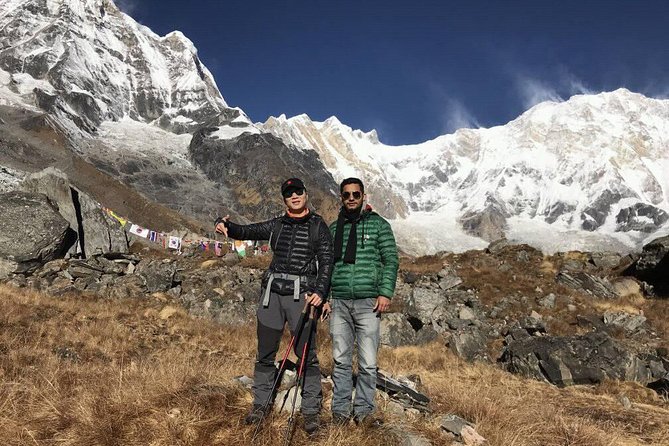
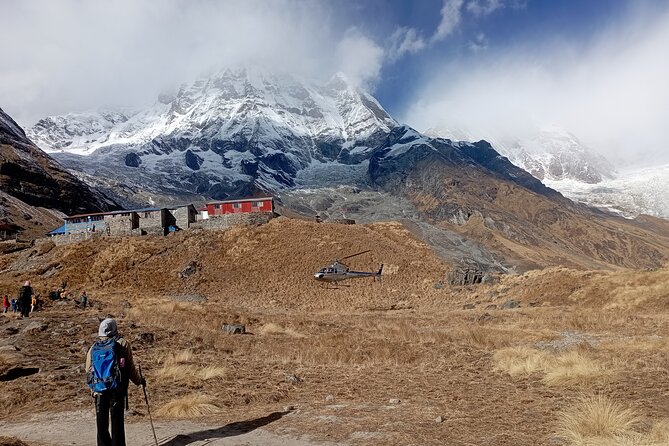
The approach to Annapurna Base Camp passes Hinko Cave, Deurali, and Machapuchare Base Camp. As you climb, vegetation becomes thinner and the views open toward waterfalls, valleys, glaciers, and high peaks.
From Machapuchare Base Camp, the route description gives about two more hours to Annapurna Base Camp. The surrounding peaks include Machhapuchhre, Hiunchuli, Annapurna South, Annapurna I, Annapurna III, Gandharvachuli, and Gangapurna.
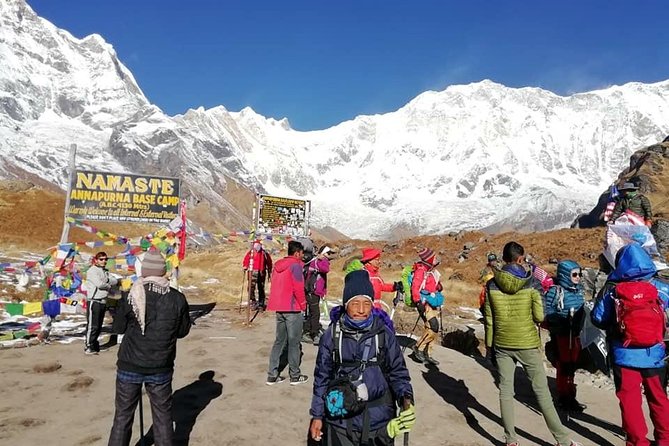
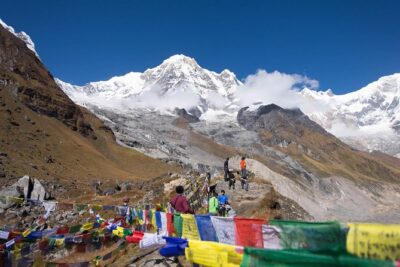
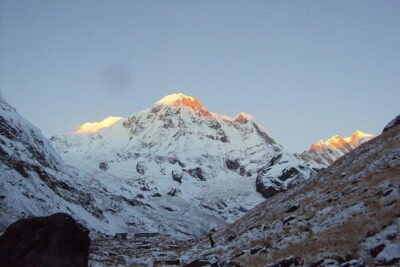
At 4,130 meters, Annapurna Base Camp is the emotional center of the trip. The mountain walls make the setting feel enclosed and grand at once, with clear views toward Machhapuchhre, Annapurna South, Annapurna I, and Hiunchuli.
One timing entry lists this day as six minutes, which cannot describe the actual walking day. The surrounding description clearly involves a substantial hike through Machapuchare Base Camp and onward to Annapurna Base Camp. Treat that figure as a likely publishing error and confirm the expected walking time directly.
The bigger issue is altitude. The package includes a guide and a medical kit, but it does not include travel or rescue insurance. You should take altitude concerns seriously and ask how the guide handles a change of plan if someone becomes unwell.
The return route includes bamboo forest and hot springs
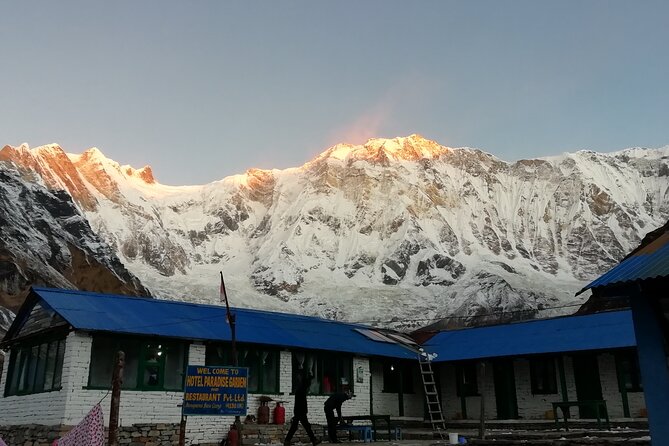
After reaching the base camp, you retrace the route downhill. The descent toward Bamboo is easier than the previous day in terms of climbing, but long downhill sections can be hard on knees and ankles. Forest views return, including bamboo, rhododendron, and oak.
The next section returns toward Chhomrong Khola before descending to Jhinu Danda. Jhinu Danda is a welcome stop because you have the opportunity to visit a hot spring. After several days of stone steps, a warm soak can be a memorable break.
The route then continues toward Ghandruk. This village offers views of Annapurna South and Fish Tail, plus a museum focused on Gurung culture and tradition. The museum gives the return journey a useful cultural stop rather than making it only a long walk back to the road.
From Ghandruk, the trail descends to Kimche and Nayapul. Transport by jeep or bus then returns you to Pokhara. The day is listed at about six hours, but walking time can vary with the group’s pace and road transfer timing.
Kathmandu closes the trip with a long road journey
The return bus from Pokhara to Kathmandu takes about six hours. The scenery changes from greener forest areas to drier hill country, with rivers, streams, and hilly views along the way.
This is a practical ending rather than a scenic shortcut. Roads and bus journeys can be tiring after a trek, so keep the final day flexible and avoid planning a tight onward connection unless you have plenty of time.
Back in Kathmandu, the farewell dinner includes a typical Nepali restaurant and Nepali dance. The next day, a company representative drives you to the airport in a private vehicle. The experience ends at Tribhuvan International Airport.
What the service record tells you
The available service record contains six five-star ratings. The strongest praise centers on friendly staff, help with equipment, attention to guests, a reasonable price, and supportive guides and porters.
John Shrestha is singled out for answering questions with interesting facts and helping with trekking preparation. Another account praises the guide and porter for being friendly and helpful, with strong knowledge of the route. That is exactly the kind of support you want on a private trek, where communication can shape the whole experience.
The company is also praised for responding to questions and staying concerned about people during their time in Nepal. Still, praise for staff does not replace practical questions. Before booking, confirm the guide’s name, porter arrangements, baggage handling, daily walking hours, and the plan for altitude problems.
Who should book this Annapurna trek?
I would recommend this trek to someone who wants a full Nepal experience rather than a short mountain walk. You get Kathmandu culture, Pokhara, village life, forest paths, major viewpoints, high mountain scenery, and a hot spring in one 14-day plan.
It suits people with moderate physical fitness who are comfortable walking for five to seven hours, climbing long stairways, and staying in basic guesthouses. It is less suitable if you want luxury rooms, short walking days, or a highly flexible schedule.
The private format is useful for couples, families, or friends who want their own group and guide. Solo bookers should confirm whether a single supplement applies, since the stated accommodation is twin sharing.
Free cancellation is available when you cancel at least 24 hours before the experience begins. Changes or cancellations inside that window are not accepted for a refund, so check your flight timing before committing.
Should you book it?
Book this Annapurna Base Camp trek if you value an organized private route, practical inclusions, and a balance of culture and mountain walking. The permits, meals, accommodation, transfers, guide costs, and airport service give the $1,600 price solid value.
I would book only after clarifying the confusing day labels, the incorrect six-minute entry, porter details, and the exact response to altitude or weather problems. If those points are confirmed, this is a strong choice for a first major Himalayan trek, especially if you want help with equipment and planning from people such as John Shrestha.
FAQ
Where does the Annapurna Base Camp trek start and finish?
The experience starts at Tribhuvan International Airport in Kathmandu. It ends back at the same meeting point after the company provides a private airport drop-off.
How long does the experience last?
The experience lasts approximately 14 days, including time in Kathmandu, Pokhara, the trekking route, and the return to Kathmandu.
What is the highest point reached?
The trek reaches Annapurna Base Camp at 4,130 meters.
Are meals included?
Breakfast is included in Kathmandu and Pokhara. During the trek, breakfast, lunch, dinner, and tea or coffee are included. The package lists 13 breakfasts, nine lunches, and eight dinners.
Is accommodation included?
Yes. The package includes twin-sharing accommodation with breakfast in Kathmandu and Pokhara, plus twin-sharing guesthouse accommodation during the trek.
Are permits included?
Yes. The Annapurna Conservation Area Permit and the Trekkers Information Management System permit card are included.
Is travel insurance included?
No. International flights, Nepal’s entry visa, travel and rescue insurance, personal expenses, and tips for the guide and porter are not included.
Recently added around Kathmandu
- Ghorepani Poon Hill Trek★ 5.0 · 16 reviews
- Private Manaslu Circuit Trek at Himalayas★ 5.0 · 3 reviews
- Amazing 1 Day Trekking Experience in Kathmandu Nepal★ 5.0 · 24 reviews
- Ghorepani Poonhill Trek★ 5.0 · 5 reviews
- Upper Mustang Trekking★ 5.0 · 2 reviews
- Upper Mustang Trekking★ 3.0 · 2 reviews
- Upper Mustang Trekking★ 5.0 · 4 reviews
- Upper Mustang Trek★ 5.0 · 5 reviews
Annapurna Base Camp Treks, compared.

Trekking in Annapurna/Langtang/Everest/Upper Mustang regions
Read our review →
Kathmandu to Annapurna Base Camp (ABC) 5-Day Trek
Read our review →Browse the lists this tour appears in