
REVIEW · KATHMANDU
Annapurna Base Camp Trekking
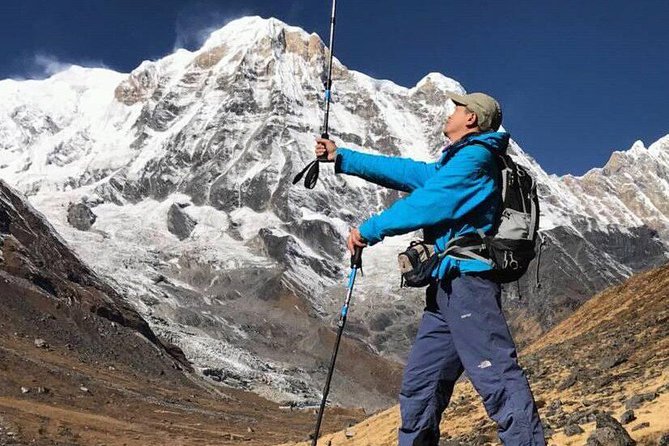
Mountain mornings come early in Nepal. This 12-day Annapurna Base Camp trek combines Poon Hill sunrise, rhododendron forests, high mountain views, and the dramatic finish at Annapurna Base Camp. I like that the package takes care of the awkward pieces, including Kathmandu and Pokhara transfers, trekking permits, teahouse stays, a guide, and shared porter support.
I also like the useful gear loan: a duffle bag, sleeping bag, down jacket, first aid kit, trekking map, and T-shirt are included. The main caution is the physical demand. You need moderate fitness, and the route reaches 4,130 meters at base camp. Food on the trek, drinks, and accommodation in Kathmandu and Pokhara cost extra, so the advertised price is not the full trip budget.
The trip costs $749.90 per person, and private departures mean only your own group takes part. That offers more control than a large fixed group, but solo trekkers should note that a porter for one person is not included.
Key points to know before booking
- Poon Hill comes before base camp: The early sunrise walk from Ghorepani adds a superb mountain viewpoint before the harder part of the route.
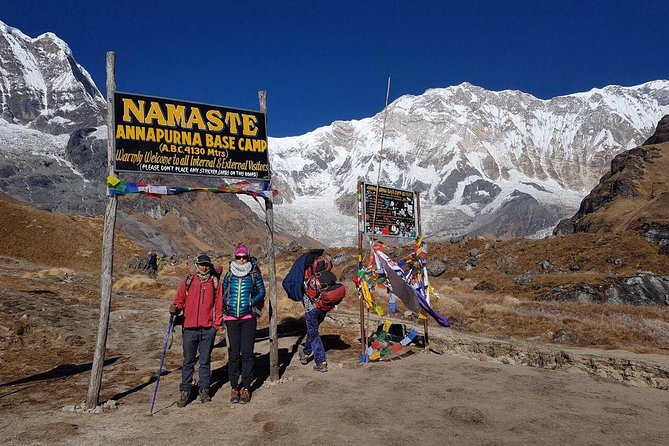
- Annapurna Base Camp reaches 4,130 meters: Altitude, long walking days, and cold nights require sensible preparation.
- One porter serves two trekkers: A solo participant pays extra for porter service.
- Transport is handled at both ends: Tourist bus service connects Kathmandu and Pokhara, with private transfers to and from the trail.
- Jhinu Danda adds a welcome rest: The route finishes near natural hot springs, although entry is not included.
- The strongest praise concerns the staff: A guide named Avi and porter Robin were specifically praised for patience, kindness, and attention to safety.
What the $749.90 price really covers
At first glance, $749.90 is not the whole cost of a Nepal holiday. It covers the main trekking framework, though you still need to budget for meals during the trek, drinks, and rooms in Kathmandu and Pokhara.
The included services have real value. You receive round-trip tourist bus transport between Kathmandu and Pokhara, private transfers to the trailhead and back from the trail, tea house accommodation during the walk, the TIMS card, and the Annapurna Conservation Area Permit. Government taxes and agency service charges are also covered.
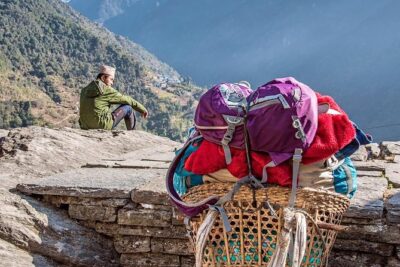
The guide is a licensed, English-speaking professional, and staff costs include wages, food, equipment, insurance, and transport. A porter is provided at a ratio of one porter for two trekkers. That is common for a supported trek and helps keep your personal load manageable, but you should pack with the porter arrangement in mind.
The borrowed gear is another practical saving. You can use a duffle bag, sleeping bag, and down jacket during the trek. A first aid kit is provided, too. Still, this does not mean you can arrive without preparation. You will need suitable walking clothes and personal items, and you should confirm what clothing and footwear you want to bring yourself.
The trip has received a five-star score from 38 ratings, with 100 percent recommending it. That is a strong record, though any trek depends on weather, fitness, road conditions, and how well you handle altitude.
More Annapurna Treks in Kathmandu
- Annapurna Circuit Trek with Tilicho Lake
★ 5.0 · 368 reviews - Annapurna base camp trek 5 Days
★ 5.0 · 252 reviews - 14-Day Private Annapurna Base Camp Trek
★ 5.0 · 180 reviews
Kathmandu arrival and the first briefing
Day one is gentle. An airport representative meets you in Kathmandu and transfers you to your hotel. Later, you meet the trek leader for a pre-trip briefing.
This meeting matters more than it may sound. Use it to clarify the day-by-day route, what goes in the porter’s duffle, what stays with you, and how meals and drinks will be handled. The itinerary gives a 6:00 a.m. start time, while the Pokhara departure is listed at 7:00 a.m., so confirm the exact pickup time during the briefing.
Accommodation in Kathmandu is not included. You will need to arrange or pay for your own room there, and the same applies to Pokhara. Airport pickup is included as part of the arrival service, which makes the first few hours easier after a long flight.
The seven-hour road to Pokhara
The drive from Kathmandu to Pokhara takes about seven hours. It follows one of Nepal’s scenic rivers and ends at Pokhara Lakeside, the main base for trekkers heading toward the Annapurna region.
I would treat this as a full travel day, not a quick transfer. A long road journey can be tiring, but it also gives you a gradual change from the capital to the quieter setting around Phewa Lake. The tour uses a tourist bus, while private transfers are used for the trailhead sections.
Pokhara is more than a stopover. It gives you a chance to settle your gear before walking and offers a calmer setting than Kathmandu. Since your Pokhara accommodation is not included, check your hotel plans carefully around both the outward and return journeys.
Day three: Birethanti, Ulleri, and Ghorepani
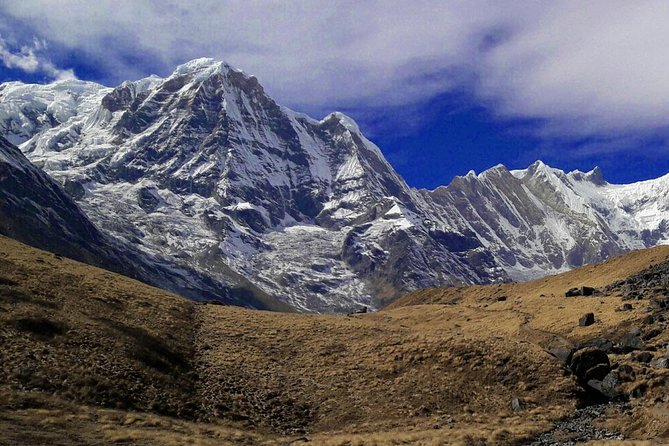
The walking route begins after a drive from Pokhara Lakeside toward the trail. Birethanti is listed at about 827 meters, and the route continues toward Tikhedhunga before the climb to Ulleri.
The Tikhedhunga to Ulleri section takes about four hours and gains height quickly, reaching roughly 1,480 meters. This is an important first test. You are no longer simply strolling through foothills. The day asks your legs to work, especially on the upward route toward Nangethanti.
Ghorepani sits at about 2,874 meters and is the night’s destination. It is a key stop in the Annapurna area, and its height makes the next morning especially useful for judging how your body is responding to altitude.
The listed walking times are estimates, not promises. Pace, weather, rest stops, and trail conditions can affect them. I would focus less on speed and more on keeping a steady rhythm.
Same trailhead, a longer or shorter day out:
- Everest Base Camp Trek – 14 Days
★ 5.0 · 1,499 reviews - Everest Base Camp Trek
★ 5.0 · 842 reviews - Everest Base Camp Trekking
★ 5.0 · 485 reviews - Everest Base Camp Trekking – 13 Day
★ 5.0 · 365 reviews
Poon Hill sunrise before the main climb
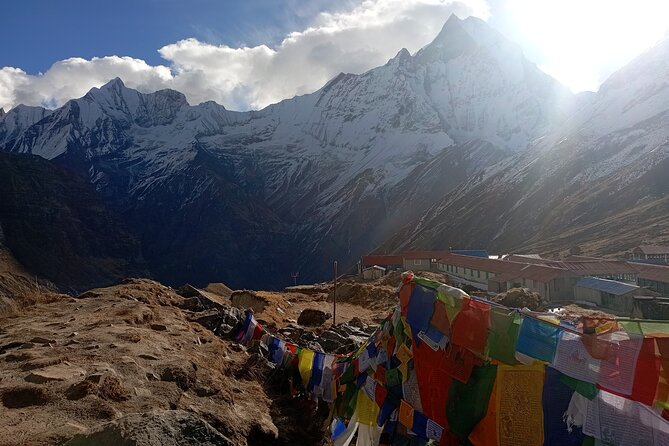
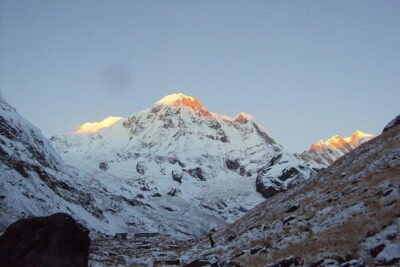
Day four begins before breakfast with a roughly 45-minute walk from Ghorepani to Poon Hill, at 3,210 meters. The viewpoint is known for broad views of Annapurna, Dhaulagiri, Machhapuchhre, and nearby peaks.
This early start is one of the best features of the route. You get a major mountain viewpoint without making a separate trip, and the sunrise walk breaks up the long journey to base camp with a clear reward near the start.
After returning from Poon Hill, you continue to Tadapani. The day is listed at about seven hours. Tadapani, at around 2,630 meters, is known for views toward Machhapuchhre, Annapurna South, and Hiunchuli.
The drawback is simple: the sunrise requires an early wake-up after a demanding day at Ghorepani. If you are tired, the temptation to sleep in will be strong. I would still treat Poon Hill as a priority, since it is one of the route’s most distinctive moments.
Forest trails from Tadapani to Sinuwa
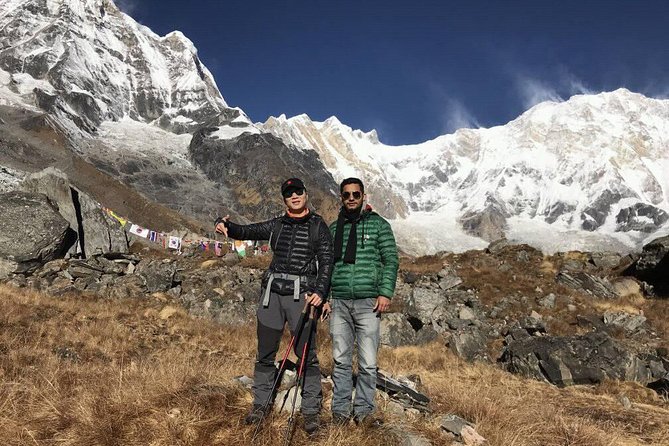
The next section passes through Chuile and continues toward Sinuwa. Chuile sits at about 2,300 meters and is surrounded by forest and terraced fields, with views toward Annapurna South and Hiunchuli.
Sinuwa is divided into Lower Sinuwa and Upper Sinuwa, at roughly 2,340 and 2,360 meters. The area is associated with bamboo and rhododendron forest, giving this part of the walk a different feel from the open mountain viewpoints around Ghorepani and Tadapani.
The walking day is listed at about seven hours. You should expect a steady route rather than a sightseeing stop with lots of free time. Tea house accommodation keeps the trip rooted in the local trekking system, but you should remember that meals are not included in the package.
Sinuwa to Deurali, about five to six hours
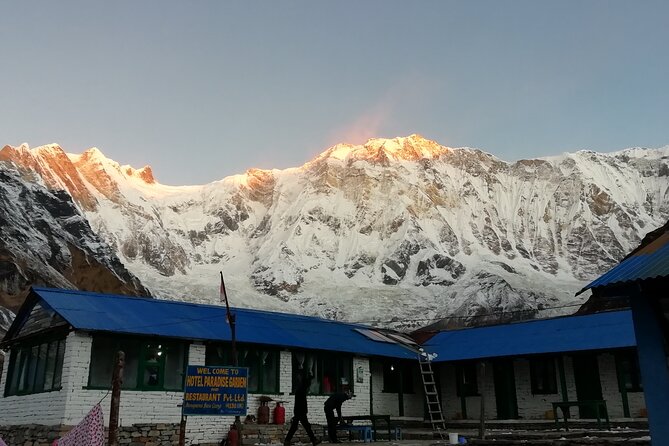
Day six continues upward from Sinuwa toward Deurali. The route description also refers to Chhomrong, at about 2,165 meters, and Himalaya, at around 2,890 meters. Deurali is listed at approximately 3,174 meters.
This is where the altitude becomes a bigger part of the trip. You are moving beyond the lower villages and toward the high section of the Annapurna Sanctuary. The walking time is split into roughly six hours from Sinuwa and five hours toward Deurali, depending on the exact starting point and route used.
A guide is especially useful here. The package includes one licensed guide for your private group, so you can ask about pace, rest stops, and the best way to manage the height. The direct praise for Avi’s patience and care gives a useful picture of what to value in your guide: not just route knowledge, but calm support when the walking becomes harder.
The high point: Machhapuchhre Base Camp and ABC
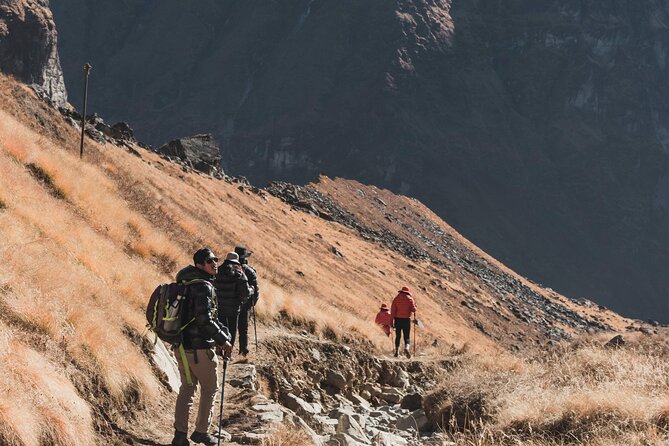
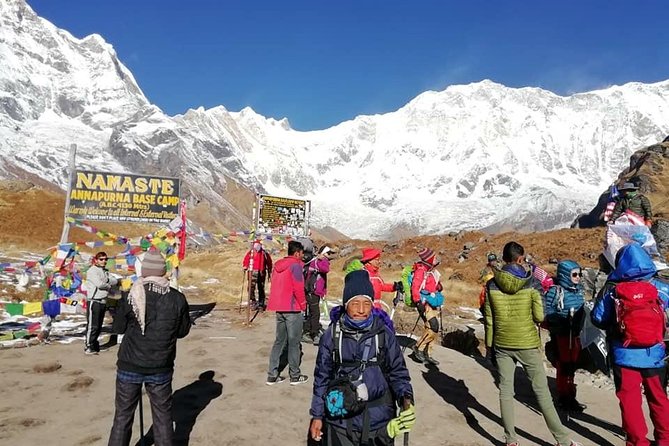
Day seven is the centerpiece. From the Himalaya or Deurali area, you continue toward Machhapuchhre Base Camp, also called MBC, at about 3,700 meters. From there, the trail reaches Annapurna Base Camp at 4,130 meters, or 13,550 feet.
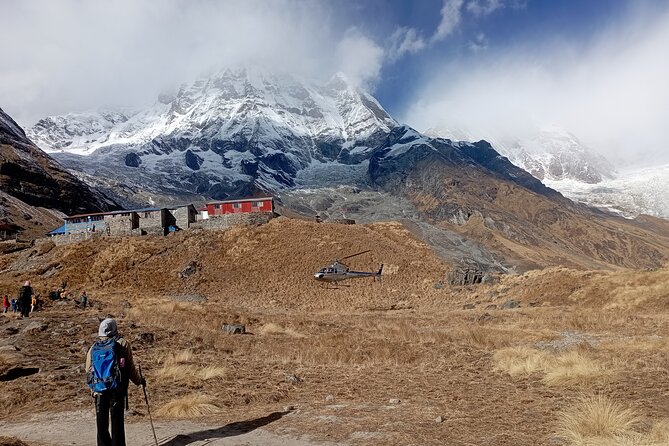
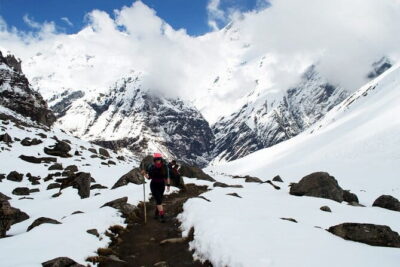
The day is listed at about six hours. The route passes through the Annapurna Conservation Area and brings you into a mountain setting surrounded by major peaks. This is not a casual viewpoint stop. You are spending time at the highest point of the trip, and cold conditions or altitude may affect your energy.
The final approach to ABC is rewarding because the goal is clear. You have moved from low foothills through villages and forests, then into the high sanctuary. The achievement certificate included with the package may seem small, but after this day, it will have earned its place in your luggage.
You should keep warm layers and personal essentials with you rather than placing everything in the porter’s bag. The down jacket and sleeping bag supplied by the operator are useful, but you remain responsible for dressing sensibly and telling the guide if you feel unwell.
The long descent to Bamboo
Day eight drops from ABC at 4,130 meters to Bamboo at about 2,350 meters. The walk takes roughly seven hours and retraces part of the high route.
Descending is usually easier on the lungs, but it can be demanding on knees and legs. The drop in height is large, so do not assume the day will feel easy simply because you are going downhill.
Bamboo is surrounded by the wooded section of the sanctuary and gives you a lower, more sheltered overnight point. This day also shows why the itinerary needs 12 days. The trek is not just a fast climb and return. It gives you time to move through several mountain zones.
Bamboo to Jhinu Danda and its hot springs
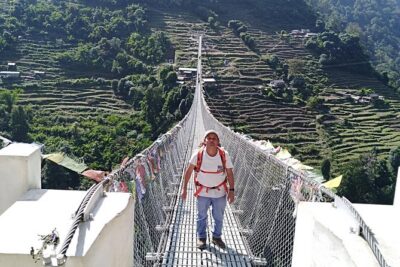
Day nine continues from Bamboo to Jhinu Danda, at about 1,780 meters. The walk takes around five hours and ends at a village known for natural hot springs.
Jhinu Danda is a well-chosen place to recover after the base camp section. The hot springs are not included in the tour price, so bring some cash for the admission fee. The stop is optional in practical terms, but it offers a pleasant way to ease tired legs.
Day ten completes the walking portion. You trek from Jhinu Danda to Siwa or Ghandruk Phedi, depending on the route, and then continue toward Pokhara Lakeside. The walking time is about five hours, and transport is included for the return to Pokhara.
The route description gives the final walking point as roughly 1,150 meters. Since the exact endpoint can vary, listen carefully to your guide on the day and keep your daypack ready for the final transfer.
Returning to Kathmandu and flying home
Day eleven is another long road journey, this time from Pokhara to Kathmandu. It takes about eight hours and covers approximately 200 kilometers.
This is not a day for squeezing in extra sightseeing. The road transfer can take most of your day, and you may want a quiet evening in Kathmandu. Since the capital accommodation is not included, arrange your final night before the trek ends.
Day twelve provides airport transfer to Tribhuvan International Airport. The listed airport service takes about an hour. Keep your passport, flight details, and essential belongings separate from any stored trekking gear so departure is straightforward.
Who this trek suits best
This trip fits you if you want the major Annapurna Base Camp route without arranging every permit, bus, transfer, and piece of rented equipment yourself. It also suits people who value a private group and want support from a guide and porter rather than carrying every item alone.
You should be comfortable with long walking days of up to seven hours, steep climbs, substantial descents, and sleeping at high altitude. The operator asks for moderate physical fitness, and that is a fair minimum. This is not a gentle hotel-based tour with one mountain excursion.
Solo participants should pay close attention to the porter cost. The standard inclusion covers one porter for two trekkers, not a porter for one person. Couples and pairs may get especially good value from the shared porter arrangement.
The private format can also help if one person in your group needs a slower pace or extra rest. Still, the itinerary is structured, and the high-altitude days cannot be treated casually.
My booking verdict
I would book this trek if I wanted a supported Annapurna Base Camp route with Poon Hill included and did not want to arrange permits, buses, trail transfers, and loaned gear myself. The best value comes from the combination of staff support, tea house stays, transport, permits, and equipment rather than from the headline price alone.
Before paying, I would confirm the Kathmandu and Pokhara hotel arrangements, meal costs, the exact pickup time, and the solo porter supplement. If you are fit, prepared for altitude, and happy with simple tea house accommodation, this is a strong choice. If you want private rooms, included meals, or short walking days, choose a different style of Nepal trip.
FAQ
How long is the Annapurna Base Camp trek?
The full experience lasts approximately 12 days, including arrival in Kathmandu, transfers to and from Pokhara, the trek, and departure.
What is the highest point on the route?
Annapurna Base Camp is at approximately 4,130 meters, or 13,550 feet. Machhapuchhre Base Camp is about 3,700 meters.
Is transportation from Kathmandu to Pokhara included?
Yes. The package includes tourist bus transfers from Kathmandu to Pokhara and from Pokhara back to Kathmandu.
Are airport transfers included?
Airport pickup in Kathmandu is included on arrival, and airport transfer is provided on the final day.
Are trekking permits included?
Yes. The TIMS permit and Annapurna Conservation Area Permit are included, along with government taxes and agency service charges.
Is a guide included?
Yes. The tour includes one licensed, English-speaking trekking guide for your private group.
Is a porter included?
Yes, one porter is included for every two trekkers. A porter for a solo participant is not included.
Are meals included during the trek?
No. Breakfast, lunch, dinner, and drinks during the trek are not included. Cold drinks, bottled water, juice, and similar beverages are also excluded.
Can I cancel for a full refund?
Yes, if you cancel at least 24 hours before the local start time. Cancellations or changes made less than 24 hours before the start are not refunded.
Recently added around Kathmandu
- Ghorepani Poon Hill Trek★ 5.0 · 16 reviews
- Private Manaslu Circuit Trek at Himalayas★ 5.0 · 3 reviews
- Amazing 1 Day Trekking Experience in Kathmandu Nepal★ 5.0 · 24 reviews
- Ghorepani Poonhill Trek★ 5.0 · 5 reviews
- Upper Mustang Trekking★ 5.0 · 2 reviews
- Upper Mustang Trekking★ 3.0 · 2 reviews
- Upper Mustang Trekking★ 5.0 · 4 reviews
- Upper Mustang Trek★ 5.0 · 5 reviews
Annapurna Base Camp Treks, compared.
Trekking in Annapurna/Langtang/Everest/Upper Mustang regions
Read our review →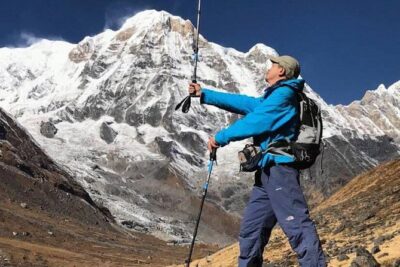
Kathmandu to Annapurna Base Camp (ABC) 5-Day Trek
Read our review →Browse the lists this tour appears in