
REVIEW · KATHMANDU
Annapurna Base Camp Trek
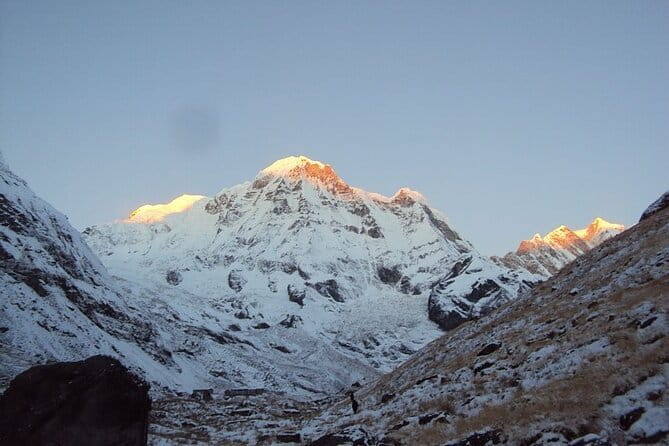
Mountain mornings are worth sore legs. This 12-day Annapurna Base Camp trek combines Gurung villages and rhododendron forests with a thrilling finish among the high peaks of the Annapurna Sanctuary. I especially like the route through Ghandruk and Chhomrong, and I like that meals, permits, a guide, a shared porter, and trekking lodges are included. The main caution is the physical effort: steep climbs, long descents, stone steps, and chilly nights make this a serious trek, not a gentle sightseeing trip.
At $810 per person, the package offers good value for a private trip, especially since it covers Kathmandu and Pokhara hotels, eight lodge nights, most meals on the trail, transport, permits, staff costs, and a duffel bag. You should still budget for drinks, laundry, tips, personal items, and travel insurance that covers helicopter rescue.
Key points to know before booking
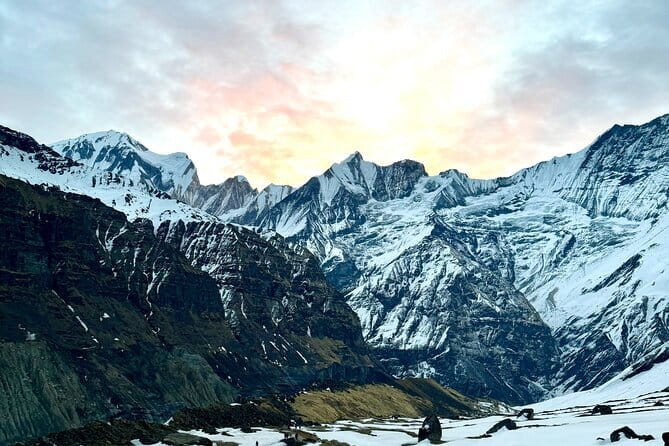
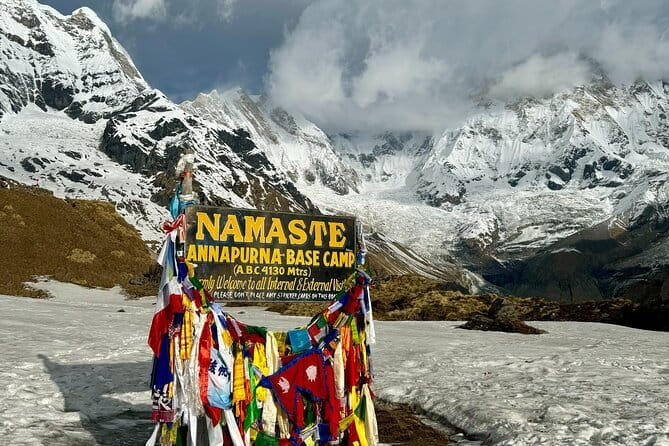
- Annapurna Base Camp is the main reward: You reach the sanctuary after passing Machhapuchre Base Camp, with a 360-degree mountain panorama around you.
- The route changes character every day: Expect forests, bamboo groves, waterfalls, rivers, traditional villages, open mountain views, and a natural hot spring.
- Ghandruk and Chhomrong add cultural value: These villages offer a closer look at Gurung communities and mountain life, not just photo stops.
- The hardest section comes late: Day 7 from Deurali to Machhapuchre Base Camp and then Annapurna Base Camp is the most strenuous part.
- The package handles much of the practical work: A government-certified English-speaking guide, shared porter service, permits, meals, and transport are included.
- The schedule is active from start to finish: You travel between Kathmandu and Pokhara by tourist bus, with several six to eight-hour trekking or transfer days.
Why this Annapurna trek works in 12 days
The appeal here is efficiency. You get a real Himalayan trekking experience without committing to a three-week route. The itinerary begins with Kathmandu and Pokhara, then gives you seven main trekking days before returning to the cities.
I like the way the route builds gradually. You start in a settled city, move to Pokhara beside Fewa Lake, and then walk through villages and forest before reaching the high sanctuary. The scenery does not arrive all at once. It changes step by step, which makes the final arrival at base camp feel earned.
This is also a private activity, so only your group participates. That can make the pace and daily rhythm more comfortable than a large fixed group, though your guide will still need to keep the itinerary realistic for the terrain and weather.
More Annapurna Treks in Kathmandu
- Annapurna Circuit Trek with Tilicho Lake
★ 5.0 · 368 reviews - Annapurna base camp trek 5 Days
★ 5.0 · 252 reviews - 14-Day Private Annapurna Base Camp Trek
★ 5.0 · 180 reviews
Kathmandu arrival and the Thamel warm-up
Your first day begins at Tribhuvan International Airport, where a representative takes you to your hotel. Around 7 pm, the trek leader gives a pre-trip orientation and briefing.
Take this meeting seriously. It is your chance to ask about the walking schedule, baggage, meals, weather, and what to expect in the tea houses. If you arrive early, you can use the extra time to walk through Thamel or visit the old market area of Ason. The tour team can help arrange additional activities.
The first night is in Kathmandu. It is not a trekking night, so use it to rest, organize your gear, and avoid turning your arrival day into a marathon of sightseeing.
Pokhara and Fewa Lake on day two
After breakfast, you travel by tourist bus from Kathmandu to Pokhara. The journey is listed as an early morning drive and takes much of the day, so this is a transfer day rather than a relaxed scenic ride.
Pokhara is a pleasant pause before the trail. The city is known for Fewa Lake, where you can go boating and visit Tal Barahi Temple. On a clear day, you may see Mt. Fishtail, Annapurna, and Dhaulagiri to the north.
Your hotel is in the Lakeside area. This gives you an easy evening for street food, souvenirs, restaurants, or a quiet walk beside the lake. I would keep the evening simple. The next morning begins the trek, and your legs will appreciate an early night.
Ghandruk adds people and place to the route
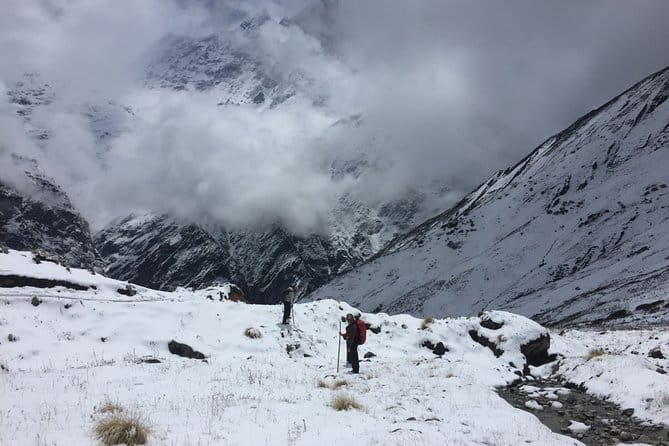
On day three, you drive to Nayapul, the starting point of the trek. From there, the trail passes through Birethanti and climbs through forest toward Ghandruk.
The walk takes about five hours. Expect dense woodland and some steep ground, so this is your first proper test of fitness. Ghandruk is a major Gurung settlement and one of the most appealing villages on the route.
If time allows, visit the Gurung Museum. The village is valuable because it gives you more than mountain scenery. You see a living community connected to the trail, with local hospitality and traditional culture woven into the trek.
The overnight stay is at a trekking lodge. Tea houses are practical rather than luxurious. You get a place to sleep and meals during the trekking portion, but personal comforts can be limited, especially as you move higher.
Same trailhead, a longer or shorter day out:
- Everest Base Camp Trek – 14 Days
★ 5.0 · 1,499 reviews - Everest Base Camp Trek
★ 5.0 · 842 reviews - Everest Base Camp Trekking
★ 5.0 · 485 reviews - Everest Base Camp Trekking – 13 Day
★ 5.0 · 365 reviews
Chhomrong brings steep steps and Annapurna views
Day four takes about six hours and includes a demanding series of changes in elevation. You descend to Kimrung Khola, climb to Chere Danda, and continue toward Chhomrong.
This is a day to pace yourself. Mountain trails can make a short distance feel long, and repeated climbs and descents are often harder than one steady ascent. Your guide and porter support are important here, but you still need to carry your own water and personal day pack.
Chhomrong sits at the base of the Annapurna massif. It is one of the route’s key mountain villages, with a strong sense of arrival before the trail turns farther into the sanctuary.
The schedule then becomes slightly confusing in its description. The next day is labeled Ghandruk, but the route details clearly describe the trail through Chhomrong Khola, Sinuwa, Kuldihar, and Bamboo. Plan on staying in Bamboo, as stated in the overnight details, and confirm the exact daily plan with your trekking leader during the briefing.
Bamboo and the damp forest corridor
The route from Chhomrong toward Bamboo begins with a descent of about 2,500 steps to Chhomrong Khola. Then comes a steep climb to Sinuwa, followed by forest walking toward Kuldihar and Bamboo.
This is not a day to race. Downhill stone steps can be hard on knees, while the climb afterward tests your breathing. The forest offers shade, but it can also feel damp underfoot.
Bamboo is a useful overnight stop because it breaks the climb into manageable stages. You are now moving through a quieter section of the Annapurna route, with thick forest, rushing water, and a sense that the high mountains are getting closer.
Deurali and the changing forest
The next day is shorter, listed at about four hours, but it still includes steep sections. You walk through a cold, damp bamboo forest toward Himalayan Hotel, a familiar landmark on the trail.
After that, the forest opens enough for views toward the glacial river below. You pass through Hinku Cave, descend closer to the river, and then climb gently to Deurali.
This part of the route is especially good for variety. You move from dense vegetation to more open ground as the altitude rises. The waterfalls, bridges, streams, and river views give the walk a sense of constant movement.
The descriptions of the schedule contain a few timing errors, so treat the listed hours as rough guides rather than exact promises. Mountain weather, trail conditions, and the pace of your group can all change the day.
Annapurna Base Camp is the big day
Day seven is the trek’s main event. You leave Deurali early, walk toward Bagar, and continue to Machhapuchre Base Camp. From there, you enter the Annapurna Sanctuary and walk across a wider trail with sparse vegetation.
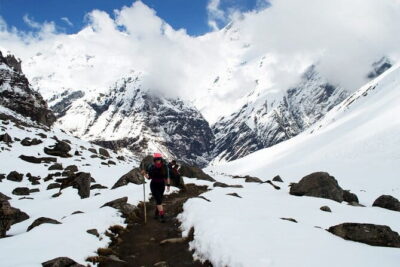
This is the hardest day of the itinerary. The combination of altitude, cold, uneven ground, and a long climb can make the final approach slow. Do not spend all your energy trying to keep up with a faster companion. A steady pace is the smarter choice.
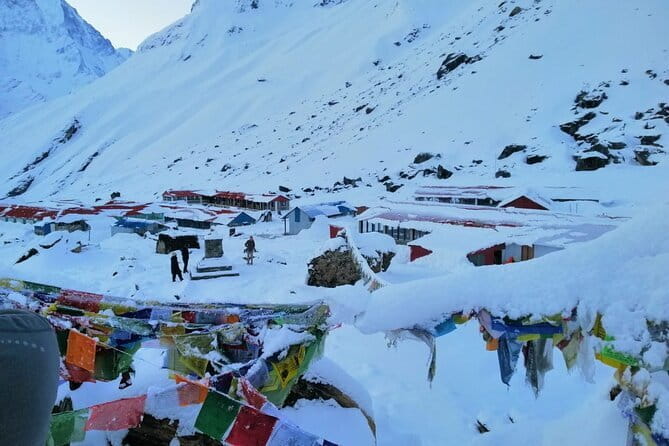
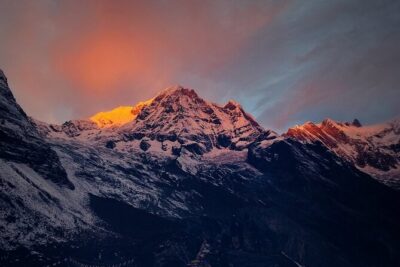
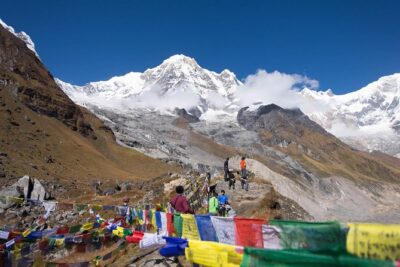
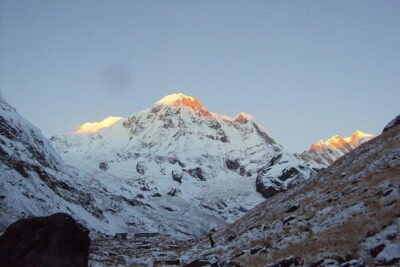
At Annapurna Base Camp, the reward is not just one mountain in front of you. You are surrounded by high peaks, with a 360-degree view across the sanctuary. Sunrise can be especially memorable, as the mountains catch the first light and the cold becomes part of the experience.
You spend the night at base camp. That is a major advantage of this plan. You do not rush up for a quick photograph and immediately turn around. You have time to absorb the setting and experience the atmosphere of the high camp.
The cold can be sharp, so keep warm layers accessible. Personal insurance is essential, and the policy must include emergency helicopter rescue. That is not a luxury item on a remote mountain trek.
The return route is easier, but not effortless
On day eight, you retrace your steps to Bamboo. The seven-hour walk is mainly downhill and generally easier than the climb to base camp.
Do not confuse downhill with easy. Long descents can be tiring, particularly after the previous day. Trekking poles may be useful, though the package details do not say whether they are supplied, so ask before departure.
Returning by the same route lets you notice details missed during the climb. Bridges, waterfalls, bamboo groves, and river views can look completely different when you are walking in the opposite direction.
Jhinu Danda adds a welcome hot spring
Day nine takes about five hours. You climb to Kuldighar, descend to Chhomrong Khola, and then tackle another set of roughly 2,500 steps to Chhomrong.
From Chhomrong, the trail descends to Jhinu Danda. A 20-minute walk takes you to one of the area’s popular natural hot springs. After the long days on the trail, this is a welcome chance to rest and loosen tired muscles.
The hot spring is one of the itinerary’s best touches because it changes the mood of the trek. You are no longer pushing toward a mountain objective. You are letting the body recover before the final walk out.
Nayapul, Pokhara, and the road back
Day ten is mostly downhill from Jhinu to Nayapul and takes about six hours. From Nayapul, you drive to Pokhara and return to your hotel.
This is a long day, but reaching Pokhara gives you a comfortable break after the tea houses. You can enjoy the Lakeside area again, have a proper rest, and reflect on the route before the final bus journey.
Day eleven is the early drive from Pokhara back to Kathmandu. The schedule lists about eight hours, so do not plan an ambitious Kathmandu sightseeing program around the arrival time. If you still have energy, Thamel is a convenient place for souvenirs and Nepali handmade products.
Your last night is in Kathmandu. On day twelve, a representative takes you to the airport three hours before your scheduled flight.
What the $810 price really covers
The price is strong for what is included. You receive two nights in standard tourist hotels in Kathmandu and Pokhara, eight nights in trekking lodges or tea houses, breakfast at the hotels, and breakfast, lunch, and dinner during the trek.
The package also includes:
- Airport and hotel transfers by private car
- Tourist bus transport between Kathmandu and Pokhara
- A government-certified English-speaking trekking guide
- A shared porter arrangement, one porter for two trekkers
- Trekking permits and entry fees
- Staff allowances and insurance costs
- A duffel bag
- A Nepali cultural farewell dinner with local food and performances
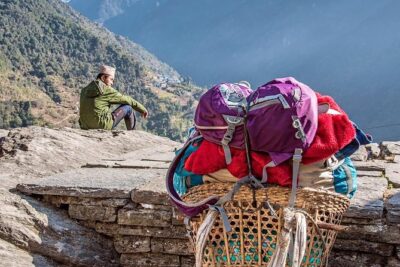
The shared porter system helps keep the cost reasonable, though you should understand that your porter will carry group luggage rather than every small item you own. Pack sensibly and keep valuables and daily essentials with you.
Tips are not included. Neither are drinks, laundry, personal purchases, trip cancellation costs, trip extensions caused by unforeseen problems, or other expenses outside the package. Travel insurance must cover helicopter rescue, so check the wording of your policy instead of assuming ordinary medical coverage is enough.
Who should book this trek?
I would recommend it to you if you want a serious but relatively short Himalayan trek with cultural stops, forest walking, high mountain views, and organized support.
It suits people with moderate physical fitness who are comfortable walking for four to seven hours on several consecutive days. You should be ready for steep ascents, steep descents, long stone stairways, cold conditions, and basic lodge accommodation.
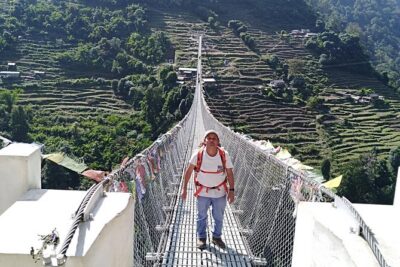
It is also a good choice for friends or couples. The route creates plenty of shared moments, from wooden and metal bridges to waterfalls, village meals, chilly sunrises, and the natural hot spring at Jhinu Danda. Solo participants can also meet people along the trail, though the booking itself is for a private group.
I would look elsewhere if you want a soft adventure with short walks, private hotel rooms every night, or a flexible schedule built around comfort. This trek has an efficient plan, but the mountains still set the rules.
Final verdict: book it if the walking is your priority
I like this Annapurna Base Camp itinerary because it gives you the essential experience without padding the trip with too many idle days. Ghandruk, Chhomrong, the changing forest, Machhapuchre Base Camp, Annapurna Base Camp, and Jhinu’s hot spring create a satisfying sequence.
The main reason to book is the balance of support and independence. Transport, food, permits, guide service, porter help, and accommodation are arranged, while your group still gets a private trip.
Book it if you can accept basic tea houses and demanding walking. Skip it if you are not prepared for long days or if you need exact timing at every stage. Before paying, confirm the day five route, ask how luggage will be handled, and verify that your insurance includes helicopter rescue. Do that, and the $810 package offers a practical path to one of Nepal’s most rewarding base camps.
FAQ
How long does the Annapurna Base Camp trek take?
The full experience lasts approximately 12 days, including Kathmandu, Pokhara, the trekking route, and the return to the airport.
Where does the trek begin?
The walking portion begins at Nayapul, after transport from Pokhara. The overall trip begins with airport pickup in Kathmandu.
Is the trek private?
Yes. Only your group participates in the tour or activity.
What meals are included?
Breakfast is included during the hotel stays. Breakfast, lunch, and dinner are included during the trekking portion. A Nepali cultural farewell dinner is also provided in Kathmandu.
Are trekking permits included?
Yes. Trekking permits and entry fees are included in the package price.
Is a guide provided?
Yes. A government-certified, English-speaking trekking guide accompanies the group during the trek.
What happens if bad weather cancels the trip?
The experience requires good weather. If it is canceled because of poor weather, you are offered a different date or a full refund. For ordinary cancellations, you can receive a full refund if you cancel at least 24 hours before the start time.
Recently added around Kathmandu
- Ghorepani Poon Hill Trek★ 5.0 · 16 reviews
- Private Manaslu Circuit Trek at Himalayas★ 5.0 · 3 reviews
- Amazing 1 Day Trekking Experience in Kathmandu Nepal★ 5.0 · 24 reviews
- Ghorepani Poonhill Trek★ 5.0 · 5 reviews
- Upper Mustang Trekking★ 5.0 · 2 reviews
- Upper Mustang Trekking★ 3.0 · 2 reviews
- Upper Mustang Trekking★ 5.0 · 4 reviews
- Upper Mustang Trek★ 5.0 · 5 reviews
Annapurna Base Camp Treks, compared.
Trekking in Annapurna/Langtang/Everest/Upper Mustang regions
Read our review →
Kathmandu to Annapurna Base Camp (ABC) 5-Day Trek
Read our review →Browse the lists this tour appears in