
REVIEW · KATHMANDU
Annapurna Base Camp Trek
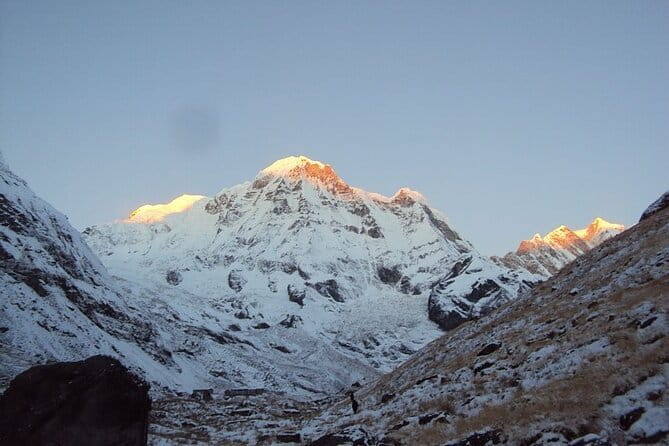
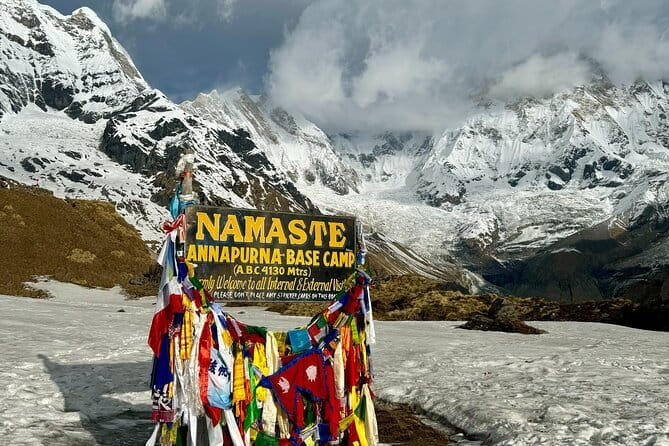
The mountains do the talking here. This 12-day Annapurna Base Camp trek links Nepalese villages, terraced fields, rhododendron woods, waterfalls, and high glacial valleys before reaching 4,130-meter Annapurna Base Camp. I like the mix of mountain scenery and Gurung culture, and I like that the plan includes a Kathmandu sightseeing day rather than treating the trek as a simple airport-to-trail transfer.
The main caution is cost clarity. The $1,440 price includes guides, permits, lodges, some meals, and airport transfers, but domestic flights, porters, most meals, personal gear, insurance, and tips are extra. You will also need to be comfortable with steep stone steps, slippery sections, cold nights, and high altitude.
Key points to know before you book
- Annapurna Base Camp reaches 4,130 meters: Altitude is a real concern, even though the trek is graded as moderate.
- The route includes Poon Hill: The classic circuit is described through Ghorepani and Poon Hill, though the daily schedule does not clearly assign time to that stop.
- Gurung villages add cultural interest: Ghandruk and Chhomrong bring local homes, village life, and warm hospitality into the trip.
- The trail is not just uphill: Expect long descents, 2,500 stone steps out of Chhomrong, suspension bridges, and repeated ups and downs.
- The price leaves several costs outside the package: Flights, porters, three daily meals, travel insurance, hot showers, and personal equipment are not included.
- Guide care is a strong point: Aneel received special praise for safety and support, while Machhindra Achary, Machhindra, and Radhika are also connected with the smooth running of the trip.
Why the Annapurna Sanctuary route earns its reputation
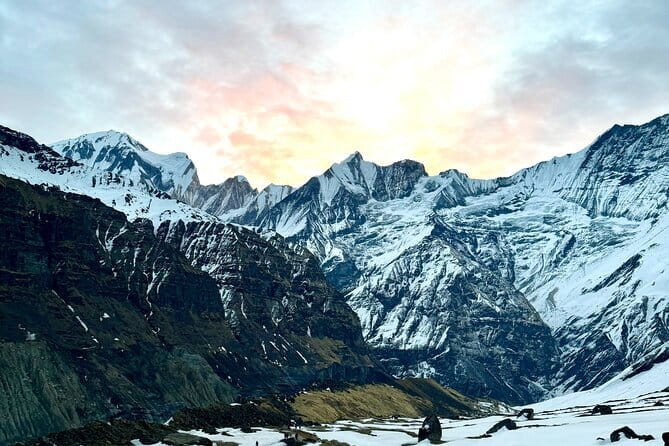
This trek takes you into the Annapurna Sanctuary, a mountain basin surrounded by striking peaks and narrow river valleys. The route changes often enough to keep each day fresh. You begin among lowland villages and cultivated slopes, then move through thick forest, damp bamboo groves, steep rock walls, and finally a colder high-altitude valley.
I like this variety more than a route that gives you mountain views from the first hour and then repeats the same scene for a week. Here, the journey has a clear rhythm. You first earn the big views through village paths and forest trails, then reach the open mountain amphitheater around Machhapuchhre Base Camp and Annapurna Base Camp.
The route is described as a clockwise walk beginning around Nayapul and continuing through Ulleri, Ghandruk, Ghorepani, Tadapani, Chhomrong, Deurali, and the base camp. The day-by-day plan is not perfectly aligned with that summary, so I would ask for a final route sheet before departure, especially if Poon Hill is a priority.
More Annapurna Treks in Kathmandu
- Annapurna Circuit Trek with Tilicho Lake
★ 5.0 · 368 reviews - Annapurna base camp trek 5 Days
★ 5.0 · 252 reviews - 14-Day Private Annapurna Base Camp Trek
★ 5.0 · 180 reviews
Days 1 and 2: Kathmandu, Pokhara, and the trailhead
Your first day begins with airport pickup at Tribhuvan International Airport in Kathmandu. A representative takes you to your hotel, followed by a briefing and an introduction to your guide. Two nights in Kathmandu are included on a bed-and-breakfast basis, though the hotel name and neighborhood should be confirmed before you travel.
On Day 2, you transfer to Kathmandu’s domestic airport for a roughly 30-minute flight to Pokhara. A private vehicle takes you onward to Nayapul, where a local vehicle continues toward Ulleri. The trekking portion then begins on an ascending trail toward Ghandruk.
This is a busy travel day. You are handling a flight, two road transfers, and your first substantial walk, so do not think of it as a gentle warm-up. The reward is Ghandruk, one of the best-known Gurung villages in the region, with mountain scenery, local culture, and lodge accommodation.
The transport arrangement is useful because it reduces the amount of road travel from Kathmandu to the trail. Still, domestic flights are not included in the $1,440 price. That can make the final bill noticeably higher, and flight schedules can affect the day’s timing.
Day 3: Ghandruk and the Gurung heart of the trek
The plan gives Day 3 to the route between Ghandruk and Chhomrong, although it does not provide a precise walking time or intermediate stops. The appeal here is less about a single landmark and more about the people and setting.
Ghandruk and the surrounding villages are strongly linked with the Gurung community. You will see terraced farmland, stone paths, and mountain settlements where hospitality is a central part of the local culture. The trip description specifically highlights friendly villagers, local customs, and the welcome offered in this area.
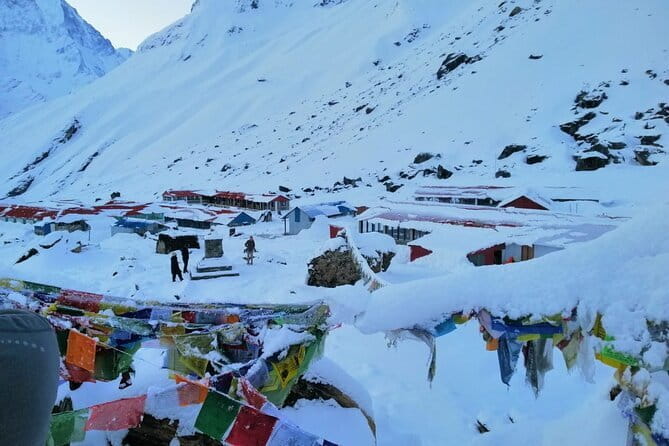
Chhomrong is an important stop because it is one of the last large settlements before the trail moves farther into the sanctuary. Your overnight stay is in a local lodge. Expect basic accommodation rather than hotel comfort, and remember that hot showers during the trek are excluded.
Day 4: Chhomrong’s steps, bridge, and bamboo forest
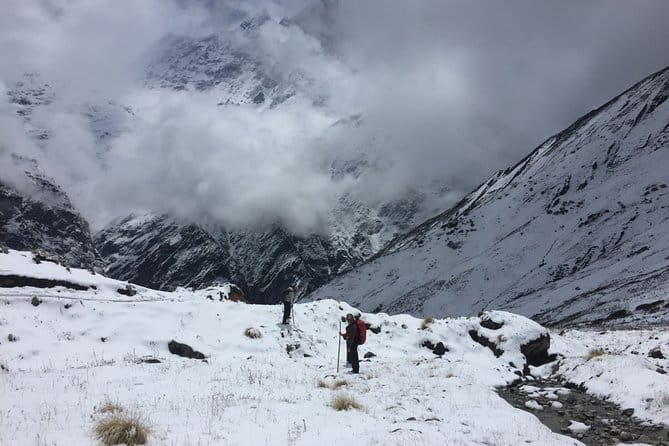
Day 4 is a good example of why the route requires reasonable fitness. Leaving Chhomrong means descending about 2,500 stone steps before crossing the Chhomrong Khola on a suspension bridge. What goes down must later come back up, and this trail is not shy about collecting its payment.
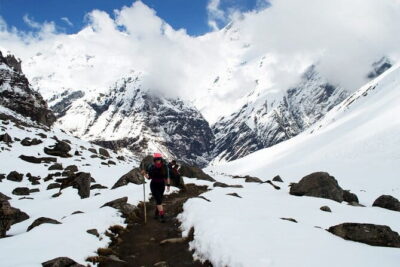
After the bridge, the path climbs toward Sinuwa and continues through forest to Kuldihar. From there, you walk downhill to Bamboo, where you spend the night in a teahouse. The forest provides shade and a change from the open village paths, but damp conditions can make the trail slippery.
I would keep your camera ready on this section, but also keep both hands free when the trail is wet. Trekking poles would be useful, although personal equipment is not included and must be arranged by you.
Same trailhead, a longer or shorter day out:
- Everest Base Camp Trek – 14 Days
★ 5.0 · 1,499 reviews - Everest Base Camp Trek
★ 5.0 · 842 reviews - Everest Base Camp Trekking
★ 5.0 · 485 reviews - Everest Base Camp Trekking – 13 Day
★ 5.0 · 365 reviews
Day 5: From Bamboo to Deurali beside the river
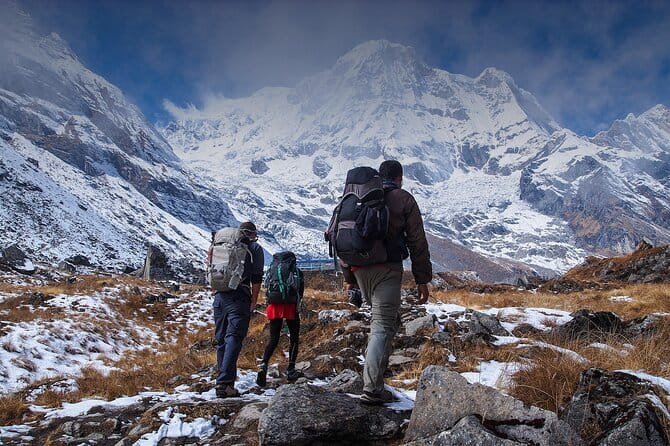
The trail from Bamboo enters a damp, cold bamboo forest. The setting becomes quieter and more enclosed, with the glacial river often nearby. Hinku Cave is one of the named points along the way and gives the day a clear landmark.
The path follows close to the river before climbing toward Deurali. This is one of the more scenic stretches, with tall rock faces and thin waterfalls dropping down the cliffs above you. The combination of rushing water, cold forest, and steep walls gives this section a more serious mountain feel than the earlier village trails.
You sleep at Deurali. At this point, altitude begins to matter more. Take the pace steadily, drink water, and tell your guide if you feel unwell. The package includes a first-aid kit for groups of more than six, but your travel insurance should cover emergency rescue and medical needs, since those costs are specifically excluded.
Day 6: The hard-earned arrival at 4,130 meters
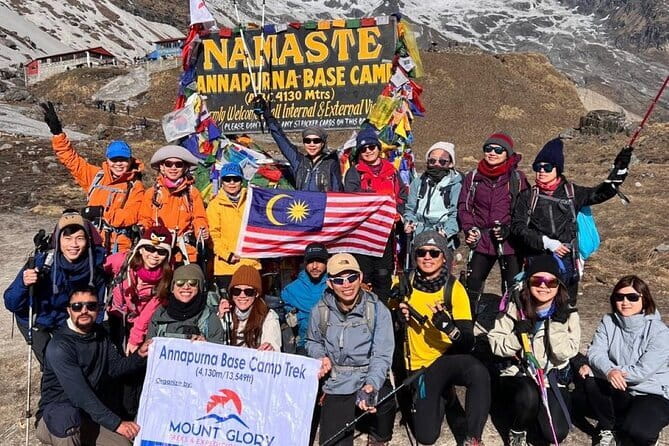
The key walking day runs from Deurali to Machhapuchhre Base Camp at 3,700 meters and then onward to Annapurna Base Camp at 4,130 meters. The stated walking time is five to six hours, though your actual pace will depend on trail conditions, weather, and how your body handles the altitude.
The trail first climbs through a riverbed and then takes a steeper line along the mountainside. The section from Bagar to Machhapuchhre Base Camp is described as strenuous, so this is not a day for rushing. From Machhapuchhre Base Camp, you can look toward Machhapuchhre, also known as Fishtail, along with Hiunchuli, Annapurna South, Annapurna I, Annapurna III, Gandharvachuli, and Gangapurna.
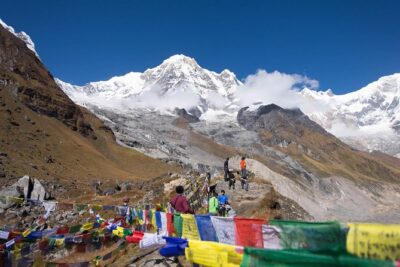
Annapurna Base Camp sits in a dramatic mountain basin. You will spend the night at the base camp, where the cold and basic lodge conditions are part of the deal. Warm layers, a sleeping bag, gloves, a warm hat, thermal clothing, and a proper trekking boot are not optional suggestions here. They are on the required packing list for good reason.
Altitude is the largest practical concern. The itinerary labels the trek moderate, but 4,130 meters is high enough that fitness alone does not remove the risk. The guide’s role matters greatly on this day. Aneel was singled out for keeping a participant safe while also making the trek enjoyable, which is exactly the kind of support you want at the highest point.
Day 7: Sunrise at base camp and the return to Bamboo
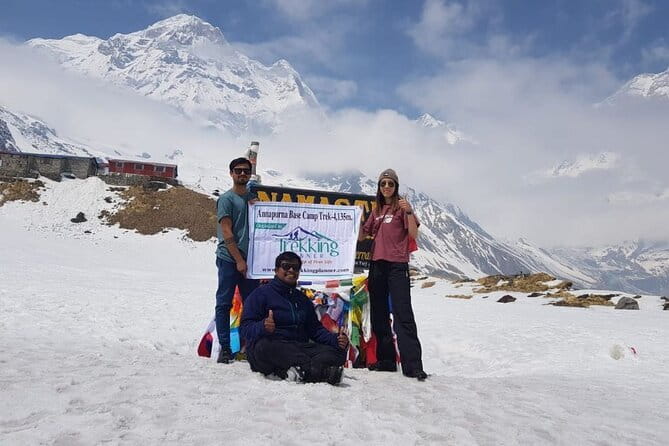
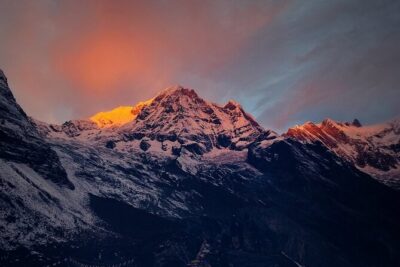
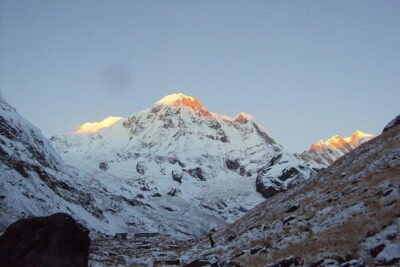
The morning gives you time for photographs of the peaks and the surrounding valley. Light changes quickly in the mountains, so this is the best chance to enjoy the base camp before breakfast and the return walk.
You retrace the route from Annapurna Base Camp to Bamboo. The itinerary calls it an easy downhill walk, but downhill does not always mean effortless. Long descents can be hard on knees, especially after the previous day’s climb and if the trail is wet.
The scenery remains a major reward. You see familiar places from a different direction, and the lower altitude should make breathing easier. The overnight stay is again at a teahouse in Bamboo.
Day 8: Chhomrong, Jhinu Danda, and the hot spring option
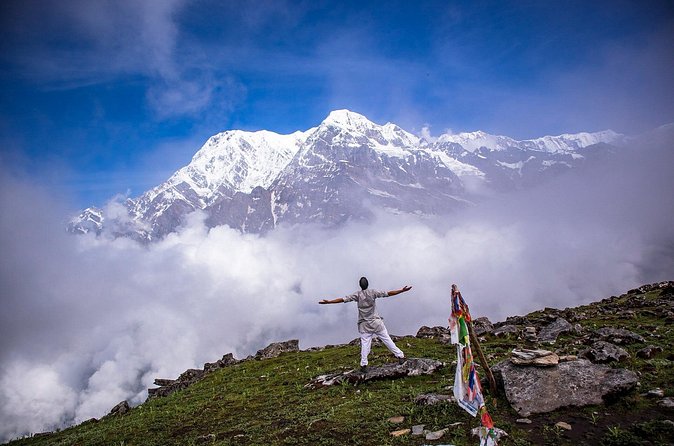
This is another full day of ups and downs. From Bamboo, you climb toward Kuldighar, descend to Chhomrong Khola, climb again to Chhomrong, and then descend to Jhinu Danda.
The repeated climbing can surprise you. You have already reached base camp, but the return is not a flat walk out. The mountain views and local plants help, yet tired legs will notice every rise in the trail.
Jhinu Danda offers a welcome change at the end of the day. A short walk from the lodge leads to a hot spring where you can relax. The bath itself is not listed as an included service, and hot showers during the trek are excluded, so carry cash for optional comforts.
Days 9 and 10: Leaving the trail and returning to Kathmandu
On Day 9, you trek down to Siwai and catch a vehicle to Pokhara. This is a practical finish, though the road transfer means your first post-trek day is still partly spent moving between places.
Day 10 takes you from Pokhara back to Kathmandu. The plan allows either a flight or a five-to-six-hour drive. A flight may leave time for Kathmandu sightseeing, while the road option costs more time but avoids another domestic flight charge. Neither domestic flight is included in the package price, so confirm which option your booking uses.
Day 11: Four major Kathmandu sights
The final full day includes a guided Kathmandu Valley tour beginning at 9 a.m. The stops are Pashupatinath, Boudhanath, Swayambhu, and Kathmandu Durbar Square.
This is a useful way to finish because the trek shows you rural Nepal, while the city day adds major religious and cultural sites. Pashupatinath and Boudhanath are especially important places, while Swayambhu and Kathmandu Durbar Square provide a different view of the valley’s sacred and historic center.
Temple and monument entrance fees are not included. You should also expect a full day of sightseeing after nearly a week and a half of walking, so keep the evening simple before your departure.
What the $1,440 price really covers
At first glance, $1,440 per person is a substantial price. The value improves if you want a private arrangement with airport transfers, a guide, permits, lodge accommodation, and Kathmandu sightseeing organized together.
The package includes international airport pickup and drop-off, two Kathmandu hotel nights with breakfast, trekking lodges, an English-speaking guide, government taxes, Annapurna Conservation Area fees, and a TIMS card. Guide salary and insurance are also covered.
The meal allowance is less generous. The stated inclusions list four dinners, seven breakfasts, and two lunches. At the same time, the exclusions say three daily meals during the trek are not included. I would get the exact meal arrangement in writing, because food can become a meaningful extra cost over several days.
You should also budget for:
- Domestic flights between Kathmandu and Pokhara
- A porter, if needed
- Most meals and drinks
- Personal trekking equipment
- Hot showers, laundry, phone use, and alcoholic drinks
- Travel and rescue insurance
- Temple and monument entrance fees
- Tips and gratuities
A porter is not included, although the terms refer to a ratio of one porter for two people and a maximum luggage load of 30 kilograms. Confirm this arrangement before you go, including the cost and your own baggage limit.
Who should choose this trek?
This trip suits you if you want a serious Himalayan walk with village culture, teahouse nights, and a high mountain finish. It is a good fit for someone with moderate physical fitness who can manage steep climbs, long descents, stone steps, and changing weather.
It is not suitable for people with back problems, heart complaints, other serious medical conditions, or pregnancy. The route is not wheelchair accessible. You should also be comfortable with basic lodge accommodation and the possibility of cold, wet, slippery trail conditions.
The guide support is one of the best reasons to consider this arrangement. Aneel received especially strong praise for safety and care, while Machhindra Achary, Machhindra, and Radhika were also linked with attentive service and smooth organization. The strongest personal detail from the feedback is simple: the staff helped turn a long-held Annapurna dream into a manageable trip.
The tour is private, so only your own group participates. That can make a major difference on a demanding route, since the walking pace and daily decisions are not tied to a large mixed group.
Booking details and cancellation terms
Pickup is offered, the meeting time is 7 a.m., and confirmation is provided when you book. You must supply each participant’s passport name, number, expiry date, and country at booking, and you need a valid passport on the day of travel.
The trek operates in all weather conditions, so pack for both sun and cold. If bad weather forces cancellation, you are offered an alternative date or another destination of the same value.
You can cancel for a full refund up to 24 hours before the local start time. Cancellations or changes within 24 hours are not refunded or accepted.
Should you book the Annapurna Base Camp Trek?
I would recommend this trek if you want the full mix: mountain scenery, Gurung villages, forest trails, a hot spring stop, Kathmandu sights, and a clear goal at 4,130 meters. The itinerary offers more human contact and variety than a simple high-altitude out-and-back walk.
I would not book it without first confirming the domestic flights, porter cost, exact meal inclusions, hotel details, and the place of Poon Hill in the final schedule. If those costs fit your budget and you are prepared for altitude and long stone-step sections, this is a strong choice for a private Annapurna adventure with useful guide support.
FAQ
How long is the Annapurna Base Camp Trek?
The full package lasts approximately 12 days, including arrival and departure in Kathmandu, the trek, transport between Kathmandu and Pokhara, and a Kathmandu sightseeing day.
What is the highest point on the trek?
Annapurna Base Camp is the highest point listed, at 4,130 meters or 13,545 feet.
Is Poon Hill included?
The route description includes Poon Hill and Ghorepani, but the daily schedule does not clearly assign a specific day to them. Confirm the final route before booking if Poon Hill is important to you.
Is domestic airfare included?
No. Domestic flights between Kathmandu and Pokhara are excluded from the $1,440 price.
Are meals included during the trek?
The package lists four dinners, seven breakfasts, and two lunches. It also states that three meals per day during the trek are excluded, so confirm the exact meal plan before departure.
Is a porter included?
No. Necessary porter service is excluded. The terms refer to one porter for two participants and a maximum load of 30 kilograms, so ask for the current porter price and baggage rules.
What accommodation is provided?
You receive two nights in a Kathmandu hotel with breakfast and lodge or guest house accommodation during the trek, according to the itinerary.
Is the trek suitable for beginners?
The trek is graded moderate and requires a moderate level of physical fitness. You should be ready for steep trails, 2,500 stone steps, repeated climbs and descents, slippery sections, and high altitude.
Is travel insurance included?
No. Emergency rescue, travel insurance, trip cancellation, accident or health cover, and loss, theft, or damage to personal effects are excluded.
What happens if bad weather cancels the trip?
You receive the option of an alternative date or an alternative destination of the same value if the trip is canceled because of bad weather.
Recently added around Kathmandu
- Ghorepani Poon Hill Trek★ 5.0 · 16 reviews
- Private Manaslu Circuit Trek at Himalayas★ 5.0 · 3 reviews
- Amazing 1 Day Trekking Experience in Kathmandu Nepal★ 5.0 · 24 reviews
- Ghorepani Poonhill Trek★ 5.0 · 5 reviews
- Upper Mustang Trekking★ 5.0 · 2 reviews
- Upper Mustang Trek★ 5.0 · 5 reviews
- Upper Mustang Trekking★ 3.0 · 2 reviews
- Upper Mustang Trekking★ 5.0 · 4 reviews
Annapurna Base Camp Treks, compared.

Trekking in Annapurna/Langtang/Everest/Upper Mustang regions
Read our review →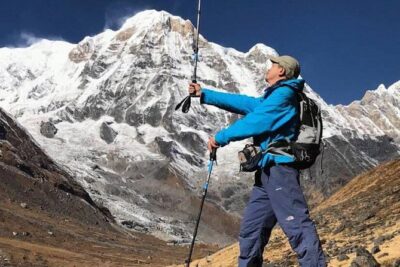
Kathmandu to Annapurna Base Camp (ABC) 5-Day Trek
Read our review →Browse the lists this tour appears in