
REVIEW · KATHMANDU
Annapurna Base Camp Trek
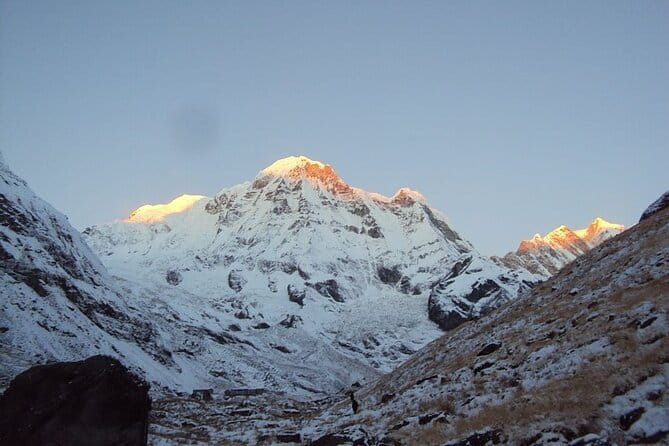
The mountains earn every step. The 7-day Annapurna Base Camp Trek leads you from Pokhara through terraced farmland, rhododendron forest, and Gurung villages to a high mountain sanctuary ringed by Annapurna South, Machhapuchhre, and Hiunchuli. I like the local guide-and-porter setup and the fact that meals, permits, transport, and lodging are bundled into one price. I also like the chance to reach Annapurna Base Camp without committing to a much longer Himalayan route.
The main caution is the itinerary itself. Several daily durations look inconsistent, and the listed trip length does not line up perfectly with the included seven nights of lodging. You should confirm the walking hours, overnight stops, and exact transport plan before paying, especially if you are new to multi-day trekking.
Key points to know before booking
- The route begins near Pokhara: You spend the first night in Pokhara before driving toward the trailhead at Nayapul and continuing toward Ghandruk.
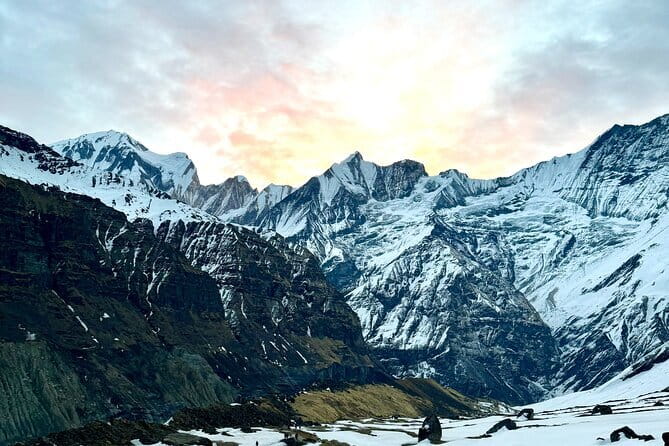
- Mountain views improve as you climb: Annapurna South, Machhapuchhre, and Hiunchuli become the visual focus, with the base camp providing the big payoff.
- Food and permits are included: Breakfast, lunch, dinner, seasonal fruit, the Annapurna Conservation Area permit, and the TIMS card are covered.
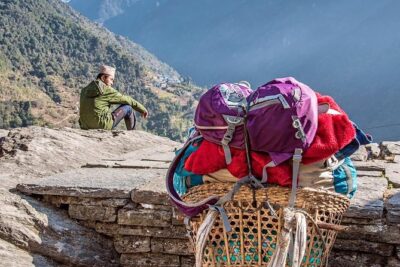
- The trek is private: Only your own group participates, with a government-licensed mountain guide and porters arranged through the company.
- Guide quality is a strong point: Suraj, Anos, Laku, and other guides receive repeated praise for care, flexibility, planning, and good humor.
- You need moderate fitness: The route includes repeated uphill and downhill sections, forest trails, bridges, and long walking days.
What the seven-day route is really like
This is a compact version of the Annapurna Base Camp route. You move from warm farm country into cool forest, then into a high mountain setting before returning through a different section of the valley.
The trip is not a sightseeing tour with a few easy walks. You carry yourself through several hours of uneven trail each day, often with steep climbs followed by equally serious descents. The reward is variety: village life, forest shade, river crossings, open mountain views, and the enclosed mountain setting around base camp.
The route begins after an overnight stay in Pokhara. The early start is listed as 4:45 am, so you should be ready for a very early morning, a road transfer, and a full day on your feet. Pickup is offered, and the ground transport covers the road from Pokhara toward Syauli Bazar, with the return journey from Samrung Khola to Pokhara.
More Annapurna Treks in Kathmandu
- Annapurna Circuit Trek with Tilicho Lake
★ 5.0 · 368 reviews - Annapurna base camp trek 5 Days
★ 5.0 · 252 reviews - 14-Day Private Annapurna Base Camp Trek
★ 5.0 · 180 reviews
Day 1: Pokhara to Ghandruk and the first mountain views
After breakfast in Pokhara, you drive beyond the city toward the walking route. The scenery changes from urban streets to farmland and mountain foothills, and the first day brings you to Ghandruk.
Ghandruk is an appealing opening stop because it gives you a village setting rather than dropping you straight into a long forest climb. The route passes terraced fields, and the village is associated with the Gurung communities of the region. You also get your first strong views toward the Annapurna range and Machhapuchhre, the distinctive peak known as Fish Tail.
The listed walking time is about four hours and ten minutes, though the exact time depends on the road conditions, trail point, and final overnight arrangement. This first day should feel like an introduction, but it still sets the rhythm for the week: walk, eat, rest, and repeat.
I like this start because the mountain experience begins gradually. You get a road transfer out of Pokhara, then a village and trail setting that feels more personal than a simple drive to a lodge near the high route.
Day 2: Ghandruk to Chhomrong through forest and farmland
From Ghandruk, the trail begins on a gradual path before climbing toward Kimrong Danda. From this ridge, the route drops through cool forest to the Kimrong River, then continues through a farm village before the climb toward Chhomrong.
This is a good example of why the trek requires real fitness. The trail does not simply rise at a steady angle. You go up to a ridge, down toward the river, and then up again. That constant change can be harder on your legs than one long climb.
Chhomrong is an important point on the route and a useful place to judge how your body is handling the trek. The village sits in a mountain setting with broad views, and the route from here leads toward Sinuwa and the Modi River gorge.
The itinerary lists this day as 15 hours, which is a very long walking day. That figure may reflect a rough total rather than actual time on the trail, but you should ask the operator to clarify it. If the intended walking time is substantially shorter, the day may be manageable for a reasonably fit person. If 15 hours is accurate, you need to prepare for a demanding push.
Day 3: Chhomrong to the forest near Bamboo
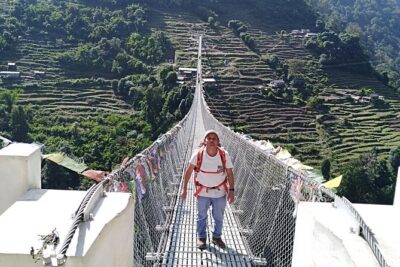
The route leaves Chhomrong by descending to a bridge, followed by an uphill section toward Sinuwa Danda. From there, the trail enters thick forest and winds through a series of climbs and descents toward Bamboo in the Modi River gorge.
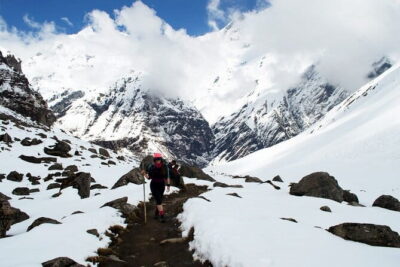
This section offers some of the best woodland walking on the trek. The forest provides shade, and the sound of the river helps break up the effort. You should not expect an easy stroll, though. The repeated uphill and downhill movement continues, and damp or uneven ground may make the trail slower.
The itinerary places Ghandruk Bus Park in the description for this day, but the route itself is described as Chhomrong to Sinuwa and Bamboo. That is another detail worth confirming before departure. The listed duration is 14 hours, which again seems unusually long for a standard trekking day. Ask for the expected walking hours and overnight location in writing.
This is where having a good guide matters. A guide can help set a workable pace, point out the correct turns, and adjust the plan if the group is tiring. The strongest praise for Suraj, Anos, and Laku centers on exactly this kind of care. Their value is not just route finding. It is making sensible decisions hour by hour.
Same trailhead, a longer or shorter day out:
- Everest Base Camp Trek – 14 Days
★ 5.0 · 1,499 reviews - Everest Base Camp Trek
★ 5.0 · 842 reviews - Everest Base Camp Trekking
★ 5.0 · 485 reviews - Everest Base Camp Trekking – 13 Day
★ 5.0 · 365 reviews
Day 4: Into the Annapurna Sanctuary
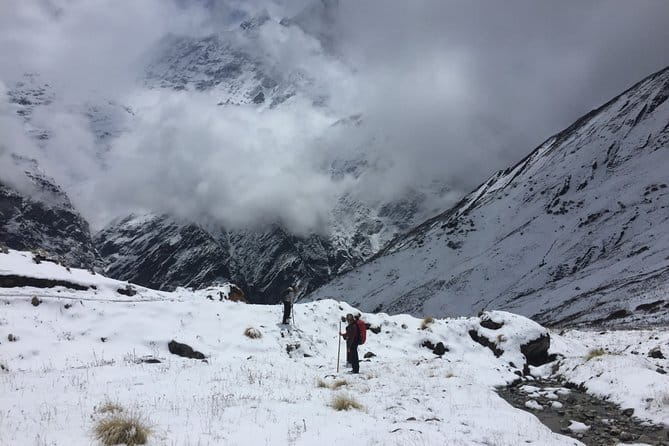
The route continues through forest toward Himalaya Hotel, near the large Hinko Cave. From there, you pass below Annapurna South and Hiunchuli and continue toward the sanctuary and base camp area.
This is the day when the scenery begins to feel more dramatic. Trees thin as you gain height, and the valley narrows into a more enclosed mountain setting. The peaks become the main event, with rock, ice, and high ridges replacing much of the farmland and village scenery from the opening days.
The itinerary describes the day as 13 hours, again a figure you should verify. Regardless of the exact number, this is likely one of the more demanding sections because you are still gaining height and approaching the main destination.
The route passes near Hinko Cave, a memorable natural landmark beneath the peaks. You also reach the area around Machhapuchhre Base Camp before continuing toward Annapurna Base Camp, according to the route description. The exact overnight stop should be confirmed because the supplied schedule does not clearly state where you sleep each night.
Day 5: Annapurna Base Camp and the return toward Bamboo
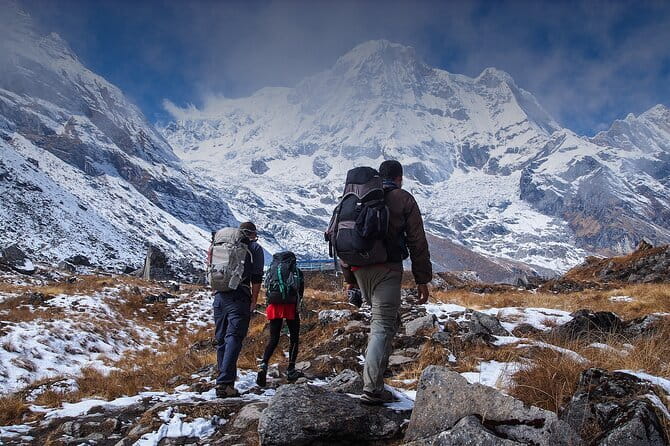
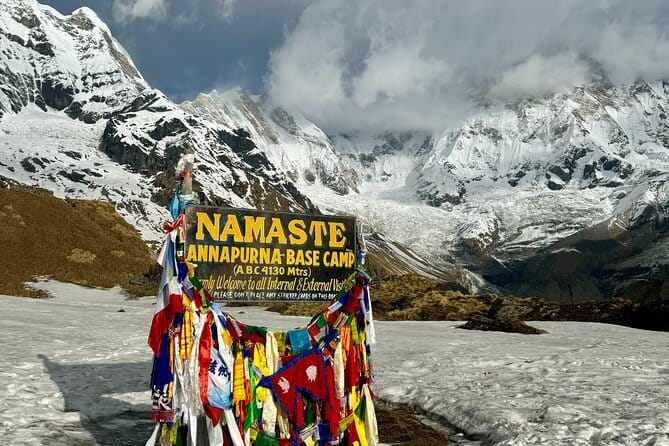
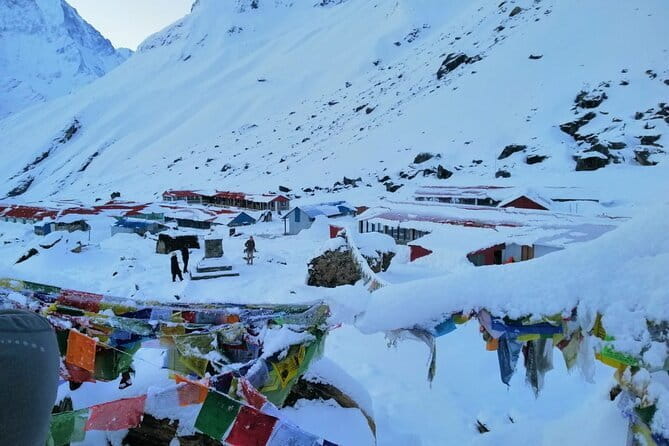
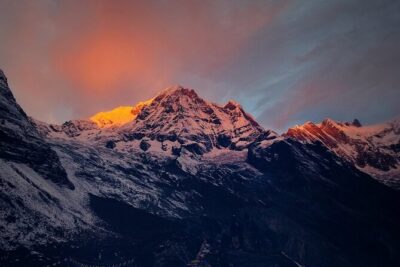
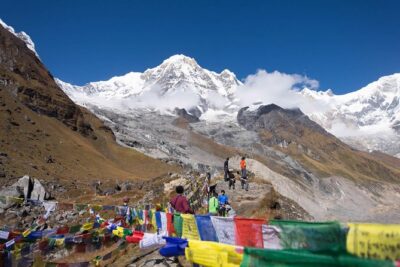
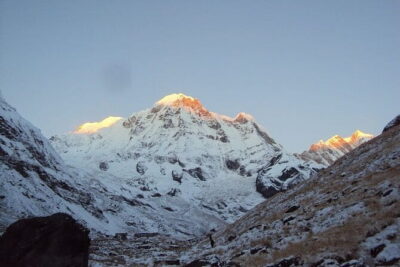
Annapurna Base Camp is the emotional high point of the trek. Here, the mountains surround you on a much larger scale, with Annapurna South, Hiunchuli, Machhapuchhre, and nearby glaciers forming the mountain backdrop.
The early light is especially important. The base camp setting is known for sunrise views, and this is the moment to slow down, look around, and enjoy what the previous days of climbing bought you. Bring patience for photographs, but also give yourself time simply to watch the changing light on the peaks.
The route then turns downhill toward Bamboo, with short uphill sections mixed into the descent. The description refers to a walk of nearly six hours, while the stop duration is listed as two hours. Those figures conflict, so you should ask the company which schedule applies.
The descent may sound easier, but downhill walking can be tough on knees and thighs. Trekking poles can be useful, though they are not listed as included. Pack carefully and keep frequently used items accessible because you will not want to empty your bag each time you need water, a snack, or a layer.
Day 6: Chomrong to Jhinu Danda and its hot spring
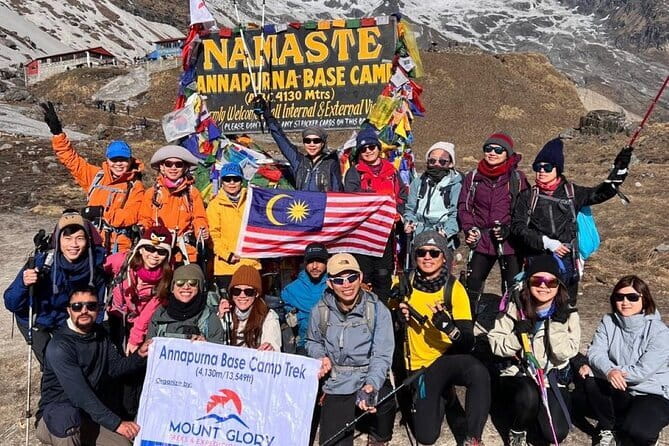
The return route reaches Chomrong, then branches toward Jhinu Danda. The trail includes more uphill and downhill walking before arriving at the village on a ridge.
Jhinu is a welcome change of pace because the stop includes access to a hot spring. After several days on mountain trails, a warm soak can be a pleasant way to ease tired legs. The information provided does not state whether any hot spring entry fee is included, so ask your guide about that expense.
This day also gives you another view of the surrounding hills and river valleys. The itinerary lists a two-hour duration, but the description includes a return to Chomrong and a fresh trail to Jhinu. Confirm the actual walking time and overnight arrangement. The route may be short compared with the high days, but it is not necessarily flat.
Day 7: Walk to Siwai and drive back to Pokhara
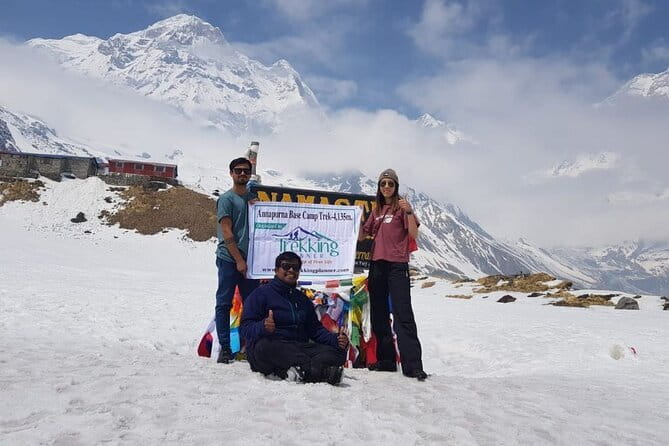
The final morning takes you downhill through warmer farm areas toward Siwai. From there, the return drive to Pokhara is listed at about two hours.
The description gives roughly four hours for the walk and two hours for the drive, while the stop duration is listed as 30 minutes. As with several earlier days, the timing needs clarification. Treat the last day as a combined walking and road-transfer day, not as a quick departure.
The trip ends in Pokhara, where you can recover from the trail and enjoy the contrast between the quiet mountain route and the lakeside city. The transport is part of the package, which saves you from arranging a separate return vehicle after a tiring descent.
What the $699.67 price covers
At $699.67 per person, the price has real value if you want a full-service trek rather than a bare guide arrangement. It includes a government-licensed mountain guide, porters, seven nights of trekking accommodation, all three daily meals, seasonal fruit, the Annapurna permit, and the TIMS card.
Ground transport is also included for the outbound and return sections specified in the package. That matters in Nepal, where coordinating trailhead transfers can take time and patience.
The price does not include travel or rescue insurance. It also excludes drinks, phone calls, laundry, battery charging, bottled water, hot water, showers, and guide tips. These are not surprising exclusions, but they can add up during a week in the mountains.
You should also clarify the accommodation count. The tour is advertised as seven days, while the inclusions list seven nights on the trek. The route description appears to involve several overnight stops, but the exact night-by-night lodging plan is not fully clear.
Meals, lodging, and practical comfort
Three meals a day are included: breakfast, lunch, and dinner. Seasonal fruit is also provided. That takes away one major planning task and makes the price easier to judge.
The information does not name the lodges or describe room arrangements, bathrooms, showers, charging access, or hot water availability. You should not assume these extras are included, since battery recharge, hot water, and showers are specifically listed as additional costs.
Pack for simple mountain accommodation rather than hotel comfort. Keep cash available for drinks, charging, showers, laundry, and tips. A reusable water bottle may help, but bottled water itself is not included.
The guide team and private group format
This is a private activity, so only your group participates. That gives you more room to set the walking pace than a large scheduled group would.
The strongest praise goes to the guides. Suraj is repeatedly described as attentive, cheerful, and good at handling meals, accommodation, and daily plans. Anos is praised for careful organization and a considerate approach. Laku is noted as friendly and helpful, while porters Sonam and Necha are specifically appreciated for taking good care of the group.
One useful tip is to request particular guides and porters in advance during the busy hiking season. The company has also adjusted routes around individual needs, so you should explain your preferred pace and any concerns before the trek begins.
Fitness, timing, and who should book
The operator asks for moderate physical fitness, and that is a fair description. You should be comfortable walking for several hours on uneven trails and handling repeated climbs and descents.
This trek suits you if you want a focused Himalayan route, prefer a private group, and value having permits, meals, transport, and accommodation arranged together. It is also a good fit if you want village and forest scenery along with a major mountain destination.
I would hesitate to recommend it to anyone seeking a relaxed holiday with short walks. The route requires effort, early starts, and tolerance for basic facilities. It also needs a clearer schedule than the supplied timings currently provide.
The experience is generally popular, with a listed five-star rating from 59 reviews and 100 percent recommendation. That positive record is reinforced by consistent praise for communication, guide care, flexibility, and overall organization. Still, strong service cannot remove the physical demands of the route or the need to confirm the itinerary details.
Cancellation and booking details
You can cancel up to 24 hours before the local start time for a full refund. Cancellations or changes made inside that period are not refunded or accepted.
The trek depends on suitable weather and a minimum group size. If the company cancels for either reason, you are offered another date or experience, or a full refund. Confirmation is provided at booking, and pickup is offered.
Should you book the Annapurna Base Camp Trek?
I would book this trek if you want a relatively short, fully arranged route to Annapurna Base Camp and you value personal support from a local guide. The combination of meals, permits, transport, lodging, and a private group makes the $699.67 price attractive.
Before booking, ask three direct questions: What are the exact walking hours each day? Where do you sleep each night? Why do the listed durations conflict with the route descriptions? If the answers are clear and the pace suits your fitness, this is a strong way to experience the Annapurna sanctuary without organizing every detail yourself.
FAQ
Where does the Annapurna Base Camp Trek start?
The trip begins with an overnight stay in Pokhara. After breakfast, you drive beyond Pokhara toward the trail area, beginning the walking route around Nayapul and continuing toward Ghandruk.
How long does the trek take?
The experience is advertised as approximately seven days. The inclusions also mention seven nights of accommodation on the trek, so you should confirm the exact schedule and number of nights before booking.
Are meals included?
Yes. Breakfast, lunch, and dinner are included during the trek, along with seasonal fruit. The package lists seven breakfasts, seven lunches, and six dinners.
Is transportation included?
Yes. Ground transportation is included from Pokhara toward Syauli Bazar and from Samrung Khola back to Pokhara. Pickup is also offered.
Do I need good fitness for this trek?
You need a moderate level of physical fitness. The route includes uphill and downhill walking through forests, villages, farmland, and mountain areas, with some listed days requiring long hours.
What costs are not included?
Travel and rescue insurance, drinks, phone calls, laundry, battery charging, bottled water, hot water, showers, and tips for the guide are not included.
Recently added around Kathmandu
- Ghorepani Poon Hill Trek★ 5.0 · 16 reviews
- Amazing 1 Day Trekking Experience in Kathmandu Nepal★ 5.0 · 24 reviews
- Private Manaslu Circuit Trek at Himalayas★ 5.0 · 3 reviews
- Ghorepani Poonhill Trek★ 5.0 · 5 reviews
- Upper Mustang Trekking★ 5.0 · 2 reviews
- Upper Mustang Trekking★ 3.0 · 2 reviews
- Upper Mustang Trekking★ 5.0 · 4 reviews
- Upper Mustang Trek★ 5.0 · 5 reviews
Annapurna Base Camp Treks, compared.
Trekking in Annapurna/Langtang/Everest/Upper Mustang regions
Read our review →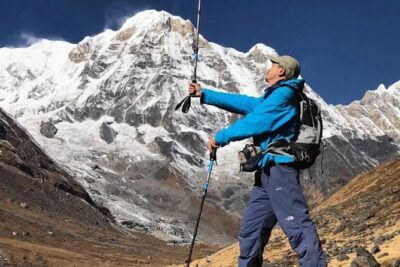
Kathmandu to Annapurna Base Camp (ABC) 5-Day Trek
Read our review →Browse the lists this tour appears in