
REVIEW · KATHMANDU
Annapurna Base Camp Trek
Mountain mornings reward early risers. This 10-day Annapurna Base Camp trek combines village paths, forest walks, a Poon Hill sunrise, and a high mountain finish at 4,130 meters. I especially like the route’s variety and the fact that it includes both the famous sunrise viewpoint and Annapurna Base Camp, rather than rushing straight to the high camp.
I also like the practical support from Touch The Himalaya Treks and Expedition. Guides and porters handle permits, bags, meals, transport, and basic first aid, while names such as Madan, Rishi, Roshan Pandey, Arjun, and Ganesh appear repeatedly in the company’s feedback. The main consideration is the pace: six to seven hours of walking on several days, followed by a quick ascent and descent, will test anyone who arrives without reasonable fitness.
Key points to know before booking
- Poon Hill sunrise comes before Annapurna Base Camp, giving you two major mountain highlights on one route.
- The trek starts with transport from Kathmandu, then moves through Pokhara, Nayapul, Ulleri, Ghorepani, Tadapani, and Sinuwa.
- The $700 price covers major essentials, including two Kathmandu hotel nights, trekking meals, permits, a guide, porter support, and transport costs.
- The trek is private, so only your own group participates rather than joining a large mixed party.
- A local, first-aid-trained guide is included, with English, Hindi, and Chinese language support listed.
- The final mountain section reaches Annapurna Base Camp, followed by a return through Sinuwa and the hot springs at Jhinu.
Kathmandu to Pokhara: a long first day
The trip begins at 6:15 a.m. from Thamel in Kathmandu. You can reach Pokhara by tourist bus, car, or flight. The bus journey takes about seven hours and covers roughly 200 kilometers, following the Trishuli River through changing countryside.
I would choose the bus only if you want to see more of Nepal between the two cities and can handle a long road day. The drive is included in the wider arrangement, but seven hours in a vehicle is still seven hours. A flight is quicker, though the exact price difference is not given, so confirm that before you set your budget.
Pokhara is the staging point for the trek and a pleasant pause before the trail begins. You stay there after the road journey, though the supplied schedule does not specify the hotel or whether dinner is included that evening. Ask for those details in advance.
The arrangement includes airport pickup and drop-off, plus two nights of accommodation in Kathmandu before and after the trek. That is useful if you are arriving from abroad, since you do not have to organize your own transfer immediately after a long flight.
More Annapurna Treks in Kathmandu
- Annapurna Circuit Trek with Tilicho Lake
★ 5.0 · 368 reviews - Annapurna base camp trek 5 Days
★ 5.0 · 252 reviews - 14-Day Private Annapurna Base Camp Trek
★ 5.0 · 180 reviews
Nayapul to Ulleri: the first real test
After breakfast on the second day, you drive for about an hour to Nayapul. From there, the walking begins beside the Modi Khola River and through small villages on the way to Ulleri.
This is where the trip changes from sightseeing to trekking. The five-hour walking day gives you time to settle into the rhythm, but the route to Ulleri is not just a gentle stroll. You should expect an uphill start and a noticeable demand on your legs.
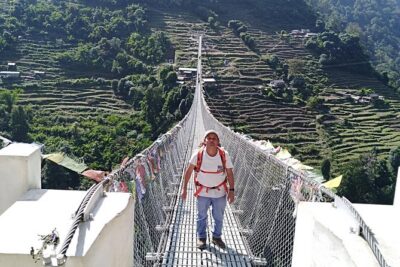
The village sections are valuable because they put the mountains in a human setting. You are not simply walking toward a famous base camp. You pass homes, local paths, and communities where the route is part of daily life. Your guide can help explain what you are seeing, which is one reason local support adds real value here.
Meals during the trek are included: breakfast, lunch, and dinner. You can also buy meals at tea houses, according to the trip details, so clarify what is covered and what would count as an extra purchase. Carrying light snacks and chocolate is sensible for the longer stretches.
Ulleri to Ghorepani: forests and rising views
The next day takes about five to seven hours from Ulleri to Ghorepani. The path moves through forest and open mountain scenery, with views toward the Annapurna range opening as you gain height.
Ghorepani matters because it is the base for the early morning climb to Poon Hill. You will not simply arrive, eat, and sleep in. The next morning starts before breakfast, so keep your clothes and headlamp, if you carry one, ready the night before.
This section is a good example of why the trek needs moderate physical fitness. The daily hours are manageable for a fit walker, but the repeated ascents and descents accumulate. You should not judge the whole trip by the first few hours. Your legs will have a stronger opinion by the fourth day.
Tea house accommodation is part of the normal structure of this kind of route, but the exact room arrangements are not stated. Ask whether you should bring a sleeping bag, what type of room is planned, and how hot water is handled. Those details can matter more than another line of scenery when you are tired.
Poon Hill sunrise and the walk to Tadapani
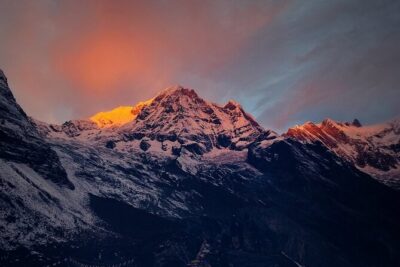
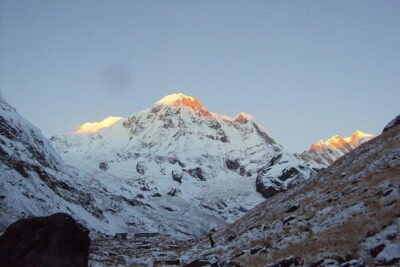
The early climb to Poon Hill is one of the strongest features of this route. You leave Ghorepani before sunrise, reach the viewpoint, and watch light spread across the Annapurna and Dhaulagiri mountains.
This is an early start, but it gives the trek a memorable focal point before you reach base camp. The sunrise stop also breaks up the long journey nicely. After returning to Ghorepani for breakfast, you continue to Tadapani for about four hours.
The walk to Tadapani passes through forest and mountain country. Four hours may sound easy after the previous day, but the Poon Hill climb comes first. I would treat the morning viewpoint as part of the day’s physical effort, not as a free add-on.
Tadapani is another useful overnight stop because it keeps the route moving without forcing a punishing single-day march. The schedule is fairly tight, though, so this is not a trip built around long afternoon rests.
Same trailhead, a longer or shorter day out:
- Everest Base Camp Trek – 14 Days
★ 5.0 · 1,499 reviews - Everest Base Camp Trek
★ 5.0 · 842 reviews - Everest Base Camp Trekking
★ 5.0 · 485 reviews - Everest Base Camp Trekking – 13 Day
★ 5.0 · 365 reviews
Tadapani to Sinuwa: a change in rhythm
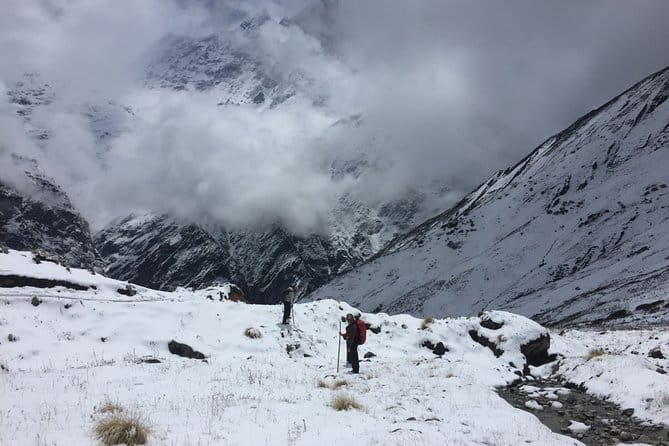
The fifth day takes roughly six to seven hours from Tadapani to Sinuwa. The trail descends through forest and passes several small villages, with occasional views of the Annapurna range.
A descent can be harder than an ascent if your knees are not used to it. Walking poles would be useful, but the supplied details do not confirm that they are provided, so bring your own if you normally rely on them.
Sinuwa marks the route’s movement toward the higher section. You are still surrounded by trees and village paths, but the coming days become more demanding. This is a good point to check your water supply, phone charger, clothing, and snacks. The company specifically advises carrying water bottles, sunglasses, a charger, and light energy food.
The private format can help here. Your guide can set a pace for your own group, rather than trying to keep up with strangers who walk faster or slower. Still, a private trek does not remove the need to speak up if you are tired, cold, or struggling with the altitude.
Sinuwa to Deurali: the higher trail
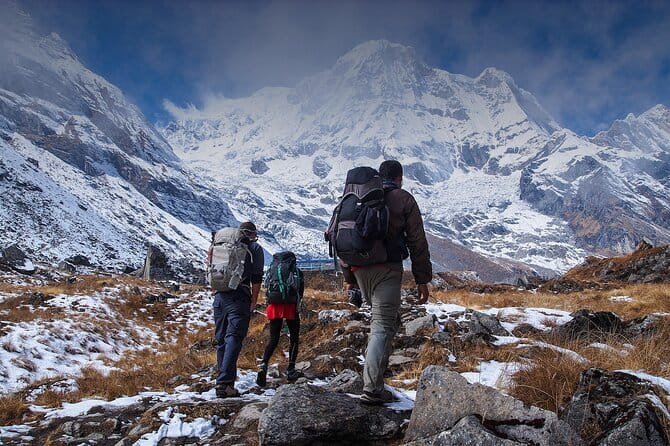
From Sinuwa, you walk to Deurali in about five to six hours. The trail climbs steadily through forest, then becomes more rugged as you approach Deurali.
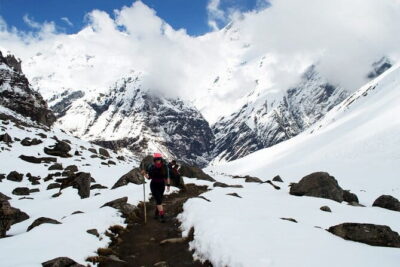
The route description includes a glacier crossing on this section. Because trail conditions and the exact crossing point can vary, confirm the current route with the operator before departure. More broadly, this is the part of the trek where weather, fatigue, and altitude deserve your full attention.
The guide’s role becomes especially important here. The company includes an English, Hindi, or Chinese government-licensed guide with first-aid training, as well as a first-aid kit carried on the trail. The guide and porter package also includes salaries, insurance, equipment, transport, food, and accommodation.
Those inclusions are not just paperwork. They mean you are not expected to manage permits, hire porters separately, or work out every camp transfer yourself. Past trips have given particular praise to guides such as Rishi and Roshan Pandey for keeping solo trekkers and groups well supported.
Deurali to Annapurna Base Camp
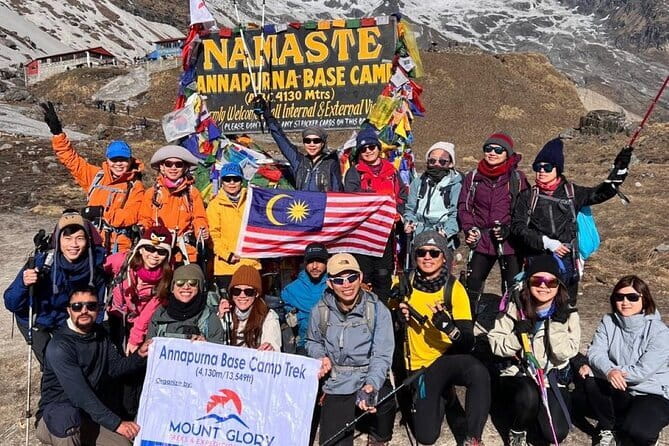
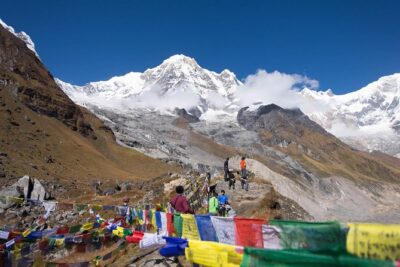
The seventh day is the high point of the trek, both literally and emotionally. From Deurali, you walk through Machapuchare Base Camp and onward to Annapurna Base Camp, with the day taking about six to seven hours.
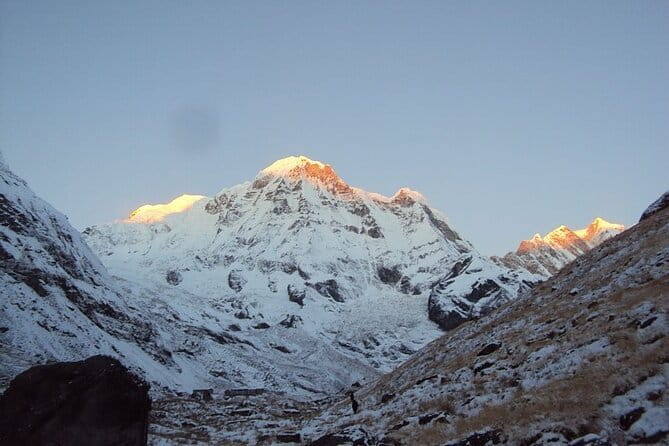
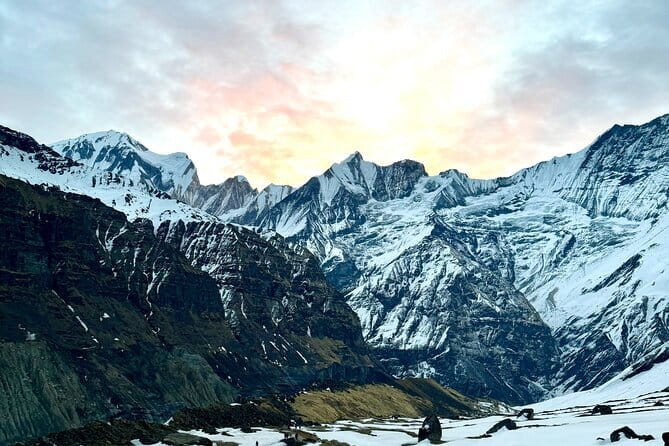
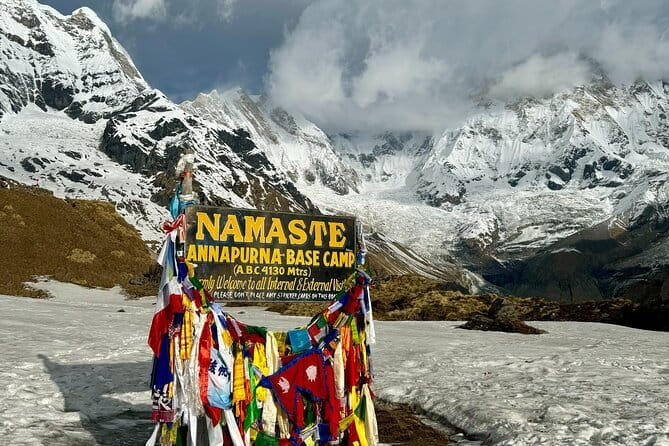
This is the section where the route’s purpose becomes clear. The scenery turns more open and rugged as you approach the mountain amphitheater. Annapurna Base Camp sits at approximately 4,130 meters, so the altitude is serious even if you have been walking for several days.
Do not treat the base camp day as a race. Keep your pace steady, drink regularly, and tell the guide if you feel unwell. The trip is designed with overnight stops along the way, but the schedule does not describe a separate acclimatization day. That makes careful pacing especially important.
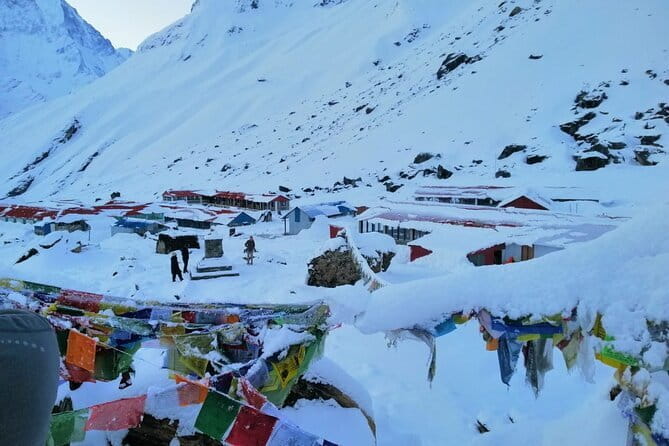
You reach the base camp, enjoy the mountain views, and spend the night in the high country before returning. The reward is not only the destination. It is the sense of having walked from warm river valleys and villages into a much harsher mountain setting.
The descent to Sinuwa and Jhinu
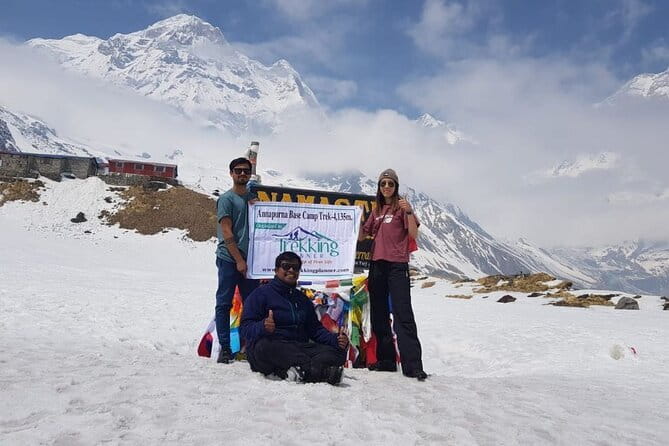
After the base camp night, you retrace the trail to Sinuwa in about six to seven hours. The views are familiar, but the walking can feel different because your body is tired and the descent places fresh pressure on your knees.
The next day continues from Sinuwa to Jhinu, taking about five to six hours. Jhinu is a welcome stop because you can relax in the nearby natural hot springs. After several days of hard walking, this is exactly the sort of simple comfort that makes sense.
In the afternoon, you drive back to Pokhara for one to two hours. The timing gives you a chance to clean up, rest, and enjoy the city before the final return to Kathmandu.
The route’s return is fairly efficient, but it leaves little spare time for delays. Mountain roads and flights can change plans, so I would avoid booking an international departure immediately after the scheduled return unless you have a backup plan.
Back to Kathmandu and the real value of $700
The final day takes you from Pokhara to Kathmandu by scenic drive or short flight. The drive takes about seven to eight hours. Once back in Kathmandu, you have free time for shopping or exploring before departure.
At $700, the trek offers strong value if you use most of the included services. The package covers airport transfers, two Kathmandu hotel nights, trekking meals, permits, guide and porter costs, transport, equipment, insurance, and a duffel bag that you return after the trip. A complementary trekking map is also included.
Tips for the guide and porter are not included. You should budget for that separately, since tipping is the one stated extra cost connected directly with the trekking team.
The price is less attractive if you want luxury accommodation, private vehicle upgrades, or flights added without checking the extra charge. The trip is built around practical mountain travel, not a premium lodge holiday. That is a fair trade for many people, but it is better to know it before paying.
What the guides add to the trip
The strongest praise connected with this trek centers on organization and personal care. Madan is noted for arranging trips and answering questions, while Rishi is praised for looking after a solo woman during a nine-day trek. Roshan Pandey is credited with helping a group complete the demanding route in 10 days.
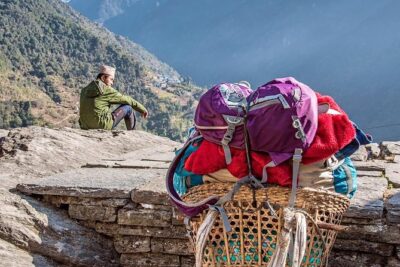
Porters Arjun and Ganesh are also named for moving baggage between camps. That matters because carrying a heavy pack can turn a challenging walk into a miserable one.
The company’s local connection to the Annapurna region is another useful feature. Local guides can help with village customs, route choices, weather concerns, and the practical details that are easy to miss when you are planning from far away.
No guide can guarantee perfect weather or remove altitude problems. What you are paying for is support, judgment, and logistics when the trail becomes tiring or confusing.
Who should book this trek
I would recommend this trek to you if you want a classic Annapurna route with a private group, a well-defined schedule, and major services arranged in advance. It suits people with moderate fitness who can manage repeated five to seven-hour walking days.
It is also a good fit for solo visitors who want support without joining a large group. The positive experience of a solo woman with guide Rishi is encouraging, though you should still ask direct questions about your guide, accommodation, and emergency procedures before leaving Kathmandu.
I would be more cautious if you dislike early starts, long road transfers, basic mountain accommodation, or fixed schedules. The 10-day format is efficient, but it is not leisurely. You get Poon Hill and Annapurna Base Camp, yet you pay for those highlights with demanding walking and limited spare days.
Booking confirmation is provided at the time of purchase. Cancellation is allowed for a full refund if you cancel at least three full days before the local start time. Changes or cancellations inside that window are not accepted.
Should you book the Annapurna Base Camp Trek?
Book it if you want a practical, fairly priced route with two major rewards: Poon Hill sunrise and Annapurna Base Camp. The included permits, meals, hotel nights, guide, porter, and transport make the $700 price easier to justify, especially for a first visit to Nepal.
Choose another plan if you need a slow acclimatization schedule, extra rest days, or high-end lodging. For everyone else, this is a well-supported mountain trek with a demanding but sensible route, strong guide involvement, and enough variety to keep the 10 days interesting.
FAQ
Where does the Annapurna Base Camp Trek start?
The trek starts at Thamel in Kathmandu, Nepal. The listed start time is 6:15 a.m.
How long does the trek take?
The full trip takes approximately 10 days, including transport between Kathmandu and Pokhara and the return journey.
Is airport pickup included?
Yes. Airport pickup and drop-off are included, along with two nights of accommodation in Kathmandu before and after the trek.
Is transportation from Kathmandu to Pokhara included?
Transportation is arranged between Kathmandu and Pokhara. You can choose a tourist bus, car, or flight for the first journey, while the return can be by scenic drive or short flight.
Are meals included?
Breakfast, lunch, and dinner are included during the trek. You can also buy meals at tea houses if you want additional food or different options.
Are trekking permits included?
Yes. The necessary trekking permits and fees are included in the package.
Is a guide provided?
Yes. The package includes a government-licensed guide who is trained in first aid. English, Hindi, and Chinese language support is listed.
Is this a private trek?
Yes. Only your own group participates in the activity.
What is not included in the price?
Tips and gratitude for the guide and porter are not included. You should also confirm any extra cost for optional flights, upgraded transport, or personal purchases before departure.
Recently added around Kathmandu
- Ghorepani Poon Hill Trek★ 5.0 · 16 reviews
- Private Manaslu Circuit Trek at Himalayas★ 5.0 · 3 reviews
- Amazing 1 Day Trekking Experience in Kathmandu Nepal★ 5.0 · 24 reviews
- Ghorepani Poonhill Trek★ 5.0 · 5 reviews
- Upper Mustang Trekking★ 5.0 · 2 reviews
- Upper Mustang Trekking★ 3.0 · 2 reviews
- Upper Mustang Trekking★ 5.0 · 4 reviews
- Upper Mustang Trek★ 5.0 · 5 reviews
Annapurna Base Camp Treks, compared.
Trekking in Annapurna/Langtang/Everest/Upper Mustang regions
Read our review →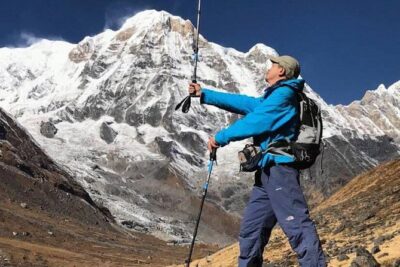
Kathmandu to Annapurna Base Camp (ABC) 5-Day Trek
Read our review →Browse the lists this tour appears in