
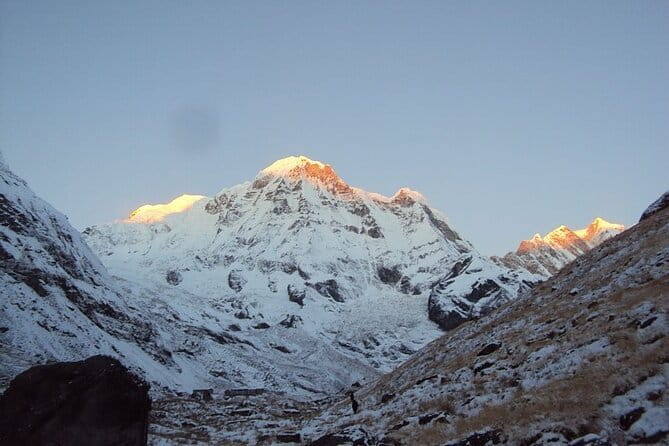
REVIEW · KATHMANDU
Annapurna Base Camp Trek
The mountains are only half the story. This Annapurna Base Camp trek pairs dramatic Himalayan views with rhododendron woods, terraced farms, village life, and a private guide-and-porter team. I especially like the private transportation from Kathmandu to Pokhara and the personal support throughout the walk. The route also includes the Annapurna conservation fee, TIMS fee, meals, lodgings, and guide and porter costs, which makes the $995 price easier to understand.
The main consideration is the physical demand. You need a moderate fitness level, and the route includes steep climbs, long walking days, and an ascent to 4,130 meters. The nine-day plan also leaves little room for delays, and Kathmandu lodging, Pokhara lunches and dinners, drinks, travel insurance, and tips are not included.
Key things to know before booking
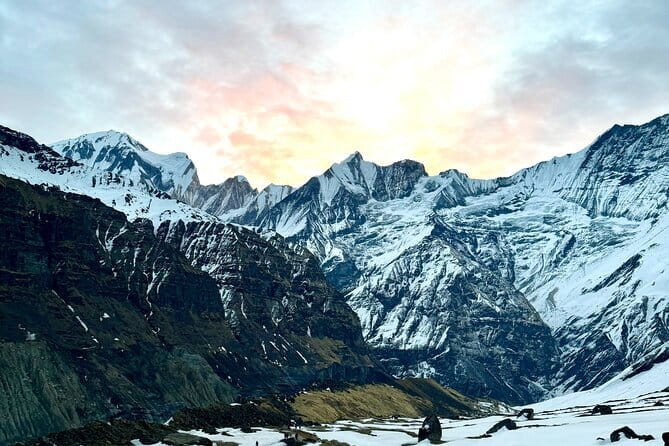
- Annapurna Base Camp reaches 4,130 meters: The payoff is a close look at Annapurna I, Annapurna South, Machhapuchhre, Hiunchuli, and other major peaks.
- The trip uses private transport: A private vehicle connects Kathmandu and Pokhara, while a jeep handles the road between Pokhara and Jhinu Danda.
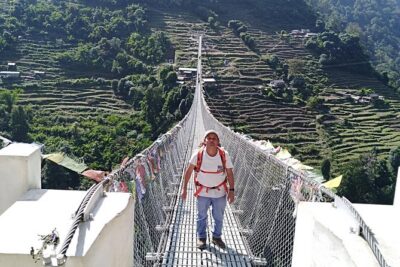
- The route combines villages and mountain scenery: You walk through terraced farmland, bamboo and rhododendron forests, gorges, waterfalls, and local settlements.
- Guide and porter support are included: An English-speaking guide accompanies the trek, with porter service, insurance, allowances, and equipment covered for the working team.
- The schedule is active but efficient: You spend two nights in Pokhara, then move through Chhomrong, Bamboo, Doban, Deurali, Annapurna Base Camp, and Jhinu Danda.
- Planning help is a strong point: Rojesh helped shape a shorter trek for one party, while guides Karma and Dami were praised for taking care of guests on the trail.
What the Annapurna Sanctuary route gives you
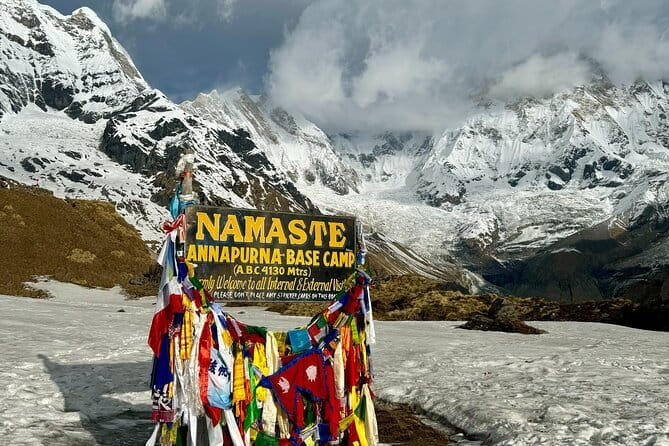
The Annapurna Base Camp route is also called the Annapurna Sanctuary trek. That name fits the geography. The trail moves into a mountain bowl surrounded by high peaks, with the final camp at 4,130 meters.
You are not simply walking toward one viewpoint. The scenery changes as you climb. Lower sections bring terraced fields, ethnic villages, forest paths, and rural Nepalese life. Higher sections bring bamboo, rocky gorges, snowy peaks, and a more enclosed mountain setting.
The main peaks in view include Annapurna I at 8,091 meters, Annapurna II at 7,937 meters, Annapurna South at 7,219 meters, Gangapurna at 7,455 meters, Machhapuchhre, and Hiunchuli at 6,441 meters. The route description also mentions Dhaulagiri, although the exact views depend on weather and position along the trail.
I like that this trek does not treat the mountains as a backdrop only. The villages and farms are part of the experience. You get a closer look at how people live in the middle hills, rather than spending every night in a major resort town.
More Annapurna Treks in Kathmandu
- Annapurna Circuit Trek with Tilicho Lake
★ 5.0 · 368 reviews - Annapurna base camp trek 5 Days
★ 5.0 · 252 reviews - 14-Day Private Annapurna Base Camp Trek
★ 5.0 · 180 reviews
Kathmandu to Pokhara: a long first day on the road
The journey begins at Odyssey Treks in Khusibun, Kathmandu. From there, a private vehicle takes you to Pokhara in roughly six to seven hours. The route leaves the capital and follows Nepal’s changing scenery through river valleys, hills, farms, and small settlements.
A private vehicle matters here. You are not tied to a public departure schedule, and your group can manage its own luggage and stops. Still, this is a long road day, not a quick transfer. You should expect much of the first day to be spent sitting in the vehicle.
Pokhara is useful as more than a transit point. The package includes two nights of accommodation there, although lunches and dinners in Pokhara are your responsibility. Since the itinerary returns to the city after the trek, those nights provide a practical buffer before and after the mountain section.
Pokhara to Chhomrong: the trail begins near Jhinu Danda
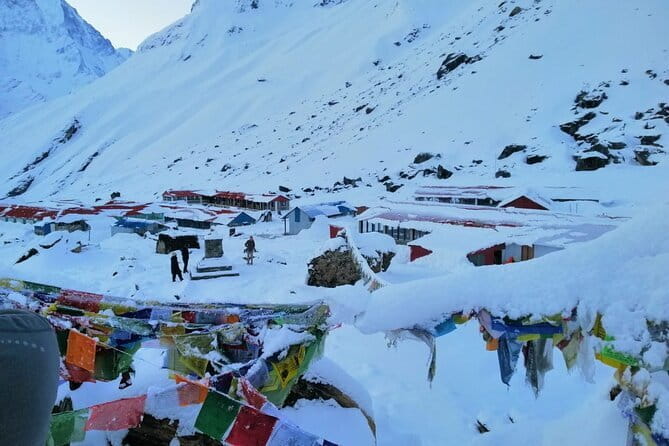
On the second day, a jeep takes you from Pokhara toward Jhinu Danda. The drive takes about four hours and follows valleys, terraced fields, villages, and hill roads. The written route places Chhomrong as the day’s main stop, with the journey beginning at Jhinu Danda.
This is the point where the trip shifts from road travel to walking. The details supplied for this day do not give a separate walking time or exact overnight arrangement, so you should confirm the day’s final stop with Odyssey Treks before setting out.
Chhomrong is an important gateway for the Annapurna Sanctuary route. It is also where the trail begins to feel properly mountainous. You will have already seen rural Nepal from the vehicle, but walking gives you time to notice footpaths, farm terraces, forest cover, and village homes at a slower pace.
Chhomrong to Bamboo and Doban: the first serious walking day
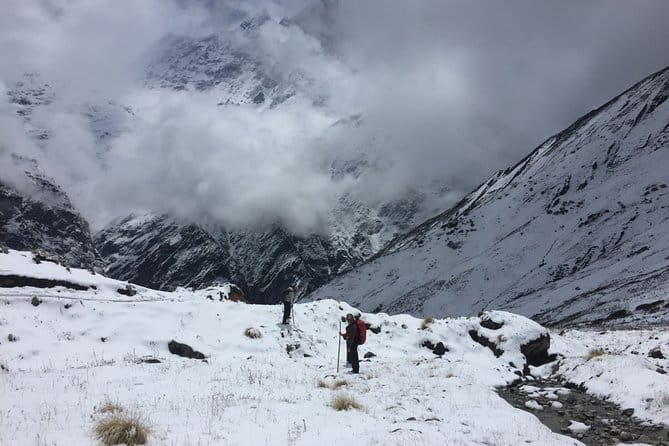
The third day is described as a six to seven-hour trek from Chhomrong toward Doban, while the itinerary lists Bamboo as the stop. That difference in naming is worth clarifying before booking. It may reflect the overnight lodge or the route segment used by the operator, but the supplied plan does not explain it.
Either way, this is one of the more demanding days. The route begins with a steep descent from Chhomrong, then continues through forest and mountain terrain. The descent can be hard on knees, while the later walking requires steady effort.
The forest section is one of the route’s pleasures. Bamboo and rhododendron cover parts of the trail, and waterfalls and gorges add variety to the walk. The scenery is not only about distant summits. You get the closer details of Nepal’s mountain ecology, including the chance to see wildlife mentioned in the trip description.
You should pace yourself here. The temptation is to rush early, especially if the weather is clear, but a measured start will help on the later ascent toward base camp.
Same trailhead, a longer or shorter day out:
- Everest Base Camp Trek – 14 Days
★ 5.0 · 1,499 reviews - Everest Base Camp Trek
★ 5.0 · 842 reviews - Everest Base Camp Trekking
★ 5.0 · 485 reviews - Everest Base Camp Trekking – 13 Day
★ 5.0 · 365 reviews
Doban to Deurali: steady climbing inside the sanctuary
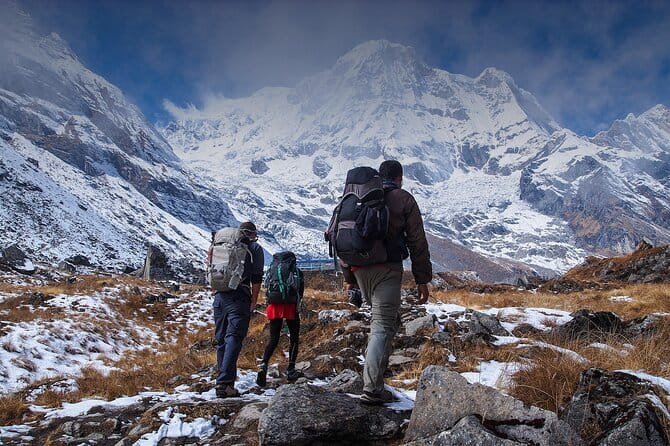
The fourth day takes about three to four hours from Doban to Deurali. Compared with the previous day, it is shorter, but the trail keeps climbing. The route passes through bamboo and forest as it moves farther into the Annapurna Sanctuary.
This shorter stage is useful because the route is gaining altitude. You are not covering a huge distance, but every hour brings you closer to the high mountain bowl. The gradual nature of the ascent gives you time to watch how the scenery changes.
Deurali is an important staging point before the final push. At this height, cold weather and altitude may begin to matter more. The itinerary does not list a separate acclimatization day, so you should pay attention to how you feel and tell your guide if you have symptoms that concern you.
Deurali to Annapurna Base Camp via Machhapuchhre Base Camp
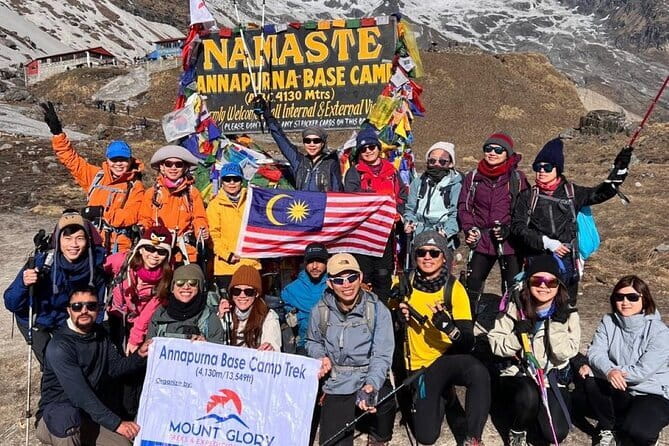
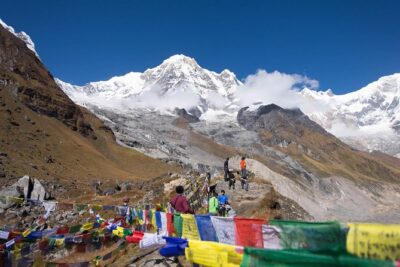
The fifth day is the main prize: five to six hours from Deurali to Annapurna Base Camp, passing through Machhapuchhre Base Camp. The trail continues upward through increasingly open mountain terrain, with the peaks becoming more immediate.
Machhapuchhre, also known as Fishtail, is one of the most recognizable mountains in Nepal. The route brings you toward its base before continuing to Annapurna Base Camp. From there, the sanctuary opens around you, with Annapurna I, Annapurna South, Hiunchuli, and other summits forming the high point of the trip.
The altitude is serious even though the walking time is moderate. Base camp sits at 4,130 meters, so this is not a casual hill walk. The guide’s role matters here, especially in setting a sensible pace and helping you judge how hard to push.
Your tea-house or local lodge accommodation is included during the trekking section. Conditions are practical rather than luxurious, and the high-altitude setting is part of the bargain. You are paying for access, food, shelter, and support in a remote mountain route, not a resort-style stay.
Sunrise at Annapurna Base Camp
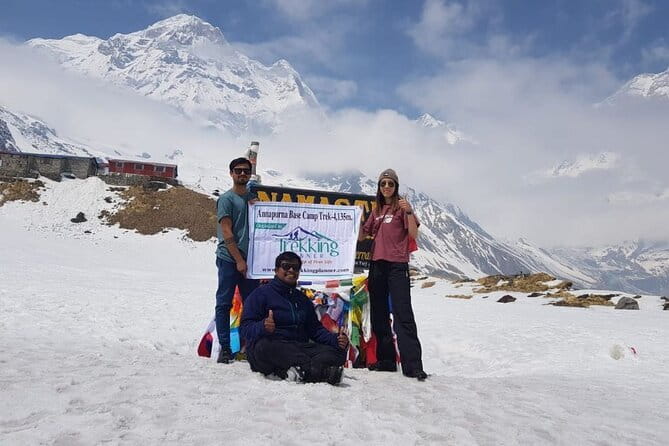
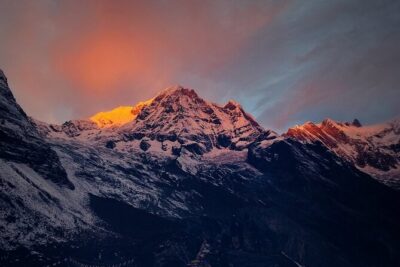
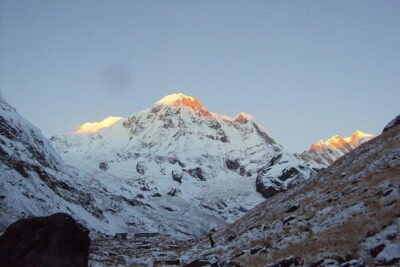
The morning at base camp is one of the strongest parts of the plan. At sunrise, Annapurna I, Annapurna South, Machhapuchhre, and Hiunchuli catch the first light. The high peaks shift in color as the sun reaches them, giving you a quiet mountain moment before the descent begins.
This early start also makes practical sense. You get the best chance of seeing the peaks before clouds build, although mountain weather can never be promised. Bring warm clothing and keep your camera ready, but do not let photography distract you from watching the light change across the sanctuary.
Day six then takes you from Annapurna Base Camp back to Bamboo in about six hours. The route is mostly a return through terrain you have already seen, but descending does not mean easy. Long downhill sections can tax your knees, and tired legs need careful footing.
The return route also gives you a different view of the trail. Features you missed while climbing may become more obvious on the way down, and the changing angle can reveal new mountain views.
Bamboo to Jhinu Danda: forest walking and a lower finish
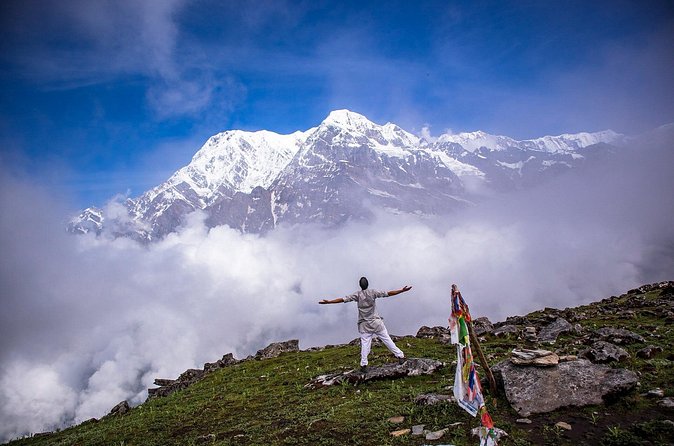
The seventh day takes roughly five to six hours from Bamboo to Jhinu Danda. You descend through bamboo and rhododendron forest, with scenic views and a return to warmer, lower country.
Jhinu Danda is the final trekking stop listed in the plan. The supplied details do not promise a particular activity there, so you should not book this trek solely for a specific attraction at Jhinu. Its value is as a satisfying lower-altitude end to the mountain route before the road journey back to Pokhara.
By this stage, the walking days are behind you, but the trip is not quite finished. The next day still includes a three to four-hour drive.
Jhinu Danda to Pokhara, then back to Kathmandu
The eighth day uses a jeep from Jhinu Danda to Pokhara. The road passes through hills, terraced farmland, villages, and rural scenery. Road conditions and traffic can affect the timing, so keep your Pokhara plans light.
The ninth day is another six to seven-hour private-vehicle journey from Pokhara to Kathmandu. The route retraces the broad connection between the two cities, offering one final look at Nepal’s hills and river valleys.
The itinerary ends back at the Odyssey Treks meeting point in Khusibun. The office hours supplied for the activity are 10:15 a.m. to 5:15 p.m., Monday through Sunday, for the stated booking period. Pickup is offered, but you should confirm the exact pickup arrangement and time when you book.
What the $995 price really covers
At $995 per person, this is not the cheapest way to reach Annapurna Base Camp, but the price includes a sizable amount of support:
- Private transportation from Kathmandu to Pokhara and back
- Jeep transportation between Pokhara and Jhinu Danda
- Two nights of accommodation in Pokhara
- Tea-house or local-lodge accommodation during the trek
- An English-speaking trekking guide
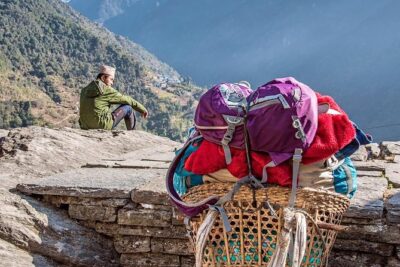
- Porter service
- Meals listed as six dinners, seven lunches, and eight breakfasts
- Trekking equipment and allowances for the guide and porter
- Insurance for the guide and porter
- Annapurna conservation fee
- TIMS fee
The private transport is a real value for a small private group. You avoid arranging the major road transfers yourself, and the guide and porter costs are already built into the package.
The exclusions still matter. You pay for accommodation and meals in Kathmandu, lunch and dinner in Pokhara, bottled water and other drinks, sightseeing in Kathmandu or Pokhara, personal travel insurance, laundry, telephone calls, bar bills, and tips.
I would budget for those extras before deciding the price is final. Tips for the guide, porter, and driver are not included, and personal travel insurance is especially important for a high-altitude trek.
Guide support and personal planning
The experience is a private activity, so only your group participates. That gives you more control than a large shared departure, though the supplied information does not state the maximum group size.
Rojesh handled planning for one party and helped adjust an Annapurna Base Camp trek to fit a shorter schedule. That is useful if you have limited time or need help shaping the route. The same account praised quick answers during the planning stage.
Karma and Dami were specifically praised for caring for a parent-and-child party on a five-day version of the trek. That shorter trip was not the same as this nine-day schedule, but it shows that Odyssey Treks has arranged different versions of the route.
The guide is also important for practical reasons. The itinerary includes demanding walking days, a high final destination, and changing road and trail conditions. An English-speaking guide can help with pacing and route decisions, while the porter reduces the load you carry.
Who should book this trek?
This trek suits you if you want:
- A private trip rather than a shared group departure
- A guided route with porter support
- Mountain views plus village and forest scenery
- A nine-day plan from Kathmandu and back
- Most major transport, meals, fees, and trekking accommodation arranged in advance
- A physically active holiday with a moderate fitness requirement
It may not suit you if you want a relaxed sightseeing trip, dislike long road transfers, or prefer hotels and restaurants throughout. The route includes steep sections, six-hour walking days, basic tea-house accommodation, and a high point of 4,130 meters.
The itinerary also has a few details worth confirming. Chhomrong, Bamboo, and Doban are not presented with perfect consistency in the day-by-day wording, and there is no separate acclimatization day listed. Ask the operator for the exact overnight stops and guidance on altitude before paying.
Cancellation terms are fairly clear: cancel at least six full days before the start for a full refund, cancel two to six days before for a 50 percent refund, and cancel within two days for no refund. The cutoff uses local Nepal time.
Should you book the Annapurna Base Camp Trek?
I would book this trek if you want a well-supported route to Annapurna Base Camp without arranging every vehicle, permit, meal, and lodge yourself. The strongest reasons are the private transport, included guide and porter, and the chance to experience both Nepalese villages and the mountain sanctuary.
I would first confirm the day-two and day-three overnight details, ask how the guide handles altitude concerns, and price your Kathmandu, Pokhara, drink, insurance, and tip costs. If you are comfortable with long walking days and basic mountain lodging, $995 offers solid value for a private nine-day package. If you want a slower pace, request a longer version before booking.
FAQ
Where does the Annapurna Base Camp Trek start?
The activity starts at Odyssey Treks Pvt. Ltd. in Khusibun, Kathmandu, Nepal. Pickup is offered, but the exact arrangement should be confirmed at booking.
How long does the trek take?
The full experience lasts approximately nine days. It includes road travel between Kathmandu and Pokhara, the trekking section, and the return to Kathmandu.
How high is Annapurna Base Camp?
Annapurna Base Camp is at 4,130 meters.
Is transportation included?
Yes. Private vehicle transportation from Kathmandu to Pokhara and back is included. Jeep transportation from Pokhara to Jhinu Danda and back is also included.
Are meals included?
The package includes six dinners, seven lunches, and eight breakfasts. Lunch and dinner in Pokhara are not included, and bottled drinks, cold drinks, and alcoholic drinks cost extra.
Is accommodation included?
Yes. Two nights of accommodation in Pokhara and accommodation in tea houses or local lodges during the trek are included. Accommodation and meals in Kathmandu are not included.
What fitness level is required?
The activity states that you should have a moderate physical fitness level. The route includes several six-hour walking days and reaches 4,130 meters, so you should be prepared for sustained uphill and downhill walking.
Recently added around Kathmandu
- Ghorepani Poon Hill Trek★ 5.0 · 16 reviews
- Private Manaslu Circuit Trek at Himalayas★ 5.0 · 3 reviews
- Amazing 1 Day Trekking Experience in Kathmandu Nepal★ 5.0 · 24 reviews
- Ghorepani Poonhill Trek★ 5.0 · 5 reviews
- Upper Mustang Trekking★ 5.0 · 2 reviews
- Upper Mustang Trekking★ 5.0 · 4 reviews
- Upper Mustang Trek★ 5.0 · 5 reviews
- Upper Mustang Trekking★ 3.0 · 2 reviews
Annapurna Base Camp Treks, compared.
Trekking in Annapurna/Langtang/Everest/Upper Mustang regions
Read our review →
Kathmandu to Annapurna Base Camp (ABC) 5-Day Trek
Read our review →Browse the lists this tour appears in