
REVIEW · KATHMANDU
Annapurna Base Camp Trek -13 Days
The mountains earn every step. This 13-day private trek combines Kathmandu and Pokhara stays, tea-house nights, a professional guide, porters, meals, permits, and ground transport into one well-organized package. I especially like the private format, which lets you walk at your own pace, and the way the route includes both Poon Hill and Annapurna Base Camp.
I also like the practical support: airport pickup, a duffle bag, first-aid supplies, rescue arrangements, and a guide who stays with your group. The main consideration is the physical demand. You climb to 4,170 meters, walk on steep stone staircases, and spend several days on rough mountain trails. A moderate fitness level is required, and travel insurance is not included.
Key points before you book
- Poon Hill adds a superb sunrise stop: The early climb reaches 3,210 meters, with views toward Dhaulagiri, Annapurna I, Machhapuchhare, Nilgiri, and other peaks.
- Annapurna Base Camp reaches 4,170 meters: The route passes through forests, villages, waterfalls, bamboo groves, and alpine terrain before arriving at the mountain amphitheater.
- The price covers most major trek costs: At $1,200 per person, you receive Kathmandu and Pokhara hotels, tea-house lodging, meals during the trek, permits, transport, guide service, and porter support.
- You get one porter for every two clients: You carry a daypack while the porter handles the larger duffle bags.
- Chhomrong offers a useful rest point: It has broad mountain views, local village life, and even pizza for anyone craving a familiar meal.
- The return includes Jhinu hot springs: After the high mountain section, you can soak beside the Modi Khola before continuing toward Nayapul.
What the $1,200 price really covers
At $1,200 per person, this is not simply a guided walk. The package handles the costly and annoying pieces that can add up quickly in Nepal. You get airport pickup, private road transfers, two hotel nights in Kathmandu, two hotel nights in Pokhara, tea-house accommodation during the trek, permits, government fees, meals on the trail, a guide, and shared porter service.
The package also includes a company T-shirt and a duffle bag that is returned after the trek. Those are small extras, but the duffle bag matters more than it sounds. You can leave non-trekking belongings at the hotel and carry only what you need on the mountain.
During the trekking section, breakfast, lunch, and dinner are included. Bottled or boiled water is not included, and neither are showers, battery charging, laundry, phone calls, bar bills, or personal purchases. You should also budget for guide and porter tips, which are separate from the tour price.
The value is strongest if you want one company to coordinate the full route. Independent hikers can sometimes spend less, but they must arrange transport, permits, lodging, meals, and support themselves. Here, the price buys convenience and a private arrangement rather than a bare-bones trek.
More Annapurna Treks in Kathmandu
- Annapurna Circuit Trek with Tilicho Lake
★ 5.0 · 368 reviews - Annapurna base camp trek 5 Days
★ 5.0 · 252 reviews - 14-Day Private Annapurna Base Camp Trek
★ 5.0 · 180 reviews
Kathmandu arrival and the first evening
Your trip begins at Tribhuvan International Airport, where a representative takes you to your Kathmandu hotel by private vehicle. The first evening is intended for meeting the company staff and trek members, checking your plans, and getting settled.
The package includes two nights in a three-star Kathmandu hotel with breakfast. That gives you a little breathing room before and after the mountain section, although the published schedule does not include a separate sightseeing day in Kathmandu. If you want to see more of the capital, ask the operator before booking or arrange extra nights at your own cost.
The airport transfer is useful after a long international flight. You do not need to find a taxi, explain your hotel address, or work out the first local arrangements while tired. The company also provides all necessary paperwork and can answer questions before departure.
Day 2: Kathmandu to Pokhara by road
The drive to Pokhara takes most of the morning and part of the afternoon. This is an important practical detail: you are not beginning the trail yet, and road conditions can make this transfer feel long.
Pokhara is a pleasant contrast to Kathmandu. The city sits beside Phewa Lake and offers views toward the Annapurna and Dhaulagiri ranges when the weather is clear. The evening walk around the lake is gentle and gives you a chance to stretch after the road journey.
Two nights in a three-star Pokhara hotel are included, with breakfast. This is a good setup for a trek because you are not rushing directly from Kathmandu into the first walking day. It also gives the company time to organize the trail departure and equipment.
Day 3: Nayapul, Birethanti, and the first climb
A roughly 90-minute car ride takes you from Pokhara to Nayapul at about 1,050 meters. From there, the walking begins through Birethanti, around 1,065 meters, toward Tikhedhunga at 1,570 meters.
The walk to Tikhedhunga takes about three to four hours. If you still have energy, you can continue toward Ulleri, adding roughly another hour and a half. This flexible opening is useful because your guide can judge how the group is handling the trail.
The early section introduces village paths and mountain scenery without immediately pushing you to high altitude. Still, do not treat this as an easy stroll. Your legs are adjusting to repeated uphill walking, and the next day includes a much steeper climb.
Same trailhead, a longer or shorter day out:
- Everest Base Camp Trek – 14 Days
★ 5.0 · 1,499 reviews - Everest Base Camp Trek
★ 5.0 · 842 reviews - Everest Base Camp Trekking
★ 5.0 · 485 reviews - Everest Base Camp Trekking – 13 Day
★ 5.0 · 365 reviews
Day 4: Ulleri and the first strong mountain views
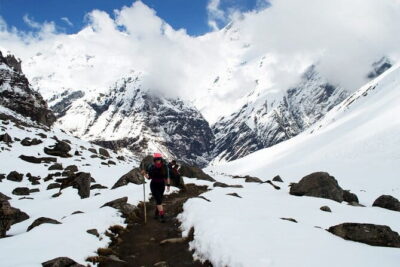
The trail climbs steeply for about two hours before passing through Magar villages and forest around Ulleri and Banthati. Stone steps make the ascent demanding, but they also provide a clear rhythm: steady pace, short breaks, and no need to race.
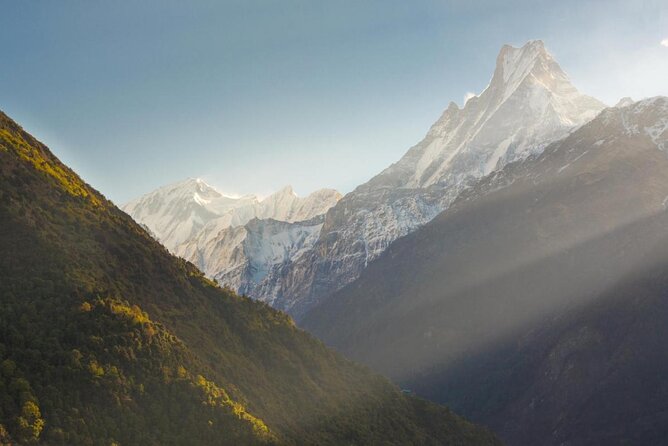
This is where the trek begins to feel properly Himalayan. Machhapuchhare, also called Fish Tail, appears along with Hiunchuli and Annapurna South. The views become more rewarding as you gain height, but the steep staircases can be tiring, especially if you pushed farther on the previous day.
A guide is helpful here because the group can set a sensible pace. The private arrangement also means you are not forced to match a large group that walks faster or slower than you do.
Day 5: Poon Hill sunrise and the road toward Tadapani
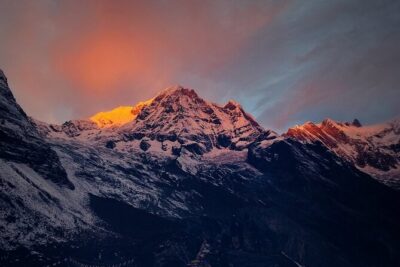
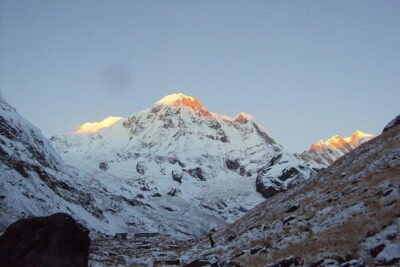
The early morning hike to Poon Hill, at 3,210 meters, is one of the strongest parts of the itinerary. The reward is a wide mountain panorama at sunrise, with Dhaulagiri, Tukuche Peak, Nilgiri, Varaha Shikhar, Annapurna I, Annapurna South, Annapurna III, Machhapuchhare, Annapurna IV, Annapurna II, Lamjung Himal, and other snowy peaks named in the route plan.
The early start is not for everyone. You climb before breakfast and may be walking in cold conditions, but the viewpoint gives you a major visual payoff without requiring a full expedition. Poon Hill is also a good reason to choose this route over a shorter Base Camp plan.
The schedule then continues toward Tadapani. Check the exact overnight stop with the operator before departure, since the itinerary describes the Poon Hill day and the following day begins from Tadapani. That small clarification will make your daily expectations easier.
Day 6: Tadapani to Chhomrong
The walk from Tadapani to Chhomrong takes about five to six hours and covers roughly seven to eight kilometers over changing ground. You pass through forest and villages, with more views toward the Annapurna range.
Chhomrong is an important village on the route. It offers a chance to rest, eat, and take in the peaks from a settled mountain community rather than only from a viewpoint. The itinerary specifically notes its Gorkha connection and its reputation for pizza, a welcome change after several meals of local trekking food.
The descent and ascent around Chhomrong can surprise you. Mountain routes are not simply uphill to Base Camp and downhill afterward. You often lose elevation only to regain it later, so save energy and keep your daypack light.
Day 7: Bamboo forest, Sinuwa, and Himalaya
Leaving Chhomrong, you descend a stone staircase and cross the Chhomrong Khola before climbing again on a rocky trail. Stinging nettles are noted along the way, so long trousers or careful clothing are sensible.
The route passes Sinuwa at approximately 2,350 meters and then drops through bamboo and rhododendron forest. The trail can become muddy, especially in wet conditions, before reaching Himalaya at about 2,920 meters.
This is a beautiful section, but it is also one of the more demanding days. You deal with steep steps, uneven rock, forest shade, and repeated changes in elevation. Good shoes matter more here than fancy equipment. Trekking poles can also help with the descents, although they are not listed as part of the package.
Day 8: From the forest to Annapurna Base Camp
The route continues through alpine forest toward Annapurna Base Camp at 4,170 meters. Along the way, you may see Hiunchuli, Annapurna South, Annapurna I, Annapurna III, Gangapurna, and Machhapuchhare.
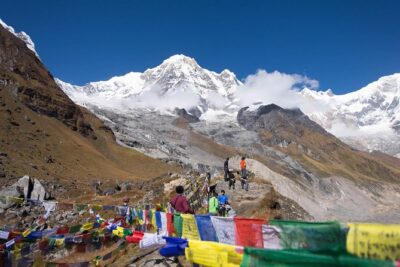
The final approach is the moment the trek has been building toward. Forest gives way to higher, more open mountain terrain, and the peaks feel much closer. At Base Camp, you can take in the surrounding mountains and the glacier and valleys described in the itinerary.
Altitude is the serious point here. The schedule reaches 4,170 meters within the 13-day plan, and the trail includes several long walking days. Pay attention to how you feel, follow your guide’s advice, and do not hide symptoms to keep the timetable. The company includes rescue arrangements and a first-aid kit, but your own travel and rescue insurance is still your responsibility.
Day 9: Sunrise at Base Camp and the long descent
Morning at Annapurna Base Camp brings views of the surrounding peaks, glacier, green valley, and changing light across the mountains. After breakfast, you walk down toward Bamboo, a journey of about five to six hours.
The descent is easier on your lungs but not always on your knees. The stone steps and uneven trail can be hard after the push to Base Camp, so use your poles if you have them and keep your pace controlled.
This day is also a reminder that the trek is not finished once you reach the destination. You still have several hours of walking and another night in a tea house before returning to the road.
Day 10: Forest trails and the Jhinu hot springs
The trail continues through rhododendron, oak, and bamboo forest. It descends toward Bamboo, climbs steeply to Kuldi Ghar, then levels out before Sinuwa. From there, you descend toward the Chhomrong Khola and climb stone steps back to Chhomrong.
The final section drops steeply to Jhinu Danda. From the settlement, a 20-minute walk takes you to the hot springs beside the Modi Khola. This is one of the itinerary’s most welcome additions. After days of climbing and descending, a warm soak gives your body a break.
The route is still not gentle. The day includes another climb and a steep final descent, so the hot spring is a reward rather than a substitute for fitness.
Day 11: Birethanti and the end of the trail
The morning route descends past waterfalls, then rises gently across terraces and streams. You continue to Birethanti at about 1,025 meters and then walk toward Nayapul through forest beside the Modi River.
At Nayapul, the trekking portion ends and road transport resumes. This final walking day is shorter in spirit than the high mountain section, but your legs may still feel the previous ten days. Keep your expectations realistic and allow time for the group to move together.
Day 12: Returning to Kathmandu
The drive back to Kathmandu passes through Damauli, Dumre, Muglin, and Kurintar. The route also comes near the Manakamana Temple cable car, identified as Nepal’s first cable car in the trip information.
The schedule then climbs toward Thankot, the gateway to Kathmandu. Road travel in Nepal can be slow, so keep this day flexible and do not plan a tight independent connection afterward.
In the evening, the company arranges a farewell dinner at an authentic Nepalese restaurant with a cultural performance. It is a fitting close to the trek, bringing you back from mountain tea houses to an organized meal in the capital.
Guides, porters, and personal service
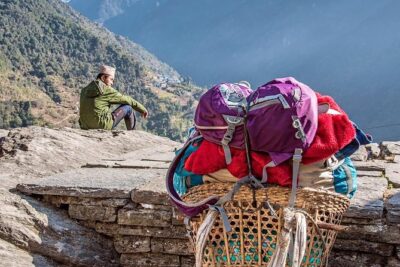
The private format is one of the package’s strongest features. Your group has an experienced guide and one porter for every two clients. You carry your personal daypack, while the porter handles the larger duffle bags.
Several guides and porters are praised by name in the supplied feedback, including Prakash, Bharat, Badri Kakri, Parlad, Surman, Manoj, and Urken Sherpa. The company’s owner, Bhagwat Simkhada, is also repeatedly described as quick to respond and helpful when plans change.
That matters on a mountain trip. Good organization is not only about having a reservation. It is also about answering questions, arranging transfers, adjusting plans when conditions change, and keeping the group informed. The supplied feedback includes examples of the company changing from Everest Base Camp plans to Annapurna Base Camp plans because of weather and trail conditions, including a large group that was reorganized quickly.
The exact guide assigned to you may differ, so ask before arrival if you have a preferred guide or want to know who will lead the trek.
Who should choose this trek?
This itinerary suits you if you want a major Himalayan walk without organizing every detail yourself. It is also a good match if you prefer a private group, want a porter, and value hotel stays in Kathmandu and Pokhara before and after the mountain section.
You should be comfortable walking for several hours on steep, uneven trails. The tour description asks for moderate physical fitness, but the combination of stairs, altitude, forest paths, and long descents should be taken seriously.
The route may suit older hikers who are fit and prepared. The supplied feedback includes a couple aged 71 who completed the package, but that should encourage careful preparation, not careless confidence. Your health, pace, and response to altitude matter more than your age alone.
Vegetarian meals are available if requested when booking, and you should provide any other dietary requirements in advance. Service animals are allowed, and the tour is near public transportation, although most of the actual trekking takes place on foot and in remote mountain areas.
Small practical details that matter
The meeting point is Tribhuvan International Airport in Kathmandu, and the stated start time is 7:00 a.m. The trip ends back at the same general meeting point after airport transfer on Day 13.
The company takes you to the airport about three hours before your flight. Extra hotel nights caused by early arrival, late departure, early return, or schedule changes are not included.
Nepal visa fees, international flights, insurance, personal spending, extra porters, water, showers, laundry, phone calls, charging, and tips are also outside the price. Free cancellation is available if you cancel at least 24 hours before the local start time. Changes or cancellations later than that are not accepted for a refund.
Should you book the Annapurna Base Camp Trek?
I would choose this package if you want strong logistical support and a private walking experience at a clear price. The route gives you more than Base Camp alone: Poon Hill sunrise, village life around Chhomrong, forest trails, the hot springs at Jhinu, Pokhara, and a cultural dinner in Kathmandu.
I would hesitate only if you want a short or easy walk, dislike long road transfers, or prefer to arrange every detail yourself. The climb to 4,170 meters and the repeated stone staircases are real work.
For most fit hikers seeking a supported Annapurna adventure, the package offers good value. Before paying, confirm your exact hotel names, daily overnight stops, assigned guide, tipping expectations, and the plan for altitude concerns. With those details clear, this is a practical way to reach Annapurna Base Camp without carrying the full planning burden yourself.
FAQ
How long is the Annapurna Base Camp Trek?
The experience lasts approximately 13 days, beginning and ending in Kathmandu.
What is the highest point on the trek?
Annapurna Base Camp is reached at approximately 4,170 meters.
Is airport pickup included?
Yes. A representative meets you at Tribhuvan International Airport and transfers you to your Kathmandu hotel by private vehicle.
Are Kathmandu and Pokhara hotels included?
Yes. The package includes two nights in a three-star hotel in Kathmandu and two nights in a three-star hotel in Pokhara, with breakfast.
Are meals included during the trek?
Yes. Breakfast, lunch, and dinner are included during the trekking section. The package lists 12 breakfasts, 9 lunches, and 9 dinners overall.
Is a guide and porter included?
Yes. An experienced guide is included, along with one porter for every two clients.
Are permits included?
Yes. The Trekkers’ Information Management System permit, Annapurna Conservation Area Permit, government fees, and necessary paperwork are included.
Is travel insurance included?
No. Travel and rescue insurance is not included. The package does include rescue arrangements and a first-aid kit, but you must arrange your own insurance.
Recently added around Kathmandu
- Ghorepani Poon Hill Trek★ 5.0 · 16 reviews
- Private Manaslu Circuit Trek at Himalayas★ 5.0 · 3 reviews
- Amazing 1 Day Trekking Experience in Kathmandu Nepal★ 5.0 · 24 reviews
- Ghorepani Poonhill Trek★ 5.0 · 5 reviews
- Upper Mustang Trekking★ 5.0 · 2 reviews
- Upper Mustang Trekking★ 3.0 · 2 reviews
- Upper Mustang Trekking★ 5.0 · 4 reviews
- Upper Mustang Trek★ 5.0 · 5 reviews
Annapurna Base Camp Treks, compared.

Trekking in Annapurna/Langtang/Everest/Upper Mustang regions
Read our review →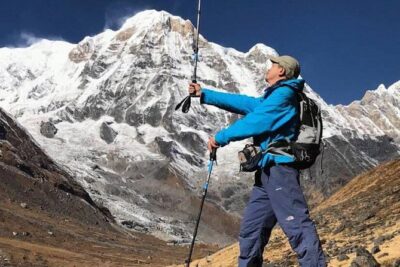
Kathmandu to Annapurna Base Camp (ABC) 5-Day Trek
Read our review →Browse the lists this tour appears in