
REVIEW · KATHMANDU
Annapurna Base Camp Trek 12 Days
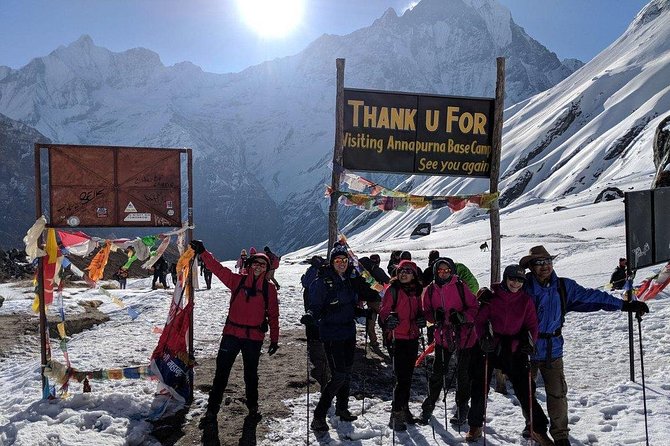
Mountain mornings come early here. This 12-day Annapurna Base Camp trek combines two of Nepal’s best-known walking routes: sunrise at Poon Hill and the high mountain bowl of Annapurna Base Camp. I especially like the careful transport plan, with tourist buses between Kathmandu and Pokhara and private road service at the trailhead, plus the personal attention praised in connection with guides such as Bhairas Tamang, Prajil, Deepak, Somnath Tripathi, Uttar, and Buddha.
The other strong point is the support included for the price: permits, meals on the trek, accommodation, an experienced guide, water purification tablets or drops, and airport transfers are covered. The main drawback is that this is still a serious mountain walk. You need moderate fitness, proper insurance for emergency rescue, and patience for basic teahouses, early starts, local buses, and rough trails.
Key Points Before You Book
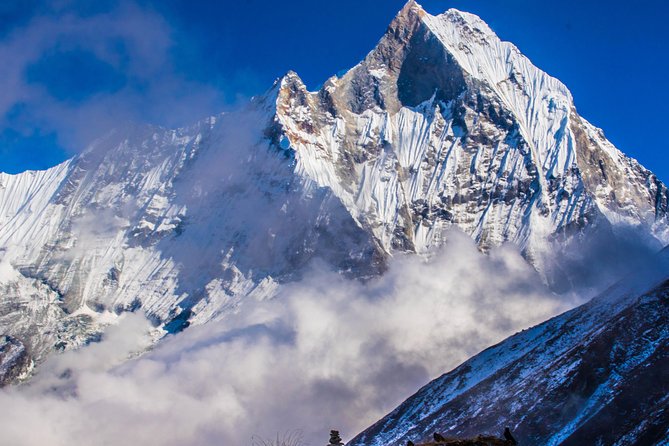
- Poon Hill adds a sunrise highlight: You leave Ghorepani before breakfast for a 45-minute to one-hour climb to the viewpoint.
- Annapurna Base Camp is reached on Day 8: The route passes Machhapuchhre Base Camp before entering the mountain-ringed sanctuary.
- Private group format: Only your own group participates, which allows the guide to adjust the pace and deal with tired walkers.
- Transport is mixed: Tourist buses connect Kathmandu and Pokhara, while private vehicles handle the road to and from the trekking route.
- Guide care is a major strength: Feedback repeatedly praises guides for stopping when someone tires, solving problems, and keeping the pace comfortable.
- The $800 price covers a lot: Permits, 11 nights of accommodation, trekking meals, guide services, and several transfers are included, but insurance, porter help, drinks, and some city meals cost extra.
What the 12-Day Route Really Involves
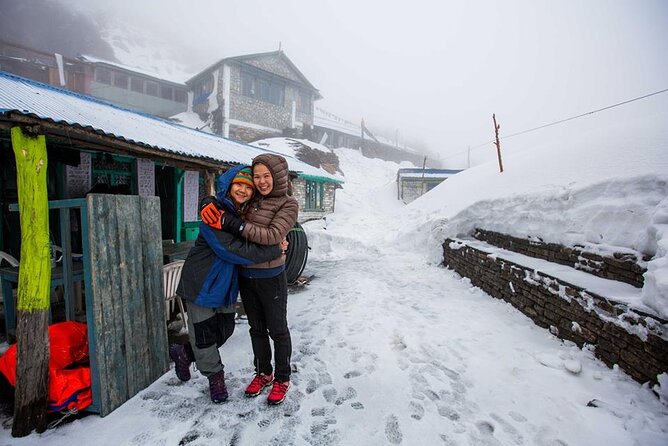
The route is not a simple walk straight to Base Camp. You begin with city transfers, move through Pokhara and the lower Annapurna foothills, climb to Ghorepani and Poon Hill, then turn toward Chhomrong and the Modi Khola valley before reaching Annapurna Base Camp.
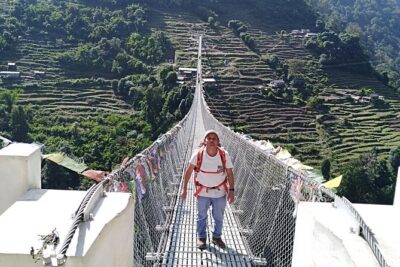
That design gives you variety. You get village paths, forest, farmland, waterfalls, sunrise viewpoints, teahouses, and high mountain scenery. It also means the trek has several changes in rhythm. Some days are gentle and downhill, while others involve long climbs or rougher ground.
The published plan uses approximate timing rather than a strict mileage schedule. That is useful in the mountains, where weather, trail conditions, road delays, and the group’s pace can change the day. I would ask the company for current walking hours, expected elevations, and accommodation names before departure.
More Annapurna Treks in Kathmandu
- Annapurna Circuit Trek with Tilicho Lake
★ 5.0 · 368 reviews - Annapurna base camp trek 5 Days
★ 5.0 · 252 reviews - 14-Day Private Annapurna Base Camp Trek
★ 5.0 · 180 reviews
Day 1: Airport Arrival and Kathmandu Preparation
Your trip begins with pickup at Tribhuvan International Airport. The team takes you to your hotel, and the suggested plan is to rest and spend part of the day preparing for the trek.
This is a sensible first day. Kathmandu can be tiring after an international flight, and the trek begins early the next morning. Use the time to check your boots, organize layers, charge devices, and confirm what your guide expects you to carry.
Accommodation for this night is included. Meals in Kathmandu are not covered, so lunch and dinner are your responsibility. The airport transfer is included both at arrival and departure, which removes one small but useful hassle.
Day 2: The Long Road from Kathmandu to Pokhara
The guide meets you at your hotel or hostel at 6:30 in the morning. You walk a short distance to Sorakhutte tourist bus station and board the 7:00 bus toward Pokhara.
The journey includes a stop around Malekhu. The important point is that this is a full road-transfer day, not a trekking day. Tourist buses are included, but road travel in Nepal can take patience. Keep water, snacks, medication, and a light layer within reach rather than buried in your main bag.
You spend the night in Pokhara. The city is the practical staging point for the Annapurna trails, and it gives you a final chance to sort equipment before heading into the hills.
Day 3: Pokhara to Nayapul and the First Walking Stage
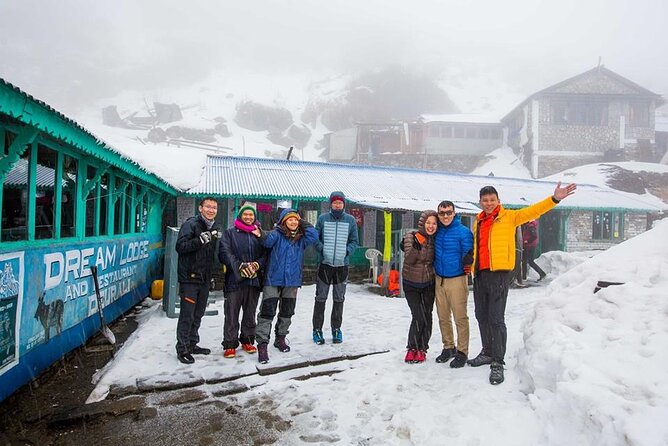
After breakfast in Pokhara, your guide arranges a car or taxi to the bus park. From there, you take a shared local bus or jeep to Nayapul, the trekking starting point mentioned in the plan.
The road journey to Nayapul takes about one and a half hours. Private vehicle service from Pokhara to the trek start is included, though the itinerary also describes shared local transport during this connection. Confirm the exact arrangement before setting out, since that affects comfort and luggage handling.
From the trailhead, the walking begins toward the mountain villages. The day is less about dramatic altitude and more about shifting from road travel to foot travel. You should expect a slower pace, frequent stops, and a first taste of local village life.
Same trailhead, a longer or shorter day out:
- Everest Base Camp Trek – 14 Days
★ 5.0 · 1,499 reviews - Everest Base Camp Trek
★ 5.0 · 842 reviews - Everest Base Camp Trekking
★ 5.0 · 485 reviews - Everest Base Camp Trekking – 13 Day
★ 5.0 · 365 reviews
Day 4: Sunrise Around Tadapani
The morning brings local mountain sounds: donkeys, goats, hens, and dogs. That detail tells you something useful about the route. This is not a polished resort walk. You are moving through working villages where pack animals and farm life are part of the daily scene.
Breakfast comes with views toward the Annapurna range. Tadapani is a scenic stop, and the morning light can make the peaks look very different from the previous afternoon. Keep your camera accessible, but do not let photography turn breakfast into a cold meal.
Accommodation is in a teahouse-style setting. The supplied details do not name the exact lodges, so conditions can vary. You should be ready for simple rooms and shared facilities, and you should bring the personal items you need for comfort.
Day 5: Poon Hill Sunrise from Ghorepani
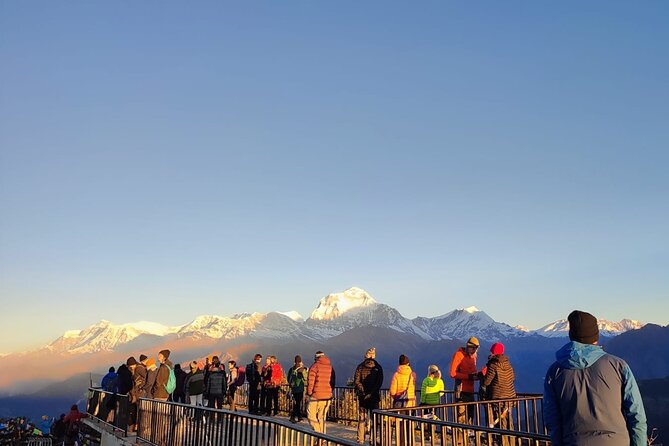
This is one of the trek’s strongest days. You wake early and walk 45 minutes to one hour to Poon Hill Viewpoint for sunrise.
The viewpoint is known for broad views of many Himalayan peaks, with the route description noting 18 countable peaks on a clear morning. Weather controls the reward. If cloud settles over the ridges, you may see less than expected, but the early walk is still an important part of the Annapurna experience.
The early start is also the day’s main drawback. It can be chilly before sunrise, and the climb comes before breakfast. Carry warm layers and a light source if your guide advises one. After returning to Ghorepani, you continue toward the next village according to the day’s route.
Day 6: Tadapani to Sinuwa Through Chhomrong
The plan describes this as an enjoyable downhill day toward Sinuwa. You leave Tadapani and descend through Chhomrong, with views toward Modi Khola and Chhomrong Khola.
Downhill sounds easy, but it can be hard on knees and thighs. Trekking poles are worth considering, especially if you are less accustomed to long descents. The route passes farms, mountain villages, and changing views rather than offering one single grand viewpoint.
Chhomrong is an important point on the approach to Base Camp. From here, the route becomes more closely tied to the Modi Khola valley and the high mountain sanctuary. Your guide’s pacing matters on this stage. Bhairas Tamang, one of the named guides associated with this trek, received specific praise for stopping when someone felt tired and checking that everyone was all right.
Day 7: Sinuwa to Deurali
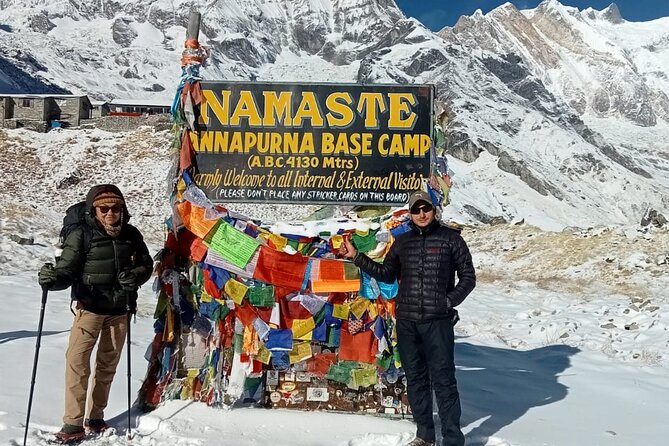
Sinuwa offers a morning view toward the rising sun over the Himalayas. After breakfast, you begin the ascent toward Deurali.
The walk to Bamboo takes about one and a half hours. From there, the route continues toward Deurali through increasingly rugged surroundings and more sparsely wooded ground. This is where the trek begins to feel more remote and physically demanding.
The day’s value is gradual change. You are not simply ticking off a destination. You are moving from village paths into a higher mountain setting, with the trail and weather becoming more important than shops or road access.
Day 8: Machhapuchhre Base Camp to Annapurna Base Camp
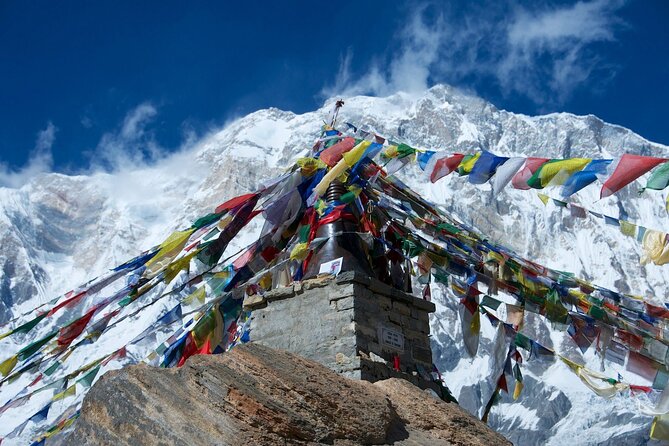
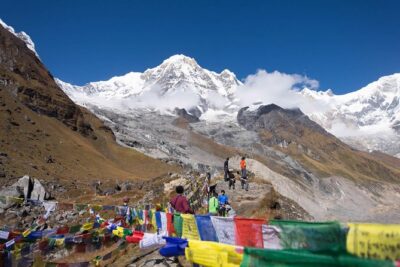
This is the target day. You continue toward Machhapuchhre Base Camp before reaching Annapurna Base Camp, surrounded by striking peaks.
The description does not provide a precise walking time, distance, or elevation gain, so you should request those details before booking. What is clear is that this is a high point of the trek, both physically and emotionally. You reach the mountain basin that gives the trip its name, with the scenery closing in around you on all sides.
High-altitude conditions can change quickly. Your guide’s role is especially important here, and the company presents this as a safety-focused trip led by staff familiar with the route. Still, no operator can remove mountain risk. Insurance that covers emergency rescue and evacuation is not optional in practical terms, even though it is not included in the tour price.
Day 9: Sunrise at Base Camp and the Return to Sinuwa
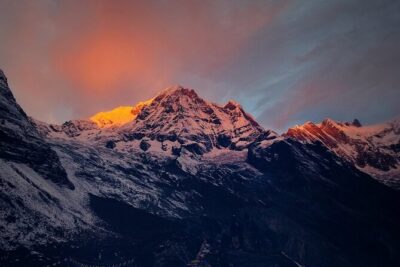
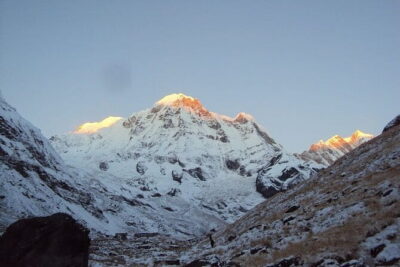
If the weather is clear, you watch sunrise from Annapurna Base Camp. This is a valuable reason to spend the night near the destination instead of treating Base Camp as a quick photo stop.
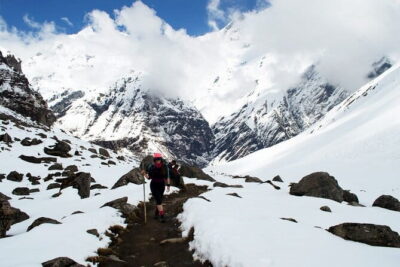
After breakfast, you return to Sinuwa by rugged trails and through areas with sparse forest. The return route is not merely a repeat of the previous day. Descending changes the views, and you notice different details when you are no longer focused on reaching the highest point.
The day can be tiring because you are combining an early start with a long return. Keep snacks and water accessible. Drinks, bottled water, snacks, beer, soft drinks, juice, Wi-Fi, and similar personal expenses are not included.
Day 10: Sinuwa to Siwai and Back to Pokhara
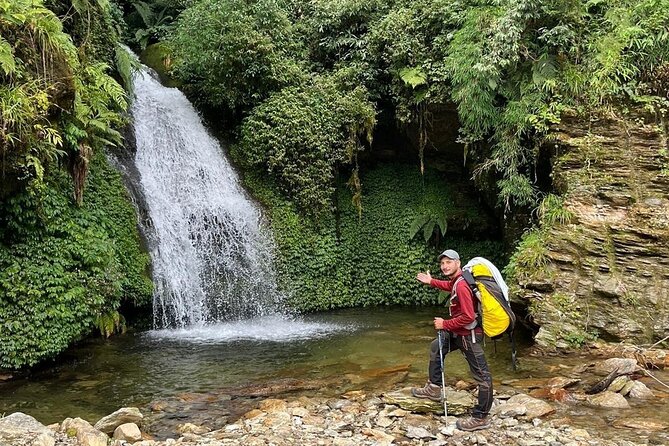
The final trekking day takes about two hours from Sinuwa to Siwai. The route climbs toward Chhomrong, then continues through mountain scenery, waterfalls, and farmland before the road transfer.
This is a satisfying finish because it connects the high mountain walk with ordinary rural life again. You leave behind the higher trails and return to road transport. Private vehicle service from the trek ending point to Pokhara is included.
Back in Pokhara, you have a chance to rest. The city is described as a place of lakes, but the itinerary does not include a dedicated sightseeing program. If you want extra time there, you will need to arrange it separately.
Day 11: Tourist Bus Back to Kathmandu
After breakfast, you take the tourist bus from Pokhara to Kathmandu. The same transport choice that keeps the package affordable also makes this a long and potentially tiring transfer.
Once in Kathmandu, the rest of the day is free for rest or shopping. A farewell dinner is planned in the evening. Breakfast is included, while lunch and dinner in Kathmandu and Pokhara are generally not covered in the package details, apart from the planned farewell meal.
This day works well as a buffer before your flight. I would not plan a tight international connection immediately after the bus arrival, since road conditions can affect timing.
Day 12: Airport Drop-Off and Departure
The final day includes a transfer to the airport for your onward flight. The team says goodbye at Tribhuvan International Airport.
The tour lists airport arrival and departure transfers, which is helpful after a demanding trek. Confirm the departure pickup time with the office, especially if your flight leaves early.
What the $800 Price Covers
At $800 per person, the package offers solid value if you want a guided trek with the major administrative work handled. Included items are:
- Airport transfers
- Tourist bus transport between Kathmandu and Pokhara
- Private vehicle service between Pokhara and the trail
- 11 nights of accommodation
- Experienced guide
- Breakfast, lunch, and dinner while trekking
- Tea and coffee during the trekking portion
- Trekking map
- Water purification drops or tablets
- Annapurna Conservation Area, TIMS, and local permits
- Government taxes and applicable fees
The meal counts are listed as 11 breakfasts, 8 lunches, and 8 dinners. That suggests the city transfer days are treated differently from the main trekking days. Ask for a day-by-day meal confirmation so you know exactly when you need to budget for food.
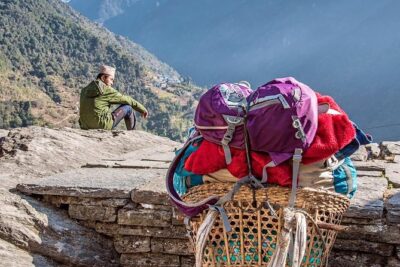
The package does not include a porter. If you do not want to carry your own trekking bag, arrange porter support and confirm the extra cost before arrival. International flights, Nepal entry visa, travel insurance, city meals, drinks, Wi-Fi, snacks, and tips are also outside the price.
Guides, Pace, and Group Style
The trip is private, so only your own group participates. That is a useful feature for families, couples, and friends who want fewer compromises over pace and breaks.
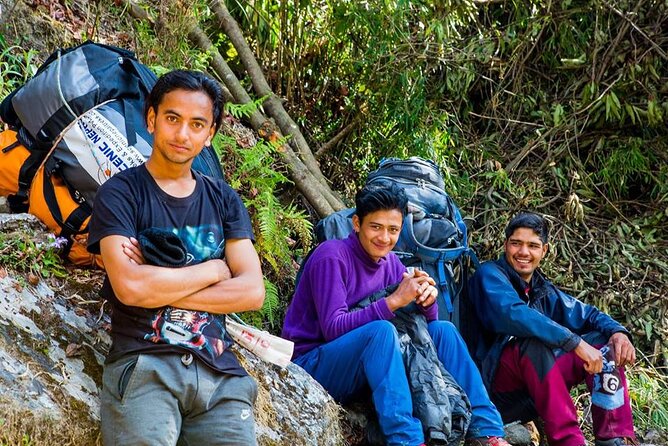
The strongest praise attached to the experience concerns guide care. Bhairas Tamang is described as funny, attentive, and good at explaining the tour. Prajil is praised for helping with practical needs, including snacks and tea-house arrangements. Somnath Tripathi is described as well prepared and calm when problems arise. Deepak, Uttar, and Buddha are also singled out for making the trek feel supportive and enjoyable.
You should still ask who your assigned guide will be. The exact guide can shape the experience, and the names connected with past departures do not guarantee who will lead your group.
Who Should Book This Trek?
This trek suits you if you want the major Himalayan highlights in a relatively compact 12-day plan. It is a good match for someone who values a guide, included permits, organized road transfers, and meals at mountain lodges more than luxury or complete independence.
It may not suit you if you dislike early mornings, basic accommodation, shared road transport, or changing trail conditions. The moderate fitness requirement is important. You need to handle repeated climbs and descents, including an early walk to Poon Hill and the high route to Annapurna Base Camp.
The company allows service animals and places the activity near public transportation, but the supplied information does not explain trail access or accommodation arrangements for animals. If that matters to you, confirm the details before booking.
Free cancellation is available up to 24 hours before the experience starts for a full refund. Changes or cancellations inside that window are not accepted or refunded under the stated policy.
Should You Book the Annapurna Base Camp Trek?
I would book this trek if you want Poon Hill sunrise and Annapurna Base Camp in one organized route, and if you are comfortable with simple mountain conditions. The combination gives you a strong mix of viewpoints, villages, forest, farmland, and high Himalayan scenery without requiring you to arrange every permit and transfer yourself.
Before paying, ask for the exact walking hours, elevation profile, lodge names, guide assignment, porter price, and current road arrangements. If the answers are clear, $800 is a reasonable package price for the services included. If you need luxury, flexible private transport every day, or a slower acclimatization plan, look for a more customized itinerary.
FAQ
How long is the Annapurna Base Camp Trek?
The experience lasts approximately 12 days, beginning and ending in Kathmandu.
Where does the trek begin?
The trip starts with airport pickup at Tribhuvan International Airport in Kathmandu. The walking portion begins near Nayapul after travel from Pokhara.
Is airport pickup included?
Yes. Arrival and departure airport transfer services are included.
Is transportation between Kathmandu and Pokhara included?
Yes. Tourist bus transportation from Kathmandu to Pokhara and back to Kathmandu is included.
Is transportation to the trailhead included?
Yes. The package includes private vehicle service from Pokhara to the trekking start point and from the trek ending point back to Pokhara.
Are meals included?
Breakfast is listed for 11 days. Lunch and dinner are included during the trekking portion, with the package listing 8 lunches and 8 dinners. Meals in Kathmandu and Pokhara are generally not included.
Are trekking permits included?
Yes. The package includes ACAP, TIMS, local permits, and applicable government fees and taxes.
Is a porter included?
No. Porter service is not included, but you can request it for an additional cost.
Do I need travel insurance?
Yes. You are responsible for travel and health insurance that covers emergency rescue and evacuation.
What fitness level is required?
A moderate level of physical fitness is required. The route includes climbs, descents, an early walk to Poon Hill, and a high-altitude approach to Annapurna Base Camp.
Is this a private tour?
Yes. Only your own group participates in the activity.
Can I cancel for a full refund?
Yes, if you cancel at least 24 hours before the experience start time. Cancellations or changes made less than 24 hours in advance are not refunded or accepted under the stated policy.
Recently added around Kathmandu
- Ghorepani Poon Hill Trek★ 5.0 · 16 reviews
- Private Manaslu Circuit Trek at Himalayas★ 5.0 · 3 reviews
- Amazing 1 Day Trekking Experience in Kathmandu Nepal★ 5.0 · 24 reviews
- Ghorepani Poonhill Trek★ 5.0 · 5 reviews
- Upper Mustang Trekking★ 5.0 · 2 reviews
- Upper Mustang Trekking★ 3.0 · 2 reviews
- Upper Mustang Trekking★ 5.0 · 4 reviews
- Upper Mustang Trek★ 5.0 · 5 reviews
Annapurna Base Camp Treks, compared.
Trekking in Annapurna/Langtang/Everest/Upper Mustang regions
Read our review →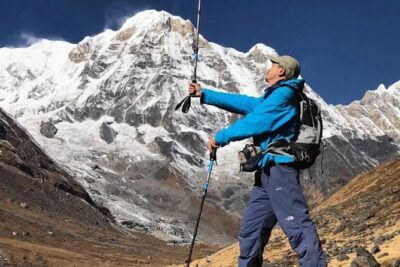
Kathmandu to Annapurna Base Camp (ABC) 5-Day Trek
Read our review →Browse the lists this tour appears in