
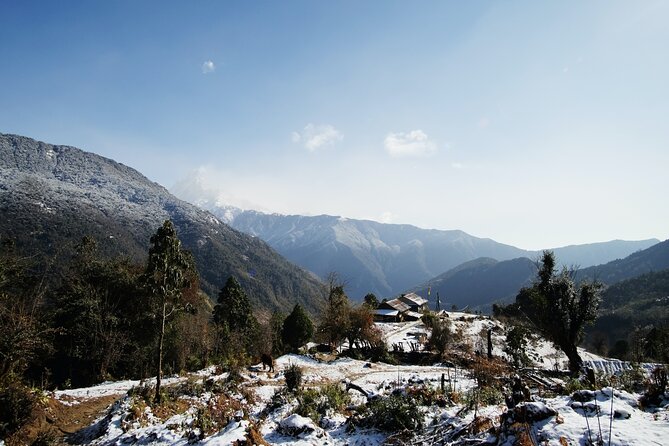
REVIEW · KATHMANDU
Annapurna Base Camp Trek 11 Days Full Package
The mountains arrive one sunrise at a time. I like this trek because it combines Poon Hill, traditional villages, rhododendron forests, and Annapurna Base Camp in one carefully packed route. I also like the private format, with a guide and porter support rather than a large group moving at one fixed pace.
The main consideration is the physical effort. You will climb thousands of stone steps, reach 4,130 meters, and walk for many hours on rough trails. The itinerary also needs clarification on hotel standards, since one section lists two-star hotels while the included details promise three-star accommodation in Kathmandu and Pokhara.
Five things to know before booking
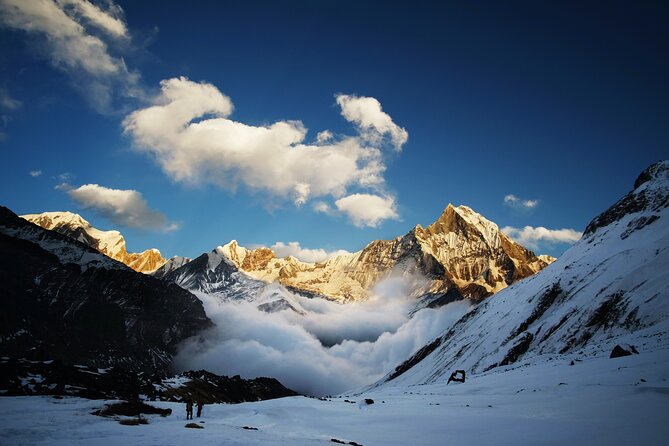
- Poon Hill and Annapurna Base Camp come together: You get a sunrise viewpoint and a high mountain sanctuary on the same 11-day route.
- The highest overnight is at 4,130 meters: Annapurna Base Camp is the point where altitude, cold, and effort matter most.
- Private support is part of the price: The package includes a trekking guide and one porter for every two guests.
- The route mixes culture and mountain scenery: Magar communities, Chhomrong, tea houses, rivers, forests, and suspension bridges all feature along the way.
- The trip begins and ends in Kathmandu, but finishes in Pokhara: You can stay in Pokhara, continue to Chitwan National Park, or take a tourist bus back to Kathmandu.
- The price is attractive, but confirm what is included: At $785.12 per person, the package offers strong value if transport, hotel category, and porter arrangements match the written details.
What the $785.12 package really offers
At $785.12 per person, this is an appealing price for an 11-day private trek in Nepal. The package includes accommodation in Kathmandu and Pokhara, breakfast, permits, national park fees, a trekking guide, and porter support arranged at one porter for two guests.
That matters because the cost of a Himalayan trek is not just the cost of walking. Permits, transport, lodging, meals, and staff support can quickly add up. Having those major items grouped together makes budgeting easier.
Still, I would confirm a few details before paying. The day-by-day plan says two-star hotels in Pokhara, while the included section says three-star hotel category in Kathmandu and Pokhara. Tea houses are listed for the mountain nights, but the package does not state whether lunches and dinners are included. The written details say 11 breakfasts are included, while personal drinks and habits are excluded.
That means the price is good, but you should ask for a final inclusion sheet. Confirm the hotel category, Kathmandu accommodation, airport or hotel pickup details, and exactly what transport is covered between Kathmandu, Pokhara, Nayapul, and the return point.
The tour is private, so only your own group participates. That gives you more freedom than a large departure, although the information does not state the maximum group size. The start time is 6:15 a.m. from Kathmandu, which is important on the first travel day.
More Annapurna Treks in Kathmandu
- Annapurna Circuit Trek with Tilicho Lake
★ 5.0 · 368 reviews - Annapurna base camp trek 5 Days
★ 5.0 · 252 reviews - 14-Day Private Annapurna Base Camp Trek
★ 5.0 · 180 reviews
Day 1: Kathmandu to Pokhara by road
The first day is mainly a transfer day. The drive from Kathmandu to Pokhara usually takes about six hours, followed by a night at a hotel in Pokhara at roughly 900 meters.
The route is also offered by air for an extra charge. Flying saves time, but the road journey lets you watch Nepal change outside the window as the city gives way to hills, river valleys, and rural settlements. You should choose the flight only if you value a faster arrival or want more time in Pokhara.
Once in Pokhara, you can take a boat ride or walk around the lake. This is a useful, gentle introduction to the trip. Pokhara has shopping and restaurants, so you can buy small supplies before the trail begins.
The hotel night is a practical buffer. You get a bed, breakfast, and time to settle before several nights in tea houses. Just verify whether your booking provides a two-star or three-star hotel.
Day 2: Nayapul, Tikhedhunga, and the first trail miles
After breakfast, you drive toward the trailhead area and begin walking from Nayapul. The listed walking time is about three and a half hours, with the Bhurungdi Khola River beside the route and terraced farmland around you.
This is a friendly first walking day. The altitude at Tikhedhunga is about 1,570 meters, so you are not yet dealing with the thin air found higher up. The villages and farm terraces give the route a human scale, and you start to see how much daily life in the hills depends on steep slopes and narrow paths.
The route description uses both Tikhedhunga and Nayapul, so ask where the vehicle will leave you and where you will sleep that night. Small wording differences matter on a trek, particularly when you are carrying a pack and arriving after a road transfer.
Tea house accommodation is basic but central to the experience. You trade private hotel comforts for a simple room in a mountain settlement, shared meal spaces, and direct contact with the communities along the route.
Day 3: Ulleri’s stone steps and Ghorepani
Day three is the first real test. You climb more than 3,000 stone steps over several hours to reach Ulleri, then continue through rhododendron forest toward Ghorepani at 2,840 meters.
This is where fitness makes a difference. The steps are not technically difficult, but their number can wear you down. A slow pace is sensible. Your guide can help manage rest stops, and the porter arrangement means you should not need to carry your main luggage yourself.
The forest becomes a major part of the day. Rhododendrons are especially notable in Nepal, and the route passes through areas associated with the Magar people. Ghorepani is an important overnight stop because it positions you for an early morning climb to Poon Hill.
The night at 2,840 meters is also your first real altitude check. Take the evening quietly, drink enough water, and avoid treating the next morning’s sunrise walk as an excuse to stay up late.
Same trailhead, a longer or shorter day out:
- Everest Base Camp Trek – 14 Days
★ 5.0 · 1,499 reviews - Everest Base Camp Trek
★ 5.0 · 842 reviews - Everest Base Camp Trekking
★ 5.0 · 485 reviews - Everest Base Camp Trekking – 13 Day
★ 5.0 · 365 reviews
Day 4: Poon Hill sunrise and the trail to Tadapani
The pre-breakfast walk to Poon Hill takes about half an hour. The reward is a wide mountain panorama, including Dhaulagiri at 8,167 meters, Annapurna I at 8,091 meters, Machhapuchhre, Himchuli, and the three peaks of Nilgiri.
Sunrise walks require an early start and warm clothing. The cold can be sharp before the sun reaches the ridge, and visibility depends on weather. On a clear morning, this is one of the most memorable parts of the route. On a cloudy morning, the experience will be less dramatic, so keep expectations realistic.
After returning to the lodge for breakfast, you continue through forest and open meadows. The route reaches Deurali, descends to Banthanti for lunch, then climbs gradually to Tadapani at 2,610 meters.
This is a long-feeling day because the sunrise walk is added before the main trek. The good news is that Poon Hill gives you a major mountain view early in the journey, before the trail turns toward the Annapurna Sanctuary.
Day 5: Tadapani to Chhomrong
The path drops through rhododendron forest, crosses a river bridge, and passes Gurjung village before reaching Chhomrong at 2,140 meters.
Chhomrong is one of the route’s most appealing settlements. It is a mountain town with a strong connection to the trail, and it offers a clear sense that you are moving deeper into the Annapurna region. The descent from Tadapani also gives your legs a short break from constant climbing, though the following stages will include plenty of uphill work.
At 2,140 meters, Chhomrong is lower than Tadapani, but do not assume the next days will be easy. The route now turns toward the sanctuary, where the trail becomes more enclosed and the altitude rises steadily.
Day 6: Chhomrong steps, Sinuwa, and Dovan
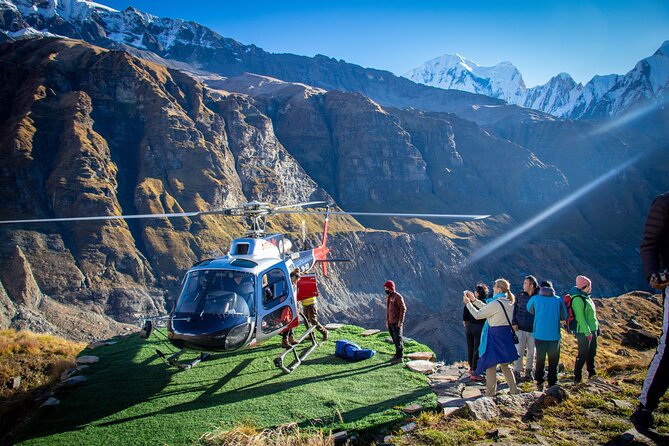
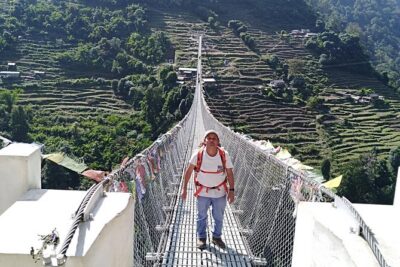
The morning begins with about an hour of rocky steps downhill. You also pass the ACAP checkpoint, connected with the Annapurna Conservation Area. After a suspension bridge, the trail climbs for about another hour toward Sinuwa.
This up-and-down pattern is typical of Himalayan trekking. Distance alone does not tell you how tiring the day will be. A descent can be hard on knees, while the climb after a river crossing quickly raises your heart rate.
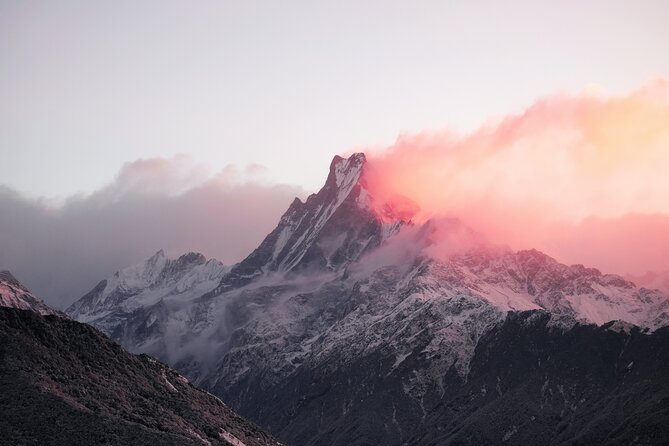
From Sinuwa, the trail continues through rhododendron forest toward Dovan at 2,310 meters. The route offers views of Fishtail, also called Machhapuchhre, when the trees and weather allow.
Dovan is a useful overnight stop before the higher section. You are still below 2,500 meters, but the setting becomes more remote and the walking pace should begin to slow.
Day 7: Bamboo forest and Deurali at 3,230 meters
You climb gradually through rhododendron and bamboo forest toward Deurali. The itinerary mentions an optional side trip to Hinku Cave, which can add interest if the group has enough time and energy.
This is not a day for rushing. The altitude reaches 3,230 meters, and a slower pace helps you notice early signs of altitude trouble. Headache, unusual tiredness, dizziness, or nausea should be reported to your guide rather than brushed aside.
The forests make this part of the route feel very different from the open views around Poon Hill. The trail is more enclosed, the air cooler, and the next day’s high point is clearly approaching. Tea house accommodation remains simple, and you should be prepared for fewer comforts as you gain height.
Day 8: Machhapuchhre Base Camp to Annapurna Base Camp
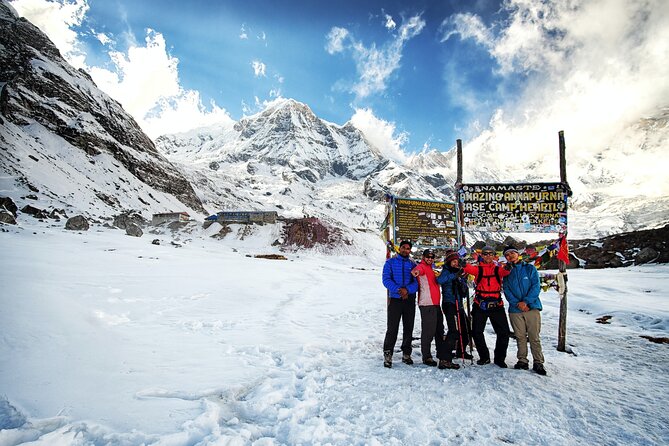
This is the central day of the trek. The route climbs above 4,000 meters near Machhapuchhre Base Camp, then continues to Annapurna Base Camp at 4,130 meters.
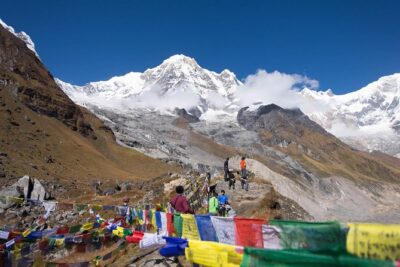
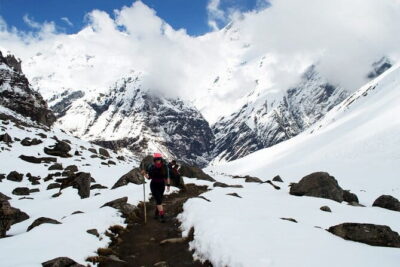
The mountain views become the reason for every previous step. Annapurna South, Himchuli, Fishtail, and other snowy peaks surround the sanctuary, creating the bowl-like setting that defines the experience. The itinerary allows time for a sunset view, although weather and arrival time will decide how much you see.
This is also the most demanding day. You are walking at high altitude, and the distance may feel harder than it would at lower elevations. Keep your pace steady, listen to your guide, and do not treat reaching base camp as a reason to ignore physical warning signs.
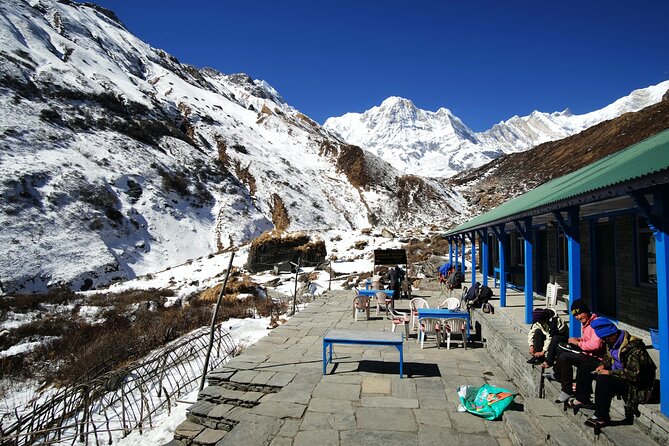
The overnight tea house at Annapurna Base Camp is a major part of the adventure, but it is not a hotel night. Expect basic accommodation and cold conditions. The reward is waking inside a ring of high peaks rather than merely looking at them from a distant viewpoint.
Day 9: Annapurna sunrise and the long return to Bamboo
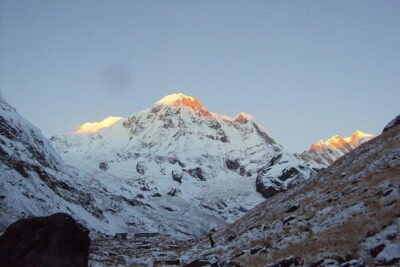
An early rise gives you another mountain viewing opportunity. Sunrise at Annapurna Base Camp can put warm color on Annapurna South, Himchuli, and Fishtail before breakfast.
After eating, you retrace the route toward Bamboo at 2,340 meters. The large altitude drop is welcome for breathing, but descending for many hours can be hard on your knees. Trekking poles, if you use them, would be useful here, though the package does not specifically list equipment.
Bamboo feels different after the open sanctuary. You return to forest, lower altitude, and tea house surroundings. This is a full day, but the direction is mostly downward.
Day 10: Jhinu Danda and hot springs
The trail continues down to Jhinu Danda at 1,760 meters. The key attraction here is the chance to visit the hot springs, followed by a short walk of about 20 minutes to the tea house.
This is a smart recovery stop after the high point of the trek. Warm water can feel especially welcome after the cold at base camp, though the package only says you have the opportunity to use the springs. It does not say whether any entry fee or personal towel rental is included.
Jhinu Danda also brings you back into a lower, warmer part of the route. You can enjoy the scenery without the same altitude concerns, but the path is still uneven and downhill.
Day 11: Nayapul, Pokhara, and your next choice
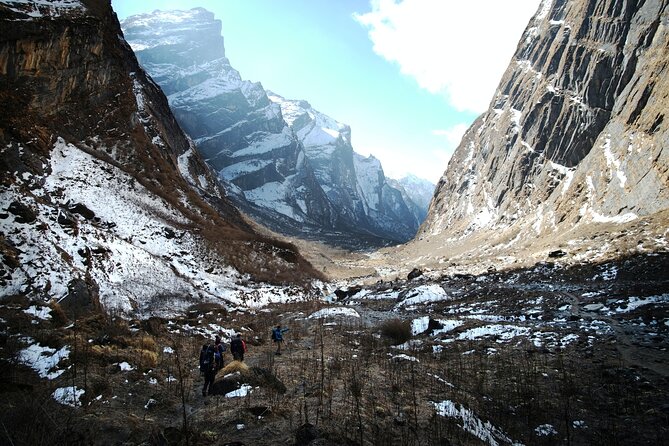
The final walking day follows the Modi Khola River, with waterfalls and steep gorges along the route. The descent is described as easy, though any downhill finish can feel tiring after ten active days.
At Nayapul, you stop for lunch before driving to Pokhara. The package provides a hotel night there, with time for a shower and an evening in town. That shower may sound like a small detail, but after tea houses and long trail days, it is one of the trip’s quiet luxuries.
From Pokhara, you can choose to stay, continue to Chitwan National Park, or return to Kathmandu. The company arranges a tourist bus ticket. Since the itinerary ends in Pokhara rather than Kathmandu, confirm whether that ticket is included in the quoted price or arranged separately.
Guides, porters, and the private format
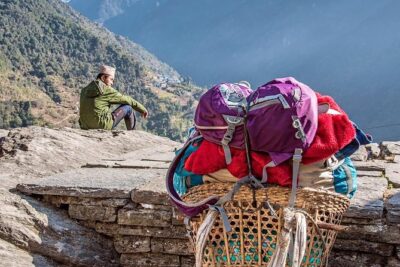
The package includes an experienced trekking guide and one porter for every two guests. This is one of its strongest features. A porter can carry the main load while you walk with a lighter day pack, which makes the long stair sections and high-altitude days more manageable.
The personal accounts connected with this experience place special emphasis on the staff’s care. One person reached base camp at age 67 and credited the Sherpa support with carefully helping and protecting them throughout the trek. That is encouraging, but it should not be taken as proof that the route is easy for older walkers.
The guide’s role matters most on the high section, where pace, weather, and physical symptoms need attention. The tour is described as suitable for people with strong physical fitness and not recommended for those with breathing problems such as asthma.
Who should book this trek?
I would recommend it to a fit walker who wants a classic Nepal route without arranging every permit, transfer, hotel, and porter separately. It suits you if you want both a famous sunrise viewpoint and a high base camp, rather than choosing only one.
It is less suitable if you want a relaxed holiday with short walks. The 3,000-plus steps to Ulleri, repeated descents and climbs, early Poon Hill start, and 4,130-meter overnight all require commitment.
The private format is useful for couples, friends, or families who want their own pace. It may also appeal to older hikers who are fit and willing to prepare carefully, though age alone does not determine suitability. Your current health, walking strength, and response to altitude matter more.
Practical points before you go
Bring warm layers for Poon Hill and Annapurna Base Camp, even if Pokhara feels mild. Keep your day pack light, but carry essentials you may need during the walk, since the main luggage will be handled by the porter.
Ask these questions before booking:
- Is accommodation in Kathmandu and Pokhara two-star or three-star?
- Are lunch and dinner excluded everywhere?
- What exactly does pickup include?
- Is the flight from Kathmandu to Pokhara optional at an added cost?
- Is the return tourist bus from Pokhara included?
- Does the porter arrangement mean one porter shared by two people?
- Are hot spring fees included at Jhinu Danda?
Cancellation is free if you cancel at least 24 hours before the 6:15 a.m. start time. Changes made later are not accepted, and poor weather may lead to a different date or a full refund.
Should you book the Annapurna Base Camp Trek?
I would book this trek if you want strong scenery, real village walking, and organized support at a moderate package price. The combination of Poon Hill, Chhomrong, rhododendron forest, Annapurna Base Camp, and Jhinu Danda gives you a satisfying range of Nepal experiences.
I would book only after confirming the hotel category and transport details. If the written inclusions are honored, $785.12 is good value for an 11-day private itinerary with permits, breakfast, guide, porter, and accommodation. If you need luxury rooms, included full-board meals, or an easy walking schedule, this is not the right choice.
For a fit hiker who accepts basic tea houses and wants the mountains up close, this route offers a memorable and well-rounded introduction to the Annapurna region.
FAQ
Where does the Annapurna Base Camp Trek start?
The experience starts in Kathmandu, Nepal, with a listed start time of 6:15 a.m.
How long does the trek last?
The full experience lasts approximately 11 days.
What is the highest point on the route?
The highest point is Annapurna Base Camp at about 4,130 meters.
Is Poon Hill included?
Yes. The itinerary includes an early morning walk to Poon Hill from Ghorepani to watch the sunrise and see the Himalayan peaks.
Are permits and national park fees included?
Yes. The package includes all permits and national park fees.
Are meals included?
Breakfast is included, with 11 breakfasts listed. Personal drinks and habits are not included, and the provided details do not list lunch or dinner as included.
What accommodation is provided?
The itinerary lists tea houses during the trek and hotel accommodation in Pokhara. The inclusion details mention three-star hotels in Kathmandu and Pokhara, while the day plan describes a two-star hotel in Pokhara, so confirm the category before booking.
Can I continue to Chitwan or return to Kathmandu after the trek?
Yes. After reaching Pokhara, you can stay there, go to Chitwan National Park, or return to Kathmandu. A tourist bus ticket can be arranged.
Recently added around Kathmandu
- Ghorepani Poon Hill Trek★ 5.0 · 16 reviews
- Private Manaslu Circuit Trek at Himalayas★ 5.0 · 3 reviews
- Amazing 1 Day Trekking Experience in Kathmandu Nepal★ 5.0 · 24 reviews
- Upper Mustang Trekking★ 5.0 · 2 reviews
- Ghorepani Poonhill Trek★ 5.0 · 5 reviews
- Upper Mustang Trekking★ 3.0 · 2 reviews
- Upper Mustang Trekking★ 5.0 · 4 reviews
- Upper Mustang Trek★ 5.0 · 5 reviews
Annapurna Base Camp Treks, compared.

Trekking in Annapurna/Langtang/Everest/Upper Mustang regions
Read our review →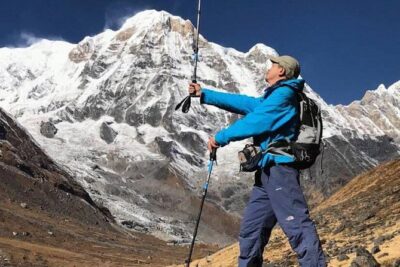
Kathmandu to Annapurna Base Camp (ABC) 5-Day Trek
Read our review →Browse the lists this tour appears in