
REVIEW · KATHMANDU
Annapurna Base Camp Trek – 10 Days
Big mountains reward steady steps. This 10-day Annapurna Base Camp trek takes you from Kathmandu to Pokhara, through traditional villages and rhododendron woods, and up to Annapurna Base Camp at 4,130 meters. I like the combination of airport transfers, hotels, tea houses, guide support, and tourist buses in one package. I also like the personal feel of walking through places such as Chhomrong, Sinuwa, and Jhinu Danda rather than simply driving to a viewpoint.
The main concern is the schedule. Some day descriptions appear compressed or slightly out of order, and the route includes demanding stone steps and serious altitude. You should confirm the exact overnight villages, permits, and acclimatization plan before paying.
Key points worth knowing
- The high point is 4,130 meters: Annapurna Base Camp is high enough to bring real altitude concerns, even for fit people.
- The route mixes comfort and effort: You get two nights in Kathmandu, two in Pokhara, and six nights in tea houses during the trek.
- Guide support is a major part of the value: A licensed guide receives accommodation, meals, insurance, salary, transport, and equipment through the package.
- Pokhara adds breathing room: Phewa Tal, Sarangkot, and lakeside time give you a gentler contrast to the mountain days.
- The trek is private but capped at 12 people: Only your group participates, though you should clarify the final group size and guide arrangement.
- Budget beyond the advertised price: Plan for about $150 per person for specified food and drinks outside the included meals, plus roughly $50 for gratuities.
What the $699 price really covers
At $699 per person, this trek offers good value if you want transport and basic arrangements handled for you. The package includes airport transfers, two hotel nights in Kathmandu, two hotel nights in Pokhara, and six nights in tea houses along the trekking route.
You also receive Kathmandu to Pokhara and back by luxury tourist bus, plus a private car between Pokhara and Nayapul. That matters because road transfers in Nepal can be tiring and confusing to arrange on your own. Having someone meet you at Tribhuvan International Airport is especially useful after a long flight.
The guide’s food, drinks, lodging, insurance, salary, equipment, transport, and local tax are included. A first aid kit and a company T-shirt are also provided, along with government taxes, VAT, service charges, nine breakfasts, and a farewell dinner with a cultural show.
The price is not all-inclusive. Lunch and dinner in Kathmandu and Pokhara are excluded, with an estimated extra cost of $150 per person. Gratuities are listed at $50 per person. The information does not clearly state every trekking permit or entry fee, so ask for a written list of permits and inclusions before departure.
For a 10-day trip with hotels, tea houses, ground transport, and a licensed guide, the rate is attractive. It becomes less attractive if you expect private rooms, all meals, porter service, or extensive altitude acclimatization to be included automatically.
More Annapurna Treks in Kathmandu
- Annapurna Circuit Trek with Tilicho Lake
★ 5.0 · 368 reviews - Annapurna base camp trek 5 Days
★ 5.0 · 252 reviews - 14-Day Private Annapurna Base Camp Trek
★ 5.0 · 180 reviews
Kathmandu gives you a useful start
Your first day begins with airport pickup and a hotel transfer. You then meet the guide and have time around Thamel, Kathmandu’s main visitor district. This is a sensible place to sort out missing trekking gear, exchange money, and check your bags before heading into the mountains.
The schedule also lists Kathmandu Durbar Square and Pashupatinath Temple. These are valuable additions if they actually fit the day. Kathmandu Durbar Square offers palace courtyards and temple architecture, while Pashupatinath is one of the city’s most important religious sites.
Other listed Kathmandu stops include Swayambhunath, Chandragiri Hills, Garden of Dreams, and Narayanhiti Palace Museum. They do not all appear to fit neatly into the 10-day schedule, so treat them as possible additions rather than guaranteed visits. Ask the operator for a day-by-day plan that names both sightseeing stops and overnight locations.
The bus to Pokhara is part of the experience
The journey from Kathmandu to Pokhara is by tourist bus, with scenery along the river and through the hills. It is not a quick transfer, so you should expect a full travel day rather than a short hop.
Pokhara is the practical gateway for the trek, and staying two nights there gives you time to prepare. The itinerary lists Pokhara Lakeside, Phewa Tal, and Sarangkot. Lakeside is convenient for meals and last-minute supplies, Phewa Tal gives you a calm waterfront setting, and Sarangkot is known for broad mountain views.
The listed sequence is slightly confusing. One section says the guide takes you to the bus park for the drive to Nayapul, while another places Pokhara before the mountain route. Confirm whether the Pokhara hotel night comes before the trek, after it, or both. The package says two nights in Pokhara, which suggests time is allocated on both sides of the trek.
Walking through Ghandruk and Chhomrong
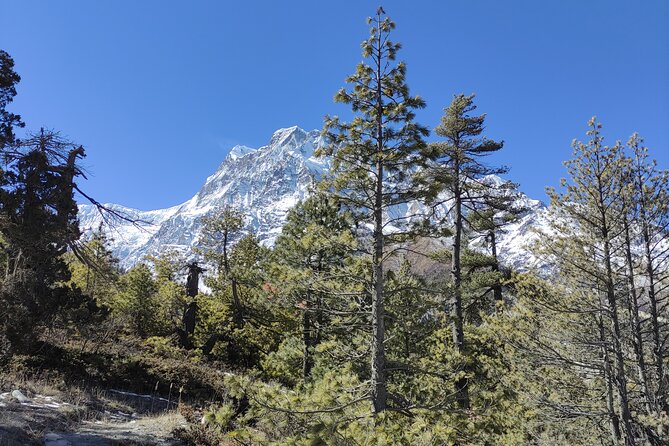
The mountain section is described as beginning around Ghandruk before continuing to Chhomrong. This is where the trip becomes more than a collection of viewpoints. You pass through ethnic villages, working farmland, woodlands, and trails lined with rhododendrons.
The route to Chhomrong includes steady uphill and downhill walking over uneven ground. It is not technical climbing, but it can feel tough early in the trek. The combination of stairs, changing slopes, and a loaded daypack makes good footwear important.
Chhomrong is one of the most useful stops on the route because it marks a major transition toward the sanctuary. You get village life, mountain views, and a clear sense that the trail is turning more serious. The guide’s job is especially important here, since the pace needs to suit the group rather than the fastest walker.
Several past groups praised guides including Santosh, Raju Simkhada, Dibo, Varat, and Asok. Their value was not just route finding. Good support on this kind of trek means watching pace, helping with small problems, and keeping the group together when the steps become tiring.
Same trailhead, a longer or shorter day out:
- Everest Base Camp Trek – 14 Days
★ 5.0 · 1,499 reviews - Everest Base Camp Trek
★ 5.0 · 842 reviews - Everest Base Camp Trekking
★ 5.0 · 485 reviews - Everest Base Camp Trekking – 13 Day
★ 5.0 · 365 reviews
Sinuwa and the long stone staircase
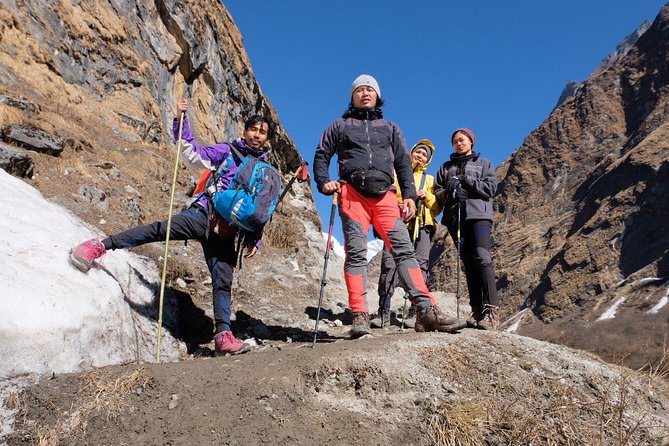
From Chhomrong, the route crosses the Chhomrong Khola and climbs roughly 2,500 stone steps toward Sinuwa. This is one of the most demanding details in the itinerary, and it deserves more attention than the usual quick mention.
The steps are a good reason to train with stair climbing before Nepal. You do not need an athlete’s program, but regular walking on hills or stairs will help. Trekking poles may also be useful, and the company says required gear can be bought or rented in Kathmandu with help from the guide.
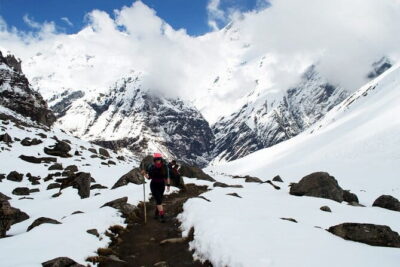
Sinuwa places you deeper inside the Annapurna Conservation Area. The trail passes through woodland and follows the river system toward the higher section of the trek. Expect damp conditions in parts of this route, along with changing weather and cooler temperatures as you gain height.
Tea house accommodation keeps the route grounded in local life. These are simple mountain lodgings, not city hotels. Their great advantage is location and atmosphere. Their limitation is that comfort, hot water, room temperature, and meal choices can vary.
Reaching Annapurna Base Camp at 4,130 meters
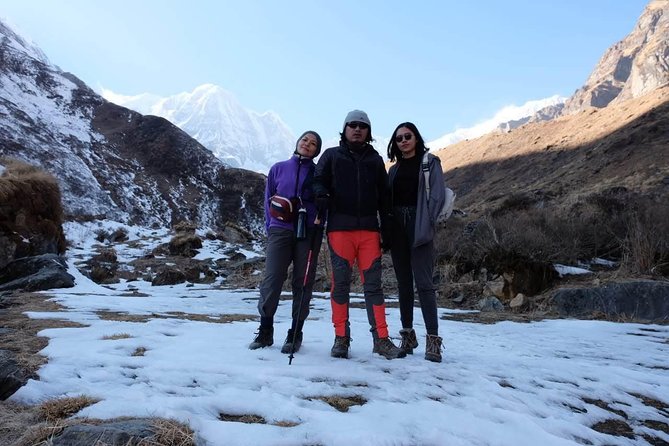
The approach to base camp follows the riverbed and climbs toward Bagar, then onward toward Machhapuchhre Base Camp. The final section is described as strenuous, and the altitude makes every uphill stretch feel harder.
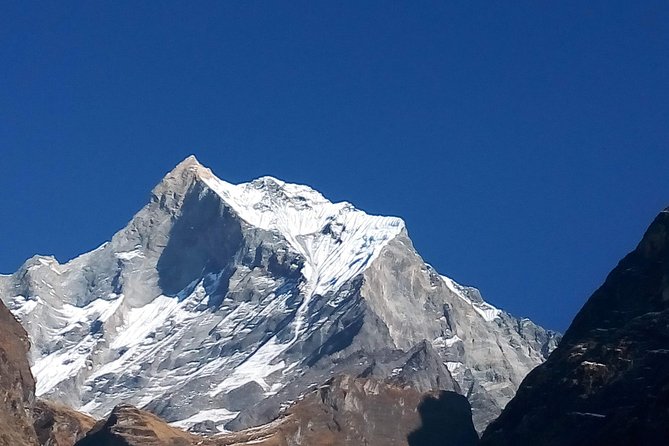
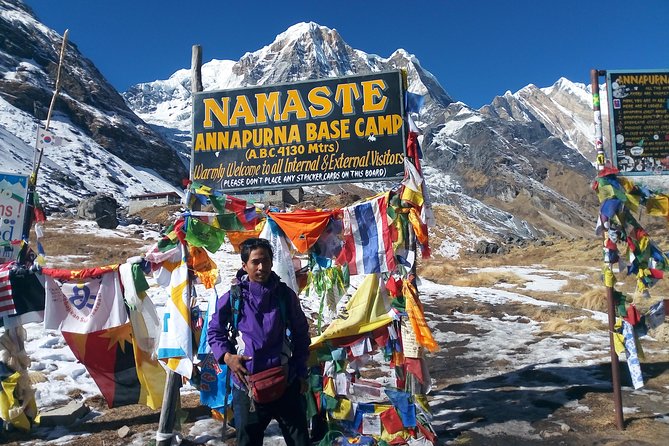
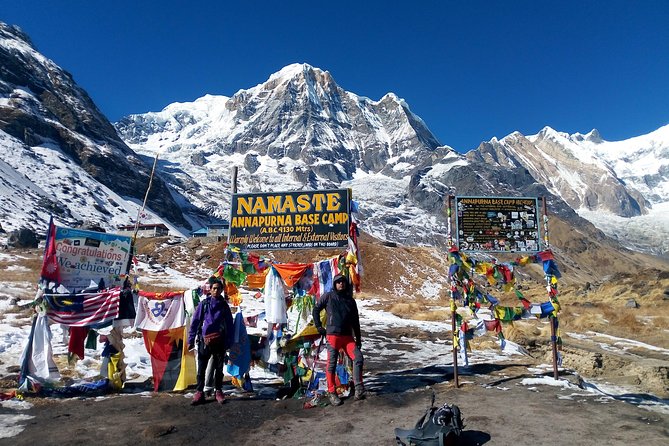
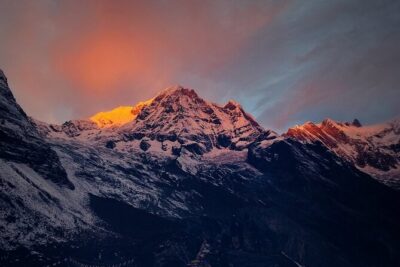
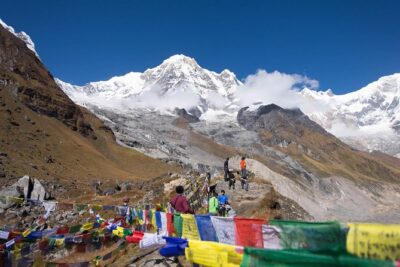
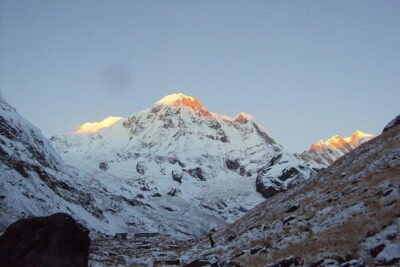
At Annapurna Base Camp, you reach 4,130 meters, or about 13,550 feet. The reward is a close mountain setting surrounded by the Annapurna range. The experience is about scale as much as scenery. Small trails and tea houses give way to enormous walls of rock and snow.
You should take altitude warnings seriously. The operator notes that people of any age, gender, or fitness level can experience adverse effects. Discuss the trek with your doctor, carry insurance covering medical treatment and emergency repatriation, and show proof of that insurance to the tour leader on the first day.
The information does not promise a separate acclimatization day. That is one of the most important points to clarify. Ask how the guide handles headaches, nausea, unusual tiredness, or a slower-than-planned ascent. A sensible guide should be willing to adjust the route rather than push you toward a fixed target.
Returning through Bamboo and Jhinu Danda
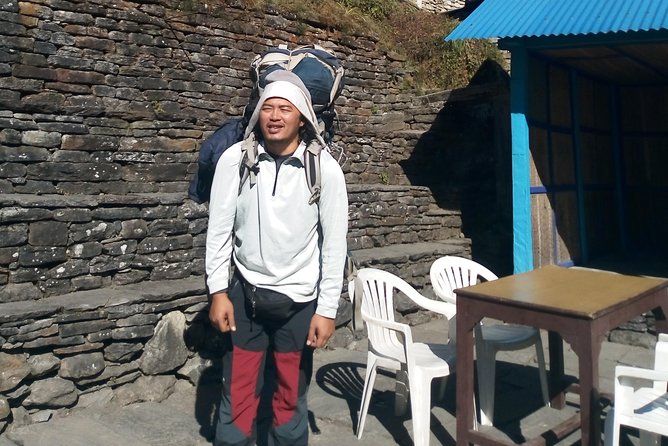
After base camp, you retrace your steps toward Bamboo and Sinuwa. The return route is not simply easy downhill walking. Descending stone steps can be hard on knees, and the wet woodland sections may feel slippery.
The route then continues toward Jhinu Danda, with another climb toward Kuldighar, a descent to the Chhomrong Khola, and more steps toward Chhomrong. The itinerary specifically identifies Jhinu Danda as a stop, but it does not state whether a hot spring visit is included, so do not assume that it is part of the package.
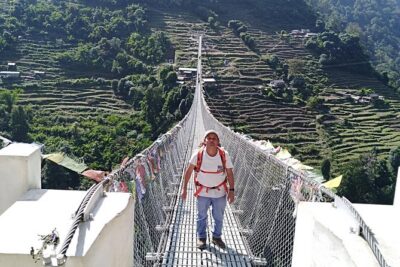
The return through villages and farms gives you a different pace from the high sanctuary. Rice plantations and countryside replace the stark upper mountain setting. That contrast is one reason this trek feels varied despite following an out-and-back route.
Back to Pokhara, then Kathmandu
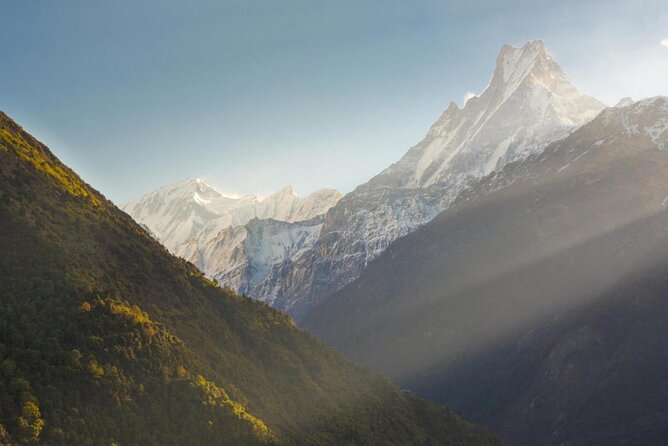
From Jhinu, you walk toward Nayapul and return to Pokhara by private car. The final village route includes distant Annapurna views and farmland, so the return is still part of the sightseeing rather than a rushed exit.
Back in Pokhara, Phewa Tal and Sarangkot offer a gentler finish. This is a good place to rest, eat well, and review your photographs before the return bus to Kathmandu.
The next scheduled transfer is back to Kathmandu, followed by airport drop-off on day 10. The itinerary also mentions an optional extra day in Kathmandu, but the exact cost is not provided. If your flight is on the same day as the return from Pokhara, confirm the timing carefully. Road delays can affect mountain transport.
What makes the guide support valuable
The most positive pattern in the available feedback is praise for friendly, careful local guides and porters. Santosh is described as helpful and supportive, while Santosh and Raju Simkhada are remembered for humor, thoughtfulness, and keeping morale high over long days.
That human side matters. A guide can explain village customs, help with permits and gear, translate at tea houses, and notice when someone is struggling. The operator states that all leaders have basic first aid training and know the location of nearby medical facilities.
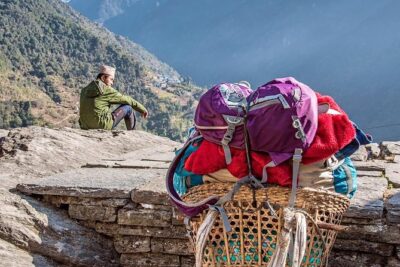
The package does not clearly say that a porter is included for every participant. Past groups refer to local porters, but you should ask how luggage is carried, what weight limit applies, and whether porter costs are extra. Keep your own daypack light and store extra luggage at the company office or hotel, which is specifically allowed.
A maximum of 12 people per booking keeps the group from becoming huge. The trip is also described as private, meaning only your own group participates. Since those two details can be read in different ways, confirm whether you receive a dedicated guide and how many people will actually walk together.
The practical drawbacks to consider
The biggest issue is not the scenery. It is clarity. The itinerary contains references to an 11th day, a possible extra Kathmandu day, Poon Hill, and sightseeing stops that do not all line up with the stated 10 days.
Poon Hill is listed under the Chhomrong day, but the route description does not clearly explain a sunrise visit or overnight plan there. Ask directly if Poon Hill is included. Do the same for Kathmandu Durbar Square, Swayambhunath, Chandragiri Hills, Patan Durbar Square, and the other city stops.
You also need to prepare for variable weather. Conditions can change sharply at altitude, and the route reaches a level where cold, snow, rain, or strong sun may all be possible. The company can help arrange gear in Kathmandu, but do not rely on finding every item at the last minute.
Cancellation is free if you cancel at least 24 hours before the start time. Within 24 hours, the payment is not refunded, and late changes are not accepted. The minimum age is seven, but the altitude and stair-heavy route may make this unsuitable for many young children.
Who should book this trek?
I would consider it a good fit if you want a guided first trek in Nepal, prefer hotels and arranged transfers, and are comfortable with basic tea house accommodation. Couples may like the private format and the mix of village walking, mountain scenery, and time beside Phewa Tal.
It can also suit solo participants who want guide support without organizing every transfer themselves. The positive comments about guides such as Santosh and Raju suggest that the personal service is a real strength.
I would be cautious if you dislike long bus rides, have limited hill-walking experience, need guaranteed private facilities, or are not prepared for altitude. You should also avoid booking until the daily route, permits, porter arrangements, and acclimatization plan are written clearly.
Should you book the Annapurna Base Camp trek?
Book it if the $699 price fits your budget and you value a guide-led route with transport, accommodation, and airport support already arranged. The trek offers a strong mix of village life, forest trails, mountain views, Pokhara downtime, and a genuine high-altitude goal.
Before booking, ask for a corrected day-by-day itinerary. Confirm whether Poon Hill and the city attractions are included, what permits are covered, how luggage is handled, and how the guide responds to altitude problems.
With those details settled, this looks like a solid-value introduction to Annapurna Base Camp. It is not a soft adventure, but you do not need to be an expert mountaineer. You need steady fitness, realistic expectations, proper insurance, and enough patience to let the mountains set the pace.
FAQ
How long is the Annapurna Base Camp trek?
The experience is advertised as a 10-day trip, including time in Kathmandu, Pokhara, the trekking route, and airport transfers.
What is the highest altitude reached?
The trek reaches Annapurna Base Camp at approximately 4,130 meters, or 13,550 feet.
Is airport pickup included?
Yes. Airport transfers from and to Tribhuvan International Airport are included.
Are hotel nights included?
Yes. The package includes two nights in Kathmandu and two nights in Pokhara in three-star hotels with breakfast.
Where do you sleep during the trek?
The package includes six nights in tea houses during the trekking section.
Is transport between Kathmandu and Pokhara included?
Yes. The package includes Kathmandu to Pokhara and Pokhara to Kathmandu by luxury tourist bus.
Is transport between Pokhara and Nayapul included?
Yes. The package includes a private car between Pokhara and Nayapul in both directions.
Are meals included?
Nine breakfasts and a farewell dinner are included. Lunch and dinner in Kathmandu and Pokhara are excluded, with an estimated extra cost of $150 per person.
Is travel insurance required?
Yes. You must have insurance covering medical expenses and emergency repatriation, and proof must be shown to the tour leader on the first day.
Can the trek be customized?
The experience is advertised as flexible and customizable. Any changes should be agreed with the provider before departure, especially because the route reaches high altitude.
How many people can join one booking?
A booking can include a maximum of 12 people. The experience is described as private, with only your group participating.
What is the cancellation policy?
You can receive a full refund if you cancel at least 24 hours before the experience begins. Cancellations or changes made within 24 hours are not accepted for a refund.
Recently added around Kathmandu
- Ghorepani Poon Hill Trek★ 5.0 · 16 reviews
- Private Manaslu Circuit Trek at Himalayas★ 5.0 · 3 reviews
- Amazing 1 Day Trekking Experience in Kathmandu Nepal★ 5.0 · 24 reviews
- Ghorepani Poonhill Trek★ 5.0 · 5 reviews
- Upper Mustang Trekking★ 5.0 · 2 reviews
- Upper Mustang Trek★ 5.0 · 5 reviews
- Upper Mustang Trekking★ 3.0 · 2 reviews
- Upper Mustang Trekking★ 5.0 · 4 reviews
Annapurna Base Camp Treks, compared.
Trekking in Annapurna/Langtang/Everest/Upper Mustang regions
Read our review →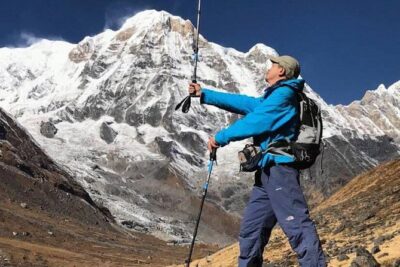
Kathmandu to Annapurna Base Camp (ABC) 5-Day Trek
Read our review →Browse the lists this tour appears in