
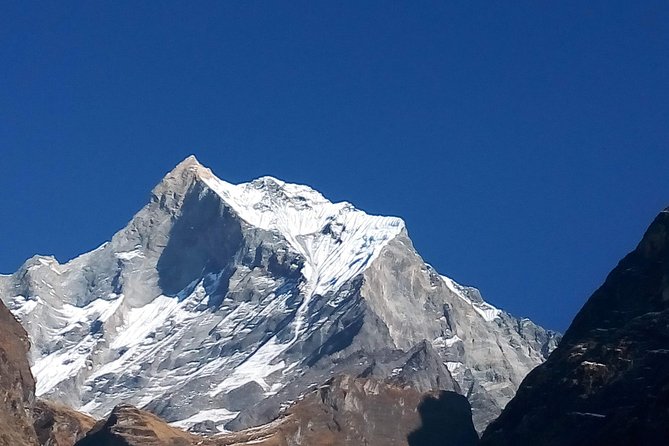
REVIEW · KATHMANDU
Annapurna Base Camp Trek 10 Days
The mountains arrive one step at a time. This 10-day Annapurna Base Camp trek combines high Himalayan scenery, Gurung and Magar villages, and a well-organized route to 4,130 meters. I especially like the strong guide support, with Sudam and Ganesh praised for attentive service, and the useful inclusion of permits, a porter, sleeping bag, and down jacket. The main caution is the physical demand: steep stone steps, long walking days, and altitude make this a serious trek, not a gentle sightseeing holiday.
The $996 price offers good value because it covers much of the costly groundwork, including transport, guide, porter, permits, meals, and basic mountain equipment. I also like the spare day in Pokhara, which gives you room to rest or see Phewa and Begnas lakes. Still, the road journeys are long, and the final transport from Pokhara to Kathmandu may be by bus or scenic flight, so you should confirm that detail before departure.
Key points at a glance
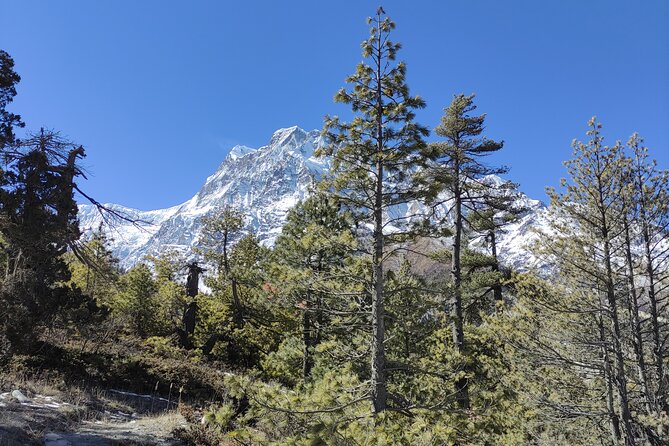
- Reach Annapurna Base Camp at 4,130 meters: The route brings you into a huge mountain amphitheater below Annapurna I and Machapuchare.
- Walk through changing scenery: Expect village paths, forest, river crossings, stone stairways, rugged high country, and open mountain views.
- Get practical support: A licensed guide, porter service, ACAP permit, TIMS card, sleeping bag, and down jacket are included.
- Meet the mountain villages: Ghandruk and Chhomrong add real local character before the trail turns wilder and higher.
- Allow for demanding days: Some stages last six to eight hours, with repeated climbs and descents.
- Travel in a small group: The maximum group size is 16, which is large enough for company but still manageable on the trail.
Why the Annapurna Base Camp route works so well
Annapurna Base Camp is one of Nepal’s best-known treks for good reason. You do not spend the entire journey at extreme altitude, yet the route still gives you a close look at some of the country’s most famous peaks.
The appeal comes from the variety. One day you are walking through forest and village farmland. Later, you are crossing a suspension bridge, following the Modi Khola, and climbing through a narrower mountain corridor. Near base camp, the trees thin out and the views become grander and more severe.
The route reaches 4,130 meters, high enough to feel like a real Himalayan goal. It is not a mountaineering expedition, but it does require stamina and a sensible pace. You need to be ready for long days on foot and a lot of steps.
The cultural side matters, too. Ghandruk and Chhomrong are not just overnight names on a map. They are working mountain settlements associated with Gurung and Magar communities. The village sections help you understand how people live in the foothills before you move into the high country.
More Annapurna Treks in Kathmandu
- Annapurna Circuit Trek with Tilicho Lake
★ 5.0 · 368 reviews - Annapurna base camp trek 5 Days
★ 5.0 · 252 reviews - 14-Day Private Annapurna Base Camp Trek
★ 5.0 · 180 reviews
Day 1: Kathmandu to Pokhara by tourist bus
The trek begins with a morning departure from Kathmandu after breakfast. The route to Pokhara takes roughly six to seven hours by luxury tourist bus, although the day is listed at about eight hours once transfers and arrival time are included.
This is a useful start because you reach Pokhara without arranging a separate domestic flight. You also get a first look at Nepal beyond the capital, with a long road journey through changing scenery.
The tradeoff is time. A bus day is not glamorous, and road conditions can affect the schedule. Pack water, snacks, and anything you want close at hand. Your main luggage arrangements should be clear before leaving Kathmandu, since the porter service begins to matter once you enter the trekking route.
Pokhara is one of Nepal’s best-known holiday bases, with mountain views and lakeside activities. Here, it functions mainly as the bridge between city travel and the trail. You spend the night before the next morning’s drive to Ghandruk.
Day 2: The road to Ghandruk and the first village feel
After breakfast, you drive from Pokhara to Ghandruk for about three to three and a half hours. At approximately 1,940 meters, Ghandruk gives you a gentle introduction to the foothills before the harder walking begins.
The village is known for its mountain setting and traditional character. This is one of the best places on the route to slow down and notice the human side of the trek. You are not simply passing through empty wilderness. The paths connect established communities, and the village sections provide a useful contrast with the high, rugged terrain ahead.
The day is listed at around five hours, including the drive and time in Ghandruk. That makes it less strenuous than the following stages, but do not treat it as wasted time. A calm first trekking day can help you settle into the pace and check that your boots, pack, and clothing are working well.
Day 3: Ghandruk to Chhomrong by stone steps
From Ghandruk, the trail climbs for about an hour to Kimrungdanda. This uphill section is an early reminder that the Annapurna route is built around repeated ascents and descents, not a steady walk along a valley floor.
The reward comes quickly. Views open toward Annapurna South, Hiunchuli, Machapuchare, and Gangapurna. These mountain names can feel abstract in Kathmandu, but the trail gives them scale and presence.
Chhomrong is at roughly 2,170 meters, although the information for the previous village lists Ghandruk at 1,940 meters. The day takes about six hours. You should expect stone steps, uphill walking, and plenty of chances to stop for water and photographs.
Chhomrong is an important point on the trek because the route begins to feel more remote after it. It is also a place where pacing matters. You are gaining altitude, so walking too fast early in the trip is a poor bargain. Enjoy the views, but save energy for the days ahead.
Same trailhead, a longer or shorter day out:
- Everest Base Camp Trek – 14 Days
★ 5.0 · 1,499 reviews - Everest Base Camp Trek
★ 5.0 · 842 reviews - Everest Base Camp Trekking
★ 5.0 · 485 reviews - Everest Base Camp Trekking – 13 Day
★ 5.0 · 365 reviews
Day 4: Down to the river, then up through forest
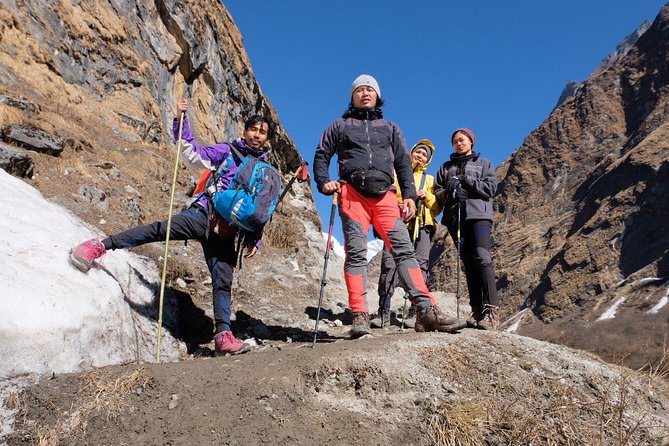
The route from Chhomrong begins with a long descent through thousands of steps to the Chhomrong Khola. You cross a suspension bridge, then climb again toward Khuldighar at about 2,380 meters.
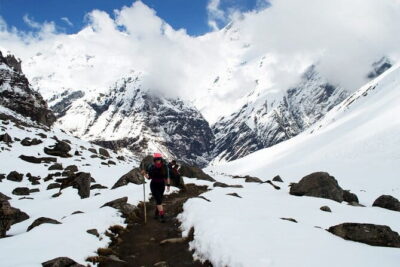
This is classic Annapurna walking. The trail gives you a downhill section that may seem welcome, then asks you to pay for it with another uphill stretch. The pattern can be tough on knees and thighs, particularly if you are carrying too much.
The route continues toward the Himalayan Hotel area, with a walking time of about seven hours. Forest becomes a major feature here, and the sound of the river helps break up the effort. The trees provide shade, but the trail can still feel demanding because of the stairways and changing elevation.
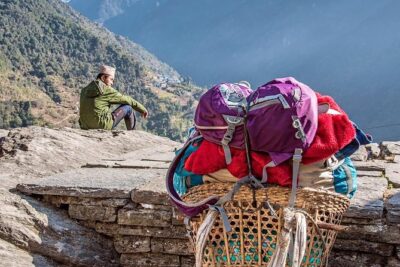
This is a good day to use the porter service properly. The package assigns one porter to two people, with a maximum load of 25 kilograms. You should still carry your day-to-day essentials, but avoiding an overloaded backpack will make the climbs more manageable.
Day 5: Deurali, Machapuchhre Base Camp, and Annapurna Base Camp
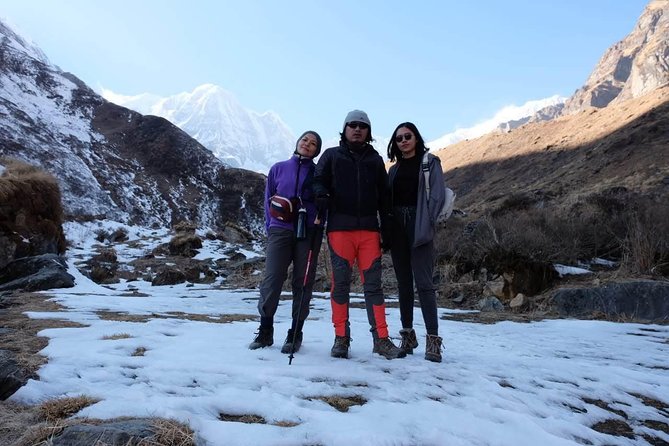
The approach to base camp is the emotional center of the trek. From the Himalayan Hotel area, it takes about an hour to reach Deurali. You then follow a riverbed and tackle a steeper trail toward Bagar before continuing higher.
The walk from Bagar can feel demanding, especially after several days of steps. The route takes you toward Machapuchhre Base Camp, then onward to Annapurna Base Camp. The total day is listed at about six hours, although effort matters more than the clock at this altitude.
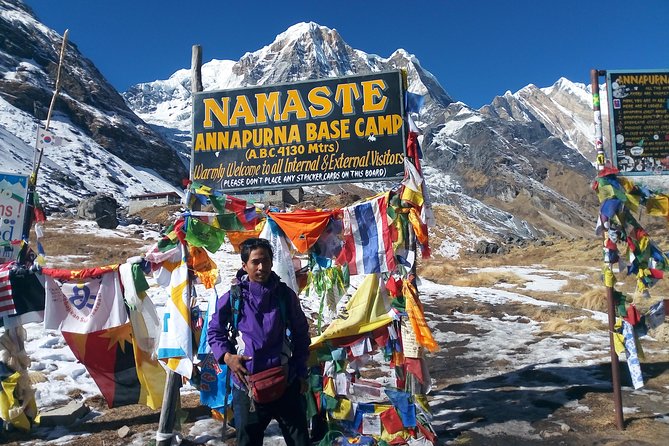
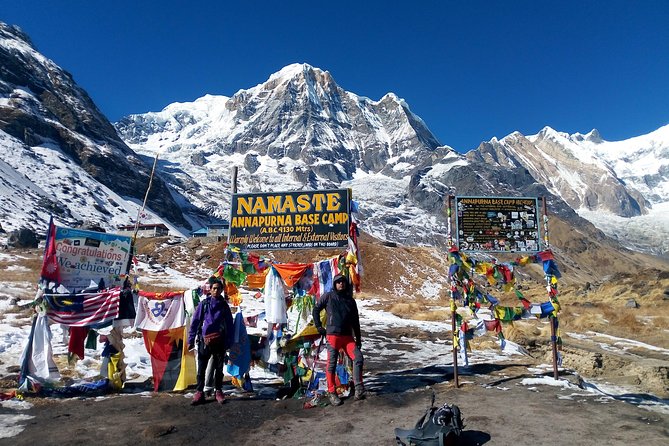
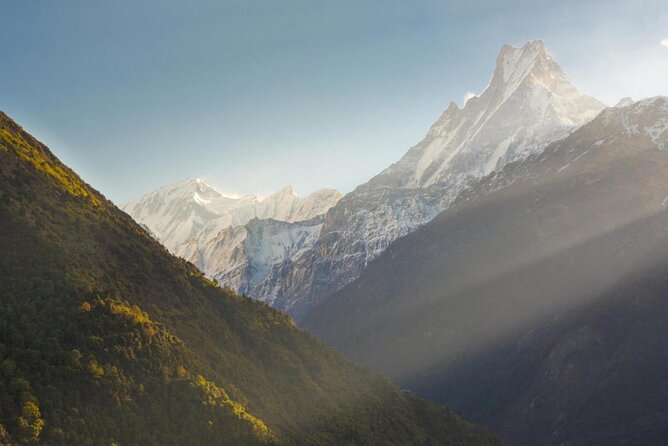
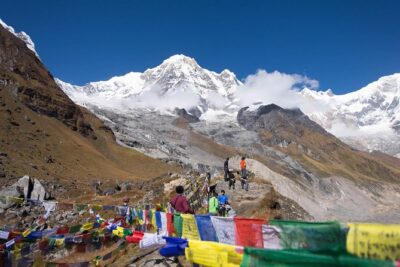
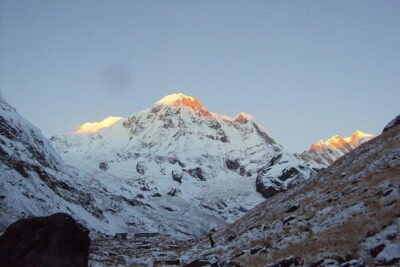
One major change occurs near the final approach. The forested setting fades away, leaving more open mountain terrain. At 4,130 meters, Annapurna Base Camp sits beneath a powerful ring of peaks, including Annapurna I and Machapuchare.
This is where the route earns its reputation. You have not simply driven to a viewpoint. You have walked from village country into a high mountain basin, carrying the memory of every climb behind you.
Cold and altitude can affect your comfort, so the included down jacket and sleeping bag are useful items rather than decorative extras. The package also includes a first aid kit, but emergency rescue is not included as a free tour service. Rescue costs are covered by your own travel insurance, so proper trekking insurance is essential.
Day 6: Sunrise at base camp and the long descent to Bamboo
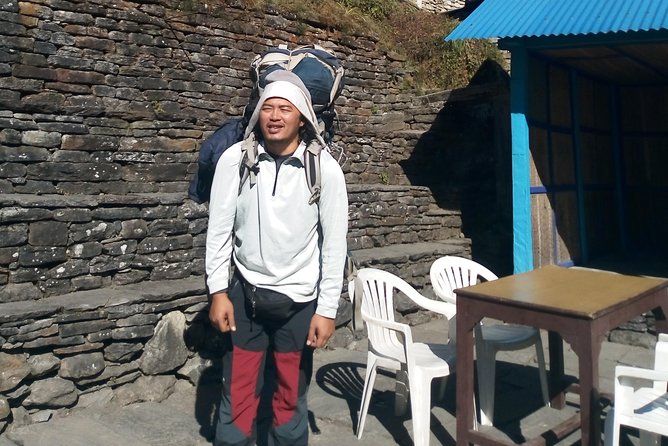
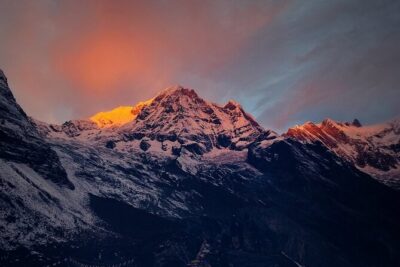
Morning at Annapurna Base Camp is set aside for mountain views before you return along the same trail. Sunrise gives you the best chance to see the surrounding peaks in changing light, although mountain weather is never guaranteed.
The descent to Bamboo takes about eight hours, making this one of the longest stages. Going downhill may sound easier than climbing, but steep steps can be hard on your knees, and tired legs increase the chance of slips.
Bamboo is a practical overnight stop rather than a grand finale. It breaks the return journey and gets you back into greener country. Keep your pace controlled and use trekking poles if you normally rely on them, though poles are not listed among the supplied equipment.
Day 7: Bamboo to Jhinu Danda and its hot-spring option
The route first climbs toward Khuldighar, then drops to the Chhomrong Khola. After crossing back through the valley, you climb stone steps for about an hour to reach Chhomrong before continuing toward Jhinu Danda.
The day takes around six hours. It is another example of the route’s up-and-down rhythm, so do not judge it only by the distance. You may feel tired even on a day that appears shorter than the base camp approach.
Jhinu Danda is a welcome stop because it is associated with natural hot springs. The supplied details identify Jhinu as the overnight point, but they do not promise a hot-spring visit as part of the formal program. Ask your guide about timing and access if this is important to you.
Day 8: Jhinu Danda to Naya Pul, then back to Pokhara
From Jhinu Danda, you follow the Modi Khola for four to five hours toward Birethanti. The route includes the hilly scenery of the Annapurna Conservation Area and provides a gentler final walking day.
Naya Pul is reached after the trail section, followed by about an hour’s drive to Pokhara. Private vehicle transport is included for the Naya Pul to Pokhara transfer, which is useful after several days of walking.
This day closes the trekking loop without making you repeat the full road approach from Pokhara to Ghandruk. You return to a city with more comfort, more food choices, and a chance to wash, rest, and sort your bags.
Day 9: A useful rest day in Pokhara
The free day in Pokhara is one of the smartest parts of the plan. After the demanding return from base camp, you do not have to rush straight into another long transfer.
You can spend the day by Phewa Lake or visit Begnas Lake. The program leaves this sightseeing open rather than forcing you into another paid excursion. That gives you control over your budget and energy.
If you prefer a quiet day, resting is perfectly reasonable. If your legs feel good, Pokhara provides a change from the trail without requiring another major commitment. This flexible day also gives you some protection against a delayed road journey earlier in the trip.
Day 10: Returning from Pokhara to Kathmandu
The final transfer is described as a scenic flight or bus to Kathmandu. The included transport list specifies a tourist bus, so confirm the actual arrangement before you go. A flight would offer a final mountain view and save road time, while a bus would keep the cost structure simpler but take longer.
The day is listed at about eight hours. You return to the Kathmandu meeting point, where the activity ends. Airport pickup and hotel transfer are included at the beginning, along with Kathmandu sightseeing by private vehicle, although the exact sightseeing schedule is not detailed.
What the $996 price really covers
At $996 per person, this trek is not a bare trail package. The price includes a licensed professional guide, porter support, the ACAP permit, TIMS card, transport on the main route, meals, government taxes, and service charges.
It also includes breakfast, lunch, and dinner for eight days. That detail matters because food costs can add up during a mountain trek. The plan does not list every meal for all 10 calendar days, so you should budget separately for meals outside the included eight breakfasts, eight lunches, and eight dinners.
The supplied sleeping bag and down jacket are valuable for anyone who does not want to purchase or carry bulky cold-weather equipment. Guide and porter salary, transport, clothing, insurance, and food are also included for the staff.
The 25-kilogram porter limit applies to two people sharing one porter. Pack within that limit and keep valuable items with you. A maximum group size of 16 offers a social experience without creating a very large walking party.
Guides, porters, and the human side of the trek
The strongest praise has focused on the people leading the route. Sudam and Ganesh are repeatedly singled out for being attentive, experienced, professional, funny, and supportive. One group of 11 appreciated how well they handled different needs, while another person noted that Sudam speaks Chinese.
Those details are useful because guide quality matters on a high-altitude trek. Good support is not only about finding the trail. It also means watching the group’s pace, helping with practical problems, and keeping communication clear when people are tired.
Porters also receive specific praise. Dinesh and Suresh are named as helpful porters in separate accounts. Staff assignments can change, so you should not assume a particular guide or porter is guaranteed, but the repeated emphasis on personal care is a positive sign for this operator.
Who should book this trek?
This route suits you if you want a serious Himalayan walk without committing to a much longer expedition. It is a good fit for someone with moderate physical fitness who can manage six to eight hours of walking and repeated stone stairways.
It also suits first-time Nepal trekkers who value structure. Transport, permits, meals, equipment, guide support, and porter arrangements are handled in one package. You still need to prepare physically and carry suitable personal clothing, but you are not building the entire trip from scratch.
You might prefer another plan if you dislike long bus journeys, want private rooms throughout, or need a highly flexible schedule. The route is fixed enough to keep the group moving, and the final Pokhara to Kathmandu transport needs clarification.
Cancellation terms are fairly strict close to departure. You receive a full refund if you cancel at least six full days before the start time, 50 percent if you cancel two to six full days ahead, and no refund for cancellations less than two full days before departure.
Should you book the Annapurna Base Camp Trek?
I would book this trek if your priority is a strong mountain route with practical support and clear value. The combination of Annapurna scenery, village life, a 4,130-meter goal, experienced named guides, permits, meals, porter service, and equipment makes the $996 cost reasonable.
Before paying, confirm three points: the exact accommodation standard, the transport method from Pokhara to Kathmandu, and the guide assignment. Then train for stairs, keep your pack light, and buy insurance that covers emergency rescue.
Choose this trek for the full journey, not only the base camp photograph. The best parts come from the changing pace: Kathmandu to Pokhara, Ghandruk village paths, Chhomrong steps, forest and river crossings, high mountain air, and the welcome return to Pokhara.
FAQ
Where does the Annapurna Base Camp trek start and finish?
It starts at The Great Adventure Treks and Expedition office on Chhusya Galli in Kathmandu. The activity ends back at the meeting point in Kathmandu.
How high is Annapurna Base Camp?
Annapurna Base Camp is at approximately 4,130 meters.
What transport is included?
The package includes a tourist bus from Kathmandu to Pokhara, private vehicle transport from Pokhara to Naya Pul, private vehicle transport from Naya Pul to Pokhara, and transport from Pokhara to Kathmandu. The final return is described as a scenic flight or bus, so confirm the exact option before departure.
Are a guide and porter included?
Yes. A government-licensed trekking guide is included. One porter is provided for every two people, with a maximum combined baggage limit of 25 kilograms.
Are permits and trekking equipment included?
Yes. The ACAP permit, TIMS card, sleeping bag, and down jacket are included. A first aid kit is also supplied by the operator.
How fit do I need to be?
The activity requires a moderate level of physical fitness. Walking days range from about five to eight hours and include steep climbs, descents, suspension bridges, and many stone steps.
Recently added around Kathmandu
- Ghorepani Poon Hill Trek★ 5.0 · 16 reviews
- Private Manaslu Circuit Trek at Himalayas★ 5.0 · 3 reviews
- Amazing 1 Day Trekking Experience in Kathmandu Nepal★ 5.0 · 24 reviews
- Ghorepani Poonhill Trek★ 5.0 · 5 reviews
- Upper Mustang Trekking★ 5.0 · 2 reviews
- Upper Mustang Trekking★ 3.0 · 2 reviews
- Upper Mustang Trekking★ 5.0 · 4 reviews
- Upper Mustang Trek★ 5.0 · 5 reviews
Annapurna Base Camp Treks, compared.

Trekking in Annapurna/Langtang/Everest/Upper Mustang regions
Read our review →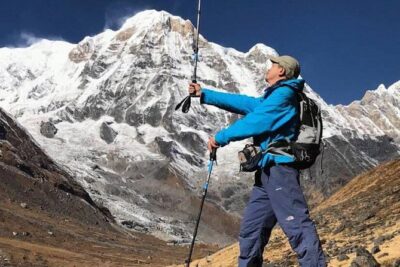
Kathmandu to Annapurna Base Camp (ABC) 5-Day Trek
Read our review →Browse the lists this tour appears in