
REVIEW · KATHMANDU
Annapurna Base Camp Short trek
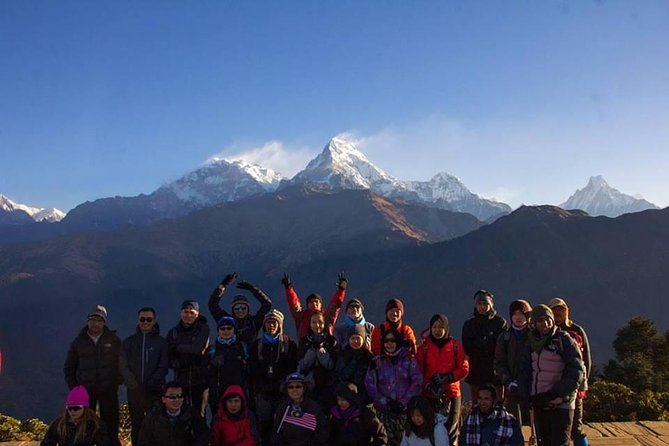
Mountain mornings do not get much better than this. This eight-day Annapurna Base Camp trek takes you from Kathmandu through Pokhara, Gurung villages, rhododendron and bamboo forests, and finally to the foot of the Annapurna Massif at 4,130 meters. I like the strong mix of mountain scenery and local life, especially the time in Ghandruk, Chhomrong, and the hot springs at Jhinu Danda.
I also like that the price of $897.44 per person covers a guide, meals, trail lodging, permits, and two hotel nights in Pokhara. The main drawback is the pace. Reaching Annapurna Base Camp and returning through the high valleys involves long walking days, including one of about eight hours, plus steep stone stairs and a rapid rise in altitude.
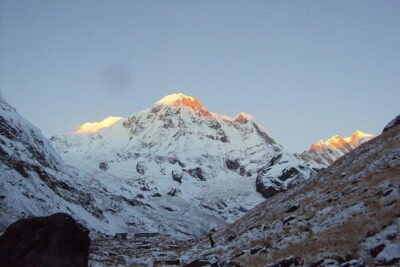
- A dramatic finish: Sunrise at Annapurna Base Camp brings the Annapurna range and Machhapuchhre into view at 4,130 meters.
- A changing trail: You move from terraced farmland and villages to forests, open meadows, rocky paths, and high mountain terrain.
- A useful stop in Pokhara: Two hotel nights provide time to rest, explore the lake city, and break up the long road journeys.
- Personal guiding: The trek includes one professional guide, with food, lodging, insurance, and allowances covered for the guide.
- A private outing: Only your own group takes part, which can make the pace and daily routine easier to manage.
- A welcome reward: The natural hot spring at Jhinu Danda gives you a chance to soak after several demanding days.
What the $897 price really covers
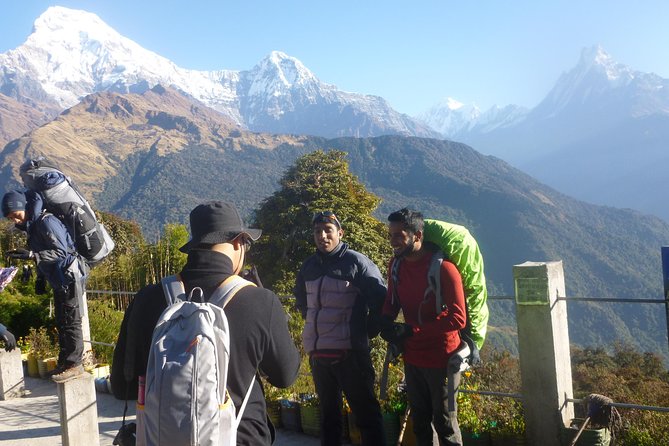
At $897.44, this is not simply a walking package. The cost includes two nights in a Pokhara hotel with breakfast, TIMS permits, three meals a day during the trek, overnight lodging along the trail, and a professional trekking guide.
That package has real value because food and lodging become part of the daily challenge once you leave the road. You are not arranging every meal or hunting for a room at the end of a long climb. The guide’s insurance, meals, and allowances are also included, which helps make the price easier to compare with cheaper-looking packages.
The price does not cover travel or medical insurance, emergency evacuation, personal phone calls, alcoholic drinks, donations, or tips. Tips for the guide and porters are expected, so include that in your budget from the start rather than treating it as a surprise at the end.
Porters are mentioned in the feedback, and names including Jog Gurung, Ganesh, Osman, Hori, and Phoindra Gurung receive warm praise for their help. Since the exact guide and porter team can vary, I would confirm the assigned staff before departure. The personal support is one of the strongest reasons to choose an organized trek instead of trying to arrange each section alone.
Day 1: Kathmandu to Pokhara by the Prithvi Highway
The trip begins with pickup at Tribhuvan Airport in Kathmandu, followed by a long drive to Pokhara along the Prithvi Highway. This is a road day, not a trekking day, and the route gives you a useful look at rural Nepal.
From the vehicle window, you will see terraced farmland, the Trishuli River, hills, and a series of towns along the highway. The scenery helps explain how closely daily life is tied to rivers, slopes, roads, and farming. The drive takes much of the day, so do not expect a relaxed transfer.
No meals are included on this first day. You will set your luggage at the Pokhara hotel and have time for boating, cycling, or walking around the city. Pokhara is often called the City of Lakes, and this stop provides a softer introduction to the trek before the long trail days begin.
The two-night Pokhara hotel allocation is especially useful at the start and end of the walking section. It gives you a fixed place for luggage and a chance to enjoy the city again after returning from the mountains.
More Annapurna Treks in Kathmandu
- Annapurna Circuit Trek with Tilicho Lake
★ 5.0 · 368 reviews - Annapurna base camp trek 5 Days
★ 5.0 · 252 reviews - 14-Day Private Annapurna Base Camp Trek
★ 5.0 · 180 reviews
Day 2: Ghandruk, Kimrong River, and Kimrong Village
The next morning, you drive to Ghandruk, a Gurung village known for views of the Annapurna range and Machhapuchhre, also called Fishtail Mountain. The approach by road cuts out some lower walking, which is one reason this version is called a short trek.
Ghandruk is more than a starting point. It gives you an early look at village life, mountain farming, and Gurung culture before the trail becomes more remote. Cherry blossoms can add color in the area, depending on the season.
The walk then descends through forest to the Kimrong River. After crossing the river area, the route climbs again toward Kimrong Village. This is a four-hour walking day after about three hours of driving, so it is active but not yet the hardest section.
The repeated descent and climb are worth noticing. Mountain trails often trade height for access to rivers and villages, and the route is not a steady uphill line. You will need comfortable shoes and patience with uneven surfaces.
Breakfast, lunch, and dinner are included from this point, along with overnight lodging on the trail. The accommodation is described as hotel or lodge accommodation, so you should expect simple trekking facilities rather than city-style comfort.
Day 3: Chhomrong, Sinuwa, Bamboo, and Deurali
This is a demanding day of roughly six hours on foot. The trail climbs through forest to open ground before reaching Chhomrong at about 2,310 meters.
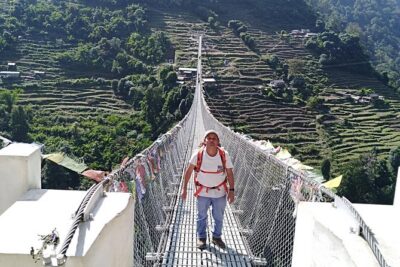
Chhomrong is an important point on the route because the village gives you another mountain setting before the trail enters thicker forest. After Chhomrong, you descend a long stone staircase, cross a suspension bridge, and then climb again toward Sinuwa.
This up-and-down pattern can surprise you. Distance alone does not tell the whole story here. The stairs may feel harder than a smooth uphill path, especially after the earlier descent has already taken energy from your legs.
From Sinuwa, the route continues through bamboo forest and hillside terrain toward Bamboo and then Deurali. The forest provides shade and a cooler walking environment, but it also limits long-distance views in places. You trade open mountain panoramas for a close look at the plant life of the Annapurna region.
All three meals are included. The combination of a guide, fixed lodging, and meals matters on this day because the walking is long enough that small planning errors can become tiring by evening.
Day 4: Machhapuchhre Base Camp to Annapurna Base Camp
This is the trek’s main test and its great reward. The day begins early, with about eight hours of walking over rocky trails, grassland, river sections, and a long staircase to Machhapuchhre Base Camp.
The open grassy areas create a welcome change after the forest. The mountains appear larger and brighter as you gain height, and sunlight can make the peaks look almost polished. The trail follows the river for sections, adding the sound of fast water to the otherwise quiet route.
Machhapuchhre Base Camp is a major visual moment. The famous fishtail mountain rises close by, and its shape is especially striking from this high position. After a rest, you continue toward Annapurna Base Camp.
The final section is not something to rush. You are heading to the highest point of the trip, 4,130 meters, and the air is thinner than it was in the villages below. The itinerary does not list a separate acclimatization day, so you should take the guide’s pace seriously and report any difficulty rather than trying to prove you can push on.
Annapurna Base Camp sits beneath the Annapurna Massif and offers a remarkable sense of arrival. You are surrounded by high Himalayan peaks, with snow and rock replacing the forests and farmland below. The setting is powerful partly because the route has shown you so many different environments along the way.
Same trailhead, a longer or shorter day out:
- Everest Base Camp Trek – 14 Days
★ 5.0 · 1,499 reviews - Everest Base Camp Trek
★ 5.0 · 842 reviews - Everest Base Camp Trekking
★ 5.0 · 485 reviews - Everest Base Camp Trekking – 13 Day
★ 5.0 · 365 reviews
Day 5: Sunrise at Annapurna Base Camp and the return to Sinuwa
The early start is worth it. Sunrise reflecting across the Annapurna range is the signature moment of the trek, and the high position gives you a wide view as the light changes across the peaks.
After breakfast, you retrace the route downhill. The return is described as easier because much of the route loses altitude, though downhill walking has its own strain on knees and feet.
You pass the grassland, return through the forest, cross Deurali, and continue toward Sinuwa. The day takes about seven hours, so the sunrise does not mean a slow morning. You still have a long distance to cover after breakfast.
This is a good reason to keep your packing practical. A headlamp, warm clothing, water, and easy access to personal essentials are useful for an early start, though the supplied details do not specify a full equipment list. You should ask the operator what is provided and what you must bring.
Day 6: Chhomrong and the hot springs at Jhinu Danda
From Sinuwa, the trail drops down long stairs to the suspension bridge, then climbs another lengthy set of stairs to Chhomrong. You will recognize the pattern by now: a river crossing often means another climb afterward.
The route back uses a different path from Chhomrong. You descend a steep hill to Jhinu Danda, where the famous natural hot spring offers a chance to soak. After several days of walking, this is a well-timed break, not just a sightseeing stop.
The walk continues downhill after the hot spring, with an overnight stay at an inn. The day takes about six hours, and the steep descent can be more tiring than the number suggests. Trekking poles may be useful, though they are not listed as included.
Jhinu Danda also adds variety to the trip. The trek is not only about reaching a high mountain viewpoint. It includes forests, village paths, river crossings, and a warm-water stop that changes the rhythm of the journey.
Day 7: Nayapul and the return to Pokhara
The final walking day is gentler. After breakfast, you follow farmland and terraced fields toward Nayapul. The route is described as pleasant, with few climbs, and the walking takes about two hours.
From Nayapul, you drive for roughly three hours along winding roads beside the Modi Khola before returning to Pokhara. The river and farmland keep the transfer scenic, though road travel in the mountains can be tiring after a week of walking.
Back in Pokhara, you return to the hotel and have free time. This is a good chance to rest, enjoy the city, or simply deal with laundry and luggage before the final drive. The package includes breakfast that morning, but the supplied details do not list lunch or dinner for this day.
Day 8: Pokhara to Kathmandu
The final day repeats the highway journey to Kathmandu. Expect views of hills, white rivers, and terraced farmland from the window, with a stop for lunch and a toilet break along the highway.
Once in Kathmandu, you can freshen up, walk around Thamel, enjoy the evening, and shop for souvenirs. The schedule gives you a useful transition from the quiet of the mountains back to the capital’s busy streets.
Because the drive is long, you may prefer to treat this as a travel day rather than planning a packed Kathmandu program. The tour ends with the return to the capital, and the meeting point is listed as Tribhuvan Airport in Kathmandu.
The real challenge: stairs, altitude, and changing conditions
The itinerary says most people can participate, but that does not mean the trek is easy. The route includes steep hills, long stone staircases, suspension bridges, rocky trails, and several six-to-eight-hour walking days.
The highest point is 4,130 meters. That altitude is the main concern, especially because the schedule moves upward over a short period. You should be honest about how you feel, follow your guide’s advice, and avoid treating the timetable as more important than your health.
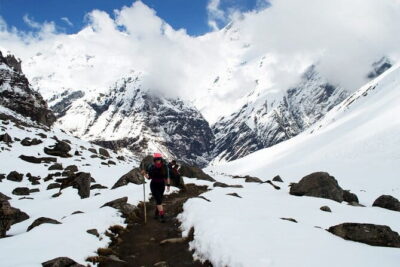
Mountain weather can also change quickly. One group described experiencing rain, hail, snow, and strong weather during an ABC trek. That makes layered clothing and waterproof protection sensible, even though the package details do not provide a mandatory packing list.
The scenery changes constantly, which is one of the trek’s best features. You begin among farms and villages, move through rhododendron, oak, and bamboo forest, follow rivers and open meadows, and finish among snow-covered Himalayan peaks.
Guide support and the private-group advantage
This is a private tour, so only your group participates. That can make a real difference on a strenuous route. You can discuss walking speed, breaks, and daily needs with your guide instead of adjusting to a large mixed group.
The strongest praise focuses on the local team. Jog Gurung and Ganesh are singled out for careful support, while porters including Osman, Hori, and Phoindra Gurung are praised for being helpful and attentive. The comments also describe guides answering questions, assisting at each stage, and creating a friendly atmosphere.
You should still confirm the current team, porter arrangements, and luggage limits before booking. The package clearly includes one professional guide, but the porter details are less precise than the guide details.
A good guide is valuable here for more than navigation. The person leading you can help judge your pace, explain village life, and respond when the weather or trail conditions change. That support is a central part of the price.
Who should book this Annapurna trek?
I would recommend this trip to you if you want a compact route to Annapurna Base Camp and prefer an organized private outing. It suits people who value mountain scenery, village contact, included meals, and local support more than luxury accommodation.
It is also a strong option if you want to combine a serious trek with time in Pokhara. The city breaks up the road journeys and gives you a more relaxed setting before and after the trail.
I would be cautious if you dislike long drives, steep stairs, basic lodge accommodation, or early starts. The itinerary also offers no separate rest day at altitude, so you should be comfortable with a demanding schedule and ready to adjust if your guide advises it.
Free cancellation is available when you cancel at least 24 hours before the local start time. Changes or cancellations inside that period are not accepted for a refund, so check your plans carefully before the final day.
Should you book it?
Book this trek if your priority is reaching Annapurna Base Camp in eight days with meals, permits, lodging, Pokhara hotels, and a private guide already arranged. The combination of mountain views, Gurung villages, forests, rivers, sunrise, and Jhinu Danda’s hot spring gives you far more than a quick walk to a viewpoint.
Before paying, confirm the assigned guide, porter support, insurance requirements, emergency arrangements, and what equipment you must bring. If you accept the long drives and strenuous stairs, the package offers solid value and a well-rounded introduction to the Annapurna region.
FAQ
Where does the Annapurna Base Camp trek begin?
The meeting point is Tribhuvan Airport in Kathmandu, Nepal. The itinerary then continues by road to Pokhara.
How long does the trek take?
The experience lasts approximately eight days. It includes travel between Kathmandu and Pokhara, the walking route to Annapurna Base Camp, and the return journey.
What is the highest point of the trek?
The highest point is Annapurna Base Camp at 4,130 meters.
Is hotel accommodation included?
Yes. Two nights in a Pokhara hotel with breakfast are included. Overnight accommodation along the trekking route is also included in hotels or lodges.
Are meals included during the trek?
Three meals per day are included during the trekking section. The first day from Kathmandu to Pokhara has no meals included.
Is a guide included?
Yes. The package includes one professional trekking guide, along with the guide’s necessary insurance, meals, and allowances.
Are trekking permits included?
TIMS permits are included in the price.
Is this a private tour?
Yes. Only your group participates in the private tour or activity.
Can I cancel for a full refund?
You can receive a full refund if you cancel at least 24 hours before the experience begins. Cancellations or changes made less than 24 hours before the start time are not refunded.
Recently added around Kathmandu
- Ghorepani Poon Hill Trek★ 5.0 · 16 reviews
- Private Manaslu Circuit Trek at Himalayas★ 5.0 · 3 reviews
- Amazing 1 Day Trekking Experience in Kathmandu Nepal★ 5.0 · 24 reviews
- Ghorepani Poonhill Trek★ 5.0 · 5 reviews
- Upper Mustang Trekking★ 5.0 · 2 reviews
- Upper Mustang Trekking★ 3.0 · 2 reviews
- Upper Mustang Trekking★ 5.0 · 4 reviews
- Upper Mustang Trek★ 5.0 · 5 reviews
Annapurna Base Camp Treks, compared.

Trekking in Annapurna/Langtang/Everest/Upper Mustang regions
Read our review →
Kathmandu to Annapurna Base Camp (ABC) 5-Day Trek
Read our review →Browse the lists this tour appears in