
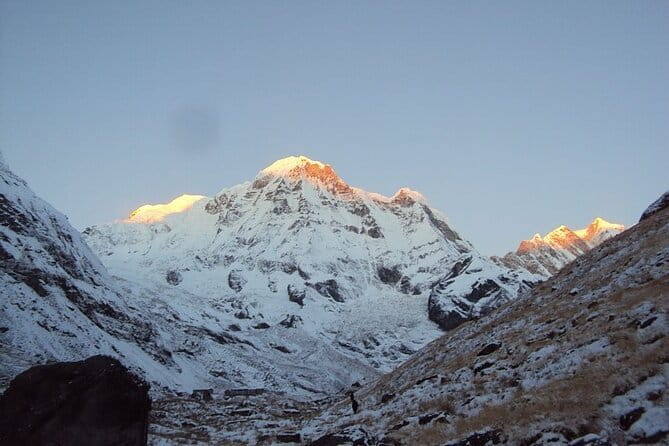
REVIEW · KATHMANDU
Annapurna base camp trek
The Himalayas reward steady feet. This roughly 15-day trip combines Annapurna Base Camp at 4,130 meters with Poon Hill, Pokhara, mountain villages, and time among Gurung and Magar communities. I like the smart route design: you begin with Pokhara and Poon Hill before heading higher, and I like the mix of big mountain views and everyday village life. The main drawback is the physical demand, especially if you are not used to walking five to six hours a day at altitude.
I also like that the group is limited to 15 people and that a guide, driver, accommodation, breakfast, entrance fees, and hotel transfers are included. But the $999 price does not cover all meals and drinks, and the exact 15-day schedule needs careful checking before you pay. The trek itself is often described as lasting about 7 to 12 days, so the full program may include transport and other days around it.
Key points at a glance
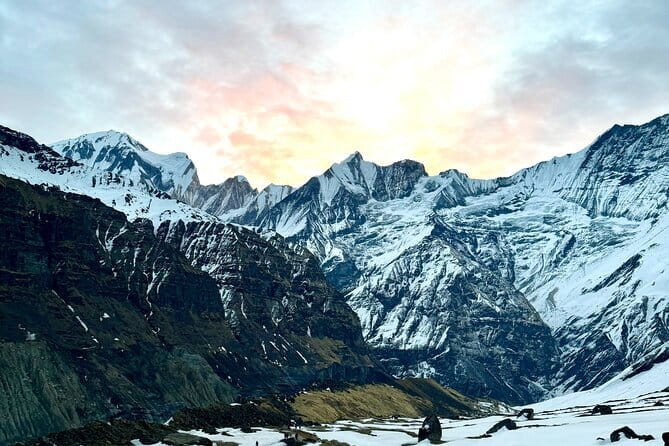
- Poon Hill at 3,210 meters: Start the walking portion with a famous sunrise and sunset viewpoint.
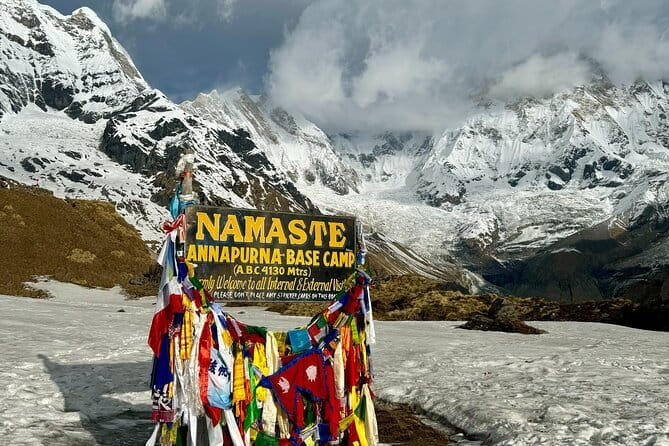
- Annapurna Base Camp at 4,130 meters: Reach a high mountain bowl surrounded by the Annapurna range and Machhapuchhre.
- Machhapuchhre Base Camp: Add an important stop before the final push to Annapurna Base Camp.
- Gurung and Magar villages: See distinctive homes, local food, and Hindu and Buddhist customs.
- Pokhara before and after the trek: Enjoy lakes, caves, museums, restaurants, bars, paragliding, and other activities.
- Small group, moderate fitness: The maximum group size is 15, but you still need to manage long walking days and altitude.
Why this route works so well
The Annapurna Base Camp trek gives you more than a mountain endpoint. It moves through several kinds of Nepal in one trip: the easygoing lake city of Pokhara, lower villages and forests, high Himalayan settlements, and a dramatic base camp surrounded by snow-covered peaks.
I like the route’s two-part character. The first phase leads toward Ghorepani and Poon Hill. The second heads farther into the mountain belt, where the views become larger and the villages reflect Tibetan influence. This gives you time to adjust to the walking before reaching the highest point.
The scenery includes Annapurna, Dhaulagiri, Machhapuchhre, Neelgiri, and Himchuli. You also pass through parts of the Annapurna Conservation Area, where rare animal species may be found. Wildlife is not guaranteed, but the protected setting adds more value than a simple point-to-point hike.
The cultural side matters just as much. Gurung and Magar communities have their own housing styles, food traditions, and hospitality. You may also meet people of Tibetan origin farther along the route. This is one reason I prefer this trek to a walk that simply races from one mountain viewpoint to another.
More Annapurna Treks in Kathmandu
- Annapurna Circuit Trek with Tilicho Lake
★ 5.0 · 368 reviews - Annapurna base camp trek 5 Days
★ 5.0 · 252 reviews - 14-Day Private Annapurna Base Camp Trek
★ 5.0 · 180 reviews
Pokhara is more than a starting point
Pokhara is often treated as a short stop before the trail. That would be a mistake. This lake city has a slower rhythm than Kathmandu and gives you room to get your bearings before a demanding walk.
You can find lakes, caves, museums, restaurants, bars, and paragliding spots around town. The trip also mentions hot-air ballooning, paragliding, and a zip flyer as possible additions. These activities are not part of the listed trek inclusions, so you should treat them as optional extras that require their own time and payment.
Pokhara is useful for practical reasons too. The walking route begins at Nayapul, about a two-hour drive from Pokhara. The included driver and hotel transfers make this connection easier, especially if you are carrying a full trekking bag.
Do not expect the $999 price to cover every Pokhara activity. It is better viewed as the cost of the organized trek framework, not a complete holiday budget.
From Nayapul to Poon Hill
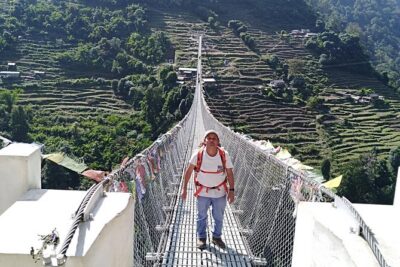
The formal walking portion begins at Nayapul. From there, the first phase leads through green woodland and local villages toward Ghorepani and Poon Hill.
The forests include rhododendron, fig, bamboo, juniper, and other plants. In season, rhododendron color can make the lower sections especially attractive. The path is not just a mountain road with occasional scenery. It has changing plant life, village homes, and glimpses of the larger peaks ahead.
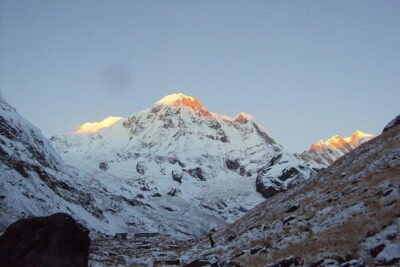
Poon Hill reaches 3,210 meters and is included for sunrise and sunset views. This is an important feature of the route because it gives you a high viewpoint before Annapurna Base Camp. You can see the Annapurna and Dhaulagiri massifs from this area, weather permitting.
The early morning start for sunrise can be tiring, particularly after a long walking day. Still, I think Poon Hill earns its place. It adds a clear visual reward early in the trek and breaks up the long climb toward the base camp.
You should also understand that moderate does not mean effortless. One account described daily walking as five to six hours, with some days lasting seven to twelve hours depending on the route and conditions. Your guide can help with pacing, but your fitness remains your responsibility.
Into the higher Himalayan belt
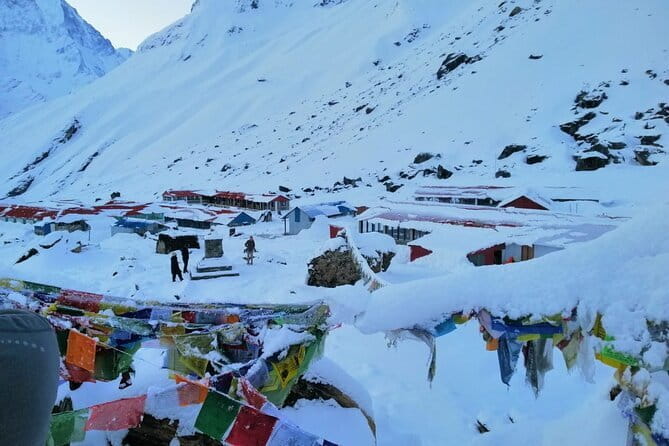
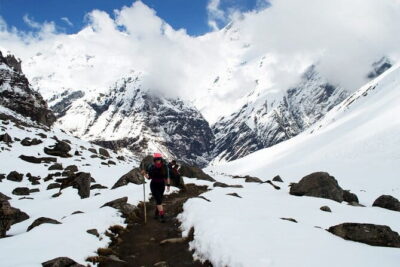
After Poon Hill, the route continues toward higher settlements and the main Annapurna range. The scenery changes as you leave the lower forest sections behind. Machhapuchhre, Dhaulagiri, Annapurna, Neelgiri, and Himchuli become regular parts of the view.
The villages are a major part of the experience. Gurung, Ghale, and Magar culture is present along the route, with a blend of Hindu and Buddhist customs. Farther north, Tibetan-origin communities add another cultural layer.
You should allow yourself time to notice the details: house design, food, hillside paths, and the way villages function at altitude. The supplied description points to distinctive housing styles, typical cuisines, and local hospitality. Those details can be more memorable than another photograph of a distant summit.
Accommodation is included according to the itinerary, but the supplied information does not specify room types or standards. Ask before booking if you need private rooms, specific bathroom arrangements, or a clear list of overnight stops.
Same trailhead, a longer or shorter day out:
- Everest Base Camp Trek – 14 Days
★ 5.0 · 1,499 reviews - Everest Base Camp Trek
★ 5.0 · 842 reviews - Everest Base Camp Trekking
★ 5.0 · 485 reviews - Everest Base Camp Trekking – 13 Day
★ 5.0 · 365 reviews
Machhapuchhre Base Camp adds a special moment
Machhapuchhre Base Camp is one of the route’s strongest features. Machhapuchhre, also called Fishtail, is one of the most recognizable peaks in the area, and reaching its base camp gives you a direct connection to the mountain rather than a distant viewpoint.
The stop also works as a useful stage before Annapurna Base Camp. You are already in the high mountain zone, surrounded by the peaks that define the trek. The air, walking pace, and weather can feel very different from the lower villages.
This is where you should take the altitude seriously. At 4,130 meters, Annapurna Base Camp is high enough that tiredness and changing conditions can affect the day. The tour requires moderate physical fitness, but the description does not promise a medical or altitude specialist. Keep your guide informed if you feel unwell and do not treat the schedule as a race.
Annapurna Base Camp at 4,130 meters
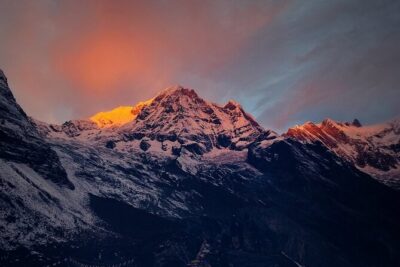
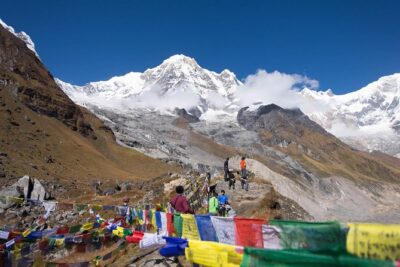
The main goal is Annapurna Base Camp. The setting brings together the Annapurna Massif, Machhapuchhre, Dhaulagiri, and other high peaks in one powerful mountain scene.
The appeal is not only reaching a number on an elevation sign. It is the sense of entering a mountain amphitheater after days of walking through villages and forest. You have earned the views step by step, which makes time at the base camp more satisfying.
Bring enough camera storage. The route offers repeated chances to photograph the peaks, but the best views depend on weather and light. Clouds can hide the summits, and no tour can guarantee a clear view.
The base camp is also where the difference between an attractive brochure and a demanding trip becomes clear. The trek can suit families and younger walkers who are fit and prepared. A family account described two children, aged 12 and 14, enjoying the route, but that does not make it easy for every child. Fitness, patience, and sensible pacing matter more than age alone.
The return route and Jhinu hot springs
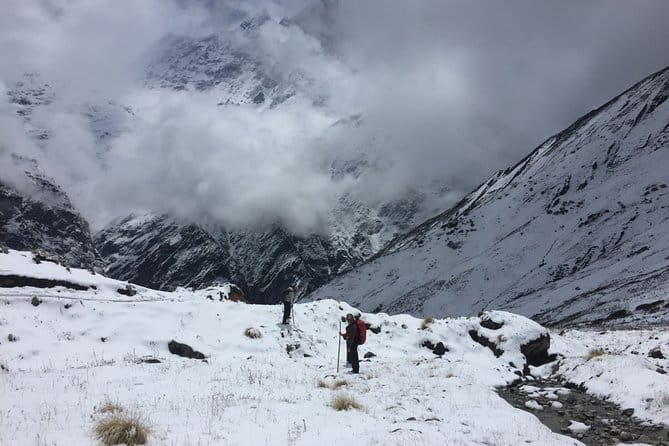
The return journey is not simply an anticlimax. One of the most appealing features is the natural hot-water spring near Jhinu.
After several days of walking, a hot spring can be a welcome way to loosen tired muscles. It gives the return phase a clear reward and adds a different kind of experience to the mountain itinerary. You move from high peaks back toward lower villages, then finish with a moment of rest.
The listing does not provide a full day-by-day schedule, so you should ask how much time is allocated at Jhinu and whether transport back to Pokhara is included on a particular day. Hotel pickup and drop-off are listed, but the exact sequence should be confirmed.
What the $999 price includes
At $999 per person, the tour offers reasonable value if you want an organized trek rather than arranging every piece yourself. The listed inclusions are:
- Accommodation according to the itinerary
- Breakfast
- Entrance fees
- Driver and guide
- Hotel pickup
- Hotel drop-off
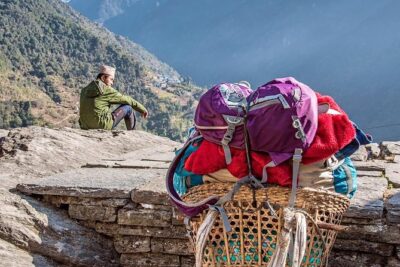
The guide and driver are especially useful on a route with several transfers and changing trail conditions. One highly praised aspect of the experience is the personal care provided by the guide and porter. The guide was described as patient and willing to show as much as possible, which is precisely the kind of service that can make a long trek feel manageable.
But you still need to budget beyond the headline price. Food and drinks are not included, apart from the stated breakfasts. Alcoholic drinks can be purchased, but the minimum drinking age is 18. Optional Pokhara activities such as paragliding, hot-air ballooning, and zip flying also appear to be extra.
One past account advised buying the trekking permit in Kathmandu or Pokhara. Since the included list does not clearly state that a permit is covered, ask the operator exactly which permits and fees are included before departure.
Group size, fitness, and clothing
The maximum group size is 15 people. That is small enough to keep the group practical on the trail, though it is not a private trek. If you prefer a quiet pace or need frequent stops, ask how the guide handles different walking speeds.
The official advice calls for moderate physical fitness and a moderate amount of walking. In practical terms, you should be ready for repeated walking days, uphill and downhill sections, and altitude up to 4,130 meters. The published review details put typical walking at five to six hours per day, with some days longer.
Clothing also matters beyond the trail. Places of worship and selected museums require knees and shoulders to be covered. Shorts and sleeveless tops are not accepted in those places, for both men and women. Pack a light layer that gives you respectful coverage so you are not caught out during a cultural stop.
Winter can be cold and less comfortable for people who dislike low temperatures. October can also be busy, with many people on the trail, and conditions may require a flexible schedule. The best choice of season depends on your tolerance for cold, crowds, and changing mountain weather.
Meeting point and cancellation terms
The trip begins at the TIA Domestic Terminal parking lot in Kathmandu, postal code 44600. It ends back at the meeting point, although the route includes Pokhara and the trek itself.
Confirmation is provided at booking, and the tour is near public transportation. Free cancellation is available if you cancel at least 24 hours before the local start time. Less than 24 hours means no refund, and changes inside that window are not accepted.
These rules are simple, but the more important booking step is asking for the exact itinerary. Confirm the number of nights in Pokhara, the walking days, the accommodation standard, permit coverage, meal arrangements, porter support, and transport timing.
Who should book this trek?
I would recommend this experience to you if you want a classic Himalayan trek with cultural stops, a major base camp, and a few comforts arranged in advance. It suits people who like walking for several hours a day and who want a guide rather than a fully independent trip.
It may also work for fit families and teenagers, provided everyone understands the altitude and daily effort. The route offers enough variety to keep younger walkers interested, especially with Pokhara, Poon Hill, mountain villages, Machhapuchhre Base Camp, and the hot springs.
I would be cautious if you want a relaxed sightseeing holiday. This is not simply a scenic bus tour with a short mountain walk. The route reaches 4,130 meters, and the exact walking schedule may be demanding.
Final call: good value with a few questions first
The Annapurna Base Camp trek has the right ingredients for a memorable Nepal trip: Poon Hill sunrise, excellent mountain views, village culture, Pokhara, Machhapuchhre Base Camp, and a hot spring near Jhinu. The praise for patient guides and helpful porters is encouraging, and the small group size adds practical value.
Book it if you are comfortable with long walking days and are willing to confirm the details before departure. Ask about permits, meals, porter service, room arrangements, and the precise 15-day plan. At $999, it can be a strong package, but only if you know exactly what the price covers.
FAQ
How long is the Annapurna Base Camp trek?
The advertised experience lasts approximately 15 days. The walking portion is described in related details as lasting about 7 to 12 days, so you should confirm how the full schedule divides trekking, transport, and time in Pokhara.
What is the highest point of the trek?
Annapurna Base Camp is the highest stated point, at 4,130 meters. Poon Hill reaches 3,210 meters.
Is breakfast included?
Yes. Breakfast is included, while food and drinks are otherwise listed as not included.
Where does the tour begin and end?
The meeting point is the TIA Domestic Terminal parking lot in Kathmandu. The activity ends back at the meeting point.
How fit do I need to be?
You should have a moderate level of physical fitness. The trip involves a moderate amount of walking, with typical walking days described as five to six hours and some days lasting longer.
Can I cancel for a full refund?
Yes, if you cancel at least 24 hours before the experience start time. Cancellations or changes made less than 24 hours before the start are not accepted for a refund.
Recently added around Kathmandu
- Ghorepani Poon Hill Trek★ 5.0 · 16 reviews
- Private Manaslu Circuit Trek at Himalayas★ 5.0 · 3 reviews
- Amazing 1 Day Trekking Experience in Kathmandu Nepal★ 5.0 · 24 reviews
- Ghorepani Poonhill Trek★ 5.0 · 5 reviews
- Upper Mustang Trekking★ 5.0 · 2 reviews
- Upper Mustang Trekking★ 3.0 · 2 reviews
- Upper Mustang Trekking★ 5.0 · 4 reviews
- Upper Mustang Trek★ 5.0 · 5 reviews
Annapurna Base Camp Treks, compared.
Trekking in Annapurna/Langtang/Everest/Upper Mustang regions
Read our review →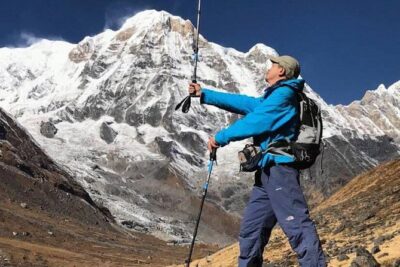
Kathmandu to Annapurna Base Camp (ABC) 5-Day Trek
Read our review →Browse the lists this tour appears in