
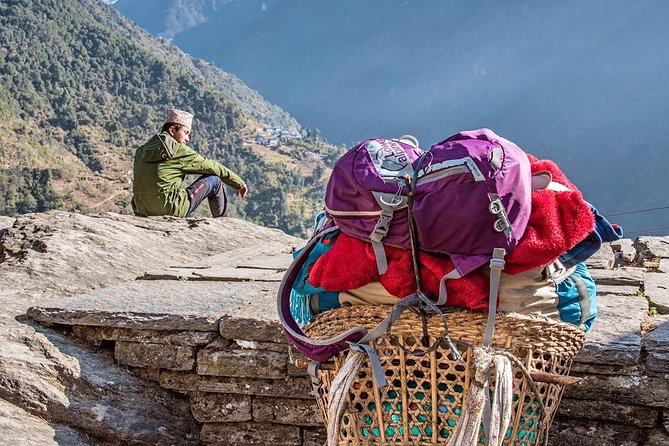
REVIEW · KATHMANDU
Annapurna base camp trek 5 Days
Mountain views reward every uphill step. This Annapurna Base Camp trek combines transport from Kathmandu, tea house stays, meals, permits, and an English-speaking guide in one small-group trip. I like that the route includes both the famous Fish Tail mountain, also called Machhapuchare, and the chance to walk through rhododendron, bamboo, and oak forests. I also like that the trip ends in Pokhara, giving you time around the lakeside town rather than rushing straight back to Kathmandu.
The main concern is organization. Two poor ratings describe confusion over the trek plan and a problem with water-purification tablets, which were expected but initially forgotten. The overall score is still excellent at 5 out of 5 from 252 ratings, with 99 percent recommending the experience, but you should confirm the equipment and daily plan before departure.
Key points to know before booking
- Six days overall, five days of meals and trekking logistics: The trip begins with the road journey from Kathmandu to Pokhara and ends after the return from the mountain trail.
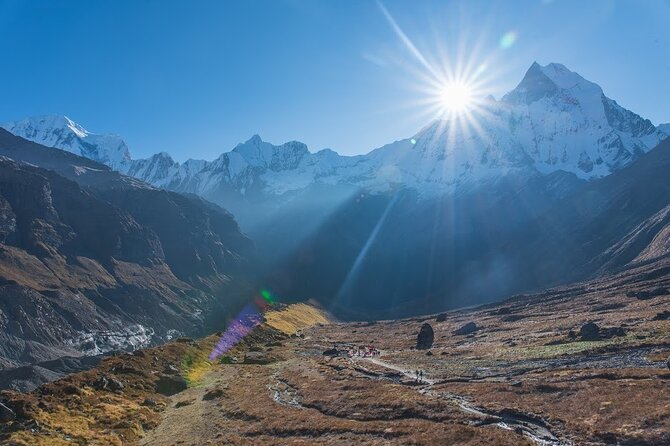
- Fish Tail is one of the visual prizes: Machhapuchare rises above the route with its distinctive double-peaked profile.
- Tea house accommodation keeps the price practical: You sleep in trekking lodges rather than hotels, with breakfast, lunch, and dinner included during the trek.
- The route is physically serious: You need a moderate level of fitness for steep climbs, descents, and several hours of walking each day.
- The group is limited to 12 people: That is small enough for a more personal walking experience, though the guide remains important for keeping the group together.
- The price covers a lot: At $699 per person, transport, permits, guide services, food, lodging, down jacket, sleeping bag, and airport transfers are included.
What the $699 price really covers
At $699, this is not simply a guided walk. The fee bundles the parts of a Nepal trek that can become complicated when arranged separately: airport pickup and drop-off, the tourist bus to Pokhara, local road transport, trekking permits, tea house accommodation, meals, guide services, and equipment.
You also receive a down jacket and sleeping bag. That matters because cold-weather gear adds cost and luggage weight if you bring everything yourself. The package includes a trekking guide or sherpa, an achievement certificate, a hiking T-shirt, a farewell dinner, and the guide’s food, insurance, equipment, transportation, and salary.
The value is strongest if you are arriving in Nepal without a local support network. You do not need to arrange each lodge, permit, meal, and mountain transfer on your own. The guide handles the main arrangements while you focus on walking.
Still, $699 does not cover everything. Food in Kathmandu and Pokhara, your arrival visa, tips, travel insurance, and extra accommodation outside the planned schedule are separate. The package also lists five breakfasts, five lunches, and five dinners, so you should budget for meals outside those included days.
More Annapurna Treks in Kathmandu
- Annapurna Circuit Trek with Tilicho Lake
★ 5.0 · 368 reviews - 14-Day Private Annapurna Base Camp Trek
★ 5.0 · 180 reviews - Annapurna Base Camp Trekking
★ 5.0 · 116 reviews
Day 1: Kathmandu to Pokhara by tourist bus
The trip starts early, at 6:45 a.m., with a scenic drive from Kathmandu to Pokhara along the Prithvi Highway. The ride takes about seven hours. It is a long first day, but it moves you from the capital toward the Annapurna region without requiring you to arrange a separate domestic connection.
I would treat this as a transport day, not a sightseeing day. You will spend much of the morning and afternoon on the road, so keep water, snacks, and anything you need close at hand. The reward comes after arrival, when you visit Pokhara Lakeside.
Pokhara is a pleasant change of pace from Kathmandu. The Lakeside area is geared toward visitors, with a more relaxed setting around the water and easy access to restaurants and shops. Your time here gives you a first look at the town that will bookend the mountain portion of the trip.
One limitation is the amount of time spent sitting on the bus. If you dislike long road journeys, this may be the least enjoyable part of the trip. The benefit is that the transport is already arranged, and you do not need to work out the Kathmandu to Pokhara connection yourself.
Day 2: Siwai, Birethati, and the walk to Chhomrong
After breakfast in Pokhara, you travel by local jeep toward Siwai. The drive takes about two hours. Before reaching Siwai, the route passes through Birethati, described as an entry point for the trek.
From Siwai, the walking begins in earnest. The day takes about five hours and finishes at Chhomrong Cottage. This is the first stage where your physical preparation matters. You are no longer just moving between towns. You are following a mountain route with climbs and descents, and your pace needs to match the group.
Chhomrong is a useful overnight stop because it places you inside the Annapurna trekking route rather than leaving you with a long approach from the road. The tea house format is basic by design. You get a bed, meals, and a place to rest, but this is not a hotel-based holiday.
The local jeep is also an important part of the plan. Mountain roads can be rough, and a short vehicle transfer helps save walking time on the lower section. It also means your first serious walking day is manageable rather than a long haul from Pokhara.
Day 3: Upper Sinuwa and the forest route
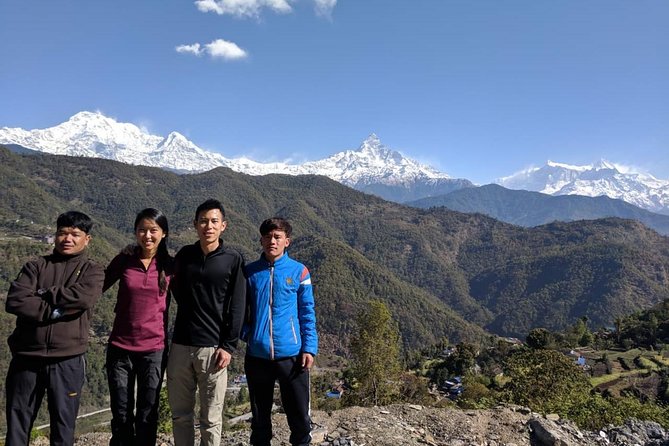
The third day begins with tea and, if the weather allows, a sunrise view over the white peaks. After breakfast, you descend before continuing upward toward Upper Sinuwa. The day is listed at about six hours, although the stop description gives a very brief time estimate, so you should follow the guide’s actual schedule rather than rely on a precise online clock.
The setting changes as you climb. The route passes through rhododendron, bamboo, and oak forests. These sections provide shade and variety, while the openings in the trees give you chances to see the surrounding peaks.
Upper Sinuwa Hilltop Lodge and Restaurant serves as the overnight point. The name tells you what to expect: a simple mountain lodge with a view-oriented setting, not a full-service resort. Tea house accommodation is one of the most authentic parts of this route, but it also means shared facilities and fewer comforts than you may be used to at lower elevations.
I like the rhythm of this day. You wake to a possible mountain sunrise, walk through several types of forest, and finish at a lodge that places you closer to the high country. You should also pay attention to your water supply here. Because two poor ratings report a problem with promised purification tablets, confirm with the guide that tablets or another safe water plan are available before the walking begins.
Same trailhead, a longer or shorter day out:
- Everest Base Camp Trek – 14 Days
★ 5.0 · 1,499 reviews - Everest Base Camp Trek
★ 5.0 · 842 reviews - Everest Base Camp Trekking
★ 5.0 · 485 reviews - Everest Base Camp Trekking – 13 Day
★ 5.0 · 365 reviews
Day 4: Reaching Annapurna Base Camp
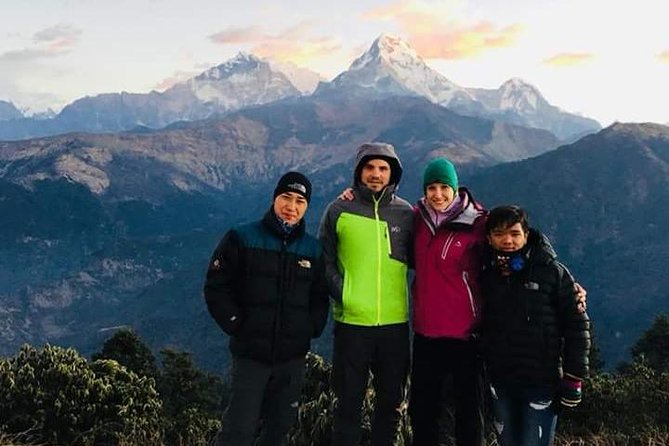
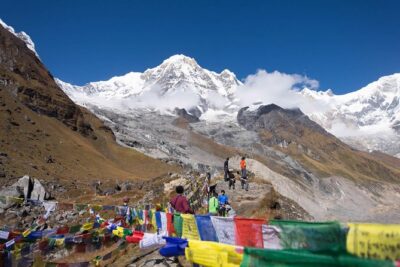
Day four is the emotional center of the trek. After breakfast, you head toward Annapurna Base Camp, one of Nepal’s classic short mountain routes. The destination sits below the high Annapurna range and offers views of several major peaks, including Machhapuchare.
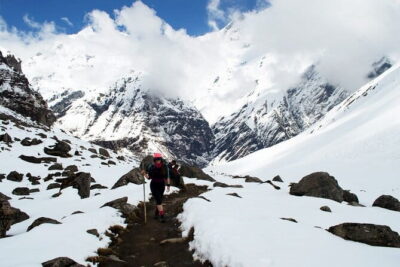
This is the day when the earlier forest walking pays off. You have already moved beyond the road and lower villages, so the surroundings feel more open and more alpine. The route is not described as an easy stroll. You should expect a demanding mountain day and follow the guide’s pace, particularly as the air becomes thinner.
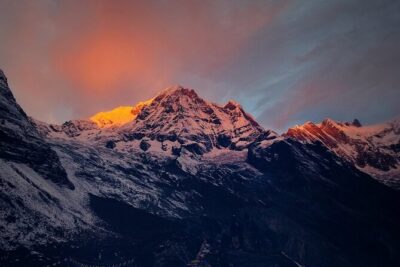
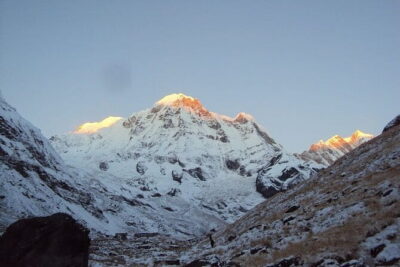
Machhapuchare, or Fish Tail, is one of the most memorable sights on the route. Its shape gives the mountain an identity that is easy to recognize, even if you are not familiar with Himalayan peaks. The Annapurna range provides the larger setting, with snowy summits rising above the trail.
The base camp stop is valuable because it gives the trek a clear goal. You are not simply walking through mountain villages without an endpoint. You are reaching a named place tied to one of the world’s best-known high mountain areas.
The information provided does not give an exact elevation, and it does not promise a specific weather condition. Mountain views can change quickly, so keep expectations flexible. The guide can manage the route and timing, but no operator can guarantee clear peaks.
Day 5: Sunrise above Machhapuchare and the return to Sinuwa
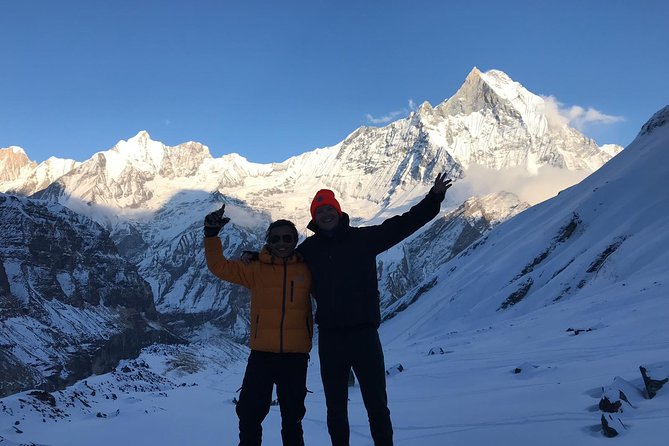
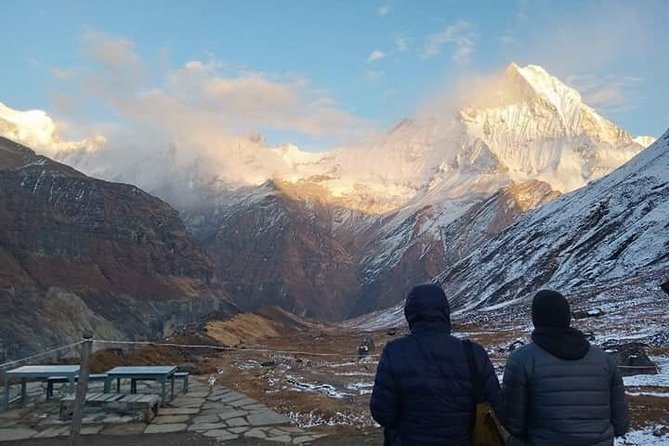
The morning begins with a short walk upward to watch the sun rise over Machhapuchare and Annapurna. This is likely to be one of the trip’s finest moments, provided the weather cooperates. Early mountain light can change the appearance of the peaks within minutes, so have your warm clothing ready and keep your camera close.
After breakfast, you return toward Sinuwa and spend the night again at the Upper Sinuwa lodge area. The day takes about six hours. This return is practical rather than repetitive. Sleeping at Sinuwa breaks up the descent and avoids forcing you to reach the road in one exhausting push.
Walking back over part of the route also lets you see the forest sections from a different angle. Descending may sound easier, but steep downhill sections can be hard on knees and ankles. Trekking poles would be sensible, although they are not listed among the included items.
The repeated lodge stop is also a reminder that this is a compact mountain program. You are not changing hotels every night for variety. You are using the available tea houses to create a workable route through the range.
Day 6: Chhomrong, Jhinu hot spring, and Pokhara
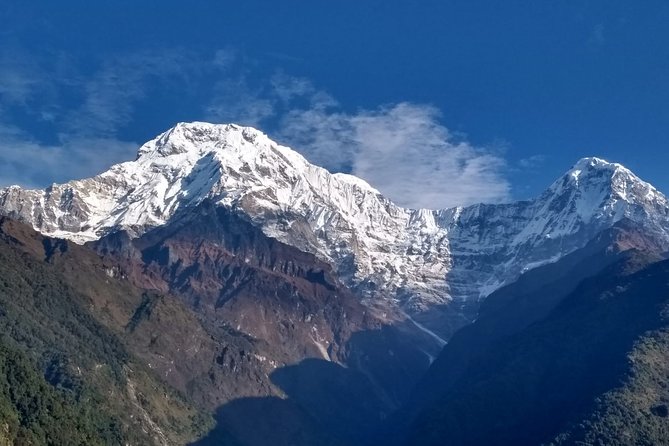
The final walking day follows the trail back toward Chhomrong. From there, the route descends steeply toward the Jhinu hot spring. A steep descent is worth taking seriously. It can be harder than the ascent for anyone with tired legs, so use steady steps and let the guide set a safe pace.
From Jhinu, the walk continues to Siwai, taking about two hours. A local jeep then carries you back toward Pokhara. The schedule also lists Pokhara Museum as a stop, although the main experience described is the return journey after the mountain walk.
Ending in Pokhara is a nice touch. You finish the trail in a real town rather than being deposited directly into another long transfer. It gives you a little breathing room after the trek, though food and accommodation in Pokhara are not included in the package.
The total duration is described as about six days, while the title refers to a five-day base camp trek. The clearest way to understand this is five days of included trek meals and mountain logistics, plus the first Kathmandu to Pokhara travel day. Confirm the exact start and end schedule when booking.
Tea houses, food, and included equipment
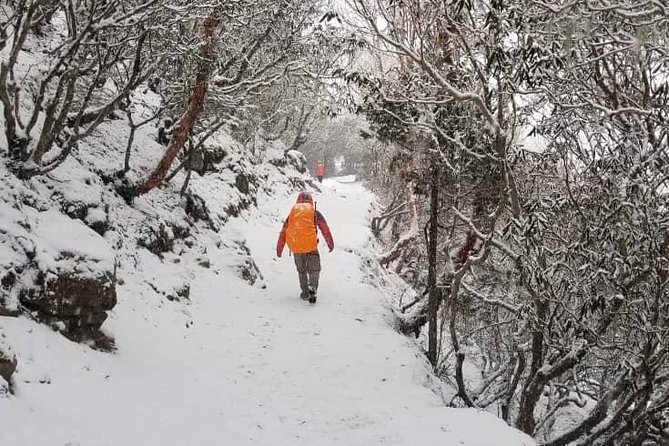
Tea house accommodation is central to the experience. These lodges provide the practical base for a route that moves through remote mountain areas. You should expect simple rooms and basic facilities, since the purpose is rest and shelter rather than luxury.
Breakfast, lunch, and dinner are included for five days. That removes a major daily decision and makes the cost easier to estimate. It also means you can keep moving with the group instead of stopping to arrange every meal yourself.
The down jacket and sleeping bag are useful inclusions. Mountain nights can be cold, and carrying these items from home may be awkward. The information does not specify brands, sizes, or insulation ratings, so ask about fit and condition before setting off.
Water deserves special attention. The package indicates that purification tablets are part of the expected support, but two low ratings describe the tablets being forgotten and a dispute over buying water. I would confirm this detail in writing and carry a personal backup purification method if possible. This is not a minor comfort issue. Staying hydrated is essential on a strenuous trek.
How the guide and group setup affect the trip
The tour uses an English-speaking local guide or sherpa and limits the group to 12 people. That size is small enough to feel more manageable than a large coach group, while still giving you company on the trail.
A good guide can make the experience much easier. The guide handles permits, lodging arrangements, transportation, and the daily flow, allowing you to concentrate on walking and views. This support is particularly valuable on a route with local jeeps, tea houses, and changing trail conditions.
The available feedback also points to a risk. One poor rating describes an unprofessional guide who did not know the plan before the trip began. Another describes the water-tablet problem. These complaints are specific enough to take seriously, even though the overall rating remains 5 out of 5.
Before departure, ask for the guide’s name, the daily walking plan, the water arrangement, and the equipment handover details. That short check can prevent confusion once you are already on the trail.
Fitness, timing, and who should choose this trek
The operator recommends a moderate level of physical fitness. That is a fair description, but you should read it as a real requirement. The schedule includes days of roughly five to six hours, steep descents, forest trails, and the climb to Annapurna Base Camp.
You do not need to be an elite climber based on the information provided. You do need to be comfortable walking for several hours and handling uneven mountain terrain. A person who enjoys regular hill walking will likely find the program more suitable than someone who rarely exercises.
The early start is another factor. The meeting time is 6:45 a.m., and the first day includes a seven-hour bus ride. You should be comfortable with early mornings and full travel days.
This trip suits you best if you want a guided introduction to the Annapurna region without arranging every detail yourself. It is also a good fit if you value mountain scenery and local lodge stays more than polished accommodation.
It may not suit you if you want private hotels, a slow schedule, or complete control over meal and departure times. The route is organized around group movement, shared transport, and the realities of a mountain trail.
Booking details and cancellation flexibility
Confirmation is provided at booking, and the experience offers pickup. Airport transfers are included, which is helpful when you first arrive in Kathmandu or leave Nepal after the trip.
You can cancel for a full refund up to 24 hours before the start time. Changes made within 24 hours are not accepted, and there is no refund for a late cancellation. The trip also requires suitable weather. If poor weather causes cancellation, you are offered another date or a full refund.
The package has a maximum of 12 people and is near public transportation. Those details matter less than the trail conditions, but they help you understand the general setup: this is a small organized group trip, not a fully private expedition.
Should you book the Annapurna Base Camp trek?
I would book this trek if I wanted a value-focused route with transport, permits, food, tea houses, equipment, and a guide already arranged. The views of Machhapuchare and Annapurna, the forest walking, and the sunrise stop give the six-day program real variety.
I would not book it without first confirming the guide, daily schedule, sleeping-bag and jacket details, and water-purification plan. The overall score is very strong, but the two poor ratings identify practical problems that are easy to prevent with a clear pre-trip check.
For a moderate hiker who accepts basic lodges and long travel days, $699 is a fair package price. Go for the mountain scenery and organized logistics, not for hotel comfort or a relaxed holiday pace.
FAQ
How long does the Annapurna Base Camp experience last?
The overall trip lasts about six days. The first day is travel from Kathmandu to Pokhara, followed by the mountain route and return to Pokhara.
What is included in the $699 price?
The price includes private transportation, airport transfers, ground transport, trekking permits, an English-speaking local guide or sherpa, tea house accommodation, a down jacket, sleeping bag, meals during the trek, taxes, an achievement certificate, a hiking T-shirt, and a farewell dinner.
Are meals included?
Yes. The package includes five breakfasts, five lunches, and five dinners. Food in Kathmandu and Pokhara is not included.
What fitness level is required?
A moderate level of physical fitness is required. The route includes walking days of about five to six hours, steep descents, and the approach to Annapurna Base Camp.
How many people can join the group?
The group has a maximum of 12 people.
Can I cancel for a full refund?
Yes. You can cancel at least 24 hours before the experience starts for a full refund. Cancellations or changes made within 24 hours are not accepted, and late cancellations are not refunded.
More 5-Day Experiences in Kathmandu
- Kathmandu to Annapurna Base Camp (ABC) 5-Day Trek
★ 5.0 · 102 reviews - 5 Day Private Guided Trekking in Annapurna Base Camp
★ 5.0 · 25 reviews - Ghorepani – Poon Hill Trek – 5 DAYS
★ 5.0 · 13 reviews - Pokhara: 5-Day Annapurna Base Camp (ABC) Trek
★ 5.0 · 9 reviews
Recently added around Kathmandu
- Ghorepani Poon Hill Trek★ 5.0 · 16 reviews
- Private Manaslu Circuit Trek at Himalayas★ 5.0 · 3 reviews
- Amazing 1 Day Trekking Experience in Kathmandu Nepal★ 5.0 · 24 reviews
- Ghorepani Poonhill Trek★ 5.0 · 5 reviews
- Upper Mustang Trekking★ 5.0 · 2 reviews
- Upper Mustang Trekking★ 3.0 · 2 reviews
- Upper Mustang Trekking★ 5.0 · 4 reviews
- Upper Mustang Trek★ 5.0 · 5 reviews
Annapurna Base Camp Treks, compared.
Trekking in Annapurna/Langtang/Everest/Upper Mustang regions
Read our review →
Kathmandu to Annapurna Base Camp (ABC) 5-Day Trek
Read our review →
Browse the lists this tour appears in