
REVIEW · KATHMANDU
Annapurna Luxury Circuit Trek
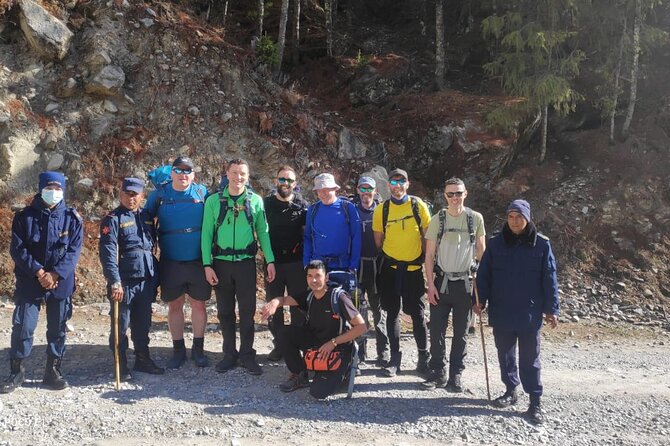
The mountains change every day. This 13-day Annapurna Luxury Circuit Trek combines long Himalayan walks with comfortable hotels, teahouses, porters, planned transport, and help from a local guide team. I especially like the built-in acclimatization day in Manang and the chance to cross Thorong La Pass at 5,416 meters. I also like the small group limit of 10 people, which should make communication easier. The main concern is that the published schedule contains several mismatched details, so you should confirm the final route and included flights before paying.
The $2,000 price can be good value if the promised hotels, meals, permits, porter service, and transport are all included as described. The company has received strong praise for organization, safety, and flexibility, with Binod involved in planning and guides including Shiva and T. B. Still, this is not a soft adventure. The pass day is demanding, roads are rough in places, and the altitude requires care.
Key points to know before booking
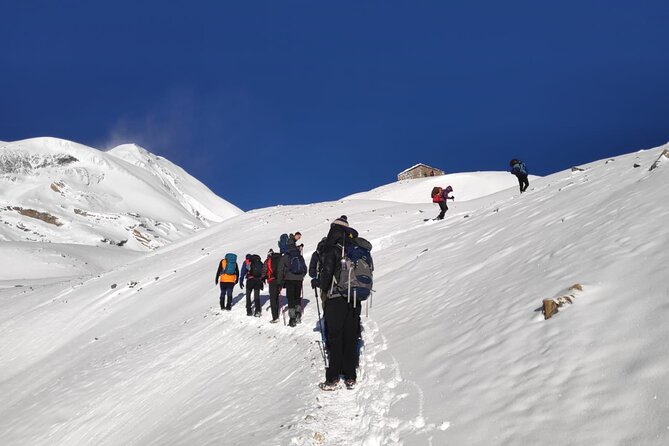
- Thorong La is the physical high point: The pass reaches 5,416 meters, followed by a descent to the sacred settlement of Muktinath.
- Manang provides a useful rest day: At 3,540 meters, it is used for acclimatization, with visits to Gangapurna, the ice lakes, Vraja village, and the Himalayan Rescue Association.
- Luxury means comfort within a mountain trek: You get two nights in four-star hotels in Kathmandu and two in Pokhara, but much of the route uses lodges and teahouses.
- A porter carries shared luggage: One porter is assigned to two people, while personal trekking equipment remains your responsibility.
- The group is capped at 10: That is small enough for a more personal experience without making the trip private.
- Check the paperwork carefully: The program mentions Kathmandu to Lukla flights, although the actual route uses road transport to Besisahar and a flight from Jomsom to Pokhara.
What kind of luxury trek is this?
The word luxury needs a little translation here. You are not getting a high-end lodge every night with room service and a heated bathroom. The Annapurna Circuit is a working mountain route, and the comfort level changes with altitude and road access.
Luxury here means that the hard parts are organized for you. A local company arranges airport pickup, permits, hotels, meals, porters, road transfers, internal flights, guides, and the return to Kathmandu. You carry less, and you have a team to help with route decisions and altitude concerns.
The first and last hotel nights in Kathmandu, plus two nights in Pokhara, provide genuine comfort. On the trail, lodges and teahouses offer a simpler setting. That contrast is part of the appeal: you move through ordinary mountain communities rather than staying sealed inside a resort.
The program also includes dinner, breakfast, and lunch as specified, though the wording suggests 11 dinners, 12 breakfasts, and 11 lunches. Ask for a day-by-day meal chart, especially because the schedule contains inconsistencies. Drinks, including alcoholic and hot or cold beverages, are not included.
More Annapurna Treks in Kathmandu
- Annapurna Circuit Trek with Tilicho Lake
★ 5.0 · 368 reviews - Annapurna base camp trek 5 Days
★ 5.0 · 252 reviews - 14-Day Private Annapurna Base Camp Trek
★ 5.0 · 180 reviews
Day 1: A simple Kathmandu arrival
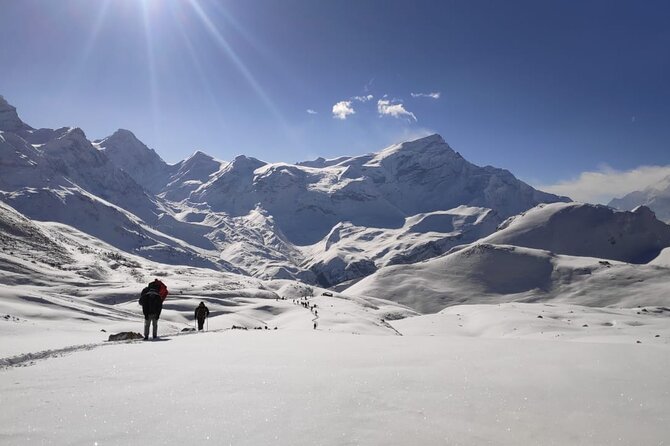
Your airport representative meets you outside the terminal with a Nepal Trek Adventures sign. You are then driven to the hotel, with the transfer taking about an hour.
This is a useful start after a long flight. You do not need to find a taxi or negotiate a ride while tired. The company also schedules a pre-trek briefing, so use that time to ask about weather, daily walking hours, luggage weight, medication, and the exact transport plan.
Kathmandu is more than a staging point, but this program gives you little sightseeing time there. If you want to visit temples, markets, or museums, consider adding extra nights before or after the trek.
Day 2: The long road to Besisahar
The journey to Besisahar takes roughly six to seven hours. You pass green hills, terraced fields, small towns, and traditional settlements as the road leaves Kathmandu behind.
This drive gives you an early look at rural Nepal, but it is still a full road day. Expect a long sitting period rather than a gentle warm-up hike. Besisahar is the practical gateway to the Annapurna route, and an overnight stop lets you rest before the road becomes rougher and the mountains begin to feel closer.
The included vehicle transfer is valuable here. Public transport can be crowded and unpredictable, while a planned vehicle makes the start easier. Ask if the road transfer uses a private vehicle for your group, since the supplied information does not specify this.
Day 3: Besisahar to Chame by road
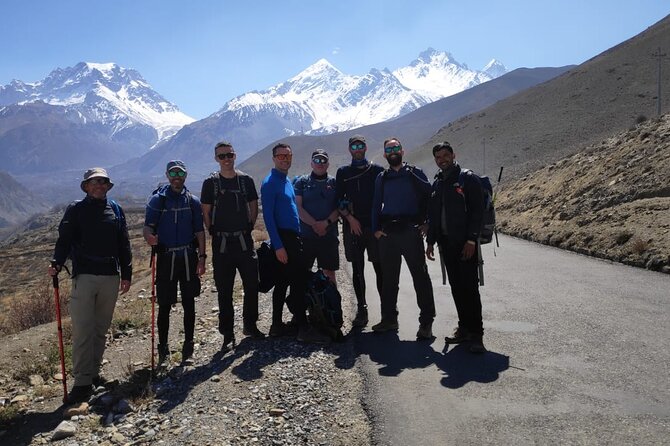
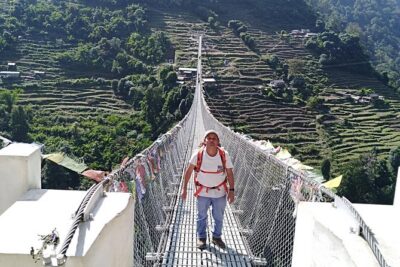
The next road journey to Chame takes another six to seven hours. The route passes through forests, terraced fields, villages, rivers, and suspended bridges.
Chame sits at about 2,670 meters. It is known for traditional houses, friendly local communities, and views toward snow-covered peaks. The town is an important point on the route because it marks the shift from lower hill country toward the higher Marsyangdi Valley.
This is scenic, but not always comfortable. Mountain roads can be tiring, and the published schedule should be checked for the exact driving route. One stray itinerary note refers to Namche Bazaar, which belongs to the Everest region, not the Annapurna Circuit. That appears to be a copy-and-paste error, but it is a good reason to request the final schedule in writing.
Same trailhead, a longer or shorter day out:
- Everest Base Camp Trek – 14 Days
★ 5.0 · 1,499 reviews - Everest Base Camp Trek
★ 5.0 · 842 reviews - Everest Base Camp Trekking
★ 5.0 · 485 reviews - Everest Base Camp Trekking – 13 Day
★ 5.0 · 365 reviews
Day 4: Walking to Upper Pisang
From Chame, you begin walking toward Upper Pisang. The route passes through forest, streams, large rock formations, and mountain viewpoints.
Upper Pisang is a traditional settlement with local monasteries and a strong Tibetan cultural influence. It is one of the more memorable overnight stops because the village setting feels distinct from the lower valleys. You stay in a teahouse, where the luxury is mainly the chance to rest in a quiet mountain community after a serious walking day.
The stated duration is confusing, with a 16-hour entry attached to this day. That cannot reasonably describe the walking time as written, so ask the operator for the expected distance, walking hours, and elevation gain. Do not plan this section using the 16-hour figure.
Day 5: Entering Manang at 3,540 meters
The walk to Manang follows the Marsyangdi Valley. Forests thin out as you gain height, villages become more widely spaced, and the air feels noticeably drier and thinner.
Manang is surrounded by major Himalayan peaks, including Annapurna III, Gangapurna, and Tilicho Peak. Its Tibetan-style buildings and role as a trading center give it more character than a simple overnight stop. You can explore the town, look at the local architecture, and begin adjusting to the altitude.
This is where the trip becomes more serious. You may feel fine at 2,670 meters and then notice the difference above 3,500 meters. Walk slowly, drink water, and tell your guide at once if you develop a headache, nausea, unusual tiredness, or breathing problems.
Day 6: Acclimatization around Manang
The rest day in Manang is one of the strongest parts of the program. Instead of pushing onward, you spend a full day helping your body adjust to 3,540 meters.
The planned outings include Gangapurna and its ice lakes, along with Vraja village and the Himalayan Rescue Association. Learning about acute mountain sickness from a local rescue organization gives the altitude plan real value. This is not wasted time. It is a safety measure that may make the high pass more manageable later.
You may take a short hike to a higher point and return to sleep in Manang, or simply rest and explore the town. The right choice depends on how you feel. A guide who takes symptoms seriously is more important here than one who keeps a rigid pace.
Day 7: Manang to Ladar
The route continues through juniper and pine, then toward the higher settlement of Ladar at approximately 4,230 meters. You pass small communities and see the buildings and customs change as Tibetan influence becomes stronger.
The walk is described as five to six hours and moderately difficult. At this height, that description needs context. The distance may be manageable, but thin air changes the effort. A steady pace and frequent breaks matter more than speed.
Ladar gives you wide mountain views and a clear sense that the tree line is behind you. Accommodation becomes more basic as you climb. That is normal for this route, and it is one reason the term luxury should be understood as organized comfort, not constant four-star service.
Day 8: The high camp approach
The schedule describes the climb from Ladar toward Thorong High Camp, with five to six hours of walking and increasingly steep ground. This is a demanding day because you gain altitude while sleeping at a very high elevation.
The route should be confirmed carefully. Another section of the published plan refers to Dughla, Lobuche, yak fields, and 4,910-meter Lobuche, all associated with the Everest region rather than this Annapurna route. Those details do not fit the stated Annapurna Circuit program.
For your safety, ask the company to explain exactly where you sleep on this night, the elevation of that lodge, and the planned walking time. Do not rely on the stray Everest references. Your guide should also have authority to adjust the schedule if weather or altitude makes the high camp unsafe.
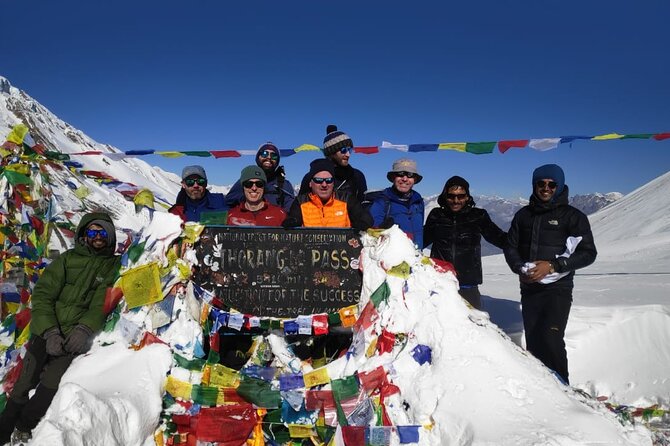
Day 9: Thorong La and Muktinath
This is the centerpiece of the trek. You cross Thorong La Pass at 5,416 meters, then descend toward Muktinath.
The climb can be hard, especially in cold or poor weather. The reward is a dramatic high mountain setting, with views toward peaks and river valleys. Once over the pass, the descent changes the feel of the trip. Muktinath is a sacred Hindu and Buddhist site, known for temples and natural springs, and it gives the day a cultural purpose beyond the physical achievement.
The walking time is listed as six to seven hours, but conditions can make the day feel longer. Keep your warm layers, gloves, water, snacks, and sun protection accessible. Your porter carries your main luggage, but you need a small daypack with the items you use on the trail.
Day 10: Mustang country and Jomsom
The schedule describes a route from Marpha to Jomsom, with stone houses, apple orchards, the Kali Gandaki River, and Jomsom’s shops, hotels, and restaurants. It also mentions a museum and hot springs, though the exact amount of free time is not clear.
Jomsom is the administrative center of Mustang and is known for strong winds. The afternoon can be rough, so keep loose items secured and expect weather changes. The dry Mustang setting feels very different from the forested lower valleys.
There is a route gap here because the previous day ends in Muktinath, while this day begins in Marpha. Ask if transport connects those settlements or if an overnight stop has been left out. This is a small planning detail with a big practical effect.
Day 11: Flight to Pokhara
A morning flight from Jomsom to Pokhara is planned, with views of Annapurna and Dhaulagiri. Flights in mountain regions depend on weather, so keep your schedule flexible even though the itinerary assigns a specific day.
Pokhara is a welcome change after the high route. You can rest, visit Fewa Lake, look toward the hills, or enjoy the city’s evening food and nightlife. Two nights in a four-star hotel are included, giving you a comfortable place to wash clothes, sleep properly, and recover.
The flight is also one of the program’s logistical weak points. Ask what happens if weather delays the aircraft, and confirm whether an alternative road transfer is arranged or costs extra.
Day 12: Return to Kathmandu
The flight from Pokhara to Kathmandu takes about 30 minutes and gives you another chance to see the Himalayan range from above. After arriving, you are transferred to your hotel and later attend a farewell dinner.
This final evening is useful for more than ceremony. It gives you time to settle any hotel, meal, or transport questions before departure. It also leaves a little breathing room after the trek instead of sending you directly from the mountains to an international flight.
The program includes two nights in Kathmandu at a four-star hotel, though the day-by-day schedule clearly uses one arrival night and one final night. Confirm the exact hotel nights if your flights require an early arrival or late departure.
Day 13: Airport transfer
The company provides an airport transfer to Tribhuvan International Airport. The listed transfer time is about two hours, which may include traffic and waiting time rather than driving alone.
Your flight should be booked with enough room for road delays. Kathmandu traffic can be slow, and this is not the day to cut things close.
What the $2,000 price covers
At $2,000 per person, the value depends on how fully the stated inclusions are delivered. Permits, airport pickup, hotels, meals, guide support, a shared porter, road transfers, and internal flights can add up quickly in Nepal.
The porter arrangement is one porter for two people. That reduces your load, but it does not mean you can bring unlimited luggage. Pack carefully and keep essential items in your daypack.
The price does not include personal trekking gear, insurance, drinks, unspecified expenses, or tips. Medical and emergency evacuation insurance is required. Tipping is expected, so budget for it separately rather than treating the advertised price as your final cost.
The strongest value comes from organization. The company has been praised for planning, safety attention, and flexibility, with Binod handling arrangements and guides such as Shiva and T. B. receiving particular praise for leadership and route knowledge. The important point for you is not the names alone. Ask who will lead your group, how many guides will be present, and who makes decisions if someone becomes ill.
Who should book this trek?
You should consider it if you want the classic Annapurna Circuit experience but prefer not to arrange every permit, hotel, vehicle, porter, and internal flight yourself. It suits someone with moderate physical fitness who is comfortable walking for several hours on uneven mountain trails and sleeping at high altitude.
It is less suitable if you want a gentle holiday, guaranteed smooth roads, private luxury rooms every night, or a fixed schedule that cannot change. The pass is high, the days can be long, and weather can interrupt flights.
The small group limit is helpful for people who want support without joining a large coach-style operation. Couples and small groups may also like the flexibility described by the company, but you should confirm exactly what can be changed and what would cost extra.
Should you book the Annapurna Luxury Circuit Trek?
I would consider booking it, but only after getting the corrected route in writing. The Manang acclimatization day, porter support, cultural stops, mountain views, and comfortable Kathmandu and Pokhara hotels make the package appealing. The strong emphasis on safety and the company’s reported flexibility add confidence.
Before booking, ask for four clear answers: the exact day-by-day route, the correct flights included, the accommodation names, and the plan for weather delays. If those points are settled, this can be a practical way to experience the Annapurna Circuit with less luggage and less administrative work. If the company cannot correct the Everest references and route gaps, choose a program with cleaner documentation.
FAQ
How long is the Annapurna Luxury Circuit Trek?
The experience lasts approximately 13 days, including arrival in Kathmandu, the trek, the return to Kathmandu, and the airport departure transfer.
Where does the experience start?
The meeting point is Nepal Trek Adventure and Expedition P. Ltd. on Thamel Marg in Kathmandu. The listed start time is 6:15 am.
Is airport pickup included?
Yes. An airport representative meets you outside the terminal with a Nepal Trek Adventures sign and transfers you to the hotel.
What accommodation is included?
The package includes two nights at a four-star hotel in Kathmandu and two nights at a four-star hotel in Pokhara. During the mountain portion, accommodation is in lodges and teahouses.
Is a porter included?
Yes. A local porter carries luggage, with one porter assigned to two people. Personal trekking equipment is not included.
Are meals included?
Dinner, breakfast, and lunch are included in the stated package. Drinks, including alcoholic and hot or cold beverages, are not included.
Is travel insurance required?
Yes. You must have travel insurance covering medical treatment and emergency evacuation.
What fitness level is needed?
A moderate physical fitness level is required. The trek includes long walking days and a crossing of Thorong La Pass at 5,416 meters.
Is there an acclimatization day?
Yes. Day 6 is spent in Manang at about 3,540 meters, with possible visits to Gangapurna, the ice lakes, Vraja village, and the Himalayan Rescue Association.
Can I cancel for a full refund?
You can cancel at least 24 hours before the experience starts for a full refund. Cancellations or changes made within 24 hours are not refunded or accepted. If poor weather or an insufficient number of participants cancels the experience, you are offered another date or a full refund.
Recently added around Kathmandu
- Ghorepani Poon Hill Trek★ 5.0 · 16 reviews
- Private Manaslu Circuit Trek at Himalayas★ 5.0 · 3 reviews
- Amazing 1 Day Trekking Experience in Kathmandu Nepal★ 5.0 · 24 reviews
- Ghorepani Poonhill Trek★ 5.0 · 5 reviews
- Upper Mustang Trekking★ 5.0 · 2 reviews
- Upper Mustang Trekking★ 3.0 · 2 reviews
- Upper Mustang Trekking★ 5.0 · 4 reviews
- Upper Mustang Trek★ 5.0 · 5 reviews
Annapurna Base Camp Treks, compared.
Trekking in Annapurna/Langtang/Everest/Upper Mustang regions
Read our review →
Kathmandu to Annapurna Base Camp (ABC) 5-Day Trek
Read our review →Browse the lists this tour appears in