
REVIEW · KATHMANDU
Annapurna Full Circuit Trek
Mountain views come with real walking. This 20-day Annapurna Circuit trek takes you from Kathmandu through forested valleys, high mountain villages, and the dramatic route around the Annapurna range. I like the effort to use footpaths instead of simply following jeep roads, and I like that the trip includes meals, private transport, and a trekking guide. The main caution is simple: this is a serious high-altitude trek, not a sightseeing tour with a few gentle walks.
I also like the cultural range. You move through settlements belonging to several ethnic groups before reaching Manang, where Manangi traditions and architecture give the area a distinctly Tibetan feel. The price, $1,952 per person, may represent good value for a private, food-supported trek, but you should confirm exactly what transport, permits, lodging, and porter support are covered before paying.
Six things to know before you book
- The route follows the full Annapurna Circuit, beginning with transport from Kathmandu toward Beshisahar, then Syange or Jagat.
- Walking trails are used to avoid jeep roads in parts of the Marshyangdi Valley, an important detail for anyone seeking a more traditional trekking experience.
- Manang is a major cultural highlight, with Manangi customs and a strong little-Tibet atmosphere.
- Himal Dawadi is a frequently praised guide, noted for his English, care, medical checks, and ability to adjust plans.
- Meals are included, with breakfast, lunch, and dinner provided during the trip.
- You need moderate physical fitness, and weather can affect the schedule or lead to a full refund if the experience is canceled.
Why the full circuit still earns its reputation
The Annapurna Circuit works because the scenery changes steadily. Lower sections bring thick fir and rhododendron forests, while higher ground opens into dry mountain valleys and stark Himalayan views. You are not staring at one peak from one viewpoint. You keep changing altitude, climate, village style, and culture.
The route also gives you a better sense of Nepal beyond the famous mountain names. You begin near Kathmandu, travel by road toward Beshisahar, and then continue toward Syange or Jagat. From there, the trek enters the Marshyangdi Valley and gradually moves upward.
Road construction has changed parts of the circuit. Jeep traffic now reaches sections that once required days of walking, which can take away some of the old-fashioned trekking feel. This trip attempts to counter that by using trails to avoid the road where possible. That choice matters. A narrow footpath through forest feels very different from walking beside engine noise and dust.
Still, you should keep expectations sensible. The route is not untouched wilderness from start to finish. You may encounter roads, vehicles, and settlements. The appeal lies in the full progression, from subtropical forest and farming areas to high-altitude villages and huge Himalayan peaks.
More Annapurna Treks in Kathmandu
- Annapurna Circuit Trek with Tilicho Lake
★ 5.0 · 368 reviews - Annapurna base camp trek 5 Days
★ 5.0 · 252 reviews - 14-Day Private Annapurna Base Camp Trek
★ 5.0 · 180 reviews
Kathmandu to Beshisahar and the road toward Syange
Kathmandu is the starting point, with pickup offered and a stated start time of 7:15 am. The early departure matters because the first part of the journey is by private vehicle, and the route toward Beshisahar and then Syange or Jagat takes you out of the capital and into the hills.
This transfer is practical rather than scenic all the way through. Road travel in Nepal can be slow, and you should expect the first day to involve more sitting than walking. The benefit is that you reach the trekking corridor without spending extra days on sections that are now heavily affected by road construction.
The exact overnight point is given as Syange or Jagat, so your final starting village may depend on local conditions and the operating plan. Ask for the confirmed overnight stops before departure. That will help you understand the walking distance and how much transport is used at the start.
Private transportation is included, which is useful for a private group. You are not being placed into a large public bus arrangement, and your party can travel together. The information does not state the vehicle type or whether airport transfer is included, so confirm those points separately.
Forest trails in the lower Marshyangdi Valley
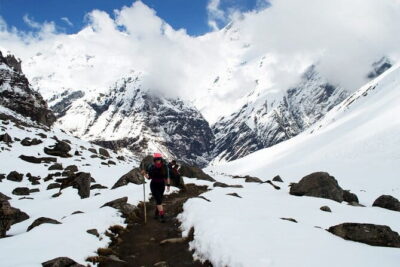
The lower part of the route is where the trip earns its variety. You pass through thick fir and rhododendron forests before reaching the higher country. The changing plant life gives you a clear sense of altitude, even before the mountains become the main subject.
I like this section because it provides texture between the headline views. You get forest paths, village life, and changing river-valley scenery rather than a long series of exposed high passes. The lower settlements also introduce you to different ethnic communities and local ways of life.
The trail choice is especially important here. Since roads have been built along many sections of the Marshyangdi Valley, walking every step beside the road would make the circuit less pleasant. Using alternative paths can mean more natural walking and fewer interruptions from vehicles.
There is a trade-off. Trail conditions can be less predictable than a road, and a path that avoids a jeep track may be steeper or rougher. You should bring footwear with reliable grip and be ready for a day that feels harder than the distance alone suggests.
Village life and the human side of the route
The circuit is not only about Annapurna and Manaslu. It passes through many settlements, and the route’s value comes partly from the chance to meet local people and observe daily life in mountain communities.
You may find that the village sections are more memorable than the formal viewpoints. Homes, prayer sites, farming areas, and small local businesses give the trek a human scale. The information provided does not promise specific cultural performances or organized village visits, so do not expect a staged program. The culture comes through ordinary contact and the rhythm of the trail.
This is also where a private guide can improve the trip. A good guide can explain what you are seeing, help with communication, and keep the walking plan realistic. Himal Dawadi receives particularly strong praise for his English, calm manner, and ability to adapt plans to a group’s condition.
That adaptability is worth more than a polished speech. High-altitude trekking can change from day to day. Appetite, sleep, energy, and general health all matter. Himal is specifically praised for checking those points, along with oxygen levels, and for correcting plans when needed. You should still remember that a guide is not a substitute for personal preparation or medical advice.
Same trailhead, a longer or shorter day out:
- Everest Base Camp Trek – 14 Days
★ 5.0 · 1,499 reviews - Everest Base Camp Trek
★ 5.0 · 842 reviews - Everest Base Camp Trekking
★ 5.0 · 485 reviews - Everest Base Camp Trekking – 13 Day
★ 5.0 · 365 reviews
Manang, where the circuit begins to feel Tibetan
Manang is one of the most distinctive stops on the route. At higher altitude, you encounter Manangi people and a traditional way of life that gives the village a little-Tibet character.
This is a place to slow down and pay attention. The shift from the lower forested valleys to the dry, high mountain setting is dramatic. Manang also represents the point where altitude becomes a more serious concern, so the village has both cultural importance and practical value within the trek.
The supplied information does not provide a day-by-day acclimatization schedule, so you should ask how long the itinerary allows in Manang and what the walking distances are before and after it. Do not assume that a 20-day package automatically includes enough rest for every person. Fitness, past altitude experience, and pace all affect how comfortable you feel.
The guide’s role becomes especially important here. The strong praise for daily health checks, appetite checks, sleep checks, and oxygen checks suggests a careful approach. Ask whether those checks are part of your planned service and what the procedure is if someone needs to slow down or stop.
Annapurna and Manaslu views on the higher route
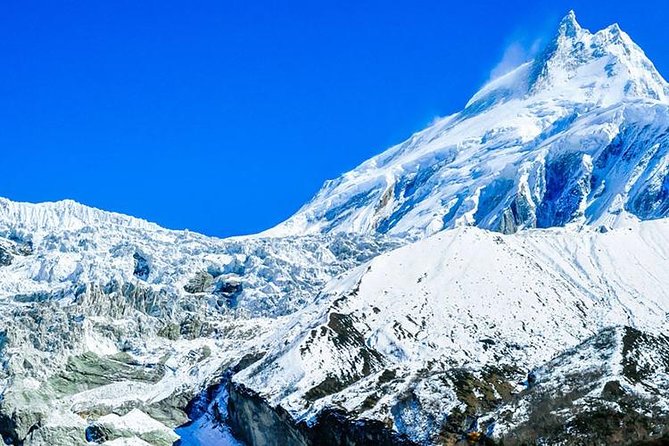
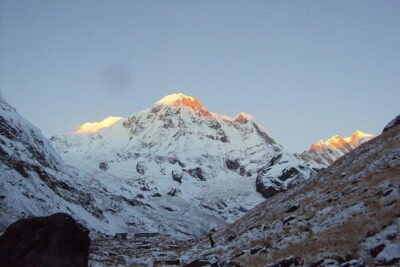
The reward for the long approach is the mountain scenery. The route offers views of the Annapurna peaks and Manaslu, two of Nepal’s major Himalayan groups.
The appeal is not just the scale of the peaks. You see them in relation to villages, forests, trails, and high valleys. That changing setting makes the views feel earned. Clear weather can produce extraordinary visibility, but mountain weather is never guaranteed.
The trip’s cancellation terms acknowledge that fact. If poor weather causes the experience to be canceled, you are offered another date or a full refund. That is reassuring, although it does not remove the possibility of weather affecting visibility during a trek that still goes ahead.
A practical tip: ask your guide how the schedule responds to bad weather while you are already on the route. The policy clearly covers cancellation of the experience, but it does not spell out changes caused by rain, snow, road closures, or poor visibility during the trek.
The walking challenge and who should choose it
This trek is marked as requiring a moderate physical fitness level. That wording is important. You should be comfortable walking for many hours over uneven ground, handling repeated climbs and descents, and managing a high-altitude environment.
The route is not a good fit if you want a relaxed holiday with occasional short walks. It may suit you if you enjoy active travel, can accept basic mountain conditions, and want a full circuit rather than a quick mountain excursion.
You also need to be ready for changing comfort levels. Lower forest sections may feel warm and humid, while higher areas can be cold and exposed. The supplied details do not specify lodging standards, room arrangements, porter service, permits, or shower availability. Ask about all of these before you book, since they affect the real value and difficulty of the trip.
The private format is useful for couples, families, or friends who want one walking pace and one guide. Only your group participates, so you are not tied to strangers’ schedules. The trade-off is that a private trip can feel less social, especially if you are traveling alone. One solo participant had a very positive experience with the company, but the size and makeup of your own group will still shape the mood.
Meals, transport, and what the $1,952 price means
At $1,952 per person, this is not a bargain-basement trek. It may still be fair value if the price covers the main transport, guide, meals, and the complete 20-day route with private arrangements.
Breakfast, lunch, and dinner are included. That simplifies the trip and makes budgeting easier, especially in remote areas where food costs can rise. Bottled water is not included, so you need to budget for drinking water and clarify whether safe refill options are available.
Private transportation is included, as is a trekking guide. The information does not say that accommodation, permits, porter service, airport transfers, visas, insurance, snacks, hot drinks, or emergency evacuation are included. These are not small details on a long Himalayan trek. Get a written list of inclusions before deciding that the price is good value.
One odd detail deserves a direct question: use of scuba equipment appears among the included items. Scuba gear has no obvious connection to an Annapurna trek, so confirm whether this is simply a data-entry mistake. You do not want uncertainty about the genuinely important inclusions.
Guide quality is the strongest part of the package
The most consistent praise centers on the guiding team, especially Himal Dawadi. He is described as professional, kind, energetic, and careful, with strong English and good knowledge of the route. One group also praised his gentle manner and willingness to adapt the plan to their needs.
Sunita is also praised for welcoming people from the moment they arrive in Nepal and for showing them around Kathmandu. That suggests the company may offer a more personal arrival experience than a simple handoff to a trekking guide, though you should confirm exactly what Kathmandu support is included in your booking.
Bashu Dev Bagale, identified as the owner of Adventure Blossom Treks and Expedition, is described as kind and professional. The company receives an overall rating of 5 from seven reviews, which is encouraging but still a small sample. I would place more weight on the specific details about health checks, plan adjustments, communication, and personal care than on the perfect score alone.
The best question to ask before booking is who will actually guide your group. If Himal is available, confirm that in writing. If another guide is assigned, ask about experience, English ability, emergency procedures, and how the company handles altitude problems.
Booking, cancellation, and practical limits
Confirmation is provided at the time of booking. Pickup is offered, the meeting time is 7:15 am, and the experience is available as a private activity. Service animals are allowed, and the route is near public transportation, although much of the actual trek takes place far from ordinary transit.
You can cancel up to 24 hours before the start time for a full refund. Cancellations or changes made less than 24 hours before departure are not accepted for a refund. The cut-off uses local time, so check the clock in Nepal rather than relying on your home time zone.
The weather clause is useful. If poor weather forces cancellation, you receive a different date or a full refund. That protection is better than being left to absorb the loss, but you should still buy travel insurance suited to trekking and high-altitude activity.
Should you book the Annapurna Full Circuit Trek?
I would recommend this trek if you want a serious, culture-focused walk with changing scenery, local villages, Annapurna and Manaslu views, and a private guide. The trail choices that avoid some jeep roads are a real plus, and the strong attention given to health and flexible pacing makes the operator appealing.
I would pause if you need a precise daily schedule, guaranteed lodging details, or a fully itemized price before booking. Ask about permits, accommodation, porter support, water, the scuba equipment line, and the exact role of Himal, Sunita, or another guide.
For an active visitor who values personal care over a large group format, this looks like a strong choice. For anyone expecting an easy holiday, it is the wrong trip. The mountains may be beautiful, but you still have to walk up them.
FAQ
Where does the Annapurna Full Circuit Trek start?
The experience starts in Kathmandu, with pickup offered and a stated start time of 7:15 am.
How long does the trek take?
The advertised duration is approximately 20 days. Some past groups completed an Annapurna Circuit in 16 days, so you should confirm the exact schedule for your booking.
What meals are included?
Breakfast, lunch, and dinner are included.
Is transportation included?
Private transportation is included. The route begins with travel from Kathmandu toward Beshisahar and then Syange or Jagat.
Is this a private tour?
Yes. Only your group participates in the activity.
What happens if bad weather cancels the trek?
You will be offered a different date or a full refund if poor weather causes the experience to be canceled. For a full refund under the standard cancellation policy, you must cancel at least 24 hours before the start time.
Recently added around Kathmandu
- Ghorepani Poon Hill Trek★ 5.0 · 16 reviews
- Private Manaslu Circuit Trek at Himalayas★ 5.0 · 3 reviews
- Amazing 1 Day Trekking Experience in Kathmandu Nepal★ 5.0 · 24 reviews
- Ghorepani Poonhill Trek★ 5.0 · 5 reviews
- Upper Mustang Trekking★ 5.0 · 2 reviews
- Upper Mustang Trekking★ 3.0 · 2 reviews
- Upper Mustang Trekking★ 5.0 · 4 reviews
- Upper Mustang Trek★ 5.0 · 5 reviews
Annapurna Base Camp Treks, compared.

Trekking in Annapurna/Langtang/Everest/Upper Mustang regions
Read our review →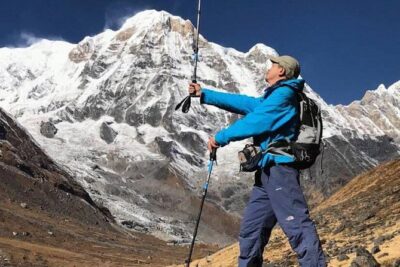
Kathmandu to Annapurna Base Camp (ABC) 5-Day Trek
Read our review →Browse the lists this tour appears in