
REVIEW · KATHMANDU
Annapurna Circuit Trek
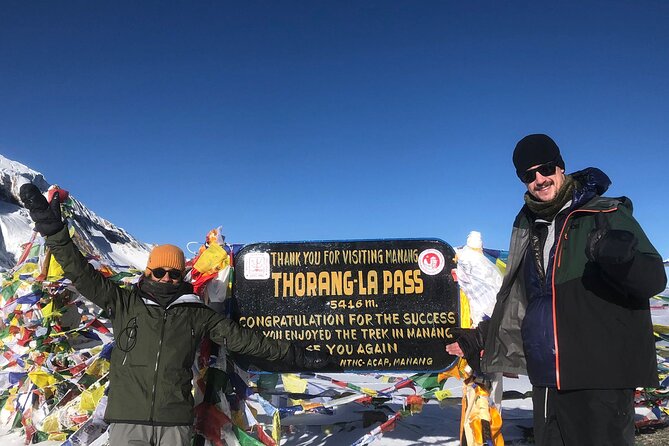
The high pass is the payoff. This 16-day Annapurna Circuit Trek moves from Kathmandu through river valleys, pine forests, high pasture, and the Thorong La Pass before finishing in Pokhara. I like the careful acclimatization day in Manang, and I like that guides, porters, permits, sleeping bags, breakfast, and the Jomsom to Pokhara flight are included. The main caution is that the description mixes the Annapurna Circuit with the Ghorepani and Poon Hill trek, yet the day-by-day plan does not include Ghorepani or Poon Hill.
I also like the small cultural start, with Boudhanath, Pashupatinath, Patan Durbar Square, and Swayambhunath in Kathmandu. The local guide and porter setup has earned strong praise, with names such as Tikaram, Ganesh, Shankar Timalsina, Bini, Ram, and Prakash appearing in past trip accounts. Still, this is a serious high-altitude walk, not a sightseeing holiday with a few easy strolls added.
Key points to know before booking
- Thorong La is the big test: Day 12 crosses the pass before descending to Muktinath, making acclimatization and steady pacing essential.
- The route changes by the hour: You move from green fields and waterfalls to fir forest, dry high valleys, yak pasture, and stark mountain country.
- Manang gets a full rest day: This is one of the most useful features in the plan, giving your body time to adjust above 3,000 meters.
- Kathmandu and Pokhara are built in: You get cultural sightseeing, hotel nights, airport transfers, and time to recover after the trek.
- Simple lodges are part of the deal: Expect family-run accommodation, outside bathrooms, and hot water that depends on solar power.
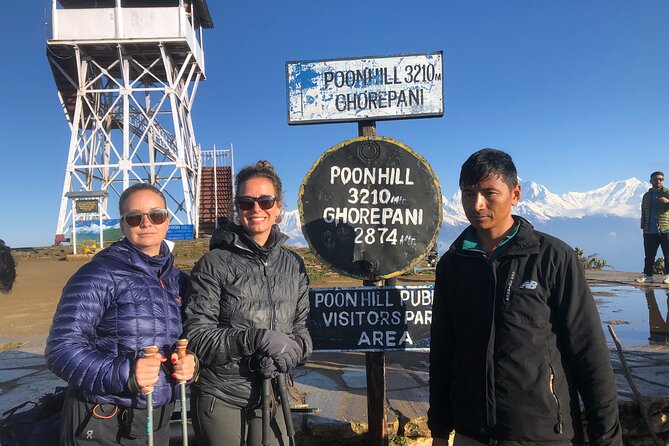
- Check the route name carefully: The plan is an Annapurna Circuit crossing, not a Ghorepani Poon Hill itinerary.
What this Annapurna trek actually includes
At $1,350 per person, this package covers a great deal of the costly groundwork. You get airport pickup and drop-off, Kathmandu and Pokhara hotels on a twin-sharing bed-and-breakfast basis, trekking lodges with breakfast, transport between Kathmandu and the trailhead, the Jomsom to Pokhara flight, permits, TIMS, crew expenses, and a guided sightseeing tour.
That makes the price reasonable for a supported Himalayan trek. You are not simply paying for a guide to walk beside you. The fee also pays for porters, transport, accommodation, government charges, and the domestic flight that saves a long road journey from Jomsom.
The value is less clear if you expect most meals to be included. Lunch and dinner are not covered in Kathmandu, Pokhara, or during the trek. You should also budget for Kathmandu sightseeing admission, personal spending, visa fees, tips, and any optional helicopter flight from Pokhara to Annapurna Base Camp.
The group limit is listed as 15 people, with trekking groups capped at about 16. That is large enough to create a social atmosphere, but small enough for a guide to keep track of the group. If you prefer private rooms, a single supplement is available, though some mountain lodges cannot provide a private room every night.
More Annapurna Treks in Kathmandu
- Annapurna Circuit Trek with Tilicho Lake
★ 5.0 · 368 reviews - Annapurna base camp trek 5 Days
★ 5.0 · 252 reviews - 14-Day Private Annapurna Base Camp Trek
★ 5.0 · 180 reviews
Kathmandu begins with temples and a practical briefing
Day 1 is simple: airport pickup, hotel transfer, and a welcome dinner. An evening orientation is normally held at the hotel, often around 5 or 6 pm. This is when you should confirm the walking plan, ask about weather, sort your bags, and make sure your permits and equipment are ready.
Day 2 gives you four important Kathmandu sights. Boudhanath Stupa introduces you to Tibetan Buddhist culture and the steady rhythm of pilgrims circling the great white dome. Pashupatinath, beside the Bagmati River, is one of Nepal’s most important Hindu temple areas.
Patan Durbar Square brings traditional Newari architecture into the day, while Swayambhunath, often called the Monkey Temple, gives you a hilltop view over Kathmandu. Each stop is scheduled for about an hour, and entrance tickets are not included, so keep Nepali rupees handy.
The sightseeing is more than filler before the mountains. It gives you a quick look at the beliefs, building styles, and daily rituals that shape the villages you will meet later. The drawback is a busy day after an international flight, especially if you are tired or dealing with jet lag.
The long road to Bhulbhule and Nadi
Day 3 is mostly transport. The drive toward Bhulbhule takes about seven to eight hours, with mountain views, rivers, and wooded hills along the way. After reaching Bhulbhule, the route continues toward Nadi.
This is not a glamorous travel day. Nepal’s roads can make short distances take a long time, and the bus section may feel cramped after a flight and a full day in Kathmandu. Still, it moves you from the capital into the quieter river country where the trek begins to feel real.
Day 4 continues toward Jagat, with about five hours of walking. Paddy fields, muddy paths, waterfalls, green hills, and distant snowy peaks give this section a gentle introduction to the route. You are still at a lower elevation, so the setting feels warmer and more settled than the high country ahead.
Jagat, Dharapani, and the first serious climbs
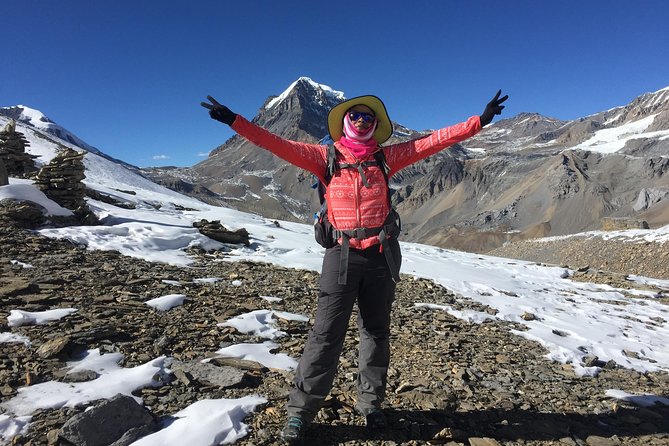
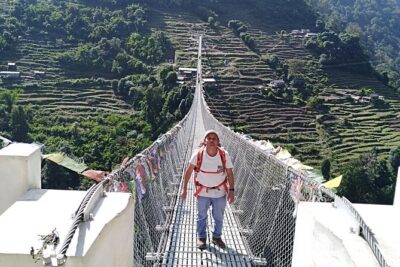
On Day 5, you follow the Kali Gandaki River toward Dharapani. The route includes steep cliffs, a suspension bridge, waterfalls, and the village of Tal. A stone Mani marks the entrance to Dharapani at about 1,960 meters.
This section shows why the Annapurna Circuit works so well as a long trek. The setting changes gradually. You do not fly straight into thin air and snow. You walk through farming country and river valleys first, giving your body and eyes time to adjust.
Day 6 climbs toward Chame, the administrative center of Manang. From Dharapani, you pass Danaque and make a steep ascent to Timang, below Lamjung Himal. Pine and mountain views begin to replace the warmer fields.
Day 7 brings fir and pine forest, rocky trail, and Bhratang before the route opens toward Pisang. Annapurna II and Pisang Peak become major visual rewards. The walk takes about six hours, and the combination of forest, exposed rock, and open valley makes this one of the more varied sections.
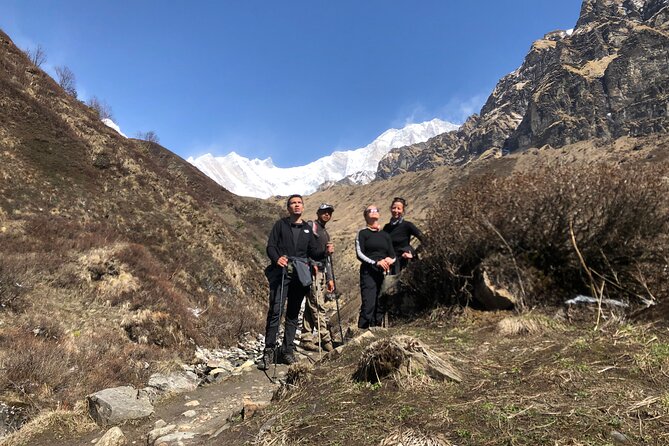
You should prepare for five to seven hours of walking a day, usually around 10 to 14 kilometers. Hill training, stair climbing, jogging, and gym work for several months will make a real difference. Good, already-worn hiking boots are essential.
Same trailhead, a longer or shorter day out:
- Everest Base Camp Trek – 14 Days
★ 5.0 · 1,499 reviews - Everest Base Camp Trek
★ 5.0 · 842 reviews - Everest Base Camp Trekking
★ 5.0 · 485 reviews - Everest Base Camp Trekking – 13 Day
★ 5.0 · 365 reviews
Manang gives you the rest day you need
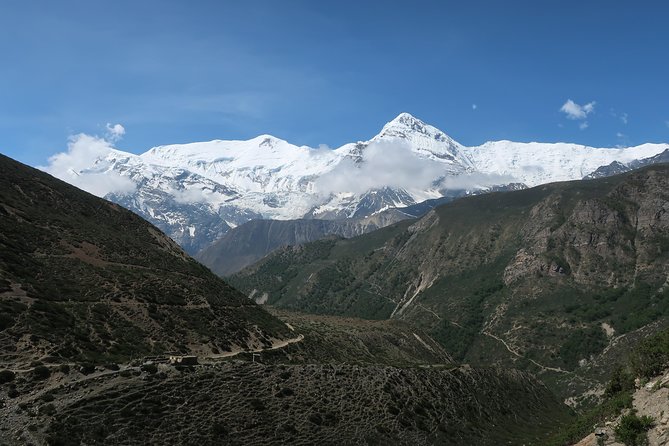
Day 8 reaches Manang after a steep ridge walk. From the ridge, you can see across the Manang Valley toward Tilicho Lake. The route passes the airstrip at Hungde, with views toward Annapurna III and Annapurna IV from the broad plains around Sabje Khola.
Manang is more than an overnight stop. It is the point where altitude becomes a serious concern. Day 9 is set aside for acclimatization, with short walks around the village and time to take in the mountains. The schedule lists only about an hour of walking, but the purpose is to spend time at altitude without pushing too hard.
The practical rule here is simple: walk slowly, drink often, and tell your guide if you feel unwell. The trip information advises at least three liters of clean water daily. You can use purification tablets or refill at regulated pure-water stations for a small fee. Bottled water is available at lodges but is discouraged.
Altitude sickness can begin above 3,000 meters. A doctor should advise you if you have a health condition that may be affected by high altitude. Travel insurance is compulsory for this trek and should include medical care, evacuation by helicopter, air ambulance, repatriation, and baggage protection.
Yak pasture and the approach to Thorong La
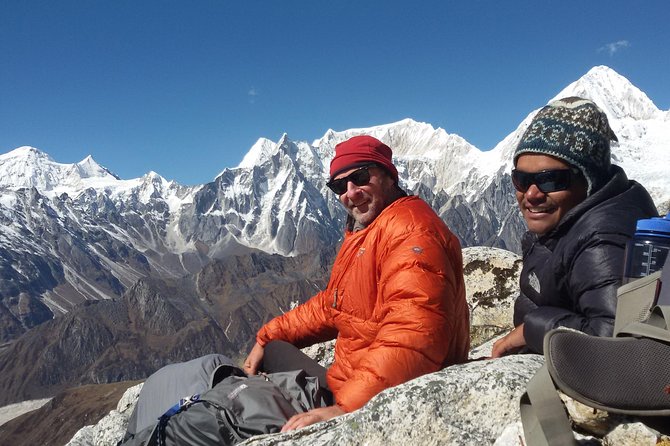
Day 10 leaves the Marshyangdi Valley. You climb through Tenki Manang, cross along the Jarsang River, pass yak pasture at Yak Kharka, and continue to Ledar. The day takes about five hours, but the air is thinner and the pace should be measured.
Day 11 is shorter, at around three hours, but it is not necessarily easy. The route from Ledar to High Camp is rough, with narrow sections above the Kali Gandaki River and some steep ups and downs. This is a day for conserving energy, eating properly, and keeping your layers ready.
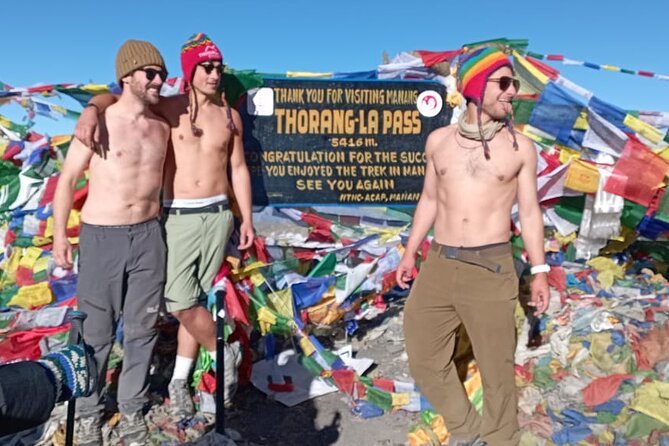
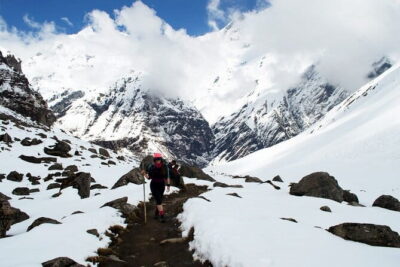
Day 12 is the hardest day of the itinerary. From High Camp, you cross Thorong La Pass and descend to Muktinath, with about seven hours on the move. The pass is the dramatic center of the trek, but it is also where weather, altitude, fatigue, and trail conditions matter most.
You should not treat the pass as a guaranteed photo stop. Conditions can change, and the guide’s pacing and judgment are important. The strong praise given to guides such as Ganesh, Tikaram, Shankar Timalsina, and Ram is especially relevant here. Past trip accounts repeatedly highlight guides who encouraged people, watched their condition, and helped them keep going without turning the trek into a race.
Muktinath, Jomsom, and the flight to Pokhara
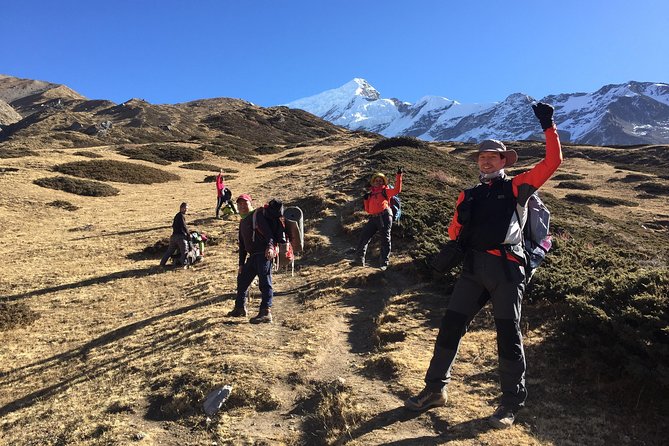
Muktinath is a significant pilgrimage site, and Day 13 allows a few hours to visit before continuing toward Jomsom. The shift from high pass to Mustang country is another major change in scenery and culture.
The Jomsom section also marks a practical transition. Instead of walking all the way out, you take an early flight to Pokhara on Day 14. Domestic mountain flights can be affected by weather, so keep your schedule flexible and do not plan an important international connection immediately afterward.
In Pokhara, you can rest, explore the city, or pay extra for a helicopter flight to Annapurna Base Camp. That flight is optional and not part of the basic price. The city hotel provides a more comfortable pause after the mountain lodges, and laundry is available in Pokhara.
Day 15 returns to Kathmandu by tourist bus, a journey of about six to seven hours. A flight from Pokhara to Kathmandu is another possible option, but the supplied plan does not include that flight. Day 16 finishes with airport transfer after breakfast.
Guides, porters, and the human side of the trek
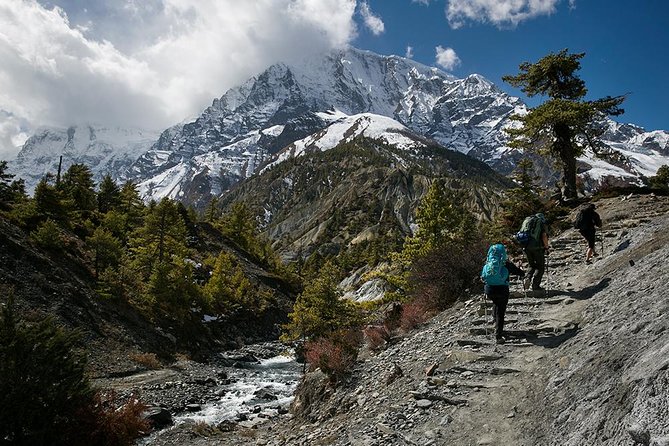
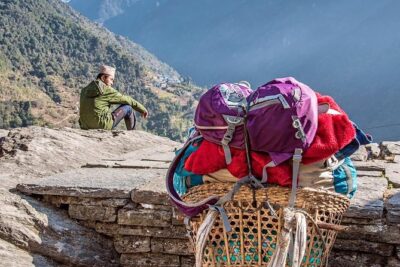
The strongest part of this program is its local support. The company describes a licensed Nepali team affiliated with national trekking and tourism bodies, and the trip uses an English-speaking guide for each trekking group. One porter is assigned for every two people, with a luggage limit of about 10 to 13 kilograms per person.
You leave excess luggage at the Pokhara hotel and carry only what you need in the mountains. That is a useful arrangement, since carrying a heavy pack at altitude quickly turns a beautiful walk into a slog.
The names praised in past accounts include Tikaram, Ganesh, Shankar Timalsina, Bini, Prakash, Ram, Sagar Karki, and others. The repeated themes are patience, encouragement, organization, and personal care. One especially striking account described an 80-year-old family member completing a trek with support from the guide. That does not mean the route is easy, but it shows how much a good guide can affect the experience.
Tipping is not fixed. Guides, porters, and drivers appreciate tips, and groups sometimes pool them before dividing the money, with the guide receiving a little more. Ask at the orientation how your group prefers to handle this.
Lodges, food, weather, and packing
Kathmandu accommodation is at Himalayan Suite Hotel, while Pokhara accommodation is listed as Hotel Dandelion or Lake Star. These are clean tourist hotels by local standards, but you should not expect European hotel facilities.
Mountain lodges are simple and usually family-run. Bathrooms may be outside the room, and hot water depends on solar panels. Bring patience, a headlamp, layers, and a willingness to accept basic conditions.
Breakfast is included throughout the package, but lunch and dinner are extra. Meal prices vary by lodge and food choice, so keep Nepali rupees with you. Only Nepali currency is accepted on the trek.
Spring runs from March to May, with generally warm conditions at lower elevations. The summer monsoon brings rain and occasional evening storms. Autumn, from late September through November, is generally dry and mild. Winter mornings and evenings are cold, and higher elevations can be very cold.
For November through the first half of March, bring a jacket suitable for around 0 degrees Celsius. At other times, the advice is a jacket suitable for about 4 to 6 degrees Celsius, but higher sections can still feel much colder. Bring worn-in boots, warm layers, a water bottle, walking poles if you use them, and two passport photos for permits or visa needs.
Who should book this trek?
You should consider it if you want a full Himalayan route with strong mountain views, local villages, cultural stops, and a supported crossing of Thorong La. It suits fit people who can train in advance and who are comfortable walking for several hours on uneven ground.
It is also a good choice if you want porters and guides but do not want to organize every permit, hotel, transfer, and lodge yourself. The group format keeps the price manageable and can create a friendly atmosphere.
You should think twice if you want private rooms every night, included restaurant meals, reliable hot showers, or a short and easy holiday. You also need to clarify the Ghorepani and Poon Hill wording before paying, since those places do not appear in the listed 16-day route.
The booking includes free cancellation if you cancel at least 24 hours before the local start time. A current passport is required, and a Nepal visa can be obtained at Kathmandu airport for an additional fee, with waiting time possible.
Should you book the Annapurna Circuit Trek?
I would book this trek if your priority is a well-supported crossing of the Annapurna Circuit at a fair package price. The Manang acclimatization day, local crew, porter support, permits, breakfast, and Jomsom flight make the planning easier and add real value.
I would not book until the operator confirms the exact route, because the title and description refer to Ghorepani and Poon Hill while the daily plan focuses on the classic circuit through Thorong La and Muktinath. Get that point settled, train properly, buy suitable insurance, and accept basic lodge conditions. If you do, this can be a demanding but rewarding way to experience Nepal’s mountains and village life.
FAQ
How long is the Annapurna Circuit Trek?
The planned duration is 16 days, including Kathmandu sightseeing, the trek, Pokhara, transport, and airport transfers.
Where does the tour start?
The tour starts at Tribhuvan International Airport in Kathmandu. The listed start time is 6:00 am.
Is airport pickup included?
Yes. Airport pickup and drop-off are included.
Are meals included?
Breakfast is included, along with the welcome dinner on Day 1. Lunch and dinner in Kathmandu, Pokhara, and during trekking are not included.
Is accommodation included?
Yes. You receive twin-sharing three-star hotel accommodation in Kathmandu and Pokhara on a bed-and-breakfast basis. During the trek, you stay in lodges with breakfast.
Is the Jomsom to Pokhara flight included?
Yes. The package includes the flight from Jomsom to Pokhara.
Is the flight from Pokhara to Kathmandu included?
The itinerary lists a tourist bus from Pokhara to Kathmandu, taking about six to seven hours. A flight may be available, but the supplied inclusions do not list it as included.
Does the trek cross Thorong La Pass?
Yes. Day 12 crosses Thorong La Pass before continuing to Muktinath.
Is a private room guaranteed with the single supplement?
No. Some lodges may not have enough rooms for private accommodation, so you may still share during parts of the trek.
What group size should I expect?
The booking allows a maximum of 15 people, while each trekking group may have up to 16 people with its own English-speaking guide.
Is travel insurance required?
Yes. Insurance is compulsory and should cover medical treatment, helicopter rescue, air ambulance, repatriation, personal injury, death, and baggage.
Is Ghorepani or Poon Hill included?
The description refers to Ghorepani and Poon Hill, but the detailed day-by-day route does not list them. Confirm the exact itinerary before booking.
Recently added around Kathmandu
- Ghorepani Poon Hill Trek★ 5.0 · 16 reviews
- Private Manaslu Circuit Trek at Himalayas★ 5.0 · 3 reviews
- Amazing 1 Day Trekking Experience in Kathmandu Nepal★ 5.0 · 24 reviews
- Upper Mustang Trekking★ 5.0 · 2 reviews
- Ghorepani Poonhill Trek★ 5.0 · 5 reviews
- Upper Mustang Trekking★ 3.0 · 2 reviews
- Upper Mustang Trekking★ 5.0 · 4 reviews
- Upper Mustang Trek★ 5.0 · 5 reviews
Annapurna Base Camp Treks, compared.
Trekking in Annapurna/Langtang/Everest/Upper Mustang regions
Read our review →
Kathmandu to Annapurna Base Camp (ABC) 5-Day Trek
Read our review →Browse the lists this tour appears in