
REVIEW · KATHMANDU
Annapurna Circuit Trek
The mountains keep changing every day. This 18-day Annapurna Circuit Trek links high passes, Buddhist and Hindu sites, old villages, and views of Annapurna and Dhaulagiri. I especially like the chance to cross Thorong La at 5,416 meters and later catch sunrise from Poon Hill. The inclusion of airport transfers, Kathmandu sightseeing, permits, and hotel nights also makes the trip easier to organize.
The main caution is the physical demand. You need moderate fitness, and the altitude at Thorong La is serious. The route also runs close to the advertised $1,074.88 price per person, but meals in Kathmandu and Pokhara, drinks, and other personal spending are not included.
Key details that shape this trek
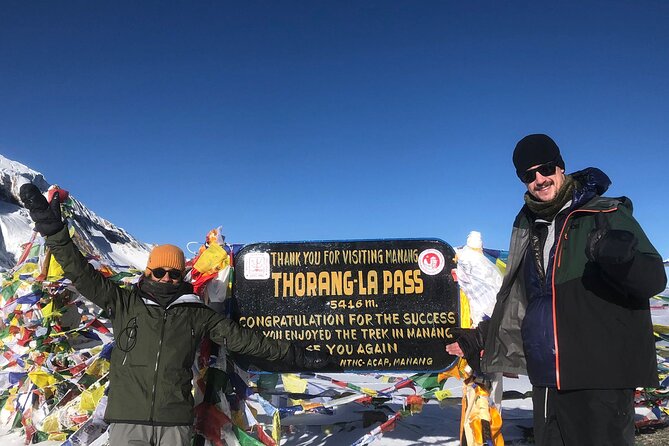
- Thorong La reaches 5,416 meters, making altitude preparation and a steady pace important.
- Muktinath combines mountain scenery with religious meaning, as the temple is one of Nepal’s holiest pilgrimage sites.
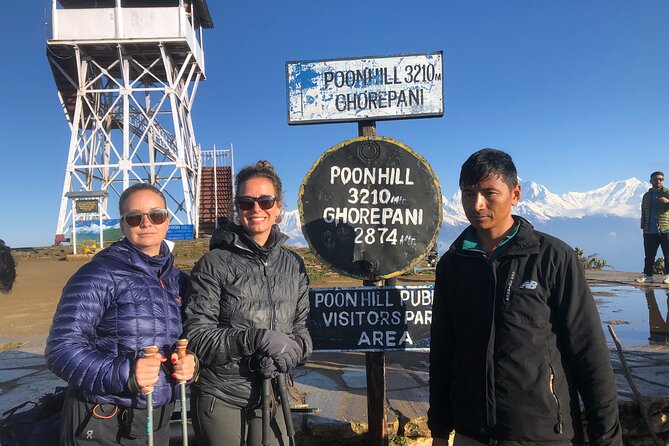
- Poon Hill adds a memorable sunrise stop, with views toward the Annapurna range and Dhaulagiri.
- The route passes through Manang, Marpha, Ghorepani, and Muktinath, giving you a broad look at the Annapurna region.
- A small group of no more than 10 people should allow for a more personal guide experience.
- Guides and porters receive strong praise, with Sudam, Binod, Pasang, Rajesh, Jayaram, Raju, and others named for their care and flexibility.
From Kathmandu to Besisahar: the long way into the mountains
The trip begins in Kathmandu, where airport pickup and a transfer to a three-star-level hotel are included. Kathmandu sightseeing by car is also part of the program, so you get some city time before heading into the hills.
That arrangement is useful if you want one company handling the first practical steps. Airport arrival, hotel transfer, sightseeing, permits, and the start of the trek can otherwise require several separate bookings. The tour also includes the TIMS card and Annapurna Conservation Area Project permit, two important pieces of trekking administration.
The first major transport leg is a scenic bus ride from Kathmandu to Besisahar. This is not a quick transfer, and road travel in Nepal can be tiring, but it gives you a gradual change from city streets to river valleys and mountain country. I would treat the bus ride as part of the adventure rather than a minor detail.
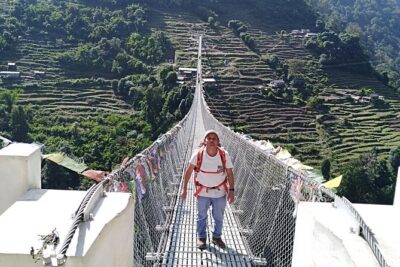
From Besisahar, the walking section begins. The route then climbs through the Annapurna region, where the scenery changes as you gain height. The appeal of the circuit is this variety. You are not looking at the same mountain view for two weeks. Villages, cliffs, forests, dry high valleys, and snowy summits appear in different combinations.
More Annapurna Treks in Kathmandu
- Annapurna Circuit Trek with Tilicho Lake
★ 5.0 · 368 reviews - Annapurna base camp trek 5 Days
★ 5.0 · 252 reviews - 14-Day Private Annapurna Base Camp Trek
★ 5.0 · 180 reviews
Manang and Yak Kharka: where altitude becomes real
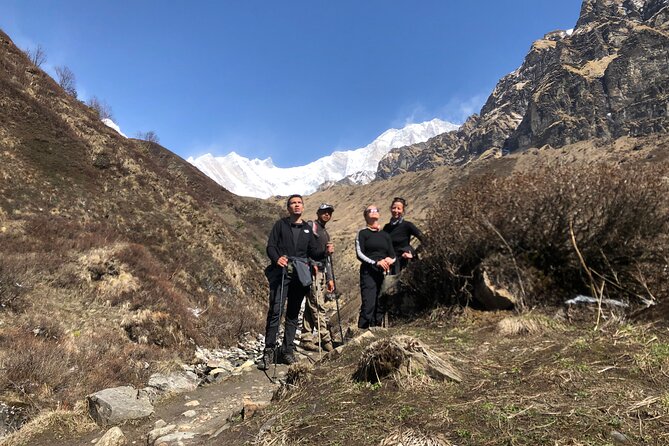
Manang is one of the key villages on the route. It is also one of the places where the trek begins to feel much more serious. The itinerary highlights views from Yak Kharka, Thorong La, and Muktinath, including sights of Annapurna and Dhaulagiri.
At this point, the height matters more than the distance. A trail can look manageable on a map and still feel hard when you are walking above 3,000 meters. The tour is best for someone prepared to walk for many days, accept a slower rhythm, and follow the guide’s advice.
The inclusion of a guide is particularly valuable here. Several named guides, including Sudam and Binod, were praised for taking care of people, giving practical advice, and adapting plans when needed. The company’s staff were also praised for helping with planning before arrival. That kind of support matters more on a high-altitude trek than fancy extras do.
The Annapurna Conservation Area is another major part of this section. The program points to animals such as snow leopards, musk deer, and Himalayan tahr. Wildlife sightings are never guaranteed, so you should think of this as a chance to be in protected mountain habitat, not a safari with scheduled animal encounters.
Thorong La at 5,416 meters: the hardest day on paper
Thorong La is the trek’s highest point, at 5,416 meters. That figure is not decoration. It tells you why the tour requires moderate physical fitness and why a careful pace is essential.
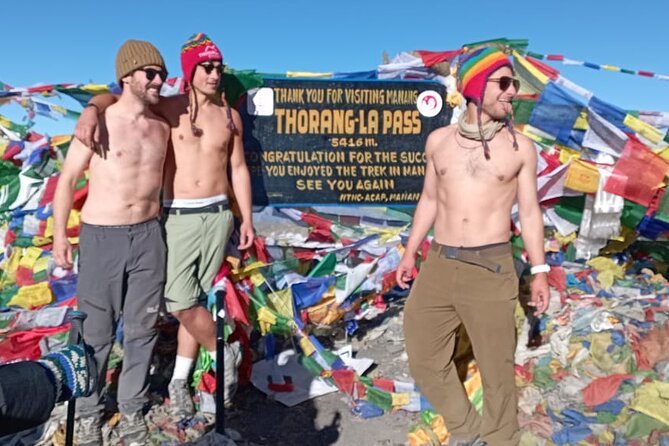
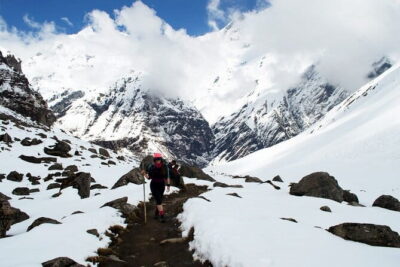
The pass is one of the main reasons to choose this circuit. Reaching the top gives you a strong sense of achievement, but the crossing is also the part that deserves the most respect. Cold, thin air and steep terrain can turn a beautiful day into a difficult one. The itinerary information does not specify walking hours, daily distances, or an acclimatization schedule, so I would ask for those details before paying.
Views from Thorong La and nearby high points can include Annapurna and Dhaulagiri. The exact visibility depends on weather. The tour requires good weather, and poor conditions can lead to a new date or a full refund if the experience is canceled for that reason.
The guide and porter system is another strength here. People specifically praised guides such as Pasang, Binod, and Jayaram, along with porters including Dinesh, Majhi, Golkun, and Rajan. The recurring theme is practical care: support on the trail, help with bags, schedule flexibility, and a friendly attitude. Do not underestimate how useful that becomes on the pass day.
Muktinath: a spiritual stop beyond the pass
After Thorong La, Muktinath brings a different kind of interest. The temple sits at 3,410 meters at the base of the pass and is regarded as one of Nepal’s holiest religious sites. It is described as a Shakti Peeth, a source of primordial energy.
You do not need to share the same religious beliefs to appreciate the place. Muktinath shows how pilgrimage, mountain travel, and local culture overlap in Nepal. The route also brings you into contact with people from different ethnic communities, as well as trekkers from many countries.
That cultural mix is one of the strongest reasons to choose a longer circuit rather than a short mountain viewpoint trip. You see more than peaks. You move through communities with different traditions and meet people following the trail for very different reasons.
The tour description does not give detailed information about room standards in the mountain villages. Accommodation beyond Kathmandu is therefore something I would confirm before booking. The price includes the program according to the itinerary, but it does not clearly spell out every trekking lodging detail in the material provided.
Same trailhead, a longer or shorter day out:
- Everest Base Camp Trek – 14 Days
★ 5.0 · 1,499 reviews - Everest Base Camp Trek
★ 5.0 · 842 reviews - Everest Base Camp Trekking
★ 5.0 · 485 reviews - Everest Base Camp Trekking – 13 Day
★ 5.0 · 365 reviews
Marpha, the Kali Gandaki gorge, and the long return
Marpha is another memorable village named in the route. The circuit then continues through the Kali Gandaki area, described as the world’s deepest gorge. This is a major geographic feature of the trek and helps explain why the Annapurna Circuit feels so varied.
The Kali Gandaki route is not simply an out-and-back walk to one base camp. It gives you a changing view of the mountains and a gradual transition from high terrain toward lower villages. That variety is a real advantage for anyone who wants a broad Himalayan experience.
The return section includes Tatopani, Ghorepani, Tikhedhunga, Ulleri, and Nayapul, followed by the beautiful valley of Pokhara. These names are also associated with the Annapurna Base Camp trekking area, so the trip combines the high pass route with villages often reached on other popular Annapurna walks.
The tradeoff is time and effort. An 18-day schedule gives you more scenery and cultural variety, but it also means more nights on the move. If you prefer a short, focused mountain holiday, this may feel too long. If you want the full change from Kathmandu to the high pass and down toward Pokhara, the length is part of the appeal.
Poon Hill sunrise: a rewarding finish
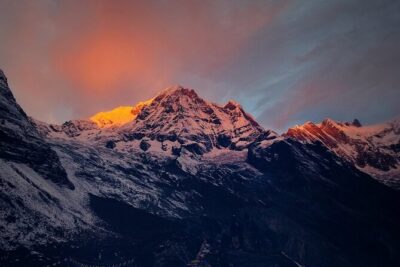
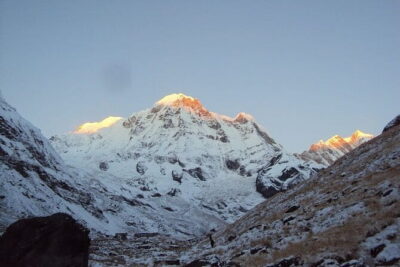
Poon Hill is one of the trip’s most appealing additions. The promise is a sunrise among the mountains, with views toward Annapurna and Dhaulagiri. Early starts are rarely easy on a trekking trip, but this is the sort of viewpoint that can justify setting the alarm.
Poon Hill also provides a different mountain experience from Thorong La. The high pass tests endurance and altitude tolerance. Poon Hill is about the view, the light, and the feeling of seeing the peaks change as morning arrives. Having both on one route gives the trek more range.
The route through Ghorepani, Tikhedhunga, Ulleri, and Nayapul then leads toward Pokhara. Pokhara is the final valley destination named in the program, and airport drop-off is included at the end of the broader arrangement.
The listing does not state the exact transport method from Nayapul to Pokhara, so ask how that transfer is handled and how much time is allowed before your departure. That is a small but important planning point.
What the $1,074.88 price actually gives you
At $1,074.88 per person, the price is easiest to judge as a package of logistics rather than as a simple walking fee. It includes airport pickup, a Kathmandu hotel at the three-star level, Kathmandu sightseeing by car, the ACAP permit, the TIMS card, airport drop-off, and the scheduled program.
Those inclusions reduce the number of moving parts. Permits alone are not the whole cost of a trek, but arranging them in advance saves time and removes uncertainty. Airport transfers are also useful after a long flight and at the end of a demanding route.
The exclusions matter. Lunch and dinner in Kathmandu and Pokhara are not included, and drinks, both soft and alcoholic, are also excluded. The information provided does not say that every meal on the trekking route is included, so you should request a precise meal and lodging breakdown before booking.
I also like the maximum group size of 10. That is small enough for a guide to notice when someone is struggling, and it should make group decisions easier than on a large coach-style trek. The strong praise for flexibility suggests the operator may be willing to adjust plans, though you should not assume every change is included in the price.
Guides, porters, and the human side of the trip
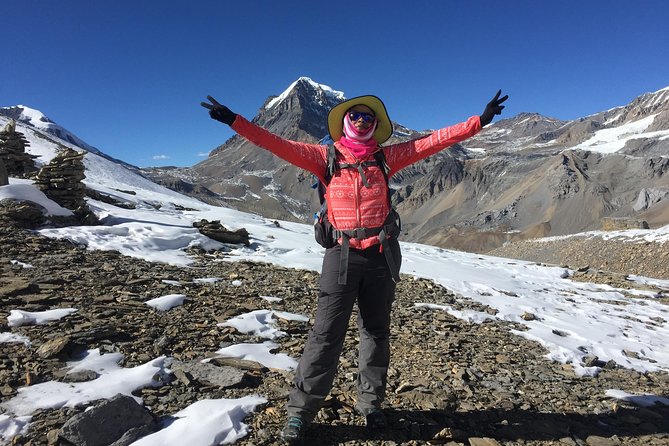
The most consistently praised part of this experience is the staff. Sudam was described as professional, patient, and caring. Binod received praise for responsible support from airport pickup through trekking. Pasang was praised for language skills and trail knowledge, while Jayaram and Raju were also credited with making difficult journeys feel more manageable.
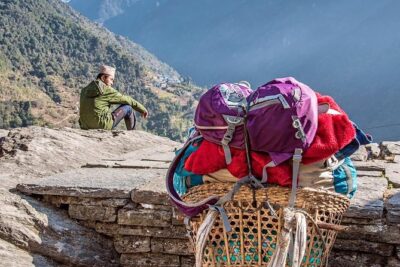
The porters receive warm attention too. Dinesh, Majhi, Rajan, Golkun, and others are named in the feedback, with their effort and good humor appreciated. On a long trek, that is not a minor service. Porters help make it possible for you to walk with a manageable daypack instead of carrying every item yourself.
The company’s managing director, Mr. Mani, is also repeatedly praised for communication, planning, flexibility, and practical help with matters such as exchange and a local NCell connection. That suggests the service begins before the trail, which is useful if this is your first trip to Nepal.
Still, staff quality can vary by departure, so ask who your actual guide will be. The names above come from different trips and should not be treated as a guarantee for your booking.
Who should book this Annapurna Circuit Trek?
I would recommend this trip to fit hikers who want a broad Nepal experience rather than a quick mountain visit. It suits you if high passes, pilgrimage sites, village life, changing scenery, and a long route all sound appealing.
It is less suitable if you dislike long road transfers, have no experience with sustained walking, or want a relaxed holiday with fixed comfort. The 5,416-meter pass is the central challenge, and the tour description itself asks for moderate physical fitness.
A small group, airport support, permits, hotel arrangements, and helpful staff add real value. The main thing I would confirm is the detailed day-by-day plan, including walking hours, accommodation, meals, and transport around Pokhara.
Should you book it?
Book this trek if you want the classic Annapurna Circuit highlights in one organized package: Manang, Thorong La, Muktinath, Marpha, the Kali Gandaki gorge, Ghorepani, Poon Hill, and Pokhara. The staff support is the strongest reason to choose this operator, especially if you want guidance with planning and a flexible approach.
Before booking, check the altitude schedule, daily distances, mountain lodging, meal coverage, and transport details. If those answers suit your fitness and budget, the $1,074.88 price offers a practical way to tackle one of Nepal’s most varied long-distance treks.
FAQ
Where does the Annapurna Circuit Trek begin?
The experience begins in Kathmandu, Nepal, with airport pickup and a transfer to a hotel. The trekking transport includes a scenic bus ride from Kathmandu to Besisahar.
How long does the trek last?
The advertised duration is approximately 18 days.
What is the highest point of the trek?
The highest point is Thorong La pass, which sits at an altitude of 5,416 meters.
Does the route visit Muktinath Temple?
Yes. The itinerary includes a visit to Muktinath Temple, which is located at 3,410 meters at the base of Thorong La.
Is Poon Hill included?
Yes. The route includes Poon Hill, known for sunrise views among the Annapurna and Dhaulagiri mountains.
What permits are included?
The price includes the Annapurna Conservation Area Project permit and the TIMS, or Trekkers Information Management System, card.
Is Kathmandu sightseeing included?
Yes. Kathmandu sightseeing by car is included, along with accommodation in a three-star-level hotel in Kathmandu.
Are meals included?
Lunch and dinner in Kathmandu and Pokhara are not included. Drinks, including soft and alcoholic drinks, are also excluded. Ask the provider to confirm the meal arrangements during the trekking section.
How many people can join the group?
The experience has a maximum group size of 10 people.
Can I cancel for a full refund?
Yes, if you cancel at least 24 hours before the local start time. Cancellations made less than 24 hours in advance are not refunded, and changes made within that period are not accepted. If poor weather causes the operator to cancel, you will be offered another date or a full refund.
Recently added around Kathmandu
- Ghorepani Poon Hill Trek★ 5.0 · 16 reviews
- Private Manaslu Circuit Trek at Himalayas★ 5.0 · 3 reviews
- Amazing 1 Day Trekking Experience in Kathmandu Nepal★ 5.0 · 24 reviews
- Ghorepani Poonhill Trek★ 5.0 · 5 reviews
- Upper Mustang Trekking★ 5.0 · 2 reviews
- Upper Mustang Trekking★ 3.0 · 2 reviews
- Upper Mustang Trekking★ 5.0 · 4 reviews
- Upper Mustang Trek★ 5.0 · 5 reviews
Annapurna Base Camp Treks, compared.
Trekking in Annapurna/Langtang/Everest/Upper Mustang regions
Read our review →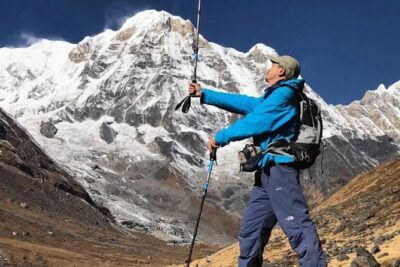
Kathmandu to Annapurna Base Camp (ABC) 5-Day Trek
Read our review →Browse the lists this tour appears in