
REVIEW · KATHMANDU
Circle the Annapurna: A Life-Changing Trek Adventure
Mountain passes make big memories. This 21-day Annapurna Circuit trek takes you from Kathmandu around the Annapurna range, through Gurung and Thakali communities, and across Thorong La at 5,416 meters. I like the careful acclimatization day in Manang and the chance to combine high mountain walking with villages, tea houses, Muktinath, and Poon Hill.
I also like the small group limit of 10 and the strong record of personal support from guides such as Govinda, Dhruba, and Gobinda, with porters including Purna and Keshab praised for their help. The main consideration is the physical demand: long walking days, a major high pass, and a price of $2,100 before international airfare, drinks, visa costs, insurance, and some transport details.
Key points before you book
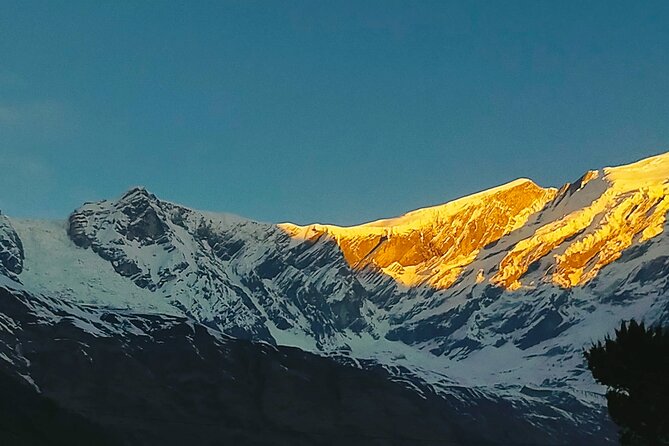
- Thorong La is the hard centerpiece: You cross a 5,416-meter pass on a seven to eight hour day before descending to Muktinath.
- Manang provides a useful rest day: The schedule gives you one full day at 3,500 meters before the highest section.
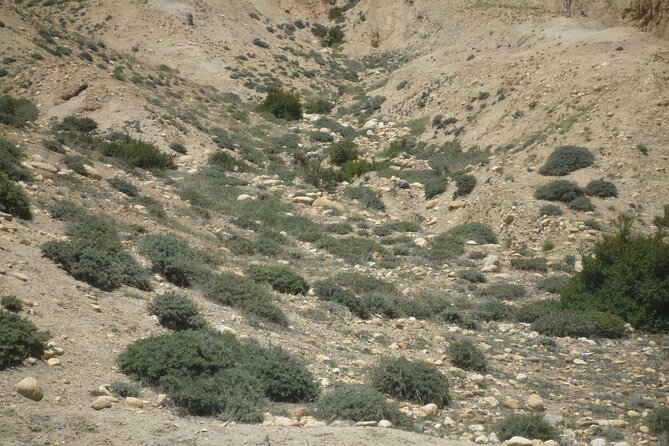
- The route changes constantly: You move from lower river valleys to alpine terrain, then into the drier Mustang area and down toward hot springs at Tatopani.
- Tea house nights shape the experience: Overnight stays are provided during the trek, with three meals each trekking day.
- The group stays small: A maximum of 10 people should make guide contact and group pacing easier.
- Poon Hill adds a final sunrise-style mountain view: The early hike to 3,210 meters comes near the end, followed by a long walk to Ghandruk.
Why this Annapurna Circuit feels like a real journey
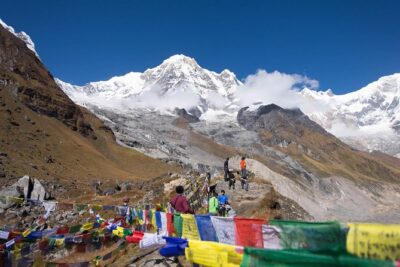
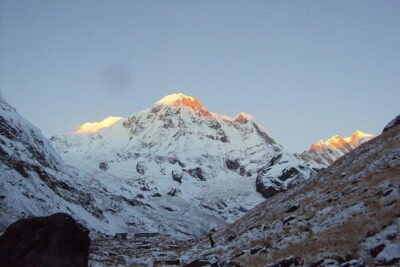
The Annapurna Circuit works because it is not just a mountain-view walk. Over three weeks, you move through several kinds of Nepal, with the scenery, altitude, architecture, and pace changing as you go.
You begin in Kathmandu at about 1,334 meters, then travel by road to Ngadi at 890 meters. From there, the trail climbs gradually through Jagat, Dharapani, Chame, Pisang, and Manang. The high point is Thorong La, followed by a descent through Muktinath, Kagbeni, Marpha, Ghasa, and Tatopani.
That shape matters. You do not arrive at the highest point on the first morning. The walking days build toward it, and the rest day in Manang gives your body time to adjust before Yak Kharka and Thorong Phedi.
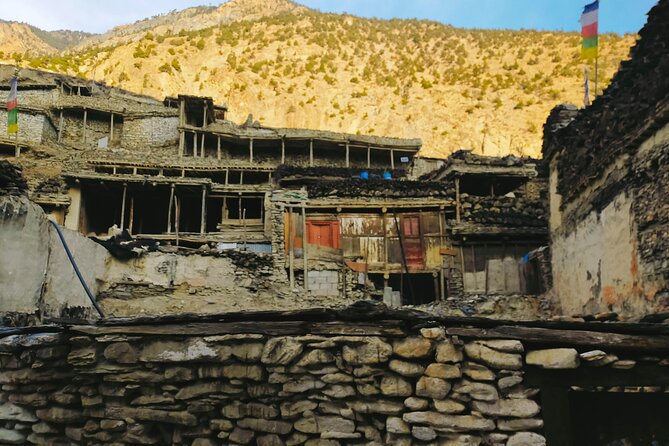
I especially like the cultural side of the route. The experience is designed to bring you into contact with Gurung and Thakali communities, rather than keeping you in one mountain base. The tea house system also gives the trip a local rhythm. One of the strongest practical details from the feedback is the consistent praise for tea house food, with meals described as delicious.
Still, you should not confuse a supported trek with an easy holiday. The schedule includes several five to six hour walking days, a demanding pass crossing, and a long return route after the high point. You need strong physical fitness, as the operator clearly states.
More Annapurna Treks in Kathmandu
- Annapurna Circuit Trek with Tilicho Lake
★ 5.0 · 368 reviews - Annapurna base camp trek 5 Days
★ 5.0 · 252 reviews - 14-Day Private Annapurna Base Camp Trek
★ 5.0 · 180 reviews
Days 1 to 3: Kathmandu preparation and the long road to Ngadi
Day 1 is your arrival in Kathmandu, followed by a transfer to the hotel. The city stay is on a bed-and-breakfast basis, so breakfast is covered, while lunch and dinner in Kathmandu are not included.
Day 2 is set aside for Kathmandu Valley sightseeing and preparation. This is useful rather than wasted time. You can get organized, check equipment, and settle into the trip before the trail begins. The schedule lists breakfast and dinner on this day.
Day 3 changes the mood quickly. You drive about 200 kilometers to Ngadi, a journey listed at eight to nine hours. That is a long road day, and you should think of it as part of the physical and mental start of the trek. Road conditions and mountain traffic can affect how the day feels, but no precise transport details are supplied, so I would confirm the vehicle arrangements before paying.
Ngadi sits at about 890 meters, lower than Kathmandu. That gives you a gentle start in altitude terms. You are not thrown straight into a high mountain village, but you do spend much of the day sitting in a vehicle.
Days 4 to 8: Following the river valleys toward Manang
From Ngadi, you walk to Jagat on Day 4. The route is about seven kilometers and takes four to five hours, ending at 1,300 meters. This is a sensible first walking day, with a clear gain in height but not yet a major altitude test.
Day 5 takes you to Dharapani at 1,860 meters. The distance is about eight kilometers, with five to six hours on foot. Dharapani marks the beginning of a more serious mountain section, and your body will start noticing the climb.
The next day, you reach Chame at 2,670 meters after another five to six hours and eight kilometers. Chame is an important stopping point because you are now well above the lower valley. You should expect cooler conditions and a greater need to manage your pace.
Day 7 brings you to Lower Pisang at 3,200 meters. The walk is shorter at about seven kilometers, taking four to five hours. The altitude matters more than the distance here. A steady pace, regular meals, and water breaks are more useful than trying to arrive early.
On Day 8, you walk to Manang at 3,500 meters. The schedule gives you five to six hours for roughly eight kilometers. Manang is one of the major stops of the trip, both for its high setting and for what comes next.
The route has now moved from warm lower valleys into serious high-altitude walking. That gradual change is one of the best features of the plan. You have several nights to adjust before Thorong La rather than rushing upward.
Day 9: A full rest day in Manang
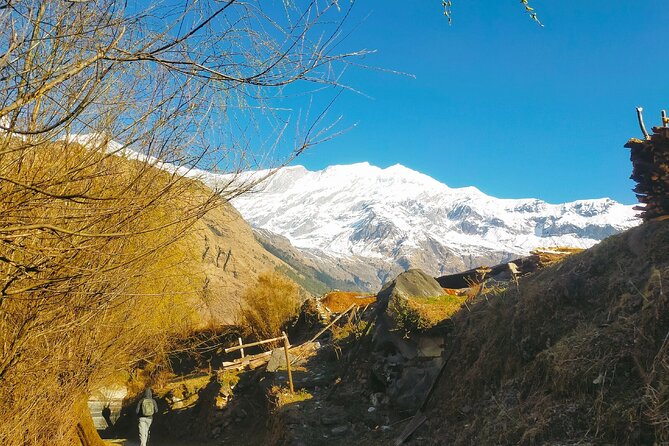
The rest day in Manang is not an optional luxury. It is one of the most important parts of the schedule.
At 3,500 meters, you are high enough that a slow day can help your body adjust before the route rises again. The supplied plan simply marks this as a rest day, so you should not assume a specific excursion or activity is included.
I would use the day to rest, eat well, and keep the next stage in mind. This is also a good point to speak openly with your guide about how you feel. The guides receive especially strong praise in the feedback, including Govinda and Dhruba, while Badri is repeatedly credited with organizing and supporting the trip.
The small group limit helps here. With no more than 10 people, the guide should have a better chance of noticing how each person is coping. That does not remove the altitude risk, but it makes direct communication easier.
Same trailhead, a longer or shorter day out:
- Everest Base Camp Trek – 14 Days
★ 5.0 · 1,499 reviews - Everest Base Camp Trek
★ 5.0 · 842 reviews - Everest Base Camp Trekking
★ 5.0 · 485 reviews - Everest Base Camp Trekking – 13 Day
★ 5.0 · 365 reviews
Days 10 to 12: Yak Kharka, Thorong Phedi, and the high pass
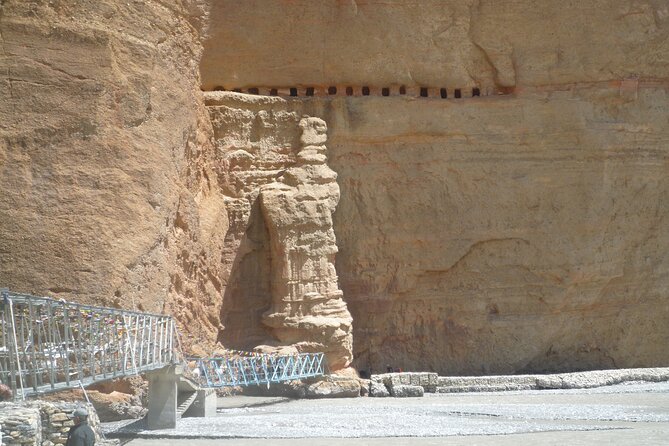
Day 10 takes you from Manang to Yak Kharka at 4,050 meters. The walk is about seven kilometers and four to five hours. This is a short distance, but the altitude makes it a serious day.
Day 11 continues to Thorong Phedi at 4,525 meters. You walk about seven kilometers in four to five hours. This is your staging point for the pass crossing, and the overnight height means you should expect a colder, tougher section than anything earlier on the route.
Day 12 is the big one. You cross Thorong La at 5,416 meters, then descend to Muktinath at 3,800 meters. The full day takes seven to eight hours and covers roughly nine kilometers.
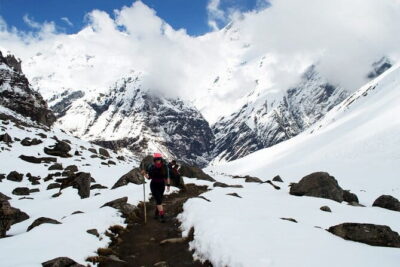
This is the section that demands the most from you. The crossing combines altitude, early-day effort, and a long descent. The reward is not just the number on the altitude chart. You have crossed from one side of the Annapurna region to another, and the scenery and cultural feel begin to change.
Muktinath gives you a major sense of arrival after the pass. It is also one of the key sightseeing points on the route. The schedule does not promise a separate guided visit or extra admission, so ask what time you will have there and what is included.
Days 13 to 16: Down through Kagbeni, Marpha, and Tatopani
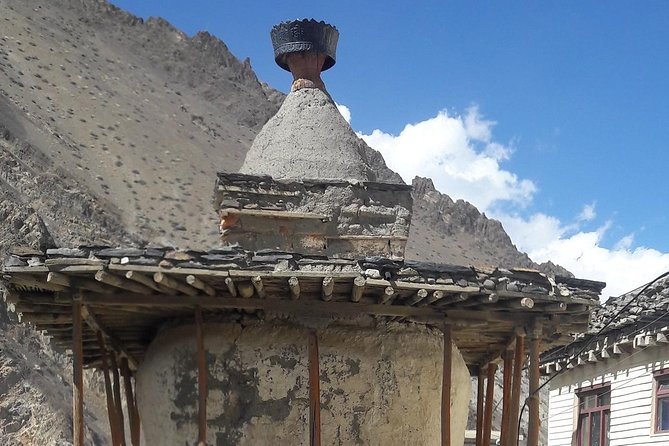
After the high pass, Day 13 takes you to Kagbeni at 2,810 meters. The walk is about six kilometers and four to five hours. This drop in altitude should feel welcome after Thorong La and Muktinath.
Day 14 leads to Marpha at 2,670 meters, with about eight kilometers and five to six hours of walking. Marpha is one of the best-known village stops on this section, and its inclusion gives the trek a strong sense of place rather than making it only a point-to-point mountain challenge.
On Day 15, you continue to Ghasa at 2,010 meters. The distance is again about eight kilometers, taking five to six hours. The route is now descending into a lower valley, and the conditions should feel less severe than around Thorong Phedi.
Day 16 reaches Tatopani at 1,190 meters after five to six hours and eight kilometers. The name is associated with hot springs, but the supplied details do not specifically confirm that a bathing visit is included. If that matters to you, ask before departure.
This middle-to-late section is valuable because it gives the trip contrast. You are not spending all 21 days above the tree line or staring at the same peaks. You move through lower villages and communities connected with the Thakali culture, then begin the final climb toward Ghorepani.
Days 17 to 19: Ghorepani, Poon Hill, Ghandruk, and Pokhara
Day 17 is another uphill day, from Tatopani to Ghorepani at 2,860 meters. The walk takes five to six hours and covers about eight kilometers. After the long descent from Thorong La, this climb can feel like a fresh test.
Day 18 begins with a hike to Poon Hill at 3,210 meters. The listed walk takes about an hour and covers 2.5 kilometers. Poon Hill is a popular viewpoint, and its position near the end of the trek gives you one more chance for wide mountain views before leaving the trail.
You then walk to Ghandruk at 2,600 meters, a much longer six to seven hour section covering about 15 kilometers. This is one of the longest distances on the schedule, so do not let the short Poon Hill hike fool you. The whole day is substantial.
Day 19 is the final walking day. You trek back to Nayapul at 950 meters, a four to five hour, seven-kilometer descent, then drive about 1.5 hours to Pokhara at 820 meters.
Pokhara provides a clear change of pace after the trail. The schedule does not specify how much free time you receive there, so confirm whether the city is simply an overnight stop or includes sightseeing. The supplied feedback describes some versions of the trip as including Pokhara, Kathmandu, Muktinath, and even Janakpur sightseeing, but the formal 21-day plan only clearly places Pokhara in the return route.
Days 20 and 21: Returning to Kathmandu and flying home
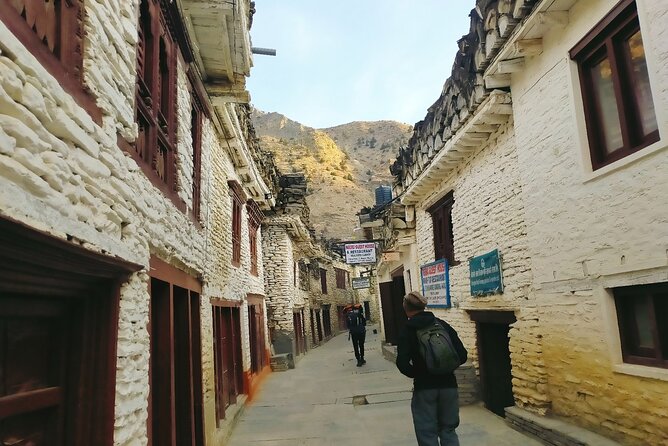
Day 20 gives you two possible ways back to Kathmandu: a six to seven hour drive or a 30-minute flight. That difference is large. A road journey keeps costs and logistics different from a flight, while the flight saves most of the day.
Because the included-cost section does not clearly spell out whether this return transport or flight is covered, ask for a written cost breakdown. The same advice applies to the earlier road transfer to Ngadi.
Day 21 is your flight home. Airport departure tax, international airfare, and Nepal visa fees are not included. Travel and rescue insurance, trip cancellation cover, personal equipment, extra services, and beverages are also your responsibility.
What the $2,100 price covers
At $2,100 per person, the price has real value if you want a long, organized trek rather than trying to arrange every piece yourself.
Included are three meals during the trek, overnight accommodation on the trekking section, and Kathmandu accommodation on a bed-and-breakfast basis. The package also covers salaries and wages for office staff, travel and rescue fees for office staff, and all meals and accommodation for office staff.
That last group of inclusions is more about the operating structure than direct comfort for you. The practical value comes from the food, lodging, coordination, and staff support.
The price does not cover everything. Kathmandu lunches and dinners, beverages, international flights, visa fees, airport departure tax, personal equipment, extra services, and insurance are excluded. Since transport choices are listed but not clearly assigned to the included section, I would ask whether the Ngadi transfer, the Nayapul to Pokhara drive, and the Day 20 return are included.
The strongest value is for someone who wants a defined schedule, a guide, a porter arrangement, meals, and tea house lodging without building the entire trip independently. It is less attractive if you want a short trek, a luxury standard, or a flexible plan that changes day by day.
Guides, porters, and the human side of the trek
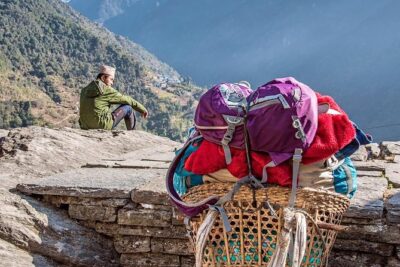
The most consistently praised part of this experience is the support team. Govinda is singled out for taking excellent care of the group, while Gobinda receives praise for helping people discover Nepal beyond simply walking from village to village.
Dhruba is also praised as an excellent guide, and Purna is described as a dependable porter. Keshab is remembered for his humor and willingness to help. Badri receives repeated credit for professional planning, support before the trip, and attention during the journey.
Names matter here because a long trek depends on people, not just route markers. You should still confirm the final guide and porter assignments before departure, since the names connected with past departures may not be the people leading your group.
Who should book this trek?
I would recommend it to you if you want the full Annapurna Circuit experience, have strong physical fitness, and prefer a structured trip with meals and lodging arranged.
It suits people who enjoy changing scenery, village stays, mountain culture, and long days on foot. It also works well if you want a small group rather than a large organized crowd.
I would hesitate to recommend it if you dislike basic overnight accommodation, struggle with steep climbs, or want a relaxed sightseeing holiday. Thorong La is not a casual walk, and the 15-kilometer day to Ghandruk comes after a one-hour Poon Hill hike.
The trek also requires flexibility. Bad weather can affect the schedule, and the provider states that poor weather may lead to a new date or a full refund. In other cases, the experience is non-refundable and cannot be changed after booking, so insurance is especially important.
FAQ
How long is the Annapurna Circuit trek?
The full experience lasts approximately 21 days, including arrival in Kathmandu, sightseeing and preparation, the trek, return travel, and departure.
What is the highest point on the route?
The highest point is Thorong La at 5,416 meters, crossed on Day 12 before the descent to Muktinath.
How physically fit do I need to be?
The activity requires a strong physical fitness level. The schedule includes repeated four to six hour walking days, a seven to eight hour Thorong La crossing, and a long 15-kilometer day from Poon Hill to Ghandruk.
Are meals included?
Three meals per day are included during the trek. Kathmandu lunch and dinner are not included, and beverages are excluded.
Where do I stay during the trek?
Overnight accommodation is included throughout the trekking section. The supplied information does not name individual lodges, but the experience includes tea house stays.
Is Kathmandu accommodation included?
Yes. Accommodation in Kathmandu is included on a bed-and-breakfast basis.
How large is the group?
The activity has a maximum of 10 people. The starting point is Bagawan Bahal Marg 29, Kathmandu 44600, with a listed start time of 6:15 am, and the activity ends back at the meeting point.
Should you book the Annapurna Circuit?
Book this trek if you want a serious, three-week mountain journey with a clear route, gradual altitude gain, tea house nights, local cultural contact, and strong guide support. The rest day in Manang and the small group limit are meaningful advantages.
Before paying, ask for a written list of transport inclusions, confirm the guide and porter team, and budget for insurance, visa fees, drinks, personal equipment, and Kathmandu meals. If you are fit, prepared for basic lodging, and ready for Thorong La, the $2,100 package offers a substantial way to experience the Annapurna region.
Recently added around Kathmandu
- Ghorepani Poon Hill Trek★ 5.0 · 16 reviews
- Private Manaslu Circuit Trek at Himalayas★ 5.0 · 3 reviews
- Amazing 1 Day Trekking Experience in Kathmandu Nepal★ 5.0 · 24 reviews
- Ghorepani Poonhill Trek★ 5.0 · 5 reviews
- Upper Mustang Trekking★ 5.0 · 2 reviews
- Upper Mustang Trekking★ 5.0 · 4 reviews
- Upper Mustang Trek★ 5.0 · 5 reviews
- Upper Mustang Trekking★ 3.0 · 2 reviews
Annapurna Base Camp Treks, compared.
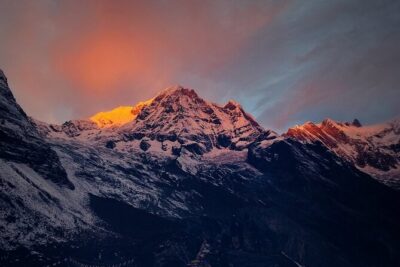
Trekking in Annapurna/Langtang/Everest/Upper Mustang regions
Read our review →
Kathmandu to Annapurna Base Camp (ABC) 5-Day Trek
Read our review →Browse the lists this tour appears in