
REVIEW · KATHMANDU
Annapurna Circuit Trek
One trek, many worlds. The Annapurna Circuit packs subtropical forests, Tibetan-style villages, high mountain passes, apple orchards, hot springs, and sweeping views into roughly 14 days. I like the route’s remarkable change of scenery, and I like that the price includes permits, meals during the trek, a guide, a porter, and Kathmandu and Pokhara lodging.
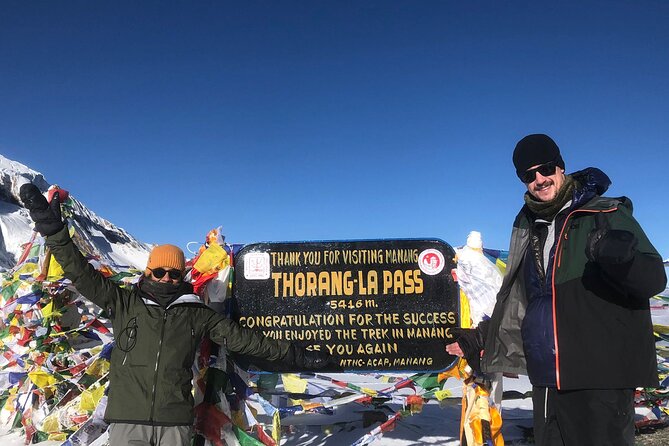
The main consideration is the pace. You reach Thorong La Pass at 5,416 meters, after several long hiking days and a short acclimatization stop in Manang. The itinerary also names Tilicho Lake as a major stop, but the daily schedule does not clearly show when that detour happens, so I would confirm the exact route before paying.
Five details that shape the trip
- Thorong La Pass reaches 5,416 meters, making altitude and fitness the central concerns.
- Tilicho Lake is included among the planned sights, but its place in the day-by-day schedule needs clarification.
- Meals, permits, guide service, porter support, and trek lodging are included, which gives the $1,175 price solid value.
- The route changes dramatically, from paddy fields and forest to dry cliffs, ice, and high Himalayan views.
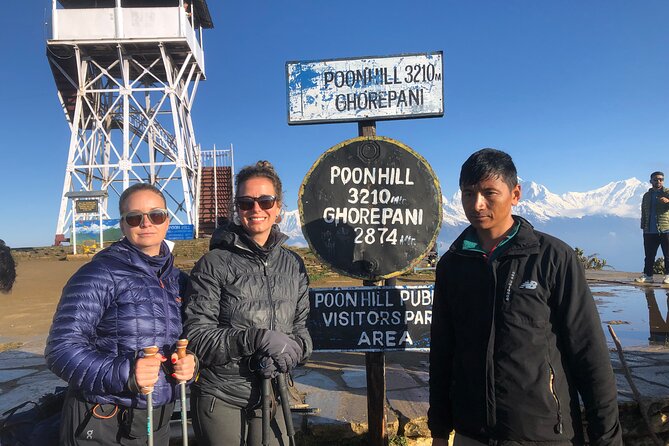
- The final section includes Muktinath, Marpha, Tatopani, Ghorepani, and Poon Hill, though the listed schedule appears shorter than the full route description.
- This is a private trip, so only your group takes part, with pickup offered in Kathmandu.
Why the Annapurna Circuit still earns its reputation
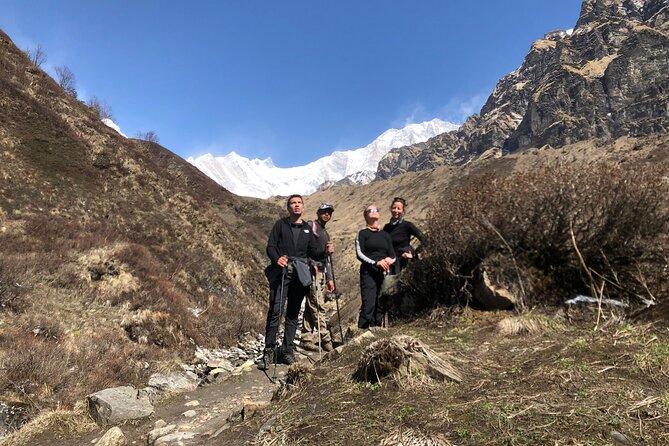
I like this trek because it is not just a mountain walk. It is a journey through several distinct parts of Nepal, each with a different climate, architecture, religious character, and style of village life.
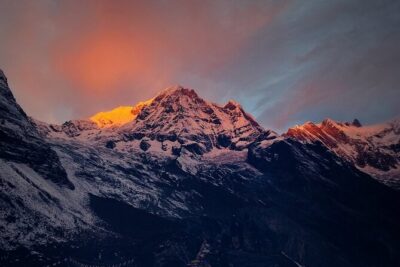
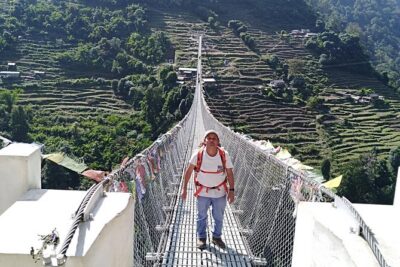
At the start, the Marsyangdi Valley gives you subtropical vegetation, terraced fields, and river scenery. As you climb through Manang, the air becomes cooler and the villages take on a stronger Tibetan Buddhist character. Beyond the pass, the terrain grows drier and more severe, with Mustang and the Kali Gandaki Valley offering a sharp contrast to the lower valleys.
The route also has a satisfying sense of progress. You begin with a long road journey from Kathmandu, then move on foot through villages and forests before reaching the highest point of the trip. After Thorong La, the route drops toward the pilgrimage site of Muktinath and eventually reaches hot springs and the sunrise viewpoint at Poon Hill.
That range is the main reason to choose the circuit. You are not seeing the same view for two weeks. The tradeoff is that the trip is physically demanding and includes long road transfers at both ends.
More Annapurna Treks in Kathmandu
- Annapurna Circuit Trek with Tilicho Lake
★ 5.0 · 368 reviews - Annapurna base camp trek 5 Days
★ 5.0 · 252 reviews - 14-Day Private Annapurna Base Camp Trek
★ 5.0 · 180 reviews
Days 1 and 2: Kathmandu, sightseeing, and preparation
Your first day is for arrival in Kathmandu at about 1,350 meters. Pickup is offered, which is useful after an international flight, especially if you are arriving late or visiting Nepal for the first time.
Day two combines Kathmandu sightseeing with trek preparation. Your accommodation in Kathmandu is provided on a bed-and-breakfast basis. Meals in Kathmandu are not included, so you should budget separately for lunch and dinner in the city.
This preparation day matters. You will need to organize trekking clothes, check your documents, and make sure you are comfortable with the walking plan. The tour includes the TIMS card and Annapurna Conservation Area Permit, along with the necessary paperwork, so you are not left to arrange those permits on your own.
The stated start time is 12:15 a.m. That is unusually early for a general meeting time, so confirm whether it refers to airport pickup, an overnight arrival, or the beginning of transport. It is an important detail, not a small footnote.
Day 3: The long road to Jagat
The drive from Kathmandu to Jagat takes about nine hours by local transport and ends at roughly 1,300 meters. This is not a glamorous travel day, but it serves a practical purpose by placing you near the lower part of the trekking route.
I would prepare for a full day in a vehicle and keep essentials close at hand. The tour description says an air-conditioned vehicle is included, though the day is also described as local transport. Ask what type of vehicle will be used for this section and how much luggage you may carry inside.
Jagat marks the real beginning of the walking portion. From here, the route follows the Marsyangdi Valley and begins its steady climb.
Days 4 and 5: Forests, river valleys, and Chame
Day four takes you toward Danakyu or Dharapani, with about five hours of hiking and an overnight elevation of approximately 2,300 meters. This is a good introduction to the route’s lower-altitude scenery, including forests, river valleys, and cultivated land.
The itinerary gives two possible names for the overnight stop, so you should ask which village is planned for your departure date. That small distinction can affect the next day’s walking time.
Day five continues to Chame at about 2,670 meters, with another five-hour hike. Chame is an important point on the route because you are now moving into a higher mountain setting. The scenery begins to feel more open and rugged, while the temperature can drop noticeably compared with Kathmandu.
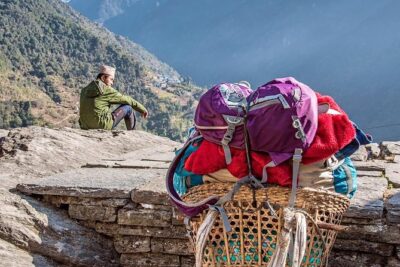
Your guide and porter are included from this stage. The porter carries luggage, allowing you to focus on walking with a lighter daypack. You remain responsible for personal items, snacks, drinks, and any extra gear you choose to bring.
Same trailhead, a longer or shorter day out:
- Everest Base Camp Trek – 14 Days
★ 5.0 · 1,499 reviews - Everest Base Camp Trek
★ 5.0 · 842 reviews - Everest Base Camp Trekking
★ 5.0 · 485 reviews - Everest Base Camp Trekking – 13 Day
★ 5.0 · 365 reviews
Days 6 and 7: Pisang, Ghyaru, and Manang
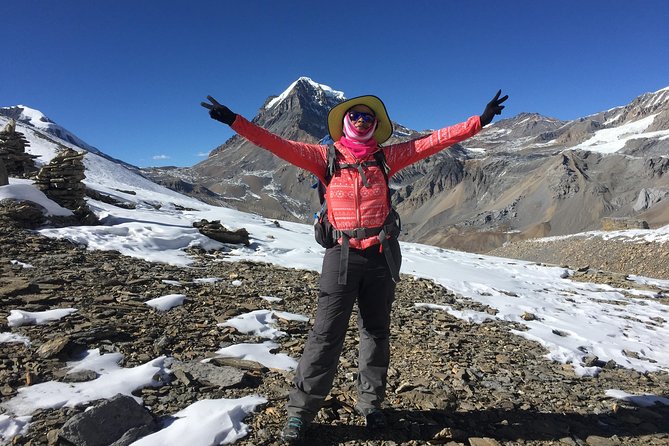
Day six brings you to Upper Pisang after about five hours of trekking, at an elevation near 3,300 meters. The word upper matters here because Pisang has upper and lower settlements, and the higher route gives you a stronger sense of the changing terrain.
Day seven is one of the more memorable sections. You hike up to Ghyaru village, then continue to Manang, reaching about 3,540 meters after approximately six hours. The route description highlights Tibetan Buddhist villages and forests, and this is where the cultural character of the trek becomes especially clear.
Manang is a sensible place to pause. You are high enough that acclimatization becomes a serious concern, not just a comfort issue. The schedule includes a full rest day on day eight, which is one of the trip’s strongest planning choices.
Day 8: A useful rest day in Manang
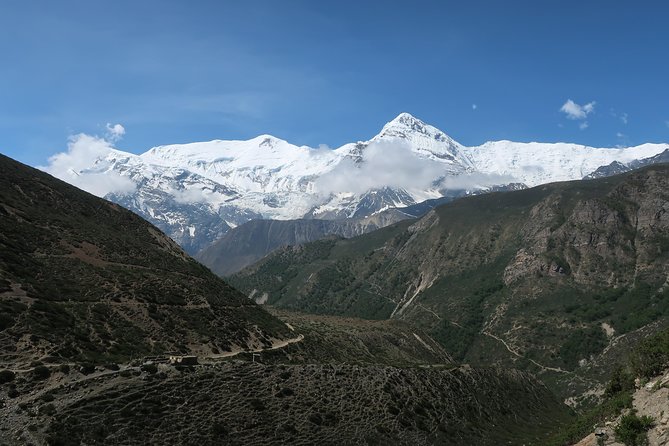
The rest day is set aside for exploring Manang Village. You should treat it as recovery time rather than a bonus hiking day.
At this elevation, a slower day gives your body a better chance to adjust before the route climbs above 4,000 meters. You can walk around the village, take in the surrounding peaks, and keep the effort moderate.
This is also a good moment to speak openly with your guide about the next stages. The guide is responsible for route support and carries a first-aid box, but you should still bring personal medication and travel insurance. Insurance is not included in the price.
Days 9 and 10: Ledar and Thorong Phedi
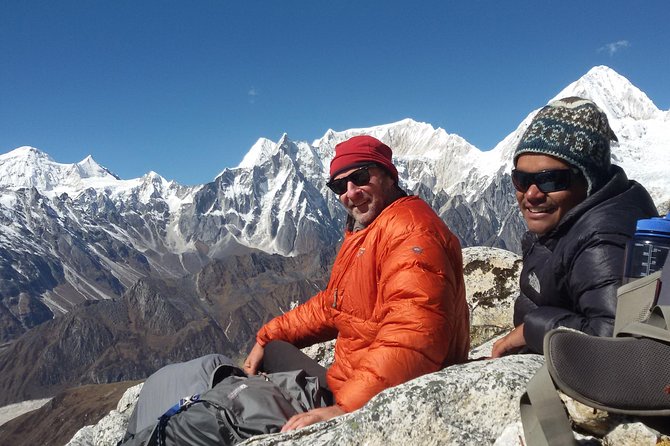
Day nine climbs to Ledar at approximately 4,200 meters. The stated walking time is about four hours, but altitude can make a shorter day feel harder than a longer walk at low elevation.
Day ten continues to Thorong Phedi at about 4,450 meters, with roughly three hours of hiking. This is the final staging point before the pass. Your pace, hydration, clothing, and sleep all matter here.
The schedule is compact. There is one rest day in Manang, followed by two consecutive days above 4,000 meters before crossing the pass. You should be honest about your fitness and tell the operator about any medical concerns before departure.
Day 11: Thorong La and the descent to Muktinath
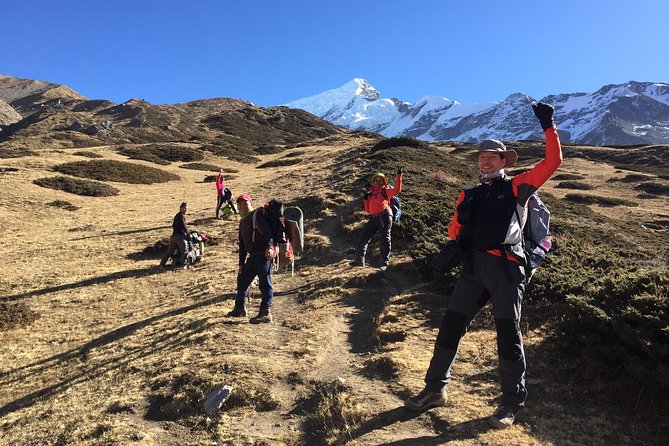
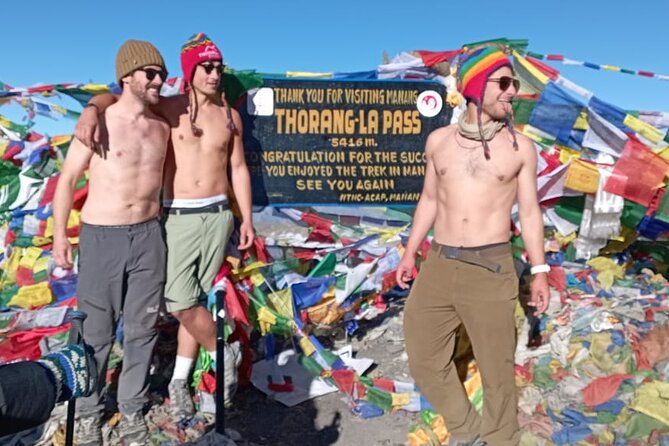
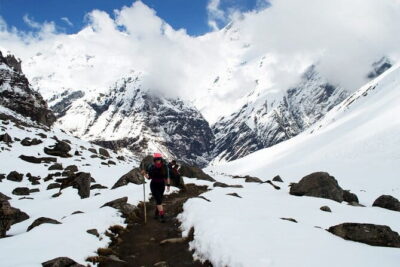
Day eleven is the hardest and most important day. You hike to Thorong La Pass at 5,416 meters, then descend to Muktinath, with about eight hours of trekking in total.
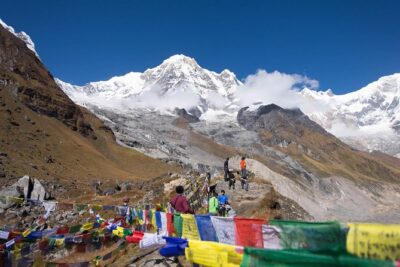
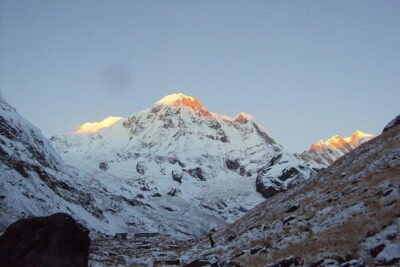
The reward is a huge change in scenery and views toward the Annapurna Massif, Dhaulagiri, and Tilicho Peak. The pass is the high point of the entire trip, both literally and emotionally.
The descent to Muktinath also shifts the cultural focus. Muktinath is a Hindu pilgrimage village, and its importance gives the route a religious dimension that differs from the Buddhist villages around Manang.
You should not judge this day by mileage alone. Weather, altitude, trail conditions, and your own pace can all affect the timing. A private group is helpful here because the guide can focus on your party rather than a large mixed group, but it does not remove the physical demands.
The Tilicho Lake question needs a clear answer
Tilicho Lake is listed as one of the main stops, and the route description presents it as a major highlight. It is one of the attractions that may make this trek especially appealing to experienced hikers.
However, the daily plan provided here goes from Manang to Ledar and then Thorong Phedi. It does not name a separate Tilicho Lake day. A detour to the lake normally affects the route, walking schedule, accommodation, and total effort, so you should ask Nepal Trail Finder Treks & Expedition to confirm all of the following:
- Is Tilicho Lake definitely included?
- How many extra trekking days does it require?
- Which overnight stops change?
- Is the quoted $1,175 price unchanged?
- Is transportation after the trek still the same?
This is the clearest planning issue in the package. Do not assume that a named highlight automatically appears in the daily schedule.
Muktinath, Marpha, Tatopani, and Poon Hill
The wider route description continues through Mustang and down the Kali Gandaki Valley. It names Marpha, with its small monastery, narrow cobbled lanes, and apple orchards, followed by Tatopani’s hot springs.
Those stops sound appealing because they give the trip a softer finish after the high pass. Marpha offers village character and cultivated surroundings, while Tatopani provides a chance to rest in warm water.
Poon Hill is another major draw. From the viewpoint, the tour says you can see more than 20 mountains in the Annapurna and Dhaulagiri ranges. Ghorepani and Gurunghe Hill are also listed among the points of interest.
There is a scheduling mismatch here too. The stated day-by-day plan goes from Muktinath to Pokhara by vehicle on day 12, but the attraction list includes Marpha, Tatopani, Poon Hill, and Ghorepani. If those places are essential to you, get the final route in writing before booking. The high-level description is broader than the 14-day schedule.
Days 12 to 14: Pokhara and the return home
Day 12 involves a six-to-seven-hour drive to Pokhara. Pokhara lodging is included on a bed-and-breakfast basis, but meals in Pokhara are not included.
Day 13 is an approximately eight-hour tourist bus ride from Pokhara to Kathmandu. That is a long final overland day, and anyone hoping for a relaxed post-trek finish should plan accordingly.
Day 14 ends with a flight from Tribhuvan International Airport. The schedule does not state that the domestic or international flight is included, so check your booking details carefully. International airfare is specifically excluded.
The return route is practical but not especially gentle. You may prefer to arrange an extra night in Pokhara or Kathmandu if your flight schedule allows, though that would be an added cost and is not part of the supplied package.
What the $1,175 price covers
At $1,175 per person, the package offers reasonable value if you want a guided trek with the major paperwork and support arranged.
Included items cover:
- Breakfast, lunch, dinner, and tea or coffee during the trekking portion
- Kathmandu and Pokhara accommodation with breakfast
- Mountain accommodation in private or shared single or double rooms
- A government-registered guide and porter
- Guide and porter wages, food, lodging, equipment, and insurance
- TIMS card and Annapurna Conservation Area Permit
- Transportation listed in the itinerary
- First-aid box
- All fees and taxes
- Farewell dinner and souvenir
That is a useful bundle. Meals and mountain lodging can otherwise add up quickly, and permit arrangements are taken care of.
You still need to pay for international flights, Nepal’s visa fee, travel insurance, drinks other than tea or coffee, snacks, WiFi, laundry, phone calls, battery charging, bar bills, tips, and donations. Meals in Kathmandu and Pokhara are also separate.
The exact value depends on the Tilicho and lower-valley routing. If the package truly includes Tilicho, Poon Hill, Tatopani, and the full route through Marpha, the price becomes more attractive. If the practical schedule skips some of those stops, you should compare it with a shorter Thorong La itinerary.
Guides, private groups, and practical comfort
The tour uses a government-registered guide and porter, and the trip is private, meaning only your group takes part. I like that arrangement for a demanding route because you have more control over pace and can raise concerns directly.
Gyanu is a guide name worth asking about. He has been praised for warmth, patience, dedication, and strong route support. If he is available, you might request him by name, though the operator would need to confirm assignment.
The service includes a first-aid box, but you should still carry personal medication, a water bottle, sun protection, suitable layers, and travel insurance. The supplied information says you need moderate physical fitness. In practical terms, you should be ready for repeated five-to-eight-hour hiking days, steep elevation gain, and a very high pass.
Service animals are allowed, and the experience is near public transportation. Those details may matter to some people, but the more important decision is your ability to manage altitude and long walking days.
Should you book the Annapurna Circuit Trek?
I would book this trek if you want a private, supported Himalayan route and value a strong mix of scenery, mountain villages, religious sites, and high passes. The included permits, meals, guide, porter, and trek lodging make $1,175 a fair starting price.
I would pause before booking if you are not comfortable with high altitude, long walking days, or an extended road journey. I would also insist on written clarification about Tilicho Lake, Marpha, Tatopani, Ghorepani, and Poon Hill, because the attraction list and daily schedule do not fully match.
For a fit hiker who wants more than a single mountain viewpoint, this can be an excellent Nepal route. Just make sure the route you pay for is the route you actually receive.
FAQ
How long is the Annapurna Circuit Trek?
The experience is planned for approximately 14 days, from arrival in Kathmandu through departure from Tribhuvan International Airport.
What is the highest point on the trek?
The highest point is Thorong La Pass at 5,416 meters.
Is pickup offered in Kathmandu?
Yes. Pickup is offered, although the supplied information does not specify the exact pickup location or time beyond a stated start time of 12:15 a.m.
Are meals included?
Breakfast, lunch, dinner, and tea or coffee are included during the trekking portion. Meals in Kathmandu and Pokhara are not included.
Are trekking permits included?
Yes. The price includes the TIMS card, Annapurna Conservation Area Permit, and necessary paperwork.
Is accommodation included?
Yes. Kathmandu and Pokhara hotels are included on a bed-and-breakfast basis. Mountain accommodation is also included, with private or shared single or double room arrangements.
Is this a private tour?
Yes. Only your group participates in the activity.
Do I need good physical fitness?
The stated requirement is a moderate physical fitness level. You should also be prepared for long hiking days and the 5,416-meter Thorong La Pass.
Is travel insurance included?
No. Travel insurance, international airfare, Nepal’s visa fee, personal expenses, tips, donations, snacks, and alcoholic drinks are not included.
Can I cancel for a full refund?
Yes, if you cancel at least 24 hours before the experience start time. Cancellations made less than 24 hours before the start time are not refunded. If poor weather causes the operator to cancel, you are offered another date or a full refund.
Recently added around Kathmandu
- Ghorepani Poon Hill Trek★ 5.0 · 16 reviews
- Private Manaslu Circuit Trek at Himalayas★ 5.0 · 3 reviews
- Amazing 1 Day Trekking Experience in Kathmandu Nepal★ 5.0 · 24 reviews
- Ghorepani Poonhill Trek★ 5.0 · 5 reviews
- Upper Mustang Trekking★ 5.0 · 2 reviews
- Upper Mustang Trekking★ 5.0 · 4 reviews
- Upper Mustang Trek★ 5.0 · 5 reviews
- Upper Mustang Trekking★ 3.0 · 2 reviews
Annapurna Base Camp Treks, compared.
Trekking in Annapurna/Langtang/Everest/Upper Mustang regions
Read our review →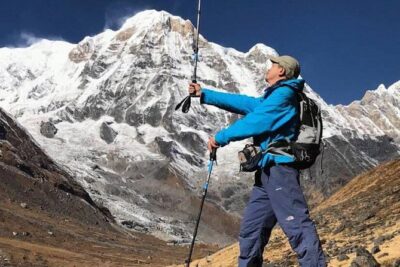
Kathmandu to Annapurna Base Camp (ABC) 5-Day Trek
Read our review →Browse the lists this tour appears in