
REVIEW · KATHMANDU
Annapurna Circuit Trek
The mountains change every day. This 15-day Annapurna Circuit Trek links Kathmandu temples, high Himalayan villages, Tilicho Lake, Thorong La Pass, and the pilgrimage town of Muktinath in one demanding journey. I especially like the route’s striking variety, from green river valleys and rhododendron forests to dry, high-altitude country, and I like that the price includes meals, permits, lodging, guides, porters, and key flights. The main drawback is the long and rough road travel at the start, followed by several hard days above 4,000 meters.
I also like the built-in acclimatization day in Manang and the chance to visit both Tilicho Lake and Thorong La Pass. This is not a gentle sightseeing holiday, though. You need moderate physical fitness, patience with basic mountain lodging, and a willingness to accept changes caused by road conditions, wind, or poor visibility.
Key points at a glance
- Tilicho Lake detour: A demanding side trip leads to the emerald lake beneath Tilicho Peak, with a night at its base camp.
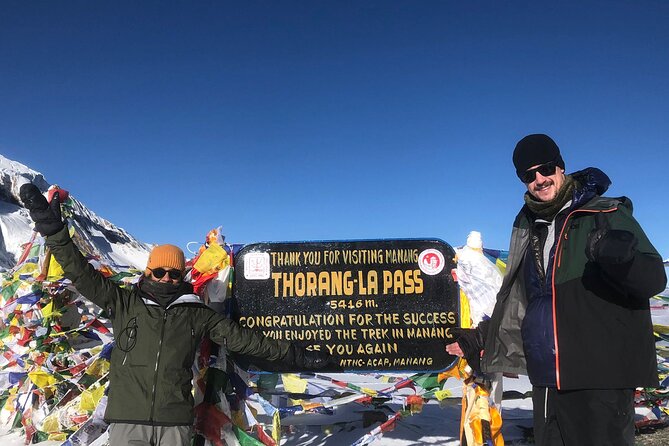
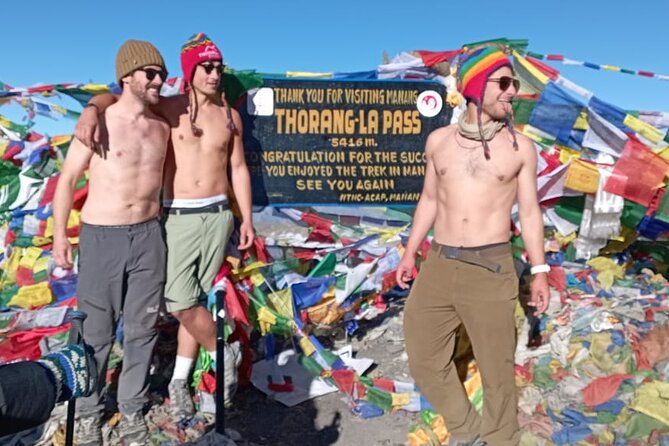
- Thorong La at 5,416 meters: The highest and hardest day comes near the end, followed by a long descent to Muktinath.
- Two days in Manang: The extra night gives your body time to adjust and allows side trips to monasteries, the Gangapurna glacier, or Ice Lake.
- Strong guide and porter support: Guide Bhupal receives repeated praise for his care, local understanding, and calm handling of altitude problems.
- Good value at $1,560: The cost covers accommodation, meals, permits, staff, and flights, though you should confirm the exact return transport before booking.
- Best timing: Spring, especially April and May, and autumn, especially September and October, offer the preferred trekking seasons.
Why the Annapurna Circuit still earns its reputation
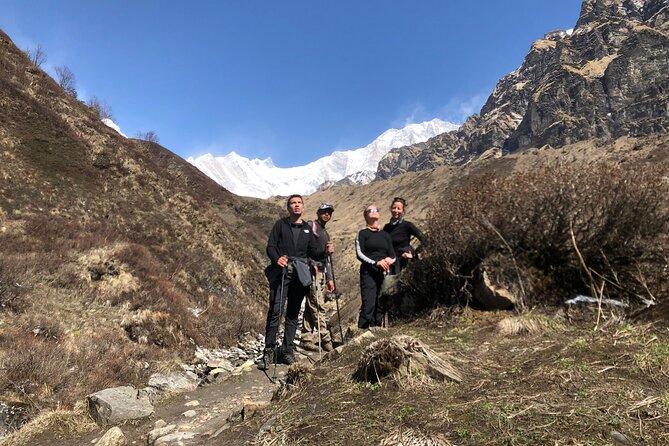
The Annapurna Circuit works because the scenery keeps changing. You begin among Kathmandu’s temples and crowded streets, then pass through river valleys, forested hills, Buddhist villages, dry mountain country, and high passes. Few trekking routes offer such a clear shift in climate and culture during a single trip.
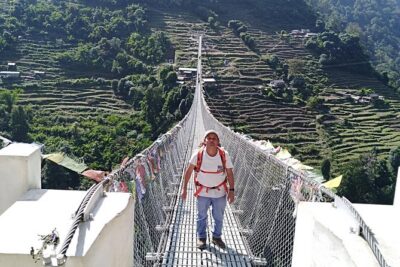
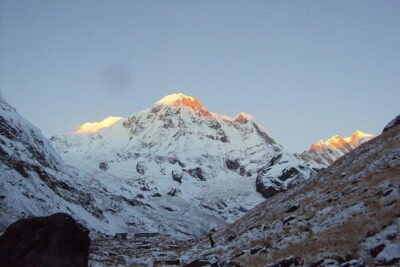
The route also brings you close to several major Himalayan peaks. You may see Annapurna I at 8,091 meters, Annapurna II, III, and IV, Pisang Peak, Tilicho Peak, Gangapurna, Machhapuchre, and Dhaulagiri. The views are not confined to one famous lookout. They appear around bends, above villages, and across suspension bridges.
The cultural side matters just as much. The route passes villages associated with Tamang, Gurung, Sherpa, and Magar communities, along with Buddhist monasteries and Hindu and Buddhist pilgrimage sites. You are not simply walking toward a mountain. You are moving through places where religion, trade, farming, and mountain travel shape everyday life.
Still, the circuit has a practical weakness: road access has changed parts of the lower route. The first two days in the mountains involve long drives rather than walking. If your ideal trek means walking from the first morning, this plan may disappoint. If you prefer to save your legs for the high country, the vehicle transfers are useful.
More Annapurna Treks in Kathmandu
- Annapurna Circuit Trek with Tilicho Lake
★ 5.0 · 368 reviews - Annapurna base camp trek 5 Days
★ 5.0 · 252 reviews - 14-Day Private Annapurna Base Camp Trek
★ 5.0 · 180 reviews
Kathmandu begins with temples and traffic
Your arrival begins at Tribhuvan International Airport, where a representative meets you and takes you to your hotel. The drive through narrow, crowded roads can be tiring, but it gives you an immediate sense of Kathmandu’s pace. After settling in, Thamel offers restaurants serving Nepali and Western food, plus shops and easy places to prepare for the trek.
The second day is set aside for Kathmandu’s major sacred and historic sights. Pashupatinath Temple gives you a look at one of Nepal’s most important Hindu religious sites. Buddha Stupa brings a very different mood, with Buddhist symbolism and a strong connection to the wider Himalayan world. Kathmandu Durbar Square adds temples, sculpture, and old royal architecture.
Each stop is listed at about one hour, so expect an introduction rather than a full architectural study. Admission to these sites is included, along with the permits needed for the UNESCO heritage visits. That saves you one small but useful part of the planning.
Besisahar and Pisang: two long road days
Day three is a major transport day. You leave Kathmandu early and follow roads with views of green hills, the Trishuli River, and the Manaslu and Annapurna ranges. The road becomes winding, narrow, and rough as you continue toward Besisahar and then onward toward Jagat.
This is the least comfortable part of the trip. The driving time is substantial, and road conditions can be tiring. The reward is that you move quickly toward the trekking country without spending extra days walking through lower elevations.
The following day continues by vehicle toward Dharapani, Chame, and Pisang. Small settlements such as Chyamje, Tal, and Karte appear along the way, along with waterfalls, suspension bridges, and increasingly clear mountain views. By the time you reach Upper Pisang, you have gained considerable height, close to 3,000 meters.
That altitude gain makes the next day important. You should rest, drink plenty of water, and avoid treating the first real trekking day as a race. The accommodation is described as a hotel, but you should expect mountain lodging rather than city comfort.
Pisang to Manang, with two trail choices
The walk from Pisang to Manang takes about six to seven hours. You can choose a lower, shorter route or a higher route through Ghyaru. The higher trail is harder, but it offers broader views and a drier route. If you feel signs of altitude sickness, the lower path is the sensible choice.
This is one of the trip’s best walking days because the mountains are close and the villages feel distinctly Himalayan. As you approach Manang, views may include Annapurna, Pisang Peak, Tilicho Peak, and Gangapurna. The route shifts from green lower valleys toward a drier, more exposed high-country setting.
Manang is more than an overnight stop. The extra acclimatization day is one of the smartest features of the plan. At roughly 3,500 meters, your body needs time to adjust before the route rises farther.
You can use the rest day for a walk toward Ice Lake at about 3,900 meters, a visit to nearby monasteries and gumbas, or a view of the Gangapurna glacier. The Himalayan Rescue Association clinic is also mentioned as a place where you can learn about altitude sickness. You should take that opportunity seriously. At this height, a rest day is not wasted time. It may make the later pass crossing safer and more manageable.
Same trailhead, a longer or shorter day out:
- Everest Base Camp Trek – 14 Days
★ 5.0 · 1,499 reviews - Everest Base Camp Trek
★ 5.0 · 842 reviews - Everest Base Camp Trekking
★ 5.0 · 485 reviews - Everest Base Camp Trekking – 13 Day
★ 5.0 · 365 reviews
The Tilicho Lake side trip adds real difficulty
After acclimatizing in Manang, the route turns toward Khangsar and Sri Kharka. You cross the river, pass through forest, and follow a dusty, rugged trail below Chulu and Gungang. The walking time is about four to five hours, so this day is shorter than the main pass days.
The next day leads to Tilicho Base Camp. The trail is not especially steep, but loose stones and sections prone to landslides make it tiring. You also leave behind the regular line of hotels and teahouses, so the reserved room at the base camp matters. There is a clear practical point here: you should not treat this as a casual side walk. The footing may be awkward, and the remote setting limits your options if you are exhausted.
The early start for Tilicho Lake is worthwhile. Morning usually brings less wind, and the first climb is demanding. At about 4,900 meters, Tilicho Lake sits beneath Tilicho Peak, surrounded by glaciers and stark high-altitude country. The water is described as emerald, but the greater appeal is the setting: a broad, quiet lake reached by a serious mountain walk.
You return to Sri Kharka after visiting the lake. That makes the day long, with roughly five to six hours of trekking, and your legs may feel the strain. The reward is one of the most memorable places on the route. If you want a shorter and easier circuit, this is the section to question. If you want the full mountain experience, it is a major reason to choose this itinerary.
Yak Kharka and Thorong Phedi prepare you for the pass
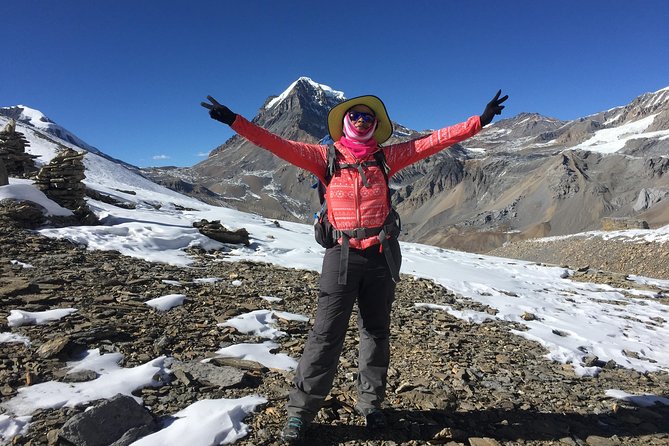
The schedule around days ten and eleven needs careful clarification before you pay. One description says you begin from Sri Kharka and reach Yak Kharka, while the stop label refers to Manang. The intended route appears to continue from the Tilicho area toward Yak Kharka, then onward to Thorong Phedi, but the wording is not perfectly consistent.
The actual walking described is clear enough: you descend toward Khangsar, cross a river, and then climb into increasingly bare country. You may see blue sheep, and Tare Gumba is noted as a sacred place. Yak Kharka has a few teahouses for food and lodging.
From there, the path to Thorong Phedi takes about four to five hours. This is an isolated, cold stretch through a glacier valley surrounded on three sides by high mountains. Thorong Phedi is a staging point, not a place for a long evening. You should eat, keep warm, drink water, and sleep early.
The itinerary says you will be walking above 4,500 meters as your body adjusts. That is why the earlier night in Manang and the slower progression matter. High altitude affects people differently, and good fitness does not guarantee an easy pass day.
Thorong La is the trip’s big test
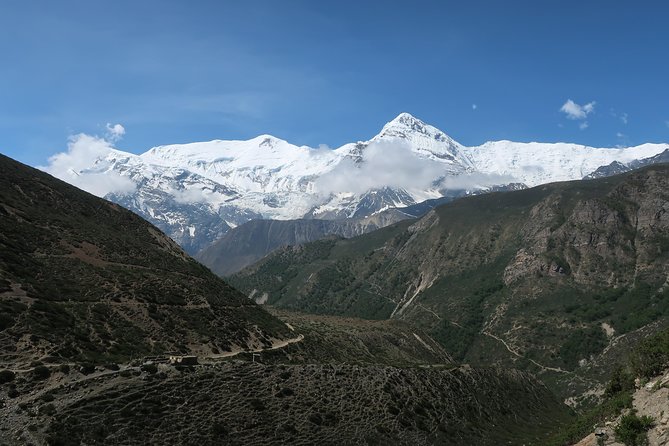
You leave before sunrise for the climb to Thorong La. Early morning is favored because the wind is usually lighter. The first section rises toward High Camp, then the final few hundred meters to the pass become harder.
The pass reaches 5,416 meters, or 17,769 feet. The climb may take two to three hours from the lower starting point, but conditions and your pace will decide the actual time. At the top, you may see Dhaulagiri at 8,167 meters and, in the distance, the old kingdom of Upper Mustang.
The pass crossing is followed by a long descent to Muktinath, making this an approximately eight-hour day. That combination is the key challenge of the trek. The climb is strenuous, the air is thin, and the descent can be just as tiring on your knees.
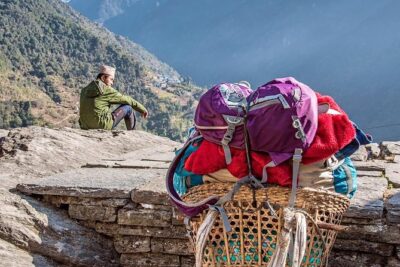
You should bring warm layers, keep your pace steady, and listen closely to your guide. The team’s support is one of the strongest parts of this experience. Guide Bhupal is repeatedly praised for his care and local understanding, and the porters are described as willing to help when people struggle with altitude. One account specifically describes porters going back uphill to carry extra loads for people affected by altitude sickness. That is the kind of practical help that matters far more than polished sales language.
Muktinath, Lubra, and the route toward Jomsom
Muktinath is important to both Hindus and Buddhists. A morning visit to the Vishnu Temple adds a strong spiritual dimension after the pass crossing. The setting also marks a sharp change from the high pass country toward the drier Mustang region.
From Muktinath, you may take a vehicle or trek via Lubra. The Lubra route offers a better elevated view than the road, followed by a descent toward Kagbeni. Kagbeni is the junction between lower and upper Mustang, and the route description points out that Upper Mustang begins beyond this area as a more isolated former kingdom.
The road from Muktinath to Jomsom is paved in places but still subject to construction. If you choose to walk through Lubra, you gain scenery and a village visit but add effort after an already demanding pass day. If you use transport, you save energy and time. This is a good place to discuss the day’s plan with your guide rather than follow a fixed schedule blindly.
Jomsom to Pokhara, then back to Kathmandu
The flight from Jomsom to Pokhara takes about 25 minutes and passes through the Kali Gandaki gorge. It is the quick and scenic option, but wind and poor visibility can delay it. That uncertainty is normal for mountain flights, so do not schedule an important international departure immediately after this part of the trip.
Pokhara gives you a softer ending: a night at the lakeside after two demanding weeks in the mountains. The change of pace is welcome. You can rest, eat well, and enjoy the water before returning to Kathmandu.
The final transfer is described as a tourist bus, though the included services also mention a flight from Pokhara to Kathmandu. The itinerary itself points to a bus and gives a six to eight hour travel time, while another section says a flight is included. This is the most important detail to confirm with Hit The Himalaya before booking. A bus costs time but avoids the uncertainty of a short mountain flight. A flight is much faster.
The final evening includes a farewell meal at a traditional restaurant, with the chance to take part in a Nepali cultural event and shop for souvenirs. It is a pleasant close, but remember that your international departure is not part of this 15-day plan.
What the $1,560 price really covers
At $1,560 per person, the package is not just a guided walk. It includes accommodation throughout, breakfast for 14 days, lunch and dinner for 13 days, trek permits, UNESCO site permits in Kathmandu, professional guides and porters, transport, and the Jomsom to Pokhara flight. Those inclusions give the price solid value, especially because permits, staff, lodging, and meals can add up quickly on a long Himalayan route.
Personal expenses and tips are not included. You should also keep some flexibility for transport changes, food or drinks beyond the included meals, and personal purchases. The package is private, so only your group participates. That is useful if you want your walking pace and rest decisions handled around your own group rather than a large mixed party.
The vehicle is described as air-conditioned, but that should not lead you to expect luxury transport on every rough mountain road. The early road sections are explicitly described as bumpy and narrow. The value here is access and organization, not plush travel.
Who should book this trek?
I would recommend it to a fit first-time Himalayan trekker who wants a guided route with strong logistical support. It suits you if you want major mountain scenery, village life, sacred sites, and one serious high pass in the same trip.
It is less suitable if you dislike long drives, basic accommodation, loose rocky trails, or uncertain flight schedules. It also may not suit anyone seeking a relaxed holiday. The Tilicho detour and Thorong La crossing make this a demanding program, even though the days are carefully spread across two weeks.
The best periods are April to May and September to October. Those months are identified as the preferred seasons for the Annapurna Circuit. Your booking has free cancellation up to 24 hours before the start time, with no refund for cancellations or changes inside that period.
Should you book the Annapurna Circuit Trek?
Book this trek if you want a full mountain story rather than a single viewpoint. You get Kathmandu’s temples, the road into the hills, Buddhist villages, Annapurna views, a high-altitude lake, the 5,416-meter Thorong La crossing, Muktinath, and a flight into Pokhara.
I would first ask the operator to confirm three points in writing: the exact day ten route, the final Pokhara to Kathmandu transport, and what type of accommodation is expected at each stop. If those details are clear, the package offers strong value and useful support. The praise for Bhupal and the porter team is especially encouraging for a trek where altitude care can matter as much as scenery.
FAQ
How long is the Annapurna Circuit Trek?
The experience lasts approximately 15 days, beginning with arrival in Kathmandu and ending with a return to Kathmandu after time in Pokhara.
What is the highest point on the trek?
The highest point is Thorong La Pass at 5,416 meters, or 17,769 feet.
Is Tilicho Lake included?
Yes. The route includes a night at Tilicho Base Camp, an early walk to Tilicho Lake, and a return to Sri Kharka.
Are meals included?
Breakfast is included for 14 days, while lunch and dinner are included for 13 days.
Are permits included?
Yes. Trek permits and the permits needed for the UNESCO heritage site visits in Kathmandu are included.
What transport is included?
The package includes an air-conditioned vehicle, the flight from Jomsom to Pokhara, and a listed flight from Pokhara to Kathmandu. The day-by-day plan describes a tourist bus from Pokhara to Kathmandu, so you should confirm the final transport arrangement before booking.
What level of fitness do I need?
The tour requires a moderate level of physical fitness. You should be prepared for six to eight hour trekking days, steep climbs, loose stones, high altitude, and the demanding crossing of Thorong La.
Recently added around Kathmandu
- Ghorepani Poon Hill Trek★ 5.0 · 16 reviews
- Private Manaslu Circuit Trek at Himalayas★ 5.0 · 3 reviews
- Amazing 1 Day Trekking Experience in Kathmandu Nepal★ 5.0 · 24 reviews
- Ghorepani Poonhill Trek★ 5.0 · 5 reviews
- Upper Mustang Trekking★ 5.0 · 2 reviews
- Upper Mustang Trekking★ 5.0 · 4 reviews
- Upper Mustang Trek★ 5.0 · 5 reviews
- Upper Mustang Trekking★ 3.0 · 2 reviews
Annapurna Base Camp Treks, compared.

Trekking in Annapurna/Langtang/Everest/Upper Mustang regions
Read our review →
Kathmandu to Annapurna Base Camp (ABC) 5-Day Trek
Read our review →Browse the lists this tour appears in