
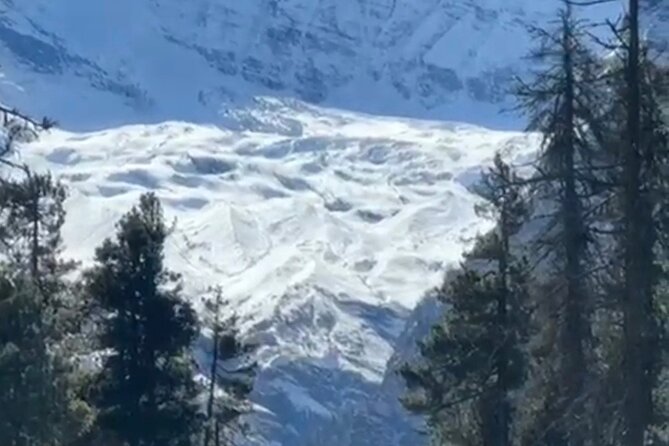
REVIEW · KATHMANDU
8 Days Private Guided Trekking in Annapurna Circuit with Pickup
The high pass is the whole point. This private eight-day trek packs forests, mountain villages, high alpine terrain, and the 5,416-meter Thorong La Pass into a demanding trip from Kathmandu toward Pokhara. I like the personal format, since only your group takes part, and I like that permits, meals, guide costs, and key transport are bundled into the price. The main concern is the speed: eight days leaves little room for delay, and the altitude gain requires a steady pace and sensible preparation.
At $260 per person, this is a remarkably low price for a guided Himalayan trek. It covers a guide, food, accommodation, permits, shared transport, and seven breakfasts, lunches, and dinners. Still, you should read the schedule carefully. Some days involve long drives, some involve steep walking, and the plan includes a major high-altitude pass that calls for good physical fitness and careful acclimatization.
Key points before you book
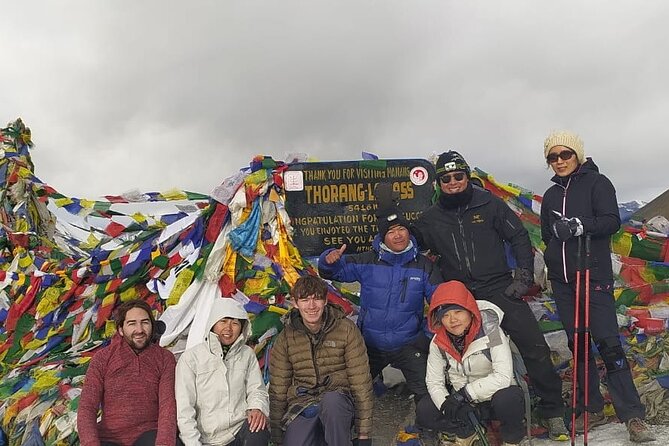
- Thorong La Pass reaches 5,416 meters: The highest point arrives on Day 7, after a night near Thorong High Camp.
- The trip is private: Your group participates alone, so the guide can adjust pace and equipment support to your needs.
- The price covers the basics: Guide expenses, Annapurna Conservation Area and TIMS permits, meals, shared transport, first aid medicine, and a trip certificate are included.
- Day 4 is your altitude buffer: The rest day in Manang includes an optional walk to Gangapurna Lake and gives your body time to adjust.
- You finish in Pokhara: The final jeep journey runs from Jomsom to Pokhara, linking the mountain route with Nepal’s lakeside city.
- Guide support is a major strength: Guides named in the feedback include Sobit, Sirjan, Garap, Bijay, and Ramesh, with particular praise for pacing, logistics, local culture, and help during altitude sickness.
What the $260 price really gives you
The price is the first surprise. At $260 per person, the package includes much more than a guide and a walking route. Your guide’s insurance, salary, food, and accommodation are covered, along with the Annapurna Conservation Area permit and TIMS card.
You also receive shared transport from Kathmandu, Pokhara, or Chitwan to Besisahar and onward by jeep to Chame. At the end, shared transport takes you from Jomsom to Pokhara. Seven breakfasts, seven lunches, and seven dinners are included, as are some seasonal fruit, basic first aid medicine, government charges, service fees, and a trip certificate.
That makes the tour a good value if you want a ready-made package rather than arranging each part yourself. The guides and staff handle the practical pieces, which matters when roads, mountain lodges, permits, and changing conditions all enter the picture.
There are limits. Extra meals, drinks, bar bills, tips, and travel insurance are not included. The word shared also matters. You have a private tour group, but the road transport is not described as private. I would confirm the exact vehicle arrangements before paying if personal space on the long drives matters to you.
The trip is often booked around 38 days ahead, so planning early is sensible. Free cancellation applies up to 24 hours before the start time, while poor weather may lead to a new date or a full refund.
More Annapurna Treks in Kathmandu
- Annapurna Circuit Trek with Tilicho Lake
★ 5.0 · 368 reviews - Annapurna base camp trek 5 Days
★ 5.0 · 252 reviews - 14-Day Private Annapurna Base Camp Trek
★ 5.0 · 180 reviews
Day 1: Besisahar to Chame by road
Your first day is mostly about reaching the trailhead. From your pickup point in Kathmandu, Pokhara, or Chitwan, you travel to Besisahar, then continue by jeep to Chame.
The total driving time is listed at about six hours, though mountain roads can make travel feel longer. Besisahar is the gateway to the Annapurna Circuit, while Chame places you farther into the valley and closer to the walking portion of the trip.
This arrangement saves several days compared with an older version of the circuit that began lower down. It also means you do not get a gentle multi-day walking start. The trip moves quickly from city transport to mountain road, so you should arrive rested and ready for a change in pace.
Day 2: Forest paths and Upper Pisang
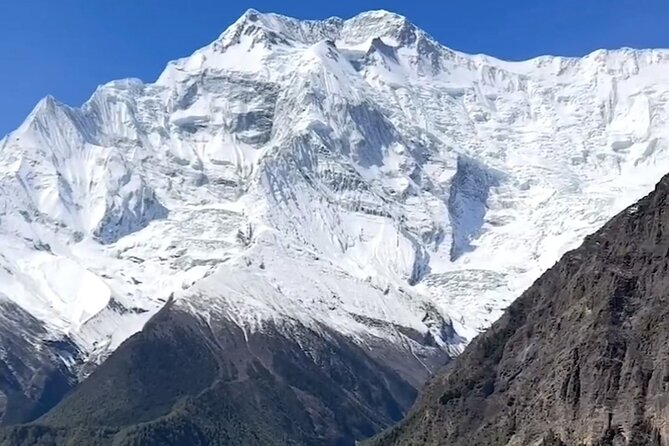
The first major walking day runs for about five hours. You pass through dense forest, with views toward Annapurna II, and go through Dhikur Pokhari village before reaching Lower Pisang.
From there, the route climbs to Upper Pisang, where you spend the night. The two Pisang settlements offer a useful introduction to the route’s changing character. Lower Pisang sits along the lower route, while Upper Pisang gives you a higher position and more mountain scenery.
I like this day because it mixes walking with village life rather than rushing from one famous viewpoint to another. You see local settlement patterns and forest terrain, then finish with an uphill section that begins the real physical work.
The drawback is simple: the climb to Upper Pisang comes after several hours on foot. If you are not used to walking uphill, this may feel like a full first day rather than an easy warm-up.
Day 3: Ngawal views and Manang
Day 3 takes about six hours and leads toward Manang by way of Ngawal. The route is designed around broad views of the Annapurna range, with a gradual move into higher country.
Ngawal is one of the memorable points on this section because the views open up as you leave the wooded lower valley behind. You continue from there toward Manang, a key stop on the circuit and the place where altitude becomes a serious concern.
Manang is not just an overnight name on a schedule. It is the right place to pause before climbing higher. The plan allows a rest day next, which is one of the most important features of this short itinerary.
The short schedule still deserves caution. You are gaining altitude over a few days, and your body may not adjust at the same speed as your walking legs. Tell your guide early if you feel unwell rather than trying to prove you can push through.
Same trailhead, a longer or shorter day out:
- Everest Base Camp Trek – 14 Days
★ 5.0 · 1,499 reviews - Everest Base Camp Trek
★ 5.0 · 842 reviews - Everest Base Camp Trekking
★ 5.0 · 485 reviews - Everest Base Camp Trekking – 13 Day
★ 5.0 · 365 reviews
Day 4: Rest in Manang and Gangapurna Lake
Day 4 is listed as a rest day, with about five hours possible for an optional hike to Gangapurna Lake. You may also choose a higher-altitude outing, though the full details of that option are not provided.
This is a valuable day, not wasted time. Resting in Manang helps break up the climb before Yak Kharka and Thorong High Camp. The walk to Gangapurna Lake gives you a way to stay active without committing to another major transfer.
I especially like the flexibility here. You can use the day to see more of the area, or keep things easy if your body needs a quiet morning. The guide can help you judge the right choice.
The central risk is altitude sickness. One person described needing strong support from guide Sirjan after becoming ill at altitude. That detail is useful because it shows why guide quality matters on this route. A private guide can monitor your pace and condition more closely than a large fixed group, but no guide can remove the risks of high altitude.
Day 5: Yak Kharka and the high alpine zone
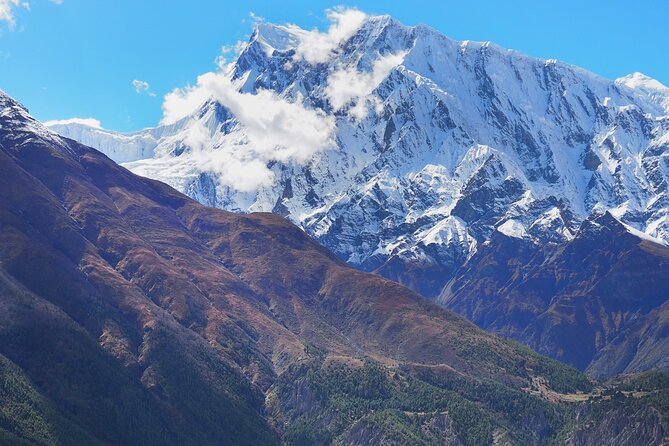
The route climbs through alpine terrain toward Yak Kharka, passing Letdar on the way. The walking time is about five hours.
This is where the scenery becomes more open and severe. Forest gives way to high mountain ground, and the route feels less sheltered. The stop at Yak Kharka keeps the ascent divided into manageable sections before the pass crossing.
You should expect a physically demanding day even though five hours may sound moderate. At altitude, a shorter walk can feel harder than a longer day at sea level. Keep your pace steady, drink as advised by your guide, and avoid treating the timetable as a race.
Yak Kharka is also a good point to review your equipment. Sleeping bags and trekking poles can be provided if needed, which is helpful if you did not bring your own. Your guide can also check whether your clothing and footwear are working before the most demanding section.
Day 6: Toward Thorong High Camp
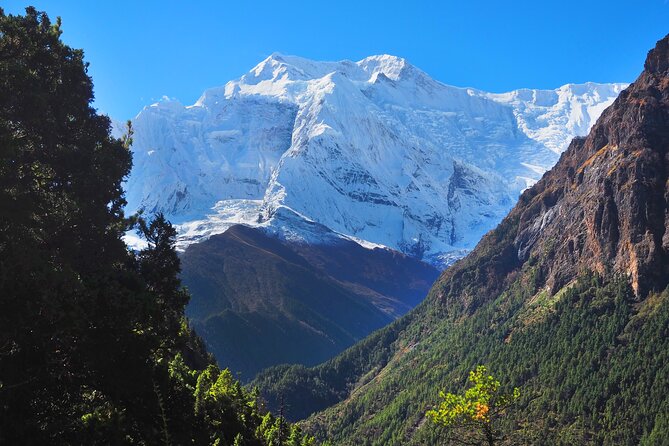
The schedule describes a four-hour trek from Yak Kharka to Thorong High Camp at about 4,450 meters. This is the staging day for the pass.
The walking time looks shorter than earlier days, but the altitude changes the calculation. You are now preparing for the next morning’s ascent to Thorong La, so the goal is not to cover huge distances. It is to reach the high camp, settle in, and conserve energy.
There is one practical point to clarify before departure. The itinerary labels Day 6 as Yak Kharka to Thorong High Camp, while Day 7 refers to starting from Thorong Phedi. Those locations are related to the pass approach, but the exact overnight point and walking plan should be confirmed with Bold Himalaya Treks and Travels before you go.
That clarification is especially important because the difference affects your start time, sleep altitude, and the length of the pass day. The package includes admission for the Thorong La section, but it does not spell out every lodge or room arrangement.
Day 7: Thorong La Pass and Muktinath
This is the toughest and most memorable day. You begin early, climb to Thorong La at 5,416 meters, then descend to Muktinath at about 3,800 meters. The listed walking time is about six hours, followed by a drive to Jomsom.
The pass is the defining challenge of the circuit. The air is thin, the ascent is serious, and weather can affect the route. Reaching the top brings huge Himalayan views, but the descent deserves just as much respect as the climb. Tired legs and steep ground are an awkward combination.
Muktinath adds cultural meaning to the day. The tour description includes a visit to the sacred Lord Vishnu Temple, making this more than a mountain crossing. The area is important to Hindu and Buddhist pilgrims, and the temple offers a different side of Nepal from the forests and high ridges.
After Muktinath, you continue by jeep to Jomsom. That road transfer is welcome after the pass, though mountain driving can be rough and slow. You should keep a little patience in reserve. The day combines the highest point, a long descent, a cultural stop, and a road journey.
Day 8: Jomsom to Pokhara by jeep
The final day is a roughly six-hour jeep trip from Jomsom to Pokhara. You leave the high mountain region and pass through changing terrain on the way to Nepal’s lakeside city.
This is not a walking finale. It is a practical connection that gets you out of the circuit and into Pokhara, where many people choose to rest after the trek. The road itself provides a final look at the route’s dramatic shifts in elevation and scenery.
Because the journey is shared, departure timing and seating may not be fully in your control. Still, the included transport keeps you from arranging a separate return transfer after a demanding week.
Guides, pacing, and personal support
The strongest pattern in the feedback is the quality of the guiding and organization. Sobit is praised for arranging food, accommodation, transport, guides, and porters, including for someone who had little time to prepare in Kathmandu.
Guide Garap helped adjust equipment and pacing for one person who arrived without much preparation. Sirjan was praised for local culture, humor, and practical help during altitude sickness. Bijay, Ramesh, and other named guides also received strong praise for making the trek feel organized and manageable.
That does not mean every guide will be identical. Your experience depends on who is assigned, the weather, road conditions, and how your body responds to altitude. Ask for the name and experience of your guide before departure, and explain your fitness level honestly.
The private format is a real advantage. You are not forced to match the pace of a large group, and the guide can respond when you need a slower morning or a shorter rest stop. It is still a guided trek, not a luxury trip. Expect basic mountain accommodation and practical meals rather than high-end comfort.
Who should book this trek?
I would recommend it to you if you have limited time, want the main Annapurna Circuit highlights, and prefer having permits, meals, transport, and a guide arranged in one package. It also suits people who value personal attention and do not want to join a large group.
You should think twice if you want a slow acclimatization schedule or several spare days for weather delays. Eight days is efficient, but it is not leisurely. The high pass, rapid altitude gain, long road transfers, and basic mountain conditions require preparation.
A moderate fitness level is requested, but I would treat that as a minimum. You should be comfortable walking uphill for several hours and prepared for cold, thin air. Travel insurance is not included, so arrange your own cover before setting out.
Should you book the Annapurna Circuit trek?
Book this trek if value, private guiding, and a compact schedule matter most. The package includes the expensive practical pieces, and the guides receive especially strong praise for arranging details, adjusting pace, explaining local culture, and helping with altitude problems.
Before booking, confirm the Day 6 overnight location, the exact transport plan, accommodation standards, and the guide assigned to your group. If you accept the demanding pace and prepare properly, this $260 trip offers an unusually direct way to reach Thorong La, visit Muktinath, and finish in Pokhara.
FAQ
How long is the Annapurna Circuit trekking experience?
The experience lasts approximately eight days, beginning with travel toward Besisahar and Chame and ending with a jeep ride from Jomsom to Pokhara.
What is the price per person?
The listed price is $260 per person.
Is this a private tour?
Yes. Only your group participates in the tour and trekking activity.
Is pickup available?
Yes. Shared transport is provided from your location in Kathmandu, Pokhara, or Chitwan to Besisahar and onward to Chame by jeep.
Are meals included?
Seven breakfasts, seven lunches, and seven dinners are included. Extra meals, bar bills, and other additional food or drink costs are not included.
Are permits included?
Yes. The Annapurna Conservation Area permit and TIMS card are included.
What is the highest point on the trek?
The route crosses Thorong La Pass at 5,416 meters.
What happens if bad weather cancels the experience?
If poor weather causes cancellation, you will be offered a different date or a full refund. You can also cancel for a full refund if you do so at least 24 hours before the experience starts.
Recently added around Kathmandu
- Ghorepani Poon Hill Trek★ 5.0 · 16 reviews
- Private Manaslu Circuit Trek at Himalayas★ 5.0 · 3 reviews
- Amazing 1 Day Trekking Experience in Kathmandu Nepal★ 5.0 · 24 reviews
- Ghorepani Poonhill Trek★ 5.0 · 5 reviews
- Upper Mustang Trekking★ 5.0 · 2 reviews
- Upper Mustang Trek★ 5.0 · 5 reviews
- Upper Mustang Trekking★ 3.0 · 2 reviews
- Upper Mustang Trekking★ 5.0 · 4 reviews
Annapurna Base Camp Treks, compared.
Trekking in Annapurna/Langtang/Everest/Upper Mustang regions
Read our review →
Kathmandu to Annapurna Base Camp (ABC) 5-Day Trek
Read our review →Browse the lists this tour appears in