
REVIEW · KATHMANDU
Annapurna Circuit Trek with Tilicho Lake (16 Days)
High passes reward steady feet. This 16-day Annapurna Circuit trek links Nepal’s high mountain villages, Tibetan-influenced valleys, Tilicho Lake, Thorong La Pass, and the pilgrimage town of Muktinath in one demanding trip. I like the careful acclimatization stop in Manang, and I like that the route includes both the famous circuit and the less usual Tilicho Lake detour.
The maximum group size of 14 keeps the trip small enough for personal support, while one assistant guide is assigned for every five trekkers. The main caution is altitude: Tilicho Lake reaches 4,919 meters and Thorong La reaches 5,416 meters, so this is not a casual walk with mountain scenery added on.
The high points of this Himalayan route
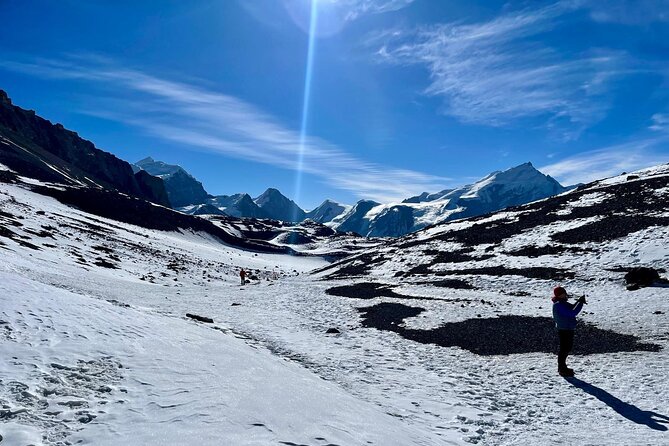
- Tilicho Lake at 4,919 meters: A stark, high-altitude detour with glacier-carved surroundings and powerful mountain views.
- Thorong La at 5,416 meters: The trip’s hardest day and its defining achievement, followed by a long descent to Muktinath.
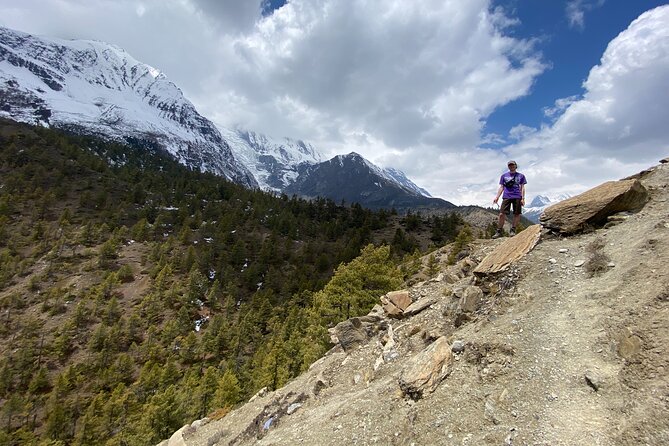
- A sharp change in scenery: You move from green river valleys and pine forests to dry Mustang hills and windy river corridors.
- Useful support on the trail: A licensed, first-aid-trained guide, porters at a two-to-one ratio, and assistant guides for larger groups.
- A restful finish in Pokhara: Two nights in the itinerary help you recover beside Phewa Lake before returning to Kathmandu.
- A true teahouse trek: Overnight stays are in standard mountain lodges, with hot showers, Wi-Fi, charging, and meals generally costing extra.
Why this Annapurna trip is worth considering
At $1,800 per person, this is not the cheapest way to walk the Annapurna Circuit, but it covers much of the work that can make a high-altitude trek stressful. Airport transfers, Kathmandu and Pokhara hotels, trekking permits, transport between trail sections, a guide, porter support, and teahouse accommodation are included.
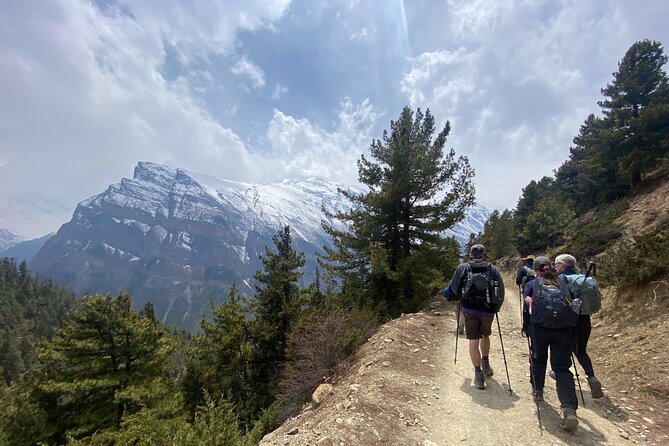
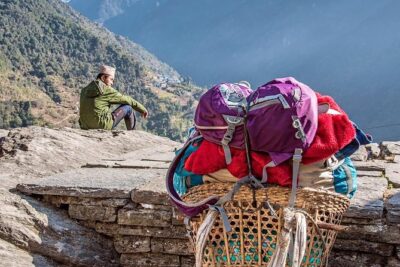
I especially value the porter ratio of two trekkers to one porter. You carry a daypack, while the porter carries your overnight bag. That makes the long climbs more manageable and keeps the group moving at a sensible pace.
The package also includes insurance for the trekking crew, but not for you. Your own policy must cover emergency evacuation and the highest altitude reached. That point matters here. Rescue, weather delays, extra nights, and other unexpected costs are not included.
There is one pricing detail to clarify before booking. The inclusions mention government fees, while the exclusions also list a $50 government fee per person. Ask the operator exactly how this charge applies to your departure. Meals during the trek are not included, apart from the listed hotel breakfasts and two dinners. Budget separately for lunch, dinner, drinks, bottled or treated water, showers, charging, and Wi-Fi.
More Annapurna Treks in Kathmandu
- Annapurna Circuit Trek with Tilicho Lake
★ 5.0 · 368 reviews - Annapurna base camp trek 5 Days
★ 5.0 · 252 reviews - 14-Day Private Annapurna Base Camp Trek
★ 5.0 · 180 reviews
Days 1 and 2: Kathmandu to Dharapani
Your arrival day is simple. A representative meets you at Tribhuvan International Airport and takes you to a three-star hotel in Thamel. You have the rest of the day to settle in, walk through Kathmandu, and check your gear.
The next day is mostly transport, not trekking. A private vehicle takes you toward Besisahar, following roads beside the Trishuli River and through the highway junction at Mugling. These stops are practical rather than polished. Trishuli gives you river and gorge views, while Mugling is a noisy road hub with buses, trucks, tea stalls, and snack vendors.
Besisahar, at about 760 meters, marks the usual gateway to the Annapurna Circuit. From there, you change to a shared jeep for Dharapani, at 1,960 meters. The full road day can last around 12 hours, so prepare for a bumpy finish and limited comfort. The payoff is arriving directly at the start of the walking route rather than spending another night at a lower village.
Days 3 and 4: Pine forests, apple country, and Pisang
The first proper walking day takes you through Bagarchhap, a village known for whitewashed buildings, Buddhist chortens, and pine-covered slopes. The surroundings begin to feel more Tibetan in design and atmosphere as you move farther up the Marsyangdi Valley.
Chame, at 2,670 meters, is the district center of Manang. It offers more services than the smaller villages, but the main attraction is the setting, with mountain ridges rising around the river corridor. The climb is steady, and you should treat this early stage as conditioning rather than a race.
From Chame, the route passes Bharatang, a forested stop known for apple orchards and juice farms. Then you continue toward Pisang, at about 3,300 meters. Upper Pisang sits above the Marsyangdi River and gives you broad views toward Annapurna II and Pisang Peak.
You may have a choice between lower and upper route sections in this part of the circuit. The upper route is more demanding, but the itinerary specifically favors Upper Pisang and the high trail through hillside villages. Keep your pace slow. Altitude begins to matter here, even if your legs still feel fresh.
Days 5 and 6: Manang and the essential acclimatization stop
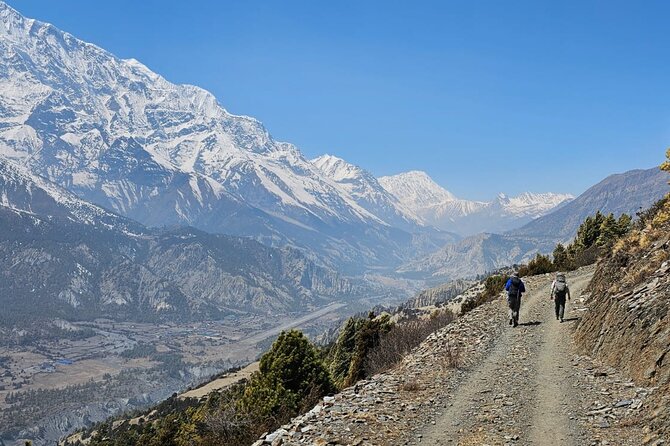
The walk to Manang passes through Ghyaru and Ngawal on the high trail. These old stone villages and the views toward Annapurna III and Gangapurna are among the most memorable parts of the approach.
Manang sits at about 3,540 meters and functions as the main cultural and trekking center of the valley. The two-night stay is one of the strongest features of the plan. Instead of climbing higher every day, you sleep at the same altitude and take a shorter acclimatization hike.
The guide can suggest one of three hikes, including a steep climb to a viewpoint. The exact choice depends on conditions and how the group is feeling. You should use this day seriously: walk, drink water, eat, and tell the guide about headaches, nausea, unusual fatigue, or poor sleep.
The acclimatization day is not wasted time. It gives your body a better chance to handle Siri Kharka, Tilicho Base Camp, Tilicho Lake, and the later climb toward Thorong La. A rushed itinerary might look efficient on paper, but it would be a poor bargain at these heights.
Same trailhead, a longer or shorter day out:
- Everest Base Camp Trek – 14 Days
★ 5.0 · 1,499 reviews - Everest Base Camp Trek
★ 5.0 · 842 reviews - Everest Base Camp Trekking
★ 5.0 · 485 reviews - Everest Base Camp Trekking – 13 Day
★ 5.0 · 365 reviews
Days 7 to 9: The difficult Tilicho Lake detour
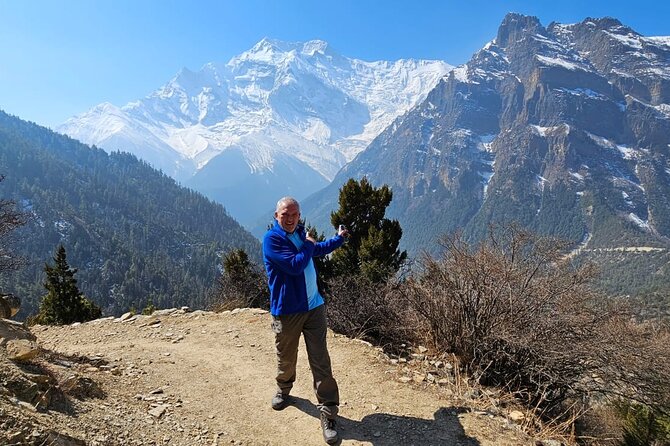
Leaving Manang, you turn toward Siri Kharka at about 4,060 meters. The trail climbs through juniper shrubs to a remote ridge with views toward Gangapurna and the Chulu range. This section is quieter and more exposed than the main circuit.
Siri Kharka is a staging point for Tilicho Lake, but reaching it is not a soft introduction to high altitude. The route rises steadily, and you are already sleeping above 4,000 meters. Keep your overnight bag light and let the porter do the heavy carrying.
The next day brings you to Tilicho Base Camp at approximately 4,150 meters. The distance may be short, but the trail can be intense, with narrow sections beside landslide-prone slopes and steep, barren ground. This is one of the places where a steady guide and careful footwork matter more than speed.
The climb to Tilicho Lake is the emotional center of the trip. At 4,919 meters, the lake sits in a severe, high basin beneath snow-covered peaks and glacier-shaped slopes. The stop at the lake is listed as about 45 minutes, though the walking day itself is much longer. Weather can change quickly at this height, so follow the guide’s timing and do not linger simply to take more photographs.
The route then returns toward the main circuit, passing through Khangsar before reaching Yak Kharka at about 4,050 meters. The return section can feel tiring because you have already climbed to the lake and are still preparing for Thorong La. This is where good pacing pays off.
Days 10 to 12: Yak Kharka, Thorong Phedi, and Thorong La
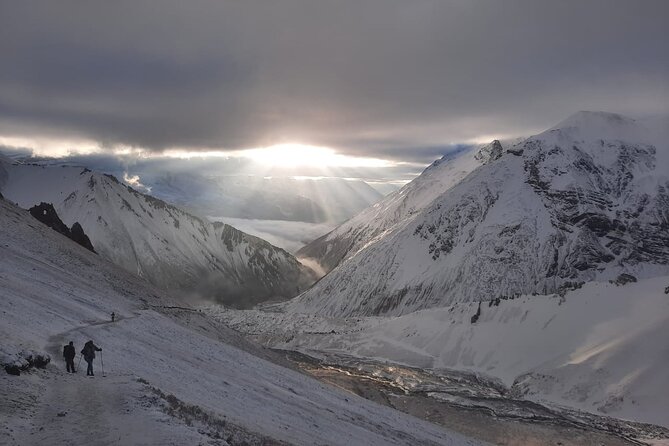
Yak Kharka is a high settlement used as a staging point before the pass. From here, the trail continues toward Thorong Phedi, at 4,540 meters. The route becomes more barren, dusty, and exposed, with fewer trees and less shelter.
Thorong Phedi is the final overnight stop before Thorong La. The next morning usually begins very early because the crossing requires a climb of more than 900 meters and conditions can worsen later in the day. This is the most physically demanding portion of the route.
Thorong La reaches 5,416 meters, making it the highest point of the trip. The ascent is slow and often feels longer than expected. Your guide’s role is important here: keeping the group together, monitoring symptoms, and making practical decisions if weather or altitude causes trouble.
After the pass, you descend roughly 1,600 meters toward Muktinath. That drop is a relief for breathing, but it is hard on tired knees. Muktinath, at about 3,760 meters, is a sacred pilgrimage site for both Hindu and Buddhist communities. Its religious importance gives the stop more meaning than simply being the end of a difficult day.
You should expect Day 12 to be long. It combines the highest climb, the pass crossing, and a major descent. Strong fitness is not optional, and trekking poles would be useful, though personal gear is not supplied by the operator.
Days 13 and 14: Kagbeni, Jomsom, and the road to Pokhara
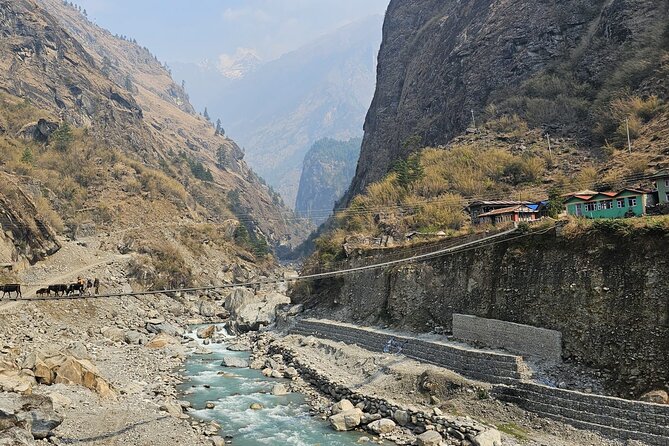
The trail continues through the dry, wind-shaped valleys of Lower Mustang. Kagbeni, at 2,810 meters, is a particularly atmospheric stop at the meeting point of the Kali Gandaki and Jhong rivers. Its narrow stone lanes and old red-walled monastery give the village a strong sense of place.
From Kagbeni, you follow the Kali Gandaki toward Jomsom, at 2,720 meters. The route descends through wide, exposed country, and strong winds can make the walking less pleasant later in the day. Jomsom is the administrative center of Mustang and an important transport point.
The following day is largely a road journey. A public bus takes you through Kalopani and Beni toward Pokhara. Kalopani, at 2,530 meters, brings back greener surroundings after the dry upper Mustang sections. Beni, at 850 meters, is a busy river market town and marks the end of the rougher mountain road.
This bus ride can be tiring, especially after two weeks on foot. Still, it lets you complete the route without adding another trekking day. Once you reach Pokhara Lakeside, the contrast is welcome: lower altitude, easier walking, restaurants, and Phewa Lake.
Days 15 and 16: Pokhara recovery and Kathmandu departure
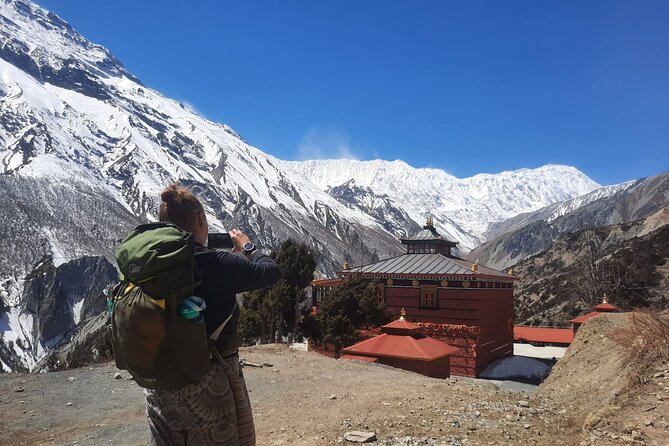
Pokhara provides a useful recovery night rather than a rushed airport connection. The included three-star hotel is in Lakeside, and breakfast is included. You can rest, walk near Phewa Lake, or use the day to enjoy Pokhara at a slower pace.
The next day, a tourist bus returns you to Kathmandu along the Prithvi Highway. The journey covers about 200 kilometers and can take most of the day. After arrival, the arrangement includes a bus park to hotel pickup, giving you a place to settle before your final departure.
On Day 16, airport transfer is provided. If your flight is later, you may have time around Thamel for a final meal or souvenir shopping. Be cautious about scheduling a tight international connection after the bus from Pokhara. Road delays are possible, and the itinerary itself allows for a full return day.
Accommodation, food, and transport in practical terms
The accommodation follows the normal pattern for this route. In Kathmandu and Pokhara, you stay in three-star hotels with breakfast. During the trek, you sleep in standard teahouses.
Teahouses are valuable because they put you near the trail and local villages, but the word standard matters. Do not expect hotel-style facilities at high altitude. Hot showers, Wi-Fi, and battery charging usually cost extra, and availability can vary by village.
Food is not included during the trekking days. You should budget for every lunch and dinner, plus tea, snacks, and drinking water. The operator recommends a filter bottle or purification tablets, which is more practical than relying on purchased bottles throughout the route.
Transport is a mixture of private and shared services. Private transport covers the airport, Kathmandu to Besisahar, and certain hotel transfers. A shared jeep takes you from Besisahar to Dharapani, a public bus connects Jomsom with Pokhara, and a tourist bus returns you to Kathmandu. This keeps the price lower, but it also means you should expect delays, crowded vehicles, and rough roads.
Who this trek suits best
This route suits you if you want more than a standard circuit. Tilicho Lake adds a demanding side trip, while the cultural stops in Manang, Muktinath, and Kagbeni give the trek a strong human and religious dimension.
You should have a high level of fitness and be comfortable walking for long days at altitude. The trip is not suitable for someone seeking a relaxed sightseeing holiday with occasional short hikes.
The support system helps. You have a licensed guide trained in first aid, assistant guides in larger groups, porters, permits, and crew insurance. The provider has also been associated with guides including Raj Rai, Suman, Prashant, Prem, and Pemba Sherpa. Preparation, calm support, and attentive handling of the route are recurring strengths connected with the guiding team.
The group cap of 14 is reasonable. Solo hikers and pairs can gain the security of a group without joining a large expedition. Group discounts may also improve the value if you are booking with friends.
Should you book this Annapurna Circuit package?
I would book this trek if you want the classic Annapurna route with a serious high-altitude addition and prefer having transport, permits, porters, hotels, and guides arranged for you. The acclimatization day in Manang and the support ratio give the itinerary a sensible foundation.
I would not book it without confirming the $50 government fee, the exact meal arrangements, porter baggage limits, and the emergency plan. You also need suitable insurance, personal trekking gear, and a realistic budget for food and mountain extras.
The free cancellation policy allows a full refund when you cancel at least 24 hours before the start time. Weather or minimum-group cancellations may lead to another date or a full refund. Those terms are helpful, but they do not remove the need to plan extra flexibility around transport delays.
For a fit hiker who wants high passes, village life, sacred sites, and a proper sense of crossing the Himalaya, this is a strong package. It asks a lot from your legs, but it gives you one of Nepal’s most varied trekking routes in return.
FAQ
How long is the Annapurna Circuit with Tilicho Lake trek?
The experience lasts approximately 16 days, including arrival and departure days, transport days, the trek, a stay in Pokhara, and the return to Kathmandu.
What is the highest point on the trek?
Thorong La Pass is the highest point at 5,416 meters. Tilicho Lake reaches 4,919 meters.
Is Tilicho Lake included in the itinerary?
Yes. The route includes Siri Kharka, Tilicho Base Camp, and a visit to Tilicho Lake before returning toward the main Annapurna Circuit.
Is there an acclimatization day?
Yes. Day 6 is a scheduled acclimatization day in Manang, at approximately 3,540 meters. The guide can recommend one of three optional hikes.
What kind of accommodation is provided?
You stay in a three-star hotel in Kathmandu, a three-star hotel in Pokhara, and standard teahouses during the trek.
Are meals included?
Hotel breakfasts and two dinners are included as listed. Meals during the trek are not included, so you must pay separately for trekking lunches and dinners.
Is drinking water included?
No. Drinking water is not included. A filter bottle or purification tablets are recommended.
What transport is used?
Private transport covers Kathmandu to Besisahar and selected transfers. A shared jeep goes from Besisahar to Dharapani, a public bus goes from Jomsom to Pokhara, and a tourist bus returns from Pokhara to Kathmandu.
Does the price include travel insurance?
No. You must arrange your own insurance, and it must cover emergency evacuation and the highest altitude reached on the trek.
Recently added around Kathmandu
- Ghorepani Poon Hill Trek★ 5.0 · 16 reviews
- Amazing 1 Day Trekking Experience in Kathmandu Nepal★ 5.0 · 24 reviews
- Private Manaslu Circuit Trek at Himalayas★ 5.0 · 3 reviews
- Ghorepani Poonhill Trek★ 5.0 · 5 reviews
- Upper Mustang Trekking★ 5.0 · 2 reviews
- Upper Mustang Trekking★ 3.0 · 2 reviews
- Upper Mustang Trekking★ 5.0 · 4 reviews
- Upper Mustang Trek★ 5.0 · 5 reviews
Annapurna Base Camp Treks, compared.

Trekking in Annapurna/Langtang/Everest/Upper Mustang regions
Read our review →
Kathmandu to Annapurna Base Camp (ABC) 5-Day Trek
Read our review →Browse the lists this tour appears in