
REVIEW · KATHMANDU
Annapurna Circuit Trek
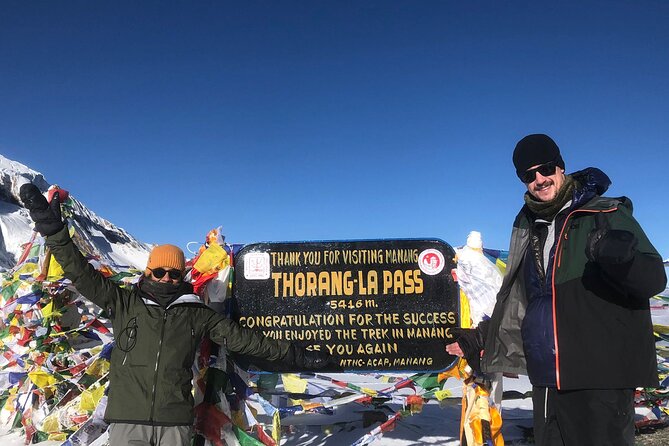
The high pass is the whole story. This 15-day Annapurna Circuit Trek links warm foothills, alpine villages, Thorong La at 5,416 meters, and the hot springs at Tatopani. I like the major scenery shift from rice-growing country to high mountain country, and I like that meals, tea-house lodging, transport, a guide, and permits are included. The main caution is the pace: you reach high altitude quickly, and several days require about five to seven hours of walking.
I also like the private format, since only your group takes part, and the route finishes in Pokhara rather than looping back to Kathmandu. The price of $1,290 is reasonable for 15 days of support, but you must budget extra for drinks, hot showers, Wi-Fi, battery charging, equipment, insurance, and a porter. The feedback is especially warm about the company’s helpful attitude and a porter named Rishi, who was praised for taking his work seriously and helping the group feel safe.
Key points to know before you go
- Thorong La is the physical high point: The pass reaches 5,416 meters and is crossed on Day 10.
- The route changes dramatically: You begin near warm lowland fields and finish among high mountain villages, apple-growing country, and natural hot springs.
- Acclimatization is built in: Day 7 is a rest day in Manang before the route climbs toward Yak Kharka and Thorong High Camp.
- The package covers the basics: Bus and taxi transport, meals, tea-house accommodation, a guide, and trekking permits are included.
- You carry extra costs: Drinks, bottled water, hot water, Wi-Fi, battery charging, hot showers, equipment, insurance, and a porter are not included.
- The trip ends in Pokhara: After Poon Hill and Nayapul, you drive to Pokhara at about 860 meters.
Kathmandu to Nagdi: a long first day
Your start time is 6:15 a.m., with hotel pickup offered by taxi before the main transport. Day 1 combines a five to six hour drive to Bulbule at 840 meters with about an hour of hiking to Nagdi at 930 meters.
That first day is mostly about getting into the route. The bus ride is long, so you should be ready for a full travel day rather than an immediate mountain walk. The short hike gives you a gentle introduction before the daily walking distances increase.
The package includes the necessary transport by bus, plus hotel pickup and drop-off by taxi. That is useful in Kathmandu, where finding the correct departure point can add stress to an early morning. Since this is a private activity, your group has its own arrangement rather than joining a large mixed party.
More Annapurna Treks in Kathmandu
- Annapurna Circuit Trek with Tilicho Lake
★ 5.0 · 368 reviews - Annapurna base camp trek 5 Days
★ 5.0 · 252 reviews - 14-Day Private Annapurna Base Camp Trek
★ 5.0 · 180 reviews
Jagat and Dharapani: the route begins climbing
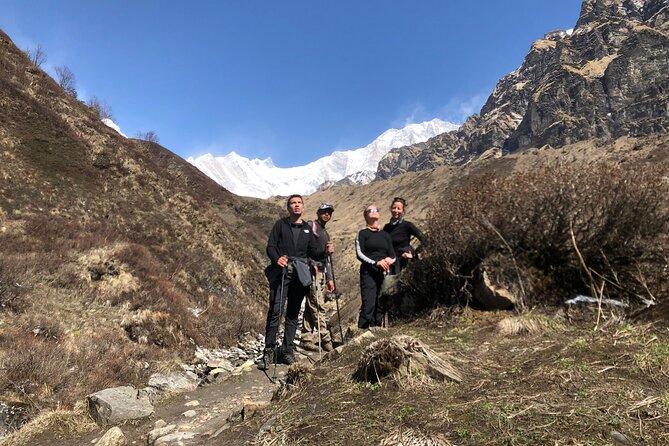
Day 2 takes you from Nagdi to Jagat at 1,300 meters in four to five hours. Day 3 continues to Dharapani at 1,860 meters, again in roughly four to five hours.
These stages gradually move you higher without the abrupt jump that comes later. I like this part of the schedule because the walking time is steady and manageable for someone with moderate fitness, while the altitude gain is spread across two days.
The route is not a collection of short sightseeing stops. You spend much of the day walking, so simple comforts matter. Tea-house lodging is included, and all breakfast, lunch, and dinner are included during the trek. Drinks are not covered, however, so tea, coffee, beer, cola, mineral water, and hot water come from your own budget.
Chame and Pisang: cooler air and serious scenery
On Day 4, you walk about five hours to Chame at 2,670 meters. The next day takes you to Pisang at 3,230 meters in another five hours.
This is where the journey feels properly high. The temperature and conditions change as the route leaves the lower, warmer areas behind. You should think of Chame and Pisang as important transition points, not just overnight names on a schedule.
Pisang is also the point where the altitude becomes more relevant. You are now above 3,000 meters, and the itinerary asks you to keep walking for about five hours. That makes a steady pace and careful attention to how you feel more important than trying to rush ahead.
Mountain accommodation means tea houses rather than standard hotels. That keeps the cost under control and fits the nature of the route, but you should not expect every hotel convenience to be included. Hot showers, Wi-Fi, and battery charging are specifically excluded, as are your own trekking clothes and equipment.
Manang at 3,450 meters: the key rest day
Day 6 takes you to Manang Village at 3,450 meters after about five hours of walking. Day 7 is a rest day in Manang, and this is one of the most valuable parts of the schedule.
The pause comes before the hardest altitude section. You are not simply taking a lazy day in the middle of the trip. You are giving yourself time to adjust before climbing to Yak Kharka and Thorong High Camp.
The itinerary does not specify a set program for the rest day, so the useful approach is to treat it as recovery time. Keep your plans flexible, follow your guide’s advice, and avoid turning the break into another demanding excursion. The guide’s salary, food, insurance, and equipment are included in the package, which gives you a trained point of contact during this high section.
The company also receives strong praise for its personal support. One account describes the operation as feeling like a family, with help that was generous and reassuring. That kind of care matters most on a demanding trek, though you should still remember that your own travel insurance is not included.
Same trailhead, a longer or shorter day out:
- Everest Base Camp Trek – 14 Days
★ 5.0 · 1,499 reviews - Everest Base Camp Trek
★ 5.0 · 842 reviews - Everest Base Camp Trekking
★ 5.0 · 485 reviews - Everest Base Camp Trekking – 13 Day
★ 5.0 · 365 reviews
Yak Kharka and Thorong High Camp: prepare for the pass
Day 8 takes four hours to Yak Kharka at 4,110 meters. Day 9 continues for about four hours to Thorong High Camp at 4,600 meters.
These are short walking days by time, but they are not easy days. Altitude makes each uphill section more demanding, and the overnight elevation at High Camp is a serious part of the trek. The schedule gives you a gradual climb from Manang, but you still need moderate physical fitness and a sensible attitude toward the conditions.
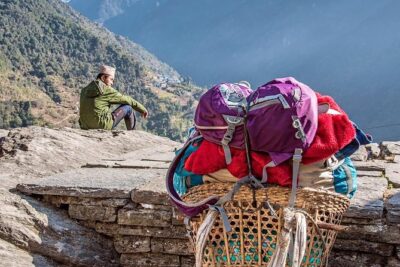
This is also the point where your packing choices become obvious. The tour does not provide your trekking equipment, so you must arrive with the clothing and gear you need. A porter is not included either. If you want porter support, that requires a separate arrangement and cost.
The supplied feedback gives Rishi, a porter, special praise for being helpful, friendly, and serious about his work. That is useful reassurance about the human side of the operation, but do not assume porter service comes with the $1,290 price. It does not.
Thorong La to Muktinath: the hardest and most rewarding day
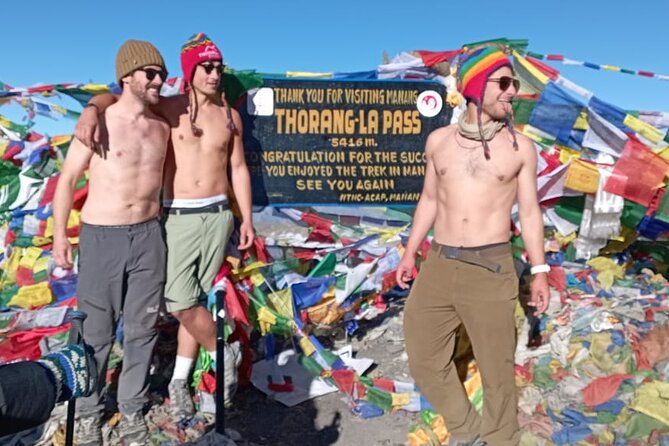
Day 10 is the trek’s central challenge. You cross Thorong La at 5,416 meters, then descend to Muktinath at 3,800 meters. The full day takes about seven hours.
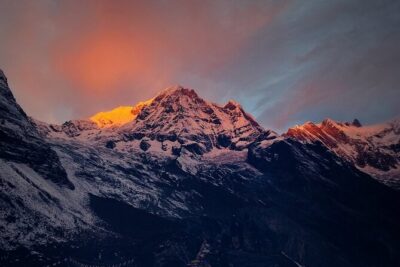
The pass is the reason many people choose this route. It gives the itinerary a clear high point, both physically and visually. The descent to Muktinath is important too, since you lose a large amount of elevation after crossing the pass.
You should approach this day with respect. It is the longest and highest stage on the schedule, and you cannot treat it like an ordinary walk. Your guide is included, and the private format means your group can receive direct support, but no tour can remove the physical demands of altitude.
Muktinath also gives the route a strong sense of change. You have crossed from the Manang side of the circuit into a different part of the mountain region, and the next stages move toward Jomsom and Marpha.
Jomsom and Marpha: a long descent through mountain country
On Day 11, you walk about six hours to Marpha at 2,670 meters via Jomsom at 2,715 meters. The descent from Muktinath continues, so the air should feel less demanding than at Thorong High Camp.
Marpha is one of the most appealing overnight stops on the plan because it breaks up the long descent and gives you a village stay below the highest elevations. The itinerary does not list specific activities there, so the value is mainly in the setting, the walking route, and the change in altitude.
Day 12 takes you to Lete at 2,480 meters in about six hours. This is still a full walking day, even though the elevation is lower. The schedule is best suited to people who want a continuous trek rather than a sightseeing holiday with frequent vehicle transfers.
Tatopani and Ghorepani: hot springs before another climb
Day 13 leads to Tatopani at 1,190 meters after about six hours. The stop is known in the itinerary for its natural hot spring, and it is a welcome contrast after days spent at high altitude.
The hot spring is one of the route’s most distinctive features. It gives you a chance to relax in a natural setting, although hot water itself is listed among the items not included. The natural spring and paid hot-water services should not be confused, so ask your guide what is available at the accommodation or stop.
Day 14 reverses the downward trend with a six-hour climb to Ghorepani at 2,880 meters. That jump is considerable. You have come down to 1,190 meters, then climb again to nearly 2,900 meters, so this day may feel tougher than its place near the end suggests.
This section adds variety to the trip. The circuit is not simply a high-pass route followed by an easy descent. It keeps asking you to walk, climb, and adjust to changing elevations.
Poon Hill and Pokhara: a satisfying finish
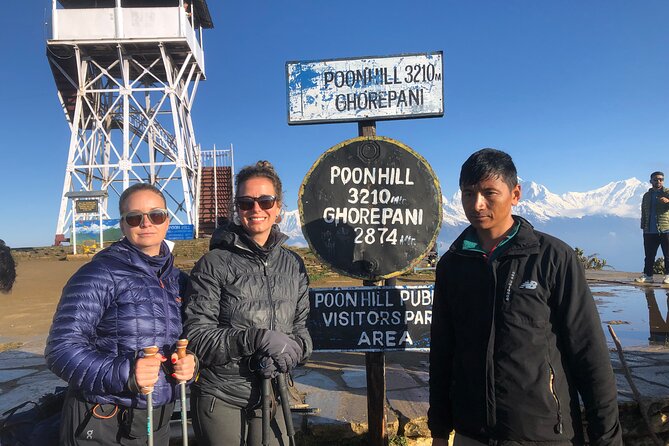
The final day begins with a trek to Poon Hill at 3,210 meters, followed by a walk to Nayapul at 1,100 meters and a drive to Pokhara at about 860 meters. The full day takes about six to seven hours.
Poon Hill provides a final mountain viewpoint before the trip leaves the trail. The itinerary does not state the exact sunrise arrangements, so you should confirm timing with your guide if that matters to you. The early start on the last day may be part of the plan, but the listed meeting time of 6:15 a.m. applies to the tour departure, not necessarily a Poon Hill sunrise departure.
Reaching Pokhara gives the trek a proper endpoint. You do not need to organize your own return to Kathmandu as part of this schedule. That finish is practical if Pokhara is your next destination, though the package information does not say that accommodation in Pokhara is included.
What the $1,290 price really covers
At $1,290 per person, the cost pays for a substantial bundle across 15 days. You receive:
- Transport by bus, with hotel pickup and drop-off by taxi
- Breakfast, lunch, and dinner during the trek
- Tea-house mountain accommodation
- An excellent guide, with guide food, salary, insurance, and equipment covered
- Required mountain trekking permits
That is good value if you want an organized private trek and would rather not arrange each permit, meal, lodge, and transfer yourself. The price also reduces the need to negotiate costs on the trail.
The exclusions are important. You pay separately for tea, coffee, beer, cola, mineral water, hot water, Wi-Fi, battery charging, hot showers, trekking equipment, travel insurance, and porter service. These are not tiny details on a 15-day trip, so plan for them before you leave.
The cancellation rule is strict: the booking is non-refundable and cannot be changed for any reason. I would only reserve after checking your dates, fitness, insurance, and equipment plans carefully.
Who this Annapurna Circuit Trek suits best
I would choose this trip if you want a private, guided mountain trek with a clear daily plan and meals included. It suits people with moderate physical fitness who are comfortable walking four to seven hours most days and sleeping in tea houses.
You should also be ready for real altitude. The route reaches 5,416 meters, and the highest overnight stop is at 4,600 meters. The rest day in Manang helps, but it does not remove the need to listen to your guide and take the high sections seriously.
This is less suitable if you want luxury lodging, short walking days, or a fully inclusive price. It is also not ideal if you want to travel with no preparation, since your equipment, insurance, and porter are your responsibility.
Should you book it?
Book this Annapurna Circuit Trek if the combination of Thorong La, changing mountain scenery, tea-house stays, and private support is what you want. The strongest reasons to choose it are the carefully staged altitude gain, the included guide and permits, the natural hot spring at Tatopani, and the convenient finish in Pokhara.
Before paying, confirm what equipment you need, decide if you want a porter, and set aside money for drinks, showers, charging, and Wi-Fi. If you can handle the long walking days and accept the strict no-refund rule, $1,290 offers a practical way to experience one of Nepal’s most varied trekking routes.
FAQ
Where does the Annapurna Circuit Trek begin?
The experience is based in Kathmandu, with hotel pickup offered by taxi. The first main journey goes by bus toward Bulbule.
How long does the trek last?
The itinerary lasts approximately 15 days.
What time does the tour start?
The listed start time is 6:15 a.m.
Is hotel pickup included?
Yes. Hotel pickup and drop-off by taxi are included as part of the transport arrangements.
Is this a private tour?
Yes. Only your group participates in the activity.
What meals are included?
Breakfast, lunch, and dinner are included during the trek.
Where do you stay during the trek?
Mountain accommodation in tea houses is included.
Is a porter included?
No. Porter service is not included in the price.
What level of fitness is required?
A moderate level of physical fitness is required. Walking days range from about one hour on the first hiking day to six or seven hours on several later days.
What is the highest point on the route?
The highest point is Thorong La Pass at 5,416 meters.
Does the trek include travel insurance?
No. Your travel insurance is not included.
Is the booking refundable?
No. The experience is non-refundable and cannot be changed for any reason.
Recently added around Kathmandu
- Ghorepani Poon Hill Trek★ 5.0 · 16 reviews
- Private Manaslu Circuit Trek at Himalayas★ 5.0 · 3 reviews
- Amazing 1 Day Trekking Experience in Kathmandu Nepal★ 5.0 · 24 reviews
- Ghorepani Poonhill Trek★ 5.0 · 5 reviews
- Upper Mustang Trekking★ 5.0 · 2 reviews
- Upper Mustang Trekking★ 3.0 · 2 reviews
- Upper Mustang Trekking★ 5.0 · 4 reviews
- Upper Mustang Trek★ 5.0 · 5 reviews
Annapurna Base Camp Treks, compared.
Trekking in Annapurna/Langtang/Everest/Upper Mustang regions
Read our review →
Kathmandu to Annapurna Base Camp (ABC) 5-Day Trek
Read our review →Browse the lists this tour appears in