
REVIEW · KATHMANDU
20 Days Annapurna Circuit Trek
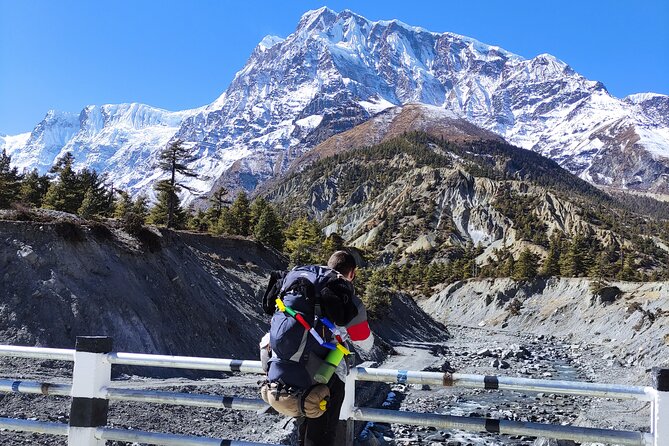
High passes, quiet villages, and big mountain views. The 20-day Annapurna Circuit Trek packs a remarkable range of scenery into one long journey, from Kathmandu’s temples and subtropical forests to the dry valleys beyond Manang and the 5,416-meter Thorong La Pass. I especially like the gradual change in climate and culture, and the fact that permits, a licensed guide, porter support, airport transfers, and many meals are included. The main caution is the physical demand: several days run for five to seven hours, and the pass day reaches serious altitude.
I also like the way this route links places with very different character. Manang gives you an acclimatization day, Muktinath adds religious importance, Marpha offers a handsome mountain village, and Poon Hill provides a final sunrise reward. The tradeoff is that long road transfers, basic mountain accommodation, extra entry fees, drinks, tips, insurance, and rescue costs all sit outside the advertised price.
Key points at a glance
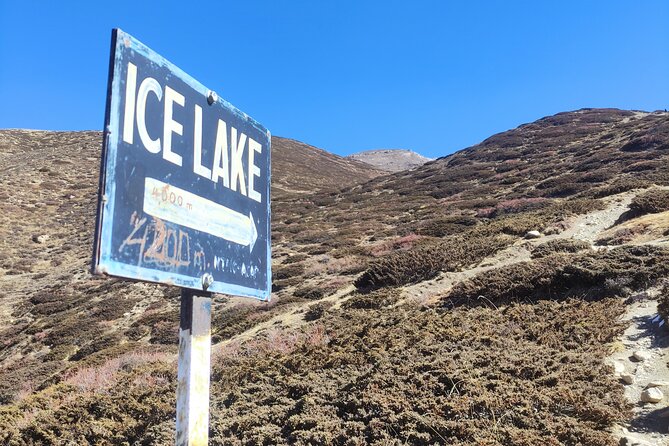
- Thorong La at 5,416 meters: The trek’s major test, reached early in the morning before strong winds usually build.
- A full acclimatization day in Manang: This pause helps break up the steady climb toward the pass.
- Dramatic climate change: You move from farm terraces and forest to dry high-altitude valleys, then back into pine forest and greener foothills.
- Poon Hill sunrise: A one-hour optional climb from Ghorepani offers views toward Dhaulagiri, Annapurna, and Manaslu when weather allows.
- Practical support included: Airport transfers, a licensed guide, one porter for every two trekkers, permits, and most breakfasts, lunches, and dinners are covered.
- A private group format: Only your own group participates, which can make the pace and daily routine easier to manage.
What the $1,200 price really covers
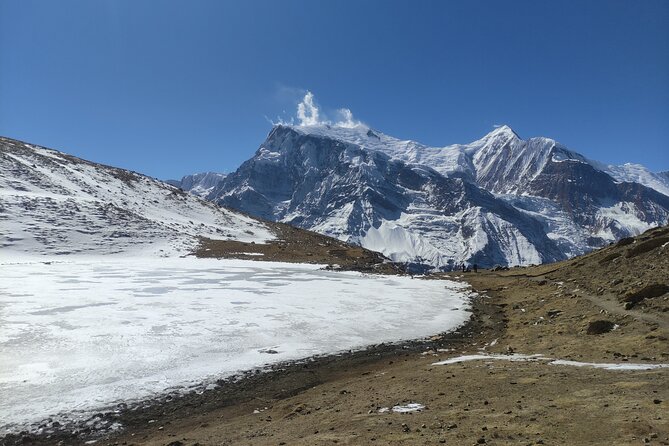
At $1,200 per person, this trip offers solid value for a 20-day guided trek, especially because several costly basics are built in. You receive airport pickup and drop-off, Kathmandu sightseeing by car, transport to the trailhead, a government-licensed guide, porter service, the Annapurna Conservation Area Project permit, and a TIMS card.
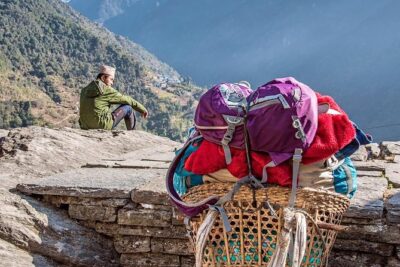
The porter allowance is listed as 25 kilograms for two trekkers. That works out to a maximum of 12.5 kilograms per person if you share the load evenly. You will still carry a daypack, so pack carefully and keep unnecessary clothing to a minimum.
Meals included are 18 breakfasts, 15 lunches, and 15 dinners. That pattern fits the route, since some meals in Kathmandu and Pokhara are not covered. Drinks are extra, including soft drinks and alcoholic drinks. Personal purchases, tips, special accommodation, international flights, visas, and rescue or evacuation costs are also excluded.
The three Kathmandu sightseeing stops have separate entrance charges. Pashupatinath costs NPR 1,000 for foreign nationals, though Indian visitors enter free. Boudhanath charges NPR 400 for foreign nationals and NPR 100 for SAARC or BIMSTEC nationals. Kathmandu Durbar Square costs NPR 1,000 for foreign nationals and NPR 500 for SAARC or BIMSTEC nationals.
The price is strongest if you want a supported trek without arranging permits, a guide, and transport yourself. It is less all-inclusive than the headline figure may first suggest, so budget for entry tickets, drinks, tips, insurance, and an emergency reserve.
More Annapurna Treks in Kathmandu
- Annapurna Circuit Trek with Tilicho Lake
★ 5.0 · 368 reviews - Annapurna base camp trek 5 Days
★ 5.0 · 252 reviews - 14-Day Private Annapurna Base Camp Trek
★ 5.0 · 180 reviews
Kathmandu temples before the trail
Your first day is simple: airport reception, transfer to the hotel, and a chance to recover from the flight. The airport pickup is useful, since arriving in Kathmandu can feel confusing after a long international journey.
Day two gives you a concentrated introduction to the capital. At Pashupatinath Temple, the Bagmati River setting and constant religious activity make this more than a quick photo stop. It is a major Hindu pilgrimage site dedicated to Shiva, and the visit brings a clear cultural frame to the trek ahead.
Boudhanath Stupa offers a calmer change of pace. Its large white dome and watchful eyes are among Kathmandu’s best-known Buddhist symbols. The stop lasts about an hour, giving you time to walk around the stupa and observe the rhythm of worship.
Kathmandu Durbar Square adds royal architecture, courtyards, and carved details. The schedule gives you about two hours there. Since all three sites have separate entry fees, carry Nepalese rupees or confirm the accepted payment method before setting out.
The long road to Syange
Day three is mostly about transport. The drive from Kathmandu to Syange takes about ten hours in total, including the section from Besisahar. The route follows hill roads and passes through changing scenery, but this is not a relaxing transfer in the usual sense. You should expect a long day in a bus and shared jeep before the walking begins.
The group travels to Besisahar by regular bus, then continues to Syange by sharing a jeep. That arrangement keeps the cost down, but it also means the road section is part of the adventure rather than a polished transfer.
At Syange, the elevation is about 823 meters. The low starting point helps you begin the trek without immediate altitude pressure. From here, the route moves through gorges, waterfalls, farm terraces, and high hills.
Forests, villages, and the climb toward Manang
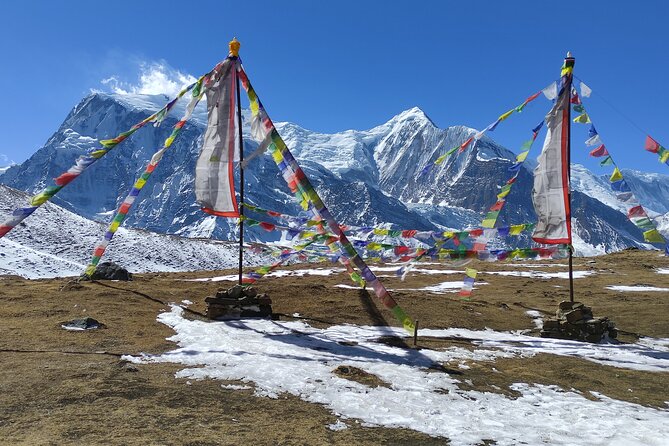
The trek begins properly on day four with the walk to Dharapani. The route includes a steep opening section and then passes through lush farmland. You will notice how closely the trail connects with working villages and cultivated slopes.
From Dharapani to Chame, the air cools and the vegetation begins to change. Bagarchhap is described as the first village with a distinctly Tibetan-style feel, an early sign that the route is entering a different cultural zone.
The next stage reaches Pisang at about 3,200 meters. Forest, river views, and expanding views of snowy peaks make this one of the more scenic stretches. The walk takes about five to six hours, long enough to feel substantial without matching the hardest days ahead.
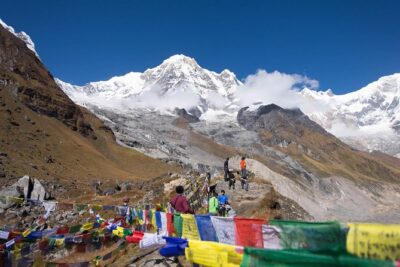
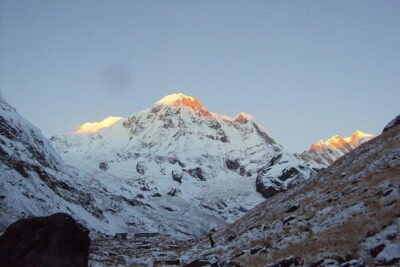
Pisang to Manang takes about five hours. The trail climbs more sharply after leaving Pisang, and the mountains become more constant companions. Annapurna II, Gangapurna, Tilicho, and the Chuli peaks appear around the route, depending on weather and visibility.
Manang is one of the most important stops in the whole plan. You spend an entire day there, surrounded by about 500 flat-roofed houses and high mountain scenery. This is not wasted time. The pause breaks up the ascent and gives your body a chance to adjust before the trail becomes colder, drier, and higher.
Same trailhead, a longer or shorter day out:
- Everest Base Camp Trek – 14 Days
★ 5.0 · 1,499 reviews - Everest Base Camp Trek
★ 5.0 · 842 reviews - Everest Base Camp Trekking
★ 5.0 · 485 reviews - Everest Base Camp Trekking – 13 Day
★ 5.0 · 365 reviews
Above Manang, where the air gets thin
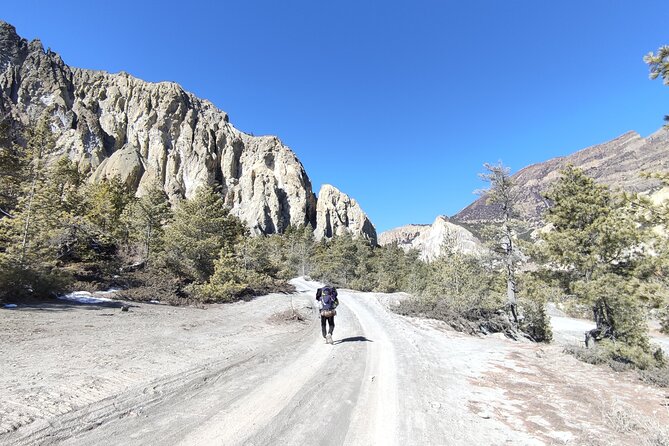
After acclimatizing in Manang, the route climbs to Yak Kharka. The walk is described as a slow ascent, with open views toward Annapurna II, Gangapurna, Tilicho, and the Chuli peaks. At this point, the scenery becomes increasingly barren and exposed.
The following day leads toward Thorong High Camp viewpoint. The six-hour walk continues through the last settlement of Ledar before winding higher. This is a day to keep your pace steady. You are not trying to win a race, and the high elevation rewards patience.
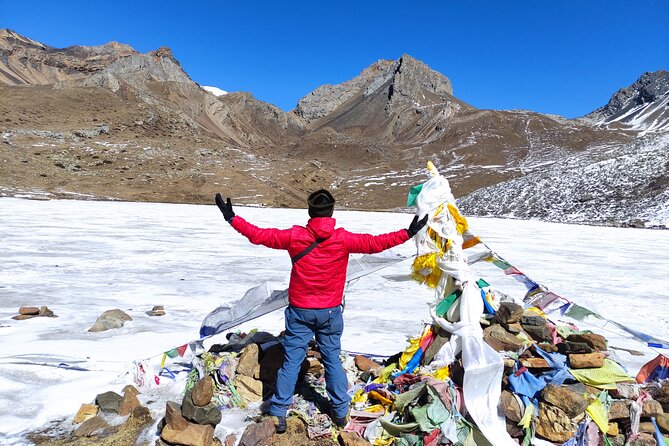
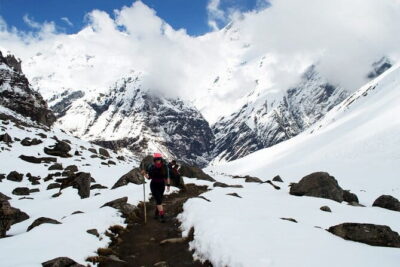
The pass crossing begins early on day 11. That early start matters because cold wind can build later in the day. The first part is steep and strenuous, but reaching Thorong La at 5,416 meters is the defining achievement of the trek.
The pass is not just a high point on a map. It is the moment when the route links the Manang side with Mustang and the Kali Gandaki valley. You should expect cold conditions, thin air, and a demanding effort. A moderate fitness level is the stated minimum, but this section deserves more respect than that phrase may suggest.
Muktinath and the dry Kali Gandaki valley
After crossing Thorong La, you descend to Muktinath at about 3,800 meters. The descent is long, and the full day can take around eight hours when the pass and the approach to the temple are combined.
Muktinath is a sacred village with importance for both Hindu and Buddhist pilgrims. Its setting gives the stop a strong sense of place, especially after the physical strain of the pass. The route description notes only a few teahouses near the lower section, so do not count on a wide choice of refreshment stops.
Day 12 continues downhill toward Marpha. You lose about 1,200 meters as the trail reaches the Kali Gandaki River valley. Ekale Bhatti, whose name means lonely teahouse, is a small settlement with only a few teahouses. This is a good reminder that services become limited in remote sections.
Marpha is one of the more appealing villages on the route. The walk from Muktinath takes about five hours, and the settlement provides a gentler rhythm after the pass. The following day reaches Lete in about six hours, following the Kali Gandaki downstream through Tukuche.
Tukuche sits beneath Tukuche Peak and Dhaulagiri, giving you some of the strongest mountain views of the lower valley. From Lete toward Tatopani, the dry country begins to give way to pine and conifer forest. The route passes between Dhaulagiri and Annapurna, then continues through a greener setting.
Tatopani is reached after about six hours. The name is associated with hot springs in Nepal, but the supplied schedule does not specifically promise bathing time or entry. Treat it as an important village stop rather than assuming a particular spa experience.
Tatopani, Ghorepani, and the Poon Hill sunrise
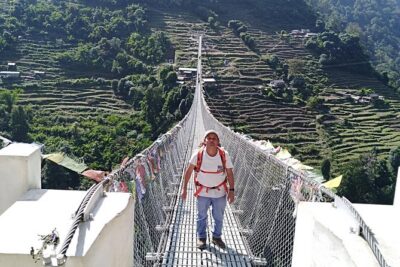
The climb from Tatopani to Ghorepani takes about six to seven hours and reaches roughly 2,860 meters. You cross a suspension bridge over the Kali Gandaki before following paths through villages and changing vegetation.
Ghorepani is the base for the optional Poon Hill sunrise walk. If the weather cooperates, the climb takes about an hour and reaches 3,195 meters. From the top, you may see Dhaulagiri, Annapurna, and the Manaslu range in the early light.
This is one of the smartest features of the final section. After the severe altitude of Thorong La, Poon Hill provides another clear goal without requiring another extreme pass crossing. The weather qualification matters, though. Clouds can erase the panorama, so keep expectations flexible.
After the sunrise, the route descends toward Tikhedhunga. The walk takes about five hours and includes rural farm villages and waterfalls. The day is shorter than some earlier stages, but tired legs will still notice the descent.
The following day continues toward Pokhara and takes about seven hours. The trail passes through more farm settlements and cascading water before reaching the city. This gives you a satisfying transition from footpaths to cafés, lakes, and road transport.
Pokhara recovery and the ride back
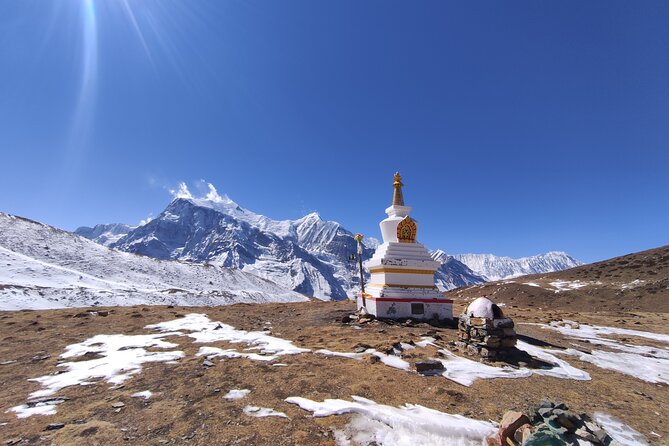
Day 18 is a full leisure day in Pokhara. You can visit Phewa Lake, Begnas Lake, or Rupa Lake. The schedule does not include a specific activity or boat trip, so you have freedom to choose how much rest or sightseeing you want.
That free day is valuable after nearly two weeks of walking. Use it to recover rather than trying to pack in every possible attraction. Pokhara also gives you a softer ending than flying straight from the mountains into an airport transfer.
Day 19 is another long transport day, with about eight hours on the road back to Kathmandu. The route follows scenic hills and views of the Trisuli and Marsyangdi rivers. Road conditions and traffic can affect the timing, so keep your international departure separate from this transfer.
On day 20, a company representative takes you to Tribhuvan International Airport around three hours before your flight. The airport drop-off is included, but you are responsible for making sure your departure details are correct and that the transfer timing works for your flight.
Guides, porters, and the private format
The trip is private, meaning only your own group participates. That can be a real advantage on a demanding route. You are not tied to a large group’s pace, and daily decisions may feel easier to manage.
A professional guide with a government license is included. One porter is assigned for every two trekkers, with a combined maximum load of 25 kilograms. Tips for staff are not included, so plan for that extra cost.
The company has received particularly warm praise for helpful staff and careful support. Names connected with highly praised company trips include guide Jaya and porters Malik and Dinesh. Another company representative, described as kind and fluent in Chinese, may be useful for Chinese-speaking clients. These names should not be treated as a guarantee that they will lead your departure, so confirm the assigned team before booking.
Who should choose this trek?
I would recommend this route to you if you want a full Himalayan itinerary with strong cultural stops, a major high pass, and a clear change from green foothills to dry mountain valleys. It suits people who can handle repeated five to seven-hour walking days and who accept basic accommodation and long road transfers.
It is less suitable if you want a gentle holiday, private luxury rooms throughout, or a short scenic trek. The itinerary includes significant altitude, a strenuous pass day, and limited services in some villages.
The company’s listed requirement is moderate physical fitness. In practical terms, you should be comfortable walking for several hours on uneven trails and managing a steep high-altitude day. The plan includes an acclimatization day in Manang, but no itinerary can remove altitude risk.
Should you book the 20-day Annapurna Circuit?
Book it if you want breadth and support. For the price, the included permits, guide, porter, transfers, meals, and airport service make the arrangement appealing. The route also gives you more than mountain views: temples in Kathmandu, Tibetan-influenced villages, sacred Muktinath, Marpha, Poon Hill, and lakeside Pokhara.
Before paying, confirm the accommodation standard, the exact guide and porter team, meal arrangements, and what emergency assistance would involve. The cancellation terms allow a full refund only when you cancel at least three full days before the start time. If you can accept the physical effort, extra costs, and basic mountain routine, this is a strong choice for a first organized Annapurna Circuit.
FAQ
How long is the Annapurna Circuit Trek?
The experience lasts approximately 20 days, including Kathmandu sightseeing, transport days, the trek, a leisure day in Pokhara, and the return to Kathmandu.
Where does the experience start?
The listed meeting point is The Great Adventure Treks & Expedition Pvt. Ltd in Chhusya Galli, Kathmandu. The stated start time is 8:15 am, while airport pickup is arranged for arriving clients.
Is airport pickup included?
Yes. Airport pickup on arrival and airport drop-off before departure are included.
Is a guide provided?
Yes. A professional trekking guide with a government license is included.
Is porter service included?
Yes. One porter is provided for every two trekkers, with a maximum combined load of 25 kilograms.
Are trekking permits included?
Yes. The Annapurna Conservation Area Project permit and TIMS card are included.
Are meals included?
The package includes 18 breakfasts, 15 lunches, and 15 dinners. Drinks are not included.
Are Kathmandu attraction fees included?
No. Entrance fees for Pashupatinath Temple, Boudhanath Stupa, and Kathmandu Durbar Square are excluded.
What happens if I cancel?
You can receive a full refund if you cancel at least three full days before the experience start time. Cancellations or changes made less than three full days before the start are not accepted for a refund.
Recently added around Kathmandu
- Ghorepani Poon Hill Trek★ 5.0 · 16 reviews
- Private Manaslu Circuit Trek at Himalayas★ 5.0 · 3 reviews
- Amazing 1 Day Trekking Experience in Kathmandu Nepal★ 5.0 · 24 reviews
- Ghorepani Poonhill Trek★ 5.0 · 5 reviews
- Upper Mustang Trekking★ 5.0 · 2 reviews
- Upper Mustang Trekking★ 5.0 · 4 reviews
- Upper Mustang Trek★ 5.0 · 5 reviews
- Upper Mustang Trekking★ 3.0 · 2 reviews
Annapurna Base Camp Treks, compared.
Trekking in Annapurna/Langtang/Everest/Upper Mustang regions
Read our review →
Kathmandu to Annapurna Base Camp (ABC) 5-Day Trek
Read our review →Browse the lists this tour appears in