
REVIEW · KATHMANDU
12 days Annapurna Circuit Trek
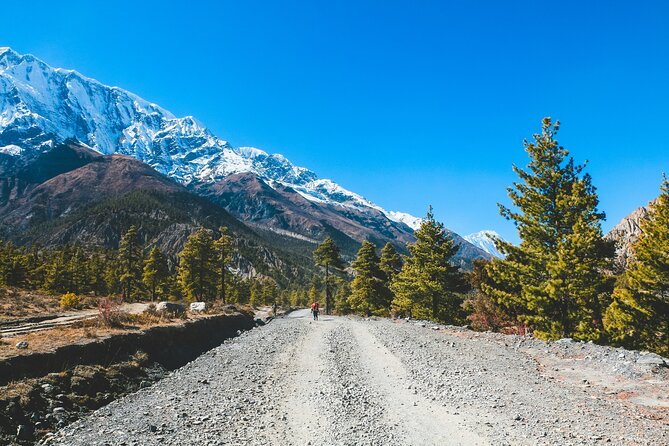
The high pass is only half the story. This 12-day Annapurna Circuit trek links high Himalayan valleys, old villages, hot springs, and sunrise viewpoints from Kathmandu to Pokhara. I like the route’s variety, especially the contrast between dry Manang and Mustang, and I like that permits, lodge stays, meals, and local guide costs are included.
The private format also gives your group room to adjust the pace and ask for a trip shaped around your needs. The main catch is the schedule: several days run close to 10 or 12 hours, and the early start for Thorong La Pass demands good fitness, careful acclimatization, and a willingness to accept basic mountain lodging.
Key points to know before booking
- A full Annapurna Circuit in 12 days: The route reaches Manang, crosses Thorong La Pass, continues to Muktinath, and finishes with Poon Hill.
- Thorong La is the physical test: You start around 3 a.m. on Day 8 to cross one of the world’s highest trekking passes.
- Two very different mountain worlds: Manang offers dry, high-altitude scenery, while the Kali Gandaki side leads through Mustang, Thakali villages, Tatopani, and Ghorepani.
- Meals and permits are covered: Breakfast, lunch, and dinner during the trek are included, along with ACAP and TIMS fees.
- Porters cost extra: A porter can be arranged for $20 per day and carries up to 20 kilograms.
- The private setup suits small groups: Only your group participates, with an English-speaking, government-licensed guide.
Why this Annapurna route earns its place on your Nepal plan
At $1,100 per person, this trek offers solid value for a high-altitude journey that includes transportation, guide expenses, accommodation, meals, permits, taxes, and one night in Pokhara with breakfast. You still need to budget for drinks, insurance, tips, personal expenses, a Nepal visa, and porter service if you do not want to carry your own pack.
I especially like the route because it does not rely on one mountain view to carry the whole trip. You get river valleys, rhododendron forests, dry mountain country, traditional settlements, a high pass, a pilgrimage site, hot springs, and a famous sunrise ridge. The scenery changes often enough to keep each walking day distinct.
The pace is not gentle. Several days are listed at 10 to 12 hours, though that total can include transport and stops. You should have moderate physical fitness and be ready for steep uphill walking, cold conditions, thin air, and early mornings.
The private format is useful here. If one person needs a slower pace or extra rest, your guide can focus on your group rather than a large fixed party. The trip is fully customizable, although you should settle any changes before departure and ask exactly how they affect price, lodging, and transport.
More Annapurna Treks in Kathmandu
- Annapurna Circuit Trek with Tilicho Lake
★ 5.0 · 368 reviews - Annapurna base camp trek 5 Days
★ 5.0 · 252 reviews - 14-Day Private Annapurna Base Camp Trek
★ 5.0 · 180 reviews
Day 1: Kathmandu to Dharapani by road
The first day is a long transfer. You travel from Kathmandu toward Besishar along the Trishuli River, then change to a jeep for Dharapani. The full day is listed at about 12 hours.
This is not a sightseeing day in the usual sense. It is the necessary link between the capital and the mountain trail. The river route gives you an early look at Nepal outside Kathmandu, while the jeep section brings you closer to the Annapurna region.
The main issue is fatigue. After a long drive, you arrive in Dharapani ready for dinner and sleep rather than a relaxed village walk. Wear comfortable clothes, keep water and snacks handy, and place important items where you can reach them during the transfer.
Day 2: Dharapani to Chame and the first change in altitude
The trek reaches Chame, headquarters of the Manang District. The route gains altitude through rhododendron forest, and the scenery begins to shift from lower valley country toward the high mountain zone.
Chame is an important early stop because you start to feel the journey moving upward. You may catch mountain views through the trees, but the real value is the steady transition in climate and scenery.
The day is again listed at about 12 hours. That makes the trek feel more like a serious expedition than a casual walking holiday. Your guide’s job is especially important here, since a sensible pace early in the route can help you manage the higher days ahead.
Day 3: Upper Pisang and the first major mountain views
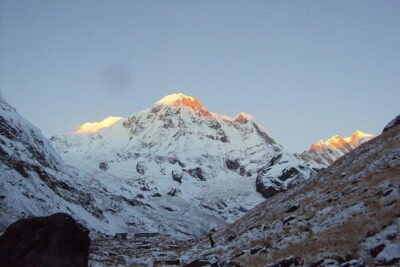
The route continues to Upper Pisang at about 3,300 meters. A highlight is the view toward Lamjung Himal, listed at 6,893 meters, with early light touching the peak.
Upper Pisang gives you a stronger sense of the Annapurna region. The air is thinner, the mountains feel closer, and the settlement offers a clear change from the lower valleys. The day is listed at about 10 hours, so you have more time than on some of the longer transfer and trekking days.
You should not treat this as an easy day simply because it is shorter. Altitude changes the effort required. Walk slowly, drink regularly, and tell your guide if you feel unwell.
Same trailhead, a longer or shorter day out:
- Everest Base Camp Trek – 14 Days
★ 5.0 · 1,499 reviews - Everest Base Camp Trek
★ 5.0 · 842 reviews - Everest Base Camp Trekking
★ 5.0 · 485 reviews - Everest Base Camp Trekking – 13 Day
★ 5.0 · 365 reviews
Day 4: Upper Pisang to Manang through Geru
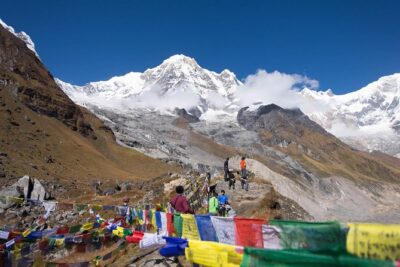
The route passes through Geru, with views toward Annapurna II, Annapurna III, Annapurna IV, Gangapurna, Tilicho, and Pisang Peak. The air becomes drier and colder as you move higher.
This is one of the most rewarding sections for mountain views. The route gives you a broad collection of peaks rather than one isolated summit, and the dry air can make the surrounding rock and snow appear especially sharp.
You finish in Manang, one of the main centers on the circuit. It is a useful place to slow down, take stock, and prepare for the serious altitude ahead. The day is listed at around 10 hours, so do not fill every spare minute with extra activity.
Day 5: Manang acclimatization and Ice Lake option
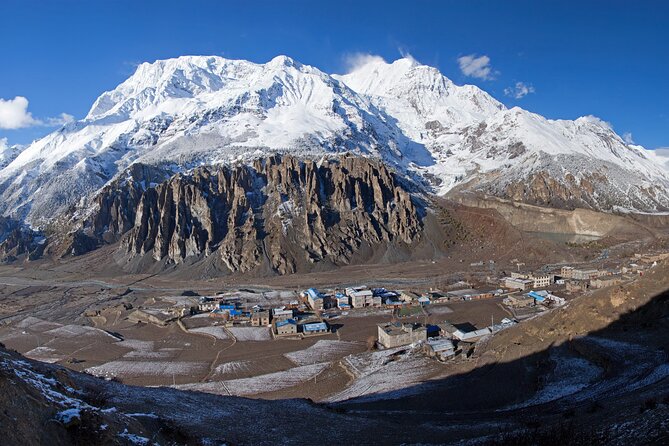
Day 5 is set aside for acclimatization in Manang. The village sits at the base of Annapurna III and offers views of Annapurna and Gangapurna. You might walk to Ice Lake as part of the day.
This rest day is not wasted time. It helps your body adjust before you move toward Yak Kharka, Thorung Phedi, and the pass. The optional Ice Lake walk can add a demanding climb, so ask your guide if it suits your condition that morning.
I like that the program includes this pause. A fast schedule through Manang would make the later pass crossing more stressful. Use the day for a moderate walk, food, rest, and a check of your clothing and pack.
Day 6: Manang to Yak Kharka
Leaving Manang, the trail crosses a stream and climbs toward Tenki before moving northwest into the Jarsang Khola valley. The day ends at Yak Kharka.
The character of the route changes again. You leave the wider Marshyangdi Valley and enter a higher, more exposed setting. The walk is about 12 hours by the stated schedule, though the actual effort will depend on pace and conditions.
Yak Kharka is a practical stop before Thorung Phedi. There is no reason to rush this section. You want to arrive with enough energy for the next day, which prepares you for the pass.
Day 7: Yak Kharka to Thorung Phedi
The route climbs from Yak Kharka to a ridge, drops toward the Marsyangdi River, crosses a wooden bridge, and then rises toward Thorung Phedi at the foot of Thorong La Pass.
This is a staging day. You are not crossing the pass yet, but you are placing yourself close enough to start before dawn. The combination of altitude and repeated uphill sections can make the day feel harder than the distance suggests.
Thorung Phedi is a basic mountain stop, and that is part of the deal. You should expect simple accommodation and a practical evening focused on food, warm clothing, and sleep. Keep your morning gear ready before bed because the next start is around 3 a.m.
Day 8: Thorong La Pass to Muktinath
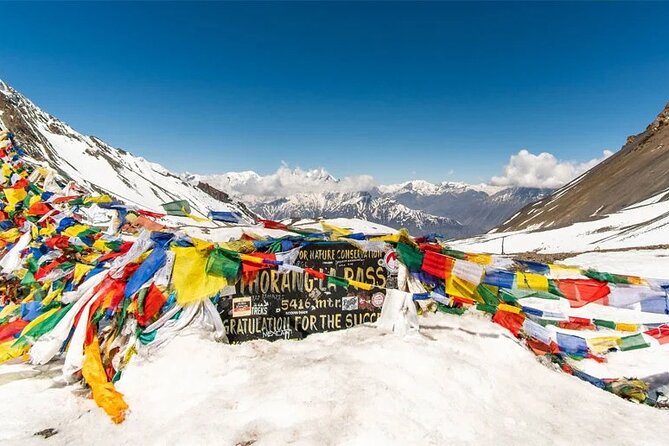
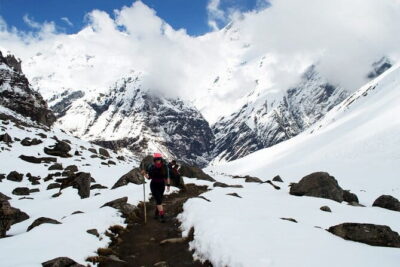
This is the defining day of the trek. You wake around 3 a.m., climb toward Thorong La, reach the pass, and then descend to Muktinath. The pass is described as one of the highest in the world.
The early start helps you cross before later weather changes, but it also means the day begins in darkness and cold. Headlamps, warm layers, gloves, and a steady pace matter. Your guide will be important in judging how you are coping with the altitude.
Reaching the pass is a major personal achievement, but the descent afterward still requires care. Tired legs and loose or uneven ground can make the downhill section demanding. Muktinath provides a welcome change of setting and connects the trek with an important religious destination.
The program lists the day at about 10 hours. That is a serious effort, even for a fit walker. You should not book this route expecting to cross Thorong La casually.
Day 9: Muktinath to Tatopani
After the high pass, you trade walking for a jeep ride of about three hours to Tatopani. Once there, you can rest at the lodge or visit the hot springs.
This is a smart change of pace after the hardest section. The hot springs offer a chance to relax tired muscles, though the visit is optional. Tatopani also gives the route a welcome low-altitude break before the next uphill stretch.
The day is listed at about 12 hours, but the actual trekking is much lighter than on the pass days. Expect road travel, waiting, and a slower rhythm rather than a full day of mountain walking.
Day 10: Tatopani to Ghorepani through Thakali villages
You leave the hot springs and pass through the Thakali settlements of Sikha and Chitre. The route reaches the east bank of the Kali Gandaki River before climbing toward Ghorepani.
This section brings back a greener, more settled feel after the dry high country. The villages are an important part of the cultural side of the trek, and the walk shows how quickly Nepal’s scenery changes with altitude.
The climb to Ghorepani is not a small finish to the day. It is listed at about 12 hours, and the uphill section can test you after the pass and jeep ride. Keep your pace steady and save some energy for the early start to Poon Hill.
Day 11: Poon Hill sunrise and Pokhara
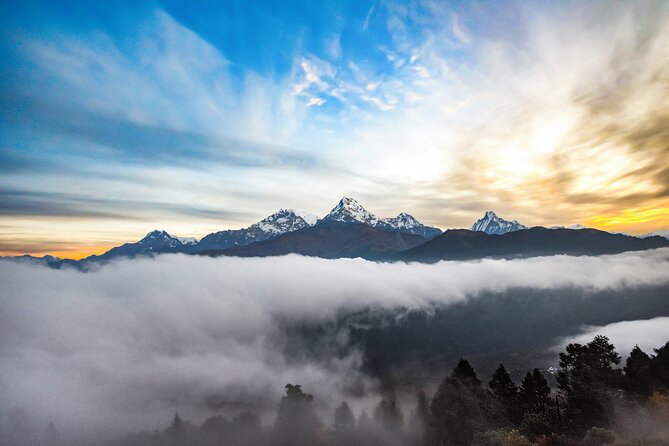
The day begins with a short early-morning climb to Poon Hill at 3,210 meters. From the viewpoint, you can see sunrise across the Dhaulagiri and Annapurna ranges, including Machhapuchhre and Annapurna.
Poon Hill is a strong final mountain moment because it gives you a broad view rather than a close pass crossing. The climb itself is listed at one hour, but you should dress warmly and allow time for the viewpoint experience before returning to Ghorepani.
Afterward, you trek from Ghorepani to Birethanti and take a bus to Pokhara. The full day is listed at about 12 hours, so it combines an early viewpoint, more walking, and road transport.
One night in Pokhara with breakfast is included. That gives you a comfortable pause beside the lake city before the return to Kathmandu.
Day 12: Pokhara to Kathmandu
After breakfast, you take a tourist bus back to Kathmandu. A 25-minute flight is also possible, but it costs extra and is not included.
The bus is the lower-cost choice, while the flight saves time. Ask about the current transport arrangement when booking, since the package specifically includes the tourist bus but not the flight.
This final day is mainly about getting back to Kathmandu. If you have an international departure soon after, allow extra time and avoid treating the bus as a guaranteed quick connection.
What the $1,100 price really covers
The price is attractive because many major costs are already bundled:
- Public transport from Kathmandu to Dharapani
- Jeep transport from Muktinath to Tatopani
- Transport from Nayapul to Pokhara
- Tourist bus from Pokhara to Kathmandu
- Tea house or lodge accommodation during the trek
- Breakfast, lunch, and dinner during the trekking days
- One night in Pokhara with breakfast
- An English-speaking, government-licensed guide
- Guide salary, meals, insurance, lodging, and transport
- ACAP and TIMS fees
- Government and local taxes
- A farewell dinner in Kathmandu
You still pay for alcoholic and non-alcoholic drinks, tips, laundry, phone use, camera or video fees, insurance, and personal purchases. A Nepal visa costs $30 for 15 days, $50 for 30 days, or $125 for 90 days.
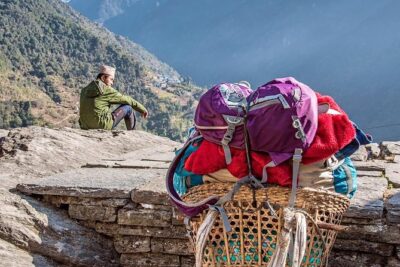
Porters are not included. You can arrange one for $20 per day, with a stated carrying limit of 20 kilograms. I consider this a worthwhile extra if you want to keep your daypack light, especially during the Thorong La section.
The meal information lists breakfast 12 times, lunch 11 times, and dinner 10 times. Since the general description says full board during the trek, confirm the exact meal schedule before paying, especially for the road-transfer days.
Guides, private groups, and the human side of the trip
The company is Magnificent Himalayan Treks. The supplied details name Bhim Panta in company responses, while Manit and Kumar are also praised for handling questions and guiding support on related Annapurna trips.
That gives you useful names to ask for when arranging the trip. Manit is described as responsive during planning, while Bhim is praised for personal airport help, Kathmandu support, and organizing wider Nepal journeys. These details point to a company that aims to stay involved beyond simply sending you up the trail.
The tour is private, so only your group participates. That is a useful advantage on a demanding route. You are not locked into the pace of a large party, and the trip can be customized. Still, customization should be agreed in writing, especially if you want Tilicho Lake, extra days, a different transport option, or a slower schedule.
The company’s past guest feedback also highlights friendly service, well-planned transport, accommodation, meals, and cultural stops. One group added three days for Tilicho Lake and considered the extension worthwhile. That extension is not part of this $1,100 package, so treat it as a possible extra rather than an included feature.
Who should book this trek?
I would recommend this route to you if you want a classic Annapurna Circuit crossing but have only 12 days. It suits fit walkers who enjoy changing scenery, simple lodges, local villages, long days, and a real high-pass challenge.
It is also a good match if you value having permits, guide costs, meals, and much of the transport handled in advance. The private format works well for couples, families with suitable fitness, and small groups that want control over pace.
I would be cautious if you dislike early starts, long road transfers, basic mountain accommodation, or carrying a pack at altitude. The route is not a relaxed hotel-to-hotel holiday, and the Thorong La day is not something to underestimate.
You also need travel insurance. Insurance is not included, and the company does not cover personal medical or evacuation costs through this package.
Should you book the 12-day Annapurna Circuit?
Book it if you want a value-focused, private trek with the circuit’s major landmarks in one compact trip. The strongest reasons are the included permits and meals, the acclimatization day in Manang, the Thorong La crossing, and the mix of high mountains, villages, hot springs, and Poon Hill.
Before booking, confirm the exact transport schedule, the meal count, lodge standards, porter arrangement, and any changes you want to make. If you can add days, Tilicho Lake is a possible extension, but it will require extra time and cost.
For a fit trekker who accepts long days and simple facilities, this is a well-priced way to see a broad slice of the Annapurna region with local support. For anyone unsure about altitude or endurance, choose a slower version rather than forcing the whole circuit into 12 days.
FAQ
How long is the Annapurna Circuit trek?
The experience lasts approximately 12 days, beginning with transport from Kathmandu and ending with the return from Pokhara to Kathmandu.
What is the price per person?
The listed price is $1,100 per person.
Is transportation included?
Yes. The package includes public transportation from Kathmandu to Dharapani, jeep transport from Muktinath to Tatopani, transport from Nayapul to Pokhara, and a tourist bus from Pokhara to Kathmandu.
Is a flight from Pokhara to Kathmandu included?
No. A 25-minute flight is available as an extra-cost option. The included return option is the tourist bus.
Are meals included?
Breakfast, lunch, and dinner are included during the trek. One night in Pokhara includes breakfast. Drinks are not included.
Are trekking permits included?
Yes. The Annapurna Conservation Area Permit and Trekkers Information Management System Card fees are included.
Is a guide included?
Yes. The package includes a government-licensed, experienced, English-speaking trekking guide, along with the guide’s meals, insurance, salary, lodging, and transportation.
Is a porter included?
No. A porter can be arranged for $20 per day and carries up to 20 kilograms.
What fitness level do I need?
The experience recommends a moderate physical fitness level. You should also be prepared for long days, high altitude, an early start for Thorong La Pass, and several days listed at 10 to 12 hours.
Recently added around Kathmandu
- Ghorepani Poon Hill Trek★ 5.0 · 16 reviews
- Private Manaslu Circuit Trek at Himalayas★ 5.0 · 3 reviews
- Amazing 1 Day Trekking Experience in Kathmandu Nepal★ 5.0 · 24 reviews
- Ghorepani Poonhill Trek★ 5.0 · 5 reviews
- Upper Mustang Trekking★ 5.0 · 2 reviews
- Upper Mustang Trekking★ 3.0 · 2 reviews
- Upper Mustang Trekking★ 5.0 · 4 reviews
- Upper Mustang Trek★ 5.0 · 5 reviews
Annapurna Base Camp Treks, compared.

Trekking in Annapurna/Langtang/Everest/Upper Mustang regions
Read our review →
Kathmandu to Annapurna Base Camp (ABC) 5-Day Trek
Read our review →Browse the lists this tour appears in