
REVIEW · KATHMANDU
Annapurna Base Camp Trekking
Mountains reward steady feet.
This 10-day Annapurna Base Camp trek packs a lot into a short Nepal itinerary, from a morning flight to Pokhara and rhododendron forests to an overnight stay at 13,550 feet. I like the mix of mountain scenery and village life, and I especially like that this is a private trip with guides and porters assigned to your own group. The main concern is the pace: six to seven hours of walking on several days is a serious commitment.
I also like the practical setup. Teahouse accommodation, breakfast each day, ten lunches, and nine dinners are included, while the route finishes in Pokhara rather than sending you straight back to Kathmandu. You should still expect simple food, basic rooms, changing weather, and a route where altitude matters more than the calendar.
The key points at a glance
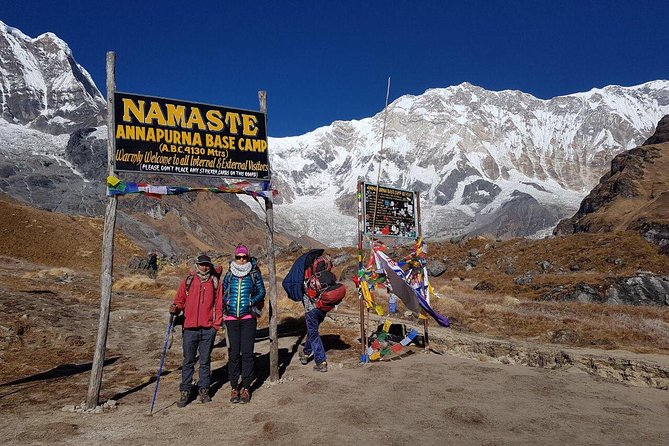
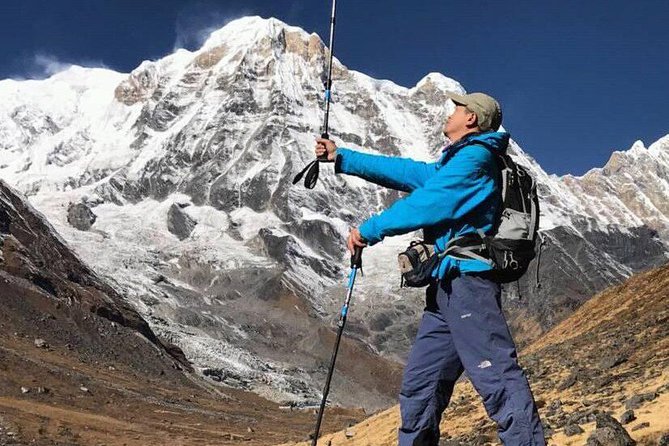
- 13,550-foot high point: Annapurna Base Camp is the physical and emotional target of the trek.
- A private group experience: Your party travels together rather than joining a large shared tour.
- Poon Hill on the way in: The route adds a famous viewpoint and rhododendron country before reaching ABC.
- Teahouse nights: You sleep in mountain guesthouses, including one night at Annapurna Base Camp.
- Strong guide support: Ashok, Hari, Prakash, Homprakash, Rai Badal, and other team members receive repeated praise for care and organization.
- A useful finish in Pokhara: After the trek, the group drives to a hotel in Pokhara instead of ending in a remote trailhead.
Why this 10-day route works
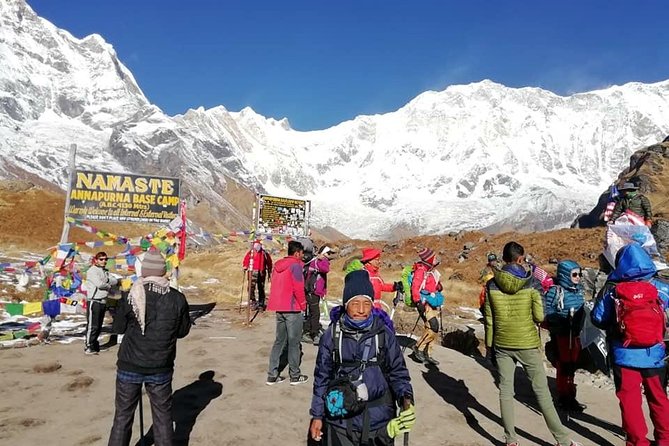
Annapurna Base Camp is a good choice if you want a major Himalayan goal without committing to a much longer circuit. The route brings you into the Annapurna region, but it does not ask you to spend weeks crossing high passes or walking in a large expedition group.
The appeal is the change in scenery. You begin near Pokhara, pass through villages and forest, climb toward the high mountain bowl around Annapurna Base Camp, then descend through Bamboo and Jhinu before returning to Pokhara. That change keeps the trek interesting. You are not simply walking uphill for ten days and retracing the same path.
The trip is listed at $1,180 per person. That is a meaningful price, but the value depends on what you want handled for you. A private trek with guides, porters, mountain accommodation, meals, internal transportation, and planning can be worth the cost if you prefer support instead of arranging each piece yourself. The company also has a record of handling airport pickup, transfers, guides, and porters in an organized way.
Still, check exactly what is included before paying. Tents are not included, although this route is described as using teahouses and guesthouses. The food is basic, and one detailed account noted extra charges for menu additions. At altitude, you may also want to budget for personal snacks and other items, though the supplied information does not specify those costs.
More Annapurna Treks in Kathmandu
- Annapurna Circuit Trek with Tilicho Lake
★ 5.0 · 368 reviews - Annapurna base camp trek 5 Days
★ 5.0 · 252 reviews - 14-Day Private Annapurna Base Camp Trek
★ 5.0 · 180 reviews
Day 1: Kathmandu to Pokhara and Nayapul
The trip begins early, with a 6:15 am meeting time at Destination Unlimited Treks on Thamel Road in Kathmandu. You take a morning flight to Pokhara, then continue by road from the airport to Nayapul, the trail area.
This first day is not just a transfer. It sets the rhythm for the trek, and the stated duration is about six hours. You should be ready for a full day after an early start, with the transition from city streets to mountain roads happening quickly.
The itinerary wording places the drive to Nayapul on Day 1, while the walking stages begin with Ghorepani. Since route timing can shift, confirm the exact overnight stop and transport plan before departure. That small check matters when you are carrying gear and trying to manage sleep before the first long walking day.
Day 2: The climb toward Ghorepani and Poon Hill
The second day takes you to Ghorepani, with about six hours of trekking. Poon Hill is listed as the key stop, making this one of the most scenic early stages.
Poon Hill is valuable because it gives you a major mountain viewpoint before the trek reaches its highest point. It also makes the early effort feel worthwhile. You are not waiting until Day 7 for your first big mountain reward.
Spring is a particularly attractive time for this section. Rhododendron forest blooms add color to the route, and the flowering season is one of the clearest reasons to consider a spring departure. The tradeoff is that the most desirable seasons can bring more demand for rooms and transport, so ask the operator about conditions and availability.
Day 3: Tadapani and the Machhapuchhare approach
The third day is listed at about seven hours and includes the route toward Tadapani, with Machhapuchhare Base Camp named in the stop heading. That combination suggests a demanding day of changing terrain and mountain views.
The important point for you is the duration. Seven hours is the longest stated walking day in this itinerary, so it is not a gentle sightseeing walk. You need regular walking practice before arriving, especially if you are not used to consecutive days on uneven trails.
Machhapuchhare, also known as Fishtail, is one of the region’s best-known peaks. Even when the itinerary names a base camp, the overnight stop is listed as Tadapani, so confirm the precise walking sequence. The supplied schedule contains a few compressed or mismatched labels, and a clear day-by-day briefing would make the plan easier to follow.
Same trailhead, a longer or shorter day out:
- Everest Base Camp Trek – 14 Days
★ 5.0 · 1,499 reviews - Everest Base Camp Trek
★ 5.0 · 842 reviews - Everest Base Camp Trekking
★ 5.0 · 485 reviews - Everest Base Camp Trekking – 13 Day
★ 5.0 · 365 reviews
Day 4: Chhomrong and the gateway to ABC
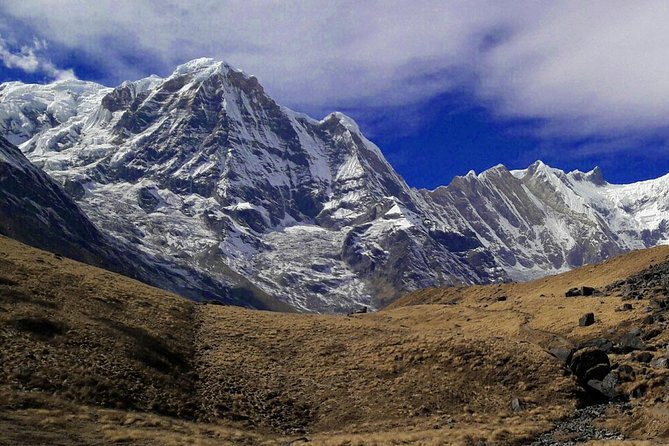
Day 4 takes about six hours and lists Chhomrong as the destination. Chhomrong is an important point on the route because it feels like a real transition into the upper Annapurna valley.
By this stage, your body is already working through several days of walking. That can be a good thing: you have found your pace, learned how your pack feels, and seen how the group moves. It can also be tiring, especially if you have not built up endurance before arriving.
I would pay close attention to the guide here. The strongest praise for this company centers on personal care, not flashy extras. Guides such as Hari, Prakash, Homprakash, and Rai Badal are repeatedly singled out for helping with pacing, comfort, and practical needs. A private format gives that support more room to work.
Day 5: Chhomrong to Doban
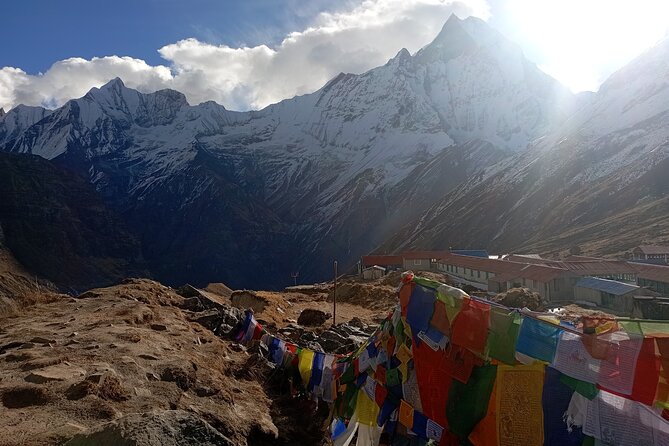
The route continues to Doban in about six hours. The scenery changes as you move farther from the lower villages and deeper into the mountain environment.
This is the kind of day where the simple teahouse format makes sense. You walk, eat, rest, and prepare for the next stage. Accommodation is not presented as luxurious, and it should not be judged by city-hotel standards. The reward is sleeping along the route instead of losing time on long daily transfers.
Meals are included, with breakfast on all ten days, lunch on all ten days, and dinner on nine days. The food is described in practical terms rather than as a highlight. One account specifically noted a basic menu and additional costs for some extras, so come prepared for repetition and keep your expectations sensible.
Day 6: Deurali and higher mountain country
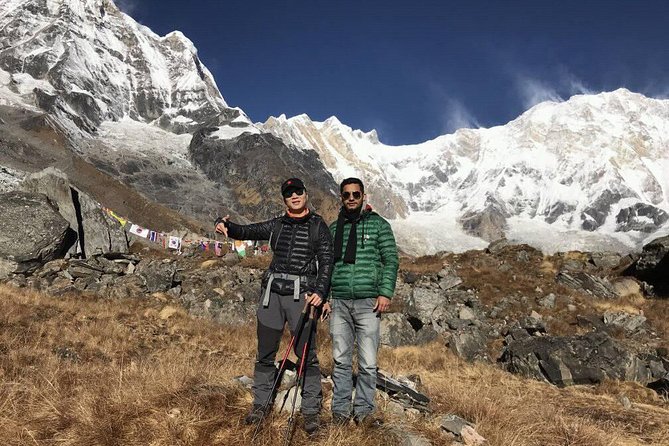
Day 6 takes about five hours to Deurali. The shorter walking time does not automatically make it easy. You are gaining height, and the route is moving toward the part of the trek where altitude becomes a central concern.
This is when a guide’s judgment matters. The company’s best feedback points to attentive staff who check on the group and respond when someone is struggling. That does not remove the risks of high altitude, but it gives you a better support system than walking alone.
You should also remember that this is a private tour, not an independent hike with no structure. The guide can help the group move at a sensible pace, but you remain responsible for telling the guide when you feel unwell. Do not hide symptoms to protect the schedule.
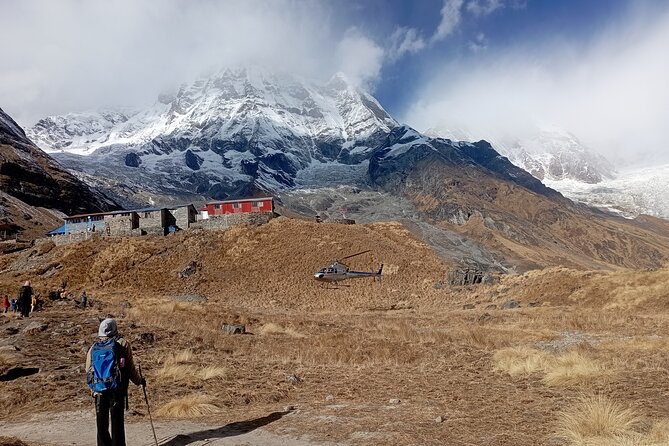
Day 7: Annapurna Base Camp at 13,550 feet
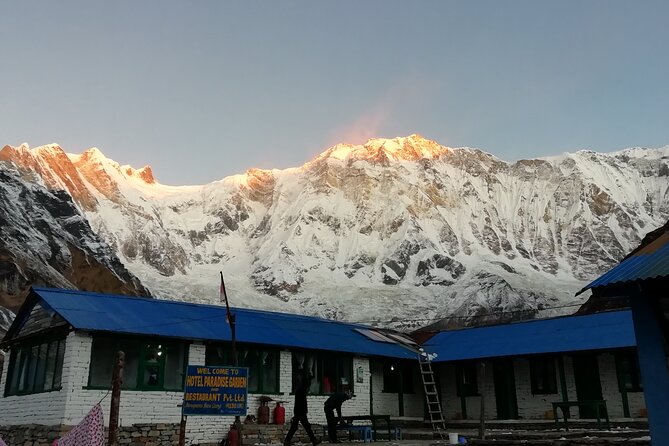
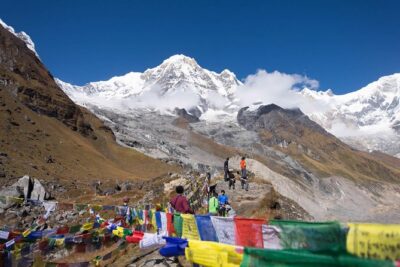
Day 7 is the central event: five hours to Annapurna Base Camp. The stated high point is 13,550 feet, or 4,130 meters, and you stay overnight at a guesthouse there.
That overnight stay is a major reason to choose this itinerary. Reaching ABC for a quick photograph and immediately descending would be less satisfying. Spending the night gives you more time to experience the mountain setting and the quiet of the high camp.
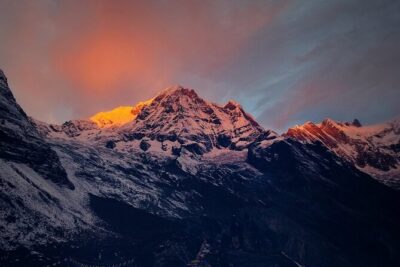
The scenery is the reward, but the altitude is real. Five hours of walking may sound modest beside the earlier days, yet high elevation can make every step slower. The private format is useful here, since the group can focus on its own pace instead of matching strangers.
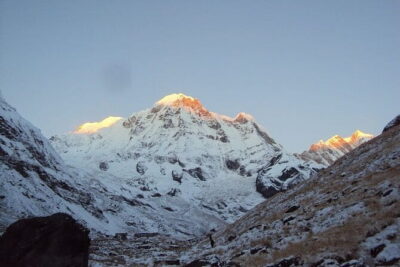
Weather can also affect the experience. Mountain visibility is not guaranteed, so you should value the journey itself rather than treating a perfect view as a promise. The combination of mountain weather, basic lodging, and thin air is part of what makes this stage demanding.
Day 8: Descending through Bamboo
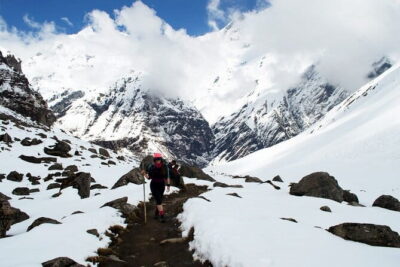
After the high point, Day 8 heads to Bamboo and takes about six hours. Descending is welcome, but it is not always easy on tired knees. The route asks you to keep walking after the excitement of ABC has passed.
Bamboo is a useful overnight stop because it breaks the descent into a manageable stage. You can enjoy the psychological lift of losing altitude while still having time to recover before the final walking days.
This is also where group spirit can help. Several accounts describe trips filled with laughter, singing, dancing, and photography, with staff joining in at times. That does not mean every group will have the same mood, but it suggests the company’s team can make a strenuous route feel more sociable.
Day 9: Jhinu and the end of the trail
Day 9 takes about five hours to Jhinu. The route continues downhill and brings you close to the end of the mountain portion.
Jhinu is often treated as a recovery point on Annapurna routes, but the supplied details do not confirm specific activities there. You should see it mainly as the final trekking stop before the transfer to Pokhara. After many days on foot, that change in pace will feel welcome.
The day is shorter than several earlier stages, which gives you a chance to finish without rushing. It also lets the guide keep an eye on anyone whose feet, knees, or energy have taken a beating.
Day 10: Returning to Pokhara
The final day is listed as Pokhara, with about five hours connected to the stop. The end point is Pokhara, and the group is driven to a hotel there after trekking.
This is a practical ending. Pokhara gives you a softer landing after the trail, rather than forcing an immediate return to Kathmandu. The itinerary also mentions Pokhara Museum, though the available details do not explain whether a museum visit is a scheduled activity or simply part of the stop description. Ask for clarification if that matters to you.
The route’s finish is one of its better planning choices. You complete the trek with transportation arranged and reach a major Nepal destination where you can rest or continue your trip.
Guides, porters, and the human side
The most consistently praised part of this experience is the staff. Ashok is described as responsive from the first inquiry through the final day, and several accounts credit him with clear planning and reliable communication.
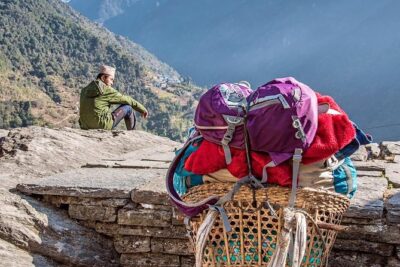
Different guides receive personal praise, including Hari, Prakash, Homprakash, and Rai Badal. Porters such as Surendra, Durga, and Bobinda are also remembered for care and serious attention to the trek. Names matter here because they show that the experience depends heavily on the particular team assigned to you.
You should still ask who will lead your group and how many porters are included. The tour is private, but the supplied details do not state a maximum group size or porter ratio. Those facts affect comfort, speed, and how much personal luggage you must carry.
Who should book this trek?
I would recommend it to someone who wants a major Himalayan walk in ten days, enjoys simple mountain lodging, and prefers an organized private trip. It suits people who want more than scenery, since the route includes villages, forests, local food, guides, porters, and nights in teahouses.
It is less suitable if you want luxury, flexible rest days, or short walking stages. A moderate fitness level is required, but that phrase should not make the route sound easy. Six to seven hours of walking, followed by high-altitude nights, demands preparation.
Train before you go with long walks and hills. Break in your footwear, pack light, and speak honestly with the guide about how you feel. The trek is far more enjoyable when you arrive ready for the physical work.
Booking decision
I would book this trek if I valued private support, a compact schedule, and the chance to sleep at Annapurna Base Camp without arranging every detail myself. The $1,180 price can be fair for the transport, teahouse plan, meals, guides, porters, and organization, but I would first confirm the exact route order, room arrangements, porter details, and extra food costs.
The strongest reason to choose it is the people. Ashok and the guiding teams are repeatedly praised for being responsive, caring, and organized. The main reason to pause is the demanding pace and the basic nature of mountain life. If you accept both, this is a strong route to one of Nepal’s most memorable high points.
FAQ
Where does the Annapurna Base Camp trek start?
The meeting point is Destination Unlimited Treks on Thamel Road in Kathmandu, Nepal. The stated start time is 6:15 am.
How long does the trek last?
The experience lasts approximately 10 days.
What is the highest point reached?
The trek reaches Annapurna Base Camp at 13,550 feet, or 4,130 meters, above sea level.
Is Annapurna Base Camp an overnight stop?
Yes. The itinerary includes an overnight guesthouse stay at Annapurna Base Camp.
Are meals included?
Yes. Breakfast is included for all 10 days, lunch is included for all 10 days, and dinner is included for nine days.
Is this a private tour?
Yes. Only your group participates in the private tour or activity.
Where does the trek end?
The trek ends in Pokhara, Nepal. After the walking portion, the group is driven to a hotel in Pokhara.
Recently added around Kathmandu
- Ghorepani Poon Hill Trek★ 5.0 · 16 reviews
- Private Manaslu Circuit Trek at Himalayas★ 5.0 · 3 reviews
- Amazing 1 Day Trekking Experience in Kathmandu Nepal★ 5.0 · 24 reviews
- Upper Mustang Trekking★ 5.0 · 2 reviews
- Ghorepani Poonhill Trek★ 5.0 · 5 reviews
- Upper Mustang Trekking★ 3.0 · 2 reviews
- Upper Mustang Trekking★ 5.0 · 4 reviews
- Upper Mustang Trek★ 5.0 · 5 reviews
Annapurna Base Camp Treks, compared.
Trekking in Annapurna/Langtang/Everest/Upper Mustang regions
Read our review →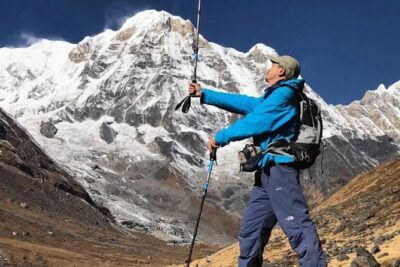
Kathmandu to Annapurna Base Camp (ABC) 5-Day Trek
Read our review →Browse the lists this tour appears in