
REVIEW · KATHMANDU
Annapurna Base Camp Trek
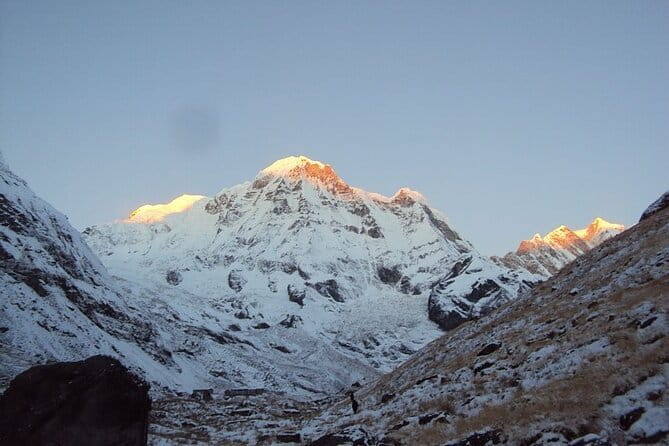
The Himalayas start with a long stairway. This 15-day Annapurna Base Camp Trek combines Kathmandu temples, Pokhara, Poon Hill sunrise, rhododendron forests, and the high mountain bowl of Annapurna Base Camp. I like the smart route design, which builds toward ABC without rushing straight there, and I like that permits, airport transfers, a porter, poles, sleeping bag, and down jacket are included. The main caution is physical: steep stone steps, long walking days, and high altitude demand strong fitness.
The $1,623 price offers solid value for a guided trek, especially with nine dinners, ten lunches, and 14 breakfasts included. I also appreciate the small maximum group of 10, but the package does not cover travel insurance, rescue costs, tips, Nepalese visa fees, or meals in Kathmandu. Plan your budget beyond the headline price.
Key points at a glance
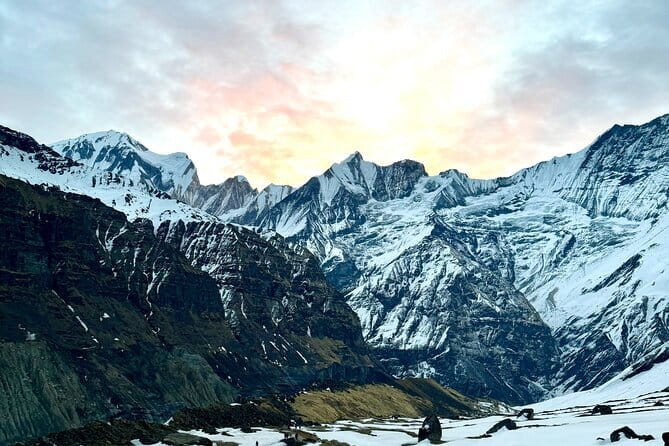
- Poon Hill sunrise: An early climb from Ghorepani brings views toward the Dhaulagiri and Annapurna ranges.
- Annapurna Base Camp finish: The route continues beyond Machhapuchhre Base Camp to the high point at Annapurna Base Camp.
- A useful mix of Nepal: You get Kathmandu temples, Pokhara, Gurung villages, forest trails, mountain lodges, and hot springs.
- Strong practical inclusions: A porter for every two people, trekking permits, medical kit, poles, sleeping bag, and down jacket are supplied.
- Small group format: The maximum group size is 10, which should make trail coordination easier than on a large departure.
- Flexible transport: You can request private vehicles or choose flights between Kathmandu and Pokhara instead of the bus.
Kathmandu begins with temples, markets, and a briefing
Your arrival day is simple. An airport representative meets you and takes you to Hotel Thamel Park in the Thamel area. After the briefing, you can eat at a nearby restaurant or walk about 15 minutes to Ason, one of Kathmandu’s oldest markets.
That first evening is useful for adjusting to the city before the trek. Thamel is busy with restaurants and bars, while Ason gives you a more local street scene. You do not need a packed schedule here. Save your energy, check your gear, and keep the next morning in mind.
Day two covers four major Kathmandu sights: Swayambhunath, also called the Monkey Temple, Pashupatinath, Boudhanath, and Kathmandu Durbar Square. This is a full cultural day before the mountain walking begins.
Each stop offers a different view of the city. Swayambhunath sits above Kathmandu, Pashupatinath is a major cremation site, Boudhanath is a large Buddhist center, and Durbar Square connects you with Nepal’s royal past. Entrance fees for these sightseeing visits are included, which helps keep the early part of the trip straightforward.
More Annapurna Treks in Kathmandu
- Annapurna Circuit Trek with Tilicho Lake
★ 5.0 · 368 reviews - Annapurna base camp trek 5 Days
★ 5.0 · 252 reviews - 14-Day Private Annapurna Base Camp Trek
★ 5.0 · 180 reviews
The road to Pokhara is scenic but slow
On day three, the tourist bus leaves around 7 a.m. The journey to Pokhara follows the Trishuli River and passes settlements, hills, and changing views from the road. A lunch stop breaks up the trip.
The bus is the budget-friendly choice, but you should expect a long, bumpy ride rather than a quick transfer. That matters because the next morning begins the trek. If road travel wears you out, you can request a private vehicle when booking, or choose a flight that takes about 30 minutes.
These alternatives cost extra or require a booking request, so settle the choice early. Pokhara gives you a pleasant pause before the trail, but the program leaves little spare time if transport runs late.
Nayapul to Ghorepani brings the first mountain views
On day four, you drive from Pokhara to Nayapul and begin walking. The opening trail uses stone-paved steps and passes small villages. It is described as an easier walking day, though the steps still require steady legs.
Below Ulleri, you get an early glimpse of Annapurna South and Hiunchuli. That first sight matters. You are no longer simply walking through foothills. The mountains begin to frame the trip.
Day five leads through dense rhododendron forest to Ghorepani. Spring is especially attractive here, when rhododendrons bloom in several colors. The forest gives the walk variety, and Ghorepani rewards your effort with mountain views and the simple pleasure of hot tea.
This section is not flat or effortless. The route is described as tough, so you should treat the distance and stair climbing seriously. The tea houses provide basic overnight lodging, and personal costs during tea house stays are not included. Carry money for drinks and other small purchases.
Poon Hill is the early morning reward
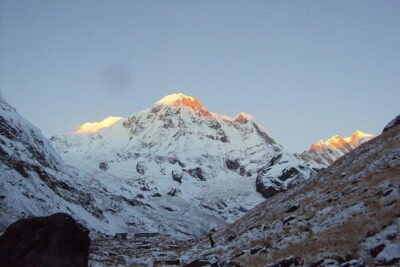
Day six begins before breakfast with a torch-lit climb from Ghorepani to Poon Hill. The ascent takes about an hour. From the viewpoint, you can watch sunrise reach the Dhaulagiri and Annapurna ranges.
This is one of the trip’s most memorable moments, but it comes at a price: an early start after a hard walking day. Take warm layers, use your poles, and expect other people to want the same sunrise.
After returning to Ghorepani for breakfast, you continue to Tadapani. The mountain views remain part of the walk, but this is also a day when tired legs become noticeable. The route works well because Poon Hill adds a clear reward before the main approach to base camp.
Same trailhead, a longer or shorter day out:
- Everest Base Camp Trek – 14 Days
★ 5.0 · 1,499 reviews - Everest Base Camp Trek
★ 5.0 · 842 reviews - Everest Base Camp Trekking
★ 5.0 · 485 reviews - Everest Base Camp Trekking – 13 Day
★ 5.0 · 365 reviews
Gurung villages lead you toward the sanctuary
Day seven climbs toward Kimrong, then continues more gently to Chhomrong, a small Gurung village. This change in pace is welcome after the morning ascent. Chhomrong is an important point on the route and gives you another chance to see village life alongside the mountain scenery.
Day eight is described as easier. You pass Sinuwa at 2,360 meters before reaching Bamboo. Sinuwa provides views toward Annapurna and the village of Ghandruk. This stretch gives your body a short break before the trail becomes steeper and more rugged.
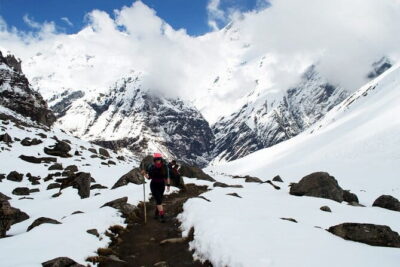
You should not mistake easier for easy. The trek remains a multi-day walk with repeated steps, uneven ground, and limited recovery time. The route’s value is in the gradual change from settled villages and forest to higher, more open mountain country.
Dobhan and Deurali make the altitude real
Day nine starts with a long, steep stone staircase toward Dobhan at about 2,600 meters. From there, you continue to Himalaya at about 2,920 meters, pass Hinku Cave, and reach Deurali.
This is a day to keep your pace controlled. The program describes the following day as slightly hard, so do not burn all your energy here. Your guide’s role becomes especially useful as you move higher and need sensible breaks.
The tea house setting is practical, not luxurious. Personal expenses during the lodge stay are excluded, and the included meals do not mean every food or drink cost disappears. Keep some Nepalese cash available for extras.
Machhapuchhre Base Camp sets up Annapurna Base Camp
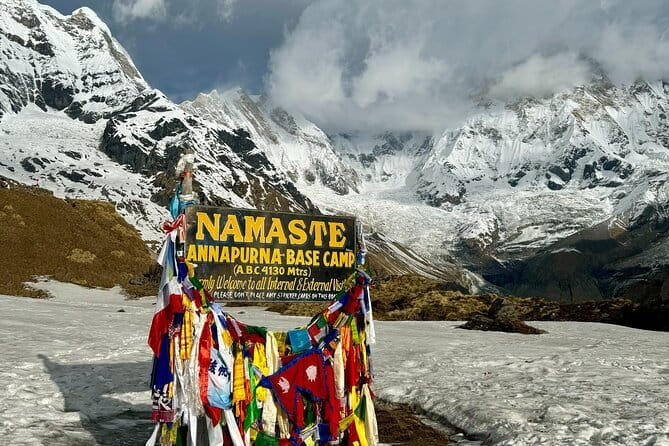
Day ten is the central effort. You first climb to Machhapuchhre Base Camp, then continue to Annapurna Base Camp. From Machhapuchhre Base Camp, the views include Machhapuchhre, Hiunchuli, Annapurna South, Annapurna I, Annapurna III, Gandharvachuli, and Gangapurna.
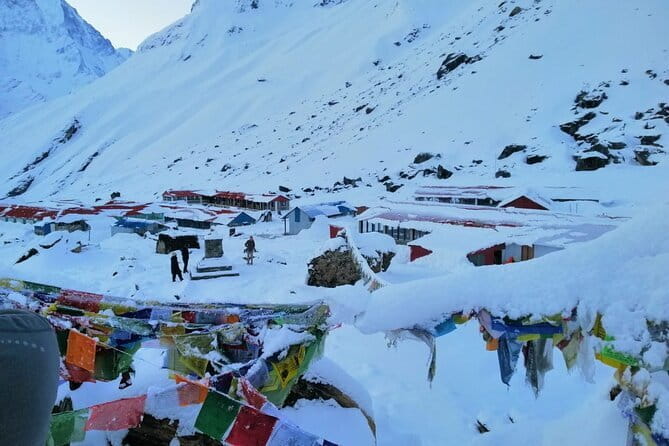
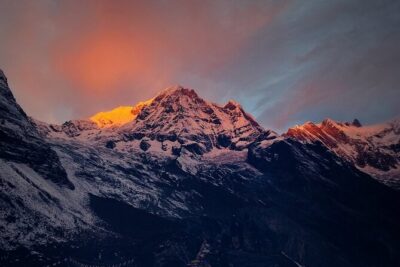
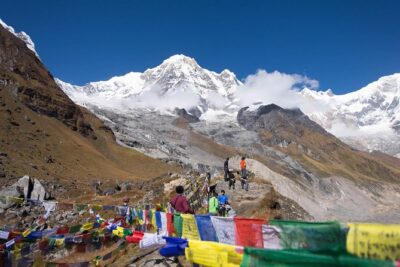
At Annapurna Base Camp, the mountain bowl becomes the reward for the previous days. The route offers views toward Annapurna South, Machhapuchhre, Annapurna I, Hiunchuli, and nearby peaks. For anyone who enjoys photography, this is the trip’s strongest section.
The altitude makes this more than a scenic walk. You need strong physical fitness, and you should listen closely to your guide. The itinerary does not promise a soft schedule or extra acclimatization days, so this trek suits people comfortable with sustained uphill walking.
The return route adds a hot spring stop
Day eleven is long but mostly downhill as you return to Bamboo. Downhill walking can be easier on your breathing but harder on knees, especially after several days on stone paths. Poles are included, and they are worth using.
On day twelve, the trail descends through Khuldighar, continues to Chhomrong, and then drops to Jhinu Danda. The hot spring here is a welcome finish to the demanding section. You can soak in the hot water and give your tired body a break.
Day thirteen continues to Nayapul, followed by a drive to Pokhara. If you want to shorten the final walking section, the program allows you to drive directly from Jhinu Danda to Pokhara instead of trekking to Nayapul. In Pokhara, you have free time to walk around the city.
That option is useful if your knees are struggling or if you simply want more time in Pokhara. It also shows that the route has at least one practical escape point near the end.
Returning to Kathmandu takes another full day
Day fourteen uses the tourist bus back to Kathmandu, leaving around 8 a.m. Lunch is provided during the journey. You can instead request a private vehicle or choose a flight of about 30 minutes.
The bus keeps the package cost lower, but it takes much longer and can be bumpy. A flight gives you more time in Kathmandu for last-minute shopping in Thamel. Since your return flight is on day 15, do not plan an ambitious final sightseeing program.
Airport transfer is included on arrival and departure. The trip ends at Kathmandu International Airport after your transfer.
What the $1,623 price really covers
At $1,623 per person, the package is not simply paying for accommodation and a route map. It includes:
- Airport pickup and drop-off in a private vehicle
- Sightseeing entrance fees
- Trekking permits and required paperwork
- A porter for every two people
- Walking poles
- A medical kit
- A down jacket and sleeping bag, both returned after the trek
- 14 breakfasts, 10 lunches, and 9 dinners
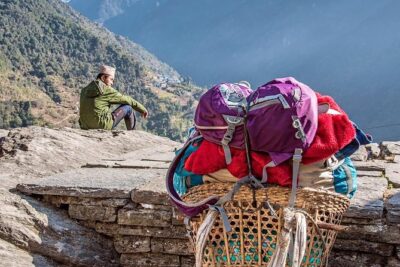
That is a useful package for a first Himalayan trek. The porter ratio is especially important because it reduces the amount you must carry each day. You still need to pack sensibly, since one porter serves two people.
The missing costs deserve equal attention. International airfare, Nepalese visa fees, travel and rescue insurance, tips, personal tea house expenses, and Kathmandu lunches and dinners are not included. Extra Kathmandu nights are also excluded.
The experience is non-refundable and cannot be changed after cancellation. Poor weather is treated differently: you can receive a new date or a full refund if the trip is canceled for that reason. Because mountain weather can change, insurance remains a sensible purchase even though it is not included.
Guides, group size, and the human side
The maximum group is 10 people, which is a comfortable size for moving through villages and coordinating transport. It is small enough for a guide to keep track of the group without creating the feel of a large procession.
Several guide names are connected with strong praise from past bookings. Niren and porter Keshab were specifically credited with making one trek memorable. Gobinda Subedi was praised for guiding a first-time solo trek with calm support and practical recommendations. Another group highlighted guide Nawin and the company’s quick email replies during planning.
Those details matter because a good guide is not just a person at the front of the line. On a route with steep steps, altitude, changing weather, and transport choices, clear advice can shape the whole experience. The medical kit and paperwork help, but you should still bring suitable insurance and prepare your own fitness.
Who should book this Annapurna trek
I would recommend this trip to you if you want a structured first Himalayan trek with cultural sightseeing before the trail. The combination of Poon Hill, Annapurna Base Camp, a hot spring, Kathmandu temples, and Pokhara gives you more variety than a route focused only on the base camp.
It is also a good fit if you value included equipment and porter support. The route is demanding but organized, and the small group limit should make the walking days easier to manage.
I would hesitate if you want a relaxed holiday, dislike long bus rides, or are not prepared for steep stone stairs. The itinerary contains several hard days and does not offer many spare days. Solo trekkers can join, as one past booking did, but you should be comfortable with the physical challenge and the fixed schedule.
FAQ
How long is the Annapurna Base Camp Trek?
The program lasts approximately 15 days, including arrival and departure days, Kathmandu sightseeing, travel to Pokhara, the trek, and the return to Kathmandu.
Where does the trek start?
The meeting point is Hotel Thamel Park Pvt. Ltd. on Chaksibari Marg in Kathmandu. The listed start time is 6:15 a.m.
Is transportation between Kathmandu and Pokhara included?
The itinerary includes tourist bus transportation, with departures around 7 a.m. on the way to Pokhara and 8 a.m. on the return. Private vehicles and flights can be arranged on request.
Are meals included?
Fourteen breakfasts, 10 lunches, and nine dinners are included. Lunch and dinner in Kathmandu are not included, and personal expenses during tea house stays are also excluded.
What equipment is supplied?
The package supplies a down jacket, sleeping bag, and walking poles. The down jacket and sleeping bag must be returned after the trek.
Is travel insurance included?
No. Travel and rescue insurance are not included, and tipping, visa fees, international airfare, extra Kathmandu accommodation, and personal expenses are also your responsibility.
Should you book it?
Book this Annapurna Base Camp Trek if you want a well-supported mountain route with a strong mix of scenery, villages, temples, sunrise views, and hot springs. The included porter, permits, equipment, meals, and small group make the $1,623 price reasonable for a guided 15-day program.
Before booking, be honest about your fitness and budget for the extras. If you can handle steep steps, long walking days, high-altitude conditions, and a slow bus ride, this itinerary gives you a rewarding path to Annapurna Base Camp without forcing you to arrange every detail yourself.
Recently added around Kathmandu
- Ghorepani Poon Hill Trek★ 5.0 · 16 reviews
- Private Manaslu Circuit Trek at Himalayas★ 5.0 · 3 reviews
- Amazing 1 Day Trekking Experience in Kathmandu Nepal★ 5.0 · 24 reviews
- Ghorepani Poonhill Trek★ 5.0 · 5 reviews
- Upper Mustang Trekking★ 5.0 · 2 reviews
- Upper Mustang Trekking★ 3.0 · 2 reviews
- Upper Mustang Trekking★ 5.0 · 4 reviews
- Upper Mustang Trek★ 5.0 · 5 reviews
Annapurna Base Camp Treks, compared.
Trekking in Annapurna/Langtang/Everest/Upper Mustang regions
Read our review →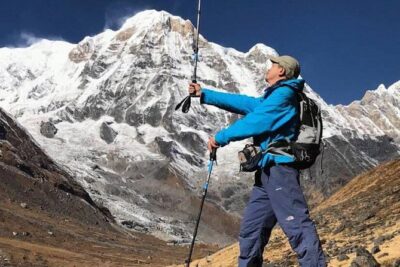
Kathmandu to Annapurna Base Camp (ABC) 5-Day Trek
Read our review →Browse the lists this tour appears in